博客

  • SpaceX’s first-ever earnings show a loss and huge spending

    SpaceX’s first-ever earnings show a loss and huge spending

    When Elon Musk-led SpaceX made its debut as a publicly traded company on U.S. stock exchanges in June, it capped off months of anticipation and even briefly soared past legacy corporate giants including Microsoft and Amazon to claim one of the largest market valuations in global history. But just two months after that historic listing, the aerospace and technology firm’s first public quarterly financial report has painted a far more mixed picture of its current performance, sparking immediate investor backlash.

    The report, released this week, reveals that SpaceX’s top-line revenue grew an impressive 92% year-over-year to hit $7.8 billion (£5.8 billion) in the latest quarter. The company’s core business lines — manufacturing next-generation launch rockets, producing its low-orbit Starlink internet satellites, and operating its social media platform X — all contributed to that strong revenue growth, which outpaces many mature public technology firms.

    However, that revenue surge is far overshadowed by an extraordinary spike in operating costs, which have jumped 550% year-over-year to reach $18.3 billion. Over the first half of 2026 alone, the firm posted a net loss of $2 billion, a figure that has alarmed market watchers and shareholders alike.

    In the immediate aftermath of the report’s release, SpaceX’s stock dropped nearly 9% during after-hours trading, erasing all of the gains it had posted during regular trading hours earlier that day. This decline marks the latest chapter in a steady downward trend for the company’s share price, which peaked at $176 on its first day of public trading in June. For the past several weeks, SpaceX’s stock has traded below its $135 initial public offering price, as initial investor hype around the listing has faded amid growing concerns about the company’s aggressive spending and unprofitable trajectory.

    Market analysts note that SpaceX has long poured billions into research and development for long-term projects, including next-generation Starship rockets for deep space exploration and NASA missions, as well as the expansion of the Starlink satellite internet network. Even so, the scale of the recent spending increase has left many investors questioning how long the company can sustain its current growth trajectory without turning a profit.

  • Trump administration revokes visa of Brazil’s ambassador to US in spat with Lula

    Trump administration revokes visa of Brazil’s ambassador to US in spat with Lula

    A sharp diplomatic rift between the outgoing Trump administration and Brazil’s Lula da Silva government has escalated dramatically, with U.S. officials confirming they have revoked the visa of Brazil’s ambassador to Washington in a reciprocal response to months of Brazilian pushback on U.S. diplomatic moves.

    Multiple senior State Department officials, speaking on condition of anonymity to discuss the sensitive diplomatic matter, confirmed the visa revocation does not amount to an immediate expulsion of Ambassador Maria Luiza Ribeiro Viotti, a seasoned diplomat who previously served as a top United Nations official. The action can be rapidly reversed, officials emphasized, if Brazilian authorities agree to advance the confirmation of Trump’s nominee for U.S. ambassador to Brasilia and reverse the visa denial for two senior American diplomats.

    The standoff traces back to two key incidents in recent months. First, the Lula administration has delayed approval of former Florida House Speaker Danny Perez, whom Trump nominated to the ambassadorship in June. Brazilian officials have signaled they will not take up the appointment until after the country’s October 4 presidential election, a timeline the Trump administration has rejected as unacceptable.

    Second, last month Brazil denied entry visas to U.S. Assistant Secretary of State for Democracy, Human Rights and Labor Riley Barnes and one of his senior aides, who had planned a working visit to Brasilia between July 27 and 30. Brazilian authorities pushed back against the trip after unconfirmed reports emerged that the pair intended to criticize Lula and Brazil’s upcoming electoral process. The State Department has refuted these claims, calling the accusation a “baseless lie” and noting the trip was routine, focused on pre-scheduled discussions of election integrity, religious freedom, and freedom of expression with government and civil society stakeholders.

    U.S. officials added that the visa revocation decision was delayed multiple times over recent weeks to give Lula an opportunity to compromise and reverse course on the two issues. When Brazilian authorities did not adjust their position, the administration moved forward with the reciprocal action.

    Tensions between the Trump administration and Lula’s government have simmered for months, rooted in deep policy and political disagreements. The two governments have clashed repeatedly on Western Hemisphere policy, particularly over diplomatic stances toward Venezuela and Cuba, where Lula’s leftist government holds positions directly opposed to the Trump administration’s. These frictions have been amplified by Trump’s longstanding close ties to Jair Bolsonaro, the former Brazilian president who preceded Lula and is currently under house arrest serving a 27-year sentence for his role in an attempted coup following the 2022 election.

    Bolsonaro’s son, Sen. Flávio Bolsonaro, will face Lula in the upcoming October presidential election, and the Trump administration has openly courted the younger Bolsonaro. He and his brother Eduardo met with Trump and other senior U.S. officials in Washington back in May. Shortly after that meeting, the Trump administration designated two of Brazil’s largest drug trafficking organizations — First Command Capital and Red Command — as foreign terrorist organizations, a move Lula has openly opposed.

    Just this week, additional economic tensions took effect when the Trump administration imposed new tariffs of up to 37.5% on thousands of Brazilian export products. The U.S. claims Brazil engages in unfair trade practices and fails to crack down on forced labor within its borders, but the Lula administration has rejected these accusations outright, framing the tariffs as an explicit attempt to sway the election outcome in Flávio Bolsonaro’s favor.

    The younger Bolsonaro has echoed his father’s longstanding, unsubstantiated claims that Brazil’s electronic voting system — which has been in use for 25 years — is vulnerable to widespread fraud. While he toned down those claims during his official nomination as the Liberal Party’s presidential candidate over the weekend, the issue remains a central talking point for his conservative campaign.

    Last week, a senior anonymous Brazilian diplomat told reporters in Brasilia that the government was already expecting a retaliatory U.S. response to the visa denial and ambassadorial delay. The diplomat also noted that the Trump administration deviated from standard diplomatic protocol by launching formal proceedings for Perez’s appointment before securing informal Brazilian approval, a step that contributed to the gridlock. As of Tuesday, Brazil’s government had not issued an official public response to the visa revocation following requests for comment from the Associated Press.

  • Israel suffers record emigration wave, with almost 270,000 leaving since 2023

    Israel suffers record emigration wave, with almost 270,000 leaving since 2023

    A landmark new study conducted by Tel Aviv University researchers has uncovered an unprecedented surge in Israeli emigration, with nearly 270,000 citizens leaving the country between the start of 2023 and the end of 2025 — the highest three-year total recorded in the nation’s modern history.

    Drawing on official datasets compiled by Israel’s Central Bureau of Statistics and other state agencies, the research found a consistent upward trend in long-term departures. More than 86,000 Israelis exited the country for stays of three months or longer in 2023, and that number climbed to over 90,000 in both 2024 and 2025. This puts the annual average of long-term departures at roughly 90,000, a sharp 50% increase from the pre-pandemic average of 60,000 departures per year recorded between 2010 and 2019.

    Unlike previous official emigration reports that only counted citizens who left for a full year or more to count as long-term emigrants, the Tel Aviv University study expands this definition to include anyone spending a minimum of three months outside Israeli borders. Study co-author Itai Ater explained to local outlet Haaretz that this adjusted methodology captures a far more accurate picture of the actual scope of outward migration. The study’s final counts also exclude recent immigrants from Ukraine and Russia who left Israel within three years of arriving, focusing only on long-term residents who had lived in the country for at least three years before their departure.

    Ater emphasized that while the current cumulative numbers do not yet pose an immediate threat to Israel’s national resilience, the steady upward trajectory demands urgent action. “In 2025, we again see deeply troubling numbers of Israelis who left the country for a significant period, adding to the emigration wave of 2023 and 2024,” he said. “But looking ahead, and unless there is a change, there is growing concern that emigration from Israel will increase to a level that endangers the country’s security and economy.”

    Compounding these concerns, earlier Tel Aviv University research has already confirmed that the emigration wave is disproportionately driven by highly skilled workers: a significant and worrying share of departures are doctors, PhD-holding researchers, engineers, university academics, and high-income professionals. While some skilled labor outflow has been observed in other developed economies, the institution notes that this brain drain carries unique risks for Israel. The country has limited natural resources, and its entire economic model is built around leveraging its skilled, innovation-focused workforce.

    The study’s authors warn that the current trend could soon trigger an irreversible domino effect. As more people leave, the incentive grows for friends, family members and professional networks to join them, creating a self-reinforcing cycle that becomes harder to break the longer it continues. “Once emigration numbers cross a certain threshold, reversing the trend will be extremely difficult, perhaps impossible,” the university stated in its release of the study findings.

    The release of the unprecedented data has sparked fierce cross-party criticism of Prime Minister Benjamin Netanyahu’s ruling government from Israeli lawmakers. Gilad Kariv, chair of the Knesset’s Committee for Immigration, Absorption and Diaspora Affairs and a member of the left-wing opposition Democrats party, took to social platform X to condemn the government’s inaction. “Israel is facing a tsunami of emigration, and the government is doing nothing about the issue,” Kariv wrote. He called the emigration wave a “strategic threat to Israel’s future” that is directly tied to the government’s policy agenda, specifically the controversial judicial overhaul launched in early 2023 that sparked months of mass nationwide protests.

    Centrist-right opposition lawmaker Meirav Cohen of the Together party also joined the criticism, drawing a pointed connection between the government’s policies toward Gaza and the growing outflow of Israeli citizens. “They declared they would carry out voluntary emigration from Gaza,” Cohen said on X, referencing the government’s widely criticized plan to encourage the expulsion of Palestinian residents from the Gaza Strip. “In the end, the October 7 government encouraged voluntary emigration from the State of Israel.”

    This report was originally framed by independent regional outlet Middle East Eye, which provides specialized, unfiltered coverage of the Middle East and North Africa region.

  • Paramount chief executive David Ellison breaks silence on Warner Bros mega merger

    Paramount chief executive David Ellison breaks silence on Warner Bros mega merger

    The high-stakes battle over one of the biggest media mergers in entertainment history has entered a new chapter, as Paramount Skydance CEO David Ellison has publicly defended his firm’s proposed $110 billion acquisition of Warner Bros. Discovery for the first time. In a lengthy op-ed published by *The New York Times*, Ellison pushed back against widespread opposition to the mega-deal, arguing that critics are clinging to an outdated vision of Hollywood that no longer aligns with the modern media landscape.

    Ellison’s intervention comes at a critical moment: the merger, which has already received formal backing from the U.S. Department of Justice and European Union regulators, has been put on an indefinite hold following a wave of domestic antitrust legal challenges. The most prominent lawsuits were filed in July by 12 state attorneys general, led by California’s top law enforcement official Rob Bonta, alongside the Writers Guild of America (WGA). The challengers argue the combined media entity would violate the U.S. Clayton Antitrust Act, stifle market competition, and cut professional opportunities for working writers in Hollywood. As a result of these challenges, federal court proceedings have been paused, with a trial not scheduled to begin until March 2, 2027, effectively freezing all progress toward closing the transaction in the U.S.

    A core point of criticism from opponents has centered on two concerns: that a merged Paramount-Warner would hold too much market power, and that it would undermine the editorial independence of the companies’ major news outlets, Paramount’s CBS and Warner Bros. Discovery’s CNN. Ellison directly addressed both concerns in his op-ed. He stressed that the two legacy news brands would retain full editorial independence and remain strictly non-partisan, committed to delivering balanced, unbiased reporting “straight down the middle.”

    To counter broader antitrust claims that the merger would create an unassailable media monopoly, Ellison presented market share data to refute the idea of excessive market control. He noted that even after the merger, the combined company would capture less than 20% of total television watch time in the United States. When major streaming and digital platforms like YouTube are included in the calculation, that share drops to roughly 13%—far smaller than the collective market power held by major tech and streaming giants such as Netflix, Amazon, and Apple. Ellison emphasized that the resources of these big tech competitors “dwarf ours,” meaning the merged Paramount-Warner would still operate as a far smaller player in a crowded, competitive global media market.

    Ellison also outlined the strategic benefits the merger would bring to creative workers and content production. He committed that the combined company would invest more than $30 billion annually into new content, producing 30 wide-release theatrical films and 170 original television series each year. In an era where algorithm-driven digital platforms have reshaped how content is created and consumed, he argued that scaling up content investment through the merger is critical to supporting and sustaining creative workers across the industry. Even as he laid out this ambitious vision, Ellison acknowledged that audience preference is unpredictable, noting that “nobody can dictate what audiences will love.”

    Despite the regulatory approvals the deal has already secured at the federal and international levels, domestic legal challenges have become a major roadblock. While the DOJ and EU have signed off on the transaction, state-level lawsuits and court delays have halted all momentum for closing, leaving the future of one of Hollywood’s largest ever combinations of media assets up in the air.

  • Gaza families bury 112 people recovered nearly three years after Israeli strikes

    Gaza families bury 112 people recovered nearly three years after Israeli strikes

    On a somber Tuesday in Gaza City, hundreds of mourning relatives gathered to lay to rest 112 members of two interconnected Palestinian clans, the Abu Shari’a and al-Hasayna families, who were killed in a devastating 2023 Israeli airstrike. Their remains, which lay trapped under collapsed concrete for nearly three years, were only recovered by civil defence teams last month, bringing an end to a years-long wait for closure that came paired with a devastating reawakening of grief.

    The airstrike that killed these family members targeted Gaza’s densely populated Sabra neighborhood in November 2023, and stands as one of the deadliest single attacks in the ongoing Israeli military campaign in Gaza. Israeli warplanes completely leveled an entire residential block where hundreds of clan members had gathered to shelter, killing more than 300 people in total – among them 44 children, 37 women, and more than 10 people living with disabilities. For months after the attack, most of the victims’ remains remained trapped under the rubble of the destroyed buildings, as Israeli restrictions blocked critical heavy rescue equipment from entering the besieged territory, halting all recovery efforts.

    It was not until July 14 that Palestinian Civil Defence crews were able to resume search operations at the site, working with limited, insufficient tools to extract remains from the rubble. The intense force of the Israeli bombs had scattered human remains across the site, turning the already painstaking work into an even more grueling challenge. After 17 days of nonstop work under extremely harsh conditions, crews recovered the 112 remains laid to rest this week. Even so, dozens more victims from the strike are still believed to be entombed in the debris, and thousands more across Gaza share the same fate.

    “We worked for 17 days to recover the bodies in extremely difficult conditions. In the end, we managed to recover the remains of 112 people,” Mahmoud Basal, spokesperson for the Palestinian Civil Defence in the Gaza Strip, told Middle East Eye. “Thousands of people are still buried beneath the rubble, while their families continue to grieve and plead for the means to recover them.”

    Among those killed in the strike were prominent community leaders, including Fathi Abu Shari’a, the clan’s respected elder mukhtar. After the first blast hit Abu Shari’a’s home, hundreds of surviving family members fled to the residence of Mofeed al-Hasayneh, a former Palestinian Authority minister of public works and housing who also held United States citizenship. The family believed the home would be spared from attack, with around 200 al-Hasayneh members gathering there for shelter – but the building was also hit by an Israeli bomb, killing everyone inside including al-Hasayneh.

    Mahmoud al-Hasayneh, a survivor of the attack who lost multiple extended family members in the strike, shared his family’s decades-long agony of waiting for recovery. Al-Hasayneh was not at the home when it was bombed, but his son was injured, and his brother, sister-in-law, their children, two of his sisters and their entire families, and dozens of other aunts, uncles, and cousins were killed. Many of the victims held dual citizenship from the United States, the United Kingdom, and Romania, he added, noting that Israeli forces did not spare women, children, or any civilian space in the attack.

    “Unfortunately, the Israelis respected neither children nor women, nor immunity, nor any house, nor any sanctity,” al-Hasayneh said. “They struck everyone here.”

    For relatives scattered across the globe, every step of the slow recovery process reopened deep trauma. “Every time a body was recovered, relatives abroad would call and cry. We opened a new wound,” al-Hasayneh said. “We pray that God will envelop them in His mercy and honour them. This is the greatest honour for the deceased: that they are helped in being buried.”

    For the families gathered for the mass funeral, where the remains were laid out in rows, each draped in a Palestinian flag, the moment carried conflicting, bittersweet emotion: relief at finally being able to lay their loved ones to rest, after nearly 1000 days of waiting, paired with a crushing return of the grief they felt when the massacre first occurred.

    “There is a feeling of both pain and joy,” said Amer Abu Shari’a, who lost multiple family members in the attack. “Joy because we will bury and honour these martyrs after three years. But the sorrow has returned, as if the massacre happened today.”

    The mass burial of the 112 clan members shines a light on the broader crisis of missing people across the Gaza Strip. Omar Nofal, head of Gaza’s government committee for missing persons, told reporters that around 6,000 people have been officially registered as missing since the war began, but the actual number is likely closer to 15,000 – all still trapped under rubble from thousands of destroyed buildings across the territory. According to the Palestinian Ministry of Health, Israeli forces have killed more than 73,000 Palestinians in Gaza since October 2023, and wounded more than 170,000 others, with thousands more still unaccounted for under collapsed infrastructure.


  • Colombian ex-guerrillas fear for future under hardline president

    Colombian ex-guerrillas fear for future under hardline president

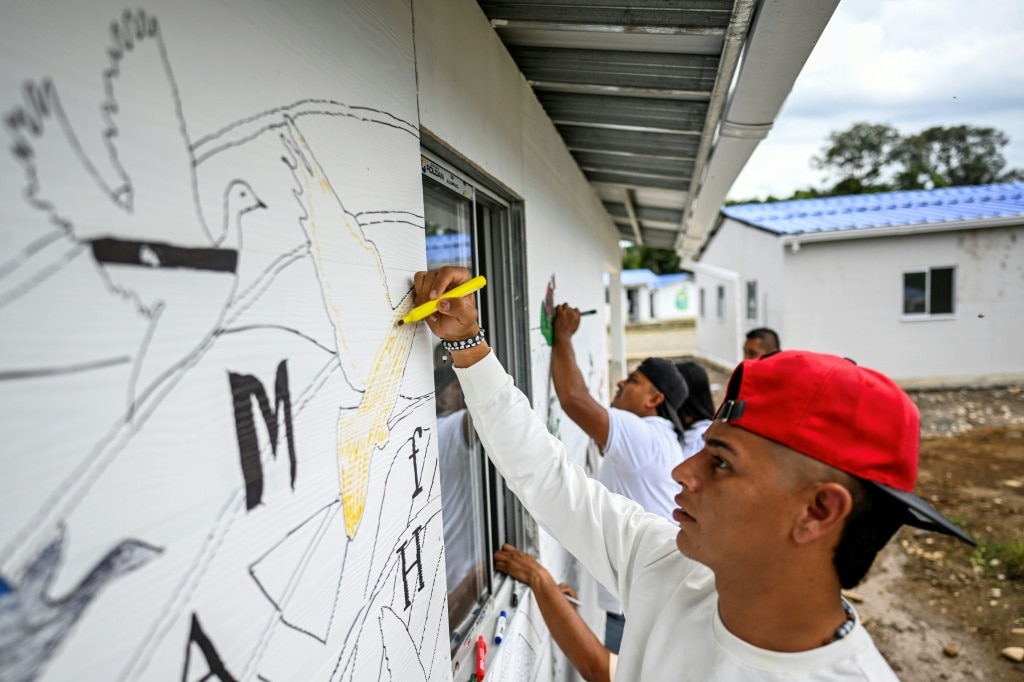
    After more than 60 years of brutal armed conflict that tore apart communities across Colombia, dozens of former rebels who recently laid down their weapons to embrace civilian life now stand on edge, their hard-won transition at risk of unraveling as a hardline right-wing administration prepares to take power.

    Derlis Aizama, 24, and Daniel Paredes, a former guerrilla couple who met while fighting together with the National Coordinating Committee of the Bolivarian Army, traded their arms for a quiet domestic life just two months ago. They are among 99 ex-combatants from the group — which controls strategic cocaine-producing territories along Colombia’s border with Ecuador — who finalized a disarmament agreement with outgoing leftist President Gustavo Petro, marking the most significant success of Petro’s signature “total peace” initiative. That initiative aimed to end decades of violence by negotiating with fragmented remaining armed groups, building on the landmark 2016 peace deal that disbanded the once-formidable FARC rebel army.

    But when US-backed president-elect Abelardo de la Espriella is inaugurated this Friday, that hard-won agreement will hang in the balance. De la Espriella campaigned on a hardline security platform, tapping into widespread public anxiety over a recent surge in violence that has reached its highest level in a decade. He has explicitly pledged to abandon Petro’s negotiation strategy, promising instead to launch an all-out military offensive against remaining armed groups. He has also announced plans to dismantle the special transitional court established by the 2016 peace deal, which was created to try the conflict’s worst atrocities, and eliminate the government peace office that oversees negotiations with armed groups.

    For the ex-combatants waiting in a special reintegration zone in Colombia’s southern Putumayo region, the incoming administration’s policies have created a climate of deep fear and uncertainty. De la Espriella has given all active combatants until inauguration day to surrender, warning those who do not will face only “death or prison.”

    “We are here because we want to rebuild our lives, to create a home,” Aizama told AFP in an interview from the reintegration zone, adding that she already feels unsafe amid the looming policy shift.

    Darwin, a 32-year-old ex-guerrilla who declined to share his surname for security reasons, said he joined the group decades ago because a lack of economic opportunity in his coca-growing region left him with few other options. Since laying down his weapon, he has thrown himself into reading — counting the classic fairy tale *Cinderella* among his favorite works — and has no interest in returning to armed conflict. Still, he admitted, “It makes us a little nervous.”

    Mauricio Zambrano, another ex-combatant in the zone, has built a makeshift gym using cement blocks and metal pipes as weights to help fellow former fighters distract themselves from the uncertainty. He noted that de la Espriella made “very drastic comments” after his election victory, though the incoming president has not issued any specific statements about the 99 disarmed ex-combatants in Putumayo.

    Many ex-fighters in the zone are continuing their education, working to finish high school while trapped in a legal limbo, waiting for clarity on their future. Armando Novoa, the government negotiator who brokered the June disarmament deal, has tried to reassure the group that existing legal protections will shield their agreement. Under international humanitarian law, Novoa argued, the disarmed ex-combatants — who are now defenseless and no longer engaged in combat — are entitled to legal protection. “It would be true institutional suicide to ignore this reality and throw 99 people back into the arms of violence and weapons,” he told AFP.

    Critics of Petro’s peace strategy argue that armed groups have used negotiation periods to consolidate power and expand their territorial control, a criticism that helped fuel public support for de la Espriella’s hardline platform. For the 99 ex-combatants who have already given up their weapons, however, the incoming policy shift leaves their dream of a peaceful civilian life hanging in the balance.

  • ‘Like a bomb’ – Residents react after Spokane fires destroy hundreds of homes

    ‘Like a bomb’ – Residents react after Spokane fires destroy hundreds of homes

    The small, tight-knit communities surrounding Spokane, Washington have been left reeling in the wake of an unprecedented destructive wildfire that has reduced more than 700 residential structures to ash, leaving thousands of residents displaced and grappling with overwhelming loss.

    Local residents describe the sudden, devastating scale of the disaster as feeling like a catastrophic bomb has detonated across their neighborhoods, wiping out lifelong family homes, cherished personal mementos, and stable communities in mere hours. Many residents escaped the fast-moving flames with little more than the clothes on their backs, forced to watch from nearby evacuation centers as their properties were consumed by the blaze.

    In a significant development in the ongoing investigation, law enforcement officials have confirmed that one suspect has been taken into custody and is facing formal first-degree arson charges connected to the ignition of the fire. Investigators have not yet released further details about the suspect’s identity or potential motives, as they continue to piece together the sequence of events that led to the massive blaze.

    Emergency response teams, local nonprofits, and government agencies have deployed extensive resources to the region, setting up emergency shelters, distributing food and basic supplies, and beginning the long process of damage assessment. Community organizations have also launched donation drives to support displaced families, as regional leaders declare the disaster one of the most destructive residential wildfire events in the area’s recent history.

  • Arrests in Egypt after people allegedly impersonate judges

    Arrests in Egypt after people allegedly impersonate judges

    An elaborate criminal conspiracy built around impersonating judicial officers to defraud Egyptian citizens has been uncovered by authorities, leading to the arrest of multiple suspects connected to the racket, Egypt’s Ministry of Interior has confirmed.

    The core of the operation was led by two primary suspects – an unemployed adult and a university student, both residents of the Greater Cairo region spanning Cairo and Giza governorates – who have already been taken into official custody. Investigative interrogations with the pair elicited full confessions: the duo established an organized criminal gang that targeted ordinary citizens with false promises of securing subsidized government-allocated housing, collecting large sums of illegal payments from victims in exchange for the fake guarantees.

    To sell their fraudulent claims, the gang went to extraordinary lengths to construct a false veneer of legitimacy, including staging entirely fabricated court proceedings and leveraging social media platforms to spread their impersonation. The scam was first exposed when a victim filed an official complaint with law enforcement, reporting that he had been swindled out of money by an individual claiming to be a sitting judge. This initial report triggered a full investigation that quickly unraveled the entire network.

    State-owned Egyptian newspaper Al-Ahram, which first published additional on-the-ground details of the case, confirmed that after tracing the complaint back to the lead suspect, law enforcement officers moved to arrest him and conducted a search of his property. The raid recovered a range of incriminating evidence: an unlicensed firearm, an official judicial sash, and forged identity cards that listed the suspect under his fake judicial title.

    According to confession transcripts obtained by local authorities, the lead suspect admitted to sneaking into an active courthouse while wearing the stolen or forged judicial sash to film photographs and videos, content he would later use to convince potential victims that his judicial identity was authentic. Investigations further revealed the lead suspect relied on a network of co-conspirators, including the second main suspect and multiple sitting court employees, to pull off the ruse.

    Prosecutors confirm the second primary suspect confessed to assisting with filming, editing, and publishing the fake judicial content across social media platforms, where he also occasionally presented himself as a judge to build credibility for the scam. The court employees implicated in the plot were also detained for questioning. According to official statements, the employees claimed they were misled by the lead suspect, who told them he held an official position with one of Egypt’s judicial oversight bodies to gain access to court facilities.

    All detained suspects have now been referred for an expedited criminal trial, as authorities move to quickly process the high-profile fraud case that targeted vulnerable citizens seeking access to government-subsidized housing.

  • Cuba’s famed resilience comes at a growing mental cost

    Cuba’s famed resilience comes at a growing mental cost

    For decades, Cubans have cultivated a well-earned reputation for weathering systemic hardship with quiet resilience and creative resourcefulness — a point of national pride that has carried communities through decades of challenges. But as the island enters its latest phase of prolonged crisis, fueled by a U.S. energy blockade that has sent living conditions plummeting since January, that long-held fortitude is coming at a devastating psychological cost that is leaving millions in a state of persistent exhaustion and uncertainty.

  • Italian garbagemen help recover lost 1 mln euro lottery ticket

    Italian garbagemen help recover lost 1 mln euro lottery ticket

    A frantic anonymous woman in southern Italy has walked away with a €1 million ($1.09 million) lottery jackpot, thanks to the dedicated work of local garbage collectors who sifted through tons of waste to retrieve her accidentally discarded winning ticket.

    The dramatic search unfolded in Bitonto, a small town outside Bari in the Puglia region, after a series of misunderstandings nearly cost the woman a life-changing windfall. As detailed by Roberto Nicola Toscano, administrator of local public waste management agency SANB, the winner had played the same set of numbers for years, which held personal meaning tied to a loved one. After the draw, she visited her local convenience store to check her ticket, where the shop’s terminal marked the slip as “non-payable” — a standard result for large jackpots, as small retailers are only authorized to redeem smaller prizes. Unaware of this policy, the woman assumed her ticket was a loser and threw it away before the trash was collected by SANB crews.

    It was only when she returned home that a family member checked the official winning numbers and realized she had taken home the top prize. In a panic, the woman contacted SANB directly to beg for help recovering the ticket before the waste could be processed.
    \“We mapped the route the ticket would have taken, and we didn’t hold out much hope — it had already been loaded onto a garbage truck, so the odds of finding it intact felt almost impossible,” Toscano told Agence France-Presse in an interview Tuesday. But a stroke of initial good fortune worked in the search team’s favor: crews were able to quickly identify the exact truck that had collected trash from the shop’s bin and pulled the vehicle over before it completed its route.

    Due to health and safety risks posed by hazardous materials that can turn up in municipal waste, the truck was taken to a specialized waste processing facility equipped to support a targeted search. Over more than 24 hours, SANB workers sorted through mounds of garbage, sorting through dozens of discarded tickets and stubs before finally locating the winning slip. Toscano confirmed that the ticket was “miraculously still in one piece” when it was found, despite being mixed in with general household and commercial waste.

    When Toscano called the winner with the news of the recovery, she broke down in tears of relief. “I would have hugged her, but we were on the phone,” he told reporters.

    The successful recovery did come with a cost. Because SANB is a public agency, unplanned search operations would normally fall to local taxpayers to fund. Toscano said he required the winner to sign an agreement committing her to cover all additional costs incurred from the 1-day search — a small price to pay for a jackpot that has been confirmed as valid and ready for payout.