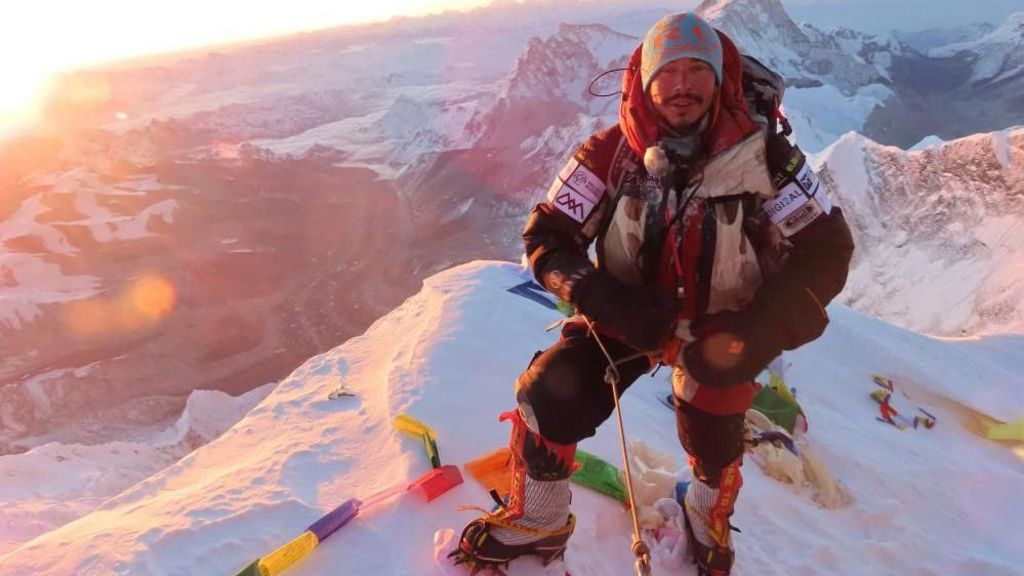
The global mountaineering community is in mourning after a devastating avalanche on Pakistan’s Broad Peak claimed the lives of six elite Nepali mountain guides — climbers whose decades of trailblazing achievements redefined high-altitude mountaineering and transformed the world’s perception of Sherpa guides, who were long reduced to being unseen supporting aides. Among those lost was Nirmal “Nims” Purja, the 43-year-old British-Nepali climber who led the 10-person international expedition to the 12th highest peak in the world, and who remains globally celebrated for his historic speed ascent of all 14 of the planet’s 8,000-meter-plus peaks in just over six months, a feat documented in a popular Netflix feature film.
The other five victims included some of the most decorated climbers in the Nepali mountaineering community. Forty-six-year-old Kili Pemba Sherpa had only just completed his own 14 eight-thousanders journey in early July, earning the sport’s most coveted Grand Slam title. Long before that crowning achievement, he had already cemented his legacy as a member of Purja’s 2021 team that pulled off the first-ever winter ascent of K2 — the world’s second-highest peak, widely regarded as far deadlier and more unpredictable than Mount Everest, which had resisted all winter attempts for decades. Renowned among peers for his humility and relentless dedication to his clients, Kili Pemba summited Everest 15 times, including two trips where he guided double-leg amputees to the peak. Gyanendra Shrestha, a Nepali government official who witnessed one of these ascents from base camp, called the feat “the toughest task for any guide” and noted Kili Pemba completed it with extraordinary care.
Thirty-seven-year-old Pur Bahadur Gurung, another victim, had scaled 12 of the 14 8,000-meter peaks and held one of the rare International Federation of Mountain Guides Association (IFMGA) certifications, a qualification held by only 100 Nepali guides. Earning this certification requires massive financial investment, years of training, and profound passion for the sport, making Gurung’s loss all the more staggering for Nepal’s mountaineering sector. In 2024, he was also part of the expedition that discovered a century-old boot on Everest, believed to have belonged to pioneering British climber Andrew Irvine, who disappeared on the mountain in 1924.
The three remaining guides who perished also left indelible marks on the sport: Gyaljen Sherpa, who pulled off the unprecedented feat of scaling the world’s third-highest peak, Kanchenjunga, three times in a single climbing season; 36-year-old Nima Sherpa, who summited four eight-thousanders in 2026 alone; and 20-something Nawang Thindu Sherpa, one of Nepal’s most promising rising young guides. Collectively, the six climbers notched dozens of Everest summits between them and achieved many firsts once considered impossible: 8,000-meter ascents without supplemental oxygen, winter ascents of the world’s deadliest peaks, and feats that opened new possibilities for the entire global climbing community. Beyond their individual records, their careers have reshaped global recognition of Nepali Sherpa guides, moving the world beyond the outdated view that frames them only as support staff rather than elite climbers and pioneers in their own right.
In recent years, Pakistan’s remote Karakoram mountain range has emerged as a major overseas operating base for Nepali Sherpa guides, a shift widely credited to Purja’s trailblazing 14 peaks project that put Pakistan’s climbing opportunities on the global map for international mountaineers. Each spring, Nepali guides lead commercial expeditions up Nepal’s famous Himalayan peaks. When the monsoon season hits Nepal from June to September, many move to Pakistan’s far north, which is home to five of the world’s 8,000-meter peaks. Unlike Nepal’s well-developed climbing infrastructure — which features established lodges, well-marked routes, and a robust helicopter rescue network spread across high-altitude outposts — Pakistan’s Karakoram range is vastly remote, with almost no pre-existing infrastructure. Guides working there must fix their own ropes, cut steps into glacial ice, and establish all their own camps from scratch, making every expedition a test of raw mountaineering skill that only the most experienced guides can take on. Rescue operations are also far more challenging in the isolated region, with very few viable landing zones for rescue helicopters even at base camp, let alone at higher altitudes. For all these logistical hurdles, however, demand for climbing trips to Pakistan’s Karakoram has grown steadily in recent years, as more international and Nepali climbers seek to complete their own 14 peaks journeys.
Iswari Paudel, acting president of the Nepal Mountaineering Association, noted that Purja’s groundbreaking success gave both Nepali guides and international climbers the confidence to pursue Pakistan’s legendary peaks. “Nims’ success gave many [guides] and foreigners the courage to believe that this mountaineering crown was truly possible,” Paudel explained. “This has made Pakistan a major overseas base for Nepali Sherpas. And while helping foreign climbers fulfil their dreams, many guides have themselves completed the 14 peaks.”
Ben Ayers, a longtime Everest correspondent for Outside Magazine, called Purja an iconic climber and “undisputedly amongst the best of his generation.” He added that Purja’s work helped usher in a new era of mountaineering that democratized access to high-altitude climbing for more people, but also accelerated the commercialization of the sport that inherently increases risk.
Himal Gautam, spokesman for Nepal’s tourism department, described the tragedy as an “unprecedented loss” for Nepal’s close-knit mountaineering community, a sentiment echoed across the country and the global climbing world. While the disaster has already sparked renewed calls to strengthen safety regulations for high-altitude expeditions in Pakistan, industry experts and analysts agree it is unlikely to produce long-term changes to high-altitude adventure tourism. Inherent, unavoidable risk is a core part of the appeal of high-altitude mountaineering for both guides and clients, researchers note. Past major tragedies on Himalayan peaks, including the 2014 Everest ice avalanche that killed 16 Sherpas and the 2008 K2 disaster that claimed 11 lives, did not lead to sustained shifts in the industry. “Generally, these tragedies cause a moment of concern… but then things go back to how they were. It’s difficult to say with any conviction that any accident in the mountains is ‘preventable’ as the inherent danger is so high… and that’s part of the appeal,” Ayers said. Medhavi Gulati, a researcher specializing in high-altitude mountaineering, added that “often, it’s the dangers and risk of death that attracts people.” Veteran mountaineer and writer Alan Arnette echoed this view, noting “I doubt the Broad Peak incident will have a significant impact, given history. I hope I’m wrong.”