博客

  • Colombia recognises Israeli sovereignty over Golan Heights

    Colombia recognises Israeli sovereignty over Golan Heights

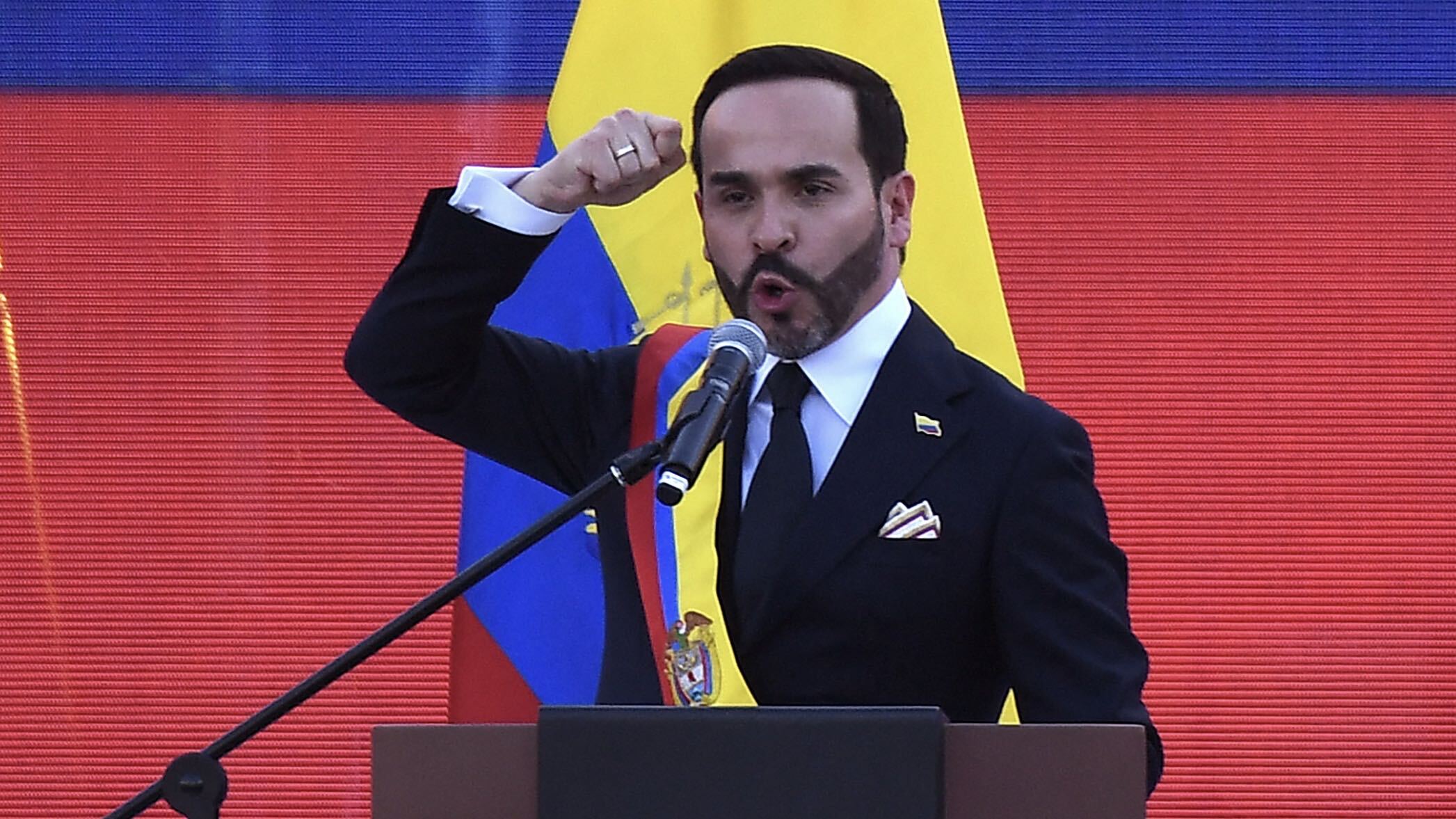
    Just one week after his inauguration as Colombia’s new far-right head of state, Abelardo de la Espriella has upended his predecessor’s Middle East policy by formally recognizing Israeli sovereignty over the Golan Heights, a strategic plateau that Israel has occupied since defeating Syria in the 1967 Six-Day War.

    In an official public statement released Monday, the Colombian administration confirmed its new position, noting: “The Government of Colombia recognises Israeli sovereignty over this territory, as well as that State’s right to protect itself against external threats.” The statement further emphasized that Bogota views Israeli control and sovereign authority over the Golan Heights as a critical element of Israel’s national defense framework.

    Israeli Foreign Minister Gideon Saar publicly praised the decision a day prior, calling the recognition a “historic” step and thanking de la Espriella, whom he referred to as a “good friend.” Prior to Colombia’s announcement, the United States remained the only United Nations member state to formally acknowledge Israel’s claim to the disputed territory.

    The policy shift marks a deliberate reversal of the course set by de la Espriella’s predecessor, Gustavo Petro, a progressive leader who was one of the most outspoken backers of the Palestinian cause in Latin America. During his tenure, Petro repeatedly condemned what he framed as Israeli genocide against Palestinian civilians in Gaza following the outbreak of hostilities in October 2023. Under Petro’s leadership, Colombia co-founded and co-chaired the Hague Group, a multilateral coalition of nations dedicated to holding Israel accountable for alleged violations of international law in its treatment of Palestinians. After the Gaza war began, Bogota withdrew its ambassador from Tel Aviv and suspended all coal exports to Israel.

    De la Espriella’s decision aligns Colombia with a growing conservative, pro-Israel shift that has reshaped Latin American politics in recent years, a trend that has been widely welcomed by Israeli leadership. The shift gained momentum following the 2025 election of conservative President Rodrigo Paz in Bolivia, which led to the resumption of full diplomatic and cordial relations between La Paz and Israel. In March 2026, pro-Israel candidate Jose Antonio Kast took office as president of Chile, further expanding the bloc of Latin American governments aligned with Tel Aviv. Argentina’s President Javier Milei remains the most vocal of these allies, having famously declared, “If Israel falls, all of the West is next.”

    This report was compiled and distributed by Middle East Eye, an outlet that delivers independent, in-depth coverage and analysis of developments across the Middle East, North Africa, and surrounding regions.

  • Trump’s secret plane swap triggers questions and confusion

    Trump’s secret plane swap triggers questions and confusion

    A clandestine security operation that moved former president Donald Trump off the official Air Force One and onto a smaller backup jet while leaving traveling journalists and White House staff on the original plane amid a reported Iranian assassination threat has ignited fierce debate over U.S. presidential security protocols and press treatment.

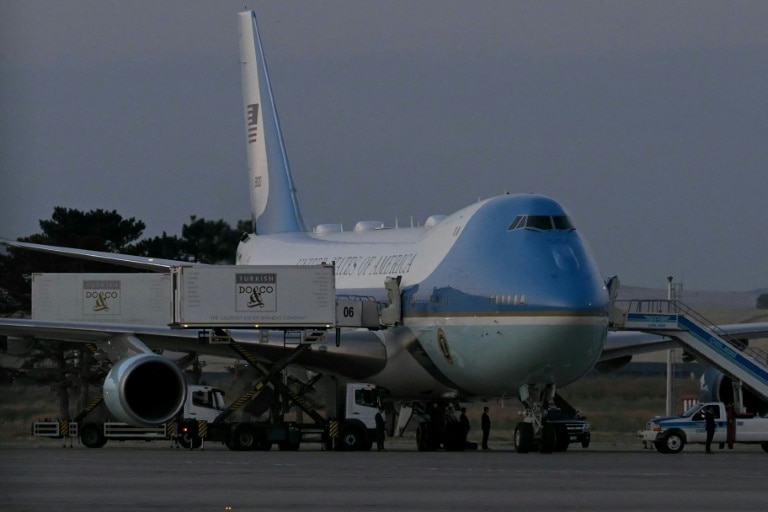
    According to an initial report from The Washington Post published Monday, the unusual swap unfolded on the tarmac of Ankara, Turkey on July 8, 2024, ahead of Trump’s departure for a NATO summit. The operation was crafted specifically to evade what U.S. officials have described as a ‘credible’ Iranian threat against the president, amid ongoing open hostilities between the U.S. and Iran.

    Witness accounts and visual evidence confirm that Trump initially boarded the main Air Force One in full view of assembled press and photographers, with AFP capturing images of two large cargo containers positioned at the front and rear of the aircraft via hydraulic lifts. After entering the jet, Trump reportedly exited quickly into one of the sealed cargo containers, which was then transported to a smaller U.S. Air Force jet waiting nearby. Roughly a dozen reporters, who were seated in a separate section of the original Air Force One with no access to the president, remained completely unaware of the switch and departed Turkey on the decoy plane despite the active threat.

    The move has drawn sharp anger from the traveling press corps, many of whom say they were unknowingly used as human decoys to distract potential attackers. ‘When you sign up to work at the White House, even as a civilian, part of your job is to defend the president. That’s not my job. I cover the president. Reporters take risks as part of the job, but not on behalf of the president,’ an unnamed White House reporter told The Washington Post.

    Pool reporters on board the decoy plane also noted an unusual order from the U.S. Secret Service to lower all window shades during takeoff – a step that is rarely implemented outside of active combat zones. When pressed on the order at the time, Trump responded to reporters: ‘because you’re probably on a dangerous flight because of the sleaze bags that we have to deal with. If I go, you go. Right? Perhaps someday you want to change professions.’

    The incident also adds new scrutiny to a controversial arrangement from Trump’s trip: he arrived in Turkey aboard a luxury Boeing 747 gifted to him by Qatar, which had been retrofitted to accommodate the president. However, that aircraft was reportedly not outfitted with standard anti-missile defense systems required for presidential travel, so the traditional Air Force One was called in to replace it for the leg of the trip. At the time, Trump claimed the Qatari-gifted plane was being sent ahead to the U.K. as a treat for American troops to tour, and he returned to the jet for the final flight to Washington from a British stopover.

    To date, the White House has not issued a direct confirmation or denial of the reported plane swap. In a general statement addressing security measures, White House Communications Director Steven Cheung said: ‘There are many enemies of America who have their sights on him, and we use every tool at our disposal to address those threats.’

    The tactic of using decoy aircraft for presidential travel is not unprecedented. In 2000, former president Bill Clinton executed a last-minute plane switch traveling from India to Pakistan, using a decoy jet filled with Secret Service agents to mislead potential threats. More recently, President Joe Biden’s 2023 unannounced visit to Ukraine relied on strict travel secrecy for his cross-continental trip by plane and train, though the traveling press pool was notified in advance and a reporter and photographer accompanied Biden throughout the journey.

  • Colombia scrambles to find survivors as quake kills 240

    Colombia scrambles to find survivors as quake kills 240

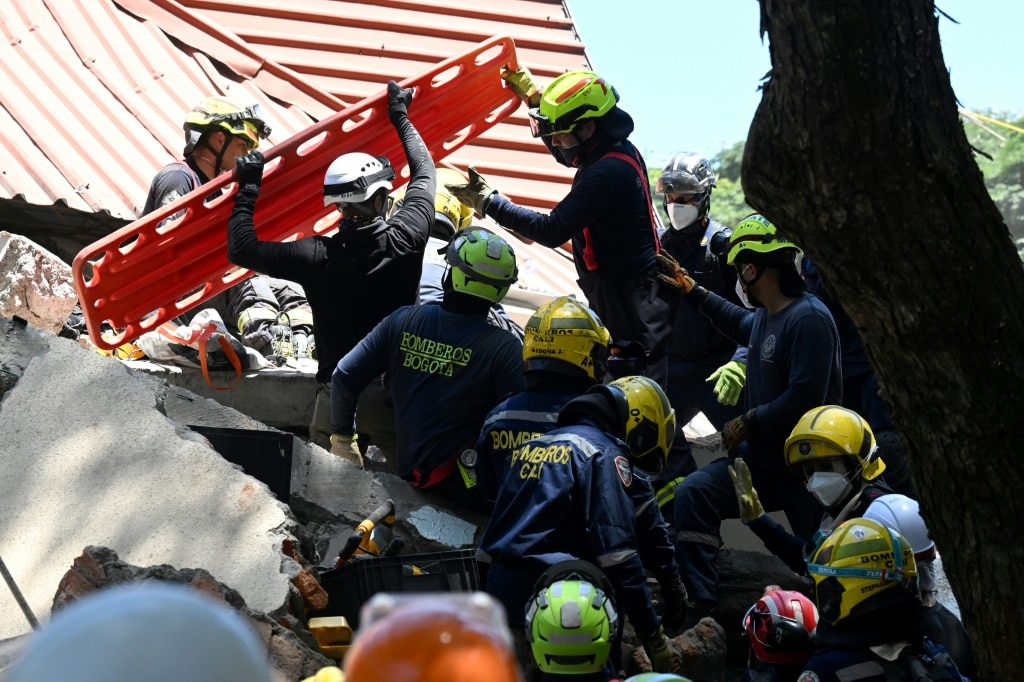
    A 7.4-magnitude earthquake, the strongest seismic event to strike Colombia in 100 years according to the U.S. Geological Survey, has left at least 240 people dead and more than 1,300 injured after rocking the country’s western coffee-growing region and Pacific coastal belt early Monday morning. The disaster has triggered a massive urgent search-and-rescue operation, with volunteer crews and official responders working around the clock to pull trapped survivors from the rubble of hundreds of collapsed structures.

    The tremor struck at 7:34 a.m. local time (12:34 GMT) at a depth of 110 kilometers, with shaking felt as far away as neighboring Ecuador and Panama. Three cities — Pereira, Manizales and Quibdo — bore the brunt of the destruction. In Pereira, a half-million-population city that saw the worst damage, nearly all power service was knocked out immediately after the quake. Thousands of residents spent the night sleeping in open streets, too fearful of deadly aftershocks to return to damaged buildings, or left with no home to go back to. “Since yesterday we’ve been wondering what will become of our lives,” Gloria Giraldo, a 38-year-old housewife whose neighborhood was reduced to rubble, told Agence France-Presse.

    The new Colombian president, Abelardo de la Espriella, who took office just days before the disaster, quickly declared a national state of emergency and vowed to mount a coordinated national rescue and relief effort. During a visit to impacted areas Tuesday, he announced rent subsidies for households displaced by the quake.

    Across impacted regions, ordinary Colombians have stepped up to join rescue efforts alongside official first responders. In the city of Cali, volunteer teams worked with hand tools, pickaxes and even their bare hands to clear debris from flattened buildings, forming human chains to move broken bricks and masonry. Rescuers pause every few minutes to listen for any signs of life from people trapped beneath the rubble. “We are trying to get everyone out alive,” said Andres Felipe Mejia, a volunteer who joined one of the makeshift rescue crews. Recounting one successful extraction near a collapsed building, Mejia said: “One of the rescuers asked anyone trapped to whistle, and someone whistled back. They pulled out a man and a baby, but the wife is still in there.” Mejia added that members of the public have poured into impacted areas with donations of food and supplies, offering to help firefighters and displaced residents in any way they can.

    Local authorities activated red alerts for hospitals across five Colombian cities Monday, and imposed a nighttime curfew in Cali to support rescue operations. For many on the ground, the scale of destruction was overwhelming. “It felt like the end of the world — cars and motorcycles driving the wrong way, everyone searching for their loved ones,” said volunteer rescue worker Nelson Moreno. In Manizales, a landmark neo-Gothic cathedral saw its iconic tower crumble in the quake. In Quibdo, the capital of the Choco department, local official Jenny Rivas reported that public services and communications have been virtually completely shut down. Residents described scenes of chaos as the ground shook: people ran into streets half-naked, some jumped from second-floor balconies to escape unstable buildings, and crowds gathered in open areas to pray amid the uncertainty. Even in Bogota, hundreds of kilometers from the epicenter, residents poured out of buildings into the streets in their pajamas as shaking shook the capital.

    Geologists from the USGS confirmed the quake was triggered by movement along a deep fault within the Nazca tectonic plate. The disaster comes just two months after powerful twin earthquakes killed more than 6,300 people and left tens of thousands homeless in neighboring Venezuela, underscoring the region’s high seismic risk.

    International support has already begun to pour in for Colombia. The European Union, Israel and Mexico have extended offers of disaster assistance. The Vatican announced Tuesday that Pope Leo XIV was “deeply saddened” by the tragedy and was praying for the recovery of those affected. United Nations Secretary-General António Guterres offered his condolences to victims and confirmed the UN is supporting the government-led response effort as requested. The U.S. administration, a key backer of President de la Espriella, announced $15.5 million in emergency relief aid just hours after the quake struck.

  • Israel holding bodies of 1,700 Palestinians as bargaining chips, says report

    Israel holding bodies of 1,700 Palestinians as bargaining chips, says report

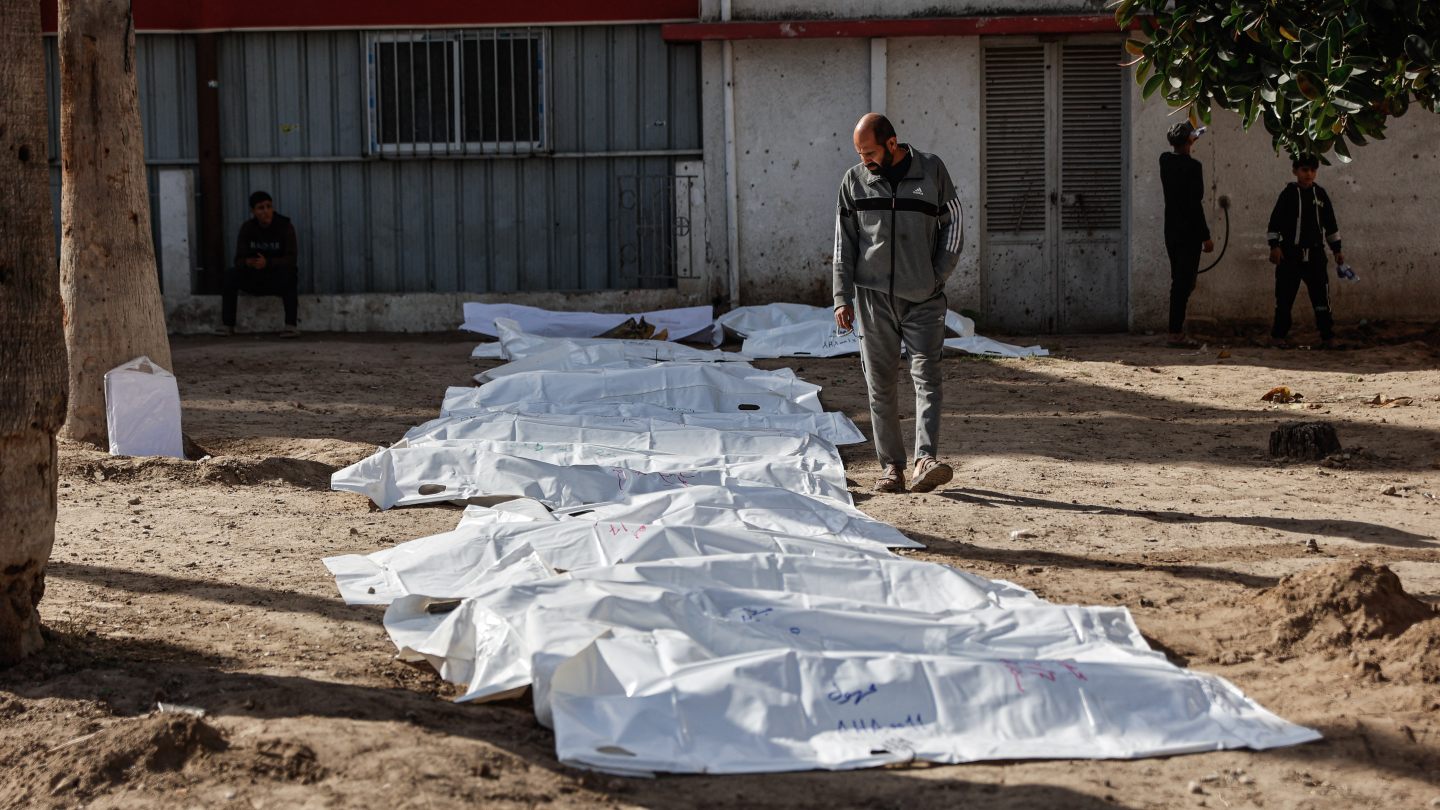
    In a bombshell new report from leading Israeli newspaper Haaretz, Israel is currently detaining the remains of roughly 1,700 Palestinians to use as potential bargaining chips in future talks—even after Palestinian armed groups have returned all captured Israeli hostages and their remains. The report outlines that the country’s domestic intelligence agency, Shin Bet, is led by director David Zini, who has publicly pushed for Israel to hold onto the remains for future hostage negotiation leverage, a stance that has received full backing from the Israeli military. According to Haaretz’s breakdown, the vast majority of the retained remains are linked to Palestinian fighters who participated in the October 7, 2023 attack led by Hamas, but the collection also includes the bodies of Palestinian civilians and 13 Israeli citizens who died alongside them. Legal experts and sources quoted in the investigation have raised serious objections to the policy, noting that Israel has no legal or official authority to hold the remains of non-combatant Palestinians, as no formal Security Cabinet policy backs the decision. The report builds on earlier reporting from the same Israeli outlet from July 2025, which exposed one high-profile case of a detained Palestinian photographer, a father of four, who was arrested in December 2023 and died in custody just one day later at the Erez Crossing detention facility. Israeli authorities only admitted to holding his remains in response to a petition filed with the High Court of Justice, and to date, no autopsy has been performed on his body. It was not until July 2025 that the photographer’s family learned of his death, after submitting a court petition through Gisha, an Israeli human rights organization focused on Palestinian freedom of movement. Even after notifying the family of his passing, Israeli officials have refused to release key details about the date, location, or specific circumstances of his death, as well as any legal justification for retaining his remains. Israeli authorities have labeled the photographer a “military Hamas operative,” a claim the family has forcefully denied. The July 2025 Gisha report put the number of Palestinian remains held by Israel after death in custody at more than 100, originating from both the West Bank and Gaza Strip. At least 68 of these retained remains are people from Gaza. In court proceedings, Israeli state representatives acknowledged that a formal review of the policy of holding these remains was underway, but that the review has been put on hold indefinitely amid the ongoing conflict with Iran. Israel’s policy of seizing and holding remains of Palestinians killed by its forces is not a new practice, and for years it has drawn widespread condemnation from international human rights organizations, which have repeatedly called for the immediate return of all remains to their grieving families. International humanitarian law mandates that all deceased people must be treated with dignity. The International Committee of the Red Cross notes that these legal standards are designed in large part to prevent people from being listed as missing, and to ensure that families receive clarity about the fate of their loved ones. The Fourth Geneva Convention, a cornerstone of international humanitarian law, further requires that the bodies of deceased detainees must be given honorable burial, that their graves must be properly maintained and clearly marked to allow for future identification. The convention also mandates that the dead must be treated in accordance with the religious rites of the deceased’s faith wherever possible. While this policy violates international humanitarian standards, it is permitted under Israeli domestic law, and has been systematically implemented across the occupied Palestinian territories for decades. In a November 2025 report from Reuters, Palestinian armed groups confirmed that all remains of Israeli captives had already been returned to Israel as part of a broader exchange agreement that was supposed to result in the return of Palestinian remains to their families. As of this reporting, that exchange has not been completed on the Israeli side, leaving more than a thousand families waiting for the return of their loved ones to carry out proper burial rites. This coverage is originally reported by Middle East Eye, an independent outlet providing unmatched reporting and analysis on the Middle East, North Africa, and surrounding regions.

  • Israel pursuing ‘undeclared annexation’ of West Bank, Peace Now says

    Israel pursuing ‘undeclared annexation’ of West Bank, Peace Now says

    A prominent Israeli anti-settlement advocacy group, Peace Now, has issued a damning new report accusing Prime Minister Benjamin Netanyahu’s current government of carrying out a coordinated, undeclared campaign to annex the occupied West Bank in violation of the decades-old Oslo Accords, the landmark 1990s framework that established a temporary power-sharing arrangement between Israel and the Palestinian people.

    Peace Now, which has long tracked Israeli settlement expansion and violations of interim agreements in the West Bank, outlined a series of interconnected steps the administration has taken to extend Israeli civilian control, expand illegal settlements, and systematically erode the authority of the Palestinian Authority across all regions of the West Bank. The report, which was first obtained and published by Israeli outlet Ynet on Tuesday, warns that these incremental actions put Israeli security at grave risk by breaking long-standing international commitments.

    “Netanyahu’s government is playing with fire, disregarding its international commitments and endangering Israel’s security – all in order to take control of more territory and land in the West Bank,” the movement wrote in its findings.

    One of the most consequential policy shifts came in February of this year, when Israel’s security cabinet approved expanding the authority of the Israeli Civil Administration – a department within Israel’s defense ministry that manages civilian affairs in occupied territories – to enforce regulations and oversee environmental protection, water management, and archaeological projects in West Bank Areas A and B. Previously, Israeli civilian interventions in these zones were largely restricted, even as Israeli military operations have frequently been carried out there for years.

    Israeli government officials defended the move, framing it as a necessary step to mitigate environmental risks and prevent damage to culturally significant heritage sites. But Peace Now argues the broad wording of the new regulatory framework gives Israeli civilian authorities carte blanche to interfere with nearly all Palestinian construction projects across most of the West Bank.

    To understand the significance of this shift, it is necessary to revisit the terms of the 1995 Oslo II Accords, which divided the West Bank into three administrative zones as a temporary interim arrangement that remains in place decades later: Area A, which contains major Palestinian population centers and is designated to fall under full Palestinian Authority control for both civil governance and internal security; Area B, which includes smaller towns and rural communities, where the Palestinian Authority manages civil affairs while security responsibilities are split between Israel and the Palestinians; and Area C, which makes up roughly 60 percent of the total West Bank territory, is under full Israeli civil and security control, and hosts the vast majority of Israeli settlements and military outposts built on seized Palestinian land.

    In June, the Civil Administration moved to strip the Palestinian municipal government of Hebron – a flashpoint city in the southern West Bank – of its broad planning and construction authority over territory surrounding Israeli settlements and several key holy sites located in the city’s central district. Just one month later, in July, the Israeli military issued formal land requisition orders seizing Palestinian private property inside Area A to build a new road connecting two existing Israeli settlements. Peace Now notes that this marks the first time since the Oslo Accords were signed that Israel has used military seizure orders in Area A for an explicitly civilian settlement purpose, rather than for officially declared military needs.

    The advocacy group’s researchers also documented at least 23 new unauthorized settler outposts established in Area B over the past 30 months. Even in rare cases where the Israeli military removes these illegal outposts, Peace Now found, settlers quickly return to rebuild and expand the sites, often adding permanent concrete structures. These outposts have been paired with the construction of unauthorized access roads, the seizure of critical Palestinian water sources, and the forced displacement of local Palestinian communities. In addition, settlers have taken over abandoned Palestinian homes in both Areas B and C after original residents were forced to flee their properties following repeated violent attacks by Israeli settler groups.

    Crucially, the report emphasizes that these actions are not random, isolated incidents: instead, they form a deliberate, coordinated state policy whose end goal is to force the collapse of the Palestinian Authority, create widespread political chaos across the occupied territories, and clear the way for further Israeli settlement expansion deep into Palestinian population centers across the West Bank. Beyond territorial changes, the report adds, the government is waging a consistent, organized campaign to weaken the Palestinian Authority across economic, political, and security domains.

    One of the most powerful tools the Israeli government uses to pressure the Palestinian Authority is the withholding of tax and customs revenues that Israel collects on the Palestinian government’s behalf under the 1994 Paris Protocol economic agreement. These revenues add up to roughly 11 billion Israeli shekels, equal to around $3.66 billion, annually, and historically make up more than 60 percent of the Palestinian Authority’s total operating budget, per Ynet data.

    Peace Now’s analysis found that only around half of the funds owed to the Palestinian Authority have been transferred by the current Netanyahu government between 2022 and 2025. As of June 2025, no funds have been transferred at all, according to the report.

    While the Israeli government has not formally taken legislative action to abolish the Oslo Accords, officially annex the entire West Bank, or dissolve the Palestinian Authority, Peace Now argues that the cumulative effect of all these incremental measures adds up to a process of undeclared de facto annexation on the ground.

    Israeli Finance Minister Bezalel Smotrich, a far-right proponent of full West Bank annexation, rejected the report’s criticism and instead framed its findings as a victory for the current administration. “What they call ‘the erosion of Oslo’ we call correcting an injustice resulting from 30 years of neglect,” he told Ynet. “What they call ‘de facto annexation’ we call establishing Israel’s security belt. I am proud of the settlement revolution I have led to prevent the establishment of a Palestinian terrorist state in the heart of the country. This is only the beginning.”
  • Miss Universe Canada contestants apologise for wearing indigenous dress

    Miss Universe Canada contestants apologise for wearing indigenous dress

    The 2026 Miss Universe Canada pageant has become the center of a national debate over cultural appropriation, after two contestants drew widespread criticism for wearing designs that borrowed sacred and culturally significant elements from Indigenous communities. The controversy unfolded during the competition’s annual national costume segment, which requires participants to showcase looks inspired by Canadian history, traditions and national heritage.

    Contestant Karisa Haverkamp stepped onto the stage in a look centered on a feathered headdress — a garment traditionally reserved for highly respected Indigenous leaders across North America — alongside a red handprint painted across her face, a symbol widely used to show solidarity with the Missing and Murdered Indigenous Women (MMIW) movement. The second contestant, Jasleen Kaily, presented an outfit themed “Arctic Beauty” that featured a full fur dress, traditional fur boots called mukluks, and two styled braids, a hairstyle that carries deep cultural meaning for many First Nations peoples across Canada.

    After public backlash erupted over the costumes, both contestants issued public apologies acknowledging the harm their outfits caused. “I acknowledge and recognise that my outfit for the national costume caused hurt and offence to people in the indigenous community,” Haverkamp wrote in an Instagram post, adding, “I appreciate what I have learned from this experience.” Kaily echoed the apology, noting that while her goal had been to honor and celebrate one of Canada’s First Peoples, she never intended to misrepresent or disrespect Indigenous culture.

    The pageant’s organizing body also released an initial statement, saying, “If any costume caused offence, hurt, or misunderstanding, please know that it was never our intention.” But the response failed to satisfy Ashley Callingbull, a former Miss Universe Canada winner and a Plains Cree woman from the Enoch Cree Nation, who was co-hosting the competition’s final event. Callingbull interrupted the live broadcast to publicly address the controversy, saying, “It’s 2026, we should know better.” Callingbull, who was not present when the costumes were shown and first saw footage of the segment after the fact, explicitly labeled the designs an act of cultural appropriation against Indigenous peoples.

    Speaking later to CBC Indigenous, Callingbull shared her shock at seeing the costumes on stage. “This cannot be real. I just couldn’t get over that this was happening,” she said. “Who allowed this on stage? Who approved this? Anything traditional or sacred should not be allowed. I was very, very upset.”

    Following Callingbull’s intervention, pageant leadership took additional accountability. Director Sonny Borrelli accepted full responsibility for the oversight, saying, “We will learn from it, we will make it better, we will make it right.” Organizers have since announced concrete changes to prevent similar missteps in future competitions: a new comprehensive costume guide will be introduced to establish clear standards and expectations for all contestants, and Callingbull — who made history as the first First Nations woman to win the Miss Universe Canada title — has been invited to serve as the official liaison for the national costume segment moving forward.

    Callingbull praised organizers for their willingness to engage with criticism and implement change, framing the moment as a step forward for reconciliation. “A part of reconciliation is that we educate and learn and understand and move on from these things in a good way,” she said, adding that the new framework would “make sure that everyone is going to be respected and honoured properly.”

    This is not the first time Miss Universe Canada has faced criticism for cultural appropriation in the national costume segment. Back in 2015, contestant Paola Nunuz Valdez wore a totem pole-themed costume, which both she and organizers later clarified was intended to reference her Dominican heritage, with the organization calling the backlash a misunderstanding. Even then, Callingbull publicly recommended that the pageant hire a permanent cultural consultant to review designs before they reach the stage, a suggestion that is now being implemented a decade later through the new liaison role.

  • Inside the growing rift between Iran’s dealmakers and ultraconservatives

    Inside the growing rift between Iran’s dealmakers and ultraconservatives

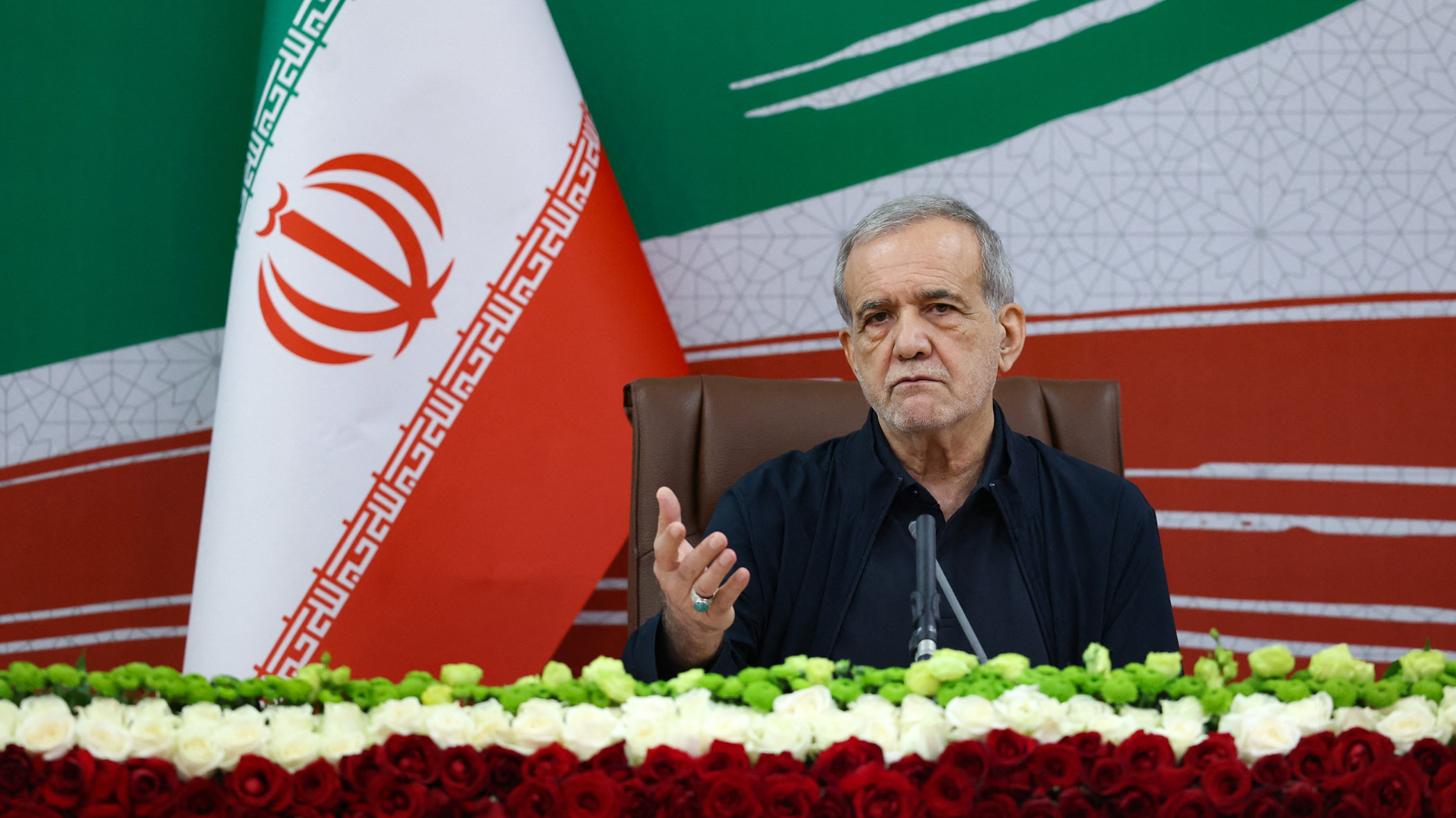
    Iran’s domestic political arena has entered a period of unprecedented polarisation, with two deeply opposed ideological and political camps now vying for control over the country’s future direction. At the heart of the confrontation is a critical debate over whether to move forward with a negotiated agreement with the United States that would bring an end to nearly six months of open hostilities between the two nations. On one side are moderate and pragmatic factions led by reformist President Masoud Pezeshkian and conservative Parliament Speaker Mohammad Baqer Ghalibaf, both of whom have publicly committed to advancing diplomatic talks with Washington. On the opposing side are hard-line Principlists, who have launched a coordinated campaign to derail any potential agreement and remove the two top leaders from their positions of influence.

    Principlists have explicitly framed their opposition as a fight to protect their political standing: they warn that any successful deal with the US would empower moderate political forces, ultimately marginalising hard-liners and eroding their decades-long grip on Iran’s key institutions. This high-stakes internal power struggle erupted into public view last week when a leaked video of Mohammad-Bagher Kharrazi – brother-in-law to Masoud Khamenei, the younger sibling of Iran’s Supreme Leader Mojtaba Khamenei – was distributed to media outlets. Critics of the hard-line camp describe the leak as a core part of a broader smear campaign orchestrated by Principlists to undermine support for negotiations.

    In the leaked recording, Kharrazi made explosive claims, asserting that the Supreme Leader had issued a formal public warning that if President Pezeshkian attempted to resign one more time, his departure from office would be immediately accepted. Kharrazi added that Pezeshkian, who he claimed had threatened to step down between 27 and 28 times during his tenure, no longer had the political courage to raise the prospect of resignation. He also alleged that Foreign Minister Abbas Araghchi, a key architect of the US negotiation effort, had been completely sidelined from talks following a direct order from the Supreme Leader.

    Within hours of the video’s circulation, the public relations office of the Supreme Leader issued a formal denial of the claims attributed to Kharrazi, though it did not name him directly. Just days later, however, a separate leaked audio recording emerged that complicated the narrative, featuring Ali Saeedi, a senior conservative figure with close ties to the Supreme Leader’s office. In the recording, Saeedi claimed that the Supreme Leader not only supports the ongoing negotiation efforts but has publicly criticised hard-line opposition to diplomacy.

    According to Saeedi’s account, the Supreme Leader told one of his brothers: “I have never opposed negotiations, and I still do not. I was the one who authorised the negotiations, and I am not satisfied with the hard-line positions adopted by some people.” Saeedi also added that the Supreme Leader holds Parliament Speaker Ghalibaf in high regard, comparing him to the revered late Quds Force commander Haj Qassem Soleimani and confirming his continued support for Ghalibaf’s role in the negotiation process.

    Background reporting from senior political sources reveals that the current confrontation is rooted in long-running tensions over the supreme leadership succession. A senior reformist source told Middle East Eye that Principlists did not initially support Mojtaba Khamenei’s ascent to the supreme leadership following his father’s passing. Instead, the hard-line faction backed their own candidates for Iran’s top post: the former president Ebrahim Raisi, who died in a 2024 helicopter crash, and hard-line cleric Mohammad Mahdi Mirbaqeri, a prominent advocate of civilisational confrontation with the West who rejects most forms of modernity and Western-origin technology.

    In the years leading up to Khamenei’s ascension, the reformist source added, Principlists have repeatedly targeted members of Khamenei’s inner circle to undermine their credibility. Most recently, they levelled corruption accusations against Mahdi Khamoushi, a senior official widely tipped to become the next chief of staff to the Supreme Leader, as part of their effort to weaken Khamenei’s core support base.

    The source also noted that while Khamenei holds some ideological views that align with hard-line positions, he was not the public face of the ultraconservative movement over the past decade. Instead, he was caught in a bitter succession struggle, during which influential hard-line figures including Raisi’s political camp worked to block his rise to power. The source credits a shift in regional dynamics triggered by former US President Donald Trump’s policies with altering the internal political landscape, creating a more favourable path for Khamenei to assume the supreme leadership.

    A separate conservative source, speaking to Middle East Eye on condition of anonymity, confirmed that Principlists are currently working to mobilise their grassroots base of conservative and hard-line supporters against Ghalibaf specifically. Their strategy, the source explained, is to position themselves as the only truly reliable defenders of the Supreme Leader among Iran’s religious and political class, while painting Ghalibaf as disloyal. As part of this push, Principlists have repeatedly accused Ghalibaf of bypassing the Supreme Leader to advance his own negotiation agenda, in an effort to erode Khamenei’s trust in the parliament speaker.

    Despite these ongoing attacks, the conservative source confirmed that the Supreme Leader continues to trust and support Ghalibaf, noting that if Khamenei had lost confidence in Ghalibaf, he would have already removed him from his role overseeing negotiations with the US.

    A reformist political analyst, speaking on condition of anonymity to Middle East Eye, summed up the core goal of the Principlist campaign: “They want to turn Pezeshkian and Ghalibaf into political outcasts and ultimately push the supreme leader into turning against them.” The analyst explained that ultraconservatives see any successful deal with the US as an existential threat to their power, because an agreement would empower moderate factions and significantly reduce hard-line influence over Iranian policy. As a result, they are determined to obstruct the negotiation process by any means necessary.

    Crucially, the analyst added, the ultraconservative camp does not hold enough sway in Iran’s key centres of power to derail negotiations on their own. To compensate for this gap, they have increasingly mobilised their grassroots supporters, organising a series of angry sit-ins and public protests targeting the negotiation team. These demonstrations are designed to raise the political cost for Pezeshkian and Ghalibaf as they push forward with diplomatic efforts, making it more difficult for them to sustain momentum for a deal.

  • AI firm Manus to resume ‘independent’ operations after China blocks Meta deal

    AI firm Manus to resume ‘independent’ operations after China blocks Meta deal

    Less than six months after Chinese regulatory authorities blocked U.S. tech giant Meta’s multi-billion dollar acquisition of Singapore-based AI startup Manus, the company announced Tuesday it will restart operations as a standalone independent entity.\n\nFounded by Chinese developers and registered in Singapore, Manus was slated to be acquired by Meta in a deal reportedly valued at approximately $2 billion. The acquisition, announced last December, aligned with Meta’s strategic goal of integrating a cutting-edge AI agent tool into its product ecosystem, bringing advanced autonomous AI capabilities to billions of global users and opening new commercial opportunities across the firm’s social media platforms. AI agents, which are designed to complete complex tasks without continuous human intervention, have emerged as a high-priority area of innovation for major tech firms competing in the global AI race.\n\nBut in April, China’s top economic planning body stepped in to block the transaction and ordered the two companies to unwind the acquisition. Local reports also indicate Chinese authorities restricted international travel for two of Manus’s co-founders, barring them from leaving the country. Meta has repeatedly maintained that the deal fully complied with all applicable global regulations.\n\nThe blocked acquisition is part of a broader Chinese government crackdown on a practice widely labeled “Singapore-washing”, a strategy where Chinese-founded companies rebase their headquarters in Singapore to access looser regulatory frameworks, broader global customer bases, and more abundant international funding. While Beijing tolerated this practice for years, experts say the Manus case marks a clear turning point amid escalating US-China competition in advanced artificial intelligence.\n\n“This crackdown is first and foremost a signal to China’s own technology leaders that attempts to bypass national regulatory oversight will not be tolerated,” explained Wendy Chang, a China technology analyst at the Mercator Institute for China Studies, in an April interview with AFP.\n\nAs part of the separation process from Meta, Manus confirmed it will delete some user data dating back to late December, and has urged all users affected by the operational shift to back up their personal information as soon as possible. “This is part of our separation from Meta; we must take this step to comply with regulatory requirements in specific parts of the world,” the startup explained in an official blog post announcing the transition.\n\nAccording to reporting from the Financial Times, Manus’s original investors are currently in advanced discussions to retake ownership stakes in the company at a $2 billion valuation, matching the price tag of the scrapped Meta deal. Chinese tech giant Tencent is set to become the startup’s largest single shareholder if the agreement is finalized.\n\nFor Meta, the unwinding of the Manus acquisition represents a temporary setback to the company’s aggressive push to expand its footprint in the global AI market, a race that has intensified over the past two years. The development comes as Meta CEO Mark Zuckerberg laid out his long-term vision for the future of artificial intelligence in a public manifesto published Monday, calling on the U.S. to step up competition with China to shape the global trajectory of AI development.\n\nZuckerberg argued in the essay that the U.S. should prevent what he called “government tyranny” over AI development, and advance policies that ensure cutting-edge “superintelligence” — a theoretical threshold where AI capabilities outpace all human cognitive ability — is accessible broadly to the public rather than concentrated in the hands of a small number of state or corporate actors.\n\nAlongside releasing his vision for AI, Meta announced a new open-weight AI model called Glimmer on Monday, built partially on the foundation of the closed-source Muse Spark model the company unveiled in April. Unlike closed AI models offered by competitors such as OpenAI and Anthropic — which function as “black boxes” that external users cannot inspect or modify — open-weight models allow users to download and alter the core algorithmic parameters that govern AI behavior. Zuckerberg framed open access as a core pillar of a healthy global AI ecosystem, writing: “Rather than centralizing superintelligence, we should distribute it widely and give every person the ability to direct it.”\n\nThe announcement comes amid evolving AI policy in the U.S. under the Trump administration. Multiple reports confirm that leading AI developers including OpenAI, Anthropic, Google, Nvidia, Microsoft, and Meta have held closed-door discussions with White House officials in recent months. In June, President Trump signed an executive order requiring major AI developers to submit new high-risk models for federal security review 30 days before public release, and gave federal regulators a 60-day deadline to finalize the full framework for the review process. Open-weight AI models, like the one Meta launched this week, are widely expected to be exempt from the new voluntary review requirements. The 60-day deadline for the framework passed on August 1 with no public announcement from the administration.

  • Candlelight vigil in Islamabad honors 10 climbers killed on Broad Peak

    Candlelight vigil in Islamabad honors 10 climbers killed on Broad Peak

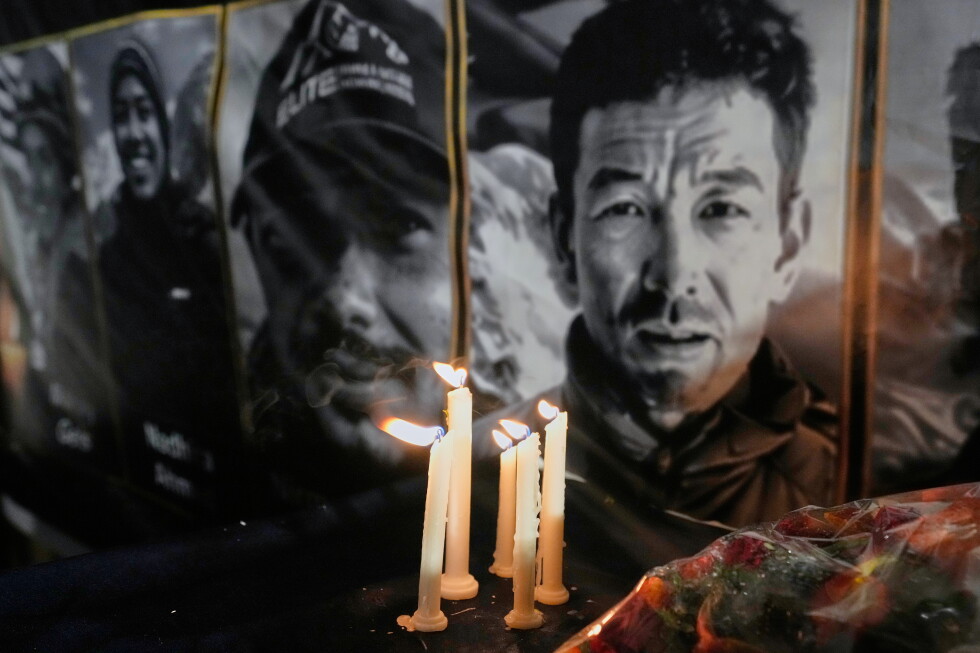
    On a rainy Tuesday evening in Pakistan’s capital Islamabad, hundreds of mourners including mountaineers, diplomatic representatives and civil society members gathered on the open lawns of a local sports complex to hold a somber candlelight vigil for 10 climbers who lost their lives in a catastrophic avalanche on Broad Peak, one of the world’s highest mountains. As attendees shielded flickering candle flames from the steady downpour, they offered prayers and remembered the climbers who never came back from their expedition.

    The disaster unfolded on July 30, when a massive avalanche swept across an international climbing expedition operating on the 8,051-meter Karakoram range peak, the 12th tallest mountain on the globe located just kilometers from K2, the world’s second-highest mountain. Among the deceased was celebrated British-Nepali mountaineer Nirmal Purja, a leading figure in the global climbing community. Six of the 10 confirmed victims were Nepali citizens, and the international expedition included climbers from six nations: Nepal, Oman, Pakistan, China, Britain and the United States.

    Days after the tragedy, search and recovery teams wrapped up their on-mountain operation, recovering the remains of eight victims. Two climbers’ bodies remain trapped in the avalanche debris and have not yet been retrieved. Rita Dhital, Nepal’s ambassador to Pakistan, attended the vigil to honor the fallen climbers, and shared memories of meeting Purja at her residence before the expedition began. “Giving up is not in my blood,” Dhital recalled Purja telling her, repeating his mantra that defined his decades of high-altitude climbing. She confirmed that all six Nepali climbers’ remains have already been returned to their waiting families.

    Dhital extended public gratitude to the Pakistani mountaineers, rescue teams, government authorities and military personnel who risked their own lives to carry out the recovery operation in dangerous, unstable alpine conditions. She gave special recognition to renowned Pakistani climber Sirbaz Khan, who led the recovery team on the mountain, as well as the Alpine Club of Pakistan for coordinating the mission.

    Sirbaz Khan told the Associated Press that his team began the mission with high hopes of finding the missing climbers alive. “I had hoped that I would hug them after finding them alive,” he said. Instead, the team discovered the fallen climbers buried deep under thick layers of avalanche snow, digging through the frozen drifts by hand with shovels to extract each body one by one. Recovering the bodies and moving them down the steep, hazardous mountain slope was an equally grueling challenge, he explained: rescuers used fixed ropes and improvised stretchers to carry the remains off the high mountain, after finding the strength to continue despite the emotional shock of finding their fellow mountaineers dead. Khan said he remains deeply grieved by the tragedy, but finds small comfort in knowing most families have been able to lay their loved ones to rest.

    Irfan Arshad Khan, president of the Alpine Club of Pakistan (who is not related to recovery team leader Sirbaz Khan), confirmed that the remains of seven climbers, including all six Nepali victims, have already been sent back to their home countries. He explained that severe, unrelenting bad weather repeatedly blocked rescue helicopters from reaching the remote avalanche site, forcing the entire search and recovery team to carry out most of the work on foot across dangerous, snow-covered terrain. Eventually, the team brought eight recovered remains to a landing zone accessible by air, allowing them to be airlifted off the mountain.

    Addressing attendees at the vigil, Irfan Arshad Khan said the gathering was to honor the memory of fallen climbing comrades. “The days following the avalanche tested not only the endurance of those searching the mountain but also the courage of rescuers who continued on foot when helicopters could not reach them,” he told the crowd. High-altitude mountaineering accidents are an all-too-common risk in northern Pakistan, which is home to five of the world’s 14 highest peaks above 8,000 meters, including Broad Peak and K2.

  • Caught between great powers: the cautionary tale of Manus

    Caught between great powers: the cautionary tale of Manus

    For ambitious young tech entrepreneurs building cutting-edge artificial intelligence tools, the intersection of innovation and great power competition has long been a risky tightrope. Now, the collapsed acquisition of AI agent platform Manus by US tech giant Meta stands as one of the clearest cautionary examples of how geopolitical friction between the world’s two largest economies can upend even the most promising startup journeys.

    The story of Manus begins in 2022, when Beijing-based startup Butterfly Effect launched to build AI-powered tools that can complete end-to-end tasks for users. By early 2025, ahead of Manus’ official public launch, the startup had already captured global tech industry attention. More than 3.5 million users rushed to secure early access invitation codes, with some rare codes reselling for thousands of dollars on secondary online markets. Chinese state media even celebrated Manus as a standout example of homegrown Chinese technological innovation, positioning the startup as a potential global leader in the fast-growing AI agent space.

    The momentum continued in May 2025, when leading US venture capital firm Benchmark Capital led a $75 million funding round that valued Butterfly Effect at nearly $500 million. At the time, it looked like CEO Xiao Hong’s goal of building a globally recognized Chinese AI company was well within reach. “In a world untouched by geopolitical tension, the Manus story would be a straightforward tale of an extraordinary startup earning a transformative big exit,” noted Kyle Chan, a technology policy researcher at the Brookings Institution, in an interview with AFP.

    But the startup’s trajectory shifted dramatically just months after its launch. In mid-2025, Butterfly Effect cut dozens of roles at its Beijing and Wuhan offices, relocated all core leadership and engineering teams to Singapore, blocked access to the platform for Chinese users, and deleted all its official presences on Chinese social media. The relocation strategy, often referred to colloquially as “Singapore-washing,” has become a common path for Chinese startups seeking easier access to international capital and global user bases while distancing themselves from Beijing’s regulatory and political oversight.

    However, a source familiar with Butterfly Effect’s internal decision-making told AFP that the full relocation was not the company’s original plan. The shift was triggered by an unexpected US investigation into Benchmark Capital, launched under Washington’s 2025 Outbound Investment Security Program, which restricts American investment in Chinese companies operating in sensitive sectors including artificial intelligence, semiconductors and quantum computing. What was initially supposed to be a small US-facing team based in Singapore became a full relocation of all company operations, the source added. AFP reached out to Butterfly Effect for official comment on the report but received no response.

    By the end of 2025, the deal that would bring Manus into the global spotlight was announced: Meta, the parent company of Facebook, Instagram and WhatsApp, confirmed it would acquire the Manus team for a reported $2 billion, marking the third-largest acquisition in Meta’s corporate history, following its purchases of WhatsApp and Scale AI. “We’re excited about what the future holds,” Xiao said at the time of the announcement.

    Almost immediately, regulatory headwinds began to build. Beijing has long pushed for its top homegrown tech startups to pursue public listings on domestic exchanges in Hong Kong and Shanghai, rather than relocating overseas, cutting domestic jobs and selling to foreign firms, Chan explained. By March 2026, reports emerged that Chinese regulators had launched a national security review of the Meta acquisition, and had even barred two Singapore-based Manus co-founders from leaving mainland China.

    In April 2026, China’s top economic planning body issued a formal ruling blocking the transaction. Under 2021 national security regulations that give regulators authority to review all foreign investments for potential risks to state security, the agency prohibited the foreign acquisition and ordered all involved parties to unwind the transaction completely.

    Industry observers say Beijing’s decision stemmed from concerns that allowing a leading Chinese-born AI startup to transfer its top talent and core technology to a major US corporation would set a problematic precedent that could undermine China’s growing AI industry. Beijing’s move also sent an unambiguous message that attempting to distance startups from their Chinese identity via overseas relocation is no longer a viable strategy, said Sherlock Xia, a corporate tech lawyer at Yenlex Law Firm.

    After months of negotiations and regulatory pressure, Manus officially confirmed its separation from Meta this week in a public statement posted to the company’s website. “We will soon return to operating as an independent company,” the statement read. “This is part of our separation from Meta; we must take this step to comply with regulatory requirements in specific parts of the world.” Prior to the official confirmation, The Wall Street Journal reported that Meta was already preparing to walk away from the deal, a complex reversal that required returning investor payouts from the original transaction. Bloomberg also reported in June that Meta had already cut off the Manus team from access to its internal engineering systems as the unwinding process moved forward.