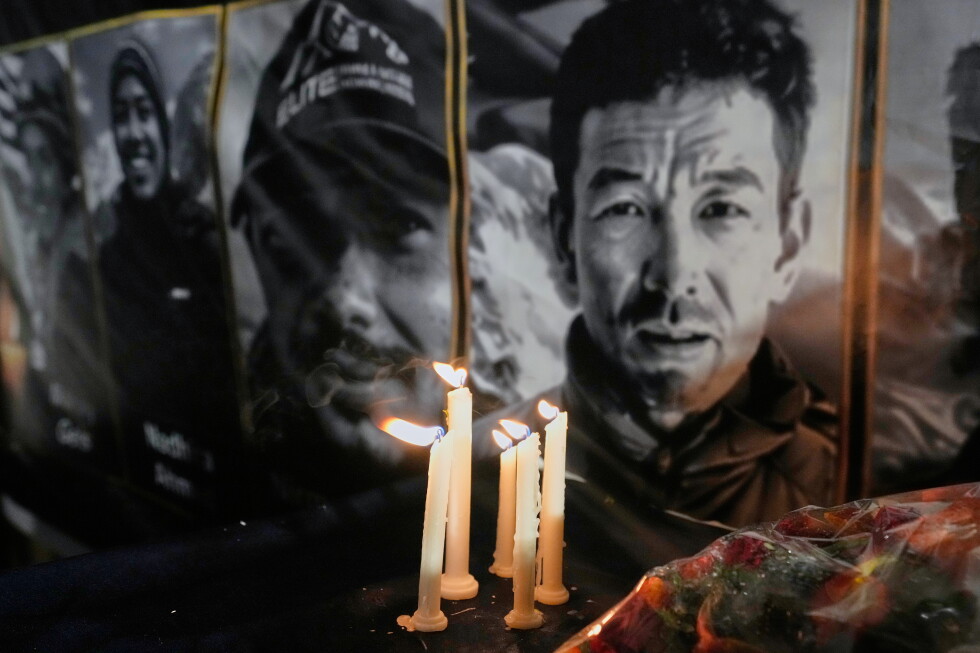
On a rainy Tuesday evening in Pakistan’s capital Islamabad, hundreds of mourners including mountaineers, diplomatic representatives and civil society members gathered on the open lawns of a local sports complex to hold a somber candlelight vigil for 10 climbers who lost their lives in a catastrophic avalanche on Broad Peak, one of the world’s highest mountains. As attendees shielded flickering candle flames from the steady downpour, they offered prayers and remembered the climbers who never came back from their expedition.
The disaster unfolded on July 30, when a massive avalanche swept across an international climbing expedition operating on the 8,051-meter Karakoram range peak, the 12th tallest mountain on the globe located just kilometers from K2, the world’s second-highest mountain. Among the deceased was celebrated British-Nepali mountaineer Nirmal Purja, a leading figure in the global climbing community. Six of the 10 confirmed victims were Nepali citizens, and the international expedition included climbers from six nations: Nepal, Oman, Pakistan, China, Britain and the United States.
Days after the tragedy, search and recovery teams wrapped up their on-mountain operation, recovering the remains of eight victims. Two climbers’ bodies remain trapped in the avalanche debris and have not yet been retrieved. Rita Dhital, Nepal’s ambassador to Pakistan, attended the vigil to honor the fallen climbers, and shared memories of meeting Purja at her residence before the expedition began. “Giving up is not in my blood,” Dhital recalled Purja telling her, repeating his mantra that defined his decades of high-altitude climbing. She confirmed that all six Nepali climbers’ remains have already been returned to their waiting families.
Dhital extended public gratitude to the Pakistani mountaineers, rescue teams, government authorities and military personnel who risked their own lives to carry out the recovery operation in dangerous, unstable alpine conditions. She gave special recognition to renowned Pakistani climber Sirbaz Khan, who led the recovery team on the mountain, as well as the Alpine Club of Pakistan for coordinating the mission.
Sirbaz Khan told the Associated Press that his team began the mission with high hopes of finding the missing climbers alive. “I had hoped that I would hug them after finding them alive,” he said. Instead, the team discovered the fallen climbers buried deep under thick layers of avalanche snow, digging through the frozen drifts by hand with shovels to extract each body one by one. Recovering the bodies and moving them down the steep, hazardous mountain slope was an equally grueling challenge, he explained: rescuers used fixed ropes and improvised stretchers to carry the remains off the high mountain, after finding the strength to continue despite the emotional shock of finding their fellow mountaineers dead. Khan said he remains deeply grieved by the tragedy, but finds small comfort in knowing most families have been able to lay their loved ones to rest.
Irfan Arshad Khan, president of the Alpine Club of Pakistan (who is not related to recovery team leader Sirbaz Khan), confirmed that the remains of seven climbers, including all six Nepali victims, have already been sent back to their home countries. He explained that severe, unrelenting bad weather repeatedly blocked rescue helicopters from reaching the remote avalanche site, forcing the entire search and recovery team to carry out most of the work on foot across dangerous, snow-covered terrain. Eventually, the team brought eight recovered remains to a landing zone accessible by air, allowing them to be airlifted off the mountain.
Addressing attendees at the vigil, Irfan Arshad Khan said the gathering was to honor the memory of fallen climbing comrades. “The days following the avalanche tested not only the endurance of those searching the mountain but also the courage of rescuers who continued on foot when helicopters could not reach them,” he told the crowd. High-altitude mountaineering accidents are an all-too-common risk in northern Pakistan, which is home to five of the world’s 14 highest peaks above 8,000 meters, including Broad Peak and K2.