博客

  • Candlelight vigil in Islamabad honors 10 climbers killed on Broad Peak

    Candlelight vigil in Islamabad honors 10 climbers killed on Broad Peak

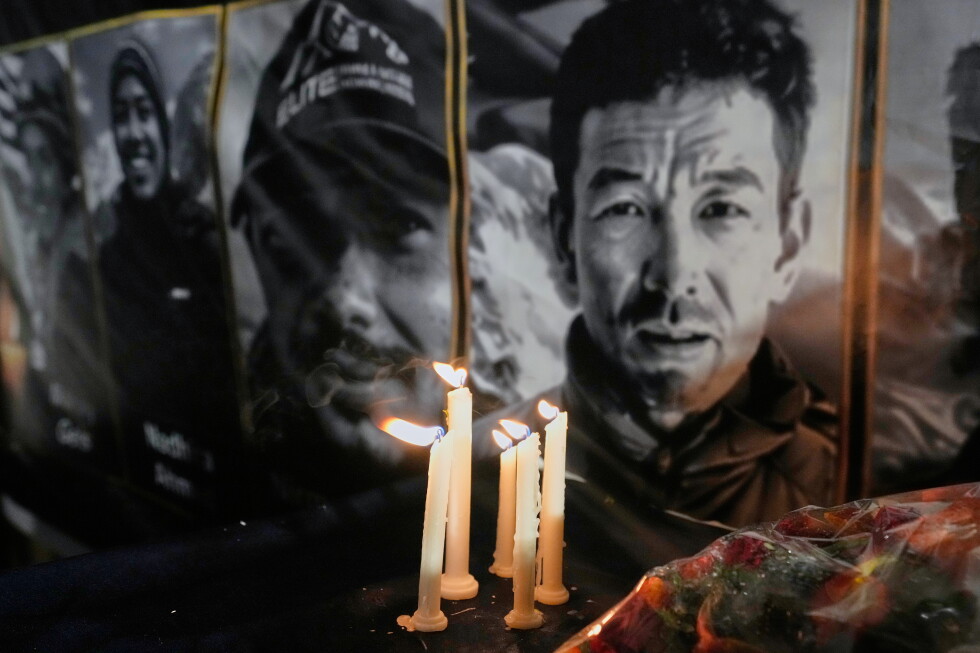
    On a rainy Tuesday evening in Pakistan’s capital Islamabad, hundreds of mourners including mountaineers, diplomatic representatives and civil society members gathered on the open lawns of a local sports complex to hold a somber candlelight vigil for 10 climbers who lost their lives in a catastrophic avalanche on Broad Peak, one of the world’s highest mountains. As attendees shielded flickering candle flames from the steady downpour, they offered prayers and remembered the climbers who never came back from their expedition.

    The disaster unfolded on July 30, when a massive avalanche swept across an international climbing expedition operating on the 8,051-meter Karakoram range peak, the 12th tallest mountain on the globe located just kilometers from K2, the world’s second-highest mountain. Among the deceased was celebrated British-Nepali mountaineer Nirmal Purja, a leading figure in the global climbing community. Six of the 10 confirmed victims were Nepali citizens, and the international expedition included climbers from six nations: Nepal, Oman, Pakistan, China, Britain and the United States.

    Days after the tragedy, search and recovery teams wrapped up their on-mountain operation, recovering the remains of eight victims. Two climbers’ bodies remain trapped in the avalanche debris and have not yet been retrieved. Rita Dhital, Nepal’s ambassador to Pakistan, attended the vigil to honor the fallen climbers, and shared memories of meeting Purja at her residence before the expedition began. “Giving up is not in my blood,” Dhital recalled Purja telling her, repeating his mantra that defined his decades of high-altitude climbing. She confirmed that all six Nepali climbers’ remains have already been returned to their waiting families.

    Dhital extended public gratitude to the Pakistani mountaineers, rescue teams, government authorities and military personnel who risked their own lives to carry out the recovery operation in dangerous, unstable alpine conditions. She gave special recognition to renowned Pakistani climber Sirbaz Khan, who led the recovery team on the mountain, as well as the Alpine Club of Pakistan for coordinating the mission.

    Sirbaz Khan told the Associated Press that his team began the mission with high hopes of finding the missing climbers alive. “I had hoped that I would hug them after finding them alive,” he said. Instead, the team discovered the fallen climbers buried deep under thick layers of avalanche snow, digging through the frozen drifts by hand with shovels to extract each body one by one. Recovering the bodies and moving them down the steep, hazardous mountain slope was an equally grueling challenge, he explained: rescuers used fixed ropes and improvised stretchers to carry the remains off the high mountain, after finding the strength to continue despite the emotional shock of finding their fellow mountaineers dead. Khan said he remains deeply grieved by the tragedy, but finds small comfort in knowing most families have been able to lay their loved ones to rest.

    Irfan Arshad Khan, president of the Alpine Club of Pakistan (who is not related to recovery team leader Sirbaz Khan), confirmed that the remains of seven climbers, including all six Nepali victims, have already been sent back to their home countries. He explained that severe, unrelenting bad weather repeatedly blocked rescue helicopters from reaching the remote avalanche site, forcing the entire search and recovery team to carry out most of the work on foot across dangerous, snow-covered terrain. Eventually, the team brought eight recovered remains to a landing zone accessible by air, allowing them to be airlifted off the mountain.

    Addressing attendees at the vigil, Irfan Arshad Khan said the gathering was to honor the memory of fallen climbing comrades. “The days following the avalanche tested not only the endurance of those searching the mountain but also the courage of rescuers who continued on foot when helicopters could not reach them,” he told the crowd. High-altitude mountaineering accidents are an all-too-common risk in northern Pakistan, which is home to five of the world’s 14 highest peaks above 8,000 meters, including Broad Peak and K2.

  • Caught between great powers: the cautionary tale of Manus

    Caught between great powers: the cautionary tale of Manus

    For ambitious young tech entrepreneurs building cutting-edge artificial intelligence tools, the intersection of innovation and great power competition has long been a risky tightrope. Now, the collapsed acquisition of AI agent platform Manus by US tech giant Meta stands as one of the clearest cautionary examples of how geopolitical friction between the world’s two largest economies can upend even the most promising startup journeys.

    The story of Manus begins in 2022, when Beijing-based startup Butterfly Effect launched to build AI-powered tools that can complete end-to-end tasks for users. By early 2025, ahead of Manus’ official public launch, the startup had already captured global tech industry attention. More than 3.5 million users rushed to secure early access invitation codes, with some rare codes reselling for thousands of dollars on secondary online markets. Chinese state media even celebrated Manus as a standout example of homegrown Chinese technological innovation, positioning the startup as a potential global leader in the fast-growing AI agent space.

    The momentum continued in May 2025, when leading US venture capital firm Benchmark Capital led a $75 million funding round that valued Butterfly Effect at nearly $500 million. At the time, it looked like CEO Xiao Hong’s goal of building a globally recognized Chinese AI company was well within reach. “In a world untouched by geopolitical tension, the Manus story would be a straightforward tale of an extraordinary startup earning a transformative big exit,” noted Kyle Chan, a technology policy researcher at the Brookings Institution, in an interview with AFP.

    But the startup’s trajectory shifted dramatically just months after its launch. In mid-2025, Butterfly Effect cut dozens of roles at its Beijing and Wuhan offices, relocated all core leadership and engineering teams to Singapore, blocked access to the platform for Chinese users, and deleted all its official presences on Chinese social media. The relocation strategy, often referred to colloquially as “Singapore-washing,” has become a common path for Chinese startups seeking easier access to international capital and global user bases while distancing themselves from Beijing’s regulatory and political oversight.

    However, a source familiar with Butterfly Effect’s internal decision-making told AFP that the full relocation was not the company’s original plan. The shift was triggered by an unexpected US investigation into Benchmark Capital, launched under Washington’s 2025 Outbound Investment Security Program, which restricts American investment in Chinese companies operating in sensitive sectors including artificial intelligence, semiconductors and quantum computing. What was initially supposed to be a small US-facing team based in Singapore became a full relocation of all company operations, the source added. AFP reached out to Butterfly Effect for official comment on the report but received no response.

    By the end of 2025, the deal that would bring Manus into the global spotlight was announced: Meta, the parent company of Facebook, Instagram and WhatsApp, confirmed it would acquire the Manus team for a reported $2 billion, marking the third-largest acquisition in Meta’s corporate history, following its purchases of WhatsApp and Scale AI. “We’re excited about what the future holds,” Xiao said at the time of the announcement.

    Almost immediately, regulatory headwinds began to build. Beijing has long pushed for its top homegrown tech startups to pursue public listings on domestic exchanges in Hong Kong and Shanghai, rather than relocating overseas, cutting domestic jobs and selling to foreign firms, Chan explained. By March 2026, reports emerged that Chinese regulators had launched a national security review of the Meta acquisition, and had even barred two Singapore-based Manus co-founders from leaving mainland China.

    In April 2026, China’s top economic planning body issued a formal ruling blocking the transaction. Under 2021 national security regulations that give regulators authority to review all foreign investments for potential risks to state security, the agency prohibited the foreign acquisition and ordered all involved parties to unwind the transaction completely.

    Industry observers say Beijing’s decision stemmed from concerns that allowing a leading Chinese-born AI startup to transfer its top talent and core technology to a major US corporation would set a problematic precedent that could undermine China’s growing AI industry. Beijing’s move also sent an unambiguous message that attempting to distance startups from their Chinese identity via overseas relocation is no longer a viable strategy, said Sherlock Xia, a corporate tech lawyer at Yenlex Law Firm.

    After months of negotiations and regulatory pressure, Manus officially confirmed its separation from Meta this week in a public statement posted to the company’s website. “We will soon return to operating as an independent company,” the statement read. “This is part of our separation from Meta; we must take this step to comply with regulatory requirements in specific parts of the world.” Prior to the official confirmation, The Wall Street Journal reported that Meta was already preparing to walk away from the deal, a complex reversal that required returning investor payouts from the original transaction. Bloomberg also reported in June that Meta had already cut off the Manus team from access to its internal engineering systems as the unwinding process moved forward.

  • Syria: Court sentences Bashar al-Assad to death in absentia in landmark trial

    Syria: Court sentences Bashar al-Assad to death in absentia in landmark trial

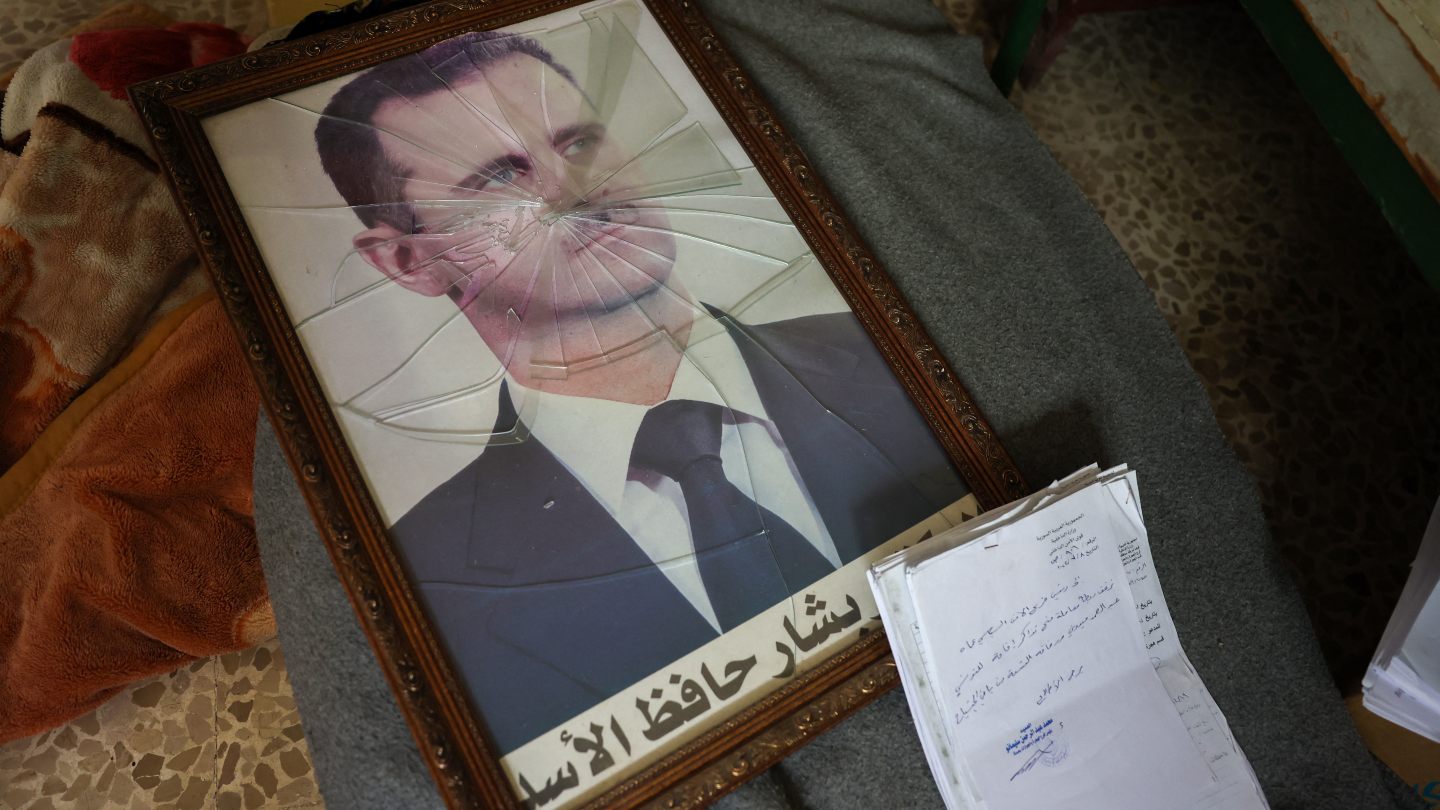
    In a landmark ruling marking the first major legal action against ousted former Syrian leader Bashar al-Assad since his flight from power, a Damascus court issued death sentences on Tuesday to Assad, his younger brother Maher al-Assad, and former senior security official Atef Najib. The convictions center on charges of premeditated murder, systematic torture, and incitement to targeted killing that span more than a decade of conflict.

    Court documents confirm Bashar al-Assad was found guilty on multiple counts, including the premeditated killing of civilians — among them children — alongside arbitrary detention, widespread torture, and crimes against humanity. Atef Najib, a cousin of the former president who was taken into custody by new authorities in January 2024, was convicted in person on identical charges, with specific convictions for the intentional killing of children under 15 years old and torture that resulted in death. Both Bashar and Maher al-Assad were tried in absentia, after the pair fled Syria for Moscow in December 2024 as armed opposition groups advanced on Damascus and toppled the decades-long Assad family regime.

    The verdict is the first high-profile conviction of former Assad regime figures issued by Syria’s new transitional government, which launched a widespread prosecution campaign this year targeting former officials both in custody and at large. The case closes a 14-year chapter of authoritarian rule that began when Bashar al-Assad, born in 1965, took power in 2000 following the death of his father and long-time ruler Hafez al-Assad. For 24 years, the Assad family maintained tight authoritarian control, cementing the political dominance of the minority Alawite sect in Syria’s majority Sunni population, and aligning the country closely with Iran while maintaining persistent hostility toward Israel and the United States.

    The eruption of mass pro-democracy protests during the 2011 Arab Spring marked the turning point for Assad’s rule. When government forces led by Assad launched a brutal violent crackdown on peaceful demonstrators, the unrest escalated into a full-scale armed uprising that plunged the country into 14 years of catastrophic civil war. The conflict quickly drew in global and regional powers, with Russia and Iran providing consistent military and political backing to the Assad regime, while the United States, Turkey, and other nations supported various opposition factions at different stages of the war.

    By the end of Assad’s rule, the United Nations estimates the conflict had killed hundreds of thousands of people, flattened critical civilian infrastructure across the country, and forced more than half of Syria’s pre-war population to flee their homes as internally displaced persons or refugees. The UN has confirmed the 14-year conflict left Syria grappling with an unprecedented, multi-layered political, economic, and humanitarian catastrophe that will require decades of recovery.

    Throughout the conflict, international investigators and human rights groups documented widespread abuses tied directly to the Assad government. Credible reports confirm the regime carried out mass arbitrary detention, systematic torture, enforced disappearances, extrajudicial killings, and deliberate attacks on civilian populations. A United Nations-backed investigative mechanism found overwhelming evidence of a systematic pattern of abuse, including torture, sexual violence, and enforced disappearances, operating across more than 100 government-run detention facilities throughout Assad’s rule.

    While the fall of the Assad regime opened a new political transition for Syria, UN experts have warned that human rights risks remain pervasive, with ongoing allegations of summary executions, forced displacement, and other abuses against civilian populations across different areas of the country as new governing structures take shape.

  • 2.4 million Afghan girls shut out of secondary school 5 years after Taliban takeover, UN says

    2.4 million Afghan girls shut out of secondary school 5 years after Taliban takeover, UN says

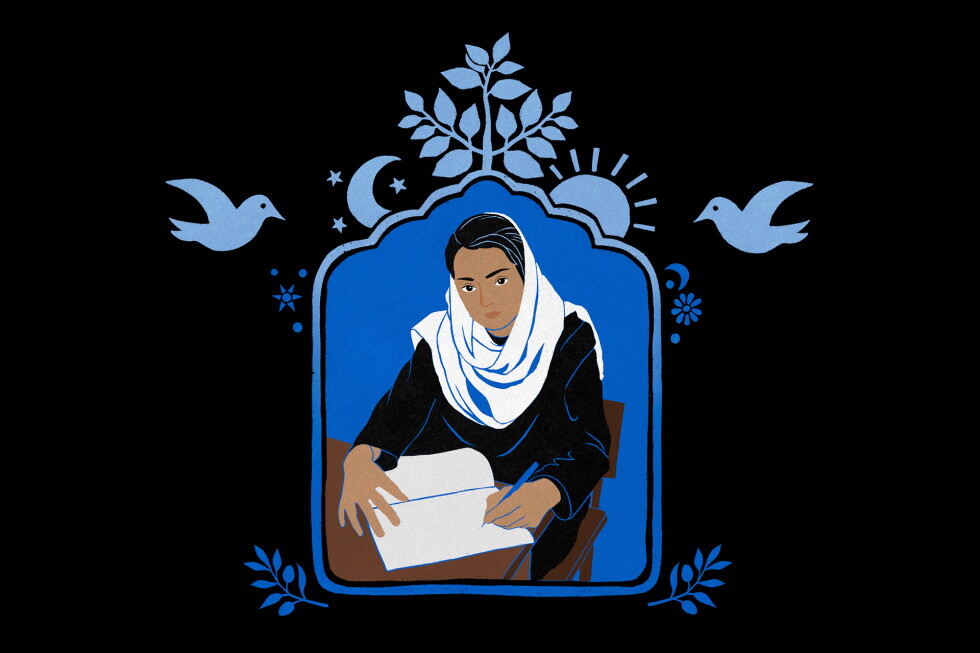
    Five years have passed since the Taliban retook control of Afghanistan, and a shocking 2.4 million Afghan adolescent girls are still barred from accessing secondary education, the United Nations Educational, Scientific and Cultural Organization (UNESCO) confirmed in an announcement Tuesday from Ankara, Turkey. The UN agency has reiterated its urgent call for the immediate reversal of the ban that shuts women and girls out of formal education at the secondary and post-secondary levels.

    As the only country globally with a formal, nationwide ban on secondary and higher education for female learners, Afghanistan’s policy represents a severe breach of basic human rights, according to Hoda Jaberian, UNESCO’s program coordinator for education in emergency contexts. Speaking via video link at a press briefing, Jaberian emphasized that a five-year exclusion from schooling is far more than a temporary disruption to a young person’s life: it effectively erases an entire secondary school cycle for millions of girls.

    “UNESCO continues to call for the immediate and unconditional restoration of girls and women’s right to secondary and higher education. It is not negotiable. It’s a basic human right and we reiterate that there is no substitute for this,” Jaberian stated.

    The Taliban first seized national power on August 15, 2021, coinciding with the full withdrawal of U.S. and NATO military forces after 20 years of conflict in the country. Within weeks of taking control, the group implemented a ban on girls’ attendance at secondary schools, and later expanded restrictions to bar women from higher education, most formal employment, and multiple other sectors of public life, effectively sidelining half of Afghanistan’s population from public society.

    Despite repeated appeals from the United Nations, global humanitarian organizations, human rights defenders, and even multiple majority-Islamic nations, the Taliban government has refused to lift the ban, framing the policy as an internal Afghan matter that is not subject to international pressure.

    Jaberian noted that the current restrictions have completely undone nearly two decades of incremental progress in expanding female access to education across Afghanistan. When the Taliban was first ousted from power in 2001, access to schooling for girls was extremely limited across most of the country. By 2021, just before the group’s return to power, nearly 1 million Afghan girls were enrolled in secondary education, marking major gains for gender equity in learning. Today, that progress has been almost entirely erased.

    “But unfortunately, much of that progress now has been completely reversed,” Jaberian added.

    In response to the formal ban, UNESCO has shifted to supporting alternative learning pathways for Afghan learners through community-based education programs, literacy classes, and vocational skills development initiatives. These programs operate out of informal community spaces—most often in the private homes of trained literacy facilitators—with the tacit approval of Taliban authorities. Currently, more than 1,000 local facilitators, most trained by UNESCO and its local partner organizations, run these community learning programs across the country.

    “While the restriction remains, we cannot abandon Afghan learners,” Jaberian said. “UNESCO work with communities and our partners from the communities to preserve every possible pathway to learning.”

  • Over 16,000 civilians detained by Russia during the war in Ukraine are still held, UN estimates

    Over 16,000 civilians detained by Russia during the war in Ukraine are still held, UN estimates

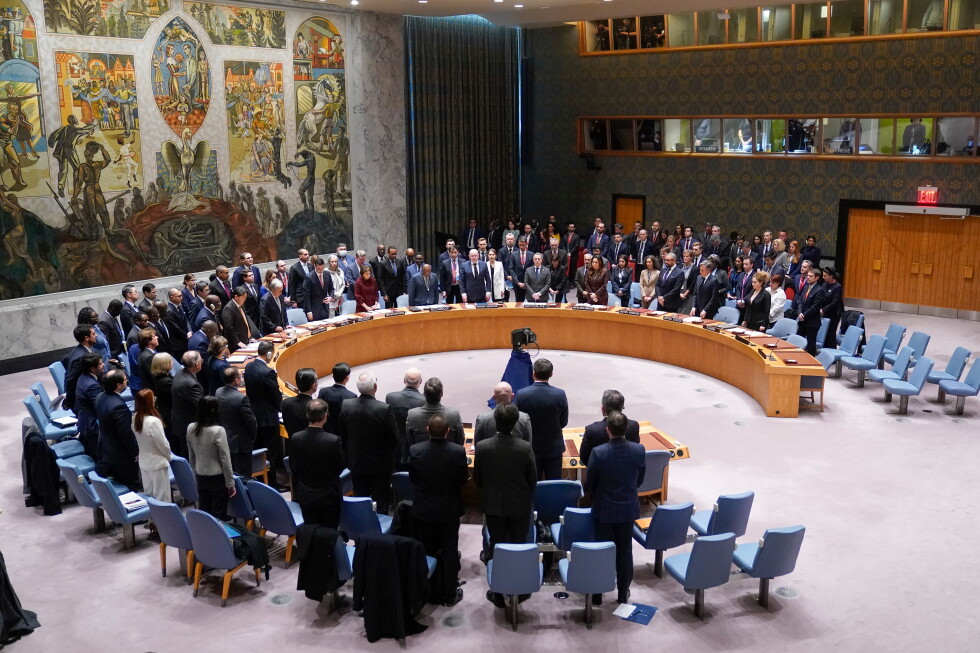
    On Monday, the United Nations Human Rights Office delivered a damning new briefing to the UN Security Council, detailing widespread unlawful detention, systematic torture, and deadly abuse of Ukrainian civilians and prisoners of war held by Russian authorities since Russia launched its full-scale invasion of Ukraine in February 2022. The informal meeting, convened by Latvia and the United Kingdom, was organized to center the long-unaddressed plight of people captured amid the ongoing conflict, which has seen a sharp escalation of offensive operations from both sides in recent months.

    Claudia Fuentes Julio, UN Assistant Secretary-General for Human Rights, told the assembled council that UN investigators estimate more than 16,000 civilians captured by Russian forces remain illegally deprived of liberty, with many held incommunicado in violation of international legal standards for detention. The UN has not been granted access to any detention facilities operating on Russian-controlled territory to independently verify conditions, meaning the agency’s current count cannot break down figures to reflect how many of the detained are children or adults.

    Julio’s briefing drew on first-hand testimony gathered from 910 released Ukrainian prisoners of war and 403 released civilian detainees interviewed by UN human rights staff after they regained freedom. The data revealed staggering rates of abuse: more than 95% of released prisoners of war and 85% of released civilian detainees reported repeated torture and cruel, inhumane treatment during their captivity, including incidents of sexual violence. Survivors also described severe inadequate conditions, including deliberate food deprivation and almost no access to life-saving medical care.

    Beyond ongoing abuse, the UN has documented confirmed deaths in custody: 129 Ukrainian prisoners of war were executed immediately after capture, while an additional 48 died in detention due to torture, denied medical care, and other deadly inhumane conditions, Julio confirmed.

    The meeting also heard harrowing, personal accounts from two survivors of Russian detention. Khuan Leyva Garsiya, a Ukrainian soldier born in Mariupol who was among the hundreds of fighters who held out against the Russian siege at the Azovstal steel plant before surrendering in May 2022, spent 1,183 days as a prisoner of war. When he was released, he weighed just 120 pounds, and displayed a photo of his emaciated frame to the council to illustrate the conditions he endured. Garsiya explained he faced harsher abuse than other prisoners because Russian captors suspected he was a foreign mercenary due to his Cuban father and an American spy because he completed college in the United States. He described systemic methods of psychological torture designed to force false confessions, including prolonged exposure to freezing temperatures, repeated beatings, electrocution, and sexual abuse. “Two of my friends were beaten to death in detention centers in the Donetsk region,” Garsiya told the council. “Two of my friends died because of the conditions they were put in in Russian prisons and were returned in plastic bags to the homeland.”

    Leniie Umerova, a Crimean Tatar human rights activist, also shared her experience of nearly two years as a self-described political prisoner under Russian occupation. Her detention began in 2022 when she attempted to cross from Georgia into Russian-occupied Crimea to visit her terminally ill father. She was immediately detained on what she called fabricated charges, and though a court ordered her release three months into her detention, she was abducted from prison gates immediately after gaining her initial freedom. Over six months, she was transferred to seven separate detention facilities, a practice she described as a “carousel of repression” designed to disorient detainees and cut off any contact with the outside world. Umerova emphasized that her experience was not an isolated incident, but part of a coordinated state system of unlawful detention, political repression, and abuse targeting Ukrainian civilians in occupied territories. She noted that at least 84 women have faced politically motivated criminal prosecution in Russian prisons, with dozens still remain in custody today.

    In a rare development, the UN briefing also acknowledged reports of abuse by Ukrainian forces. Julio told the council that UN investigators have interviewed 816 Russian service members and 57 third-country national prisoners of war captured by Ukraine, finding that roughly half reported experiencing torture or ill-treatment during initial capture and interrogation. However, Julio clarified that once detainees are transferred to formal Ukrainian detention facilities, conditions generally meet international humanitarian law standards and have improved significantly since 2022.

    Russia’s Deputy UN Ambassador Maria Zabolotskaya pushed back against the briefing, claiming Russian armed forces fully comply with international humanitarian law governing detention and prisoner treatment. She repeated Russian claims that Russian prisoners held by Ukraine face routine torture and abuse, and dismissed the entire Security Council meeting as a NATO-backed “disinformation campaign against Russia.” The meeting’s true goal, she claimed, “is to derail efforts towards a peace settlement and to justify strikes on the territory of Russia and against civilians.”

    Ukraine’s Deputy UN Ambassador Volodymyr Pavlichenko responded by noting that Russian representatives refused to engage on discussions surrounding the repatriation of all detainees — including Russian prisoners of war held by Ukraine and Ukrainian civilians and soldiers held by Russia, as well as the thousands of Ukrainian children forcibly abducted by Russia since the invasion began.

  • Turkey’s Kurdish region greets a conditional PKK pardon with relief, joy and doubt

    Turkey’s Kurdish region greets a conditional PKK pardon with relief, joy and doubt

    After four decades of violent insurgency that left thousands dead across southeastern Turkey, a landmark piece of legislation aimed at ending long-running conflict between the Turkish state and the Kurdistan Workers’ Party (PKK) has cleared parliament, triggering a complex mix of relief, optimism and unresolved concern among residents of the country’s majority-Kurdish southeastern region.

    Lawmakers cast overwhelming votes in favor of the conditional pardon bill on Monday, a core step in advancing the ongoing peace process launched after the PKK announced last year it would lay down its arms. The legislation will not enter into force immediately: it only takes effect once Turkish authorities confirm the PKK has completed full disarmament, a key condition set by the state.

    The bill outlines a clear framework for qualifying militants: it suspends prison sentences for convicted PKK members and pauses ongoing investigations and trials for other suspects for periods of five to 10 years, with the length determined by the severity of alleged offenses. If recipients do not commit any additional terror-linked crimes during the waiting period, all charges against them will be dismissed entirely. Turkish media estimates thousands of militants could benefit from the policy, including members based in exile across Europe, as well as those stationed in Iraq and Syria. Notable exceptions are militants convicted of intentional murder and those handed life sentences before 2005, a group that includes PKK leader Abdullah Ocalan and other senior figures of the organization.

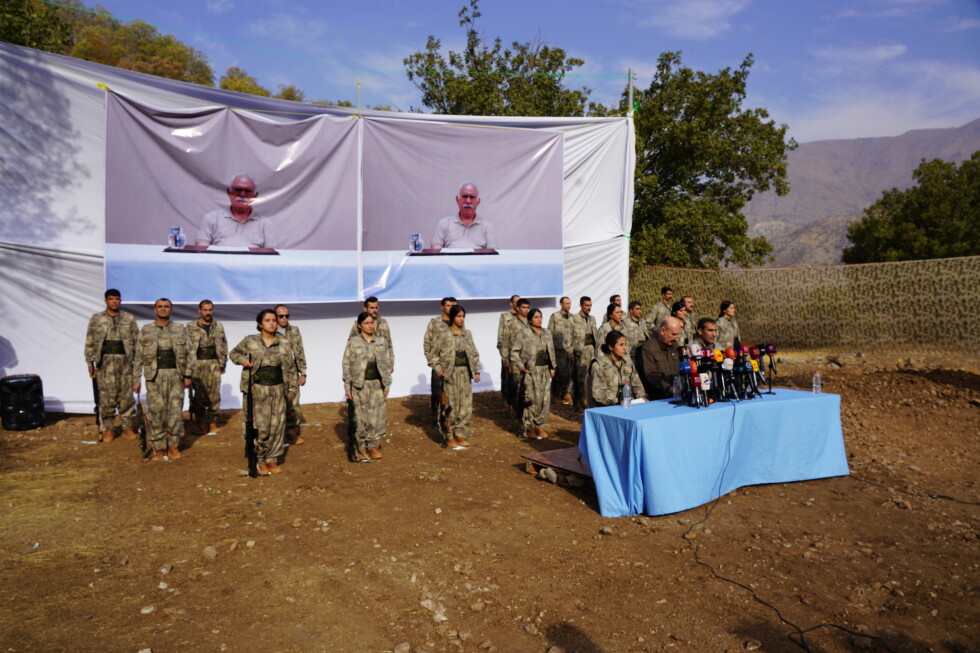
    The PKK first launched its insurgency in 1980s, originally seeking to establish an independent Kurdish state in southeastern Turkey. Over decades of conflict, the group shifted its goals to demanding greater autonomy and expanded rights for Turkey’s Kurdish population, which makes up an estimated 15 to 20 percent of the country’s total population. Last year, responding to a call from Ocalan—who has been imprisoned since 1999—the PKK announced it would dissolve the organization, held a symbolic disarmament ceremony at its base in northern Iraq, and withdrew its remaining fighters from Turkish territory to northern Iraq.

    In Diyarbakir, the largest city in southeastern Turkey, local residents greeted the parliamentary vote with cautious optimism rooted in decades of unfulfilled hopes for peace. Many voiced expectation that the end of violence would unlock long-stalled economic growth for the region, which has long lagged behind the rest of Turkey in development and prosperity.

    Seventy-year-old retired resident Ali Akdogan called the vote a moment of personal joy. “I was really very happy. I even applauded the result in my own home,” he said. “The economy will improve, good things will happen, people will start doing business. I believe it will bring peace. Since the peace process began, we haven’t had any conflict-related deaths, and this conflict killed thousands of civilians, soldiers and militants over more than 40 years.”

    Hasan Gecti, a 56-year-old shop owner in Diyarbakir, agreed that an end to violence would bring tangible economic and social benefits to local communities, but warned that core political demands of Turkey’s Kurdish population remain unaddressed by the pardon bill. Kurds have long pushed for expanded rights including broader access to Kurdish-language education and public services, as well as greater political autonomy, including an end to the central government’s policy of removing locally elected Kurdish mayors and replacing them with state-appointed administrators.

    “Has the Kurdish issue been directly solved? That’s a bit of a question mark,” Gecti said. “In my opinion, only the terrorism problem has been solved. Unfortunately, the Kurdish issue still remains where it is.”

    Local business leaders echoed this nuanced perspective. Mehmet Kaya, head of the Diyarbakir Chamber of Trade and Industry, welcomed the broad parliamentary support for the bill as a positive signal for the region. “It signals that violence is ending and the doors of politics are opening,” he noted. But Kaya emphasized the legislation alone cannot resolve decades of political tension, adding that further targeted reforms are needed to build lasting peace.

    “If the step taken now leads to sustainable democratization, and the social and economic policies the region expects are put in place, then the region will enter an important new phase,” Kaya said.

    The PKK itself offered a similarly mixed assessment in a statement published Monday by the PKK-linked ANF news agency. The group framed the legislation as a “beginning” toward resolving outstanding disputes between the PKK and the Turkish state, but criticized the bill for “serious shortcomings and deficiencies.” The PKK repeated its core demands, including the immediate release of Ocalan from prison, the implementation of broad democratic reforms, and formal recognition of expanded Kurdish rights.

  • Watch: Tide of rubbish blankets Philippines river

    Watch: Tide of rubbish blankets Philippines river

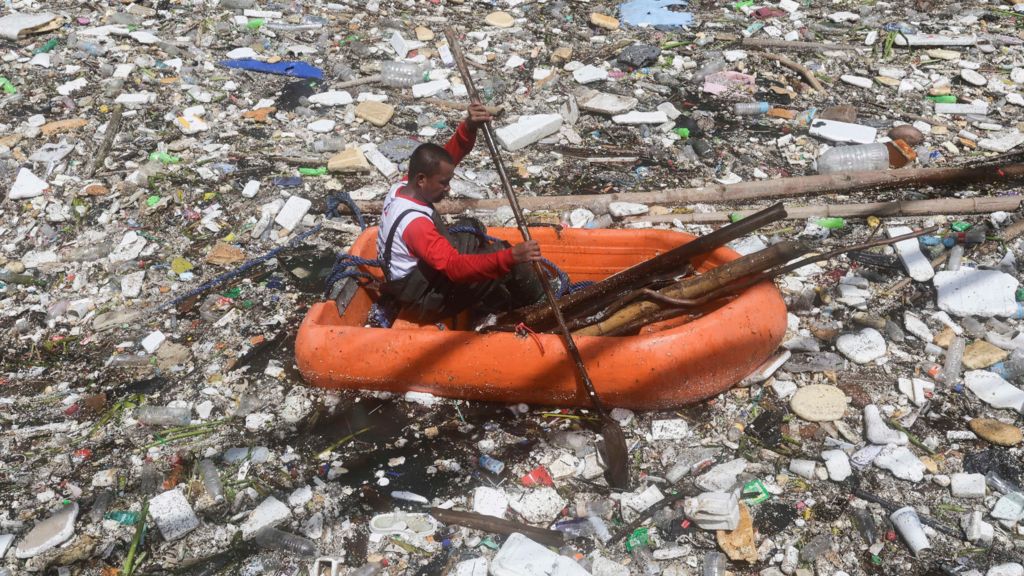
    A thick, suffocating tide of discarded waste has engulfed a major river in Manila, the capital city of the Philippines, following several consecutive days of intense downpours that washed accumulated trash from surrounding urban areas into the waterway.

    Footage of the disaster shows municipal cleanup workers wading through waist-deep, murky water littered with plastic containers, food packaging, rotting organic matter and other discarded materials, working tirelessly to gather and remove the massive volume of refuse that now covers the river’s entire surface.

    The extreme rainfall that triggered this event is part of a broader pattern of intense weather events impacting the Southeast Asian archipelago, where poor urban waste management infrastructure has long left waterways vulnerable to massive trash accumulation during storm surges and heavy precipitation events. Environmental activists have repeatedly warned that uncollected municipal waste in densely populated urban neighborhoods of Manila regularly gets washed into connected river systems during monsoon season, creating severe risks to both aquatic ecosystems and public health for communities that live along the river’s banks.

    The ongoing cleanup operation is expected to take multiple days to complete, as workers race to clear the waste before it flows out into Manila Bay, where it would exacerbate already critical marine pollution issues in the region.

  • Anne Hathaway pokes fun at ‘fake baby bump’ theories

    Anne Hathaway pokes fun at ‘fake baby bump’ theories

    When A-list Hollywood actress Anne Hathaway stepped onto the red carpet for the Los Angeles premiere of her upcoming feature *The End of Oak Street* on Sunday, her bold maternity outfit quickly became the center of a heated social media debate — and the 43-year-old star has not shied away from responding to unfounded criticism.

    Hathaway, who announced she is expecting her third child with husband Adam Shulman back in June, turned heads in a head-turning custom ensemble: a sculptural high-low halter crop top from Atelier Prabal Gurung paired with low-rise La Ligne jeans and bold red Aquazzura stilettos. The look, designed to deliberately show off her growing pregnant belly, was described by designer Prabal Gurung as a “sculptural high-low halter top with a cascading train.” Almost immediately after photos of the appearance spread across social platforms, a wave of skeptical comments flooded comment sections, with users questioning the authenticity of her bump, claiming it looked unnatural and fake. Beyond doubting her pregnancy, other critics attacked the outfit itself, dismissing it as tacky, ridiculous, and bizarre.

    It did not take long for Hathaway to respond directly to the negativity. On her personal Instagram, the actress shared an inside look at her day getting ready for the premiere and walking the red carpet, captioning the clip, “Fake hair, real bump. Enjoy The @endofoakstreet Block Party chaos with my outfit literally melts in the heat!!” The sharp, playful response put an end to any lingering speculation and aligned with Hathaway’s long public history of advocating for body positivity and women’s autonomy over their own bodies.

    The incident has sparked broader conversations online and in media circles about the endless public scrutiny of celebrity women, particularly during pregnancy. While a subset of social media users joined the criticism, many other public figures, fans, and industry commentators rushed to Hathaway’s defense. One viral social media comment put the debate in perspective, writing, “A lot of people in these comments have never seen a pregnant belly on someone who has abs.” Another called out the overreach of public judgment, asking, “Can women exist, damn?”

    Mainstream fashion and entertainment outlets have also weighed in to support the actress, framing her choice as a radical act of self-acceptance. In an op-ed for *Vogue*, writers argued that the public still needs to learn a basic lesson: a woman’s pregnant body is no one’s business but her own. “What if, instead, we celebrated the fact that a woman’s body is doing something amazing, rather than telling her that she looks shameful, fake, ‘over the top’ or ‘awful and a bit weird’? Now that really would be radical,” the piece read.

    Charlotte Cripps of *The Independent* echoed this sentiment, noting that while the outfit may not be to the taste of Hathaway’s online critics, it serves as a powerful public statement. “It might be an outfit that her social media critics wouldn’t be seen dead in, but it’s a clear message of body positivity, strength, and gender equality – and it’s her unique expression of the next chapter of her life,” Cripps wrote. The Telegraph’s Rebecca Cope added that the look is just one more example of modern celebrities choosing to reject outdated red carpet expectations, “literally letting it all hang out” on their own terms.

    Beyond the debate over body autonomy, Hathaway’s appearance has also driven a surge of public interest in her subtle beauty look for the event, specifically her viral “coconut water” manicure that has already started trending among fashion followers. This red carpet appearance is just the latest in a busy summer of press for Hathaway, who has already toured premieres for another upcoming project, *The Odyssey*, with stops in London in early July and New York City mid-July, where she wore more traditional elegant maternity red carpet looks. For this latest appearance, however, Hathaway chose to break the mold — and in doing so, has reignited a long-overdue conversation about who gets to judge a woman’s body.

  • Russia releases former US Marine reported in poor health

    Russia releases former US Marine reported in poor health

    In a high-profile cross-border humanitarian move that draws direct attention to U.S.-Russia detainee relations, Moscow has freed a former American Marine who had been imprisoned on Russian soil since 2022, after reports emerged that his health had deteriorated to a life-threatening state. The released man, Robert Gilman, a 30-year-old native of Massachusetts, was cleared for release “from detention for humanitarian reasons” according to Kirill Dmitriev, special envoy for Russian President Vladimir Putin. By Tuesday, Gilman was already en route to Washington, D.C. aboard a U.S. government aircraft, Dmitriev confirmed.

    Gilman was first taken into Russian custody in 2022 at the age of 28. At the time of his arrest, he was intoxicated while traveling on a train bound for Moscow, and faced charges for assaulting a local police officer during the incident. In the weeks leading up to his release, his health declined sharply, prompting urgent intervention from U.S. political leaders. Massachusetts Senator Ed Markey, who had advocated for Gilman’s release, shared grave details of his condition on social media prior to the announcement: before the release, Gilman was “essentially catatonic” while fighting a severe case of pneumonia, Markey reported. Around 50 days before his freedom, Gilman received a diagnosis of dissociative stupor, a neurological condition that left him unresponsive, unable to interact with others, and incapable of eating independently, Markey added. As of the release announcement, Markey noted that full details of Gilman’s current stable health status were still emerging.

    Multiple medical professionals have been assigned to care for Gilman during his flight back to U.S. territory, Reuters confirmed. A senior unnamed U.S. official told reporters that initial assessments show “he seems to be in good shape” after the transfer. Per CBS News, the U.S. news partner of the BBC, Gilman’s family has gathered at a military medical facility in Texas to await his arrival for ongoing treatment.

    In a public statement following the release, Gilman’s sister Lexie Hudson credited former U.S. President Donald Trump for securing her brother’s freedom. “I am so grateful to President Trump for saving my brother’s life,” Hudson said. “There is no other reason that Robert is alive today other than that President Trump heard about the case and took action.”

  • New allied trio militarily moves on from faltering US and Trump

    New allied trio militarily moves on from faltering US and Trump

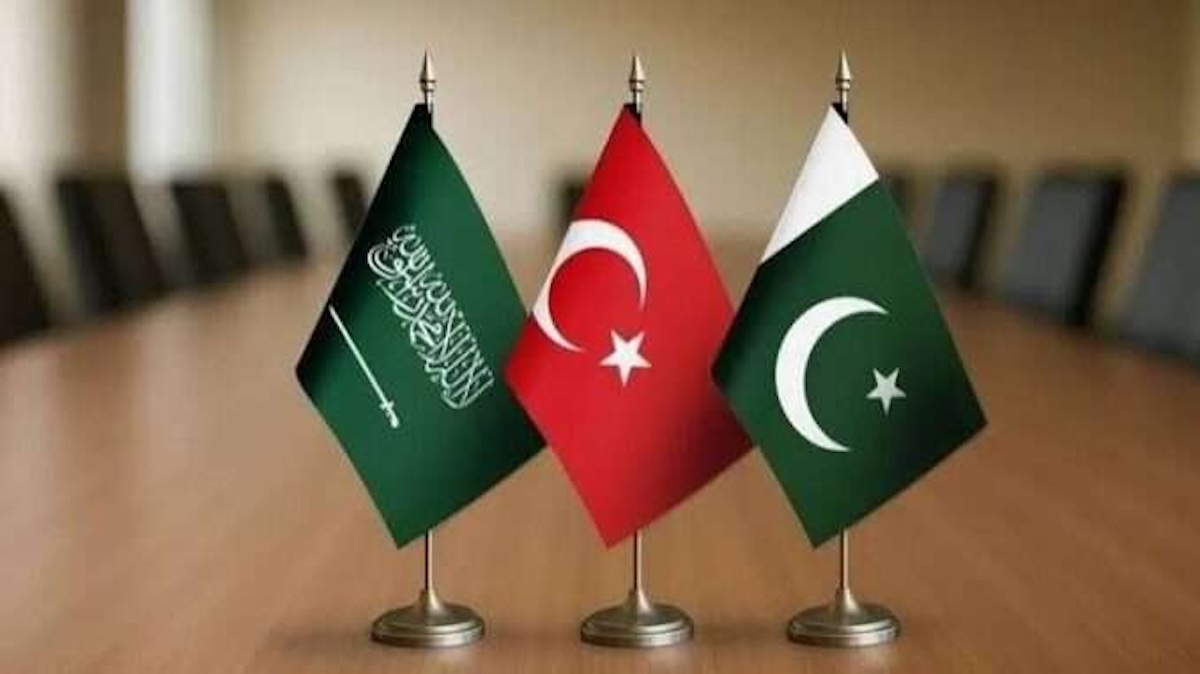
    Against the backdrop of a stalemated Middle East conflict and growing frustration with U.S. foreign policy failures, three influential Muslim-majority nations have launched a landmark regional defense alliance that marks a dramatic shift in decades-long Gulf security dynamics.

    Last Friday, Saudi Crown Prince Mohammed bin Salman, Turkish President Recep Erdogan, and Pakistani Prime Minister Shehbaz Sharif signed the Mecca Joint Defense Agreement in Saudi Arabia, a pact structured around a NATO-style collective defense principle. The core text of the agreement states that any armed aggression against one signatory will be treated as an attack against all three, with the explicit goal of strengthening coordinated deterrence against external threats.

    The naming of the agreement, tied directly to the Islamic holy city of Mecca, sends an unambiguous signal that this is not a Western-aligned bloc. For more than 30 years, dating back to the 1990 U.S.-led liberation of Kuwait following Saddam Hussein’s invasion, Persian Gulf security has been dominated by American leadership, with U.S. ground, naval, and air forces permanently hosted across Gulf states including Saudi Arabia. This new alliance breaks with that long-standing order.

    Each member brings unique strategic capabilities to the new bloc: Saudi Arabia contributes substantial economic weight from its vast fossil fuel reserves, Turkey contributes NATO’s second-largest standing military, and nuclear-armed Pakistan offers critical deterrent capacity. Regional security analysts describe the pact as a clear breaking point in regional dependence on U.S. security guarantees.

    “The political symbolism of this summit is enormous,” explained Abdulaziz Sager, director of the Saudi-based Gulf Research Center. “Three of the Muslim world’s most powerful states have come together at a time of extreme regional uncertainty, demonstrating that middle and regional powers are increasingly willing to coordinate their own security agendas independent of outside actors.”

    Observers widely agree that eroding trust in U.S. security guarantees is the primary driver behind the new alliance. After U.S. policy led to a stalled war with Iran, Tehran has launched retaliatory strikes against U.S.-aligned Gulf states, disrupting global energy supplies and bringing parts of the world economy to the brink of standstill. Iran frames its attacks as a response to Saudi Arabia’s long-standing alignment with Washington. As Iranian strikes targeted Gulf territory, the U.S. withdrew hundreds of military personnel from regional bases, leaving Gulf leadership questioning whether decades of American security promises were ever tangible.

    Harvard economist Ken Rogoff highlighted this disillusionment during a Wall Street Journal TV discussion on the war’s impact on U.S. global influence. “Many Gulf rulers went into this conflict believing U.S. bases on their soil guaranteed their protection,” Rogoff noted. “Instead, they’ve found that those bases turned their countries into targets, with no meaningful American defense to back up the promises.”

    Not all analysts frame the pact as a full break from the U.S. Ozgur Unluhisarcikli, a Turkish foreign policy expert at the German Marshall Fund’s Ankara office, emphasized that the agreement is not yet a fully operational mutual defense pact. “This is best understood as a foundational framework for deeper strategic, military, and defense industry coordination between the three states,” he told Qatar-based Al Jazeera. All three signatories still rely heavily on U.S. military equipment, a dependence that cannot be eliminated quickly, making a complete split from Washington unlikely in the near term.

    Iran’s official reaction to the alliance mixed dismissal with calls for Muslim unity. Iranian Foreign Minister Abbas Araghchi argued the new bloc’s search for security was misdirected, boasting that Iran’s military had already proven its “readiness and capability” against what he called “the world’s most expensive military.” Still, he added that “when Muslims stand together, we can face every challenge from malicious outsiders head-on. It is time to rely only on ourselves and embrace true brotherhood.” Hardline Iranian lawmakers took a more confrontational stance: “Saudis must know that a paper agreement with Turkey and Pakistan will not bring them security, just as decades of dependence on the Americans did not,” wrote Iranian MP Ebrahim Rezaei. “Reform your policies so that you do not need to beg for security from others.”

    Beyond immediate security needs, each signatory pursues distinct long-term strategic goals through the alliance. For Saudi Arabia, the pact builds on years of efforts to diversify its diplomatic partnerships and expand global influence. In 2023, Saudi Arabia restored diplomatic ties with Iran, a deal brokered by China that signaled Riyadh’s growing willingness to look beyond Washington for partnerships. The kingdom has also collaborated with Russia for years to maintain stable, high oil prices, defying repeated U.S. pressure to lower prices. Riyadh has held deep distrust of U.S. commitment since Donald Trump’s first term, when the U.S. declined to retaliate against Iranian-linked attacks on Saudi oil tankers and a key domestic oil processing facility in 2019. Today, with the U.S. failing to defeat Iran and major powers China and Russia aligned with Tehran, Riyadh is testing whether new regional partners can deliver the security Washington has failed to provide.

    For Pakistan, the alliance offers an opportunity to break free of long-standing geopolitical constraints rooted in its border dispute with India and history of intervention in Afghanistan, allowing it to play a larger role in global diplomacy. Like Saudi Arabia, Pakistan has deepened its strategic ties with China, participating in the Belt and Road Initiative to build a major transport corridor and Chinese-managed deepwater port on the Arabian Sea, positioned near the entrance to the Persian Gulf. While Islamabad’s previous attempts to mediate a U.S.-Iran peace deal have failed, it has maintained its bilateral relationship with Washington. The new partnership with Turkey gives Pakistan access to advanced Turkish military production and technology, while securing Islamabad a greater voice in Middle East affairs, a region where it has historically had limited influence.

    For Turkey, the alliance advances President Erdogan’s vision of restoring Turkey’s historical influence across the Middle East and Central Asia, a legacy of the Ottoman Empire that ended with World War I. The partnership places Ankara at the center of regional geopolitics, and the shared Islamic identity of the three-nation bloc adds a layer of historical legitimacy to Turkey’s regional ambitions. It also brings concrete economic benefits: Saudi Arabia already invests heavily in Turkish high-tech industry, Turkey is a core infrastructure and security partner for Saudi Arabia’s $500 billion NEOM mega-city project on the Red Sea coast, and the agreement is expected to lower trade barriers for Turkish consumer exports to the Saudi market.

    Militarily, Turkey can offer Saudi Arabia advanced drone technology and naval modernization support, and Ankara has the regional military footprint to help resolve the Houthi blockade of Red Sea shipping. Turkey already operates a naval base in Somalia and is building a new missile base on the Indian Ocean with capacity for missiles with a 1,250-mile range, putting the entire Arabian Peninsula, Red Sea shipping lanes, and Strait of Hormuz within striking distance. Turkey’s expanding regional role also puts it in direct conflict with Israeli ambitions, as analysts note: following the Gaza war, Israel has pushed to establish full military dominance across the Middle East, a goal that clashes directly with Ankara’s interests. “As Turkey deepened its involvement in regional affairs, its interests increasingly collided with Israel’s,” notes a report from the Jazeera Center for Studies. “Israel’s efforts to control Palestinian territory, dominate Lebanon, and overthrow the Iranian government all have direct negative consequences for Turkish security and economic interests.”

    Across the Middle East, the new agreement marks the most significant shift in regional security architecture in a generation, as regional powers move to take security into their own hands after decades of U.S. leadership.