博客

  • UK prosecutors argue Tate brothers a flight risk ahead of bail hearing

    UK prosecutors argue Tate brothers a flight risk ahead of bail hearing

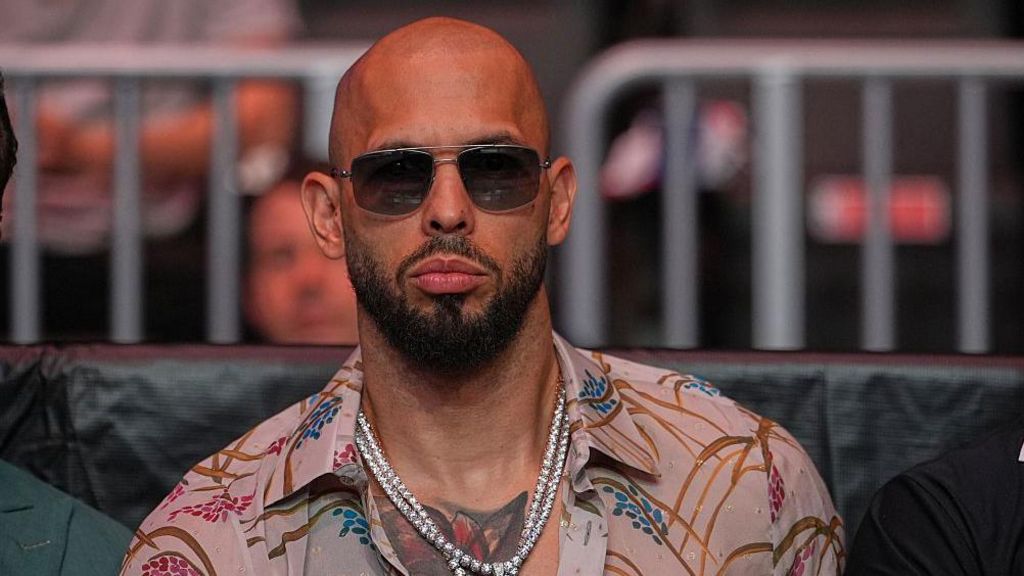
    A high-stakes extradition drama is unfolding in a Florida federal court this week, as British law enforcement officials push to keep controversial influencers Andrew and Tristan Tate behind bars for the duration of US extradition proceedings. The dual British-American citizens have been held in a Florida correctional facility since their arrest last month, when UK prosecutors unsealed a sweeping set of 38 new criminal charges against the pair. Both men have repeatedly denied all wrongdoing in connection with the allegations.

    The 38 new charges add to a 2025 indictment that already brought 21 counts against the brothers, bringing the total number of criminal charges to 59. The full list of allegations includes rape, sexual exploitation through sex trafficking, and possession of indecent images of children. The new charges stem from accusations made by four additional complainants, with alleged offenses dating between 2010 and 2017. The original 2025 indictment covers accusations from three other victims connected to crimes the UK says occurred between 2012 and 2015 in Bedfordshire, southeast England.

    The Thursday detention hearing will see a US judge rule on whether the brothers should be granted bail and released from custody ahead of the full extradition process. In new court filings submitted to the Southern District of Florida Federal Court on Monday, Crown Prosecution Service (CPS) – the public prosecuting body for England and Wales – laid out its argument that the pair poses extreme flight risk and a serious danger to witnesses in the case. The official prosecution position was backed by a formal request from the British Embassy in Washington, submitted through the US Department of State, opposing any grant of bail.

    “Both Andrew and Tristan Tate have significant resources available to them, both in terms of money and in social media networks,” prosecutors argued in their filing. The CPS added that if released, the brothers would almost certainly attempt to use their wealth and online influence to evade extradition and intimidate the vulnerable people who have brought accusations against them. Prosecutors noted that multiple complainants have already reported being assaulted and threatened with weapons by the pair, saying the accusers “are vulnerable and in fear of Andrew and Tristan Tate” because of that prior violence and the brothers’ ability to retaliate. Prosecutors also highlighted past social media posts from Andrew Tate, in which he allegedly mocked UK law enforcement and suggested he could change his identity to avoid capture.

    Former kickboxer Andrew Tate first rose to public prominence in 2016, when he appeared on the UK edition of the reality TV series *Big Brother*. A self-described misogynist, he has built a massive global online following, boasting more than 10.8 million followers on the social platform X. He is well-known for posting content that showcases a lavish luxury lifestyle of private jets, high-end sports cars and yachts, which prosecutors cited as further evidence of his ability to fund an escape from US jurisdiction. The brothers have long claimed their controversial public statements have been taken out of context and were intended only as jokes.

    The path to the Florida arrest stretches back years. The pair relocated to Romania in 2016, and were first arrested on local sexual assault charges in 2022. That case has not progressed to trial, and Romanian authorities lifted all travel restrictions against the brothers in early 2025, allowing them to travel to the United States. UK law enforcement first secured a European Arrest Warrant for the pair in 2024 to bring them back from Romania to face the original 2025 charges. After their arrival in the US, UK officials moved to extradite them from Florida instead.

    In their own court filings ahead of Thursday’s hearing, defense attorneys for the Tates acknowledged that pre-extradition bail is rare in international cases, but argued the brothers have no intention of fleeing prosecution. The BBC has reached out to the brothers’ legal team for additional comment on the case. If the pair are ultimately extradited to the UK and convicted on all charges, they could face sentences of life in prison.

    The case has attracted minor political attention due to Andrew Tate’s public support for former President and current 2024 Republican nominee Donald Trump. The White House has already confirmed it will not intervene in the legal proceedings to influence the outcome. Under US extradition rules, US courts will first review the extradition request, and a final decision on whether to transfer the brothers to UK custody will ultimately be made by US Secretary of State Marco Rubio.
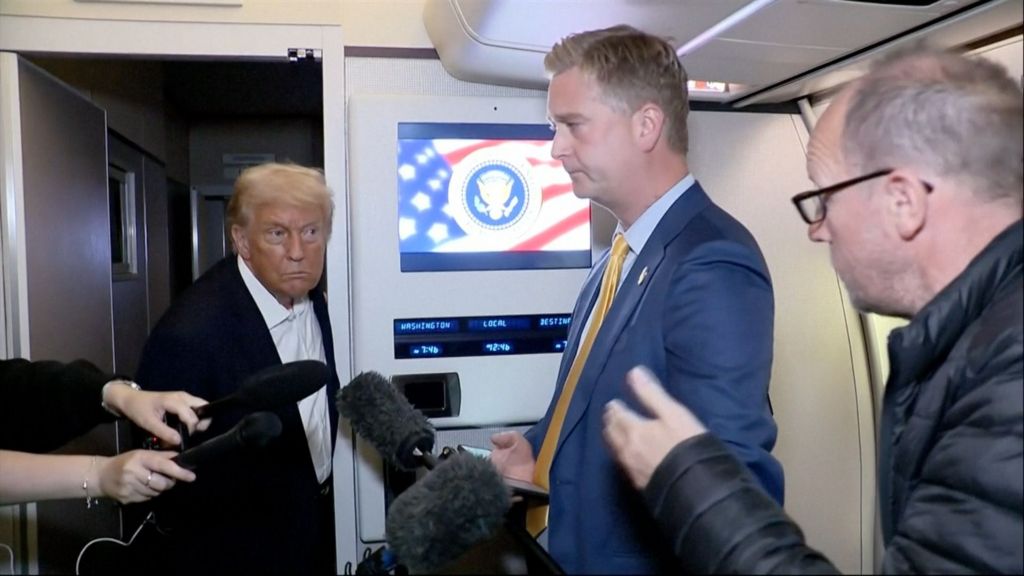
  • Watch: What is it like to travel on Air Force One with Trump?

    Watch: What is it like to travel on Air Force One with Trump?

    A surprising behind-the-scenes incident from a recent NATO summit held in Turkey has shed light on an unexpected maneuver by former U.S. President Donald Trump that caught even his embedded press corps off guard. Last month, as the summit drew to a close and leaders prepared to depart Turkish territory, Trump executed a last-minute, unannounced plane switch that left reporters assigned to travel with him none the wiser.

  • North Korea launches another missile toward sea ahead of US-South Korean military drills

    North Korea launches another missile toward sea ahead of US-South Korean military drills

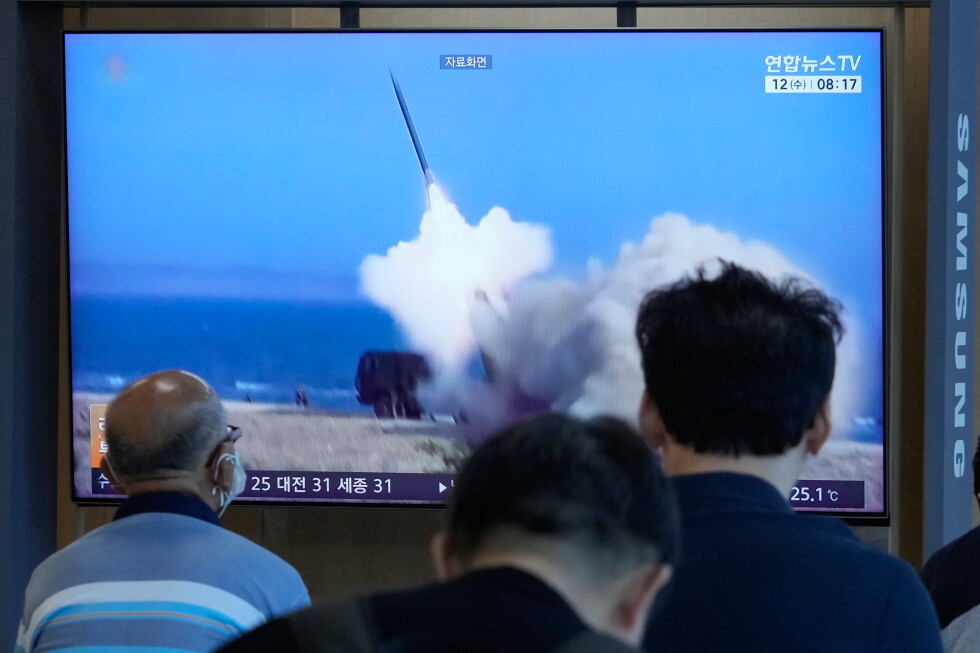
    Tensions have spiked on the Korean Peninsula after North Korea carried out its second ballistic missile launch in less than a week, in a move widely interpreted as a direct protest against the upcoming joint military exercises between South Korea and the United States. Pyongyang has long framed such drills as a preparation for an invasion of its territory.

    According to South Korea’s Joint Chiefs of Staff, the missile was launched from the eastern coastal city of Wonsan at approximately 6 a.m. local time on Wednesday, and traveled more than 700 kilometers (435 miles) before impacting. Japan’s Defense Ministry also confirmed the detection of the launch, noting that the weapon landed in waters outside Japan’s exclusive economic zone, in the sea between the Korean Peninsula and the Japanese archipelago.

    This string of rapid-fire tests aligns with a years-long pattern of North Korean weapons development, a campaign that has continued Pyongyang’s refusal to re-enter denuclearization talks with Washington and Seoul. Regional security analysts have long observed that North Korea consistently leverages joint military exercises conducted by its rivals as a justification to advance its own weapons testing program.

    The latest launch comes just two days after Seoul and Washington formally announced that their annual large-scale military drills, dubbed Ulchi Freedom Shield, would begin on August 17. The exercises are designed to strengthen allied readiness to counter North Korean aggression, a mission that both South Korea and the U.S. stress is purely defensive in nature. This has not softened Pyongyang’s opposition, however: North Korean leader Kim Jong Un labeled 2023’s Ulchi Freedom Shield exercises clear evidence of an intention to “ignite a war” against his country, promising that North Korea would respond with “proactive and overwhelming” countermeasures to any perceived provocation. This year’s tests mark a continuation of that long-standing retaliatory pattern.

    This latest test follows an initial short-range ballistic missile launch detected by South Korea, the U.S. and Japan on August 6, which was the first North Korean ballistic missile test activity since late June. North Korea has not yet issued an official confirmation of either launch, a common practice where the regime typically confirms weapons tests the following day.

    In response to the launch, South Korea’s military has announced it maintains full readiness to repel any further provocation from Pyongyang, in close coordination with the United States. South Korea’s National Security Council formally labeled the launches “acts of provocation” and called for an immediate halt to Pyongyang’s test activities. In Japan, Defense Minister Shinjiro Koizumi told reporters that Tokyo delivered a formal strong protest to North Korea via its diplomatic mission in Beijing, emphasizing that “It’s a serious problem that affects the safety of the Japanese people.”

    North Korea’s weapons tests are explicitly banned under multiple United Nations Security Council resolutions, but Pyongyang has dramatically expanded its testing of ballistic and other advanced weapons since high-stakes denuclearization diplomacy between Kim Jong Un and former U.S. President Donald Trump collapsed in 2019. Regional experts widely assess that Kim is pursuing the expansion of his nuclear and missile arsenals to gain greater leverage to force the U.S. to concede to demands such as the lifting of harsh international economic sanctions that have crippled North Korea’s economy.

    In recent years, Kim has also significantly expanded North Korea’s diplomatic and military alignment with Moscow, with open reporting indicating Pyongyang has supplied troops and ammunition to support Russia’s full-scale invasion of Ukraine. He has also moved to strengthen long-standing ties with China, North Korea’s primary economic partner and traditional diplomatic ally, a shift that culminated in Chinese President Xi Jinping’s June visit to Pyongyang, the first such visit by a Chinese head of state in seven years.

  • Anguish of Colombian brother at rubble of building being searched for earthquake survivors

    Anguish of Colombian brother at rubble of building being searched for earthquake survivors

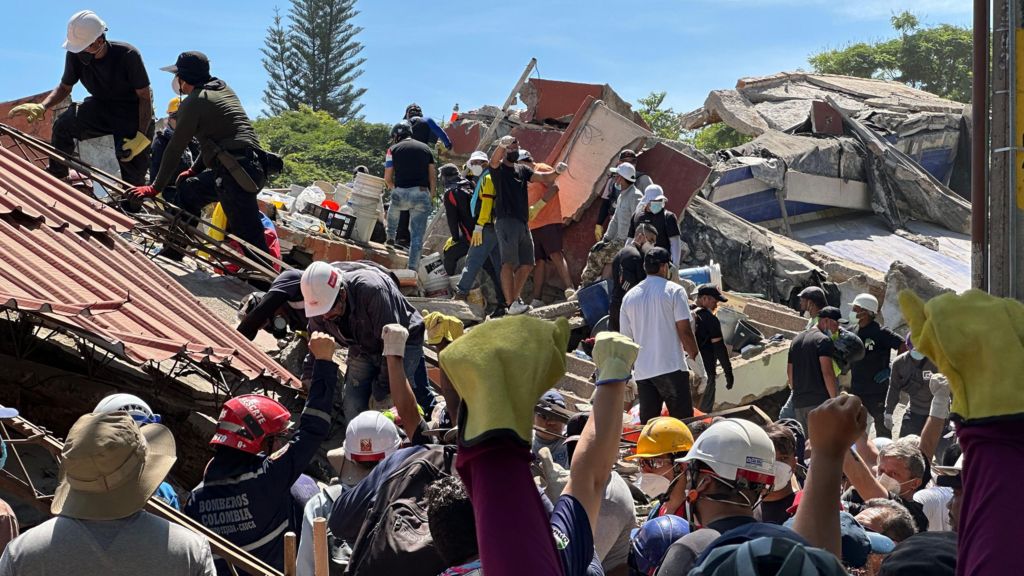
    On August 10, a devastating magnitude 7.4 earthquake ripped through southwestern Colombia, leaving a trail of destruction and death that stands as the worst seismic disaster the country has faced this century, according to the nation’s National Geological Service. Among the hardest-hit areas is Cali, Colombia’s third-largest city home to more than two million residents, where the four-story Torres del Limonar apartment building in the southern Capri neighborhood crumbled to the ground, becoming a grim symbol of the tragedy that has unfolded across the region.

    By the count of Cali Mayor Alejandro Éder, the earthquake has killed at least 95 people across the city, with an estimated 25 people still trapped beneath the rubble of collapsed structures as of Monday night. Torres del Limonar is one of more than 50 buildings that collapsed in the quake, and while neighboring properties escaped the same fate, suffering only minor cracks, the site itself is now a jagged mountain of shattered concrete, where half-buried mattresses, broken furniture and personal belongings poke through the debris under the unforgiving scorching tropical sun.

    For Efraín Gallego, every passing minute brings a agonizing mix of renewed hope and crushing disappointment. His 80-year-old brother and brother’s wife were both buried when the building gave way, and despite the emotion that cracks his voice and leaves him pausing to swallow hard and regain his composure as he speaks, he refuses to give up on finding his brother alive. “You feel such deep anguish,” Gallego told BBC News Mundo at the collapse site. “Every time there is an alert about someone being alive, hope is reborn that we will find him.”

    More than 100 people have gathered at the site, waiting for updates on missing loved ones. Many are too shaken to speak, visibly drained by grief and uncertainty. Some sleep exhausted on the sidewalk or on couches pulled into the street, while others huddle together in shade to lean on one another for support as hours stretch on and anxiety mounts.

    A multi-team response of professional rescuers, military personnel, firefighters, paramedics, humanitarian workers and hundreds of civilian volunteers has been working around the clock to clear debris and reach potential survivors. To cut through the noise of excavators, hammers and saws, workers regularly pause operations and raise their hands in a universal signal for complete silence, calling out into the rubble: “Silence! We are firefighters. If you can hear us, shout or make any noise.” Each pause brings a held breath for waiting family members, but more often than not, no sound comes from below.

    While official counts remain fluid amid the chaotic response, rescuers confirm they have pulled at least 10 survivors from the rubble of Torres del Limonar since the collapse, with local media reporting six survivors extracted in the hours after the disaster, including an infant just a few months old. As of Tuesday morning, rescue team member James Velasco told reporters that at least two trapped people had been detected alive, with crews digging narrow access tunnels to reach them. One survivor is currently trapped with a leg pinned under debris, Velasco added.

    For veteran rescuers like Velasco, there remains cautious reason to hold out hope. “In the past I have participated in operations where we have pulled out survivors after seven days trapped,” he said. “Those who are meant to survive, survive. Nothing is written.”

    A large part of the on-site response has been driven by ordinary Cali residents who have stepped up as volunteers, a collaboration Gallego was quick to highlight amid his own anguish. “We must mention all the people who have come to help with water, supplies, tools, equipment; there is a lot of collaboration. Volunteers are plentiful,” he said.

    Nineteen-year-old Alejandro Mahecha is one of those volunteers. After surviving the quake unharmed with his family and working through the initial shock, he headed to the Torres del Limonar site at first light to pitch in. “The earthquake affected my city and the homes of people I know. I came to this site because there has been a lot of talk about this building and the need for help here,” Mahecha explained. Working alongside friends, he helps clear debris, haul fresh water to exhausted rescue teams and clear streets to speed up evacuation efforts.

    To speed up rescue operations, Mayor Éder has implemented a nighttime curfew around disaster sites, allowing crews to work uninterrupted. As of Tuesday morning, search and extraction efforts were continuing non-stop, even as waiting families confront the growing weight of uncertainty.

  • Ma’a Nonu thrills Kings Park with a solo haka for the Sharks against the All Blacks

    Ma’a Nonu thrills Kings Park with a solo haka for the Sharks against the All Blacks

    DURBAN, South Africa – For decades, South African rugby sides have relished the intensity of facing New Zealand’s iconic pre-match haka challenge, but none had ever responded with a haka of their own – until Tuesday. That historic moment came courtesy of 44-year-old former All Black center Ma’a Nonu, who delivered a memorable solo haka ahead of a tour match between his new side the Sharks and his old national team, a contest New Zealand ultimately won by a commanding 54-0 score on a rain-soaked pitch at Durban’s Kings Park.

    Nonu, who earned 104 caps for New Zealand between 2003 and 2015, has continued his professional playing career across global club competitions well into his mid-40s. Just one week before the high-profile clash, the Sharks announced the signing of Nonu on a role focused on mentoring and developing the franchise’s young emerging talent. However, a growing injury crisis among the Sharks’ matchday squad left the side short of replacements, prompting management to ask the veteran to step onto the bench for the historic fixture – the Sharks’ first match against the All Blacks in 30 years.

    Initially, Nonu was hesitant to accept the call-up. He worried that inserting himself into the matchday squad would overshadow the occasion for the rest of his Sharks teammates, who were preparing to make their own history against the world-famous side. But he ultimately relented to help the franchise fill out their matchday numbers, explaining to South African broadcaster SuperSport: “I thought it would be rude to say no. I thought I would put the boots on and try to help the team really.”

    In the lead-up to the match, Nonu consulted with two former All Black teammates now serving on New Zealand’s coaching staff, Tana Umaga and Tamati Ellison, about his plan to respond to the All Blacks’ haka with one of his own. He framed the decision as an act of respect for both his current side and his roots, saying: “Out of respect for our team and on behalf of myself and my family, I thought it was the right thing to do, to answer the boys and the All Blacks.”

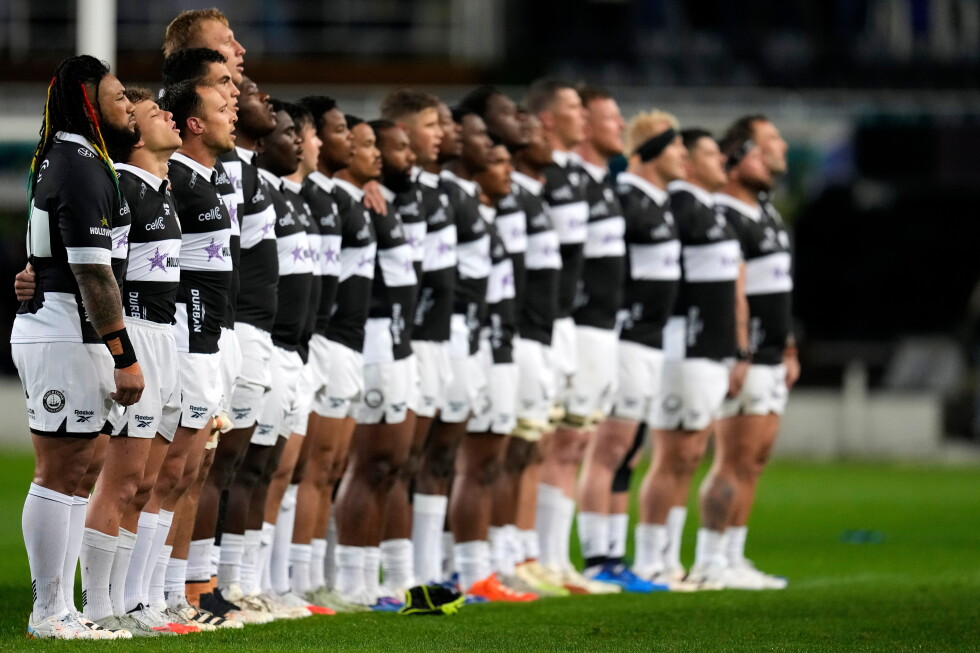
    After the national anthems concluded and the All Blacks finished their traditional haka performance, Nonu stepped forward alone, with the rest of the Sharks squad lined up behind him, and the All Blacks positioned across the halfway line. He performed Kapa o Pango – the haka most commonly used by the All Blacks in modern matches – drawing initial silence from the damp crowd that quickly swelled into loud, warm cheers. When he finished, he nodded respectfully toward the All Blacks side, where most players nodded back in acknowledgment. Only two current All Blacks squad members, Codie Taylor and Beauden Barrett, were part of New Zealand’s national side when Nonu last played for the team.

    Reflecting on the moment after the match, Nonu called the experience a profound honor. “It was such a privilege and an honor, and to do the haka, showing my respect on behalf of my family to the team I love,” he said.

    Nonu got his minutes on the pitch in the final quarter of the one-sided contest, marking his first ever appearance against his former national team. His first touch of the ball came in a hard collision with All Blacks flyhalf Ruben Love – who was not yet born when Nonu made his debut for New Zealand in 2003. “I got 20 minutes. I tried my best. It was great to see the (New Zealand) boys,” he said.

    The All Blacks pulled away to secure a lopsided victory after scoring a string of tries in the final 30 minutes, leaving Nonu playing catch-up for much of his time on the pitch. He was quick to praise his former side, adding: “The All Blacks opened up in the last 30 minutes and I was chasing my tail. Credit to them, they’re improving, and all the best to the brothers for the next game.”

  • Watch: Severe storms overturn vehicle and trigger flooding in Ohio

    Watch: Severe storms overturn vehicle and trigger flooding in Ohio

    A devastating outbreak of severe storms has swept across parts of Ohio, leaving a trail of destruction that includes flipped vehicles, widespread flash flooding, and at least one confirmed human fatality. Local emergency management officials have issued urgent warnings, urging residents across the state to make immediate preparations for a new round of intense storm activity that is projected to hit over the coming days.

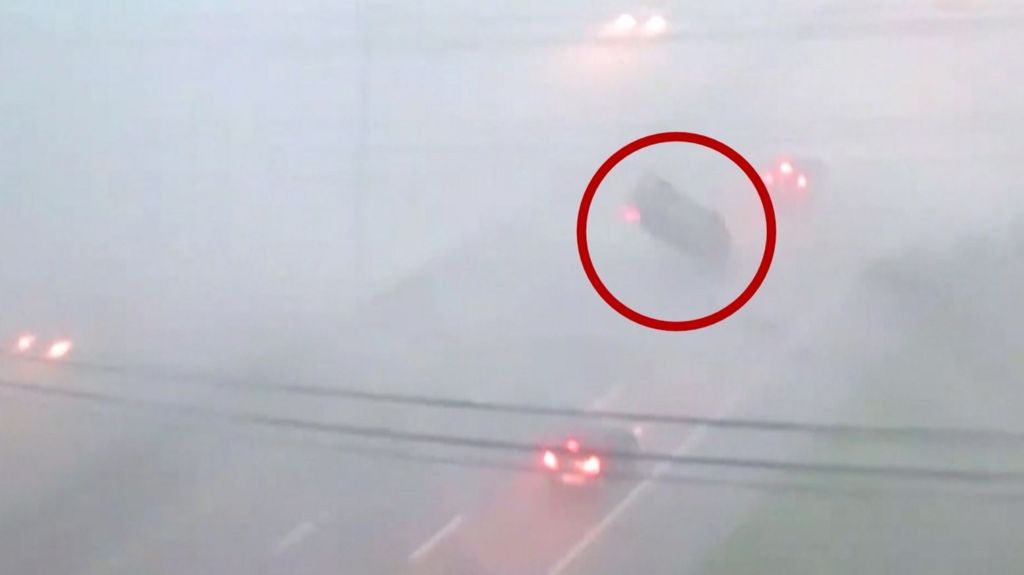
    Footage captured from impacted areas shows the full force of the extreme weather: multiple vehicles were flipped onto their roofs by powerful wind gusts, while low-lying neighborhoods and roadside corridors quickly became submerged under rushing floodwater after hours of heavy, unrelenting rainfall. First responder teams have already been deployed across hard-hit regions to conduct rescue operations, clear blocked roadways, and assess the full scope of property damage.

    Officials have not yet released detailed information about the victim who lost their life in the storm event, but have emphasized that dangerous conditions will persist as additional weather systems move into the region. Residents in flood-prone and high-risk zones have been advised to stock up on emergency supplies, monitor official weather alerts closely, and follow evacuation orders immediately if issued by local authorities. The National Weather Service has also noted that the ongoing pattern of unstable atmospheric conditions across the Midwest creates a high risk of repeated severe thunderstorms, flash flooding, and damaging wind events through the end of the week.

  • US says helicopter fired missiles to disable ship breaking Iran blockade

    US says helicopter fired missiles to disable ship breaking Iran blockade

    Escalating tensions in the Middle East have taken two sharp new turns this week, as the United States Central Command (Centcom) confirmed it carried out a missile strike on a commercial cargo ship attempting to violate Washington’s ongoing blockade of Iranian ports, while an Iran-backed militant group in Yemen launched the first deadly attack on shipping in the Red Sea since regional hostilities erupted earlier this year.

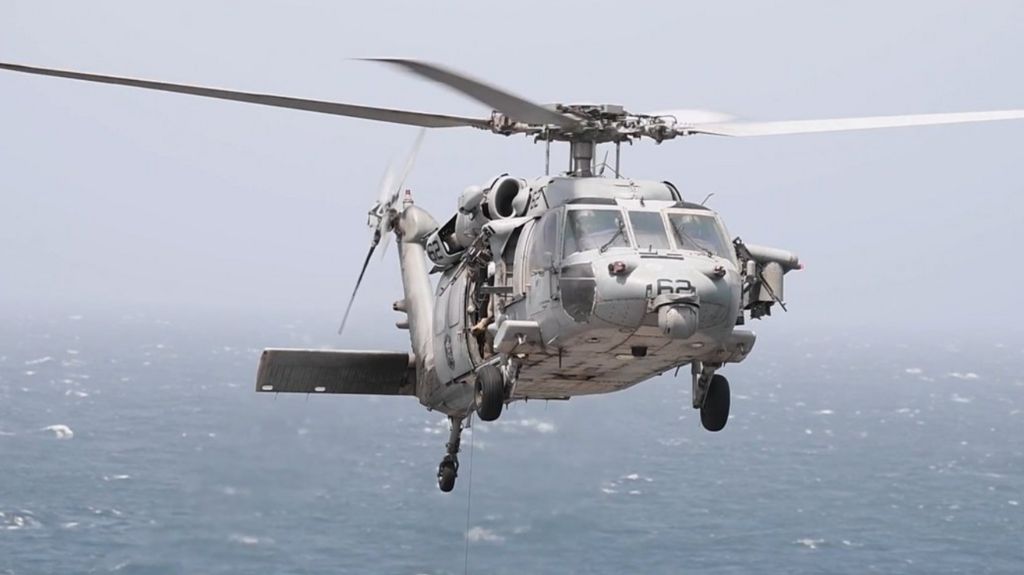
    In an official statement released this week, Centcom announced that an MH-60 military helicopter launched two Hellfire missiles at the Panama-flagged bulk carrier M/V Vela Nova on Tuesday, targeting the vessel’s engine room as it traversed the Gulf of Oman. The strike was carried out after the ship’s civilian crew disregarded multiple repeated warnings from U.S. naval forces deployed in the region, according to Centcom. Following the attack, the vessel abandoned its course and is no longer en route to an Iranian port, the command confirmed.

    The U.S. blockade of Iranian ports remains in full force, months after a regional war erupted between Israel, backed by the U.S., and Iran, which began on February 28. Diplomatic efforts to broker a ceasefire and end the conflict have so far failed to produce a lasting agreement. After the latest ceasefire collapsed in June, direct exchanges of fire between U.S. and Iranian forces have become an almost daily occurrence in the Gulf. Centcom’s update on Tuesday noted that since the blockade was implemented, as of August 11, U.S. forces have redirected 55 commercial vessels attempting to bypass the restrictions, disabled three non-compliant ships, and boarded two others to enforce the order.

    Iran has responded aggressively to the U.S.-led blockade and the ongoing war, launching retaliatory strikes against Israel and U.S. allied states across the Gulf region. Most critically, Tehran has effectively closed the Strait of Hormuz, the world’s most vital chokepoint for global energy supplies. Before the outbreak of hostilities, roughly 20% of the world’s total oil and liquefied natural gas shipments transited the strait daily. Since the closure, global energy markets have seen extreme and ongoing price volatility, with costs swinging wildly in response to every new development in the conflict. International mediators from multiple neutral nations have spent months attempting to negotiate a deal to reopen the waterway, but no breakthrough has been achieved to date. Iran has not yet issued any public comment on the Tuesday strike against the Vela Nova.

    In a separate but connected development Tuesday, the internationally recognized government of Yemen announced that six people were killed and 10 others injured in an attack carried out by the Iran-aligned Houthi movement on a cargo ship transiting the Red Sea. The Houthi group quickly claimed responsibility for the strike, stating that the targeted vessel was carrying military equipment bound for Saudi Arabia, a key U.S. ally in the region. This attack marks the first time the Houthi movement has caused fatalities in a shipping attack in the Red Sea since the regional war began in February, raising new fears that hostilities will spread beyond the Gulf and disrupt another critical global shipping lane.

  • Inside the Secret Service ‘shell game’ to hide US presidents in plain sight

    Inside the Secret Service ‘shell game’ to hide US presidents in plain sight

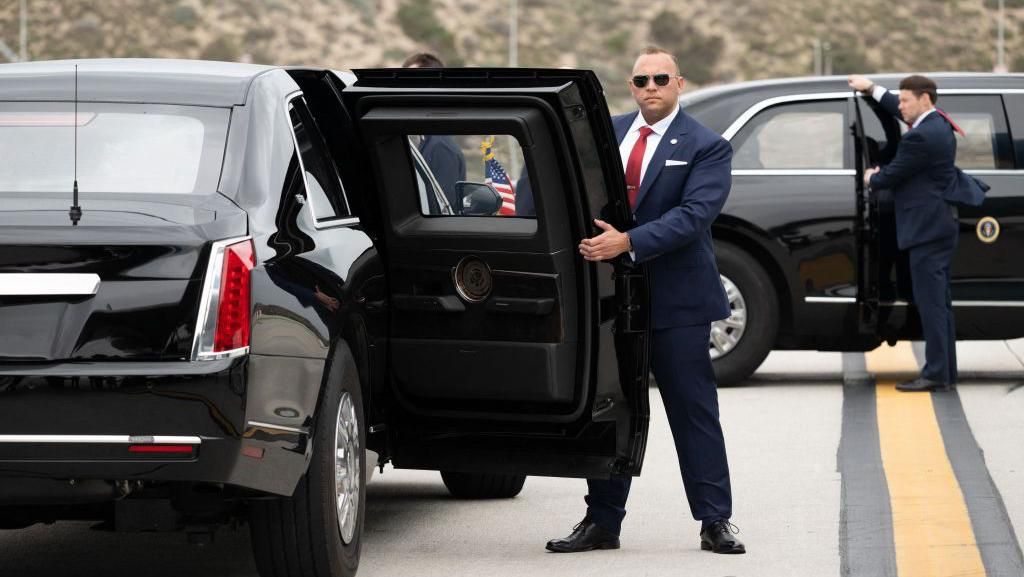
    In early July, following the NATO summit hosted in Ankara, Turkey, a dramatic and little-known security maneuver unfolded that has now drawn fresh attention to the lengths U.S. Secret Service agents go to protect the sitting American president. On July 8, Donald Trump boarded the iconic Boeing 747 Air Force One in full view of broadcast cameras, but by the time the aircraft departed Turkish airspace, the president was nowhere on board. According to multiple security and intelligence sources, Trump was secretly smuggled off the plane via an on-board catering truck before departure, and transferred to a smaller C-32A – the military-modified variant of the Boeing 757 – which then carried him to RAF Mildenhall in the United Kingdom. The passengers who remained on the original Air Force One were unknowing decoys, with no advance indication that the president had already left the aircraft.

    This extraordinary aircraft switch is far from a one-off security trick, experts on presidential protection explain. Deception has long been a core pillar of U.S. Secret Service operations designed to confuse potential adversaries targeting the commander-in-chief. “That’s very common,” noted Ronald Kessler, an acclaimed author who has extensively covered the Secret Service’s operations and history. “There’s a long history of strategies to mislead anybody who might be trying to harm the president.”

    Smaller-scale deception tactics are already a routine part of presidential travel, even within the United States. Robert McDonald, a retired senior Secret Service agent who served on presidential protection details during the George W. Bush administration, explained that decoy assets are integrated into nearly every presidential movement. For example, presidential motorcades – which often include more than 30 security, support, press and emergency vehicles – almost always carry two identical “Beasts”, the heavily armored presidential limousine. One carries the president, while the second acts as a decoy, and the two frequently switch positions out of public view, such as under highway overpasses or in tunnel sections. “It’s what we call a shell game,” McDonald explained. “Even when we traveled from Washington D.C. to Joint Base Andrews, those two limousines would change position out of sight of anyone outside the motorcade. Different things are used to mix up the bad guy.” The order of vehicles in the motorcade is also regularly shuffled en route to obscure the president’s location from potential threats.

    The same logic applies to air travel: Marine One, the presidential helicopter, almost always travels in a formation of three identical craft, with the helicopters switching positions mid-flight to prevent hostile actors from identifying which craft carries the president. For high-risk international trips, far more elaborate deception plans are prepped and can be activated at a moment’s notice.

    Paul Eckloff, another former Secret Service agent, told BBC World Service’s *Newshour* that while full aircraft switches are not a daily occurrence, they are a permanent contingency option for executive protection teams. “When the president travels to war zones, there are frequently tactics and techniques used to create doubt in an adversary of which aircraft or which movement that he’s going to make,” he said.

    This tactic has a well-documented history in high-stakes presidential travel. In March 2000, then-President Bill Clinton flew from India to Islamabad, Pakistan, aboard an unmarked executive jet, which landed only after a decoy jet painted with full Air Force One markings touched down first. Three years later, the White House publicly announced that George W. Bush would spend Thanksgiving at his Texas ranch, only for the president to arrive secretly in Baghdad aboard a blacked-out Air Force One. More recently, in 2023, Joe Biden was quietly transported into Ukraine with only a skeleton press contingent of one reporter and one photographer, with the full details of the trip kept secret until he was safely on the ground. In all three cases, reporters aware of the plan agreed to hold their reporting until the operation was complete to protect the president’s safety.

    To date, the exact nature of the threat that prompted the Ankara deception remains undisclosed. The Secret Service has declined to comment on the incident, while the White House has neither confirmed nor denied the maneuver, only stating that it “uses every tool available to protect the president.”

    Security experts note that while comprehensive contingency plans are drafted for every presidential trip, the Secret Service maintains the flexibility to improvise tactics when new intelligence emerges, particularly when traveling abroad. According to McDonald, the decision to deploy such an extraordinary measure indicates that the threat was deemed serious by multiple U.S. security agencies. “That tells me that the threat level in Turkey was relatively substantial and quite high,” he said. “The president’s staff, the Secret Service and the White House Military Office were almost certainly immediately alerted, got together in a room, reviewed the intelligence, and put together a plan to negate the threat.”

    That assessment is shared by Marc Polymeropoulos, a 26-year veteran of the Central Intelligence Agency who oversaw clandestine operations across the globe and served tours in Iraq and Afghanistan. “The key part of this is the nature of the threat, and what was so severe that the Secret Service would put forth such a deception operation,” he said. Polymeropoulos raised one key unresolved question: whether U.S. intelligence and government officials had a duty to warn the passengers who remained on the decoy Air Force One of the potential threat. “Let’s say the plane was blown out of the sky, and we knew about it,” he said. “If we know a terrorist group is going to attack a target, we warn relevant parties to prevent civilian casualties. That precedent raises questions about this case.”

    It remains unclear just how much danger the passengers on the original Air Force One faced, or if they faced any danger at all. Reporters on board the decoy aircraft noted that they were repeatedly instructed to keep their window blinds closed – a measure McDonald says is not unusual, and was intended to protect all passengers on the flight. “A large plane flying overhead where somebody could see it, with the shades up and windows illuminated, could tell somebody that it’s a particular type of aircraft,” he explained. “I appreciate the need for transparency, but [the passengers] are also part of the movement. We’ve got to make sure that you and everybody gets home safe.”

    McDonald added that the Secret Service is under no legal obligation to disclose potential threats or detail active protection operations to the public or even to non-cleared passengers, with any decision to release information resting with the White House and other senior agencies. “The Secret Service is not in the business of public relations,” he said. “We’re very good at keeping secrets, as our name says. Everybody doesn’t need to know everything.”

  • Saudi defence pact with Turkey and Pakistan sparks UAE backlash

    Saudi defence pact with Turkey and Pakistan sparks UAE backlash

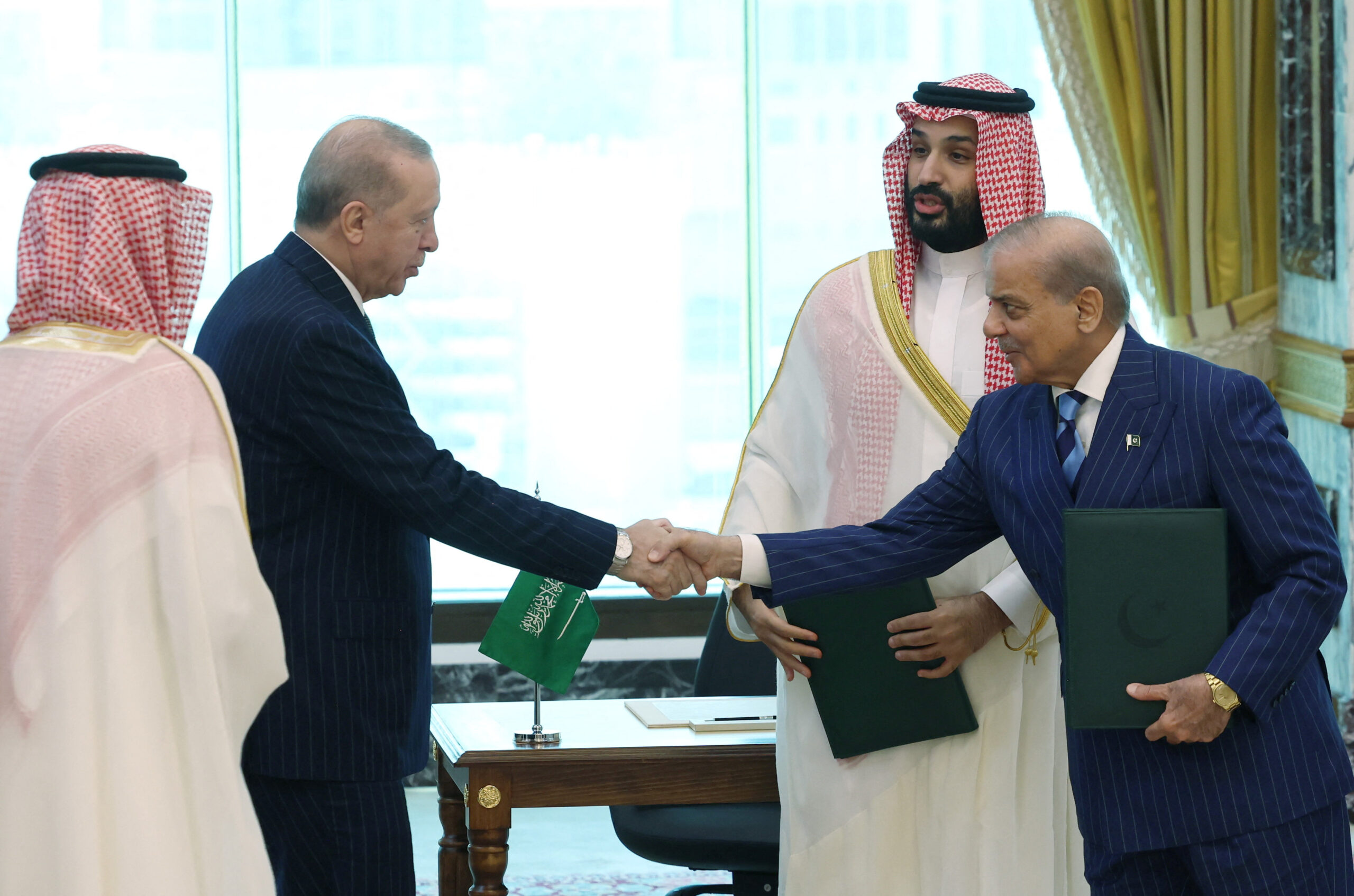
    A landmark collective defense agreement signed by Saudi Arabia, Turkey, and Pakistan has triggered an unprecedented public dispute between Saudi Arabia and the United Arab Emirates, exposing long-simmering divisions over regional security strategy within the Gulf Cooperation Council (GCC).

    Dated August 7, 2026, the accord — officially named the Mecca Joint Defence Agreement — enshrines a core mutual defense principle: any armed aggression against one of the three signatory states will be considered an attack on all three. While the pact was framed by Riyadh as a step to broaden regional deterrence capabilities, it has drawn sharp pushback from prominent Emirati public figures, who challenge Saudi Arabia’s choice to build a new security architecture outside the GCC framework.

    The GCC, founded in 1981, is a 6-nation regional bloc consisting of Bahrain, Kuwait, Oman, Qatar, Saudi Arabia, and the United Arab Emirates, all energy-rich Gulf monarchies that have long coordinated on political, economic, and security matters. Leading the Emirati criticism is Abdulkhaleq Abdulla, a respected political analyst and former senior advisor to UAE President Mohammed bin Zayed. In a series of public posts on X, Abdulla questioned the strategic rationale behind the trilateral pact, arguing that prioritizing a broader regional partnership over deepening intra-GCC cooperation was a misstep.

    “Congratulations on the establishment of this alliance, but strengthening Gulf military and political cooperation and unifying the Gulf house is far more important than investing in regional military and political cooperation that includes countries whose credibility and ability to confront the Iranian-Israeli threat are not taken seriously,” Abdulla wrote. He also pressed the three signatories on a core question of alliance-building, asking, “One of the conditions for the success of any alliance is identifying the common enemy. So who is the enemy for the countries of this alliance?”

    Abdulla’s public critique drew an immediate and firm rebuttal from Saudi officials and commentators. Saudi Prince Abdulrahman bin Musaid pushed back directly against Abdulla’s claims, framing the new agreement as an exercise of Saudi Arabia’s inherent national sovereignty. “What is the problem, Doctor, if it is an alliance, a treaty, an agreement, or under any title?” the prince wrote on X. “How can this conflict with unifying the Gulf house? Is it not the right of any state to make agreements with any state or states according to what it sees as achieving its interests?”

    Fahad al-Arabi al-Harthi, chairman of the Saudi-based Asbar Centre for Studies and Research, further clarified Riyadh’s position, rejecting the characterization of the Mecca agreement as a bloc targeted at any specific nation or regional actor. He emphasized that the pact was not structured around a shared enemy, but rather focused on building collective defensive and deterrent capacity to safeguard regional security and stability against any potential threat from any origin.

    Other Saudi social media users took a more confrontational tone, pointing to the UAE’s own independent foreign policy moves that bypassed GCC coordination, most notably the 2020 Abraham Accords that normalized the UAE’s diplomatic relations with Israel. “I wonder, did the UAE inform and notify the Gulf states before its alliance with the Zionist entity?” one Saudi commenter asked.

    As the public debate escalated, Abdulla doubled down on his position, sharing a post widely interpreted as a rejection of broader pan-Arab or pan-Islamic alliances in favor of a strict, homeland-first approach to national interest. “He whose sect is more important than his homeland, there is no safety for him… He whose nation, Arab or Islamic, is more important than his homeland, there is no safety for him,” Abdulla wrote. “Belonging, loyalty, and sincerity are for the homeland alone, with no partner.”

    That post drew a sharp response from Abdulaziz al-Tuwaijri, former head of the Islamic World Educational, Scientific and Cultural Organisation (Isesco), who alluded directly to the UAE’s diplomatic ties with Israel in his reply: “Anyone who betrays and collaborates with the Zionists will never find security.”

    In a follow-up tweet, al-Tuwaijri also called out the inconsistency of the UAE’s criticism, pointing to the UAE’s own bilateral defense agreement with India and its extensive security cooperation with Israel — partnerships the UAE has pursued independently without similar scrutiny from within the GCC. He closed his post with a pointed Arabic proverb, “those who have shame are dead,” a rebuke implying that critics of the Saudi-led pact lack the moral standing to question Riyadh’s strategic choices.

    The public clash marks a rare breakdown in the usually discrete diplomatic culture of Gulf monarchies, where internal disagreements are rarely aired publicly. The dispute highlights growing rifts over how Gulf states should navigate shifting regional power dynamics, with differing visions on whether security cooperation should remain centered within the GCC or expand to extra-regional and non-GCC actors.

  • Israeli settler who took part in brutal assault on Palestinians released from house arrest

    Israeli settler who took part in brutal assault on Palestinians released from house arrest

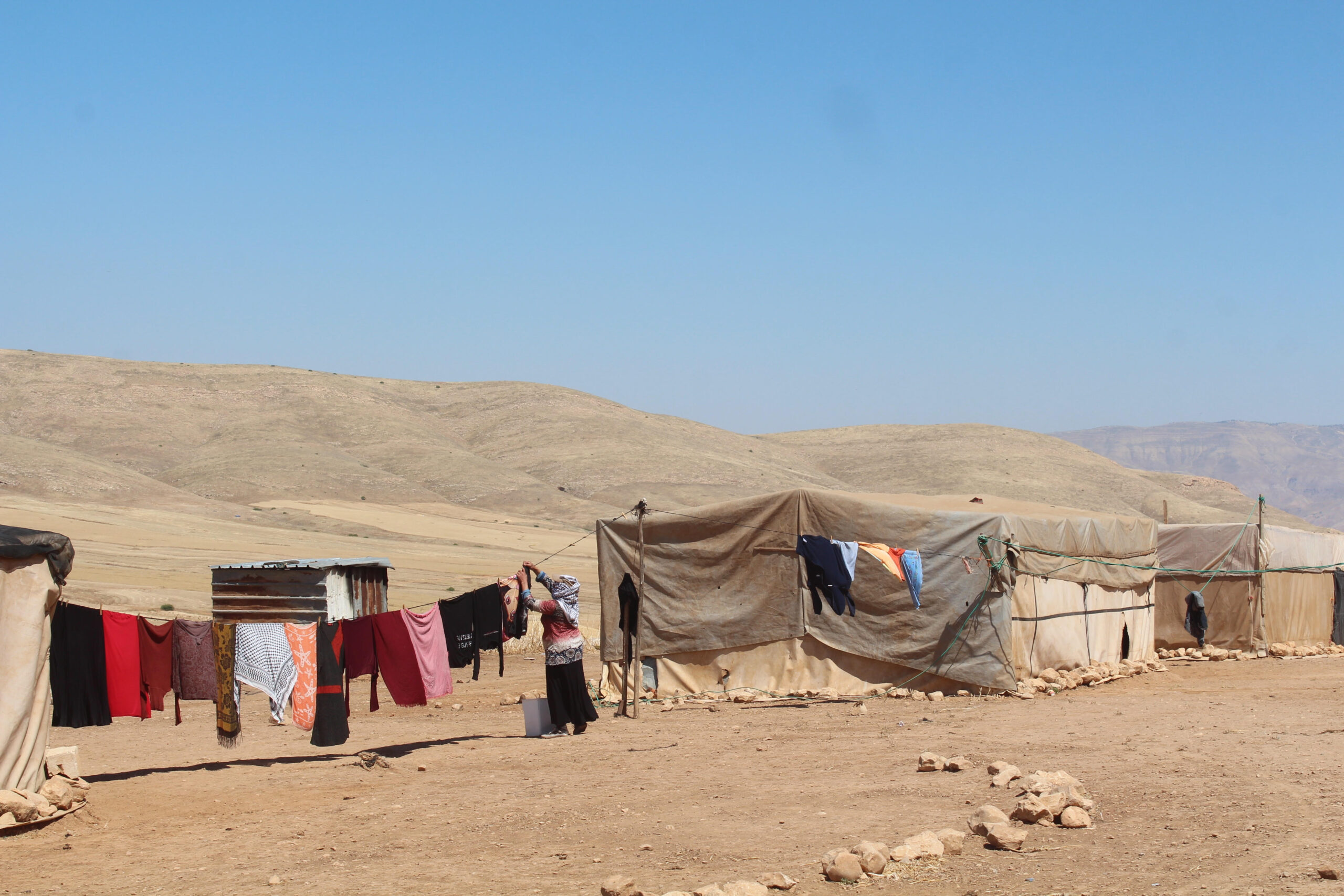
    A Israeli settler implicated in a brutal pre-dawn assault on a Palestinian village in the occupied West Bank that left multiple residents injured and humiliated has been released from house arrest, the Israeli military confirmed in a public statement issued Monday.

    Tal Yinon Dardik, who is alleged to have participated in the March 13 attack on the small Palestinian community of Khirbet Humsa, will no longer be confined to his place of residence, but is required to check in at a local police station twice a day under the terms of the court ruling that cleared his release.

    The decision to end Dardik’s house arrest followed a ruling by the Jerusalem District Court that the original terms of his detention were unworkable. Dardik had been held under house arrest at his mother-in-law’s home in Adei Ad, a Israeli settlement located in the central West Bank, but the court found the arrangement unsustainable after Dardik’s mother-in-law refused to continue hosting him.

    Dardik has become a cause célèbre for Israeli settler activist groups and right-wing political figures, who mounted a sustained public campaign to push for his release. He has repeatedly denied any involvement in the attack, which unfolded when dozens of masked settlers stormed Khirbet Humsa before sunrise, targeting multiple Palestinian residents including women, children and elderly people in a coordinated assault that left dozens traumatized.

    One of the most severe assaults targeted 29-year-old Qusai Abu al-Kebash, who has told reporters that settlers stripped him naked, bound his arms and legs, fastened a plastic zip-tie around his genitals, and paraded him through the village in front of his family and neighbors. An American peace activist who was staying in the village at the time of the attack gave a firsthand account of the violence to Israeli newspaper Haaretz earlier this year, describing being attacked as she slept in a tent.

    “Six masked Israeli settlers armed with heavy wooden sticks swarmed me while I was asleep,” the activist recalled. “They immediately beat the three of us to the ground, smashing our faces with their fists and clubs. They zip-tied our hands and feet, and were yelling things like, ‘We are going to kill you!’” During the attack, she said, settlers pulled down Abu al-Kebash’s pants, poured cold water over him, and beat him repeatedly into the dirt. “All he could do was curl into a fetal position and scream when they beat him with their clubs,” she added.

    Multiple village residents confirmed the assault lasted roughly an hour, and estimated that as many as dozens of masked settlers took part in the incursion. A Palestinian woman who was in the village during the attack said she was beaten, dragged out of her home, had her head covering torn off and portions of her clothing ripped. “They pulled the girls out and beat them, even the little ones. They mocked us and celebrated our humiliation,” she told Haaretz. A 74-year-old resident added that three attackers beat him repeatedly on his head, hands and stomach, while another destroyed the village’s security cameras, internet router and outdoor lighting.

    The release of Dardik comes after months of political pressure from senior Israeli figures, including Defense Minister Israel Katz, who has openly criticized the original restrictions placed on Dardik and ordered government and military officials not to renew his detention. Katz visited Dardik in prison last month while Dardik was conducting a hunger strike to protest his detention. He also previously threatened to fire Major General Avi Bluth, head of the Israeli military’s Central Command, after Bluth appealed a court ruling that would have allowed Dardik to move his house arrest to a location of his choosing. Katz ultimately backed down from the threat after widespread public outcry.

    The attack is one of a sharp rising tide of settler violence targeting Palestinian communities in the occupied West Bank in recent years. The International Court of Justice has repeatedly ruled that all Israeli settlements built in the occupied West Bank and East Jerusalem violate international law, yet more than 700,000 Israeli citizens currently reside in these illegal settlements. United Nations data shows that attacks on Palestinian herding communities like Khirbet Humsa have spiked dramatically in recent years, with at least 5,910 Palestinians internally displaced by settler violence between January 2023 and April 2024.