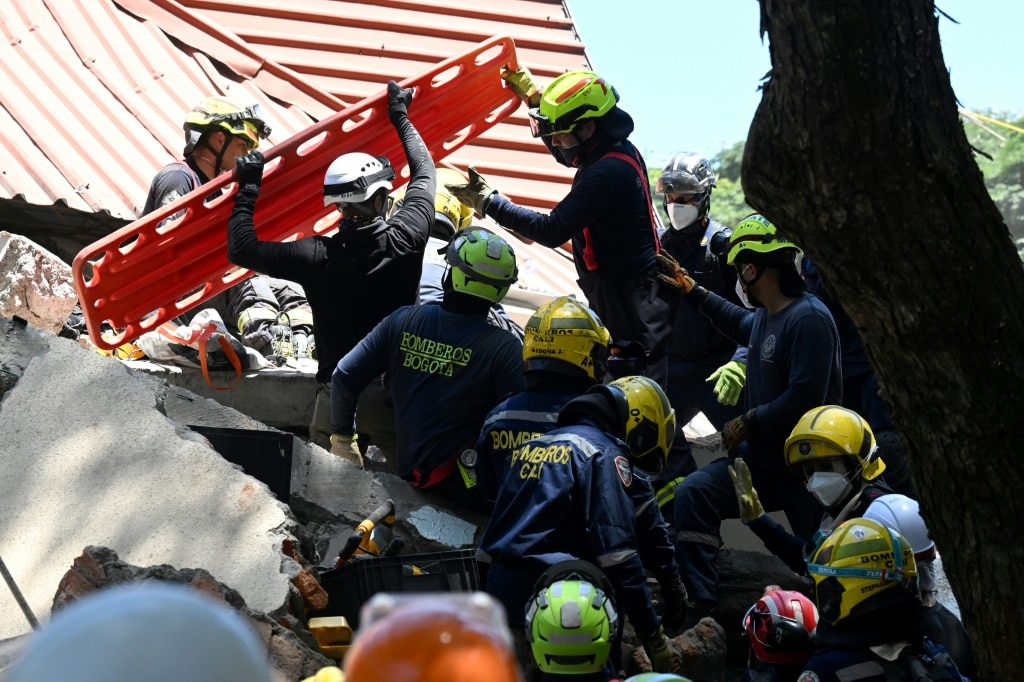
A 7.4-magnitude earthquake, the strongest seismic event to strike Colombia in 100 years according to the U.S. Geological Survey, has left at least 240 people dead and more than 1,300 injured after rocking the country’s western coffee-growing region and Pacific coastal belt early Monday morning. The disaster has triggered a massive urgent search-and-rescue operation, with volunteer crews and official responders working around the clock to pull trapped survivors from the rubble of hundreds of collapsed structures.
The tremor struck at 7:34 a.m. local time (12:34 GMT) at a depth of 110 kilometers, with shaking felt as far away as neighboring Ecuador and Panama. Three cities — Pereira, Manizales and Quibdo — bore the brunt of the destruction. In Pereira, a half-million-population city that saw the worst damage, nearly all power service was knocked out immediately after the quake. Thousands of residents spent the night sleeping in open streets, too fearful of deadly aftershocks to return to damaged buildings, or left with no home to go back to. “Since yesterday we’ve been wondering what will become of our lives,” Gloria Giraldo, a 38-year-old housewife whose neighborhood was reduced to rubble, told Agence France-Presse.
The new Colombian president, Abelardo de la Espriella, who took office just days before the disaster, quickly declared a national state of emergency and vowed to mount a coordinated national rescue and relief effort. During a visit to impacted areas Tuesday, he announced rent subsidies for households displaced by the quake.
Across impacted regions, ordinary Colombians have stepped up to join rescue efforts alongside official first responders. In the city of Cali, volunteer teams worked with hand tools, pickaxes and even their bare hands to clear debris from flattened buildings, forming human chains to move broken bricks and masonry. Rescuers pause every few minutes to listen for any signs of life from people trapped beneath the rubble. “We are trying to get everyone out alive,” said Andres Felipe Mejia, a volunteer who joined one of the makeshift rescue crews. Recounting one successful extraction near a collapsed building, Mejia said: “One of the rescuers asked anyone trapped to whistle, and someone whistled back. They pulled out a man and a baby, but the wife is still in there.” Mejia added that members of the public have poured into impacted areas with donations of food and supplies, offering to help firefighters and displaced residents in any way they can.
Local authorities activated red alerts for hospitals across five Colombian cities Monday, and imposed a nighttime curfew in Cali to support rescue operations. For many on the ground, the scale of destruction was overwhelming. “It felt like the end of the world — cars and motorcycles driving the wrong way, everyone searching for their loved ones,” said volunteer rescue worker Nelson Moreno. In Manizales, a landmark neo-Gothic cathedral saw its iconic tower crumble in the quake. In Quibdo, the capital of the Choco department, local official Jenny Rivas reported that public services and communications have been virtually completely shut down. Residents described scenes of chaos as the ground shook: people ran into streets half-naked, some jumped from second-floor balconies to escape unstable buildings, and crowds gathered in open areas to pray amid the uncertainty. Even in Bogota, hundreds of kilometers from the epicenter, residents poured out of buildings into the streets in their pajamas as shaking shook the capital.
Geologists from the USGS confirmed the quake was triggered by movement along a deep fault within the Nazca tectonic plate. The disaster comes just two months after powerful twin earthquakes killed more than 6,300 people and left tens of thousands homeless in neighboring Venezuela, underscoring the region’s high seismic risk.
International support has already begun to pour in for Colombia. The European Union, Israel and Mexico have extended offers of disaster assistance. The Vatican announced Tuesday that Pope Leo XIV was “deeply saddened” by the tragedy and was praying for the recovery of those affected. United Nations Secretary-General António Guterres offered his condolences to victims and confirmed the UN is supporting the government-led response effort as requested. The U.S. administration, a key backer of President de la Espriella, announced $15.5 million in emergency relief aid just hours after the quake struck.