博客

  • US ambassador denounces settler siege as Israel dispatches troops

    US ambassador denounces settler siege as Israel dispatches troops

    In a striking turn of events in the long-turbulent occupied West Bank, Israeli military forces launched a fresh operation against extremist rogue settlers on Thursday, responding to unusually blunt public condemnation from the United States ambassador. The operation comes on the same day that Israeli leadership inaugurated a new settlement built on the site of an outpost evacuated more than two decades ago, laying bare the deep internal and diplomatic tensions surrounding settlement expansion in the occupied territory.

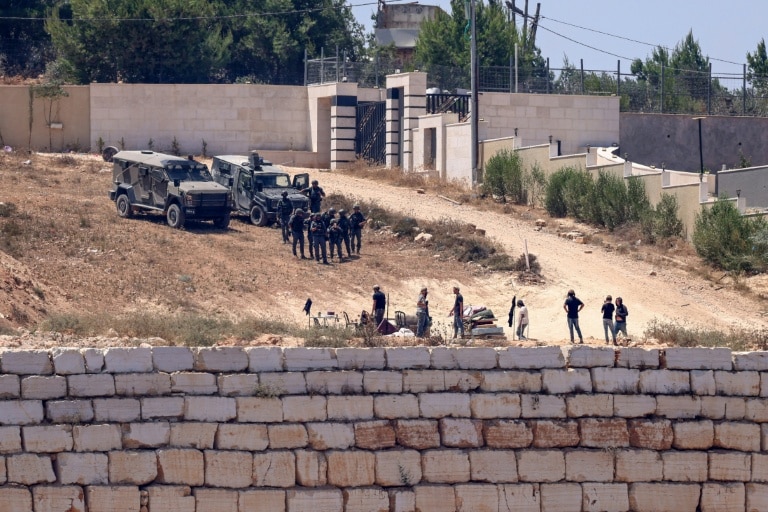
    The crisis began last Sunday, when settlers in the area near Nablus imposed a total blockade on multiple Palestinian residential properties, including a home belonging to a United States citizen. Trapped residents report being completely cut off from access to food, drinking water, and critical essential supplies for days. In an extraordinary rebuke from a figure long known as one of the most vocal American backers of Israeli settlement activity, US Ambassador to Israel Mike Huckabee issued a scathing public denunciation of the siege on social platform X.

    Huckabee, an evangelical Christian pastor who has spent decades rejecting Palestinian statehood and openly supporting Jewish settlement across the West Bank, wrote that there is “no excuse for such thuggish behaviour”. He added that the intimidation and harassment targeting the besieged Palestinian families amounted to a horrific act of terror, calling the actions “disgusting”. The ambassador also confirmed that Israeli authorities launched the new operation at the explicit request of the US government, Israel’s closest and most critical international ally.

    The Israeli military confirmed that it deployed forces to the Qusra region for a second time overnight, dismantling two unauthorized settler outposts and taking one Israeli settler into custody. But local witnesses report that the majority of the settlers who participated in the blockade remain in surrounding areas near the Palestinian village. Aisha Hassan, a resident trapped inside one of the besieged homes, told reporters that the entire area remains completely sealed off, with no way for humanitarian supplies to reach trapped residents. “The settlers are spread out in nearby areas on the adjacent hill. So far, no one has been able to get food and supplies to us because the area is completely sealed off by the army,” Hassan said.

    Abdel Azim Wadi, mayor of the Palestinian village of Qusra, added that the Israeli military has issued temporary eviction orders for the blockaded Palestinian homes amid its operation to remove the rogue settlers. A day before the overnight deployment, troops had already dismantled most of a makeshift settler tent at the site, but settlers remained defiantly in place, using only blankets for shelter.

    The parallel push to remove the rogue blockade and inaugurate a new settlement underscores the conflicting political pressures facing Israeli Prime Minister Benjamin Netanyahu’s hardline government, just weeks ahead of October 27 national elections that current polling indicate will be extremely close. On Thursday, top Israeli officials including Defence Minister Israel Katz gathered to celebrate the reopening of the Ganim settlement in the northern West Bank, which was originally dismantled more than 20 years ago as part of a national disengagement plan designed to reduce friction with Palestinian populations by withdrawing from heavily Palestinian-populated areas. That 2005 plan also saw Israel withdraw all troops and settlers from the Gaza Strip, which later fell under the control of the militant group Hamas.

    The unprecedented criticism from Huckabee has sent shockwaves through the Israeli settlement movement, even among settlement leaders who recognize the ambassador as one of their most stalwart American allies. Oded Revivi, former head of the council for the moderate Jerusalem-area settlement of Efrat, argued that the rebuke from such a reliable friend should serve as a wake-up call for the entire settlement movement. “It is impossible to slap a leftist label on Ambassador Huckabee, the greatest friend of the settlement enterprise in the US,” Revivi said. “If a true friend like Huckabee has to bang on the table, then all of us need to stop and ask how it happened that we lost our way, and fix it immediately.”

    Settler violence against Palestinian communities across the West Bank has risen sharply since the October 7, 2023 Hamas attack on Israel that killed roughly 1,200 people, mostly civilians. Currently, more than 500,000 Israeli settlers reside in West Bank settlements that are widely recognized as illegal under international law, alongside an estimated 3 million Palestinian residents of the occupied territory.

  • China’s new stealth corvette tests the future of naval warfare

    China’s new stealth corvette tests the future of naval warfare

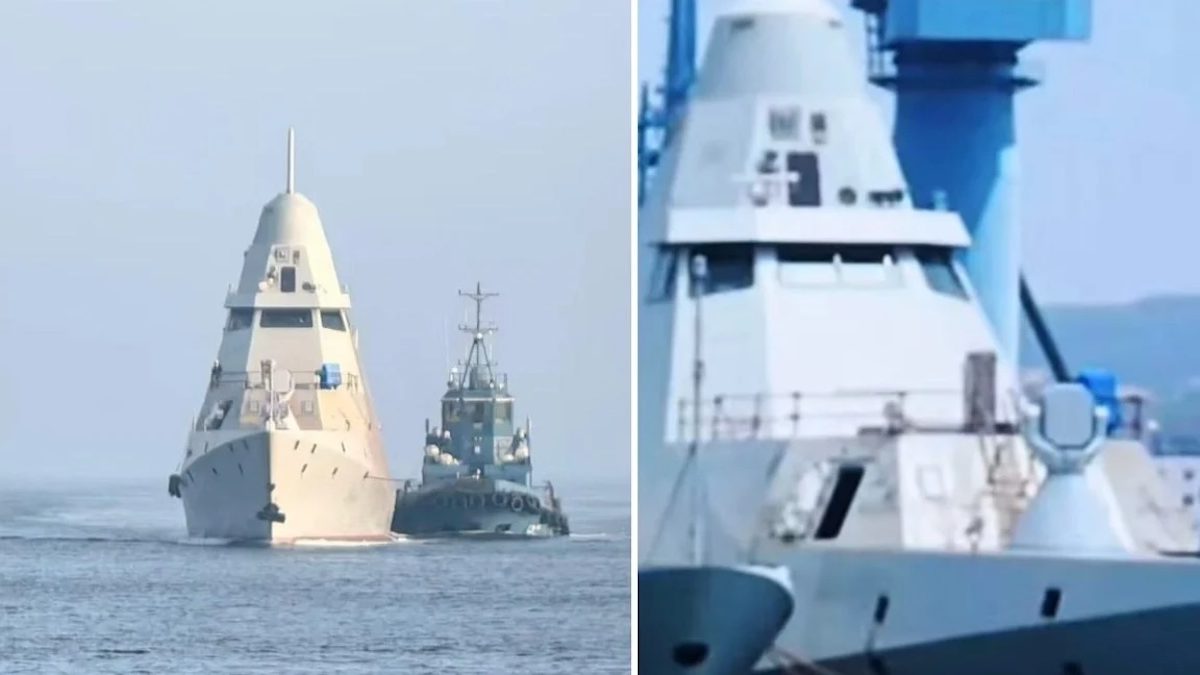
    A newly modified mysterious deck-mounted system on China’s experimental stealth corvette has sparked intense speculation among open-source naval analysts, highlighting a growing global naval competition to develop directed-energy weapons for both gray-zone coercion and cutting-edge defense against mass drone attacks.

    First spotted at China’s Liaonan Shipyard in 2023, the modified stealth test vessel made headlines this month when Defense Blog reported that a previously installed missile launcher had been removed and replaced with an unknown box-shaped system mounted on the corvette’s deck. Open-source intelligence experts who have tracked the vessel’s development are split into two leading camps over the system’s intended function: one argues it is a ship-borne sonic weapon designed for non-lethal disruption of enemy personnel, while the other contends it is a high-power microwave (HPM) directed-energy system built to disable incoming swarms of drones and unmanned vessels.

    Proponents of the sonic weapon theory point to China’s well-documented history of deploying acoustic devices for non-lethal harassment and crowd control operations, including multiple incidents in the South China Sea. In contrast, supporters of the HPM hypothesis note that the system’s boxy form factor and deck placement closely match the design of recently unveiled Chinese land-based HPM weapons, which are engineered to disable the electronics of small unmanned aerial vehicles at ranges exceeding three kilometers.

    The War Zone (TWZ) outlined the test corvette’s core design parameters in an August 2024 analysis, noting the vessel features smooth, faceted low-observable hull surfaces purpose-built to minimize its radar cross-section. Its stealth-oriented design includes a main main gun hidden inside a faceted stealth cupola, structural features that suggest space reserved for a vertical launch system, and a modified mounting originally thought to be for an HQ-10 short-range missile system, but now believed to house a single aperture for electro-optical testing, laser trials, or prototype evaluation. The corvette’s streamlined mast and rumored hybrid all-electric propulsion system also reflect its mission to test new technologies for the next generation of Chinese littoral combat vessels.

    China has a established track record of deploying non-kinetic and directed-energy tools in its gray-zone territorial operations in the South China Sea, where it uses ambiguous, deniable incremental and hybrid tactics to assert territorial claims without triggering full-scale armed conflict. In January 2025, the China Coast Guard was reported to have used a long-range acoustic device (LRAD) to harass a Philippine Coast Guard vessel, the BRP Cabra, operating in disputed waters. A similar deployment against Philippine fisheries vessels was reported in late 2023, following an early 2023 incident where a Chinese military laser was used against the Philippine Coast Guard ship BRP Malapascua, temporarily blinding members of its crew. Unlike conventional loudspeakers that project sound over a wide area, LRAD systems emit a concentrated, high-intensity sound beam similar to a flashlight’s focused light. While marketed for crowd control and ship-to-ship communication, the device is capable of causing permanent severe injury: a peer-reviewed April 2025 study published in the Chinese Journal of Traumatology confirmed that high-intensity acoustic exposure causes permanent acoustic trauma, eardrum rupture, ossicle fractures, and permanent hearing loss, with infrasound inducing organ resonance, dizziness, and internal organ damage and ultrasound causing thermal burns, blurred vision, internal pain, and bone damage depending on frequency.

    China is also widely recognized as a global leader in HPM weapons development, making the theory that the mystery system is an HPM prototype highly plausible. Invisible and difficult to attribute, HPM weapons have already been linked to unexplained health incidents like the so-called “Havana Syndrome”, making them ideal tools for deniable gray-zone coercion. An HPM attack on a rival nation’s law enforcement vessel could temporarily incapacitate the crew, disable all on-board electronics, and force a mission abort, while leaving no clear evidence of attribution and allowing the attacking party to maintain plausible deniability to avoid escalation.

    Beyond offensive gray-zone operations, HPM weapons also offer a transformative solution to one of the most pressing modern naval defense challenges: defending against mass drone and unmanned surface vehicle (USV) swarms, which are increasingly capable of overwhelming conventional ship-based missile defenses. Stealth warships may be particularly vulnerable to these swarms, which can use a mix of optical, radar, infrared, magnetic, and acoustic sensors to detect stealth targets across multiple signature types, and large coordinated swarms of attack drones and USVs can often slip through layered conventional defenses, with even a small number of penetrating attackers capable of inflicting severe damage.

    Conventional defense against drone swarms requires large stockpiles of expensive interceptor missiles, which creates unsustainable cost-exchange ratios and runs the risk of depleting limited ammunition stocks during extended operations. A June 2026 South Korean military military exercise illustrated this challenge: even eight 20-millimeter Vulcan guns firing 1,000 to 3,000 rounds per minute at close range only managed to destroy 44 out of 50 slow, formation-flying quadcopter drones, with infantry required to eliminate the remaining six using shotguns and hand-held laser devices. In a real combat scenario, drone swarms would not cooperate in slow, predictable formations; they would attack from multiple directions, often combined with anti-ship missiles and USVs to maximize the probability of a successful hit.

    Recent incidents have further underscored the vulnerability of large surface combatants to small, low-cost unmanned vessels. In July 2026, private American drone firm Seasats released publicly available footage showing its $240,000 Lightfish USV approaching a Chinese Type 052D guided-missile destroyer at close range in the South China Sea, proving that small, inexpensive unmanned vessels can reach high-value major combatants undetected. Ongoing conflicts, including the Iran War and Houthi attacks on commercial shipping in the Red Sea, have further highlighted the magazine depth and cost challenges of relying on conventional missile interceptors: in both conflicts, naval vessels have been forced to expend large numbers of multi-million-dollar interceptors to destroy cheap, expendable drones, depleting limited stockpiles that are difficult to replace at sea.

    Directed-energy systems such as HPM weapons and lasers have long been proposed as a solution to these problems, offering a nearly unlimited number of shots at negligible marginal cost, scalable effect depending on the target, and near-instantaneous engagement speeds.

    Regardless of whether the mystery system on China’s stealth test corvette ultimately proves to be a sonic weapon, an HPM emitter, or another emerging technology entirely, its deployment on a purpose-built stealth test bed confirms a broader global trend: directed-energy weapons are moving from theoretical research to sea-based testing, with roles in both deniable gray-zone operations and high-end defense against mass unmanned attacks. While significant technical barriers related to power output, cooling, effective range, and resistance to enemy countermeasures still separate experimental prototypes from reliable combat-capable systems, the shift toward integrating directed-energy into frontline naval design is already well underway.

  • French ambassador to CAR accused of bringing women to official residence faces disciplinary action

    French ambassador to CAR accused of bringing women to official residence faces disciplinary action

    France has launched formal internal disciplinary proceedings against its sitting ambassador to the Central African Republic (CAR), Bruno Foucher, following widespread allegations of professional misconduct that have sparked national security concerns, multiple international outlets have confirmed.

    The claims against the 65-year-old diplomat, who has held his post in Bangui since 2023, center on incidents alleged to have occurred between January 2024 and March 2025. According to French media reports, Foucher is accused of inviting approximately 30 women to his official diplomatic residence in the CAR capital, with several of the guests reportedly staying overnight. The unsanctioned access to a secure government facility prompted France’s Ministry for Europe and Foreign Affairs to launch an probe into potential security vulnerabilities linked to the alleged behavior.

    A senior anonymous French diplomat confirmed to the BBC that administrative disciplinary procedures against Foucher are currently active and ongoing. Details remain undisclosed regarding the specific scope of the disciplinary process, potential penalties if the allegations are substantiated, or a clear timeline for when the investigation will conclude. The BBC has reached out to the French embassy in Bangui to request an official statement from Foucher or embassy representatives, but no comment has been released to date.

    The controversy emerges at a diplomatic turning point for France and the CAR, whose bilateral relations were severely strained in previous years. Just months before the allegations surfaced, during an official visit to Bangui in March 2025, French Foreign Minister Jean-Noël Barrot publicly celebrated what he called the “complete restoration of relations” between the two nations, marking a key milestone in efforts to rebuild diplomatic ties.

  • Taiwan briefly slows its mobile internet to text-only speed as part of defense drill

    Taiwan briefly slows its mobile internet to text-only speed as part of defense drill

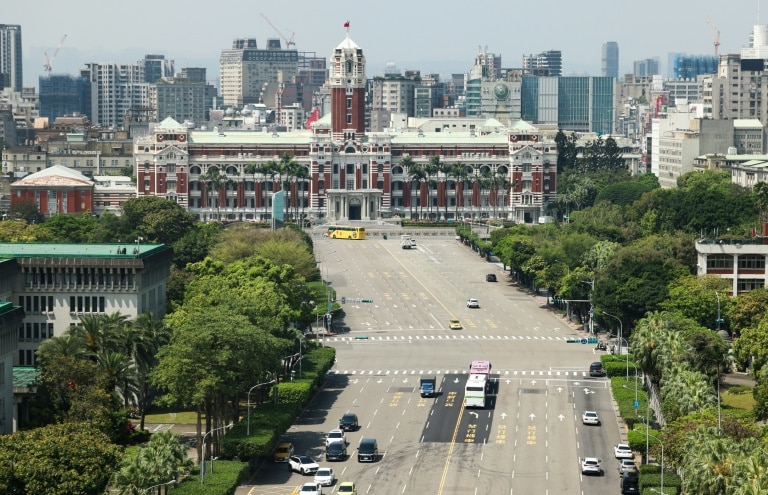
    As cross-strait tensions remain at heightened levels, Taiwan has rolled out its most realistic and public-facing annual Han Kuang military exercises to date, bringing unprecedented disruption to daily civilian life across multiple urban centers as part of preparations for a potential crisis. The 30-minute slowdown of mobile internet services across Taipei and six other cities and counties on Thursday was a central component of the exercise’s final phase, a scenario-based drill designed to test the island’s ability to function under degraded communication conditions amid a simulated military incursion.

    Telecom providers across the affected regions deliberately throttled mobile data speeds to a maximum of 256 Kbps, a dramatic reduction from the widespread 5G connectivity most urban residents rely on daily. The speed cap left only basic text-based messaging functional, cutting off access to streaming, social media, and most cloud-based services for half an hour. Taiwanese President Lai Ching-te publicly apologized for the inconvenience the controlled disruption caused, framing the measure as a critical, non-negotiable step for national preparedness. “We ask for your understanding and support, as this is a necessary drill,” Lai stated, after the exercise drew public attention for its tangible impact on daily routines.

    This year’s drills mark a clear shift in approach from previous years, with Taiwan’s military expanding the scope of exercises to actively integrate reservists and civilian populations into realistic crisis scenarios, moving away from the low-disruption, largely unnoticeable drills held in past iterations. Previous urban preparedness drills, for example, included low-key air raid exercises in Taipei subway stations that did not interrupt regular passenger flow, attracting little public notice. This year, by contrast, closed subway station entrances and held passengers inside for the duration of the air raid simulation, mirroring conditions of a real emergency.

    Local outlet the Taipei Times confirmed that civilian participation and interagency coordination with local government bodies were core priorities for the 2024 iteration of the drills. One detained passenger, Allen Hsieh, a Hong Kong tourist, told reporters he was surprised by how authentic the simulation felt, and said the minor disruption was understandable given regional security dynamics. “I did not expect it to be so real. I thought I would only receive text messages,” Hsieh said, adding “The exercise did not cause me any inconvenience. I know that Taiwan needs to conduct exercises, given the current situation. I can understand that.”

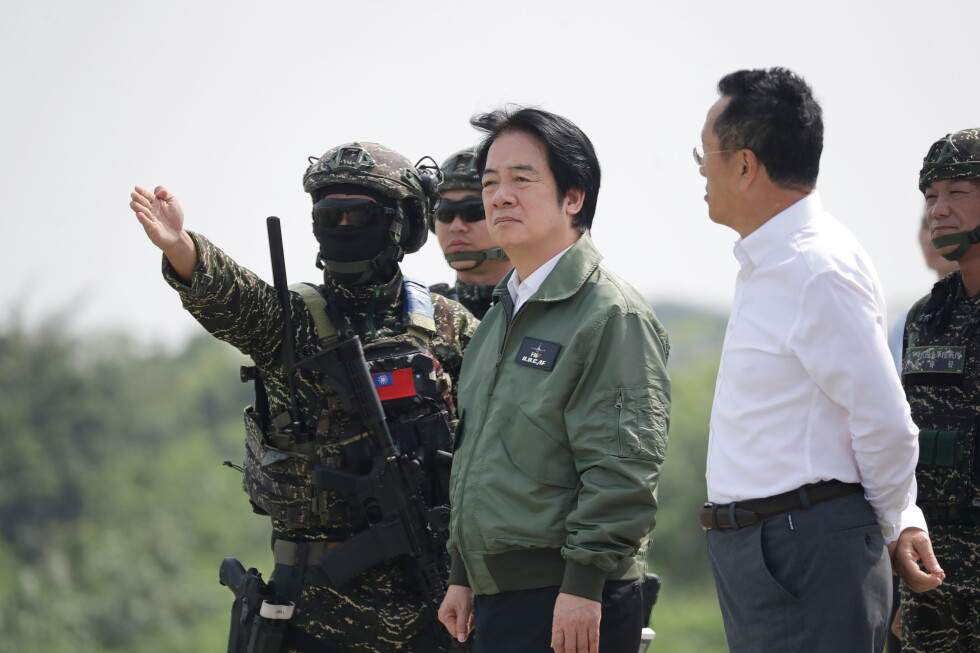
    Alongside the communication and civilian evacuation drills, President Lai also visited a local Taipei hospital that was running its own simulation: testing the process of relocating critical medical services and operations to pre-prepared underground facilities, a key preparedness step for preserving healthcare capacity during a potential conflict.

    The increasingly rigorous exercises come as Taiwan steadily boosts its defense training and military procurement in response to steadily rising tensions with Beijing. China continues to claim Taiwan as part of its sovereign territory, and maintains regular military presence near the island, with daily sorties by military aircraft and regular patrols by Chinese Coast Guard and naval vessels. Large-scale combat exercises near Taiwan’s borders are also conducted on a periodic basis to assert Beijing’s territorial claims. In the latest display of this sustained presence, Taiwan’s Ministry of National Defense reported that between Wednesday and Thursday morning alone, 18 Chinese military aircraft and 11 People’s Liberation Army Navy vessels were detected operating in waters and airspace surrounding the island.

  • Taiwan says AI agents used in cyberattacks targeting island

    Taiwan says AI agents used in cyberattacks targeting island

    In a formal statement released Thursday, Taiwan’s Ministry of Digital Affairs confirmed that a coordinated wave of cyberattacks targeting the island’s government agencies in July utilized artificial intelligence agents to boost the scope and efficiency of the intrusions. While Taipei has long pointed to Chinese actors as the source of the vast majority of the millions of daily cyberattacks that hit the self-ruled island, officials stopped short of naming a specific perpetrator in their update on this latest incident.
    Cross-strait tensions have risen steadily in recent years, as Beijing maintains its claim that Taiwan is an integral part of Chinese territory and has ramped up military, political and diplomatic pressure on the island. Taipei has repeatedly accused Beijing of leveraging a range of so-called “grey zone” tactics – actions that stop short of open military conflict – including persistent cyber intrusions to wear down and harass the island’s government and institutions.
    According to the ministry’s statement, affected agencies have already completed all necessary response and remediation measures to contain the breach. Officials did not, however, release additional details about the total scale of the attacks, the level of damage caused, or which specific agencies were targeted. What the ministry did outline is the novel hybrid approach attackers used: combining traditional hacking methods with AI agents, most notably the open-source AI agent platform OpenClaw, to streamline and scale their operations.
    “AI agents can rapidly chain together multiple attack techniques and use secondary systems — such as backup and testing systems — as jumping-off points, giving the attacks the characteristics of high speed, low cost, and large scale,” the ministry explained in its statement. Notably, Chinese technology firms have capitalized on growing interest in the open-source OpenClaw platform, offering low-cost, simplified installation and coding packages that help users deploy the platform’s AI agents on cloud servers, making these enhanced attack tools more accessible than ever.
    The ministry’s confirmation came in response to a recent report from the Financial Times, which first named Taiwan as the target of an autonomous AI-powered attack linked to suspected Chinese hackers. Citing researchers from Israeli artificial intelligence firm Dream, the FT reported that hackers built a fully autonomous attack tool using open-source AI agents, which deployed up to eight independent agents to map 21 separate government systems, identify unpatched vulnerabilities, and automatically adjust tactics when attempts to access systems were blocked. The outlet called the incident the first publicly documented attack of its kind.
    Kenny Huang, chairman of the Taiwan Network Information Center, noted that while AI integration in cyberattacks is not a new development, this breach marks the first publicly confirmed incident where multiple coordinated AI agents were used to carry out a large-scale intrusion against government targets. For years, the United States and other major powers have raised growing alarms over state-backed hacking operations attributed to Beijing that target government agencies, military infrastructure and private sector businesses around the globe. Beijing has consistently denied these accusations, maintaining that it formally opposes all forms of cyberattack and actively enforces crackdowns on malicious cyber activity.

  • Japan’s Crown Prince Akishino has ‘mixed feelings’ about male-only imperial succession law

    Japan’s Crown Prince Akishino has ‘mixed feelings’ about male-only imperial succession law

    In a rare public break with government policy, Japan’s Crown Prince Akishino, heir apparent to the Chrysanthemum Throne and younger brother of sitting Emperor Naruhito, has publicly stated he holds “mixed feelings” about the conservative Sanae Takaichi administration’s recent update to the Imperial House Law that codifies a strict male-only, paternal-line rule for imperial succession.

    The comments, delivered during a pre-travel press conference Thursday ahead of Akishino’s upcoming visit to Paraguay to commemorate 90 years of Japanese emigration to the South American nation, mark an unusual intervention from a senior imperial family member, who are traditionally barred from making public political statements. Akishino struck a carefully measured tone in his remarks, but pushed back against the gendered exclusion at the core of the new law revision.

    “There is no difference between men and women” when it comes to fulfilling imperial family duties and meeting the needs of Japanese society, Akishino told reporters. When pressed on the government’s final decision, he added: “I have mixed feelings about it, and it’s rather strange if I don’t. It is a difficult question, and the reality is that I can’t talk about it. The society needs to keep making progress, and I believe it is important for people with different views to keep thinking what’s best.”

    Akishino’s remarks come just weeks after the Takaichi government passed the historic revision to the 1947 Imperial House Law, which retains the 1890s mandate that only men born to a paternal imperial line can ascend to the throne. The change has drawn widespread condemnation from activists and members of the public as anachronistic, sexist, and a existential threat to Japan’s already shrinking imperial institution.

    Under the existing male-only succession rule, Emperor Naruhito’s 24-year-old daughter Princess Aiko — a widely popular figure among the Japanese public, a majority of whom have supported allowing female succession in opinion polling — is barred from inheriting the throne. The current line of succession designates Akishino as next in line, followed by his 19-year-old son Prince Hisahito, and then the emperor’s 90-year-old uncle, leaving a major gap in heirs after Hisahito.

    While the new revision includes a small, widely welcomed provision that allows princesses to retain their royal status and duties if they marry commoners (requiring their husbands and children to remain non-royal), the most controversial provision codifies a plan to adopt unmarried male descendants aged 15 or older from distant paternal imperial branches into the immediate royal family to produce new heirs. Critics argue the policy explicitly prioritizes retaining a strict patriarchal bloodline over allowing the popular Princess Aiko to ascend, embedding gender discrimination into Japan’s core royal institution.

    Historical records show Japan’s imperial tradition has long included female monarchs: eight women have held the throne throughout Japanese history, with the last being Empress Gosakuramachi, who reigned from 1762 to 1770. The formal mandate for male-only paternal succession was first written into law only in the 1889 Imperial House Law, a policy rooted in the strict patriarchal social order promoted by Japan’s Meiji government, and was largely carried over unchanged into the 1947 post-war Imperial House Law that remains the governing framework for the monarchy today.

    Beyond concerns over gender equity, critics warn the government’s hardline stance on male-only succession threatens the legacy of former Emperor Akihito, who abdicated in 2019. Akihito, who spent his reign working to make amends for World War II-era aggression carried out in his father’s name, worked to open up the traditionally aloof monarchy to the Japanese public — a reform project continued by his son Emperor Naruhito. Many worry the Takaichi administration’s revision pulls the monarchy backwards toward outdated hierarchical norms, undermining decades of work to modernize the institution and align it with contemporary Japanese values.

    Public backlash to the revision has already sparked widespread protests across Japan, with demonstrators arguing the policy ignores public will, sidelined the wishes of the royal family themselves, and perpetuates a discriminatory patriarchal system that places the importance of a centuries-old male bloodline above the needs and values of 21st century Japan.

  • Putin pays his first visit to Pacific island chain claimed by Japan, drawing a protest from Tokyo

    Putin pays his first visit to Pacific island chain claimed by Japan, drawing a protest from Tokyo

    In a high-profile move that has reignited a long-running territorial dispute between Russia and Japan, Russian President Vladimir Putin traveled Thursday to the Russian-controlled Kuril Islands chain — a territory claimed by Tokyo — marking his first public visit to the contested Pacific archipelago. The trip immediately drew a sharp diplomatic rebuke from Japanese officials.

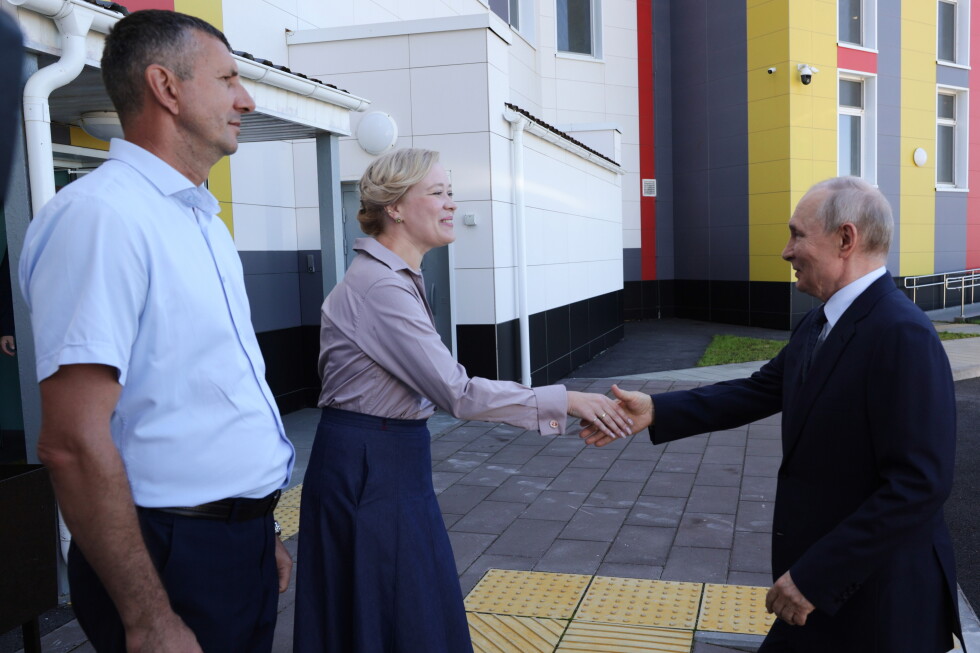
    Putin’s itinerary on Iturup, one of the four southernmost islands at the heart of the disagreement, included stops at a local fish processing facility, a public hospital, and a regional primary school. During the visit, he held brief informal exchanges with local residents and held official talks with Valery Limarenko, the governor of Russia’s Sakhalin Oblast, which administers the island chain.

    The territorial standoff over the four southern islands stretches back to the end of World War II, when Soviet forces seized the territories from Japan at the close of the conflict. To this day, Japan refers to the four islands as its Northern Territories and maintains they are part of its sovereign territory. The unresolved dispute has prevented the two nations from signing a formal peace treaty to officially end World War II-era hostilities between them.

    Despite more than seven decades of diplomatic negotiations aimed at resolving the disagreement, no breakthrough has been reached. In recent years, Moscow has significantly strengthened its military deployments across the Kuril Islands, a step widely interpreted as a demonstration of its unwavering claim to sovereignty over the chain.

    Following news of Putin’s visit, Japanese Foreign Minister Toshimitsu Motegi issued a formal statement announcing Tokyo’s “strong protest” against the trip. “The Northern Territories, including Etorofu (Iturup) Island, are Japan’s inherent territory both historically and from the perspective of international law,” Motegi said. This is not the first time Japan has issued such a protest: in 2021, Tokyo similarly condemned a visit to Iturup by Russian Prime Minister Mikhail Mishustin.

    Putin’s trip to Iturup is part of a wider tour of Russia’s Far Eastern and Siberian regions. Ahead of arriving on the disputed island, the Russian president traveled to Sakhalin Island to observe the concluding phase of large-scale military drills conducted by Russia’s Pacific Fleet.

  • Scott Pendlebury and Jordan De Goey cleared for blockbuster clash against Hawthorn

    Scott Pendlebury and Jordan De Goey cleared for blockbuster clash against Hawthorn

    Ahead of one of the most anticipated AFL matchups of the late season, Collingwood Magpies head coach Craig McRae has delivered a much-needed dose of positive news for the club’s fans: veteran star Scott Pendlebury and dynamic playmaker Jordan De Goey will both take the field against Hawthorn this Saturday. The announcement comes at a critical time for the Magpies, who have been decimated by a crippling injury wave that has sidelined several of their top players through the closing rounds of the campaign. High-profile names including captain Darcy Moore, Patrick Lipinski, Jeremy Howe, Brayden Maynard, Harry Perryman and Jamie Elliot all currently sit on the sidelines, leaving the club’s depth severely tested heading into the blockbuster clash. The return of the two experienced midfielders marks a substantial boost to a squad that has been forced to dig into its reserves in recent weeks. Pendlebury, a 440-game club icon, was forced to miss Collingwood’s away trip to Perth last round while managing a persistent calf complaint. Off the field, the veteran has been the subject of widespread speculation in recent days: the 2027 contract is still unsigned, and multiple rival clubs have been linked to a potential move for the champion midfielder, coming just days after fellow Collingwood legend Steele Sidebottom announced his retirement after an 18-year storied career with the club. Speaking to media this week, McRae made clear the club has no intention of rushing Pendlebury into a decision about his future, confirming the veteran will be given all the time he needs to make a call by the end of the season. Addressing recent reports suggesting Pendlebury intends to continue his playing career beyond this season, McRae noted that while he had not personally confirmed those reports, the widespread interest from other clubs comes as no surprise given the midfielder’s ongoing impact both on and off the field. “We’ve had Pendles as a core part of our group for the best part of a decade, and the value he brings to our club environment is incredible,” McRae said. “It makes total sense that other teams would see that same value. All the speculation right now is just around what he could bring to any playing group – the culture he builds, the leadership he provides, the way he mentors younger players. That’s a rare quality.” McRae, who has worked closely with Pendlebury since taking over as head coach in 2022, highlighted the midfielder’s unmatched impact on the club’s emerging talent, adding that his support for young players has become one of his most important contributions to the Magpies’ program in recent seasons.

  • Messi plays for Inter Miami after father’s death

    Messi plays for Inter Miami after father’s death

    Eight-time Ballon d’Or winner Lionel Messi has made an emotional return to competitive football for Inter Miami, just days after the passing of his father Jorge, while publicly revealing he is uncertain how much longer he will continue his legendary playing career.

    Jorge Messi, who had served as his son’s long-time agent and closest confidant since Lionel was 14 years old, passed away last week at the age of 68 in the family’s hometown of Rosario, Argentina following an extended battle with illness. After attending Jorge’s private funeral in Argentina on Sunday, the 39-year-old Argentine forward cut short his leave to return to the United States, and stepped onto the pitch as a half-time substitute for Inter Miami in their decisive Leagues Cup group stage match against Mexico’s CF Monterrey. The soccer legend received a thunderous standing ovation from the Miami crowd when he entered the game, a show of support that underscored the global respect for him during this difficult period.

    In a heartfelt social media statement shared after his father’s passing, Messi opened up about his uncertainty surrounding the future of his career. “I’m really not sure if I’ll carry on doing it for much longer,” the 2022 World Cup-winning captain wrote. He also shared that even as his health declined, Jorge urged him to compete in one final World Cup tournament, a request that speaks to the elder Messi’s lifelong dedication to his son’s career.

    Messi had missed Inter Miami’s previous Leagues Cup group match against CF Monterrey, a 2-1 loss that left the club needing a win against Leon to advance to the knockout stage. Despite Messi’s second-half appearance, Inter Miami fell 3-2 to the Mexican side, marking the first time the club has been eliminated in the group stage of the Leagues Cup since the tournament expanded in 2023 — the same year Messi joined the franchise and led them to their first ever major title.

    Teammates have praised Messi’s decision to return to the squad so soon after his loss. Yannick Bright, Inter Miami’s midfielder who scored the club’s second goal against Leon, called the captain’s availability “incredible.” “I wasn’t expecting it. It shows how much he cares. When I saw he was here, all I was thinking about was to give my 150% for him,” Bright told reporters after the match. “It’s a tough situation. We try to stay close to him and support him as much as we can, but it’s a lot.”

    Even opposing coaching staff expressed admiration for Messi’s choice to rejoin his team under such strained circumstances. Leon head coach Javier Gandolfi noted that while Messi stands out as an unparalleled talent in global football, his choice to play through grief highlights his character. “Messi is a human being that is different to the rest,” Gandolfi said. “Today he demonstrated once more what he’s made of.”

    For nearly three decades, Jorge Messi was a constant presence at his son’s side throughout every milestone of his historic career, from his early breakout at Barcelona to his World Cup triumph with Argentina in 2022. Most recently, Messi joined the Argentina squad for this summer’s Copa America, where the team advanced to the final before falling 1-0 to Spain in extra time, fulfilling the final wish his father shared with him amid declining health.

  • Slowing housing market offers Reserve Bank a path to pause rate rises

    Slowing housing market offers Reserve Bank a path to pause rate rises

    Australia’s housing sector is facing its sharpest monthly downturn in nearly two years, and that cooling trend is shaping the Reserve Bank of Australia’s (RBA) upcoming monetary policy decisions by easing pressure for additional interest rate increases, senior central bank officials have confirmed.

    Speaking at the LSEG Insight Series in Sydney, RBA Assistant Governor Christopher Kent outlined that slowing housing activity is already dragging down household spending, a key component of aggregate demand that the RBA targets to bring inflation back to its 2-3% target range. “All else equal, these changes will tend to reduce the extent to which monetary policy needs to constrain the growth in aggregate demand to help bring inflation back to the RBA’s target,” Kent explained.

    Kent noted that the housing market acts as a critical transmission channel for monetary policy: changes in the cash rate directly impact how much prospective homebuyers can borrow, and in turn, housing market conditions such as price shifts and credit growth give the RBA valuable real-time insight into how financial conditions are evolving across the economy. A cooling housing market therefore signals that existing rate hikes are already working to dampen economic activity, reducing the need for further restrictive policy action.

    Kent’s comments come after the RBA’s monetary policy board unanimously voted to hold the official cash rate at 4.35% for the second consecutive meeting in August, following three consecutive rate hikes earlier in 2024. RBA Governor Michele Bullock has pushed back on the idea that the slowing housing market was the direct driver of the rate pause, emphasizing that the board held rates steady to allow time for previous hikes to fully flow through to the broader economy. “What’s keeping us on hold is that we’ve already raised three times, and we are still waiting to see because it takes time for those to come through,” Bullock said.

    She also clarified that the RBA does not set monetary policy to directly influence property prices, and that interest rate cuts are not currently under consideration amid ongoing inflationary pressures. “The housing market wasn’t a constraint, and I would not say that the housing market is not, we didn’t consider an interest-rate cut,” Bullock said. “The housing market in terms of cutting interest rates – that’s not entering the equation.”

    Official data shows national Australian property prices fell 0.7% in July 2024, marking the largest single monthly drop since December 2022. Economists at ANZ Bank say the downturn is unfolding faster than their earlier projections, with forecasts calling for a 4.3% drop in capital city property prices over the 2024 calendar year, and a peak-to-trough drop of as much as 14.5% for Australia’s largest property market, Sydney.

    Kent attributed the current housing downturn to three overlapping factors: the cumulative impact of earlier cash rate hikes, a natural correction after a prolonged period of rapid price growth, and policy changes introduced by the Albanese government that have dampened investor demand for established properties. The government’s controversial changes to capital gains tax (CGT) and negative gearing, set to take effect in the 2027-28 financial year, will restrict negative gearing tax offsets to only newly built properties, replace the existing 50% CGT discount with an inflation-adjusted discount, and introduce a minimum 30% CGT rate.

    “Higher interest rates reduce the net present value of all assets, lower borrowing capacity, increase repayment burdens, and encourage saving,” Kent said. “In addition, tax changes announced in the federal budget appear to have contributed to reduced demand in the established housing market by lowering the after-tax return from housing for investors.”

    As of August 2024, Australia’s headline inflation sits at 3.8%, still above the RBA’s target range, while the trimmed mean core inflation rate (which strips out volatile price swings to measure underlying inflation) stands at 3.6%. The RBA’s dual mandate remains holding inflation between 2 and 3% while sustaining full employment across the country.