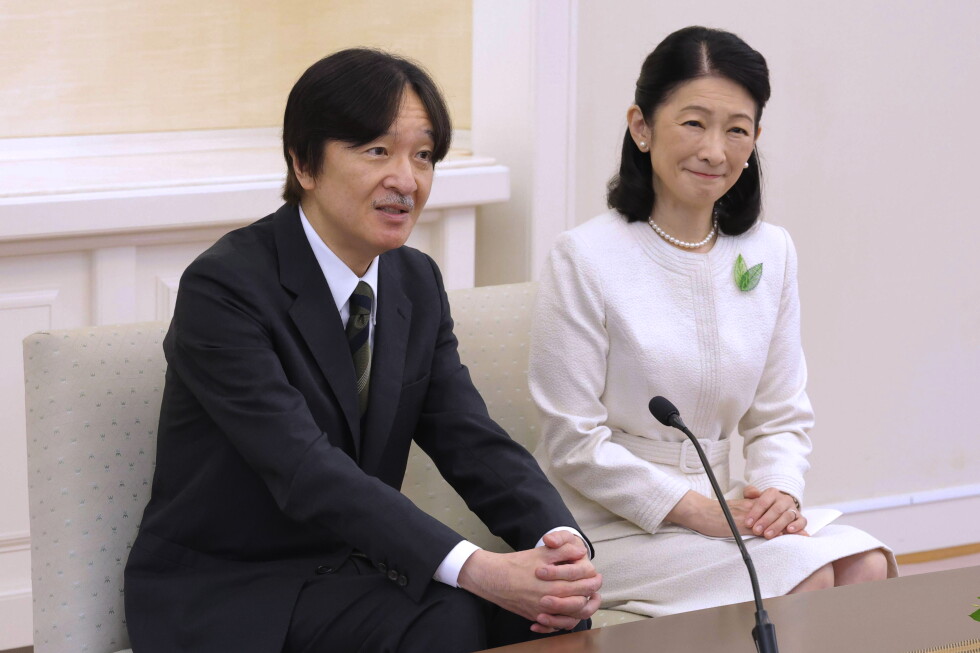
In a rare public break with government policy, Japan’s Crown Prince Akishino, heir apparent to the Chrysanthemum Throne and younger brother of sitting Emperor Naruhito, has publicly stated he holds “mixed feelings” about the conservative Sanae Takaichi administration’s recent update to the Imperial House Law that codifies a strict male-only, paternal-line rule for imperial succession.
The comments, delivered during a pre-travel press conference Thursday ahead of Akishino’s upcoming visit to Paraguay to commemorate 90 years of Japanese emigration to the South American nation, mark an unusual intervention from a senior imperial family member, who are traditionally barred from making public political statements. Akishino struck a carefully measured tone in his remarks, but pushed back against the gendered exclusion at the core of the new law revision.
“There is no difference between men and women” when it comes to fulfilling imperial family duties and meeting the needs of Japanese society, Akishino told reporters. When pressed on the government’s final decision, he added: “I have mixed feelings about it, and it’s rather strange if I don’t. It is a difficult question, and the reality is that I can’t talk about it. The society needs to keep making progress, and I believe it is important for people with different views to keep thinking what’s best.”
Akishino’s remarks come just weeks after the Takaichi government passed the historic revision to the 1947 Imperial House Law, which retains the 1890s mandate that only men born to a paternal imperial line can ascend to the throne. The change has drawn widespread condemnation from activists and members of the public as anachronistic, sexist, and a existential threat to Japan’s already shrinking imperial institution.
Under the existing male-only succession rule, Emperor Naruhito’s 24-year-old daughter Princess Aiko — a widely popular figure among the Japanese public, a majority of whom have supported allowing female succession in opinion polling — is barred from inheriting the throne. The current line of succession designates Akishino as next in line, followed by his 19-year-old son Prince Hisahito, and then the emperor’s 90-year-old uncle, leaving a major gap in heirs after Hisahito.
While the new revision includes a small, widely welcomed provision that allows princesses to retain their royal status and duties if they marry commoners (requiring their husbands and children to remain non-royal), the most controversial provision codifies a plan to adopt unmarried male descendants aged 15 or older from distant paternal imperial branches into the immediate royal family to produce new heirs. Critics argue the policy explicitly prioritizes retaining a strict patriarchal bloodline over allowing the popular Princess Aiko to ascend, embedding gender discrimination into Japan’s core royal institution.
Historical records show Japan’s imperial tradition has long included female monarchs: eight women have held the throne throughout Japanese history, with the last being Empress Gosakuramachi, who reigned from 1762 to 1770. The formal mandate for male-only paternal succession was first written into law only in the 1889 Imperial House Law, a policy rooted in the strict patriarchal social order promoted by Japan’s Meiji government, and was largely carried over unchanged into the 1947 post-war Imperial House Law that remains the governing framework for the monarchy today.
Beyond concerns over gender equity, critics warn the government’s hardline stance on male-only succession threatens the legacy of former Emperor Akihito, who abdicated in 2019. Akihito, who spent his reign working to make amends for World War II-era aggression carried out in his father’s name, worked to open up the traditionally aloof monarchy to the Japanese public — a reform project continued by his son Emperor Naruhito. Many worry the Takaichi administration’s revision pulls the monarchy backwards toward outdated hierarchical norms, undermining decades of work to modernize the institution and align it with contemporary Japanese values.
Public backlash to the revision has already sparked widespread protests across Japan, with demonstrators arguing the policy ignores public will, sidelined the wishes of the royal family themselves, and perpetuates a discriminatory patriarchal system that places the importance of a centuries-old male bloodline above the needs and values of 21st century Japan.