博客

  • Putin visits Kuril islands claimed by Japan

    Putin visits Kuril islands claimed by Japan

    On a Thursday that has injected fresh tension into decades-long territorial frictions between Moscow and Tokyo, Russian President Vladimir Putin made his first official trip to the contested Kuril Islands — a chain of volcanic outposts claimed by both nations, and a flashpoint that has defined bilateral relations for nearly 80 years. The visit immediately drew a formal, forceful objection from Japan, which has laid sovereign claim to the four southernmost islands of the archipelago it refers to as the Northern Territories.

    Footage of Putin’s visit was released via the Kremlin’s official channels, with Russian state media confirming the president toured a local fish-processing facility on the islands, where he was presented with a gift of locally sourced caviar. The trip came on the heels of a stop in nearby Sakhalin Island, where Putin oversaw the closing phase of major naval drills conducted by Russia’s Pacific Fleet. During his time in Sakhalin, Putin chaired a high-level briefing focused on safeguarding Russia’s eastern border security, according to reports from Russian state news agency RIA Novosti.

    Japan’s Foreign Ministry swiftly issued a public rebuke of the visit, with Foreign Minister Toshimitsu Motegi affirming in an official statement that the Northern Territories are “an inherent part of Japan’s territory both historically and under international law.” The diplomatic row comes amid an already sharp deterioration of Russia-Japan ties, which have plummeted since Moscow launched its full-scale invasion of Ukraine in 2022. In recent years, Russia has simultaneously deepened its strategic partnerships with China and North Korea in the Asia-Pacific, further straining its already frosty relations with Tokyo.

    The territorial dispute stretches back to the final days of World War II, when Soviet forces seized the strategically located archipelago, which sits just north of Japan’s northern main island Hokkaido, in August 1945. The Soviet Union declared war on Japan just days after the U.S. atomic bombing of Hiroshima, and only six days before Japan’s formal surrender that ended the global conflict. Following the occupation, Moscow deported the archipelago’s approximately 17,000 Japanese residents, and has maintained a continuous military presence on the islands ever since.

    While the four southern islands at the center of the dispute have a harsh, remote climate, they hold significant economic and strategic value. Home to roughly 20,000 Russian citizens today, the islands boast rich fishing grounds and untapped mineral deposits including gold and silver. Throughout the Cold War, the archipelago served as a critical forward operating base for Soviet air and naval forces, positioned directly in the heart of a region that was a key front for geopolitical confrontation between the Soviet bloc and the U.S.-led alliance.

    Diplomatic talks between Moscow and Tokyo to resolve the dispute have been intermittent for decades. A small breakthrough appeared possible in 1956, when the two sides normalized diplomatic relations: Soviet leader Nikita Khrushchev offered to return two of the four disputed islands to Japan as part of a formal peace treaty. The deal never came to fruition, however, and while negotiations resumed after the collapse of the Soviet Union in 1991, no tangible progress has been made to settle the standoff.

    Putin’s visit marks the first time the sitting Russian president has traveled to the disputed territory, though it is not the first trip by a modern Russian head of state. In 2010, then-President Dmitry Medvedev became the first Russian leader to visit the islands, and he made additional return trips after he stepped into the role of prime minister following his presidency.

  • Jeremy Cameron commits future to Geelong with major contract extension

    Jeremy Cameron commits future to Geelong with major contract extension

    One of the Australian Football League’s most decorated veterans has put an end to months of swirling off-season speculation: star forward Jeremy Cameron is set to remain a Geelong Cat through the 2028 season, locking in his future with the club until well after his 35th birthday.

    Cameron put pen to paper on his new contract on Thursday afternoon, alongside three other Geelong players who also secured contract extensions. Young utility Jhye Clark will also stay with the Cats through 2028, while veteran forward Jack Martin extended his deal to run through the end of the 2027 season.

    The 33-year-old forward, a fan favorite and cornerstone of Geelong’s recent success, was already under contract through 2027. The one-year extension eliminates all uncertainty around his career plans heading into the 2027 AFL season, ending ongoing questions from fans and media about whether he would consider retirement or a move to another club before hanging up his boots.

    Cameron’s resume with the Cats (and earlier with Greater Western Sydney) cements his status as one of the greatest forwards of his generation: across 296 career games, he has claimed a 2022 AFL premiership with Geelong, five selections to the All-Australian team – including a captaincy nod in 2025 – two Coleman Medals (awarded to the league’s leading goalkicker each season, earned in 2019 and 2025), and the 2022 Carji Greeves Medal, awarded to Geelong’s best and fairest player each year.

    Andrew Mackie, Geelong’s General Manager of Football, highlighted that Cameron’s value to the club stretches far beyond his on-field goal-kicking and match-winning plays. “He remains an important player for us, and we’re thrilled he’ll continue to play an integral role through the extension of his contract,” Mackie said in a statement following the announcement of the new deals.

    Mackie also shared praise for young midfielder Jhye Clark, whose new extension through 2028 caps a remarkable comeback arc in his young career. After a slow start to his AFL tenure that saw him spend an extended stretch developing in the Victorian Football League (the AFL’s second-tier competition), Clark fought his way back into the senior Cats side in the second half of the 2026 season, where he has already made his presence felt. “The young midfielder has worked hard at his craft and has come back into the AFL side and [is] having a strong impact,” Mackie said.

  • Ballarat tradie Lachlan Young pleads not guilty to raping teenage girl, jury told

    Ballarat tradie Lachlan Young pleads not guilty to raping teenage girl, jury told

    A seven-day rape trial got underway this week at Melbourne’s County Court, where a 24-year-old tradesperson from Ballarat has formally pleaded not guilty to charges of sexually assaulting a 16-year-old visitor to the regional Victorian city.

    Prosecutor Andrew Buckland laid out the Crown’s case to the seated jury on Monday, outlining the sequence of events that unfolded in February 2024, when the defendant, Lachlan Young, first met the teenage complainant, who was visiting Ballarat from another part of the state, at a mutual friend’s home. Over the course of an evening spent socializing and drinking, the pair exchanged small talk and connected on the social messaging platform Snapchat, Buckland told the court.

    During their conversation, Buckland claimed Young made an advance toward the teen, asking if she wanted to engage in sexual activity, a proposal the complainant immediately rejected. The girl later retreated inside the friend’s home to rest, but the two continued to exchange messages over Snapchat, eventually agreeing to meet in the backyard of the property around 3 a.m. on February 5, according to the prosecution’s account.

    Buckland told jurors that once in the backyard, the pair engaged in consensual sexual touching, but the teen explicitly told Young she did not consent to penetrative sex. Despite this clear refusal, Young went on to rape the girl for two to three minutes, Buckland alleged, during which the complainant was so shocked and frightened she froze, unable to act. After the alleged assault, Young told the teen she should return inside before other partygoers started looking for her, the prosecution added.

    The following morning, the girl told a close friend what had happened, Buckland said. Shortly after, Young contacted her over Snapchat asking if she had disclosed the incident to her friend, which she initially denied. Young reportedly responded by saying “Well, we didn’t do much anyway.” Six days after the alleged incident, the complainant messaged Young asking if he had told his friend “about the night you f*cked me?” When Young replied “What are you on about?”, the teen responded by accusing him of ignoring her refusal, writing “You’re pathetic Lachie you literally f*cked me even though I said no.”

    It was not until March 2024 that the complainant reported the alleged assault to a school wellbeing counsellor, who subsequently alerted Victoria Police, triggering the official investigation and subsequent charges.

    Glenn Casement, the defence barrister representing Young, pushed back against the prosecution’s claims in his opening address to the jury, noting that Young does not dispute that the pair engaged in consensual sexual touching in the backyard that night, but outright denies any non-consensual penetrative sexual activity took place.

    Casement pointed to Young’s Snapchat reply of “What are you on about?” as evidence of his client’s confusion at the sudden accusation, arguing that the core question for the jury to decide is not whether any interaction happened, but whether penetrative sex ever occurred. “Whatever else went on, sexual penetration of that kind is denied in the brief time they were in the backyard,” Casement told the court.

    The defence lawyer stressed that the credibility and reliability of the complainant’s account is the most critical factor in the case, urging jurors to carefully examine any inconsistencies in her statements to different people over the course of the investigation. He questioned whether jurors would find the complainant has altered her version of events depending on who she has spoken to, and whether major discrepancies in her account would leave them with deep concerns over the reliability of her evidence.

    The trial, overseen by Judge Caitlin English, is scheduled to continue over the coming week, with both sides set to present all evidence and witness testimony before jurors retire to deliberate on a verdict.

  • Millions of Australian households fall behind as wages fail to beat inflation

    Millions of Australian households fall behind as wages fail to beat inflation

    For the first time since 2022, nominal pay gains for Australia’s full-time workforce have been erased by persistent high inflation, pushing real wages into negative territory and intensifying already widespread cost-of-living pressures for households across the country. Newly released data from the Australian Bureau of Statistics (ABS), published Thursday, shows the average weekly earnings for a full-time Australian worker hit $2083 in May 2026, representing an annual wage increase of 3.7%. Over the same 12-month period, national inflation climbed to 3.8% — a small but critical gap that erodes the actual purchasing power of workers’ paychecks.

    This reversal of real wage growth marks the first time inflation has outstripped pay gains for Australian workers in several years, and the softening trend extends to shorter-term measurements as well. For the six-month period ending in May 2026, average weekly earnings grew by just 1.6%, the slowest half-year increase recorded since May 2022. A split between public and private sector growth also emerged in the data: public sector wages rose 2.3% over the six-month window, outpacing the 1.4% growth seen in Australia’s private sector. Among all industries, transport, postal and warehousing recorded the strongest wage growth over the measurement period.

    The recent data release comes on the heels of a key decision from the Reserve Bank of Australia (RBA), which opted to hold the national cash rate steady at 4.35% following three consecutive rate hikes earlier in 2026. While the pause was widely expected by financial markets, the RBA framed the decision as a hawkish hold, warning that it would not hesitate to implement additional rate increases if inflation remains persistent. In its official statement, the RBA noted that inflationary pressures stemming from the ongoing US-Iran conflict have been milder than initially projected, but still emphasized that headline inflation remains uncomfortably above target.

    In response to the new wage data, AMP’s chief economist Shane Oliver explained that while it is natural for workers to push for larger wage increases to offset rising living costs, unchecked wage growth without corresponding improvements in productivity risks creating a self-reinforcing inflationary spiral. “If workers deliver less output growth than the increase in labor costs businesses face, those extra costs get passed directly to consumers as higher prices,” Oliver explained. “We end up just chasing our tails, and the original problem of eroded purchasing power never gets solved.”

    Oliver added that Australia has struggled to sustain meaningful productivity growth in recent years, a factor that amplifies the risk of inflation from higher wage demands. The current data, he noted, lays bare the persistent strain that cost-of-living pressures have placed on average Australian households, many of which are already slipping into negative real income territory. “It makes total sense for workers to want higher pay when their grocery, energy and housing bills keep going up,” Oliver said. “But without productivity gains to offset those higher wages, they just feed back into even more inflation.”

    Beyond inflation risks, Oliver warned that sustained wage growth that outpaces productivity could also push businesses to slow hiring as profit margins come under increasing pressure, raising the risk of higher unemployment down the line. For individual workers looking to boost their earning power amid the current slowdown, Oliver recommended upskilling and retraining as the most sustainable long-term path to higher wages, acknowledging that “there are no easy solutions” for households navigating this difficult economic period.

    This debate over wage growth and inflation comes just weeks after the Fair Work Commission implemented a 6% increase to Australia’s national minimum wage, which took effect on July 1, 2026. The adjustment lifted the hourly minimum wage to $26.44, pushing the full-time weekly minimum income over the $1000 threshold for the first time in the nation’s history.

  • What to know from AP’s report about pregnant women and babies dying in Nepal amid USAID cuts

    What to know from AP’s report about pregnant women and babies dying in Nepal amid USAID cuts

    Grounded in on-the-ground reporting from Nepal, an Associated Press investigation has drawn a direct line between sweeping cuts to United States foreign aid enacted by the former Donald Trump administration and a sharp rise in preventable deaths of pregnant women and newborns across the South Asian nation. The 2023 decision to dissolve the United States Agency for International Development (USAID) — long the world’s largest single provider of humanitarian global health assistance — gutted community-focused maternal and child health initiatives that had spent years reducing mortality rates in some of Nepal’s most impoverished regions.

    While the U.S. State Department maintains that Washington continues to back maternal and child health programming in Nepal, interviews with local health workers, government officials, aid leaders, and affected families tell a far grimmer story: the loss of funding shuttered life-saving outreach and nutrition services, leaving vulnerable communities without the support they relied on to address pregnancy complications and infant care needs.

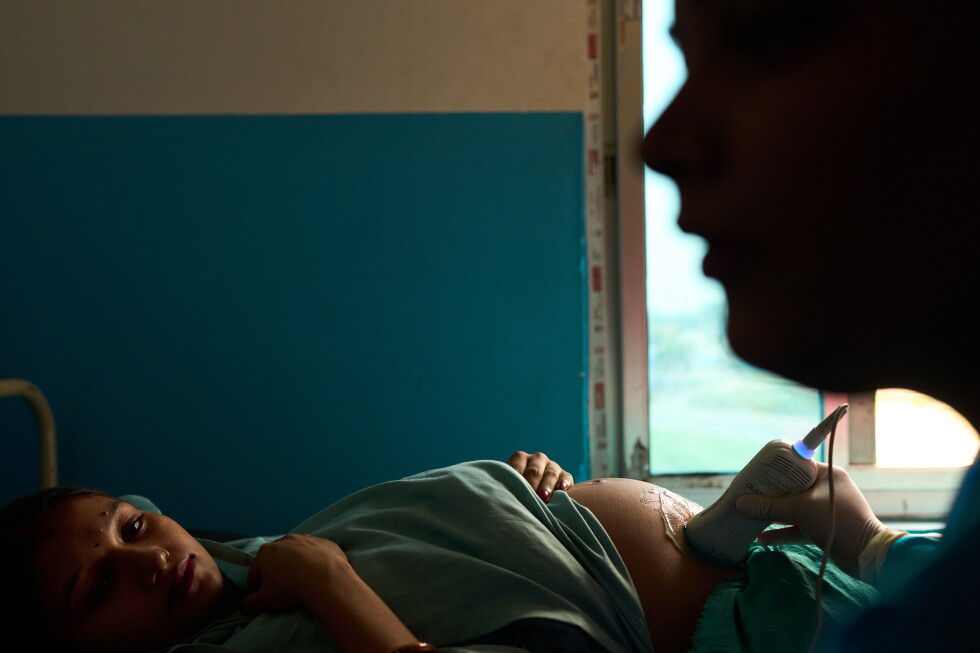
    The collapse of U.S. funding triggered a domino effect across Nepal’s community health ecosystem. According to World Health Organization data, 60% of local women’s health organizations have been forced to scale back critical services after the U.S. cuts were followed by matching reductions in foreign aid from other donor nations. Before the cuts, USAID and partner aid groups like CARE ran a multi-year initiative that reached 100,000 pregnant women and girls across Nepal. The program provided free nutrient supplements and food to low-income expectant mothers, supplied life-saving equipment and medication to rural birthing centers, and trained a network of local nurses, midwives, and community outreach workers.

    These trained workers made regular home visits to identify risk factors for complications, explain warning signs that required immediate medical care, and often escorted women who lacked transportation or health literacy to prenatal and delivery appointments. Since the program shut down, that on-the-ground support has vanished entirely.

    Global health leaders warn the cuts will have devastating global consequences, not just in Nepal. The Bill & Melinda Gates Foundation projects that 2025 will mark the first year this century that annual child mortality rates will rise globally, a shift driven in large part by widespread foreign aid cuts to maternal and child health programs.

    In Nepal, the impact is already visible in mortality data that does exist — though many deaths will likely never be counted, as the funding cuts also eliminated jobs for local workers tasked with tracking maternal and newborn mortality across rural regions. Mona Sherpa, country director for CARE Nepal, which lost more than half of its operating budget due to the U.S. cuts, called the surge in deaths catastrophic. “The number of deaths of young mothers during delivery has really increased,” Sherpa said. “The expected number within a year is happening within four to six months.”

    Newborn deaths have followed the same upward trend. In the village of Prempur Gonahi in Nepal’s Rautahat district, local administrative officer Sadho Baitha documented a remarkable public health win after CARE’s program launched in December 2022: prior to the initiative, the village recorded 10 to 15 neonatal deaths per year, a figure that dropped to zero by 2024. But just 10 months after the U.S. funding was cut and the program shut down, newborn deaths have returned: the first post-cut death was recorded in December 2023, with four more following by March 2024.

    The majority of women affected by the program closures live in extreme poverty, have little formal education, and are geographically isolated from major medical facilities. For many, the outreach workers served as more than just health educators — they were translators and advocates who helped women navigate a confusing, often inaccessible public health system.

    That gap had fatal consequences for 20-year-old Kabita Mukhiya, an uneducated woman from a poor village near the Nepal-India border. During her pregnancy, Mukhiya developed severe symptoms: excruciating abdominal pain, extreme swelling, and delirium, worsened by severe malnutrition after the nutrition supplements she had received during her first pregnancy were cut. No outreach workers visited her home to identify her red flags, as they had done before the program shut down.

    Unaware that her symptoms signaled a life-threatening emergency, Mukhiya suffered at home for weeks before her family finally arranged transport to a hospital. By that point, it was too late: both Mukhiya and her unborn child died. Health workers confirmed her death was caused by untreated eclampsia complicated by severe anemia — two conditions that are almost always manageable if caught early through routine prenatal care.

    Rajkumari Patel, a former outreach worker who was laid off when the CARE program shut down, said Mukhiya’s death is exactly the kind of preventable tragedy the program was designed to stop. “I would have asked her, ‘Is the baby kicking? When did you last feel movement?’ I would have checked for swelling in her hands and face. I would have looked at her eyes for signs of anemia,” Patel said. “These are the signs I would have noticed in Kabita and said, ‘This woman needs a hospital today — not tomorrow.’ Maybe we could have saved her life.”

  • USAID fallout: In Nepal, when the aid workers stopped coming, the women and babies started dying

    USAID fallout: In Nepal, when the aid workers stopped coming, the women and babies started dying

    In the parched, poverty-stricken villages of Nepal’s Rautahat district, a preventable tragedy unfolded in late 2025 that encapsulates the global human cost of sweeping U.S. foreign aid cuts. Twenty-year-old Kabita Mukhiya, a young mother of three who dreamed of giving her unborn son the education she never had, suffered for weeks from unexplained abdominal agony and swelling during her 28-week pregnancy. Uneducated, impoverished, and abandoned by the community outreach workers who once monitored at-risk pregnant women in her village, Kabita did not know she was experiencing life-threatening complications. When her aunt finally carried her to a hospital, it was too late: her unborn baby was dead, and Kabita herself died hours later from untreated eclampsia and severe anemia, conditions that routine prenatal care could have detected and managed.

    Kabita’s death is not an isolated incident. It is one of hundreds of preventable maternal and child fatalities documented by the Associated Press across the globe following the Trump administration’s decision to dissolve the United States Agency for International Development (USAID), for decades the world’s largest single provider of humanitarian assistance. The U.S. funding cuts, which shuttered life-saving maternal and neonatal health programs, eliminated nutritional support for pregnant people and young children, and idled thousands of community outreach workers, have been followed by additional aid reductions from other donor nations. The World Health Organization (WHO) estimates that 60% of women’s health organizations globally have been forced to slash critical services as a result.

    Global public health experts are already bracing for a devastating turning point. The Bill & Melinda Gates Foundation projects that 2025 will be the first year of this century to see an increase in global child mortality, reversing decades of steady progress in reducing preventable deaths. A study published in *The Lancet* warns that the U.S. aid cuts could lead to more than 14 million excess deaths by 2030, including over 4.5 million deaths of children under age 5. WHO’s Rajat Khosla, executive director of the Partnership for Maternal, Newborn and Child Health, calls the reversal catastrophic: “It’s heartbreaking to see what’s happening. It’s decades of progress being washed away.”

    In response to AP’s reporting, the U.S. State Department defended the administration’s policy, stating that the restructuring refocuses assistance on efficiency, effectiveness, and global partnership. The department noted that the U.S. still spends more on health and humanitarian aid than any other nation, and continues to support maternal and child health programs in Nepal, adding that “the rest of the world needs to contribute more and share the burden.”

    On the ground in Nepal, however, local health workers and aid organizations say the impact of the cuts has already been catastrophic. CARE Nepal, one of the largest aid groups operating in the country, lost more than half of its funding from the U.S. cuts. “The number of deaths of mothers, young mothers, during delivery has really increased,” said Mona Sherpa, CARE Nepal’s country director. “The expected number within a year is happening within four to six months.”

    Prior to the cuts, USAID funded a five-year, $35 million maternal and child health initiative in Nepal that reached more than 100,000 women and girls in its first three years. The program equipped rural birthing centers with life-saving equipment and medications, trained nurses and midwives, and supported a network of female community health volunteers who made regular home visits to pregnant women. These volunteers identified warning signs of complications, helped women schedule and access prenatal appointments, and explained critical medical information in terms local communities could understand.

    When the program was shut down, the volunteer network collapsed. In Dewahi Gonahi municipality, the head of the local birthing center, Kishori Shah, reports that the number of women attending prenatal checks has dropped by 50% since the cuts. Without early screening, complications that could be easily managed are left to escalate into life-threatening emergencies. “There would have been a decrease in complications if the USAID program was still running,” Shah says.

    In Prempur Gonahi village, the reversal of progress is stark. Before the program launched in 2022, the village saw an average of 10 to 15 neonatal deaths per year. By 2024, that number had dropped to zero. Just 10 months after the program was canceled, newborn deaths began to climb again: one in December 2025, four more by March 2026.

    Many of these deaths will never be officially counted: the aid cuts also eliminated funding for mortality data collection, leaving vast stretches of rural Nepal without anyone to track and report preventable deaths. Campaign Nepal, a local partner of CARE, has documented eight infant deaths in Dewahi Gonahi since the cuts, but official government records list only two. “There must be more than that,” says Shatrudhan Singh, Campaign Nepal’s executive director. “We just can’t identify them.”

    Another young woman from the region, 19-year-old Phula Devi, shared her story of grief with the AP, one she had never told even her own husband. Uneducated and with no outreach worker to guide her, Phula did not understand the warning that her unborn baby had a slow heartbeat, and delayed going to the hospital at the direction of her relatives. When she arrived, doctors urged a C-section to deliver her overdue baby, but Phula did not understand the procedure and was terrified. She delivered the baby on her own, and he was stillborn. “I think of my baby all the time,” Phula says, hiding her tear-streaked face behind a scarf. “She would have done anything to save him, if she’d only known how.”

    For Kabita Mukhiya, the collapse of outreach services proved fatal. When she was pregnant with her third child, Yubraj, she received free nutritional supplements from the U.S.-funded program that helped offset her family’s meager diet, which provided barely enough to eat. By the time she became pregnant with her fourth child, the supplements were gone, along with the regular mother’s health meetings she had attended. She missed her first-trimester checkup entirely, and only showed up for her first screening at 16 weeks. Her nurse noticed she was dangerously pale and urged her to get a blood test to check for anemia, but Kabita did not understand why the test was necessary, and never got it. By the time she arrived at the hospital, her condition was irreversible.

    Rajkumari Patel, one of the community health volunteers who lost her job when the program was cut, says Kabita’s death is exactly what she was trained to prevent. “I used to know every pregnant woman in her village, visiting them at home,” Patel says. “I would have asked her, ‘Is the baby kicking? When did you last feel movement?’ I would have checked for swelling in her hands and face. I would have looked at her eyes for signs of anemia. These are the signs I would have noticed in Kabita and said, ‘This woman needs a hospital today — not tomorrow.’ Maybe we could have saved her life.”

    Nutrition data from the region confirms the widespread damage of cutting support programs. Before the U.S. cuts, the prevalence of life-threatening wasting (severe malnutrition) among children under five in Kabita’s province was 7.4%. A national screening conducted in May 2026 found that rate has jumped to 12.3% after the cuts eliminated most local nutrition support programs.

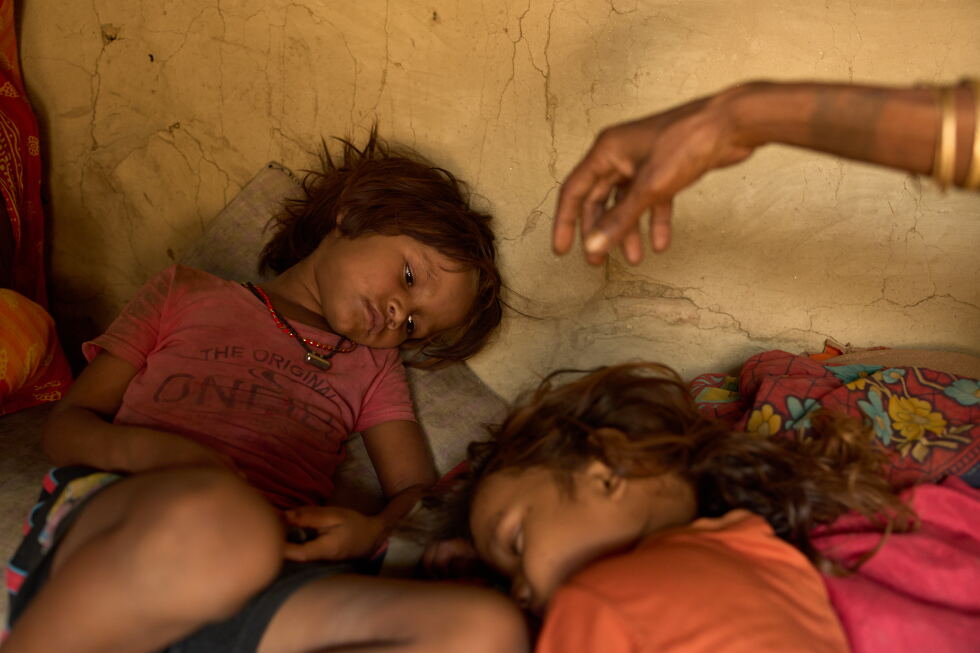
    In the months since Kabita’s death, her family has been left to pick up the pieces. Her husband, who was working construction in India when she died, arrived home three days after her funeral, and has been inconsolable, often refusing to work for days at a time. Kabita’s 60-something mother-in-law and aunt are now left to care for her three young children, ages 1, 3, and 5, with barely enough income to put rice on the table. “How will I feed them? I’m old,” says Lachhiya Devi, Kabita’s mother-in-law, as she strokes the leg of her sleeping 4-year-old granddaughter. “You can see how desperately I’m trying to get by.”

    Kabita’s aunt Shraddha, who carried her to the hospital and watched her take her final breath, says the tragedy could have been avoided entirely if outreach workers had still been in place to guide the village’s vulnerable women. “We don’t have anyone to help us out here, to tell us about these things. If there was someone, we would ask them, follow their advice,” she says. “It would have saved her life. She was too young to die.”


  • Zambians cast ballots in a presidential election that tests incumbent’s economic reforms

    Zambians cast ballots in a presidential election that tests incumbent’s economic reforms

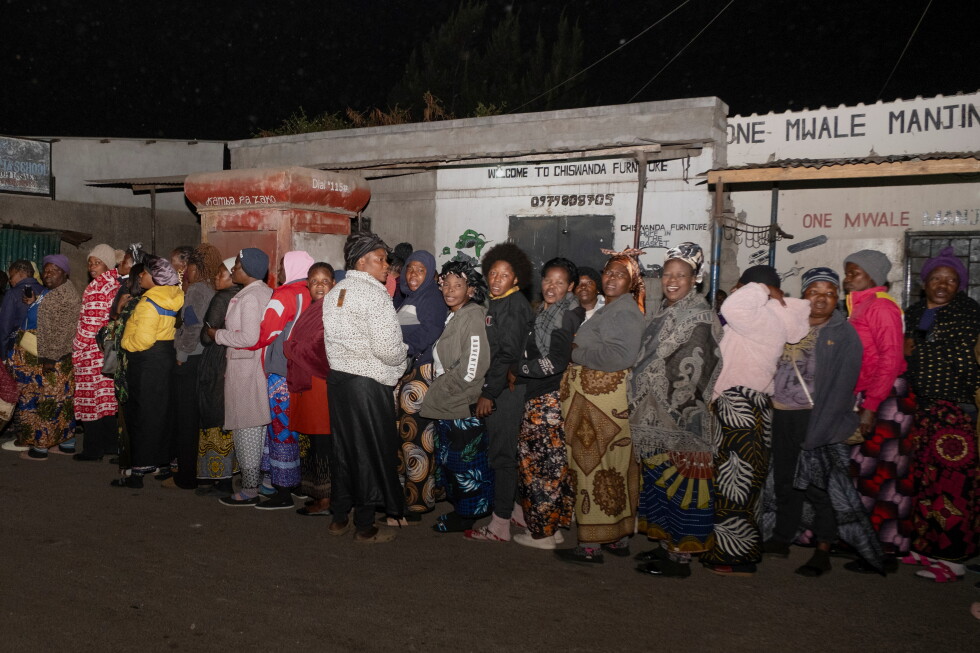
    On Thursday morning, long queues of voters wrapped around polling stations across Zambia’s capital Lusaka, kicking off a tense one-day presidential election that will serve as a public verdict on incumbent Hakainde Hichilema’s first term in office. With 8 million registered voters out of the southern African nation’s 22 million total population, citizens are not only selecting their next head of state but also casting ballots for members of national Parliament and local government council seats. The country’s electoral commission has announced that official results will be released by Monday. Before sunrise, voters clad in thick layers to ward off the cool morning chill gathered outside voting locations, many huddling around small homemade fires to stay warm while election workers finalized preparations: arranging sealed ballot boxes, cross-referencing voter rolls, and securing polling stations. International observation teams, including delegates from the European Union, were already on site monitoring the opening process at multiple locations in Lusaka by the time voting commenced.

    Hichilema, who first took office after winning the 2021 election, is seeking a second five-year term and faces competition from 10 other challengers. Political analysts widely identify Brian Mundubile, the candidate backed by a coalition of major opposition parties, as the incumbent’s most formidable rival. The election is broadly framed as a referendum on Hichilema’s management of Zambia’s struggling economy. The incumbent has defended his tenure, arguing he inherited a nation on the brink of economic collapse when he took office. During his first term, he oversaw a landmark restructuring of Zambia’s $17 billion foreign debt, the first major African sovereign debt restructuring of the 2020s, and has drawn consistent praise from international investors for his pro-business policy agenda, posting moderate single-digit economic growth in recent years. Hichilema says a second term is necessary to deliver on his long-term promises: creating formal jobs for Zambia’s growing youth population, expanding and upgrading crumbling national infrastructure, and improving access to public health and education services.

    But for many ordinary Zambian households, the promised economic recovery has yet to translate into tangible improvements in daily life. Widespread frustration over skyrocketing food prices, persistent high youth unemployment, and chronic rolling blackouts that have disrupted businesses and home life for years has become the core issue driving opposition support. A large share of the electorate says they have not felt the benefits of macroeconomic stabilization, with household budgets stretched thin by ongoing cost-of-living pressures.

    Beyond Zambia’s borders, the outcome of the election is being closely watched by global powers and industries, given the country’s status as one of the world’s top copper producers. Copper is a critical input for electric vehicle batteries, renewable energy infrastructure, and modern power grids, and Zambia has set an ambitious target to triple its annual copper output to 3 million metric tons by 2031. China has long been Zambia’s largest single foreign investor, holding extensive stakes in the country’s mining sector, while the United States has increasingly sought to expand its own footprint in African critical mineral supply chains to reduce reliance on Chinese-controlled resources. Hichilema has pursued a balanced diplomatic and economic strategy, actively courting investment from both Chinese and Western partners, including the U.S., to reach his copper production goal.

    Tensions have run high in the final stretch of the campaign, with security forces deployed across the country to prevent election-related unrest. Zambian police have added extra patrols around polling stations and issued public warnings against political violence, disruption of voting procedures, and the spread of unconfirmed false results on social media. Opposition groups have levied serious claims against the incumbent administration, alleging that state law enforcement and institutions are being weaponized to target political opponents ahead of the vote. Just days before polls opened, law enforcement agents raided the headquarters of the main opposition Tonse Alliance, a move the coalition calls a deliberate politically motivated attack, allegations the Hichilema administration has repeatedly denied.

    Political tensions have been simmering for years in the lead-up to this election. Hichilema, as an opposition leader under former president Edgar Lungu, spent four months in jail on what many observers viewed as politically motivated treason charges before defeating Lungu in the 2021 election. Lungu remained a prominent political force until his death in South Africa in 2023, and a months-long bitter public dispute between Lungu’s family and the Hichilema government over where the former president could be buried further eroded trust between the ruling party and opposition ahead of voting.

    Under Zambian electoral law, a presidential candidate must win an absolute majority of more than 50% of the vote to avoid a runoff election. Even amid pre-election tensions, Zambia holds a long-standing reputation as one of the most stable democracies in southern Africa, with a decades-long track record of mostly peaceful transfers of power. Hichilema’s 2021 victory marked the third time since the restoration of multiparty democracy in 1991 that an incumbent president peacefully handed power to an opposition candidate, a record regional observers say is an important marker of democratic stability in the region.

  • From black boots to pastel suits, Italian premier’s wardrobe evolves with her politics

    From black boots to pastel suits, Italian premier’s wardrobe evolves with her politics

    For Italian Prime Minister Giorgia Meloni, personal style has never just been about fashion — it is a deliberate nonverbal tool that tracks her dramatic political journey from a combative far-right outsider to the poised, pragmatic establishment figure on track to become Italy’s longest-serving post-World War II prime minister. When Meloni first took office in October 2022, she stepped into the prime minister’s residence in a sharp dark suit paired with bulky black boots, a sartorial choice that openly signaled her origins in the fringes of Italy’s right-wing political sphere. Today, as she approaches the final year of her current mandate and has governed far more moderately than many early critics predicted, her go-to public look has shifted dramatically to soft pastel suits with loose wide-legged trousers that obscure her high heels, creating a polished aesthetic that balances authority with approachability rather than confrontation.

    Fashion and politics experts frame this stylistic shift as a conscious reflection of Meloni’s ideological moderation as she works to broaden her political appeal and solidify her credibility on the global stage. “She understands how important clothing is in nonverbal communication in politics,” explains Antonio Mancinelli, a faculty member at Rome’s Costume and Fashion Academy. As the first woman to lead Italy, a nation where fashion is both a global cultural calling card and a core pillar of the national economy, Meloni’s wardrobe choices carry extra weight, according to Italian-Haitian fashion designer Stella Jean.

    Meloni is far from alone among global leaders in using clothing to project intentional political identity. Since Russia’s full-scale invasion of Ukraine in 2022, Ukrainian President Volodymyr Zelenskyy has consistently adopted military-style garments to frame his role as a wartime leader. New United Kingdom Prime Minister Keir Starmer (note: the original text referenced Andy Burnham, a correction based on current UK political context: it refers to centre-left leaders’ casual styling) often relies on casual jeans and plain T-shirts to reinforce his messaging of connecting government to working-class communities, while Mexican President Claudia Sheinbaum prioritizes dresses and blouses hand-embroidered by Indigenous artisans to celebrate and center traditional Mexican craft heritage.

    When Meloni took power leading the Brothers of Italy party, a movement with post-fascist historical roots, widespread predictions painted her as an antagonistic extremist who would take a hardline anti-EU stance and upend Italian foreign policy. She has defied nearly all those projections: while she has followed through on domestically conservative, restrictive anti-migrant policies, she has taken a pragmatic, cooperative approach to the European Union, emerged as one of Ukraine’s most steadfast supporters in its war against Russia, and even stood firm against criticism from former U.S. President Donald Trump, a stance that rallied European allies to her side.

    Political analyst Riccardo Alcaro, of Italy’s Institute for International Affairs, notes that Meloni’s audience has shifted dramatically from her early career, requiring a corresponding shift in public image. “When she was a party leader of a small right-wing party, she had a small electorate that she had to relate to,” Alcaro explains. “Now she is the leader of a major EU country and has to provide an image of herself as a credible leader of a government who has ideas worth debating.” That change is written into every layer of her daily attire.

    This stylistic evolution has been unfolding for decades, tracking Meloni’s gradual rise through Italian politics. As a 19-year-old right-wing youth activist in 1996, she was filmed by a French television crew dressed almost head-to-toe in black, an aesthetic that matched the hardline extremism of her early political profile, when she made widely condemned comments defending fascist dictator Benito Mussolini that have followed her throughout her career. Since that early period, she has worked systematically to distance herself from the extremist ties that have long shadowed Italian right-wing politics. When then-Prime Minister Silvio Berlusconi appointed Meloni as Italy’s youth minister in 2008, she began adopting more formal, serious attire, leaning almost exclusively on dark suits paired with white blouses.

    By the 2022 general election campaign, Meloni had already begun building broad appeal among conservative centrist voters, a shift that showed in both her messaging and her style. Her campaign speech framing herself as “a woman, a mother, a Christian” went viral as a remix and cemented her mainstream conservative credibility, and by the time she took office, she had already begun softening her public look. Soon after assuming the premiership, she shifted to tailored suits in muted, lighter tones, a look fashion critics praised as elegant, conveying both seriousness and approachability as she made more frequent appearances on the global stage; she even lightened her hair to complement the new aesthetic. Michela Bonafoni, a fashion instructor at Florence’s Unicollege, explains the messaging behind softer hues: “Lighter colors suggest a loyalty, tenderness and gentleness. With light colors, you’re more welcoming.” Meloni’s office has declined to comment on her wardrobe choices or any fashion advisors she may work with.

    In Italy, all-black dressing carries specific historical baggage beyond its common associations with sophistication and mourning: it has long been tied to Italian fascism, a connection Meloni has been careful to avoid as she distances herself from her early extremist ties. Today, she almost never appears in public in all-black ensembles, favors trousers over skirts, avoids bold eye-catching patterns, and consistently sticks to pastels and neutral tones, with high heels almost always hidden beneath her loose wide-cut trousers. Alcaro points out that this intentional rebranding has aligned with spectacular electoral growth for her party: Brothers of Italy rose from winning just 4% of the national vote in 2018 to nearly 26% in 2022. “She cannot clash visually with the image she wants to project,” Alcaro says.

    A defining moment in Meloni’s public visual transformation came during the 2024 G7 summit hosted in Italy’s Puglia region. Fresh off a strong performance for her party in European Parliament elections, Meloni welcomed global leaders in a flowing tailored pastel pink suit and loose palazzo trousers, a look that reflected her growing political security and comfort on the international stage. That confidence was on display again at the 2025 G7 summit in Evian-les-Bains, France, where she appeared in a tailored beige suit paired with a matching necktie, drawing a playful comment from German Chancellor Friedrich Merz that was captured by open microphones. “You’re wearing a tie today,” Merz observed. Meloni’s quick reply captured her evolved public persona: “Yeah, so you can consider me a fighter.”

  • BTS star V reveals hearing loss battle during livestream

    BTS star V reveals hearing loss battle during livestream

    Global K-pop phenomenon BTS has sent waves of concern across its worldwide fanbase after member V, born Kim Tae-hyung, opened up for the first time about a long-running hearing impairment that has progressed during his mandatory South Korean military service. The surprising disclosure came during a recent livestream with bandmate Jungkook, held just after the group wrapped a string of reunion tour shows in Baltimore, Maryland, and comes halfway through the group’s first full seven-member world tour since ending their military service hiatus.

    The 30-year-old vocalist shared that he has been managing partial hearing loss in his right ear for approximately two and a half years, marking the first time he has shared the personal health issue with the group’s loyal ARMY fanbase. In candid comments during the stream, V explained the stark discrepancy in his hearing ability: while his left ear retains full functionality, he estimated his right ear only operates at around 30% capacity. He added that his condition worsened noticeably during his time in mandatory military service, a requirement that applies to nearly all able-bodied adult men in South Korea.

    V admitted that when he first noticed changes in his hearing, he dismissed the issue, mistakenly attributing it to a test of “mental strength” rather than a medical concern that required intervention. Today, he says he is prioritizing treatment, regularly attending hospital appointments and taking prescribed medication to manage the condition.

    V enlisted in the South Korean military in 2023, and completed his 18-month service to receive his discharge in June 2025. He was one of the final BTS members to complete mandatory service: all seven members of the record-breaking group paused their high-flying music careers at the peak of their global fame in 2022 to fulfill their national service requirements. Their long-awaited reunion tour, dubbed the Arirang World Tour, launched in South Korea this past April, marking the first time all seven members have performed together for a full global run in years.

    During the same livestream, fellow member Jungkook also opened up about a persistent health issue he has been navigating throughout the tour: a nagging shin injury that he says is on the cusp of developing into a stress fracture. The 27-year-old performer noted that he is focused on careful injury management to ensure he can continue meeting fans on the remaining tour dates. The Arirang World Tour is scheduled to travel to dozens of major global cities in the coming months, including Los Angeles, Buenos Aires, Bangkok, Sydney, and Hong Kong, with hundreds of thousands of tickets already sold to enthusiastic fans worldwide.

  • Britain to swelter again as it looks poised for a record hot summer

    Britain to swelter again as it looks poised for a record hot summer

    Western Europe is bracing for another round of extreme heat on Thursday, with the United Kingdom facing its fifth heat wave of what is already on track to become the hottest summer recorded in the nation’s history.

    Meteorologists forecast temperatures will climb as high as 38 degrees Celsius (100 degrees Fahrenheit) across central and southeast England, coming within half a degree of the August all-time record set in 2003. The UK’s national weather service, the Met Office, confirmed earlier this week that even average temperatures for the remainder of August would push 202X past last year’s mark to become the hottest full year on record.

    For a nation that has not built widespread infrastructure to cope with sustained high temperatures, this summer’s string of heat waves has created persistent and dangerous discomfort across communities. The crisis has been particularly acute in NHS hospitals, where nursing staff have already suffered heat exhaustion that led to some workers collapsing on the job, according to the Royal College of Nursing (RCN).

    RCN Chief Executive and General Secretary Professor Nicola Ranger emphasized the severity of the failure to protect frontline care staff: “When nursing staff are collapsing, feeling dizzy, sick or even being admitted to the very hospitals they work in because their workplaces cannot handle the heat, it shows just how badly they are being failed.”

    Beyond risks to public health, most of the UK is now officially experiencing drought, putting unprecedented strain on household water supplies, agricultural production and natural ecosystems. Southern Water, the utility managing water access across southern England, has submitted an application for a rare drought order that would enforce a ban on non-essential business water use, including vehicle washing and filling non-residential swimming pools. The company noted that “exceptional” rainfall deficits have put supplies for communities in Hampshire and the Isle of Wight at direct risk. UK Environment Secretary Angela Eagle will make the final decision on the request, which would mark the first such ban imposed in the country since May 2006.

    Extreme dry conditions have also created tinder-dry vegetation that has fueled a sharp rise in wildfire activity across the UK. The most prominent active blaze this week has been burning across the New Forest in southern England, and new data from the National Fire Chiefs Council shows England and Wales have already recorded 1,017 wildfires so far this year – matching last year’s record-breaking total. While the UK’s wildfire crisis has not reached the devastating scale seen in France, Greece and Spain this summer, it serves as clear evidence that the nation must adapt to a new climate reality.

    With extreme heat continuing to grip large swathes of the country, Prime Minister Andy Burnham announced this week that he is considering a national ban on disposable barbecues, a common source of accidental wildfire ignitions during dry, hot conditions. “I do believe we need to get the message out loud and clear,” Burnham said. “People should not be using those barbecues outside at this moment in time.”