博客

  • Maghreb sees demographic shift with fertility at historic low

    Maghreb sees demographic shift with fertility at historic low

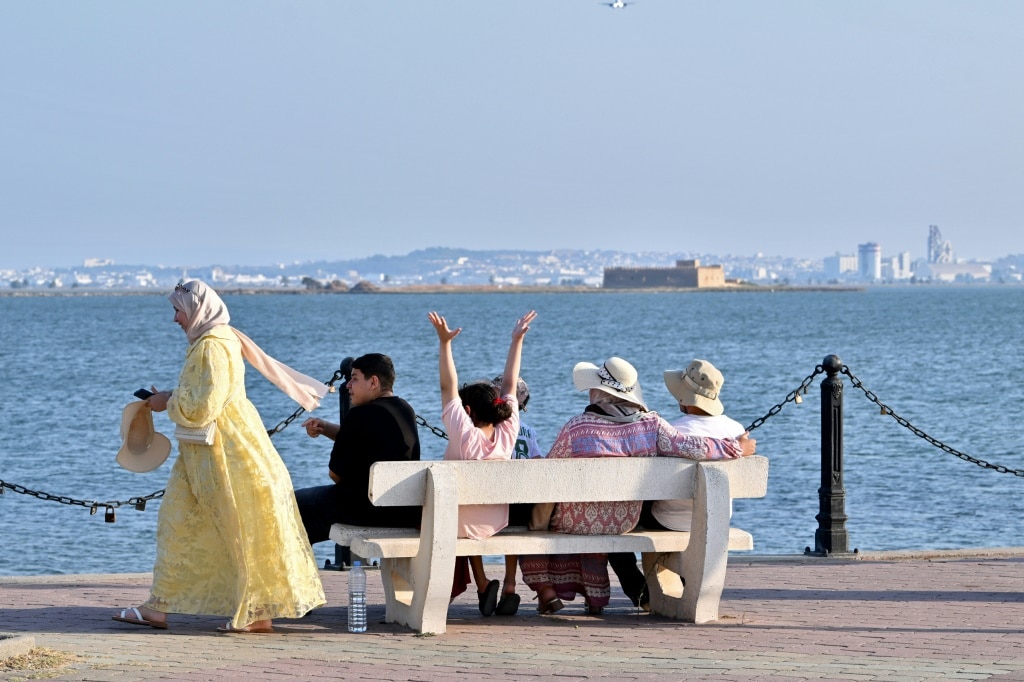
    Across Tunisia, Morocco and Algeria, the North African Maghreb region is undergoing an unprecedented demographic transformation, as shifting social norms and mounting economic strain push growing numbers of couples to have fewer children, pushing regional fertility rates to all-time historic lows. This rapid decline is upending long-held cultural stereotypes of large, multi-child families that have long defined the region, mirroring similar global demographic shifts while unfolding at a faster, more sustained pace than many experts anticipated.

    A new analysis from France’s National Institute for Demographic Studies (INED) confirms the downward trend is both exceptionally sharp and likely permanent, a shift Tunisian leading demographer Mohamed Ali Ben Zina has described as “profound” in its long-term implications for the region. Official demographic data collected across the three countries underscores the scale of the change: since the 1970s, average fertility rates have dropped by more than half across the Maghreb.

    As of 2024, Tunisia holds the lowest fertility rate in the region, with an estimated average of just 1.53 children per woman, down from 1.58 in 2023. Morocco follows with an average of 1.97 children per woman, while Algeria has the highest regional rate at 2.61.

    Interviews with residents and experts across the region point to a tangled web of interconnected factors driving the shift. Leading demographic researcher Hassen Kassar, based in Tunisia, notes deep structural social changes are at the root of Tunisia’s particularly steep decline: growing urbanization and the modernization of family structures have naturally reduced preferences for large household sizes, he explains.

    Generational shifts in outlook are striking. In Algiers, 66-year-old retired finance executive Said—who asked to not share his full name—grew up one of 10 children. “My father struggled constantly to put food on the table for all of us,” he recalled. “That experience is why I decided to stop at two children. What matters most is that they have enough to eat, proper clothes, and a stable, comfortable life.”

    Economic precarity remains one of the most commonly cited drivers for smaller families. Chaimae Drioui, a researcher and professor at Morocco’s National Institute of Statistics and Applied Economics (INSEA), frames declining fertility as a logical, calculated choice for modern families adjusting to new economic realities. For generations, many low-income Maghreb households viewed children as a long-term financial investment, counting on adult children to support aging parents. That conventional wisdom has flipped completely in recent years, Drioui explains: “Today, raising a child costs far more than any immediate or long-term economic benefit he or she can provide.”

    In Tunis, 42-year-old civil servant Nadia Jaouadi says she and her husband made the deliberate decision to remain childless 10 years ago, a choice she has never regretted. “There is nothing in this current climate that encourages people to have even one child,” she says, pointing to Tunisia’s ongoing deep economic struggles and unstable social environment as core reasons for her choice.

    Beyond financial pressure, growing awareness of the mental and physical toll of parenthood is also pushing many women to limit or forgo having children. Zina, a 42-year-old Algerian woman who had her only daughter at age 38, says she has no plans for a second child: “After giving birth, I understood just how much of a strain motherhood puts on both your physical and mental health.” In Rabat, 38-year-old public sector manager Kaouthar—who also requested partial anonymity—says she has chosen to remain permanently childless: “I opted for a calm life, free from the constant worry and stress that comes with raising a child.”

    Drioui emphasizes that expanding access to education and growing economic empowerment for women have been game-changing in dismantling traditional large-family norms. Longer educational pathways for women and rising professional ambitions have delayed childbearing and reduced the total number of children many choose to have, while rising divorce rates have also altered family planning patterns across the region.

    This dramatic demographic shift comes with far-reaching long-term consequences, most immediately a rapidly aging population across the Maghreb. In Tunisia, adults aged 60 and older already make up 17 percent of the total population, equal to nearly 2 million residents. The trend is less advanced in the other two countries: in 2023, adults 60 and older made up 10 percent of Algeria’s population, while the figure hit 13.8 percent for Morocco in 2024.

    A shrinking working-age population and growing cohort of retirees will put increasing strain on public pension systems and upend the balance between working contributors and retired beneficiaries, experts warn. If current trends hold and deaths begin to outnumber births, INED researchers note that only sustained immigration can prevent overall population decline. Foreign workers could also fill critical labour gaps as the working-age population shrinks.

    But opening borders to large-scale immigration remains a politically and socially sensitive topic across all three Maghreb countries. Even so, some experts say the region will have little choice but to embrace migration from neighbouring regions. Kassar says the writing is already on the wall: “We will need sub-Saharan migrants to address these gaps.”

  • Body of Pakistani climber recovered from Broad Peak 2 weeks after avalanche killed 10

    Body of Pakistani climber recovered from Broad Peak 2 weeks after avalanche killed 10

    Nearly two weeks after one of the deadliest mountaineering disasters in recent Pakistani history, local volunteers have recovered the remains of the last missing Pakistani climber killed in a July 30 avalanche on Pakistan’s Broad Peak, local officials confirmed Thursday.

    Sohail Sakhi, one of the 10 members of an international expedition led by famous high-altitude climber Nirmal Purja, had been unaccounted for since the avalanche cut off all contact between the team and base camp. Authorities confirmed all 10 climbers had died after the incident, and Sakhi’s recovery brings the total number of bodies retrieved to eight.

    The volunteer team hailing from the local Karakoram region located Sakhi’s body before additional rescue teams joined to carry the remains back to the mountain’s base camp. According to the Alpine Club of Pakistan, the body will be airlifted via helicopter to a regional air base as soon as favorable weather conditions allow for safe flight operations.

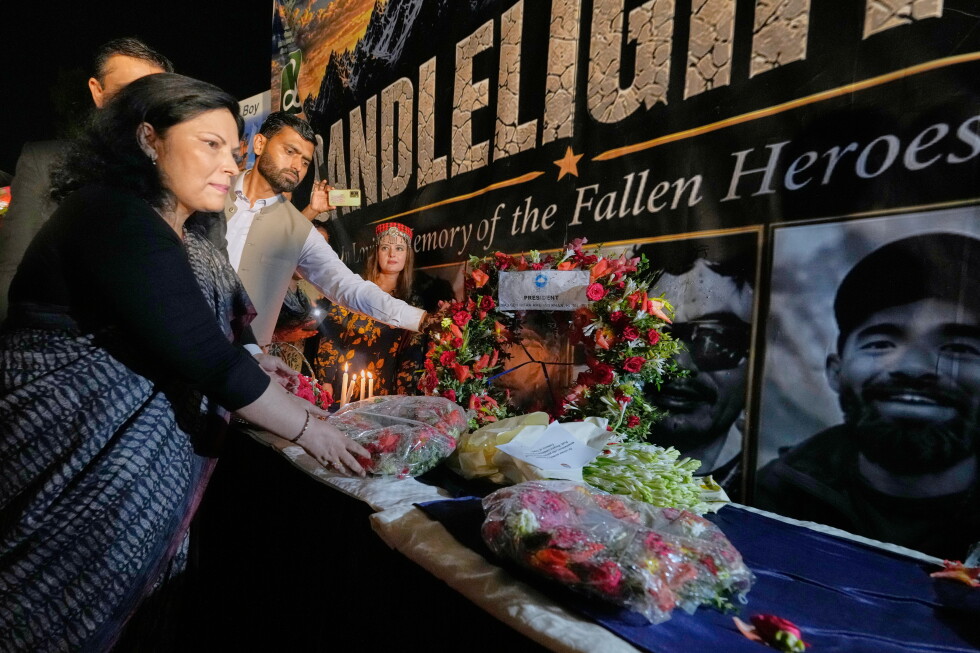
    This recovery comes just 48 hours after a moving candlelight vigil was held in Islamabad, Pakistan’s capital. Mountaineers, diplomatic representatives, and civil society activists gathered to honor the lives of the 10 lost climbers, who came from six nations across the globe: Nepal, Oman, Pakistan, China, Britain and the United States.

    Standing at 8,051 meters (26,414 feet) above sea level, Broad Peak ranks as the 12th highest mountain on Earth, located in Pakistan’s Karakoram mountain range just adjacent to K2, the world’s second-tallest peak. Northern Pakistan, which hosts five of the world’s 14 highest mountains, has long been a destination for experienced mountaineers from around the world, but the region’s unpredictable glacial conditions and harsh weather make climbing-related accidents a regular and tragic occurrence.

  • Golfer admits ‘stupidity’ after faking hole-in-one

    Golfer admits ‘stupidity’ after faking hole-in-one

    A high-profile incident of golf cheating has rocked a private country club in Missouri, after an accomplished amateur player publicly owned up to orchestrating a fake hole-in-one at a club member tournament. Zach Holland, a former collegiate golfer holding a plus-two handicap, has stepped down from his membership at WingHaven Country Club after the scheme came to light, acknowledging his actions were deeply reckless and unethical.

    The deception unfolded on the morning of the club’s annual member-member team competition, an event restricted to players who hold official membership at the facility, which offers a pooled prize for any participant that scores a hole-in-one. Holland had already completed play on the first three holes alongside his playing group when he concocted a false excuse: he claimed his grandmother was unwell and needed to take an urgent phone call, telling his group he would move ahead to the par-three fourth hole to play his tee shot early to avoid slowing down the group’s pace.

    By the time the rest of Holland’s group arrived at the fourth green, he told them he had already played his shot but could not recall where the ball had landed. When the group searched the green, they discovered Holland’s golf ball sitting in the cup, prompting an immediate celebration of what the group believed was an unexpected hole-in-one.

    Suspicion quickly grew among other club members in the clubhouse, however, as no witnesses had actually seen Holland hit the tee shot. When club officials confronted Holland, they were able to back up their suspicions with security camera footage showing Holland driving a vehicle near the fourth hole before his official tee time that day. Though no footage captured Holland actually placing the ball in the cup, the evidence was enough to prompt a full confession. Holland has since confirmed he placed the ball in the cup before his round even began, in a premeditated act of deception.

    In an interview with St. Louis-based radio station 101 ESPN, Holland expressed deep remorse for his actions, saying, “You do something as dumb as I did, there are consequences for that.” When pressed about his motivation for the scheme, he said there was no clear justification for his choice. “I don’t really know. I’ve talked to people and there really is no motivation, just complete stupidity. We were giving two shots back to the field – and that’s not an excuse, there is no excuse for what I did. But to answer your question, we were giving two shots back to the field, and I went about it just completely and utterly the wrong way.”

    Holland emphasized that the incident was an isolated mistake, not a pattern of bad behavior. “I’m not a cheater on the golf course. I made a bad decision and I have to suffer the consequences,” he said. The former player acknowledged he accepts public criticism of his actions, noting “I can take the banter and the chatter because I deserve that from a golf perspective.” What weighs on him most, he added, is the damage the incident has caused to his family and personal relationships. “But what I am most worried about is my family, breaking trust with a marriage I have had for five years next month. We have two kids that are under three and you know, it’s not fair to them for me to put them in that situation where they walk in a room, there is a stigma there that your dad [is a cheater].”

    Nathan Charnes, acting president of the PGA of America and general manager of WingHaven Country Club, told Golf.com in a statement that the club moved quickly to resolve the issue once the deception was uncovered. The club later released a formal statement confirming the matter has been fully addressed and is now considered closed. “We promptly addressed the matter,” Charnes said, adding that the club “care deeply about the integrity of the game and the experience we provide for our members and guests.”

    Holland, who is working to move past the incident and protect his family from further public scrutiny, resigned his membership at the club following his confession, bringing the internal investigation to a close.

  • Ukraine’s drones hit a major Russian refinery 800 miles from the border, sparking a fire

    Ukraine’s drones hit a major Russian refinery 800 miles from the border, sparking a fire

    Four years into Russia’s full-scale invasion of Ukraine, Kyiv has ramped up a sustained campaign targeting Russia’s critical energy sector, carrying out the fourth deep-strike drone attack on Russian oil infrastructure in just three days, Ukrainian military officials confirmed Thursday.

    As one of the world’s largest energy exporters, Russia’s oil industry forms the backbone of its national economy, funding the ongoing military campaign that has pushed slowly and at massive human and material cost deeper into Ukrainian territory. Kyiv’s strategy of disrupting Russia’s oil refining capacity aims to cut off a key revenue stream for Moscow’s war effort and force President Vladimir Putin into negotiating a peace deal, though there is currently no public evidence this objective is being achieved.

    The latest target was the Gazprom Neftekhim Salavat oil refining and petrochemical complex, located in Russia’s Republic of Bashkortostan roughly 1,300 kilometers (800 miles) southeast of Moscow and 800 miles from the Ukrainian border. Ukraine’s General Staff announced via Telegram that overnight drone strikes sparked a large fire at the facility, one of Russia’s largest refining and petrochemical hubs, which processes up to 74 million barrels of crude oil annually to produce gasoline, diesel and a range of other petroleum products.

    Radiy Khabirov, the governor of Bashkortostan, confirmed the attack, noting that two civilians were wounded and a fire broke out in Salavat’s industrial zone. Russia’s largest e-commerce retailer Wildberries also reported that a fire ignited at one of its unused facilities located within the same industrial zone following the strike, prompting a full evacuation of the site with no stored goods damaged.

    Thursday’s attack on the Salavat refinery came just one day after Ukrainian anti-ship missiles and drones carried out a large-scale blitz on a key Russian naval stronghold along the Black Sea coast. In a separate incident Thursday in Sevastopol, the port city on Russia’s illegally annexed Crimean Peninsula, five people — four Russian Emergency Ministry explosive experts and one security guard — were killed when an unexploded Ukrainian weapon detonated as the team inspected the site of an earlier attack. To date, no independent third party has been able to verify the conflicting claims of the two warring sides.

    The strike on Salavat follows a separate drone attack earlier this week on another key Russian refinery in Orsk, located in the Orenburg region near the Kazakhstan border. Orenburg Governor Yevgeny Solntsev confirmed Thursday that the Orsk facility has suspended all operations after critical infrastructure, including imported processing equipment, was damaged. In an unusual public acknowledgment of the disruption caused by Kyiv’s attacks, Solntsev noted that repairs could take up to six months due to ongoing international sanctions that limit access to replacement parts.

    Russia has responded to Ukraine’s deep-strike drone campaign with intensified barrages across Ukraine, launching waves of ballistic missiles, jet-powered Shahed drones and glide bombs — weapons that are highly destructive and difficult for Ukrainian air defenses to intercept. According to United Nations estimates, these Russian strikes have killed more than 16,000 Ukrainian civilians since the full-scale invasion began.

    Overnight between Wednesday and Thursday, Russian forces launched 133 long-range attack drones across Ukrainian territory, killing at least four people and wounding eight more. In the southern Odesa region, a Russian Shahed drone hit a passenger train, killing the lead engineer and his assistant, state railway operator Ukrzaliznytsia confirmed. A separate drone strike in the southern city of Kherson killed two civilians Wednesday evening, regional military administrator Oleksandr Prokudin reported.

    On the diplomatic and military assistance front, Ukraine is facing growing shortages of critical air defense equipment, specifically U.S.-made Patriot interceptor missiles needed to counter Russian ballistic missile strikes. Ukrainian President Volodymyr Zelenskyy revealed in a CNN interview broadcast Wednesday that Kyiv currently has only two-fifths the number of Patriot interceptors it had in 2025, with stockpiles depleted in part by ongoing conflict tensions related to Iran. Zelenskyy noted he makes daily requests to secure additional interceptors, and has asked the U.S. to sell Ukraine 5% of its current stockpile to help Ukraine defend its power grid through the coming winter, when Russia typically intensifies strikes on energy infrastructure. To date, Ukraine has only secured 1% of the requested munitions, he said.

    A new report published Thursday by Germany’s Kiel Institute, a leading organization tracking international military assistance to Ukraine, found that European countries have paid U.S. defense contractors at least 3 billion euros ($3.5 billion) for military equipment transferred to Kyiv in the first half of 2026. Overall, military aid commitments to Ukraine in the first six months of 2026 remained close to 2025 levels, but financial and humanitarian aid dropped by 41% year-over-year. The report also noted that the current U.S. administration led by former President Donald Trump has declined to provide new direct U.S. aid to Ukraine, but has permitted other allied nations to purchase U.S.-made weapons for transfer to Kyiv.

  • Eurovision Song Contest 2027 to be held in Burgas, Bulgaria

    Eurovision Song Contest 2027 to be held in Burgas, Bulgaria

    One of the world’s most watched and beloved live music competitions, the Eurovision Song Contest, has locked in its 2027 host: the coastal Bulgarian city of Burgas, overlooking the Black Sea. The European Broadcasting Union (EBU) and Bulgaria’s national public broadcaster BNT jointly made the announcement this week, confirming the full four-day event will run from May 12 to May 15, with the iconic grand final scheduled for May 15. This historic hosting gig marks the first time Bulgaria will welcome Eurovision, following the country’s first ever contest victory in May 2026, when rising pop star Dara took the top prize in Vienna, Austria with her high-energy dance hit *Bangaranga*.

    Martin Green, Eurovision’s overall event director, expressed enthusiastic support for the selection, calling Burgas an ideal choice to welcome the global Eurovision community. “Burgas is a vibrant, welcoming Black Sea city with deeply rooted musical and cultural identity, and it checks every box: it has the ambition, the modern infrastructure, and the shared passion to pull off an unforgettable contest,” Green said in a statement. All core event components—including artist rehearsals, the two semi-final rounds, and the live grand final—will be held at Arena Burgas, Bulgaria’s newest state-of-the-art sports and entertainment complex, which opened to the public in 2023.

    The selection of Burgas came as a mild surprise to many longtime Eurovision followers, as both BNT leadership and Dara herself initially suggested the 2027 contest would be held in Bulgaria’s capital city, Sofia. Speaking immediately after Dara’s May 2026 win, BNT director Milena Miltenova told reporters the country was ready to welcome Eurovision to Sofia, with Dara echoing that excitement about hosting in her home capital. Ultimately, however, Burgas beat out three other competing Bulgarian cities—Varna, Plovdiv, and Sofia—in a rigorous competitive bidding process. After initial evaluations, only Burgas and Sofia advanced to the final round of consideration, with the EBU ultimately selecting Burgas for its strong overall proposal, including top-tier venue capabilities, robust technical infrastructure, sufficient hotel capacity to accommodate tens of thousands of international visitors, and easy access via international transport links.

    Miltenova, who previously backed Sofia’s bid, has since thrown full support behind the selection, saying she is confident Bulgaria will deliver a world-class event that lives up to the contest’s high standards. “We are now entering an intensive period of cross-stakeholder collaboration to deliver a contest that meets the very high expectations of millions of viewers across the globe,” she said, adding that Bulgaria is eager to showcase its rich culture, warm hospitality, and professional event planning capabilities to the world. Dimitar Nikolov, mayor of Burgas, called the selection an “exceptional honour” for the coastal city.

    Beyond the excitement of the host city announcement, the EBU also made headlines this week by updating the contest’s core rules around hosting eligibility. Under the new policy, any winning country involved in an active armed conflict, or facing a sensitive geopolitical situation that threatens the security, safety, or stability of the host nation or its immediate region, will be ineligible to host the following year’s contest. The amendment was approved by the contest’s governing body following feedback from participating broadcasters after the 2026 Vienna contest.

    The rule change is widely interpreted as a direct response to ongoing controversy over Israel’s participation in the contest, amid widespread international criticism of its military operations in Gaza. Last November, a motion to suspend Israel from the contest failed, prompting five national broadcasters—including major Eurovision contributors Spain and Ireland—to announce a boycott of the 2026 event. Despite the protests, Israeli contestant Noam Bettan finished second in 2026, marking the second consecutive year Israel has taken the runner-up position. Multiple participating broadcasters have privately raised serious safety concerns about the possibility of hosting a future contest in Israel if the country claims its first win since 1998.

    While Israel is the most immediate target of the new rule, the policy will also apply to Ukraine, which has been engaged in full-scale defensive war against Russian invasion since 2022. Ukraine won the 2022 contest with Kalush Orchestra, a win widely seen as a symbolic show of global public support for the country. After a full feasibility and security assessment, Eurovision organizers ultimately ruled out hosting the 2023 contest in Kyiv due to unacceptable safety risks, and the United Kingdom stepped in to host on Ukraine’s behalf in Liverpool.

    As an event, Eurovision consistently delivers significant economic benefits to its host cities: the EBU reports Liverpool saw a 66 million euro economic boost after hosting in 2023, Malmö gained 40 million euro from its 2024 hosting, and Basel added 58 million euro to its local economy in 2025. Organizers and local leaders in Burgas expect the 2027 contest to deliver similar growth and global exposure for the coastal city and Bulgaria as a whole.

  • Zambians voting as president bids for second term

    Zambians voting as president bids for second term

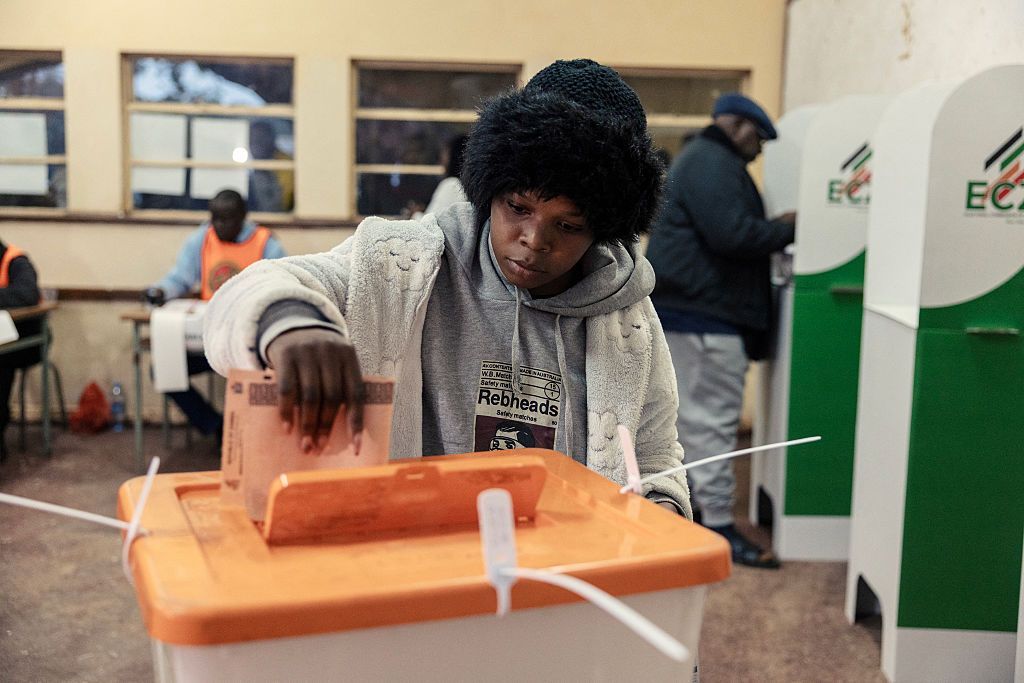
    On a crisp August morning in 2026, hundreds of Zambian voters lined up before sunrise outside polling stations across the country, kicking off a critical general election that carries profound implications for the southern African nation’s political and economic future. More than 8 million registered eligible voters are casting ballots across Zambia on Wednesday to select a new five-year presidential term and members of the national parliament, with polling stations open from 6 a.m. local time through 6 p.m. local time.

    Widely viewed as a key benchmark for Zambia’s standing as one of Africa’s most consistently stable democracies, this election unfolds against growing public scrutiny over shifting political freedoms and widespread economic dissatisfaction. Stagnant unemployment and skyrocketing living costs have emerged as the top issues shaping voter choices this cycle, cutting across demographic and regional divides.

    At the center of the race is 64-year-old incumbent President Hakainde Hichilema, who is seeking a second and final five-year term after first winning office in 2021 – his sixth attempt at the presidency. Hichilema took office amid a crippling national debt crisis and has overseen a marked macroeconomic rebound during his first term, running on a platform of continued job growth, large-scale infrastructure investment, and steady economic recovery. His campaign has highlighted targeted policy wins, such as the reinstatement of student meal allowances, which have earned him support among younger and urban voter blocs. “I voted for HH because he cares about us,” James Phiri, a 29-year-old University of Zambia student, told Reuters. “Things are better after he re-introduced meal allowances.”

    Still, the incumbent faces sharp criticism from voters who argue that broad economic gains have not translated to improved daily life, with inflation and living costs remaining stubbornly high for most working Zambians. His main challenger is Brian Mundubile, a former cabinet minister from the Patriotic Front (PF), the party that held national power from 2011 to 2021. Mundubile leads an opposition alliance anchored by supporters of the late former PF President Edgar Lungu, who died more than a year ago. A bitter, public dispute between Lungu’s family and Hichilema over the former president’s unburied remains – which remain held in South Africa – has amplified partisan tensions and deepened existing political divides across the country.

    While 14 candidates appear on the presidential ballot, political analysts broadly frame the contest as a tight two-way race between Hichilema and Mundubile. Voter opinions are deeply split heading into polling day, reflecting the nation’s evenly divided electorate. “Zambians are frustrated and this election is a 50-50, that is why we are all here early to make the change,” 26-year-old Mwiche Nalupumbwe told AFP, after joining pre-dawn queues outside a Lusaka polling station. For opposition supporters like 47-year-old welder and father of four Samuel Chitendwe, who cast his ballot for Mundubile, frustration over unmet economic promises runs deep. “I have just come from firing someone. We are tired of stories about economic progress,” he told Reuters.

    Election officials have put in place standard safeguards to prevent electoral fraud, including marking voter thumbnails with indelible ink to block repeat voting, with teams of trained monitors deployed to oversee polling across the country. To win the presidency outright, a candidate must secure more than 50% of the national vote; if no candidate hits this threshold, a run-off election will be held within 37 days of the final result being certified.

  • Farage and Count Binface go head-to-head in snap UK poll

    Farage and Count Binface go head-to-head in snap UK poll

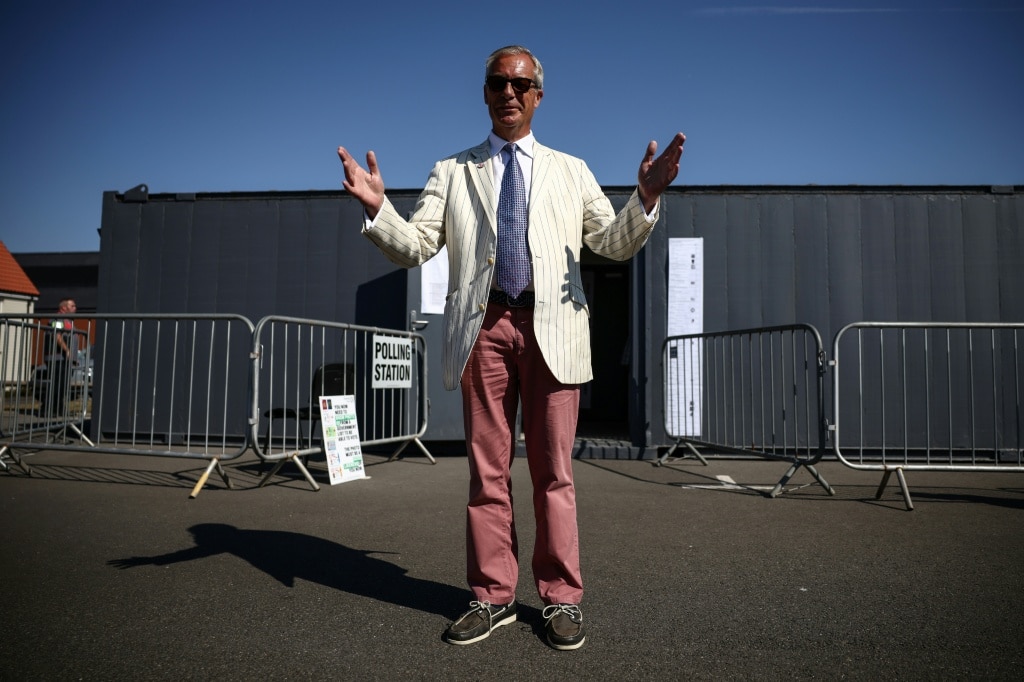
    Polling kicked off early Thursday morning in the high-profile Clacton by-election on England’s eastern coast, a deeply unusual contest that pits hard-right Reform UK leader Nigel Farage against an eclectic field of fringe candidates, headlined by satirical hopeful Count Binface. The election has turned into an extraordinary political spectacle after all major mainstream British parties opted to boycott the vote, dismissing the contest as a calculated political stunt.

    The by-election was triggered entirely by Farage’s surprise decision to step down from the Clacton seat he won in the 2024 general election, a move he made in July amid mounting scrutiny of unreported political donations to him and his Reform UK party. Farage framed his resignation as a response to a partisan “stitch-up” by political elites, and quickly announced he would run to reclaim the seat, positioning the contest as a showdown between the people of Clacton and the established Westminster political order.

    “The people of Clacton should be the judges of my actions,” Farage stated in a pre-voting video released Thursday, after casting his own ballot in the coastal town of Walton-on-the-Naze.

    Mainstream parties rejected that framing, however, accusing Farage of calling the unnecessary by-election to pause ongoing parliamentary investigations into his financial dealings, and refused to field official candidates. That left Farage, the anti-immigration Brexit figure whose party led national opinion polls for 18 months before a recent slump in support, facing off against 33 alternative candidates. The most high-profile among them is Count Binface, a long-running satirical political persona created by comedian Jon Harvey.

    Count Binface, who bills himself as an intergalactic space warrior from the fictional planet Sigma IX and wears a repurposed rubbish bin as headgear, marked polling day with a characteristically playful post on social platform X, writing simply: “Bin Day cometh”. An AFP reporter on the ground observed that the sample ballot paper, listing all 34 candidates, is so long it towers over most adult voters at one Clacton polling station.

    The contest fits into a long British tradition of satirical candidates running in elections to poke fun at mainstream politics, and Count Binface is far from the only unusual entrant: the Official Monster Raving Loony Party, another long-running UK satirical political group, is fielding three additional candidates in the race. Almost all candidates in the by-election are standing as independents, marking the largest field of candidates in any UK parliamentary election.

    While leading political analysts widely predict Farage will hold the seat comfortably, recent polling suggests Count Binface could capture as much as 20% of the popular vote, a showing that would turn the joke candidate into a significant embarrassment for the Reform UK leader. The seat is a deeply pro-Brexit constituency, a fact that gives Farage a strong structural advantage: political scientist John Curtice told AFP it would be “astonishing” if Farage failed to win the contest.

    Even so, many political observers argue Farage’s gambit has already backfired, turning what he hoped would be a popular revolt against the establishment into a national joke at his expense. “Farage’s plan to turn this by-election into a serious political battle failed,” Stijn van Kessel, a politics professor at Queen Mary University of London, told AFP. The resulting spectacle, he added, “makes Farage look rather silly”.

    That sentiment was echoed by some local Clacton voters. Phil, a 50-something voter who spoke to AFP after casting his ballot, said: “It’s not going to change anything. I get what he’s saying, but we can’t decide.” He noted that if Farage wins as expected, the paused parliamentary investigation into his finances will simply resume after he retakes his seat.

    The controversies that sparked the by-election extend beyond the parliamentary probe. The UK’s parliamentary sleaze watchdog is currently investigating Farage and Reform UK deputy leader Richard Tice over allegations they failed to declare large financial gifts, including a reported £5 million ($6.7 million) donation to Farage from cryptocurrency billionaire Christopher Harborne. Both men deny any wrongdoing. Separately, London’s Metropolitan Police confirmed they launched an investigation in 2024 into unreported donations to Reform UK ahead of last year’s general election; UK media reports link the probe to non-declared support from convicted fraudster George Cottrell, a longtime Farage ally, and his mother.

    The string of scandals has coincided with a measurable drop in support for Reform UK and Farage personally, a figure who has remained deeply divisive across British politics for decades. Luke Tryl, head of the UK-based research non-profit More in Common, told AFP that Farage’s long-time core supporters “seem largely undeterred” by the controversies, but that more recent converts to the party “might now be wavering”.

    Polls are set to close at 10:00 pm Thursday, with counting starting immediately and a final result expected to be declared by around 7:00 am Friday. Turnout among Clacton’s roughly 80,000 registered voters is expected to be significantly lower than the 59% turnout recorded in the 2024 general election, a drop widely attributed to the absence of candidates from major mainstream parties. While Farage won 46% of the vote and an 8,405-vote majority in 2024 on his eighth attempt to win a parliamentary seat, analysts note comparisons to that result are complicated by the widespread boycott of this 2025 by-election.

  • Fabien Barthez reunited with Zinedine Zidane as France’s new goalkeeper coach

    Fabien Barthez reunited with Zinedine Zidane as France’s new goalkeeper coach

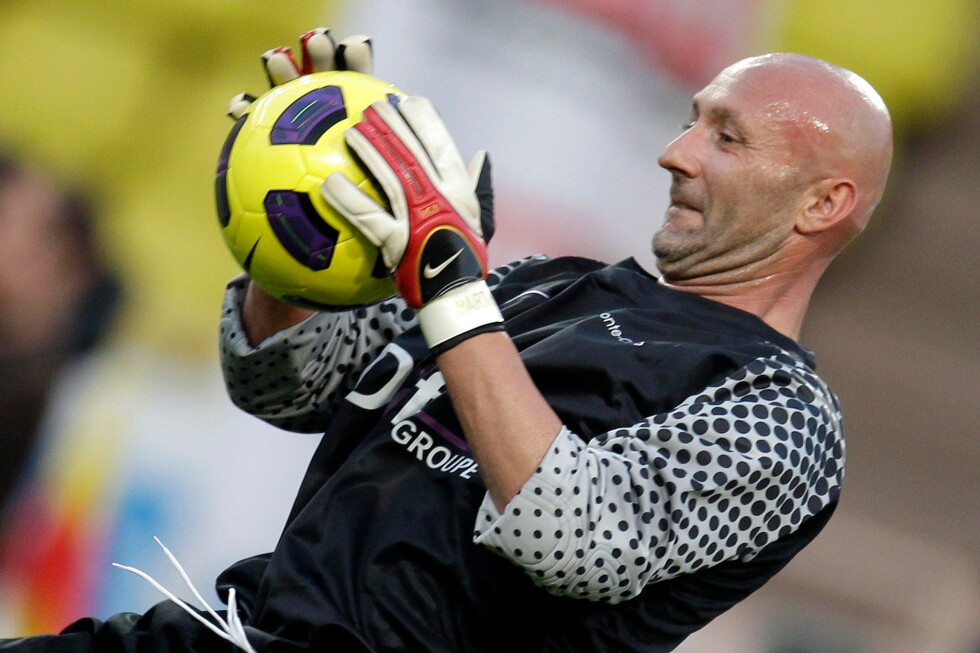
    PARIS (Updated) — Fresh off his appointment as France men’s national football team head coach, Zinedine Zidane has built out his senior support staff by reuniting with two familiar football figures who share deep winning history with the iconic French manager. On Thursday, the French Football Federation officially announced that Fabien Barthez, Zidane’s 1998 World Cup and 2000 European Championship winning teammate, will take on the role of national team goalkeeper coach. The move marks a full-circle reunion for two of the most recognizable names in French football. Zidane, one of the greatest midfielders in the sport’s history, was tapped as France’s new head coach just one month prior, signing a four-year contract that will see him lead the squad through the next cycle of major international tournaments, including the 2026 FIFA World Cup. The bond between Zidane and Barthez goes far beyond casual professional acquaintance: the pair shared the pitch for more than a decade as core members of France’s most dominant national squad generation, helping Les Bleus claim the sport’s two biggest senior international trophies in a three-year span. For Barthez, the new role caps a decorated playing career that saw him earn 87 senior caps for France, a tally that ranks among the most for any goalkeeper in the nation’s history. His final appearance for the national side came in the dramatic 2006 World Cup final against Italy, a match that remains one of the most infamous in tournament history. It was that game where Zidane, captain of the French side, was sent off in extra time for a headbutt on Italian defender Marco Materazzi, a moment that overshadowed Barthez’s final international outing as Italy went on to win the title on penalties. Beyond his international career, Barthez built a successful club career across top European competitions, featuring for French sides Toulouse, Marseille and Monaco, as well as a trophy-laden spell with England’s Manchester United in the Premier League. Now 55, Barthez brings decades of top-level experience between the sticks to his new coaching role, tasked with developing and managing France’s current crop of goalkeeping talent. Alongside the Barthez appointment, Zidane also confirmed David Bettoni will join the staff as assistant head coach, another long-time collaborator who worked alongside Zidane during his extremely successful tenure at Spain’s Real Madrid. During Zidane’s time at the Santiago Bernabéu, Bettoni served as his right-hand assistant, and the pair led the Spanish giants to a historic three consecutive UEFA Champions League titles between 2016 and 2018, a feat no other manager and coaching staff has achieved in the modern era of the competition. With his full senior coaching staff now in place, Zidane is preparing for his first competitive matches in charge of France. Les Bleus are set to kick off their next Nations League campaign with two tough away fixtures: a September 25 clash against Turkey, followed by a matchup with Belgium just three days later.

  • Goodbye, Comrade Zhu Rongji

    Goodbye, Comrade Zhu Rongji

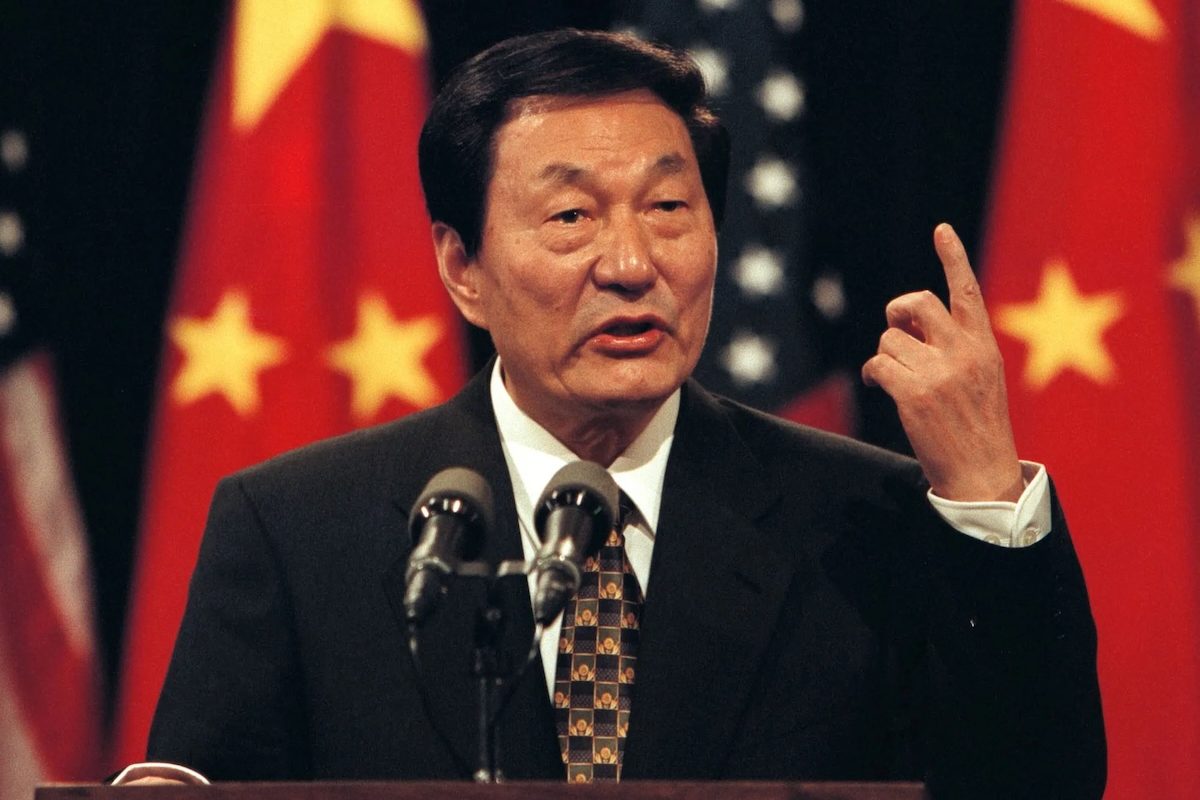
    On August 12, 2026, China’s former premier Zhu Rongji, one of the most consequential economic reformers in modern Chinese history, passed away at the age of 97. Born in October 1928, Zhu leaves behind a complex legacy marked by groundbreaking achievements that reshaped China’s place in the global economy, and a signature unfulfilled vision that continues to shape tensions between China and the world decades after he left office.

    Handpicked by Chinese reform leader Deng Xiaoping for a landmark mission, Zhu rose to national leadership at a moment of deep chaos in China’s financial system. When he took on his role, China’s trade operated on a broken dual-track structure: steep official tariffs on legal imports created massive incentives for widespread smuggling, much of it concentrated in the southern coastal provinces of Fujian and Guangdong. What made this problem particularly intractable was that much of this illegal trade operated under the protection of the People’s Liberation Army, which had secured political autonomy from intra-party conflicts in exchange for stepping back from internal politics, and leveraged that privileged status to profit from unregulated commercial activity, including smuggling.

    Zhu, alongside his policy team, calculated that cutting tariffs and bringing China into the World Trade Organization (WTO) would ultimately increase overall state revenue from import duties by eliminating the black market that was draining billions in lost income. This was a high-stakes gamble that directly threatened the entrenched interests of powerful military factions. Despite fierce opposition, Zhu pushed forward with his anti-smuggling crackdown, emerging victorious and stripping the PLA of its illegal commercial profit streams.

    Zhu’s crowning achievement came when he successfully negotiated China’s accession to the WTO, a breakthrough that integrated China into the global trading system and set off decades of explosive export-led growth that transformed the country into the world’s second largest economy. But WTO membership was only the first part of his broader vision. Zhu’s ultimate goal was to achieve full current and capital account convertibility for the Chinese renminbi by 2000, positioning the currency to become the leading regional exchange currency in East Asia.

    That goal was never realized, derailed by two catastrophic global financial crises spaced a decade apart. The 1997-1998 Asian financial crisis exposed the vulnerability of emerging market open capital accounts to speculative market attacks, convincing Chinese policymakers to postpone full convertibility rather than abandon it entirely. After Zhu stepped down from the premiership in 2003, the deadline was repeatedly pushed back, and the 2008 global financial crisis sealed the fate of his vision.

    The 2008 crisis had two defining impacts on China’s policy trajectory. First, it shattered Chinese confidence in the stability of the U.S.-led global financial system, eroding support for deeper market liberalization. Second, Beijing rolled out a nearly $1 trillion stimulus package to shield the Chinese economy from the global downturn. While the stimulus successfully stabilized growth in the short term, it created a persistent addiction to ever-larger doses of credit and state spending that has left China’s financial system saddled with massive hidden debts and opaque balance sheets.

    According to unconfirmed rumors that circulated for years within policy circles, Zhu was a fierce critic of the 2008 stimulus and the subsequent waves of credit expansion that followed. Some accounts claim his public opposition to the direction of Chinese economic policy was so strong that he was placed under informal house arrest and barred from meeting with visitors. Decades later, as China grapples with a mounting debt crisis, many observers argue Zhu’s warnings have been vindicated, even as the imbalances he warned of have grown beyond control.

    Today, economists widely agree that full renminbi convertibility is impossible under current conditions: opening China’s capital account with the country’s current level of hidden debt and non-transparent financial accounts would almost certainly trigger a massive speculative attack, collapsing the stock market, the exchange rate, and potentially the broader Chinese economy, sparking unprecedented social and political upheaval. This uncompleted reform, which Zhu (and reportedly Deng Xiaoping before him) identified as a critical long-term priority, has become a core source of friction between China and the global economy, argues the author.

    The author, who interviewed Zhu in 1999 alongside ANSA correspondent Barbara Alighiero, offers a personal portrait of the former premier that highlights his distinctive leadership style. Comparing Zhu to then-Chinese president Jiang Zemin, whom he had interviewed shortly before, the author notes the two men could not have been more different. Jiang dominated every interaction, carefully monitoring the reactions of everyone in the room to his remarks, while Zhu was focused on engaging with the ideas and perspectives of the person he was speaking with. Where Jiang’s presence left Chinese official staff visibly tense, Zhu’s casual demeanor put everyone at ease.

    Zhu’s path to power was unconventional. He was persecuted as a rightist during the 1957 anti-rightist campaign, spending decades on the political margins before Deng Xiaoping noticed his work in the mid-1980s, when he was a mid-level department head at the Chinese Academy of Social Sciences. In 1988, Deng dispatched him to serve as mayor of Shanghai, tasking him with shaking up the city, which was lagging behind the fast-growing southern province of Guangdong, and turning it into a new spearhead for market reform. After the 1989 pro-democracy protests, Shanghai party secretary Jiang Zemin was promoted to Beijing to become Communist Party chief, clearing the way for Zhu’s own national rise. He became vice premier in 1993, and premier in 1998, serving as China’s de facto economic czar throughout his tenure.

    No other modern Chinese leader has had as profound an impact on China’s economy as Zhu Rongji, but his aggressive push for financial transparency, market-oriented reform, and fiscal order was largely abandoned after he left office. He understood that market rules cannot be ignored indefinitely, and that ignoring the fundamentals of financial sustainability would eventually lead to economic collapse. In the wake of his death, observers are revisiting his legacy, with the author closing with a call to the Nobel Committee: as Zhu lived to 97, the Committee should honor his contributions to global economic reform with a Nobel Prize.

    This article was originally published by the Appia Institute, where the author serves as director, and is republished here with permission.

  • Australian jury convicts former Catholic bishop of sexually abusing 2 men

    Australian jury convicts former Catholic bishop of sexually abusing 2 men

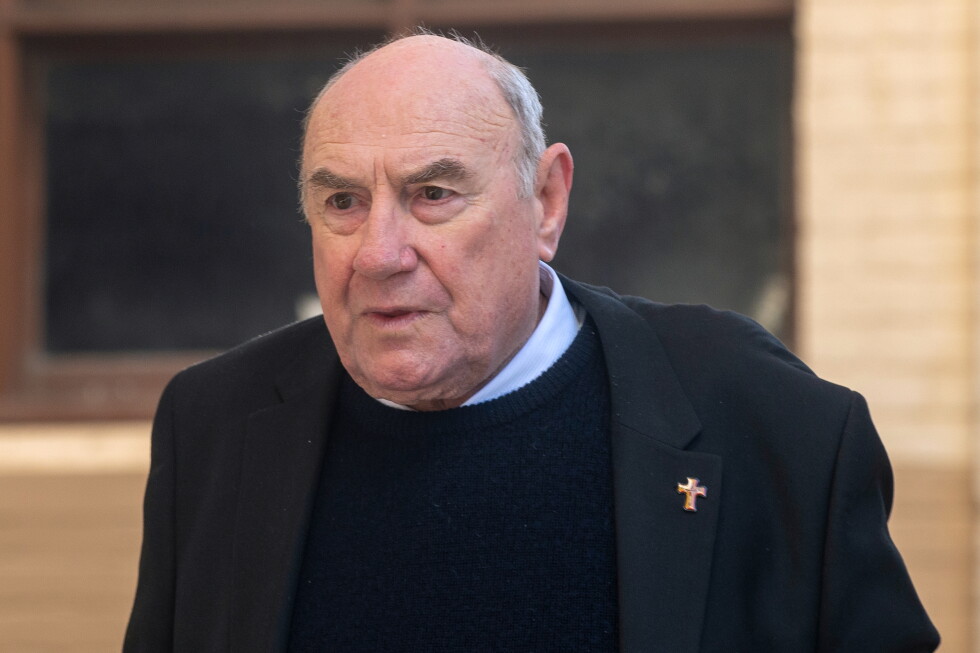
    PERTH, Australia — In a landmark ruling that marks one of the most high-profile convictions to emerge from Australia’s decades-long clergy sexual abuse crisis, a Western Australian District Court jury delivered guilty verdicts Thursday against 76-year-old former Catholic bishop Christopher Saunders. Saunders, who once led the vast remote Broome Diocese in Australia’s tropical northwest, was found guilty of 13 of the 19 sexual abuse charges brought against him, for offenses committed between 2008 and 2019.

    Prosecutors laid out a disturbing pattern of predation during the three-week trial: Saunders allegedly used church funds to buy free alcohol and cigarettes as bait to lure young Indigenous men to his church-owned residence, where he enforced a rule that all male guests remove their shirts for his alcohol-fueled house parties. The guilty convictions include one count of non-consensual sexual penetration and 12 counts of indecent assault. Jurors acquitted Saunders on six remaining charges, which involved a third alleged victim and an accusation of indecent dealing with a minor over 16. Under Western Australian law, while the general age of consent is 16, the threshold rises to 18 for people in positions of trust, authority or responsibility — a category that explicitly includes clergy.

    Four additional charges of sexual penetration against a child under 13 were dismissed on the opening day of the trial. Saunders’ conviction carries significant weight in the global reckoning with clerical abuse that has shaken the Vatican for decades. He is among the most senior Australian Catholic leaders to be found guilty in the scandal, a crisis that has already ensnared other high-ranking Australian clerics — though previous high-profile convictions of Cardinal George Pell, convicted of abusing choirboys, and Archbishop Philip Wilson, convicted of covering up child sexual abuse, were both overturned on appeal.

    Saunders led the Broome Diocese, an Outback jurisdiction spanning an area larger than France that is home to just 50,000 people, the majority of whom are Indigenous Catholics, from 1996 until his resignation in 2021. His exit from the role came after police initially announced they had dropped a criminal investigation into the abuse allegations against him. He had already stepped back from diocesan governance a year prior, after Australian news outlets first published reports of the accusations. The Vatican launched its own internal inquiry into Saunders in 2022, and transferred a 200-page report of its findings to Western Australia Police in 2023. That documentation prompted police to reopen the criminal probe, leading to Saunders being formally charged in 2024.

    While the full findings of the Vatican’s inquiry have never been officially released, excerpts were leaked to Australia’s Seven Network, which reported that the investigation found Saunders likely sexually assaulted four Indigenous youths and may have groomed an additional 67 Indigenous young men and boys. This conviction comes amid a broader national reckoning in Australia: a landmark national inquiry into institutional responses to child abuse, focused in large part on the Catholic Church, found that roughly 7% of all Australian Catholic priests faced accusations of child sexual abuse between 1950 and 2010.