博客

  • Henriques chasing ‘cricket nirvana’ with Portugal

    Henriques chasing ‘cricket nirvana’ with Portugal

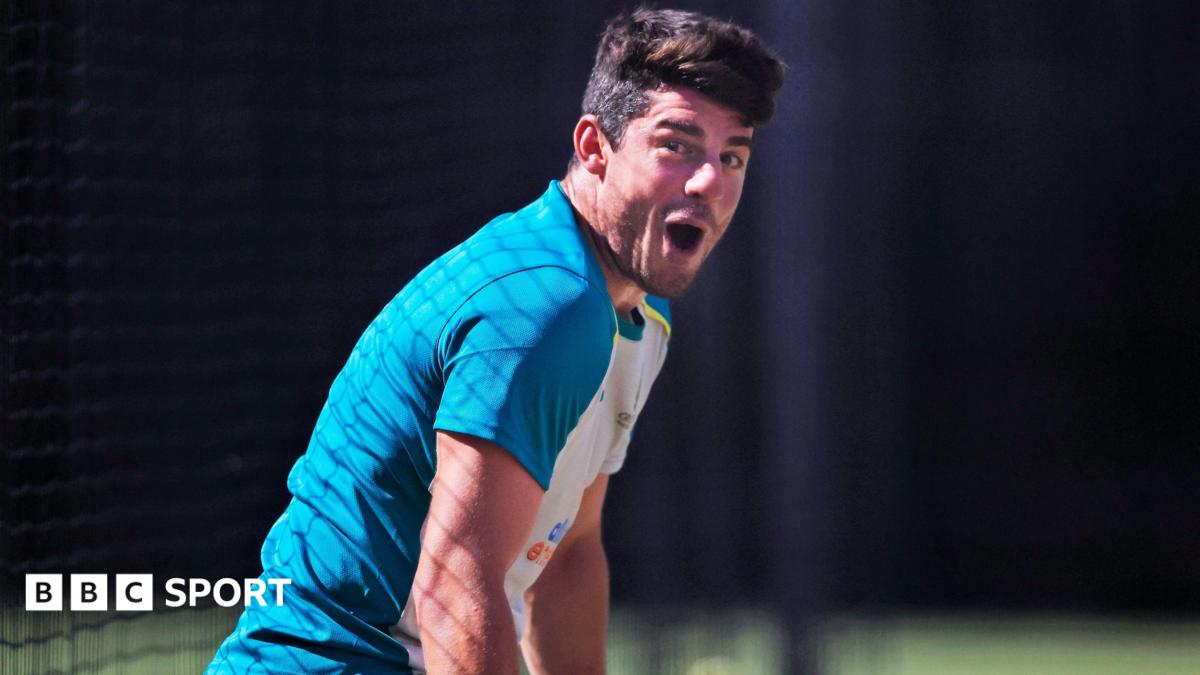
    At 39 years old, fresh off retiring from Australian domestic cricket this past July following a 420-match career across all formats, veteran all-rounder Moises Henriques is embarking on one final, deeply personal cricket adventure. The former Australian international, who earned 44 caps for his adopted country between 2009 and 2021 across Tests, ODIs and T20Is, has switched national allegiances to represent his birth nation Portugal — and he says guiding the small European cricket program to its first-ever men’s T20 World Cup would be the crowning achievement of his late career.

    Henriques will lead Portugal as captain at the European sub-regional T20 World Cup qualifier kicking off Friday in Finland, a tournament that marks the first step on the long road to the global showcase. Born in Funchal on Portugal’s Madeira Island, Henriques moved to Sydney with his family at the age of two, when his father — a former second-division Portuguese footballer — relocated to Australia in search of better professional opportunities. Growing up with an unfamiliar given name and limited English skills in his Australian primary school, Henriques credits cricket with helping him find confidence and a sense of belonging, eventually working his way up to the highest level of the sport, wearing Australia’s iconic Baggy Green Test cap.

    It has been just five years since Henriques even learned that Portugal fielded a national cricket team, but he says he has been stunned by the depth of talent assembled in the current squad. Henriques pointed to Italy’s run earlier this year, where the European side qualified for their maiden T20 World Cup after starting their campaign at the same sub-regional stage that Portugal enters this week. That precedent is exactly what he is targeting, he told the BBC Stumped podcast in an interview.

    “Obviously, the ideal, the nirvana, would be to replicate what Italy have done,” Henriques said. “Whether that’s realistic for this World Cup, or the following, I don’t know. We’ll only be able to tell in a couple of games. I’m sure there’s a lot of opposition that feel that they might be able to do something similar.”

    Portugal, currently ranked 37th in the global T20 rankings, is drawn into Group B of the 10-team Finland qualifier alongside Czech Republic, Germany, Greece and Israel. If they advance out of this week’s tournament, they will move on to a European final regional qualifier next year, where they will face off against Scotland, Jersey and Denmark for a spot in the T20 World Cup.

    While Henriques notes that representing Australia and earning a Baggy Green will always be a hard achievement to top, he says pulling on Portugal’s national shirt as captain carries a unique, special meaning. He reconnected with his birthplace during a visit to Madeira last year, and says the experience deepened his connection to the country. “When I played for Australia, my family also felt I was representing them as well. I’m representing the motherland, so to speak, and it’s going to feel somewhat similar,” he explained. “Hopefully we can make a positive impact trying to grow the sport in Portugal and probably Europe more broadly as well.”

    Madeira’s most famous native son is global football icon Cristiano Ronaldo, who has the island’s airport renamed in his honor. When asked about the possibility of similar recognition if he pulls off a World Cup qualification, Henriques joked that he would be happy to get a helicopter pad named after him.

    Henriques is far from the only high-level professional in Portugal’s squad, a fact that has surprised even him. South African batter Cameron Shekleton, who has played first-class cricket and featured for the Proteas A side, is part of the roster, while former New Zealand Under-19 captain Craig Cachopa, who has represented Sussex, Auckland and Wellington at the domestic level, also joins the group. “I was quietly and pleasantly surprised with the quality of cricketers that we’ve got in the team,” Henriques said. “There’s a lot of high-level cricketers going around, which I probably wasn’t expecting a few years ago when I first started entertaining the thought of playing.”

    The veteran all-rounder will face one unusual challenge at the Finland qualifier: he has not played a competitive match on an artificial wicket in 25 years. Compounding that hurdle, he is just five months removed from back surgery, and navigating a full run-up on the synthetic surface while bowling will be his biggest physical test. “Obviously we train a lot indoors on synthetic wickets so hopefully I can make the adjustment,” he said.

    Following the conclusion of the qualifier, Henriques will next join Glasgow Cosmic for the inaugural season of the European T20 Premier League as he continues his work growing the sport across the continent.

  • La Liga launches big European domestic leagues without Barcelona and Real Madrid

    La Liga launches big European domestic leagues without Barcelona and Real Madrid

    Just three weeks after Spain lifted the FIFA World Cup trophy, Spain’s top-flight soccer competition La Liga has made history as the first of Europe’s five major domestic leagues to launch its new season this weekend — albeit a scaled-back opening slate disrupted by postponements and delayed starts for the league’s two biggest giants.

    Multiple factors have reshaped the opening weeks of the 2026-2027 campaign. Defending league champion Barcelona and newly reconstructed Real Madrid, led by the returning José Mourinho, will not kick off their seasons until the following weekend, as a large share of their rosters competed deep into the World Cup and were granted extended post-tournament leave. A separate disruption came when an unexpected fungus outbreak on the playing surface at Celta Vigo’s home stadium forced the postponement of their Sunday opening match against Osasuna, rescheduled to August 27.

    Barcelona, which is targeting an unprecedented third consecutive La Liga title, will open its title defense with an away fixture against Elche on August 23. For Mourinho’s Real Madrid, which enters the season fresh off back-to-back campaigns without a major trophy, the club’s first match of the rebuilt side will come against Espanyol away on August 22.

    The only top-flight match involving a traditional big club this week will see Atletico Madrid, a consistent contender that has finished in the top four of La Liga for multiple consecutive seasons, host newly promoted Malaga on Wednesday. Even for Atletico, however, the season opens amid lingering uncertainty: star forward Julián Álvarez, who won the World Cup with Argentina earlier this month, has publicly requested a transfer, leaving his future at the club in doubt.

    The broader 2026-2027 European club soccer season officially got underway earlier this week, when Paris Saint-Germain claimed the first silverware of the campaign with a 2-1 victory over Aston Villa in the UEFA Super Cup final last Wednesday.

    The opening weekend of La Liga gets underway Saturday with Alaves hosting Getafe, followed by a fixture between Sevilla and Rayo Vallecano. Sunday will mark a historic milestone for Racing Santander, which is returning to La Liga’s top flight after a 14-year absence. They will host Villarreal, which finished third in the league table last season, behind only Barcelona and Real Madrid. The final match of the opening weekend will see Levante travel to Barcelona to face Espanyol.

    Barcelona enters the season with a clear target: become the first club in modern La Liga history to win three consecutive league titles. Much of the squad’s core is made up of the Spanish players who lifted the World Cup trophy last month, including breakout young stars Lamine Yamal, Gavi, Pedri, Pau Cubarsí and veteran playmaker Dani Olmo. One key exiting player is expected to be Ferran Torres, the forward who scored Spain’s game-winning extra-time goal in the World Cup final against Argentina. Reports confirm Torres is in advanced negotiations to complete a transfer to PSG. New manager Hansi Flick has already added England forward Anthony Gordon to the squad, a signing designed to offset the departure of veteran striker Robert Lewandowski.

    At Real Madrid, the club turned to the returning Mourinho to turn around its fortunes after two consecutive underwhelming seasons. The squad has undergone an extensive overhaul, with star trio Kylian Mbappé, Vinícius Júnior and Jude Bellingham retained as the foundation of the side. New additions include Spanish World Cup winner Marc Cucurella, Ibrahima Konaté, Denzel Dumfries, playmaker Bernardo Silva and young forward Yan Diomande. High-profile departures include veteran defenders Dani Carvajal and David Alaba, who left the club this transfer window.

    For Atletico Madrid, the roster turnover is equally significant. Manager Diego Simeone has already lost key first-team players including Antoine Griezmann, Thiago Almada, Nahuel Molina and Clément Lenglet. The club’s new signings include Alejandro Grimaldo, Morten Hjulmand and Lee Kang-In, with Argentine center-back Cristian “Cuti” Romero expected to complete his arrival imminently. Three Atletico players featured for champion Spain in the World Cup: Marcos Llorente, Marc Pubill and Álex Baena, while Álvarez represented Argentina. Though Atletico’s board has repeatedly stated it has no intention of selling the in-demand forward, who has now returned to pre-season training, speculation over his future continues to swirl, with both Barcelona and Real Madrid linked with a move for his signature.

    Beyond roster changes, the new La Liga season will introduce a groundbreaking technological first for top-flight soccer. The league confirmed it will become the first top competition in the world to roll out “connected ball” technology at a full league scale. The new match balls are embedded with a radio-frequency sensor that continuously transmits accurate real-time data on the ball’s position and records the exact moment of every player contact with the ball. The sensor data is captured by a network of 12 antennas installed in every La Liga stadium, and integrated into the league’s existing match technology ecosystem to support referee decision-making and broadcast analysis.

    Three clubs earned promotion to La Liga from the Segunda División this off-season: Racing Santander, Malaga, and Deportivo La Coruña, a former La Liga champion that spent eight consecutive seasons competing in the second tier. The three clubs that were relegated to the second division at the end of last season are Mallorca, Girona and Oviedo.

  • Tanzanian rangers arrested as police investigate death in national park

    Tanzanian rangers arrested as police investigate death in national park

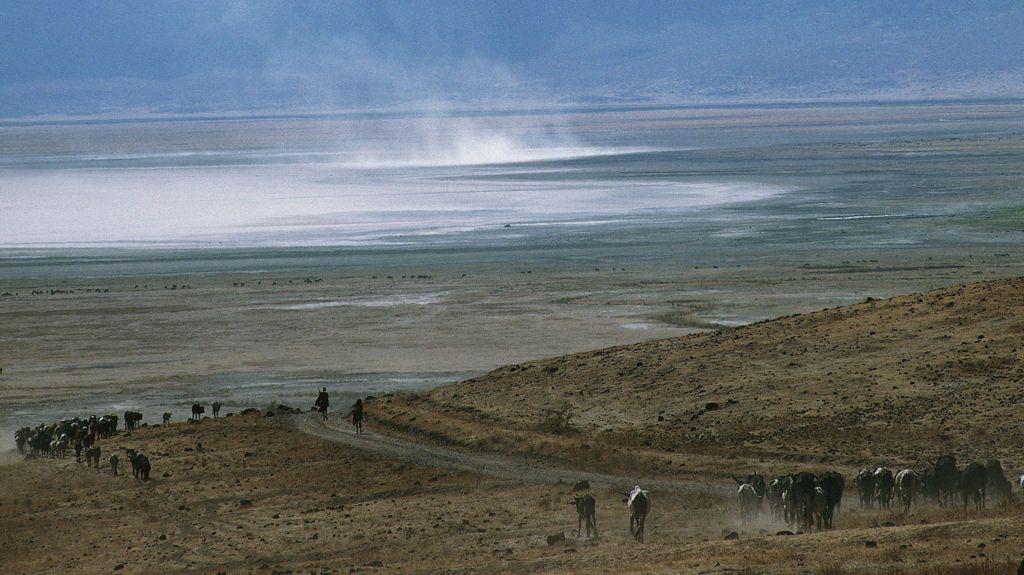
    A fatal incident in northern Tanzania’s high-profile Ngorongoro Conservation Area has sparked renewed scrutiny of harsh conservation enforcement practices, after local police took three park rangers into custody following the death of one civilian and the severe injury of two others who authorities say entered the protected zone without formal authorization.

    The confrontation unfolded on a Wednesday morning, when the rangers detained the three travelers who had mistakenly strayed into the conservation area. Police reports confirm the group was en route from the regional hub of Arusha to a funeral in Babati, a destination roughly 103 miles from their starting point, when they veered off the main road and into the protected park boundaries.

    According to statements to local media from Abdallah Nuru, the only traveler who avoided prolonged medical detention, the group realized their misdirection shortly after passing through the Ngorongoro park gate and immediately turned back to exit. Even after explaining they had lost their way and were traveling to a family funeral, Nuru says rangers accused the three men of being poachers and detained them immediately.

    Nuru described a brutal ordeal of abuse at the hands of the rangers: the three were ordered to remove all their clothing, roll across ground covered in sharp thorny shrubs, and were beaten repeatedly while officers poured water over them during the assault. Both 25-year-old Sefu Musa and the third traveler, Salimu Haji, lost consciousness during the attack. An injured Nuru managed to transport his two colleagues to a nearby hospital, where Musa was pronounced dead on arrival. Haji remains hospitalized in critical condition for treatment of his injuries, while Nuru returned to Arusha to speak with reporters and authorities.

    Police have confirmed the three rangers have been taken into custody as part of an ongoing formal investigation into the circumstances of Musa’s death. The incident is not an isolated case, however: human rights organizations and local indigenous communities have for years documented widespread allegations of excessive force, arbitrary detainment, and harassment targeting civilians during routine conservation enforcement operations across the Ngorongoro Conservation Area.

    Long-standing tensions over conservation policy in the region center on repeated forced relocation efforts targeting the Maasai people, an indigenous community that has coexisted with wildlife in the Ngorongoro ecosystem for centuries. Tanzanian government authorities have repeatedly defended these relocation and enforcement measures, framing them as critical necessary steps to protect the ecologically sensitive protected zone and enforce national conservation regulations.

    For additional reporting on news across the African continent, visit BBCAfrica.com, and follow BBC Africa on social media platforms including Twitter @BBCAfrica, Facebook, and Instagram.

  • Congo’s fastest-growing Ebola outbreak reaches a sixth province

    Congo’s fastest-growing Ebola outbreak reaches a sixth province

    KINSHASA, Democratic Republic of Congo – The ongoing deadly Ebola outbreak in eastern Democratic Republic of Congo has expanded into a sixth previously unaffected province, with the first fatality recorded in Bas-Uele, Africa Centres for Disease Control and Prevention Director-General Jean Kaseya confirmed Thursday.

    The deceased patient, Kaseya explained, had traveled from Isiro, a community in the already impacted Haut-Uele province, to Buta – the capital city of Bas-Uele – before succumbing to the virus.

    The World Health Organization warned Wednesday that this current outbreak, driven by the rare Bundibugyo strain of Ebola, is already the fastest-growing event of its kind on record and is on course to surpass the 2013-2016 West African outbreak, the deadliest Ebola event in history that claimed more than 11,000 lives. Unlike outbreaks of more common Ebola strains, there are currently no formally approved vaccines or targeted treatments available for the Bundibugyo variant driving the current surge.

    Latest official data from the Congolese government puts the outbreak’s cumulative case count above 4,500, with more than 2,100 deaths recorded to date. Alarmingly, this death toll has been reached nearly three times faster than the same mortality milestone during the 2014-2016 West African outbreak, signaling an unprecedented rate of spread.

    Response efforts are being severely hampered by a perfect storm of systemic and security challenges. Unpaid health workers have launched widespread strikes, armed rebel groups operate in many affected regions, deep-seated distrust among long-traumatized local communities undermines containment work, and pervasive misinformation claiming Ebola does not exist has discouraged participation in public health measures. These barriers have allowed the virus to outpace intervention teams across the country.

    On the same day the expansion to Bas-Uele was announced, health workers at the Nizi Treatment Center in Ituri – the hardest-hit province in the outbreak – walked off the job, forcing the facility to temporarily close. Workers reported they had not received any salary for three months, a grievance that has disrupted care across multiple response sites.

    Compounding the crisis, the true scale of the outbreak remains undercounted and poorly understood. Though the outbreak was formally declared on May 15, recent genetic sequencing conducted by the WHO confirms the virus was circulating as early as February, months before official detection. Health authorities estimate that 60 to 70 percent of new confirmed cases are found among community members not already on monitored contact lists, confirming the virus is spreading widely through undetected community transmission.

    “We are chasing the virus; the virus is ahead of us,” Dr. Mohamed Yakub Janabi, the WHO Regional Director for Africa, stated this week, summarizing the growing gap between spread and response.

    Ebola is a rare but highly contagious viral pathogen that spreads through direct contact with infected bodily fluids including blood, vomit and semen, as well as exposure to contaminated surfaces and materials like bedding and clothing. Infection causes severe acute illness that carries a high risk of fatality without targeted care.

    In a small bright spot for the response, clinical trials for two potential treatments specific to this strain of Ebola launched last month in Ituri, offering hope that targeted medical options could become available in the coming months.

  • ‘The fish is in the right’ says man bitten by blue shark while angling

    ‘The fish is in the right’ says man bitten by blue shark while angling

    A shark bite incident off Ireland’s southern coast has left a member of a marine research tagging crew with serious injuries, requiring urgent surgery this week. The encounter unfolded Tuesday near Ram Head, Ardmore, County Waterford, when 38-year-old Sebastian Achim pulled a blue shark onto his vessel after hooking it as part of a research catch-and-tag project.

    The crew on board the boat were all experienced fishermen carrying out work for Ireland’s Marine Sportfishing Tagging Programme, a long-running initiative that collects ecological data on shark populations around the Irish coast. Achim told Ireland’s national broadcaster RTÉ that after successfully removing the hook from the animal and stepping roughly half a meter back from its tail to maintain a safe buffer zone, he paused to observe the shark before the sudden attack.

    “I was just admiring the fish itself, when he just jumped in a millisecond and grabbed into my calf,” Achim recalled in an interview with RTÉ Radio One’s *Morning Ireland*. Refusing to blame the animal for the incident, he noted that the shark was acting on natural survival instincts after being pulled from its open-water habitat. “I cannot say if it was a deliberate attack or it was not a deliberate attack, but the fish is in the right anyway, we took it out of the water,” he said. The crew immediately released the untagged shark back into the ocean to avoid causing it further stress.

    In the moments after the bite, Achim acted quickly to stem blood flow by tying a tourniquet above the deep leg wound, while his crew contacted emergency responders. At the time of the incident, the vessel was roughly three hours from the nearest shore, leaving Achim fighting to stay conscious as he waited for rescue. “I lost a lot of blood and kept passing out,” he said. “I didn’t think I was going to make it.”

    Multiple emergency agencies launched a coordinated response to the incident, including Ballycotton RNLI, Youghal RNLI, and the Irish Coast Guard’s Rescue 117 helicopter. A rescue winch team extracted Achim from the boat and airlifted him to Cork University Hospital for urgent care.

    Once he arrived at the hospital, the adrenaline from the incident faded, and Achim began to experience constant severe pain. Medical teams informed him that the bite had torn away significant amounts of tissue and skin, requiring reconstructive surgery with skin grafts to repair the wound. Despite the gravity of his injury, Achim said his primary concern during the rescue was avoiding panic among his crew and reassuring his partner, rather than his own condition. “I was trying to keep myself awake so I didn’t make anyone panic,” he said. “It doesn’t matter the gravity of the problem, it matters for me that the people around do not suffer because of my actions.”

    Blue sharks, the species involved in the incident, are common seasonal visitors to Irish and British coastal waters, arriving between June and October each year to feed. These long-distance migratory sharks can grow to more than three meters in length, preying on open-water fish, squid, smaller sharks, and seabirds. They are also one of the most targeted species for recreational catch-and-release angling in Ireland, and are considered a valuable marine sport fish.

    Jack Kelly, a Galway-based marine biologist and underwater cinematographer, explained that blue sharks’ famous curiosity often leads them to interact with humans and human objects. Unlike many animals, sharks do not have limbs to investigate unfamiliar items, so they often use bumping or close approaches to explore new objects in their environment. “If a shark approaches anything, really, it’s not like they have fingers to be able to investigate to see what it is,” Kelly told BBC Radio Ulster’s *Good Morning Ulster*. “For me, when I’m underwater they might give the camera a bump just to see what it is, so their curiosity for me is definitely something that stands out.”

    Ecological data from Inland Fisheries Ireland shows that blue sharks are classified as Near Threatened on both the IUCN Red List and Ireland’s national Red List for cartilaginous fish. The Marine Sportfishing Tagging Programme, which has operated off Ireland’s coast since 1970, has tagged more than 19,300 blue sharks as of 2013, accounting for 45% of all fish tagged through the initiative.

    This week’s incident is not the first recorded shark bite off the Irish coast. In 2018, a recreational angler from Belfast suffered serious lower arm injuries after a blue shark bit him while he was pulling the animal onto his boat off Cork, requiring a rescue from Crosshaven RNLI.

  • Poland says it thwarted unprecedented plot by Russia to kill an American citizen in a NATO country

    Poland says it thwarted unprecedented plot by Russia to kill an American citizen in a NATO country

    WARSAW, Poland — In a major security breakthrough that underscores escalating cross-border Russian espionage risks on NATO territory, Polish Prime Minister Donald Tusk announced Thursday that law enforcement authorities have disrupted an alleged assassination plot ordered by Russian intelligence services, arresting a Russian national accused of planning to murder a Ukrainian-American citizen in the Polish capital.

    Tusk emphasized that the foiled plot marks a historic first: it is the first documented instance of a hit ordered directly by the Russian government targeting an American citizen on the soil of another NATO member nation. The target, he told reporters during a public press briefing, had become a perceived nuisance to Vladimir Putin’s regime, though no further details on the individual’s activities or identity were released.

    Polish security officials confirmed the suspect was taken into custody during a pre-dawn operation on August 7. Tomasz Siemoniak, Poland’s minister tasked with coordinating the country’s secret service agencies, added that the counter-terrorism operation was executed in full coordination and partnership with U.S. intelligence and law enforcement bodies. As of Thursday afternoon, government officials had not released additional information about the suspect’s background, the specific logistics of the planned attack, or any further context about the targeted victim.

  • Bangladesh dominate Australia despite Smith reprieve

    Bangladesh dominate Australia despite Smith reprieve

    The opening day of the first Test between Australia and Bangladesh in Darwin delivered an unexpected storyline full of drama, controversy, and a stunning underdog performance, with a controversial technology decision and a career-best bowling display shaping the contest. After Australia captain won the toss and opted to bat first, Bangladesh’s bowlers turned in a relentless, clinical performance that left the fancied hosts reeling by the close of play.

    The day’s biggest talking point emerged early in Steve Smith’s innings when Bangladesh pace bowler Ebadot Hossain delivered a ball that clipped the edge of Smith’s bat. Bangladesh immediately appealed for a caught-behind dismissal to on-field umpire Kumar Dharmasena, who ruled the batter not out. The touring side quickly called for a review, and even Smith himself began walking toward the pavilion, convinced he had edged the delivery. But to the surprise of Ebadot and the Bangladesh squad, Snicko — the edge-detection technology used to review close catching appeals — showed a completely flat audio line as the ball passed the bat. The original not out ruling was upheld, gifting Smith a reprieve when he had scored just seven runs.

    Speaking after the day’s play, Smith acknowledged the luck that came his way. “I think so, yeah. I was lucky? Yeah, it seems that way. You got to take it sometimes,” he told reporters. “Maybe I didn’t nick it. I don’t know. But I certainly felt something. If I’d been given out, I was going to walk off. But yeah, technology saved me today, I guess.”

    Smith went on to capitalise on his second chance, compiling a solid 71 runs before he eventually holed out a catch off the bowling of Hasan Mahmud. Notably, this was not the only let-off Smith received on the day; he was also dropped twice by Bangladesh fielders, allowing him to add crucial runs to Australia’s total. Even with Smith’s contribution, however, the rest of Australia’s batting line-up crumbled under pressure from Bangladesh’s attack.

    Mahmud, Bangladesh’s fast bowler, produced the performance of his career to date, taking a stunning six wickets for just 55 runs. His late wicket burst saw Australia collapse from 152-5 to 198 all out, losing their final five wickets for only 46 runs. It was a collapse that few predicted heading into the match, with Australia having never lost a home Test to Bangladesh, and only one loss across the six previous meetings between the sides (a 2017 defeat in Mirpur).

    The controversy around Snicko is nothing new for cricket in Australia, with the technology already at the centre of multiple high-profile disputes during the 2025 Ashes series. In that series, Australia wicketkeeper Alex Carey was reprieved after an error by the Snicko operator, while England wicketkeeper Jamie Smith was involved in two separate contentious decisions tied to the technology. Unlike those earlier incidents, which stemmed from misaligned audio and visual data, this week’s controversy came from the complete lack of an audio spike on Snicko’s readout, despite Smith acknowledging he felt contact on the ball.

    By the close of play on day one, Bangladesh had responded strongly to Australia’s total, reaching 96 for the loss of one wicket. Opener Shadman Islam fell early to Mitchell Starc, edging a leading edge to the gully slip cordon, but batsmen Tanzid Hasan Tamim (32 not out) and Mominul Haque (35 not out) put on an unbroken 81-run partnership to steer the tourists to the close. At stumps, Bangladesh trails Australia by just 102 runs, with nine wickets in hand heading into day two of the five-day Test.

    This opening match is the first of a two-Test series between the two sides, with Bangladesh sitting in a strong position to push for a historic first win on Australian soil after a dominant opening day of play.

  • Flock boss admits surveillance firm took too long to act over police abuse

    Flock boss admits surveillance firm took too long to act over police abuse

    After months of growing public outcry over documented misuse of its surveillance technology by law enforcement officers across the United States, American surveillance company Flock has introduced sweeping new privacy and security safeguards — a change its founder and chief executive Garrett Langley acknowledges should have been implemented far earlier.

    Flock’s network of tens of thousands of license plate reading cameras, fixed surveillance devices and drones have been widely deployed by police departments nationwide. While the tool has proven useful for legitimate law enforcement tasks including recovering stolen vehicles and locating missing people, multiple high-profile cases have exposed dangerous abuse: officers have used Flock’s technology to stalk current and former romantic partners, track innocent civilians unrelated to any criminal investigation, and even monitor a woman who received an abortion. Multiple officers across the country have resigned or been terminated after being caught misusing the platform, and an Indiana man recently confirmed via a public records request that local police had placed an alert on his vehicle despite him never being suspected of any crime.

    The scandal has sparked significant public and political pushback: at least 50 US cities have cut ties with Flock so far this year. Still, Langley told the BBC that business remains largely stable, noting that 16 cities that previously ended their contracts have reversed course and resumed their partnership with the firm in the last three months. He added that the company currently maintains a 7:1 ratio of new customers to customers that terminate services.

    Looking back, Langley admitted that he was slow to recognize the growing public concern and the need for stronger oversight. Six months ago, during a board meeting, he questioned why Flock was drawing increasing public scrutiny — a moment that came shortly after smart doorbell manufacturer Amazon Ring scrapped a planned partnership with Flock following public outrage over a Super Bowl advertisement that amplified fears of mass unregulated surveillance.

    “Historically, my point of view as a chief executive of a private company was, I don’t know if I should be making these decisions. I don’t know if it’s my job to say how long data should be retained,” Langley explained in his interview with the BBC. He has since reversed that position, now aligning with civil liberties groups including the American Civil Liberties Union and the Electronic Frontier Foundation on the core demand that police must be required to link any search of Flock data to an active open case number. “They’re right. I think it should be required,” he said.

    Langley acknowledged that employees and community members have repeatedly called on Flock to take a firmer stance as the technology’s creator and industry expert, a responsibility he previously resisted. Now he has embraced that accountability, pairing the rollout of new safeguards with his continued argument that Flock’s tools are critical to reducing crime and improving public safety in American communities. He even claimed that cities that choose not to use Flock’s technology are intentionally making their communities less safe.

    Despite this defense of his product, Langley does not deny the widespread abuse that has occurred. He noted that Flock’s prominently placed cameras in neighborhoods across the country have made the company a convenient target for growing public anxiety about mass surveillance and unregulated data collection, a concern that is amplified by the complete lack of comprehensive federal privacy legislation in the US governing how personal data can be collected, used or sold. “Because you can see our cameras, it’s easier to get mad,” he said.

    The push for new safeguards grew directly out of community and law enforcement conversations, Langley explained. He recalled meeting a woman in Cleveland who fiercely opposed Flock’s deployment in her neighborhood, telling him she saw the technology as a tool for police to abuse their power. What surprised him, he said, was that many rank-and-file officers shared that concern: during conversations with police, officers often told him they knew some colleagues were misusing access to surveillance tools, but had no formal mechanism to flag or document that behavior.

    That feedback led Flock to roll out a voluntary audit feature earlier this year, which automatically logs every search of the company’s database and automatically flags unusual activity that may indicate misuse. The vast majority of police departments enabled the tool as soon as it was available, and the data it captured confirmed just how rampant misuse had become — prompting Langley to make the feature a mandatory standard for all customers.

    Langley emphasized that officers who abuse their access to surveillance tools are unfit for service and should face consequences harsher than termination alone. “If anyone is going to be the one that spearheads getting rid of abusive cops? Sign me up,” he said. “We trust these individuals with deadly weapons. I think a camera is very far from a deadly weapon, but I would say it’s a very powerful tool. We should hold it incredibly accountable.”

    The key new policy changes also include cutting the default retention period for most user data collected by Flock from 30 days to just seven days, a change designed to reduce the risk of inappropriate access to historical personal location data.

  • Explosion at Dutch port of Rotterdam leaves 1 dead, several injured

    Explosion at Dutch port of Rotterdam leaves 1 dead, several injured

    On a Thursday morning in late spring, a sudden explosion rocked the industrial zone of Europe’s largest shipping hub, the Port of Rotterdam in the Netherlands, leaving at least one person dead and multiple others with injuries, local law enforcement confirmed. The blast hit a refinery and fuel storage terminal run by global energy trader Gunvor Energy just after 11 a.m., triggering an immediate large-scale emergency response across the port area.

  • Maghreb sees demographic shift with fertility at historic low

    Maghreb sees demographic shift with fertility at historic low

    Across Tunisia, Morocco and Algeria, the North African Maghreb region is undergoing an unprecedented demographic transformation, as shifting social norms and mounting economic strain push growing numbers of couples to have fewer children, pushing regional fertility rates to all-time historic lows. This rapid decline is upending long-held cultural stereotypes of large, multi-child families that have long defined the region, mirroring similar global demographic shifts while unfolding at a faster, more sustained pace than many experts anticipated.

    A new analysis from France’s National Institute for Demographic Studies (INED) confirms the downward trend is both exceptionally sharp and likely permanent, a shift Tunisian leading demographer Mohamed Ali Ben Zina has described as “profound” in its long-term implications for the region. Official demographic data collected across the three countries underscores the scale of the change: since the 1970s, average fertility rates have dropped by more than half across the Maghreb.

    As of 2024, Tunisia holds the lowest fertility rate in the region, with an estimated average of just 1.53 children per woman, down from 1.58 in 2023. Morocco follows with an average of 1.97 children per woman, while Algeria has the highest regional rate at 2.61.

    Interviews with residents and experts across the region point to a tangled web of interconnected factors driving the shift. Leading demographic researcher Hassen Kassar, based in Tunisia, notes deep structural social changes are at the root of Tunisia’s particularly steep decline: growing urbanization and the modernization of family structures have naturally reduced preferences for large household sizes, he explains.

    Generational shifts in outlook are striking. In Algiers, 66-year-old retired finance executive Said—who asked to not share his full name—grew up one of 10 children. “My father struggled constantly to put food on the table for all of us,” he recalled. “That experience is why I decided to stop at two children. What matters most is that they have enough to eat, proper clothes, and a stable, comfortable life.”

    Economic precarity remains one of the most commonly cited drivers for smaller families. Chaimae Drioui, a researcher and professor at Morocco’s National Institute of Statistics and Applied Economics (INSEA), frames declining fertility as a logical, calculated choice for modern families adjusting to new economic realities. For generations, many low-income Maghreb households viewed children as a long-term financial investment, counting on adult children to support aging parents. That conventional wisdom has flipped completely in recent years, Drioui explains: “Today, raising a child costs far more than any immediate or long-term economic benefit he or she can provide.”

    In Tunis, 42-year-old civil servant Nadia Jaouadi says she and her husband made the deliberate decision to remain childless 10 years ago, a choice she has never regretted. “There is nothing in this current climate that encourages people to have even one child,” she says, pointing to Tunisia’s ongoing deep economic struggles and unstable social environment as core reasons for her choice.

    Beyond financial pressure, growing awareness of the mental and physical toll of parenthood is also pushing many women to limit or forgo having children. Zina, a 42-year-old Algerian woman who had her only daughter at age 38, says she has no plans for a second child: “After giving birth, I understood just how much of a strain motherhood puts on both your physical and mental health.” In Rabat, 38-year-old public sector manager Kaouthar—who also requested partial anonymity—says she has chosen to remain permanently childless: “I opted for a calm life, free from the constant worry and stress that comes with raising a child.”

    Drioui emphasizes that expanding access to education and growing economic empowerment for women have been game-changing in dismantling traditional large-family norms. Longer educational pathways for women and rising professional ambitions have delayed childbearing and reduced the total number of children many choose to have, while rising divorce rates have also altered family planning patterns across the region.

    This dramatic demographic shift comes with far-reaching long-term consequences, most immediately a rapidly aging population across the Maghreb. In Tunisia, adults aged 60 and older already make up 17 percent of the total population, equal to nearly 2 million residents. The trend is less advanced in the other two countries: in 2023, adults 60 and older made up 10 percent of Algeria’s population, while the figure hit 13.8 percent for Morocco in 2024.

    A shrinking working-age population and growing cohort of retirees will put increasing strain on public pension systems and upend the balance between working contributors and retired beneficiaries, experts warn. If current trends hold and deaths begin to outnumber births, INED researchers note that only sustained immigration can prevent overall population decline. Foreign workers could also fill critical labour gaps as the working-age population shrinks.

    But opening borders to large-scale immigration remains a politically and socially sensitive topic across all three Maghreb countries. Even so, some experts say the region will have little choice but to embrace migration from neighbouring regions. Kassar says the writing is already on the wall: “We will need sub-Saharan migrants to address these gaps.”