博客

  • Broken engine parts shattered the Ryanair plane window that a passenger’s head got sucked into: NTSB

    Broken engine parts shattered the Ryanair plane window that a passenger’s head got sucked into: NTSB

    A mid-flight emergency that unfolded over Greece last July has been detailed in a new preliminary report from U.S. National Transportation Safety Board (NTSB) investigators, outlining how broken engine components shattered a passenger window minutes after takeoff, leaving a 61-year-old man partially pulled outside the aircraft before quick-acting fellow travelers pulled him back to safety.

    The incident occurred on July 10 aboard a Malta Air-operated Boeing 737-800, a subsidiary of European budget airline giant Ryanair, which had just departed Thessaloniki, a major port city in northern Greece. According to the NTSB’s account, a fan blade inside the jet’s right engine fractured and broke loose, sending high-speed debris tearing through the fuselage and destroying the adjacent window in row 11, where the injured passenger was seated.
    Investigators discovered bird remains within the damaged engine, leading to preliminary speculation that the aircraft may have collided with a flock of birds during its climb after takeoff. Still, the agency has not yet reached a final conclusion on what exactly caused the fan blade to fail.

    After the structural failure, the cabin immediately lost pressure, triggering the drop-down of emergency oxygen masks and filling the cabin with visible smoke or fog, crew members told investigators. It was only moments later that crew noticed passengers standing and calling for help, after the 61-year-old window-seat passenger was pulled partially into the broken window opening by rapid decompression. Fellow travelers worked quickly to haul him back into the cabin, a move that likely prevented a fatal outcome.

    The injured man was relocated to an empty seat in row 12, where a passenger who worked as a physician provided immediate first aid for his injuries – which included neck and shoulder damage and friction burns from the decompression event. Other passengers worked with crew to retrieve a heavy metal box, which they positioned to block the broken opening and reduce air flow into the cabin until the jet could make an emergency landing.
    Footage captured by passengers on board and later shared by local outlet Radio Thessaloniki documents the chaotic scene: passengers wearing dropped oxygen masks after pressure loss, a clear view of the blown-out window, and first responders working the aisle after the plane landed safely back at Thessaloniki Airport.

    Maintenance records reviewed by investigators show the failed right engine’s fan blades had undergone required ultrasonic inspections as recently as May 2026, with no damage detected in that check or a prior inspection in November 2025. Over the 12 months leading up to the incident, however, flight crews reported four separate suspected bird strikes involving the same engine, with bird remains confirmed after two of those events.

    This incident marked an unusual handover of investigative authority: under international aviation regulations, Greece’s Hellenic Air and Rail Safety Investigation Authority permitted the NTSB to lead the probe, with Greek experts participating in the process. The NTSB issued a public reprimand to Ryanair CEO Michael O’Leary earlier this month after O’Leary told investors the investigation was already focused on foreign object damage, ruling out issues with the aircraft’s age or maintenance. The agency clarified that no causes have been ruled out at this preliminary stage, and O’Leary was not authorized to publicly disclose investigative details.

    Jeff Guzzetti, a veteran former NTSB and FAA investigator who reviewed the preliminary findings on behalf of the Associated Press, noted that maintenance checks were completed on schedule per regulatory requirements. He added that investigators will almost certainly focus on how the inspections were conducted, and whether the four prior suspected bird strikes left hidden pre-existing damage that weakened the fan blade before the final failure.
    “ We already understand the sequence of events that day, and even have some ideas about root causes, but there are still critical unanswered questions the NTSB will work to resolve,” Guzzetti explained.
    The AP reached out to Ryanair, Boeing, and CFM International – the manufacturer of the 737-800’s engine – for comment on the NTSB’s preliminary findings, but had not received responses as of the report’s publication.
    This engine failure is not an isolated incident for CFM-produced powerplants: at least two prior fatal or near-fatal incidents have involved broken engine parts penetrating the cabin. In 2018, a passenger on a Southwest Airlines flight was killed after being partially pulled out of a broken window caused by a fractured fan blade, and a similar blade failure occurred on another Southwest jet over Florida in 2016.

    Flight tracking data from Flightradar24 shows the 189-seat narrow-body jet was originally delivered new to Ryanair in 2008. Six minutes after departing Thessaloniki, the aircraft had climbed past 15,000 feet before pilots initiated an immediate descent to 6,000 feet to burn excess fuel over 30 minutes, before landing safely back at Thessaloniki roughly one hour after takeoff. All passengers disembarked normally after landing, with only the injured passenger requesting and receiving on-the-ground medical care.
  • Iranian press review: Tehran says it will no longer wait to be attacked

    Iranian press review: Tehran says it will no longer wait to be attacked

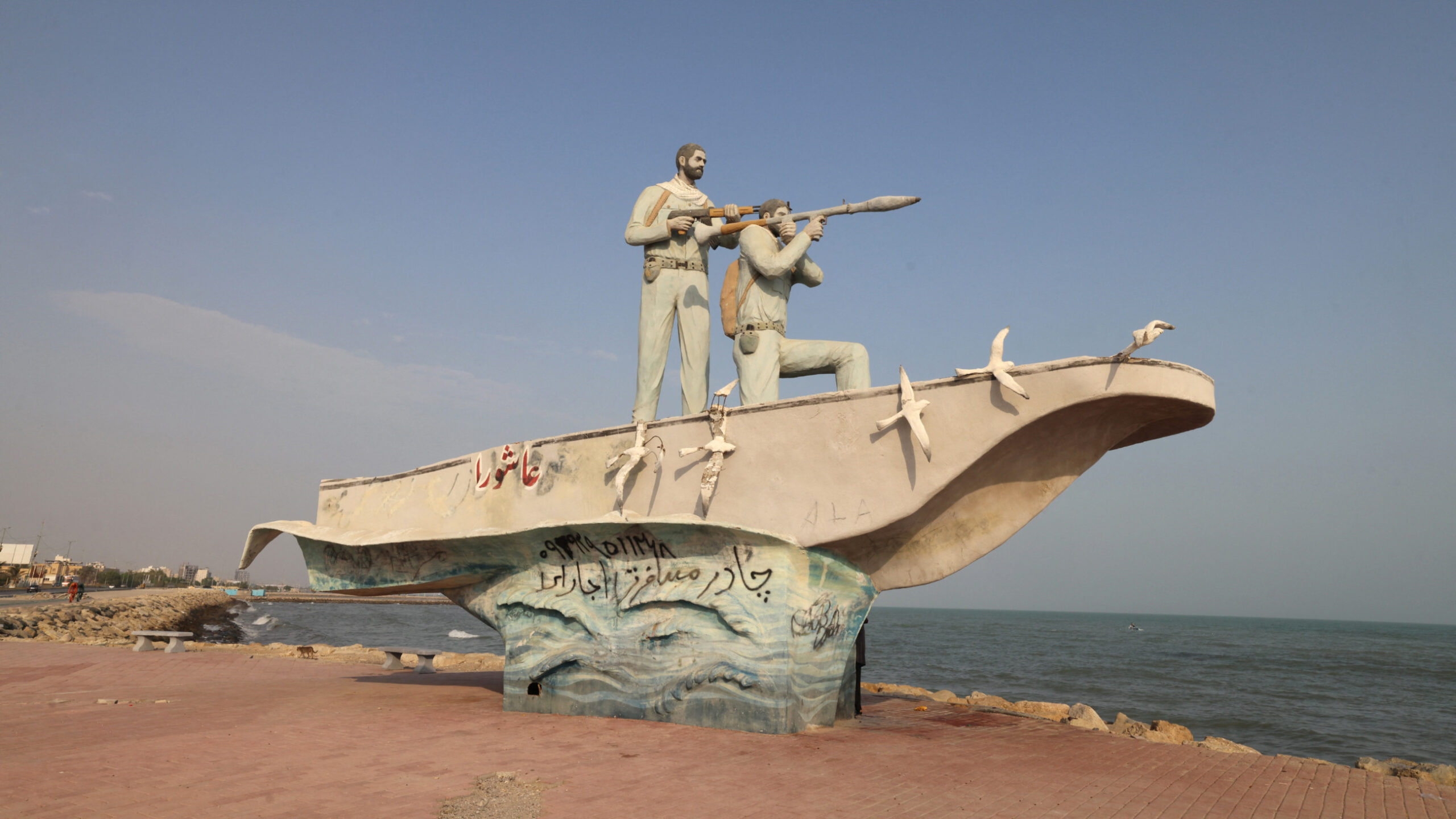
    In a series of recent public announcements that have dominated Iranian domestic political discourse, top military and political figures have formally cemented a fundamental shift in the country’s long-standing military doctrine, moving from a historically defensive posture to an active, offensive strategy targeting U.S. military assets across the Middle East. This policy shift follows a key leadership reshuffle ordered by new Supreme Leader Mojtaba Khamenei, who appointed six new senior military commanders to replace officers killed in recent strikes carried out by Israel and the United States. While low-level discussions of a potential doctrine change had circulated for months, the new appointments have pushed the topic to the forefront of national media coverage and public debate.

    Brigadier General Alireza Sheikh, deputy commander of Iran’s regular army, outlined the new strategic framework to reporters this Wednesday, pointing to recent cross-border strikes on bases belonging to Kurdish opposition groups as a tangible example of the new approach in action. Dismissing former U.S. President Donald Trump’s recent political statements as empty bluffs designed to mislead Iranian public opinion and disrupt strategic planning, Sheikh emphasized that the updated doctrine allows Iran to respond proportionally to threats and, critically, to take pre-emptive action when necessary. “This marks a clear evolution from our previous purely defensive posture to a doctrine centered on deterrence through proactive action,” Sheikh explained.

    Weeks before the army’s official announcement, Mehdi Mohammadi, a senior advisor to Iran’s parliament speaker, had already previewed the new strategy, citing the Islamic Revolutionary Guard Corps’ (IRGC) unprompted strike on U.S. military bases in Jordan on July 29 as proof of the policy change. “Iran no longer confronts its adversaries according to the old rules of engagement,” Mohammadi stated. “Surprise, rapid strikes targeting enemy sensitive infrastructure are now core components of our national war strategy.” He also rejected widespread speculation of an unwritten ceasefire between Tehran and Washington, tied to ongoing bilateral talks mediated by Oman over navigation governance in the Strait of Hormuz. “Over the past week, many analysts assumed that ongoing Omani-mediated talks would leave Iran unwilling to take action unless attacked first,” Mohammadi noted. “Events on the ground have proven that calculation completely wrong.”

    The Omani-mediated talks, which aim to establish a new navigation oversight mechanism for the strategically critical strait, are unfolding against growing pressure from Iran’s powerful conservative and ultraconservative political blocs. These factions are pushing for Tehran to leverage its geographic control over the Strait of Hormuz — through which roughly 20% of the world’s traded oil passes — as a economic and military weapon against the U.S. and its regional allies. On Tuesday, Tehran’s principlist mayor Alireza Zakani, a former IRGC member with close ties to the country’s conservative establishment, reiterated calls for abandoning all talks with the U.S. and weaponizing the strait immediately. “If America wants to enjoy unimpeded access to the Strait of Hormuz, it must pay appropriate compensation,” Zakani argued. “If Qatar wants to use this waterway, it must release our frozen sovereign funds. Tightening access to this vital route will force Europe to think twice before imposing new sanctions on Iran.”

    Leading conservative outlet Resalat Daily doubled down on this position in a recent front-page report headlined “The Drawn Sword of Hormuz in Iran’s Hand”, arguing that the strait should not return to the pre-attack status quo that existed before recent U.S. and Israeli strikes on Iranian targets. The publication framed a potential closure of the strait as a fully proportional response to repeated military aggression from the U.S. and what it called the “Zionist regime”, as well as the ongoing U.S. naval blockade of Iranian ports. In its conclusion, the report stressed that unchallenged Iranian control over the waterway must be maintained permanently: “This drawn sword must always remain in Iran’s hands, so that peace and security are guaranteed through strength, not through begging.”

    Not all Iranian political analysts and public figures support the new offensive doctrine and conservative push to weaponize the strait, however. Majid Tafreshi, a prominent independent political analyst and researcher of contemporary Iranian history, drew a parallel between today’s domestic political tensions and the period leading up to Iran’s 1988 acceptance of UN Resolution 598, which ended the eight-year brutal war with Iraq. Backed by Western military and intelligence support, Saddam Hussein’s Iraq invaded Iran’s oil-rich southern provinces in 1980, starting a conflict that killed hundreds of thousands of people on both sides before Iran agreed to a ceasefire in 1988 under the leadership of founding Supreme Leader Ruhollah Khomeini. Tafreshi criticized hardline factions pushing for open, continuous conflict with the U.S. today, noting that identical factions pushed to continue the war with Iraq long after it became clear that a negotiated end was in Iran’s national interest.

    Tafreshi also pushed back against the hardline portrayal of legendary Quds Force commander Qassem Soleimani — who was assassinated in a U.S. drone strike in Baghdad in 2020 — as a figure who exclusively favored military confrontation. This popular narrative among hardliners contradicts Soleimani’s actual political record, Tafreshi argued. “Even Qassem Soleimani believed in dialogue and negotiation. He was first and foremost a diplomat who only took up arms when no other option remained,” he explained. “Yet some factions have reinvented him as a fictional action hero — a Rambo, Zorro, or Spider-Man who solves all problems exclusively through war.”

    As the debate between factions over how to confront the U.S. and Israel drags on, leaving the country stuck in a prolonged “neither war nor peace” status quo, reformist-leaning outlet Sazandegi Daily has sounded the alarm over growing economic harm inflicted on ordinary Iranians by the U.S. naval blockade. The outlet’s recent on-the-ground reporting found that cargo activity at Shahid Rajaee Port, Iran’s largest maritime import and export terminal, has plummeted in recent weeks, leaving the facility far quieter and emptier than at any point in recent memory. If the blockade continues, the report warned, the impact will soon reach household kitchen tables, with store shelves quickly running out of essential imported goods.

    While Iran shares extensive land borders with neighboring states that can be used to import goods, the report noted that overland transport is exponentially more expensive and time-consuming than maritime shipping, a cost difference that will disproportionately harm working-class Iranian households. “Store shelves are the last place a supply crisis becomes visible to ordinary people,” the report concluded. “The first warning signs appear much earlier, along the waterfront, among idle cranes, empty berths, and missing containers. If cargo does not arrive today, that absence will show up on Iranian dinner tables in just a few months.”

  • Families of Egyptian political prisoners launch UK advocacy group

    Families of Egyptian political prisoners launch UK advocacy group

    On Thursday, a new advocacy organization dedicated to representing the families of Egypt’s political detainees officially launched its operations in London, according to an official press statement shared exclusively with Middle East Eye.

    Named the Families of Egyptian Detainees Association, commonly shortened to Feda, the group says it will build communication and coordinate efforts with governmental and civil society institutions both within Egypt and across the global community. Its core mission is to push for the safe release of thousands of people detained for political reasons in the North African country.

    In its founding statement, Feda emphasized it is open to collaboration with any individual or entity that shares its goal of ending the mass political detention crisis, which it describes as a deeply painful chapter in modern Egyptian history. “We will work with anyone who can contribute to closing this painful chapter and securing the release of political detainees from prison,” the statement reads.

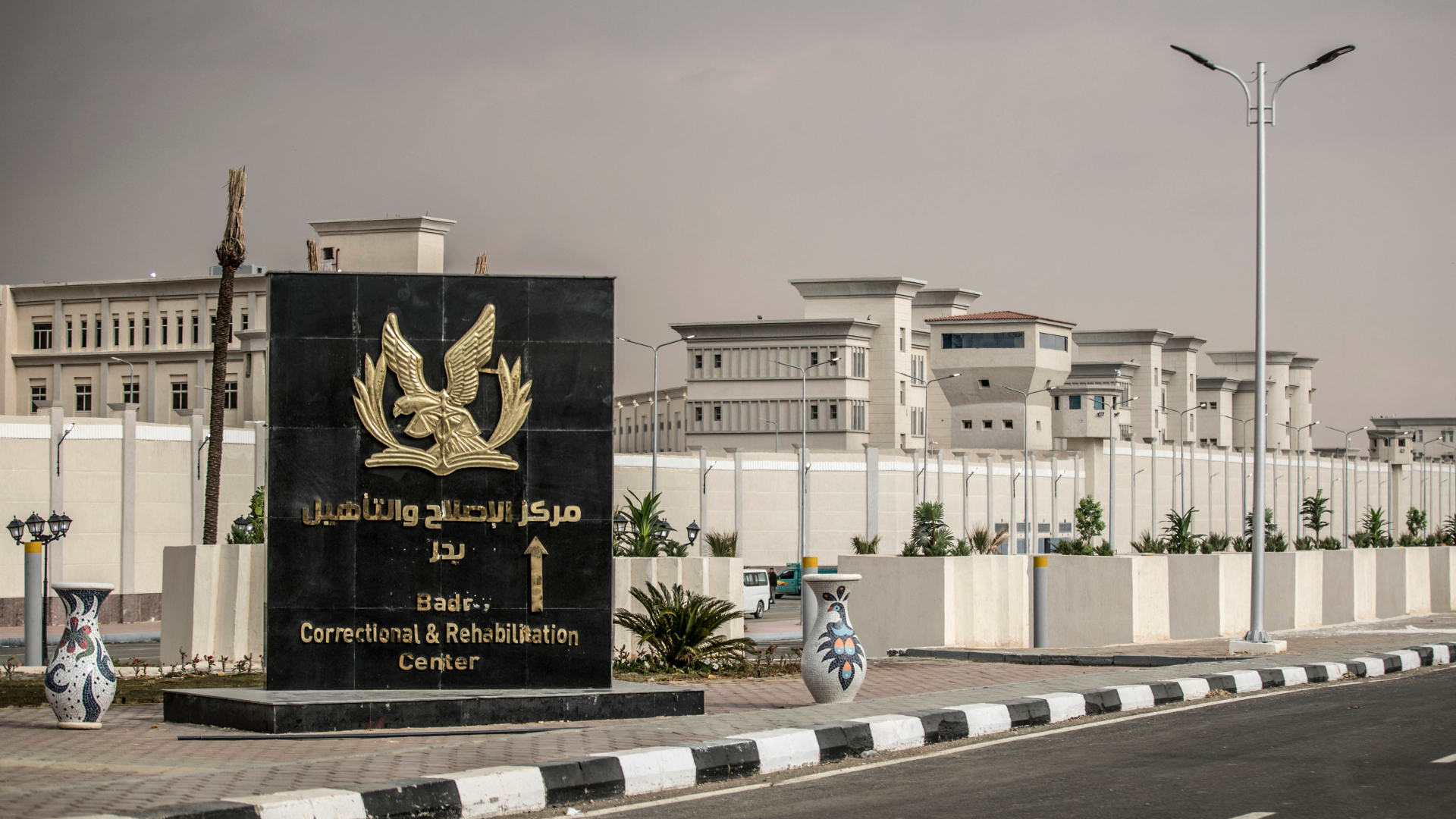
    The mass expansion of political detentions in Egypt traces back to 2013, when current President Abdel Fatah el-Sisi led a military coup that ousted Mohamed Morsi, the country’s first democratically elected head of state. In the decade that followed, human rights organizations have recorded a steady surge in the number of people imprisoned for political dissent. Independent rights groups estimate that more than 60,000 prisoners of conscience are currently held in Egyptian correctional facilities, over 1,000 of whom are women. The vast majority of detainees are young students, youth organizers, and political activists from across the full spectrum of Egyptian political life.

    Data from the Arabic Network for Human Rights Information places the total prison population in Egypt at 120,000 as of March 2021, with an estimated 65,000 of those detainees being held for political reasons. At least 26,000 of those political detainees remain in pre-trial detention, a practice that rights groups say is often used to indefinitely hold political opponents without formal conviction.

    Documentation from multiple independent rights monitors has also confirmed that inadequate care and inhumane prison conditions have led to the deaths of dozens of detainees, including former President Mohamed Morsi and multiple high-profile opposition figures.

    Feda’s mandate extends to supporting families of detainees regardless of where they currently reside, whether inside Egypt or in diaspora communities around the world. Outlining its core objectives, the organization said its work will focus on four key pillars: keeping the political detention crisis at the top of both national and international policy agendas, advocating for Egyptian detainees in global and regional forums, pushing for guaranteed fair trials and humane living conditions for all detainees, and pursuing every available legal and diplomatic channel to secure their release.

    To advance these goals, Feda plans to engage directly with United Nations bodies focused on detention and enforced disappearance, pursue legal action in competent international courts against documented human rights violations against detainees, organize public awareness and solidarity events globally, and build partnerships with international institutions, religious and political leaders, media outlets, and global human rights organizations.

    For years, global rights groups have systematically documented widespread abuses inside Egyptian prisons. Common violations reported by detainees and their families include a lack of access to adequate medical care, poor nutrition and insufficient ventilation in cells, repeated denials of family visitation rights, extreme overcrowding, and bans on access to reading materials, news, and even outdoor exercise.

    In response to mounting international pressure, the Egyptian government launched a national human rights strategy in September 2021 that included explicit provisions outlining reforms to prisoners’ rights. The strategy publicly committed to goals including humane treatment of all detainees, protection from torture and abuse, expanded judicial oversight of prison facilities, and regular independent inspections of conditions by Egypt’s national human rights council. It also outlined plans to reduce overall prison populations through periodic detainee releases, including conditional release programs, presidential pardons issued during national holidays, and the early release of detainees with serious chronic illnesses.

    However, Feda says that despite these public pledges, detainees and their families have yet to see any meaningful improvement in conditions on the ground. “Detainees and their families had hoped that this strategy would be implemented, but they say they have yet to see its impact inside prisons,” the organization noted. “They continue to await the implementation of the strategy and the legislative amendments that followed it as a step toward closing this dark chapter.”

  • Wall of US Embassy in Brazil’s capital is vandalized as relations remain tense

    Wall of US Embassy in Brazil’s capital is vandalized as relations remain tense

    In Brasília, Brazil, an act of vandalism targeting the exterior wall of the United States Embassy has drawn attention to escalating friction between the two nations, according to local law enforcement and official statements released Thursday.

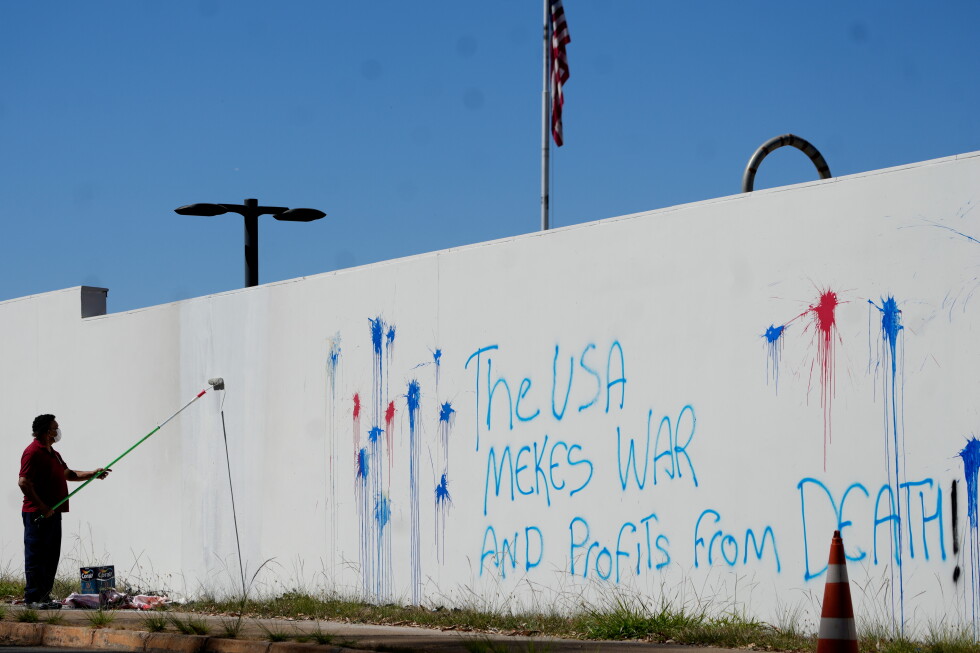
    Authorities confirmed that they took one male suspect into custody shortly after the vandalism was discovered, but the individual was subsequently released from detention pending further investigation. Anti-U.S. government slogans, painted in both Portuguese and English, were found sprayed across the embassy’s outer wall. One prominent message read: “The USA makes war and profits from death.”

    The incident unfolded against a backdrop of growing bilateral discord. In recent weeks, former U.S. President Donald Trump imposed steep new tariffs on a range of Brazilian imports entering the U.S. market, and moved to revoke the visa of Brazil’s ambassador to Washington — a rare and provocative step that strained diplomatic relations significantly.

    Notably, acts of vandalism against foreign diplomatic missions are extremely uncommon in Brazil, regardless of the country targeted, highlighting the unusual nature of this protest against U.S. policy.

    In a formal statement following the incident, the U.S. Embassy in Brasília reaffirmed its long-standing commitment to engagement with the Brazilian people and noted that it is prioritizing the safety and security of all its diplomatic and local staff. The Brazilian federal government, for its part, has so far declined to issue any public comment on the vandalism incident.

  • Iran attacks US failures as scepticism grows over Israeli role in Trump ‘assassination plot’

    Iran attacks US failures as scepticism grows over Israeli role in Trump ‘assassination plot’

    Fresh controversy has erupted over Western intelligence credibility and regional security tensions in the Middle East, with Iran publicly accusing the United States of repeatedly making catastrophic decisions driven by flawed and unreliable intelligence—including the full-scale war Washington launched against Tehran. The accusations come amid new reporting that confirms Central Intelligence Agency analysts themselves dismissed as unconvincing an Israeli warning that claimed Iran planned to assassinate former president Donald Trump during his NATO summit visit to Ankara, Turkey, yet the unsubstantiated tip still triggered a dramatic emergency security operation.

    Iranian Foreign Minister Abbas Araghchi laid out the country’s criticism in a post on the social platform X Thursday, arguing that Washington has a long track record of dangerous miscalculations rooted in systemic intelligence failures. “Worse than fake news is fake intelligence,” Araghchi wrote, adding that recent U.S. moves in the strategically critical Strait of Hormuz amount to “an even bigger miscalculation” than past errors.

    The new details of the flawed intelligence tip were first broken by Middle East Eye and later confirmed by The Washington Post. Turkish national security officials, for their part, have privately labeled the Israeli warning a deliberate ruse, crafted to derail ongoing diplomatic negotiations between Turkey and Iran, according to the reporting. Israel passed the unvetted intelligence to the CIA, but agency analysts concluded the claim lacked credibility and explicitly warned senior Trump administration officials of its low reliability. Despite that internal assessment, the warning still prompted an urgent security scramble: Trump was secretly moved from his scheduled aircraft to an alternate military plane on the Ankara tarmac and flown out of the country immediately. Trump has since publicly confirmed the operation, saying he simply followed the guidance of his security detail.

    Beyond the intelligence dispute, conflicting claims over control of the Strait of Hormuz—one of the world’s most vital global energy chokepoints, through which roughly a fifth of the world’s daily oil supplies pass—have amplified regional tensions. Just one day after Trump claimed the U.S. holds “total control” over the waterway, Hossein Taeb, commander of the Basij paramilitary unit linked to Iran’s Islamic Revolutionary Guard Corps, pushed back sharply on the assertion. “Today you see that the Strait of Hormuz is under the management and control of the Islamic Republic, and our country continues on its path in complete security,” Taeb stated, according to Iran’s semi-official Fars News Agency. “The Americans saw the power of the Islamic revolution,” he added.

    In a separate rebuke of Western powers, Araghchi also called out France and other European governments for what he described as blatant hypocrisy on human rights. These nations have repeatedly condemned Iran’s response to domestic anti-government protests, he noted, while offering unwavering support to Israel amid its military campaign in Gaza that Iran and many other global actors have labeled a genocide. “Countries like France should stop lecturing the world about ‘human rights’ and international law. The hypocrisy is blatant and embarrassing,” Araghchi wrote. “Your backing of Israel’s genocide in Gaza, and aggression against Iran, has destroyed whatever moral high ground you imagined you had.”

    Separately from the regional diplomatic clashes, a separate controversy has emerged over the prolonged deployment of the U.S. Navy aircraft carrier USS Abraham Lincoln, which has been deployed to the Middle East for nine consecutive months, with 250 straight days spent at sea without a port call—marking the longest uninterrupted deployment of any modern U.S. aircraft carrier. The carrier was redirected from planned exercises in the South China Sea to the Middle East in late January, as the Trump administration built up its military footprint ahead of launching its war on Iran. In recent weeks, reports of unacceptable living and mental health conditions aboard the vessel have sparked bipartisan concern in Washington.

    Democratic Senator Richard Blumenthal has publicly demanded answers from U.S. Secretary of Defense Pete Hegseth and Navy leadership over the deteriorating situation. “The Trump Admin must explain what they are doing to support sailors on the USS Abraham Lincoln who have been continuously at sea for nearly 7 months,” Blumenthal wrote on X. “Widespread reports of supply shortages, plumbing issues, deteriorating mental health & more demand immediate attention.”

    Military media outlets including Navy Times and Stars and Stripes have documented the severity of the crisis, reporting that multiple sailors have already attempted to jump overboard as harsh conditions and unrelenting psychological pressure pushed crew members to their breaking point. Stars and Stripes also shared the account of one military spouse, who told officials her husband had sent her a message saying “he hopes he doesn’t wake up tomorrow.” More than 5,000 sailors and Marines are currently assigned to the vessel, and military family advocacy groups and members of Congress have repeatedly raised alarm over the prolonged deployment’s impact on personnel wellbeing.

  • Exclusive: UK Charity Commission gives ‘regulatory advice’ to synagogue that hosted Great Israeli Real Estate Event

    Exclusive: UK Charity Commission gives ‘regulatory advice’ to synagogue that hosted Great Israeli Real Estate Event

    An investigation by independent news outlet Middle East Eye (MEE) has uncovered that the UK Charity Commission has issued formal regulatory advice to the trustees of London’s Edgware United Synagogue, after the charitable venue hosted a real estate event in June that advertised properties in illegally built Israeli settlements in occupied Palestinian territories.

    The controversy first came to public light on June 15, when MEE published its initial report revealing that units in illegal Israeli settlements were promoted as part of the Great Israeli Real Estate Event, held at the synagogue one day prior. After the report was published, event organizers acknowledged that the promotion of settlement properties did occur, but claimed the incident was an accidental oversight.

    Hours after MEE’s publication, the International Centre of Justice for Palestinians (ICJP) – a UK-based legal organization focused on Palestinian rights – filed a formal complaint with the UK’s national charity regulator. The complaint called for an urgent compliance investigation into the synagogue over its role in hosting the event, arguing that the charity had allowed both its premises and institutional resources to be used for a commercial activity that promoted properties in territory widely recognized as illegally occupied. The filing emphasized that organizers and the synagogue had already been notified of serious legal, regulatory and reputational risks tied to promoting settlement properties before the event went ahead. The complaint stated that by allowing the event to proceed, trustees linked the synagogue’s charitable status and reputation to illegal activity that violated UK regulatory standards for charitable organizations.

    On July 28, the Charity Commission issued its formal response to the complaint, a copy of which has been viewed by MEE. In its response, the regulator confirmed that it had reviewed all evidence submitted, held discussions with the synagogue’s trustees, and ultimately issued formal regulatory advice and guidance under Section 15(2) of the 2011 UK Charities Act. This section of legislation grants the commission authority to issue binding, formal guidance to charity trustees to ensure future compliance with charity law. The commission noted that trustees are required to incorporate this guidance into their future decision-making, and confirmed that the case is now formally closed. The regulator also thanked ICJP for bringing the issue to its attention.

    In an interview with MEE, an ICJP spokesperson acknowledged that the commission’s action sends a clear signal to UK charities that they cannot dismiss credible legal warnings over the use of their premises or resources to support activities tied to illegal Israeli settlements. However, the organization also criticized the regulator for stopping short of opening a full statutory inquiry, arguing that the response was insufficient given the severity of the incident. The spokesperson noted that while the guidance requires all UK charity trustees to conduct more thorough legal due diligence, assess regulatory and reputational risks, and prevent charitable assets from being used in ways that violate legal obligations, the commission failed to take the robust action needed to uphold charity law and maintain public trust in the UK charitable sector. ICJP believes the gravity of the conduct should have warranted stronger regulatory intervention.

    MEE has reached out to Edgware United Synagogue requesting comment on the commission’s decision, and had not received a response at the time of publication. The controversy extends beyond the charity investigation: in June, UK’s then-Foreign Secretary Yvette Cooper announced that government ministers had asked the UK Advertising Standards Authority to open its own separate investigation into the Great Israeli Real Estate Event.

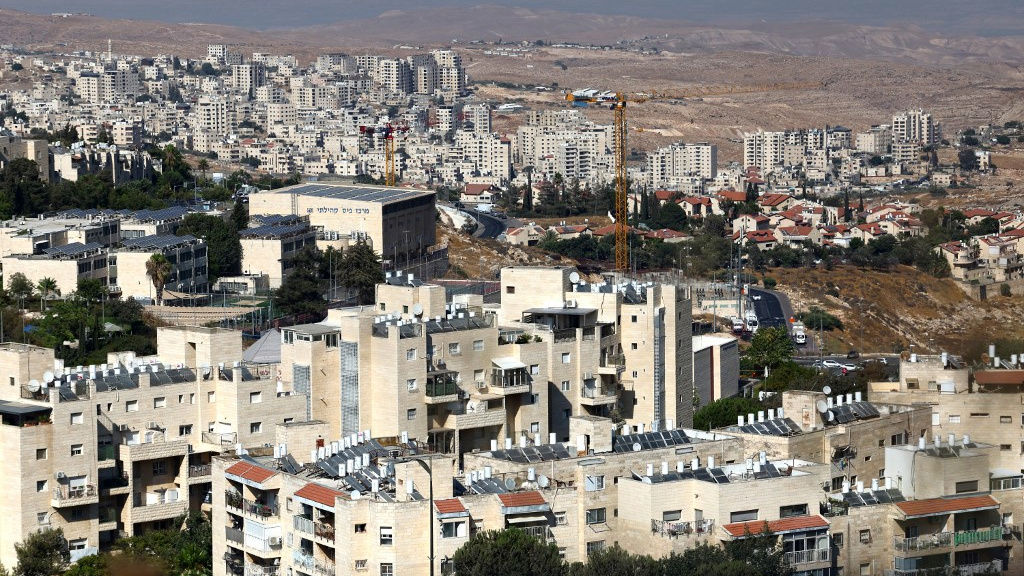
    Multiple Israeli developers and real estate firms participated in the June event, openly advertising units in settlements universally recognized as illegal under international law. Israeli developer Harey Zahav promoted projects in Kfar Eldad, an illegal settlement located south of Bethlehem in the occupied West Bank, and Teneh Omarim, another illegal settlement near Hebron. Leading Israeli agency Tivuch Shelly included listings for the illegal West Bank settlement of Ma’ale Adummim in its event brochure, marketing a new development as just 10 minutes from Jerusalem. Another firm, Jerusalem Real Estate, advertised projects in French Hill and Ramat Eshkol, both illegal settlements in occupied East Jerusalem.

  • Turkey backs Saudi-led maritime defence coalition in Red Sea

    Turkey backs Saudi-led maritime defence coalition in Red Sea

    In a landmark confirmation issued Thursday, Turkey has for the first time publicly announced its participation in a newly formed multinational maritime security coalition tasked with protecting unimpeded navigation in the strategically critical Red Sea. This formal commitment marks a tangible deepening of cooperation between Ankara and Riyadh, coming just one week after the two nations signed a landmark trilateral defence agreement with Pakistan during a summit held in Mecca.

    Turkey’s Ministry of National Defense laid out the step-by-step progression of coordination on the initiative in an official public statement. The process began with a technical working session hosted in Riyadh on July 28, focused specifically on safeguarding free passage through the Bab al-Mandab Strait— a chokepoint that connects the Red Sea to the Gulf of Aden and handles roughly 10 percent of global traded goods. That initial discussion was followed by a high-level meeting of the three nations’ joint chiefs of staff on July 30, the statement confirmed. On the same day Turkey issued its formal confirmation, a new coordination meeting focused on finalizing the coalition’s structure was underway in Jeddah, with Turkish representatives in attendance.

    The defence ministry emphasized that ongoing collaborative work with Saudi authorities is centered on two core goals: de-escalating long-running tensions across the broader Gulf region and guaranteeing that global trade flows through the waterway remain uninterrupted. The trilateral security pact signed last week between Ankara, Riyadh and Islamabad includes binding collective security commitments, meaning an attack on one member is considered an attack on all. Multiple diplomatic sources based in Ankara told Middle East Eye that the Red Sea coalition is set to be the first major area where the new Turkey-Saudi security partnership is put into practice.

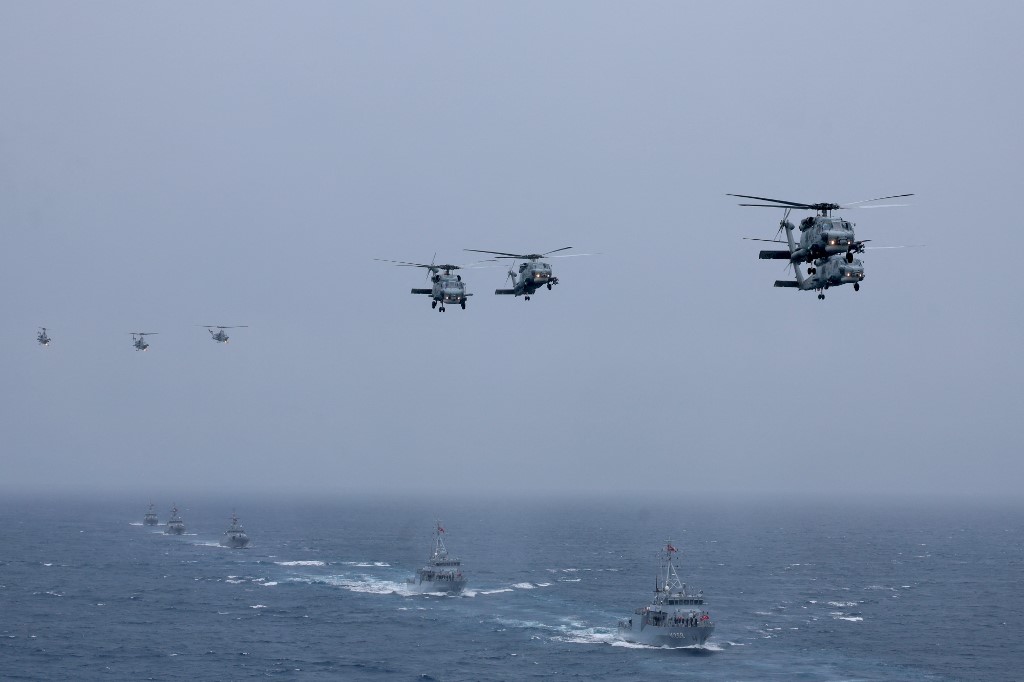
    Saudi Arabia first announced the formation of the 13-nation alliance last month, a response to rising security threats in the region. The move came shortly after Yemen’s Houthi movement declared a maritime blockade targeting Saudi shipping in mid-July, a move that disrupted oil shipments that had been rerouted through the Red Sea following temporary disruptions at the Strait of Hormuz. In addition to the three founding trilateral pact members, the coalition counts Bahrain, Bangladesh, Comoros, Djibouti, Egypt, Jordan, Kuwait, Qatar, Somalia and Yemen as participating members. The headquarters of the new security alliance will be based in Riyadh, the Saudi capital.

  • In Christian village of Taybeh, Israeli military order fails to stop settler violence

    In Christian village of Taybeh, Israeli military order fails to stop settler violence

    In the occupied West Bank, just east of Ramallah, the predominantly Christian Palestinian village of Taybeh has become the latest flashpoint for worsening settler violence, with a recent Israeli military order declaring the surrounding area a closed military zone doing little to shield local communities from persistent assault. The failure of this purported protective measure has left residents trapped in daily intimidation, cut off from their core livelihoods, and raised alarm that the restricted zone will block outside observers from documenting unfolding human rights abuses.

    Local residents and activists recorded a new wave of targeted attacks against multiple families in eastern Taybeh on August 11, with the Naif al-Kaabneh family emerging as one of the most affected groups in recent days. This surge of violence comes even after the Israel Defense Forces announced the closed military zone designation covering Taybeh and the nearby southern village of Rammun, framing the order as a measure to bar unauthorised Israeli entry and protect Palestinian residents.

    For Taybeh’s population, agriculture, particularly the cultivation of olive groves and production of olive oil, forms the backbone of the local economy. But over recent weeks, residents and international solidarity activists have documented a sharp escalation in settler incursions. Attackers have repeatedly approached residential properties and working farmland, damaged infrastructure, cut off access to water and electricity, and left residents facing growing barriers to reaching their own agricultural holdings.

    Despite the military closure coming into force on the Monday before the August 11 attacks, local accounts confirm no meaningful shift in conditions on the ground. Beyond the ongoing attacks and harassment, the new designation has sparked urgent fears that it will restrict access for international journalists, human rights monitors, and solidarity activists who have worked to document abuses and support vulnerable communities.

    Naif al-Kaabneh, a Bedouin resident of the community east of Taybeh, described settler aggression as relentless, occurring nearly every day. Speaking to Middle East Eye, he explained that a new unauthorised settlement outpost has been built on land that previously belonged to his extended Bedouin community. Settlers launched a sustained campaign of violence to force the entire community off the land, he said.

    “The settlers tear down the fences we build around our homes, steal our sheep, and bring their own cattle to graze on our land. If we attempt to defend ourselves and our property, it is us that the Israeli army arrests,” al-Kaabneh said. Twenty people, including al-Kaabneh’s immediate family and his brother’s household, currently live in the community, facing constant daily hardship under the threat of permanent displacement and land seizure.

    “We face the worst attacks imaginable, and we cannot even lift a hand to defend ourselves. We beg someone to help us, to amplify our voices to the world. Our lives have become completely miserable,” he added.

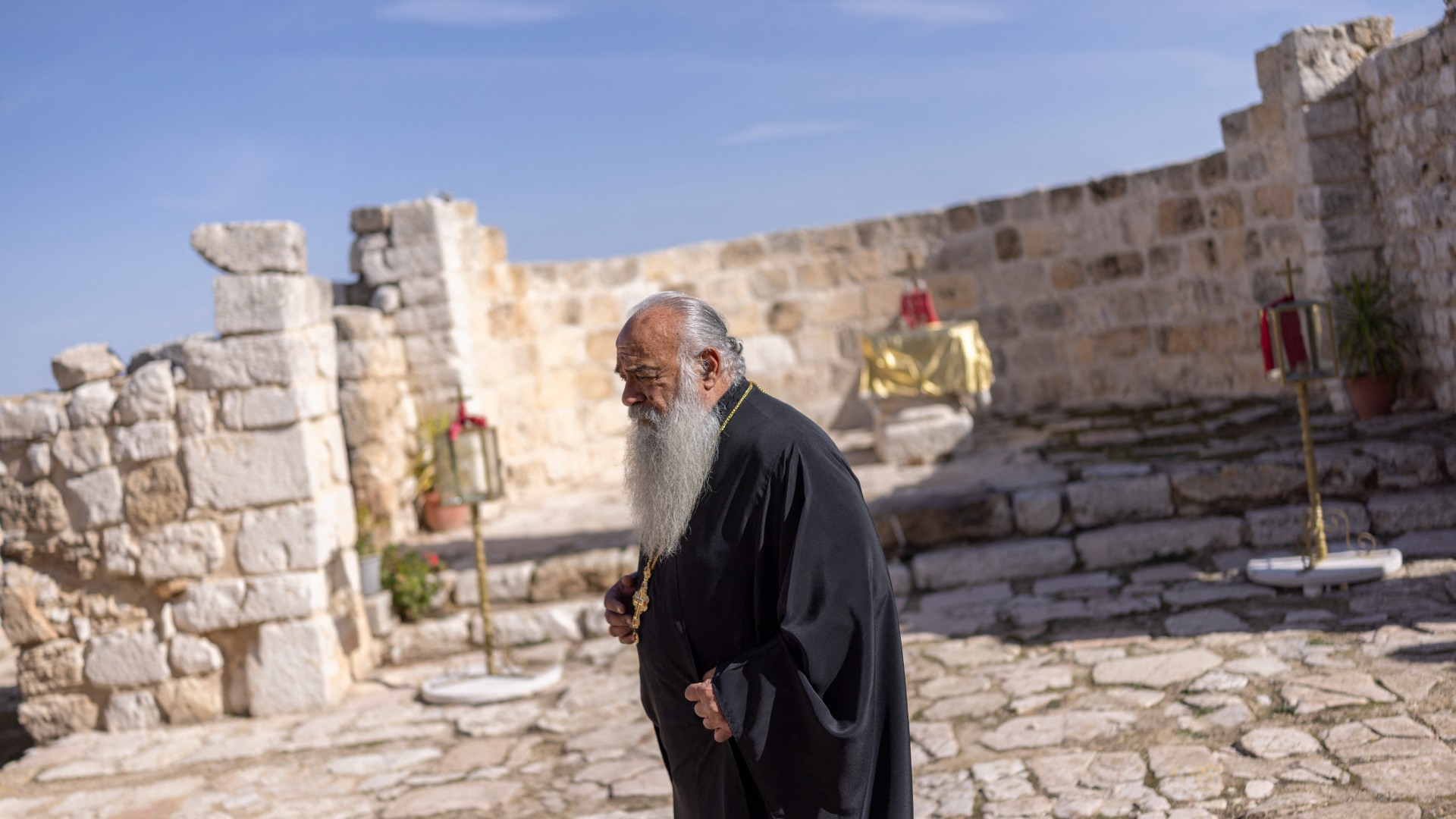
    As attacks have grown more frequent, residents say the threat has expanded beyond targeted assaults on homes and property to systematically block access to agricultural land that sustains the village. Father Jack Abed, parish priest of Taybeh’s Melkite church, explained that settler groups, particularly younger attackers, have targeted the village consistently for years.

    “They attack our village constantly, and we have not been able to reach our olive trees in peace for three years,” Father Abed said. For Taybeh, olive cultivation and olive oil sales are a critical source of household income, and Father Abed called for an immediate end to the ongoing incursions.

    “We simply want to live in peace. We ask that the illegal settlers who attack us, seize our land, and block us from reaching our farms to cultivate our olives be removed,” he said. He also joined local residents in questioning the purpose of the closed military zone order, echoing widespread skepticism about its stated goal of protecting Palestinians.

    “We have to ask ourselves and we have to ask the Israeli army: what does this closure actually mean? If Israelis are forbidden from entering this area, why are settlers still able to operate here with impunity?” Father Abed noted that the order has, in practice, given settlers free rein to attack while making it far harder for human rights defenders to reach the area and support residents claiming their rights.

    The accounts from Taybeh are supported by international activists who maintain a regular “protective presence” alongside vulnerable families in the village. Avital, an activist who visits Taybeh every week, told Middle East Eye that she has personally observed a sharp escalation in attacks against one vulnerable family and their property in recent weeks.

    She confirmed that settlers travel to the family’s home every day, tear down perimeter fences, and bring their own herds of sheep and goats onto the family’s land. On the same morning she spoke to reporters, settlers destroyed multiple items of property at the home.

    “They broke a security camera, tore through an electricity cable, and cut the water hose, spilling all of the family’s stored water. Their behaviour is extremely intimidating and openly violent,” Avital said. She added that in previous incidents, solidarity activists have been beaten by attackers, and while Israeli police were called following the most recent incident, they often fail to respond to reports from Palestinian residents.

    The ongoing crisis in Taybeh is part of a broader regional surge in settler violence across the occupied West Bank this year. Data from the United Nations Office for the Coordination of Humanitarian Affairs (OCHA) records more than 1,000 settler attacks that caused injury or property damage across the West Bank in the first half of 2026, affecting more than 230 separate Palestinian communities.

    By early July 2026, OCHA reported that more than 2,200 Palestinians had been displaced from their homes in the West Bank since the start of the year — an average of roughly 10 people displaced every single day. Displacement has been driven by both settler attacks and Israeli home demolitions carried out under the pretext of unapproved construction. The agency confirmed that settler attacks and the associated access restrictions have become the single primary driver of Palestinian displacement in the West Bank during 2026.

  • Conditions on US aircraft carrier at sea for more than 250 days raise alarms

    Conditions on US aircraft carrier at sea for more than 250 days raise alarms

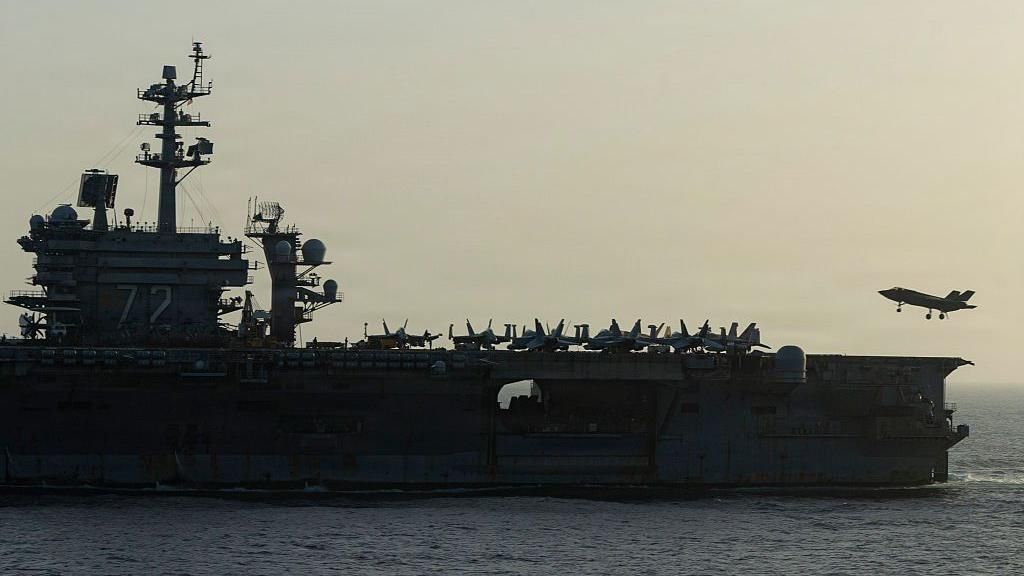
    What was planned as a routine rotational deployment has erupted into a political firestorm, as a top Democratic senator is demanding the Pentagon explain shocking allegations of dire living conditions for 5,000 sailors aboard the USS Abraham Lincoln, a U.S. aircraft carrier that has remained stationed in the Middle East for more than 250 days.

    The carrier first departed San Diego in November last year, originally bound for the South China Sea, before its mission was redirected to the Middle East in advance of U.S. strikes on Iran in February. What was supposed to conclude in May has been repeatedly extended with no public return date set, leaving crew and their families in limbo. Now, published reports from multiple U.S. military and mainstream outlets have outlined a litany of dangerous and unsanitary conditions onboard, from food shortages and contaminated water to broken plumbing systems and months-long delays or losses of personal mail and care packages. Most alarmingly, family members have told reporters that multiple sailors have experienced severe mental health deterioration, with several considering or attempting suicide. CBS News, the BBC’s U.S. partner, also confirmed via two anonymous government officials that a sailor went overboard from the vessel last month, who was later recovered unharmed, with the incident still under active investigation.

    Connecticut Senator Richard Blumenthal laid out these allegations in an official letter sent Thursday to Defense Secretary Pete Hegseth, calling for immediate investigation and clarity on the service’s ability to maintain the high operational pace being demanded of its carrier fleet. “These reports warrant immediate attention,” Blumenthal wrote, adding that the situation raises broader questions about sustained force readiness amid prolonged, unplanned deployments. The mounting scrutiny is also adding increased political pressure on the Trump administration amid ongoing tensions over U.S. military policy toward Iran.

    Hegseth, speaking to reporters during a trip to Panama on the same day, rejected the claims entirely, arguing they had been “completely misrepresented.” He asserted that the Pentagon ensures all deployed vessels and crews receive every necessary resource, and expressed deep gratitude for the work of sailors operating in high-tension regions with limited port access. “What they do in those high seas in those austere conditions with less port calls – it’s incredible,” Hegseth told reporters.

    Late Thursday, the Wall Street Journal reported that the Pentagon is moving forward with a previously planned rotation that will see the USS Abraham Lincoln replaced by the USS George Washington in the region. The BBC has reached out to the Pentagon for official comment on the rotation report, with no formal response released as of yet.

  • Nero’s Bridge emerges from Tiber River as Rome faces water crisis

    Nero’s Bridge emerges from Tiber River as Rome faces water crisis

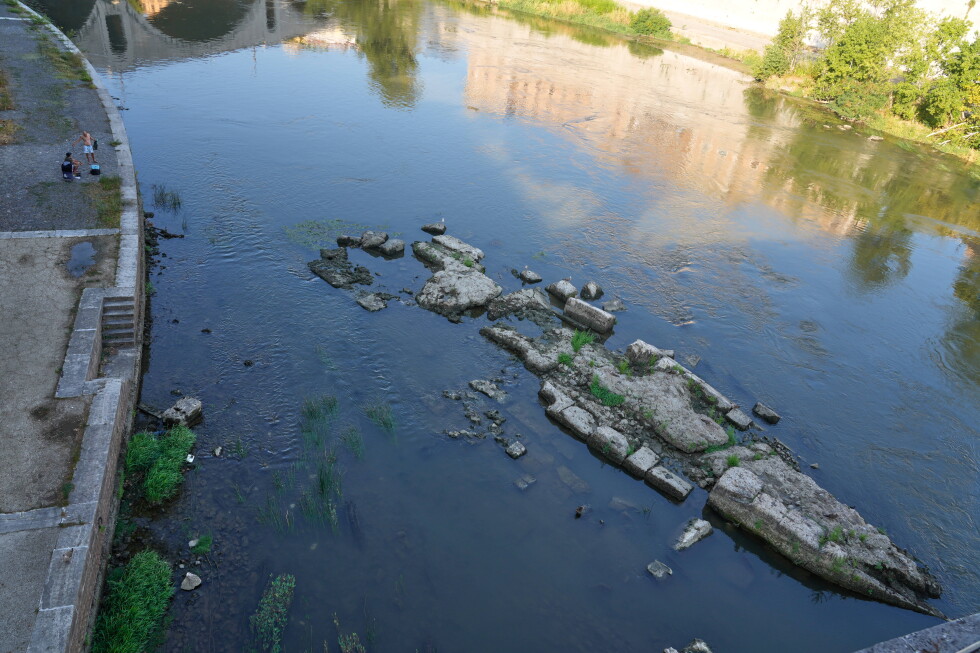
    A centuries-old archaeological treasure has risen from the shrinking waters of Rome’s iconic Tiber River, as a prolonged dry spell pushes the Italian capital into a growing water crisis. The stone remains of Nero’s Bridge, a structure that once linked central Rome to the right bank of the Tiber just steps from the famous St. Peter’s Basilica, are now fully exposed after weeks of near-total rainfall sent water levels plummeting to well below seasonal averages.

    While the bridge bears the name of the infamous early Roman emperor Nero, archaeological scholars have traced its origins back even further in history. Antonella Bonini, an archaeologist with Rome’s cultural heritage superintendency, explained the name connection comes from the Emperor’s association with the surrounding area: Nero’s circus, the site where Christian tradition holds Apostle Peter was martyred, sits on the land that now houses the Vatican. But research indicates the bridge was actually constructed by Nero’s uncle, the Emperor Caligula, with evidence confirming it stood as early as 39 AD, nearly 2,000 years ago.

    The dramatic drop in Tiber water levels that revealed the ancient structure is a symptom of a worsening water emergency across Rome. Giovanni Giganti, coordinator of the Rome civil protection service’s water management center, confirmed the river’s current flow has fallen below 80 cubic meters per second. That figure is roughly half the historic average flow for the month of July. Giganti added that while winter brought above-average precipitation to the region this year, extended dry spells that followed through spring and early summer created the current crisis, putting stress on the city’s water resources and revealing long-submerged landmarks along the river’s course.

    The unexpected emergence of Nero’s Bridge has drawn public and archaeological attention, offering a rare chance to study a well-preserved piece of Rome’s ancient infrastructure that has spent most of its modern history hidden beneath the Tiber’s flowing waters.