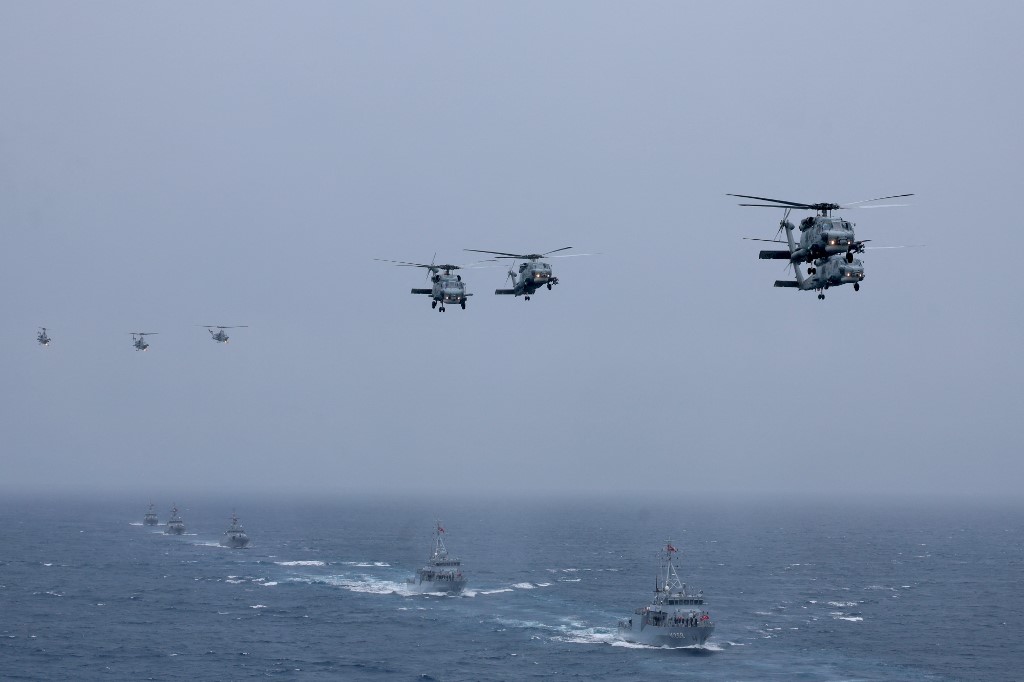
In a landmark confirmation issued Thursday, Turkey has for the first time publicly announced its participation in a newly formed multinational maritime security coalition tasked with protecting unimpeded navigation in the strategically critical Red Sea. This formal commitment marks a tangible deepening of cooperation between Ankara and Riyadh, coming just one week after the two nations signed a landmark trilateral defence agreement with Pakistan during a summit held in Mecca.
Turkey’s Ministry of National Defense laid out the step-by-step progression of coordination on the initiative in an official public statement. The process began with a technical working session hosted in Riyadh on July 28, focused specifically on safeguarding free passage through the Bab al-Mandab Strait— a chokepoint that connects the Red Sea to the Gulf of Aden and handles roughly 10 percent of global traded goods. That initial discussion was followed by a high-level meeting of the three nations’ joint chiefs of staff on July 30, the statement confirmed. On the same day Turkey issued its formal confirmation, a new coordination meeting focused on finalizing the coalition’s structure was underway in Jeddah, with Turkish representatives in attendance.
The defence ministry emphasized that ongoing collaborative work with Saudi authorities is centered on two core goals: de-escalating long-running tensions across the broader Gulf region and guaranteeing that global trade flows through the waterway remain uninterrupted. The trilateral security pact signed last week between Ankara, Riyadh and Islamabad includes binding collective security commitments, meaning an attack on one member is considered an attack on all. Multiple diplomatic sources based in Ankara told Middle East Eye that the Red Sea coalition is set to be the first major area where the new Turkey-Saudi security partnership is put into practice.
Saudi Arabia first announced the formation of the 13-nation alliance last month, a response to rising security threats in the region. The move came shortly after Yemen’s Houthi movement declared a maritime blockade targeting Saudi shipping in mid-July, a move that disrupted oil shipments that had been rerouted through the Red Sea following temporary disruptions at the Strait of Hormuz. In addition to the three founding trilateral pact members, the coalition counts Bahrain, Bangladesh, Comoros, Djibouti, Egypt, Jordan, Kuwait, Qatar, Somalia and Yemen as participating members. The headquarters of the new security alliance will be based in Riyadh, the Saudi capital.