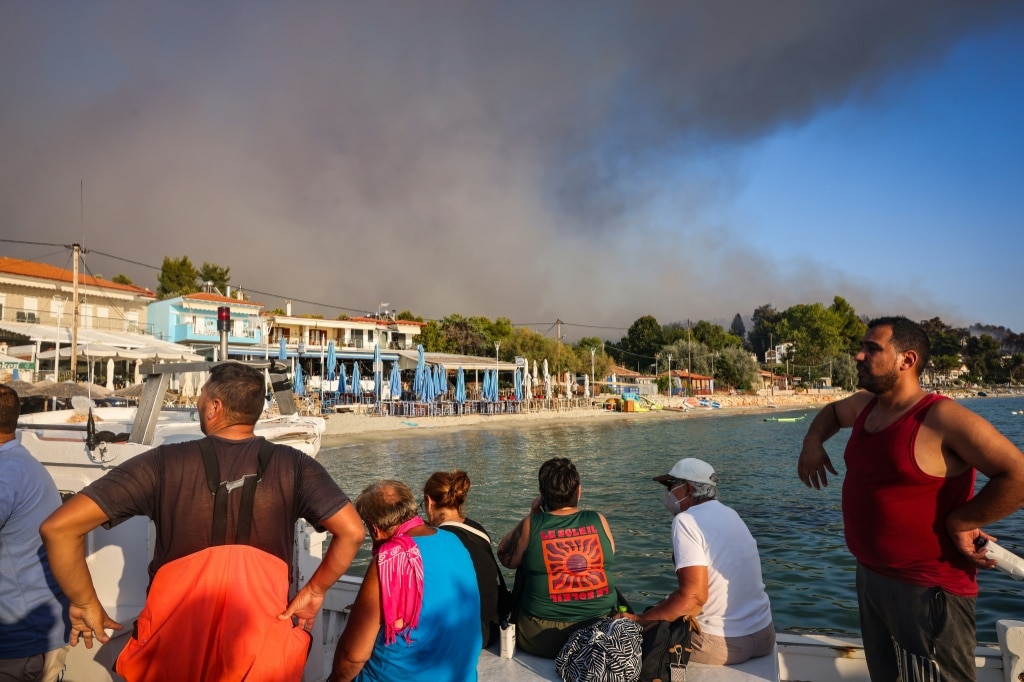
As a raging summer wildfire advanced on two popular tourist beach destinations in northern Greece, a coordinated evacuation carried out by hundreds of small civilian boats alongside official coast guard and fire brigade vessels pulled roughly 500 stranded visitors to safety amid advancing flames. The outbreak, which ignited in the pine-covered Halkidiki peninsula just south of Thessaloniki, quickly gained intensity, pushing fire crews to bring in water-bombing aircraft and more than 200 ground firefighters to halt the blaze’s spread toward the coastal resorts of Siviri and Fourka. By late Thursday, regional civil protection officials confirmed the fire had been brought under control, though firefighting teams remain on high alert for potential reignitions amid hot, dry, windy conditions. Two firefighters were airlifted to local hospitals with burn injuries sustained during the containment effort. The wildfire spread with alarming speed, reaching residential areas and coastal access roads within hours of breaking out. Driven by strong gusty winds, a 1.8-mile-wide wall of flames reaching as high as 100 feet advanced toward the shoreline, forcing authorities to order a full sea evacuation—land routes out of the resorts were already gridlocked with holidaymakers attempting to drive away, leaving the ocean as the only safe escape route. Greek civil protection authorities issued urgent mobile evacuation alerts to all residents and visitors in the affected zone, as thick black smoke blotted out the sun over the coastal communities. Footage broadcast by Greece’s public broadcaster ERT shows dozens of tourists queuing along a Fourka pontoon, many still in their bathing suits and carrying small children, waiting to be ferried out to waiting rescue vessels. Most evacuated tourists were relocated to safer nearby beaches, while around 200 were brought to a larger passenger vessel anchored offshore for shelter. Local resident Sophia, who was stranded on the beach during the evacuation, told Agence France-Presse that the fire had already reached residential areas. “From where we are, we can see that flames have reached the town and the houses,” she said. This year’s wildfire season has stretched Greek emergency services to their breaking point. Earlier this month, a mid-air collision between two firefighting helicopters operating near Athens killed two crew members, and that blaze scorched more than 42 square miles of forest and scrubland. Greek authorities have issued the highest possible level 5 wildfire risk warning for most of the country’s mainland, and Halkidiki regional officials had already implemented a full ban on public entry to the peninsula’s pine forests, which are highly prone to ignition during summer heatwaves. Weather forecasters are warning of extreme fire risk through Friday, with predicted wind gusts reaching up to 60 miles per hour that could quickly spread any new fire outbreaks. Wildfires are an annual danger for Greece during the hot, dry summer months, but climate scientists warn the frequency and severity of these events is growing due to human-caused climate change, which has amplified drought conditions and created more frequent extreme heat events across the Mediterranean region.
博客
-
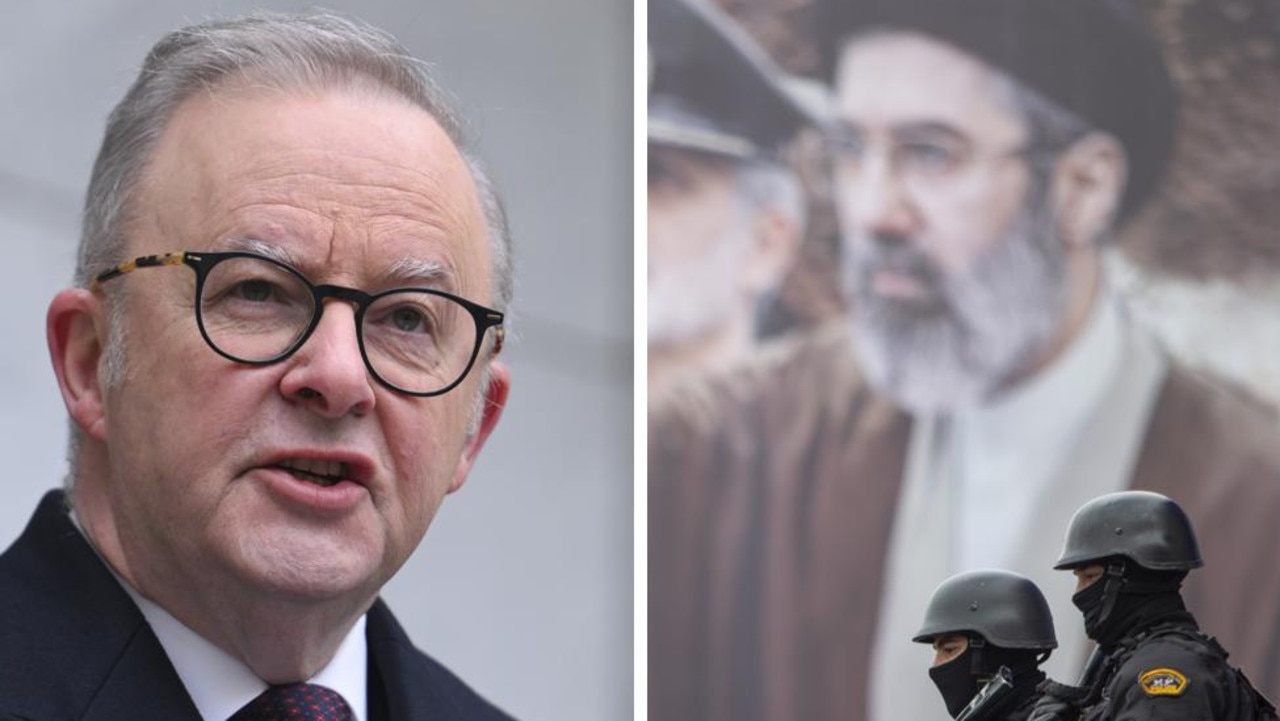
Donald Trump gives Anthony Albanese ‘confidential’ update on Iran war
In a high-stakes bilateral call held early Friday, Australian Prime Minister Anthony Albanese received a classified, extensive briefing from U.S. President Donald Trump on the ongoing and widely destabilizing conflict between the United States, Israel and Iran, as Australian motorists face another round of spiking pump prices that are rippling through household budgets nationwide. The conversation spanned a range of critical bilateral and global security topics, including the AUKUS trilateral security partnership, U.S. trade tariffs on Australian goods, and Australia’s developing domestic drone technology program.
When pressed by reporters on whether he had pushed the U.S. president to pursue a negotiated end to the conflict, Albanese stopped short of disclosing sensitive details of the closed-door discussion, confirming only that portions of the briefing remain classified. “What I received was an extensive update, and I appreciated his perspective,” Albanese told reporters. “Some of that briefing is classified, so I won’t be going into that level of detail. It is up to the President to outline the United States’ strategy when it comes to this conflict.”
Albanese made clear that he had explicitly laid out the Australian government’s formal position: the nation seeks an urgent end to the hostilities that have roiled global energy markets and heightened regional security risks. Repeating Australia’s longstanding non-proliferation stance, he added that the international community cannot permit Iran to develop nuclear weapons, a outcome that would pose catastrophic risk to the entire Middle East. He also called out Iranian military actions during the conflict, noting that Tehran has not only exchanged fire with U.S. and Israeli forces but has also launched offensive strikes against multiple other nations across the region, including the United Arab Emirates.
The prime minister also updated Trump on Australia’s existing contribution to the international response to the conflict: the deployment of an E-7A Wedgetail reconnaissance aircraft to the UAE, a commitment that comes as Trump has repeatedly called on U.S. allies to contribute more direct support to the conflict effort. Albanese acknowledged the tangible downstream costs of the war for Australia and the global economy, a impact most visible in the recent run-up in domestic fuel prices. “It is having an impact on Australia and indeed on the entire global economy,” he said, adding that Trump expressed confidence in the U.S. military’s trajectory moving forward.
The conflict erupted on February 28, when U.S. and Israeli forces launched a coordinated surprise military strike on targets across Iran. In response, Iran effectively shut down commercial shipping traffic through the Strait of Hormuz, the strategic chokepoint through which roughly one-fifth of the world’s daily crude oil supplies pass during periods of peace. The closure of the strait sent global oil prices soaring immediately, with ripple effects reaching Australian fuel markets.
Compounding domestic price pressures, the Albanese government declined to renew a temporary fuel excise relief program earlier this month. While current pump prices have not retraced the record highs hit immediately after the war began, they remain elevated: the New South Wales-based NRMA reports average fuel prices in Sydney currently sit at 201.9 cents per litre, with forecasts predicting only a modest dip to the mid-190 cent range in coming weeks. -
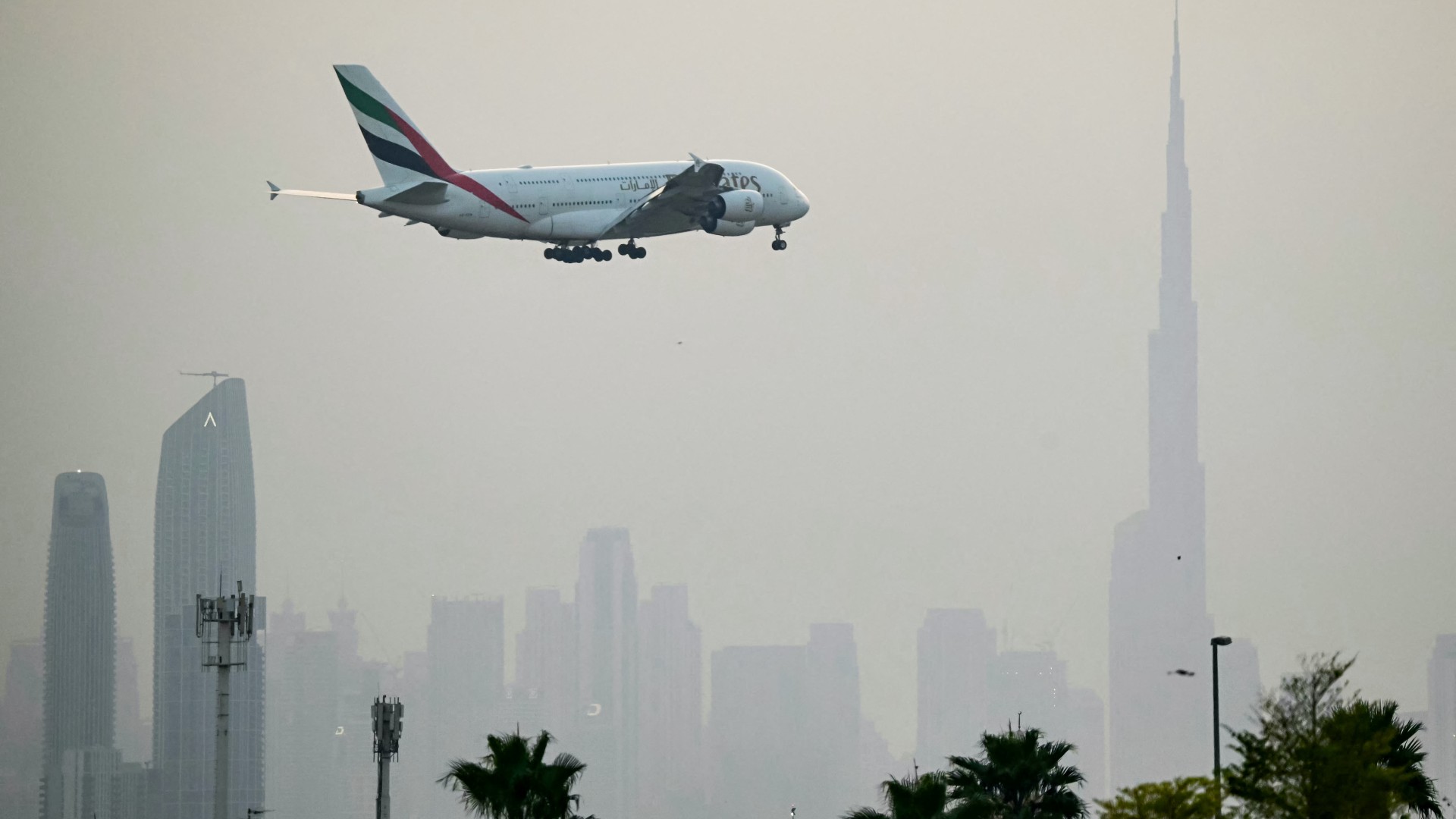
Iran war pushes Middle Eastern airlines towards $4.3bn loss in 2026
The February 28, 2026 escalation of military conflict between the US, Israel and Iran triggered a cascading crisis that has reshaped the global aviation industry, with the Gulf region at its epicenter. Following US-Israeli air strikes on Iranian territory, Iran launched retaliatory attacks targeting locations near US military installations across the Gulf, including sites in Qatar and the United Arab Emirates (UAE). Among the hit sites were key international airports: Dubai International, the world’s busiest hub for international passenger traffic, as well as airports serving Abu Dhabi, Kuwait City and Manama, Bahrain. In response to immediate safety risks, the UAE, Qatar, Bahrain and Kuwait moved quickly to close their entire airspaces to commercial traffic. While these airspaces were gradually reopened over the course of a week as hostilities de-escalated, the conflict left long-lasting damage to regional and global aviation that persists months later.
Industry data from the International Air Transport Association (IATA) illustrates the severity of the financial damage. In its June 2026 outlook, IATA projected that a projected $7.2 billion net profit for Middle Eastern-based airlines in 2026 would reverse to a $4.3 billion net loss, a stunning swing driven entirely by conflict-related disruption.
While major Gulf flagship carriers including Emirates, Etihad Airways and Qatar Airways have resumed commercial operations, none have returned to pre-conflict capacity. Emirates CEO Tim Clark confirmed in a June interview with the *Financial Times* that the airline is currently operating at only 75 percent of its pre-conflict flight schedule. In contrast, nearly all major European and Asian carriers have kept their flights to the region suspended, with staggered restart timelines stretching into late 2026 and early 2027. Air France plans to resume services in late August, Lufthansa in September, and British Airways, Cathay Pacific and Singapore Airlines have targeted late October for resumptions. Air Canada has gone further, announcing it will not restart regional services before mid-January 2027, and dozens of other global carriers have yet to announce any restart date at all.
Even after formal reopening, regional airspaces continue to face intermittent closures and unplanned disruptions. The European Union Aviation Safety Agency (EASA) latest public bulletin, published in August, continues to advise all commercial operators to avoid the airspace of Bahrain, Kuwait, Qatar, the UAE and portions of the Gulf of Oman through August 31, 2026. This ongoing caution has drastically limited travel options for passengers. For example, a one-week round-trip ticket between the UAE and London in September currently only has three available options: Emirates to Dubai, Etihad to Abu Dhabi, and Air Arabia to Sharjah. On matching dates between Doha and Tokyo, Qatar Airways is the only operating carrier available to book.
The conflict poses an existential threat to the core business model that has powered Gulf aviation’s rise over the past three decades: the hub-and-spoke system that leverages the region’s strategic geographic location between Europe and Asia to connect passengers between the two continents via a central Gulf hub. This model has long allowed Gulf carriers to offer connecting routes that are either unavailable via direct flights or cheaper than non-stop alternatives. But the conflict has exposed critical vulnerabilities in this system.
Naveed Kapadia, an aviation lecturer at Buckinghamshire New University, explained that while temporary reduced competition from suspended international carriers has allowed large Gulf airlines to capture incremental local market share and hold fares steady, their business model remains deeply vulnerable. “Gulf airlines are connecting carriers whose economics depend on moving large volumes of passengers efficiently through Dubai and Doha,” Kapadia told Middle East Eye. IATA data from June bears this out: regional passenger demand is down 13.9 percent year-over-year, while direct traffic between Europe and Asia has jumped 11 percent as carriers reroute to avoid Gulf airspace, creating immediate strain on Gulf hub operations.
This rerouting creates cascading cost increases across all operations. Flights that are forced to take longer, less efficient routes burn more jet fuel, require longer crew duty periods, and reduce overall aircraft utilization. The extra fuel carriers now carry as a buffer against unexpected airspace closures also directly cuts into the number of passengers or amount of cargo that can be carried on each flight. The hub-and-spoke model’s concentration of traffic through a single central hub also makes the entire network far more susceptible to cascading disruptions: a single grounded aircraft or stranded crew can trigger delays and cancellations across the entire global route network.
To rebuild passenger confidence and win back pre-conflict traffic, major Gulf carriers have rolled out unprecedented customer incentives. Emirates, the region’s largest carrier, introduced a new travel insurance policy that offers full coverage for flight cancellations related to conflict, a break from standard industry practice that typically excludes war-related disruption from coverage. If flights are canceled due to renewed hostilities, Emirates guarantees it will arrange repatriation for passengers on partner airlines if it cannot operate its own. “We would get you back irrespective [of whether it’s] on Emirates or not,” Clark told the *Financial Times*, framing the policy as a commitment to passenger safety. Beyond airline-specific incentives, Dubai’s tourism authority has launched broader campaigns to revive visitor numbers, offering complimentary travel packages for guests invited by Emirati citizens and free hotel stays for passengers on long connecting layovers.
The crisis has not been limited to passenger aviation: regional air cargo and private jet operations have also seen steep declines. Kapadia noted that regional air cargo demand grew only 5.6 percent year-over-year, roughly a third slower than the global industry average of 8.5 percent. IATA data shows traffic between Europe and the Middle East remains 41.1 percent below 2025 levels, while traffic between Asia and the Middle East is down 4.1 percent. While disruption to maritime shipping through the Strait of Hormuz has created new demand for air freight for urgent, high-value and time-sensitive shipments, Kapadia said this has not translated to a straightforward gain for Gulf cargo carriers, which collectively handle roughly 13 percent of global air cargo traffic. “The more important question is whether they can convert short-term urgency into sustained and profitable cargo flows,” he added.
Private jet activity originating in Gulf countries has also collapsed. Data from aviation analysts WINGX shows that as of August 10, total private jet traffic from Gulf nations was down 46.5 percent compared to pre-conflict levels. “The vast majority of flights stayed within the Middle East region, and volumes there are still down considerably,” said WINGX analyst Nick Koscinski. Gulf-to-Europe private flights, the second most popular route category, are down 40 percent year-over-year. Koscinski noted that Qatar Executive, one of the region’s largest private jet operators, has been more resilient than competitors based in the UAE or Saudi Arabia: its total traffic is only down 6.7 percent since the conflict began, compared to a 28.7 percent drop for a comparable UAE-based operator and a 39 percent drop for a leading Saudi operator. While private jet operators can often pass increased fuel costs through to customers via surcharges, Koscinski said lags in repricing and overall softer demand mean all regional private jet operators will still take a significant financial hit.
Jet fuel prices, a core input for all aviation operations, have remained far above pre-conflict levels despite temporary declines. Kapadia said prices fell 20 percent in June after Gulf oil flows temporarily stabilized, but remained 45.8 percent higher than June 2025. IATA forecasts that the 2026 average jet fuel price will be 70 percent higher than the 2025 average. Kapadia expects airfares in the region will remain elevated and volatile rather than rising uniformly: “Airlines will try to recover higher fuel and disruption costs through fares to some extent, but they cannot pass on every additional cost without weakening demand, particularly among price-sensitive leisure travellers.”
Low-cost carriers around the world have been hit hardest by the spike in fuel prices. US-based low-cost carrier Spirit Airlines ceased all operations on May 2, 2026, while European low-cost carriers Air Baltic and Wizz Air face growing bankruptcy risk and have been forced to restructure their operations to cut costs. A 2026 McKinsey report on aviation found that roughly 70 percent of jet fuel surcharges are passed directly to consumers, and airline margins only recover briefly when fuel prices fall. The report concluded that ongoing economic pressure will force the global industry to retire older, less fuel-efficient aircraft, cut low-demand routes, and further reduce overhead costs to remain solvent.
Not all regional carriers have suffered losses, however. Israel’s flag carrier El Al has reported record annual profits, more than double its previous yearly record. The gain comes as most international airlines have suspended service to Israel, leaving El Al as the near-exclusive option for international travel to and from the country, a position that has allowed the airline to raise fares sharply. Many passengers have publicly criticized the “outrageous” pricing that has come with the near-monopoly.
Industry consultants say the conflict will have long-term impacts on global aviation investment that will outlast the current hostilities. “Airport investment deals, geopolitical risk is increasingly being reflected in downside scenarios, valuation assumptions and risk premiums,” said Harsha Jaison, an aviation consultant at global advisory firm ICF. The changes to how the industry prices geopolitical risk, she added, are likely to become a permanent feature of aviation planning in the Middle East and globally.
-

In Weimar, a festival preserves Yiddish culture while reinventing it
Nestled in central Germany, Weimar is a city etched into global cultural memory: it is the birthplace of the German Enlightenment, the creative home of Johann Wolfgang von Goethe and Franz Liszt, and the namesake of the fragile democratic republic that collapsed to open the door for Nazi Germany. For more than 25 years, however, a distinctly different, once-thought-lost European cultural tradition has filled its streets and performance venues: the vibrant language, music, and heritage of Yiddish.\n\nFounded in 1998 by composer and cultural scholar Alan Bern, who still serves as artistic director, the annual Yiddish Summer Weimar festival has grown from a small weekend workshop for a handful of participants to Europe’s largest gathering dedicated to Yiddish culture. Drawing hundreds of students, musicians, and scholars from across the globe, the month-long event combines immersive language workshops, skill-building musical training, and nightly public concerts that draw a combined audience of more than 10,000 people annually. All of it centers on a core mission: to frame Yiddish culture as a living, evolving tradition, not just a footnote to the Holocaust that nearly eradicated it.\n\n“From the beginning, the idea was to present Yiddish culture as something which is alive, and not something that was entirely destroyed by the Shoah,” Bern explained. Unlike the aristocratic roots of many Western European classical traditions, Bern notes Yiddish culture emerged from the masses of Jewish communities across the continent. “Jewish culture, Yiddish culture, has a different yichus than Western European classical culture. It came not from the courts of the aristocracy but the masses of the Jewish street, and he believes it’s one of Europe’s great cultural treasures nonetheless.”\n\nA millennium of Yiddish history\nYiddish first emerged around the 10th century among Ashkenazi Jewish communities in the Rhineland, in what is now western Germany. As these communities migrated eastward across Central and Eastern Europe, settling in what would become Poland, Lithuania, Ukraine, and Hungary, the language evolved: it retains close linguistic ties to German, but integrates Hebrew, Aramaic, and Slavic vocabulary and grammatical structures. By 1939, more than 11 million people around the world spoke Yiddish, making it the primary language of the vast majority of European Jews. Over centuries, it fostered a rich, distinct ecosystem of literature, folk music, political thought, and art — a world that was almost entirely destroyed during the Holocaust.\n\nToday, Yiddish is experiencing a quiet 21st-century renaissance, with growing demand across diverse communities. It remains the native language of expanding ultra-Orthodox and Hasidic Jewish communities from New York to Israel, spurring a boom in contemporary Yiddish pop culture, from rap music to graphic novels and new periodicals.\n\n“We have a huge Hasidic pop culture, a contemporary pop culture, which is growing day by day, and where you see often mixing of different elements,” said Eidel Malowicki, a Yiddish teacher at the festival who grew up in a Hasidic family in Vienna. “Now you even have Hasidic Rap, and it’s a repertoire that is growing every day. … there’s new comics coming out, new magazines.”\n\nThe revival also extends to secular Jewish communities and non-Jewish learners, for whom Yiddish fills unique personal and cultural gaps. For many young secular Jews in Israel, Yiddish offers a broader lens to explore Jewish identity outside the narrow, Hebrew-centric Zionist narrative many have grown disillusioned with.\n\nDan Kedem, a volunteer at this year’s festival who traveled from the Tel Aviv area, called Yiddish “a sort of path of redemption from the reality that I grew up in within Israel.” “The Jewish story taught to me in Israel was linear and narrow,” he explained. “So one of the things that I found most fascinating about Yiddish is that exploration of this other Jewish culture, identity and root system of paths and ideas has allowed me to explore my own identity through a much wider lens and open myself to new ideas and new thoughts.”\n\nAcross the globe, access to Yiddish language learning has exploded. The Yiddish academic journal *Ingeveb* projects that more than two dozen Yiddish-focused programs, camps, and festivals will run globally in summer 2026 alone. Popular language-learning platform Duolingo reports its Yiddish course now counts nearly 300,000 active users, most of them under 25.\n\nBridging divided cultural worlds in Weimar\nRoughly half of Yiddish Summer Weimar’s participants are not Jewish, and many are German locals seeking to reconnect with a cultural heritage erased from their national history. Michael Panzner, an intercultural consultant from Frankfurt, told the festival he grew up never meeting Jewish people in Germany, and long saw Jewish culture as a “secret” an important, overlooked part of his country’s history. At Yiddish Summer Weimar, he found a judgment-free space to explore that missing part of his national identity.\n\n“I think Yiddish is being given way too little attention in today’s cultural life and social life,” Panzner said.\n\nFor Malowicki, whose native Hasidic Yiddish dialect is rarely taught by native speakers in global programs, the festival fills a critical role as a bridge between divided cultural communities. “I see it as a chance to create a bridge between worlds that otherwise wouldn’t have a bridge or a connection,” she said. “I think that there’s a lot that we can learn from one another and our different worlds.”\n\nOrganizers frame the festival through a transcultural, transnational lens, rejecting the common misperception of Yiddish as an isolated culture only connected to remote Eastern European shtetls. To advance that mission, they regularly collaborate with artists and communities outside Ashkenazi Jewry: past projects have included youth orchestras from Poland and France, while this year’s event featured the Yam Ensemble, a collective of young musicians from Germany, Greece, and Turkey that explores shared cultural roots between Mediterranean folk and Klezmer music.\n\nWhy Weimar? It is not a historic center of Yiddish life, unlike Warsaw, Vilnius, or Krakow, but Bern and other organizers argue it is the perfect home for the festival. The city is defined by two conflicting legacies: it is the heart of German high culture, and also a cradle of 20th-century fascism: Adolf Hitler rebuilt the Nazi Party here in 1926, and today the surrounding state of Thuringia is the strongest base for the far-right, neo-Nazi-linked Alternative for Germany party.\n\n“It’s very ironic to think that here is a place that has a large Yiddish music festival, maybe one of the biggest in the world, and sold out concerts and everything, and it’s this same environment in which there’s a neo-Nazi movement that is just growing all the time,” Bern noted.\n\nEven as a cultural hub, Weimar is the ideal place for Yiddish, festival curator Andreas Schmitges argues: the city has long been celebrated as a center of German *hochkultur* (high culture), from Goethe and Schiller to Liszt and the Bauhaus movement. But Yiddish culture deserves to be counted among Europe’s great high cultural traditions too, he said.\n\n“To be honest, I think that Yiddish culture is right here in the right place where it belongs because it’s also one of Europe’s hochkulturen, so this is a perfect place,” Schmitges said.\n\nThis year’s festival ran from July 11 to August 15, with the main public concert week held from August 8 to 15, carrying forward a 25-year mission of reviving a living culture that refuses to be defined only by tragedy. “We’re not in a constant posture of mourning the past,” Bern said. “We’re also living and creating, so the fact that we’re talking about a living, creative culture, which is not in denial of the past, but also not stuck in the past, was, I think, surprisingly refreshing to people already in 1998, and it still is today.”
-
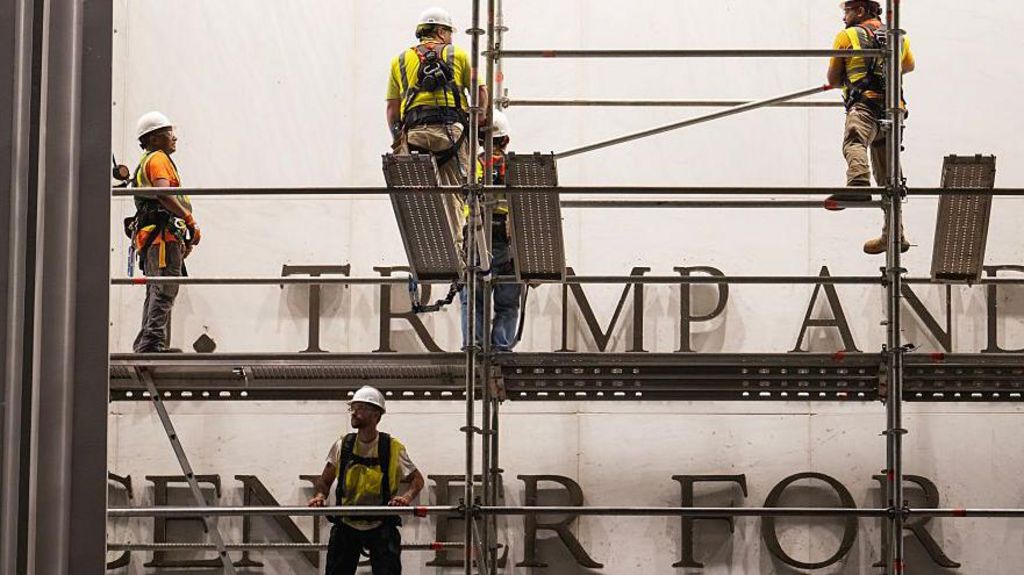
Kennedy Center board votes to put Trump’s name back on building
A new time-lapse video captured construction crews assembling scaffolding this week at Washington D.C.’s Kennedy Center, as preparations get underway for a contentious move that directly challenges a recent federal court order: reinserting former President Donald Trump’s name onto the iconic performing arts venue’s facade. The unexpected reversal comes just two months after a federal judge mandated the permanent removal of Trump’s branding from the national cultural landmark, reigniting a bitter legal and political battle over the future of the institution.
According to Democratic Congresswoman Joyce Beatty, a sitting member of the Kennedy Center’s board of trustees, the panel voted along party lines Thursday to approve adding the phrase “Restored and Renovated By President Donald J. Trump” to the center’s official public title. The current board is dominated by appointees loyal to Trump, who installed a slate of new trustees and appointed himself chairman of the institution in February 2025, shortly after he began his second presidential term.
Beatty condemned the board’s decision in sharp remarks following the vote, calling the move a blatant attempt to bypass the court’s binding order. “This latest development is a transparent effort to circumvent the court’s ruling, and flies in the face of the statutes that Congress passed,” she said. “I will continue to fight for this treasured national monument, which was created to honor the legacy of President John F. Kennedy, not advance the personal political brand of a sitting president.”
The BBC reached out to Kennedy Center leadership for additional comment on the vote and upcoming work, but had not received a response as of press time. White House spokesperson Liz Huston defended the board’s action in an official statement Thursday, framing the addition of Trump’s name as a recognition of the administration’s investment in the historic venue. “Under President Trump’s bold leadership, the Kennedy Center is on its way to becoming the finest cultural institution anywhere in the world,” Huston said.
Alongside voting to reintroduce Trump’s name, the board also approved moving forward with a planned two-year full closure of the center for a major renovation project — a proposal that the same federal judge had previously blocked earlier this year.
The conflict traces back to a May ruling from U.S. District Court Judge Christopher Cooper, who found that Trump’s initial addition of his name to the Kennedy Center facade violated federal law. Cooper ruled that the venue, which is legally designated as a national memorial to John F. Kennedy, cannot be formally renamed without explicit approval from Congress. The judge ordered the immediate removal of Trump’s name, which was completed last month after the U.S. Court of Appeals for the D.C. Circuit declined to grant a last-minute emergency stay requested by the Trump administration to pause the work.
Trump’s legal team had argued that removing the name before the appeals process concluded would create unnecessary and lasting confusion if the administration ultimately won its legal challenge. Prior to Thursday’s board vote, the removal had proceeded as ordered, with the court’s ruling set to receive further full argument in the coming months.
The dispute is part of a broader set of rebranding measures rolled out by the Trump administration across Washington D.C. last year, which included adding Trump’s name to multiple public institutions and federal properties. Legal challenges have been mounted against several of those changes, arguing that they violate longstanding federal laws governing the naming of national memorials and public lands.
-

Nigeria to miss Women’s World Cup after South Africa and Ghana win play-offs
For more than three decades, Nigeria’s Super Falcons have been an unmissable staple of the FIFA Women’s World Cup, featuring in every edition of the tournament since its inaugural staging in 1991. But that historic unbroken streak has finally come to a shocking end, after a tense 2-1 knockout playoff defeat to South Africa’s Banyana Banyana at the 2026 Women’s Africa Cup of Nations (Wafcon) in Casablanca.
-
Chile moves hundreds of inmates to a new prison as President Kast ramps up security push
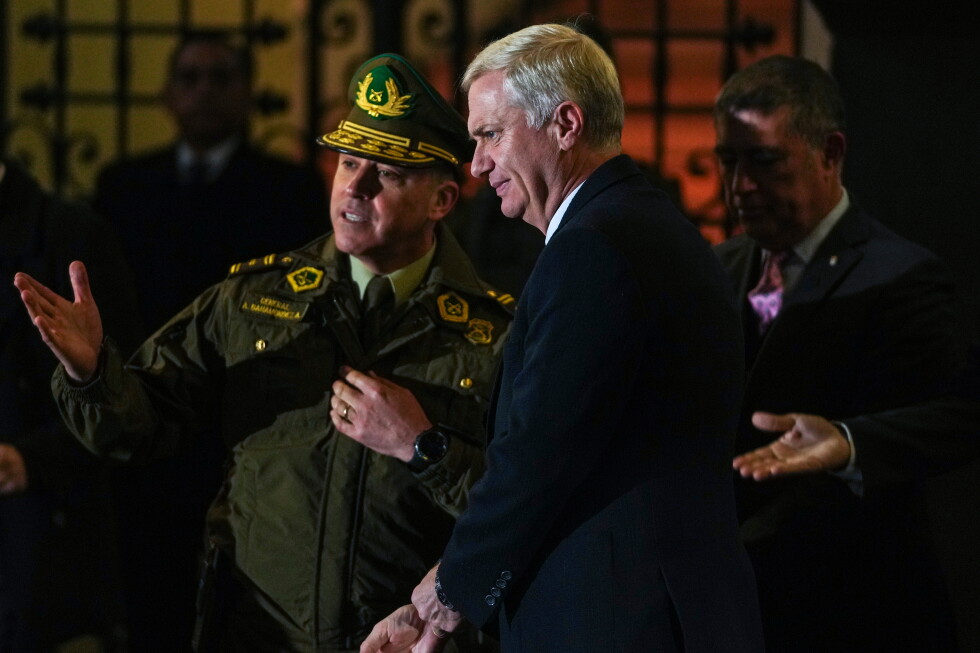
In a high-profile step to advance his signature campaign promise of cracking down on organized crime, Chile’s hard-line President José Antonio Kast oversaw the transfer of 295 high-risk inmates to the newly built La Laguna Prison on Thursday, a move directly modeled on the hardline security strategy that has defined El Salvador President Nayib Bukele’s tenure.
Located roughly 155 miles south of Chile’s capital Santiago, La Laguna counts among the nation’s largest correctional facilities, with total capacity for 2,320 inmates across 13+ units, including dedicated maximum-security wings. The facility was purpose-built to address two longstanding crises in Chile’s correctional system: severe overcrowding in older facilities, and the ability for incarcerated gang leaders to continue directing criminal operations from behind bars. To block unauthorized communications, La Laguna is fitted with 1,500 high-resolution surveillance cameras, full-body scanners for visitors and staff, and cutting-edge technology that jams all cellular signals within facility boundaries. Of the inmates transferred Thursday, 37 are confirmed members of major transnational and domestic criminal organizations, with an additional 100 inmates scheduled to move to the facility over the coming week.
Government-released footage of the transfer showed inmates grouped in rows, feet shackled and heads bowed, a visual presentation that closely mirrors the public broadcasts Bukele has shared on social media throughout his multi-year nationwide security crackdown. Bukele’s aggressive mass incarceration campaign has driven a dramatic drop in violent crime across El Salvador, but it has also sparked widespread condemnation from global and regional human rights groups, which have documented consistent patterns of arbitrary detention, physical abuse of detainees, and widespread erosion of fundamental civil liberties in the country.
Kast, a conservative ally of former U.S. President Donald Trump, has openly framed Bukele as a policy model, joining a growing wave of right-wing leaders across Latin America—including recent candidates and officeholders in Colombia and Peru—that have adopted hardline security rhetoric to win over anxious voters. During his 2025 presidential campaign, Kast traveled to El Salvador to study Bukele’s security framework in person, and even toured the Central American nation’s infamous mega-prison, which operates with no allowed visitation, recreational activities, or inmate education programs.
Speaking at a press conference following Thursday’s transfer, Kast emphasized the symbolic weight of the operation, saying: “It’s a way of sending criminals a clear message that things have changed: We are going to come after you, we are going to find you, you will be prosecuted and we are going to lock you up.”
The high-profile public move comes as Kast works to rebuild momentum for his security agenda after a bumpy first seven months in office. The La Laguna facility itself was actually approved and opened by Kast’s left-wing predecessor Gabriel Boric, and began accepting inmates months before Kast took office following his December 2025 election victory.
Since taking power, Kast has struggled to deliver on the aggressive security promises that propelled his win. He dismissed his first security minister just two and a half months into his term, and has failed to meet pledges for rapid deportations of undocumented immigrants: official data shows his administration has only deported roughly 878 of the estimated 300,000 undocumented immigrants residing in Chile, though an additional 7,501 people left the country voluntarily in the first seven months of 2026. Voters have increasingly voiced frustration that Kast’s security policies have so far delivered little tangible change from Boric’s approach, prompting Kast to unveil a sweeping new security package last week that is now under consideration by Chile’s Congress.
The legislative proposal would expand the Chilean state’s authority to combat organized crime, including provisions for permanent police deployments in the country’s most violence-plagued neighborhoods, harsher mandatory sentencing for gang affiliation, and the creation of a new state agency tasked with seizing and liquidating assets tied to criminal networks. The package also includes measures to loosen legal restrictions on police use of force and a constitutional amendment that would lower barriers to declaring national states of emergency in response to major security threats.
While Chile still ranks as one of the safest countries in Latin America, a recent surge in kidnappings, extortion, and drug trafficking—combined with the expanding presence of transnational criminal gangs like Venezuela’s Tren de Aragua—has stoked widespread public anxiety over rising organized crime. That public unease was a key factor in Kast’s electoral victory last year, and the La Laguna inmate transfer marks his most visible effort yet to convince voters he will deliver on his campaign promises.
-
Palestinians reject Hamas disarmament before full Israeli withdrawal, poll finds
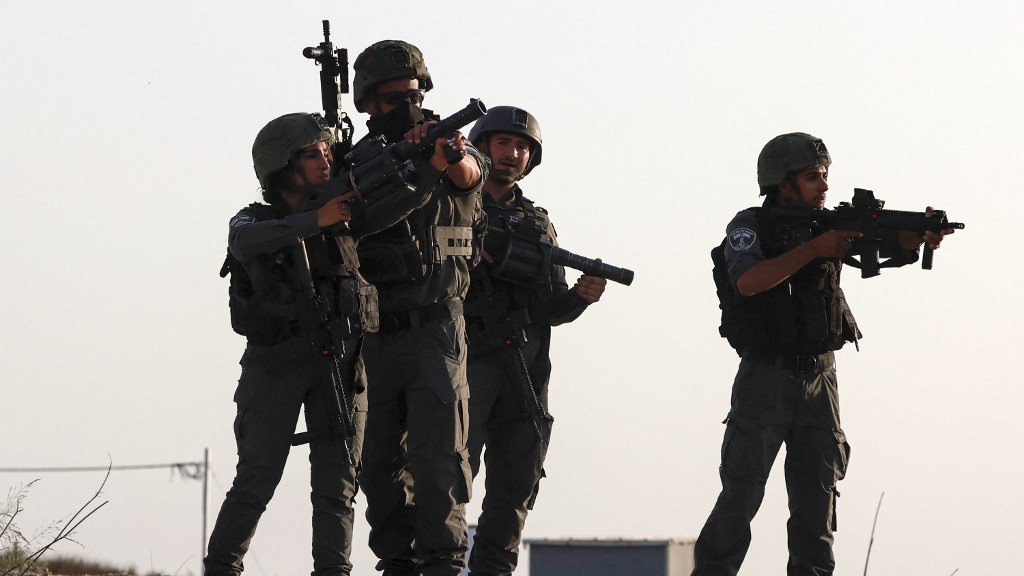
Against the backdrop of ongoing conflict and occupation in the Palestinian territories, a newly released public opinion survey from the Palestinian Center for Policy and Survey Research has painted a stark portrait of widespread Palestinian public sentiment on security, political leadership, and long-term national aspirations. The most striking finding from the poll, published Wednesday, is that more than seven out of 10 Palestinians reject any demand for Hamas to disarm before Israel completes a full withdrawal from the Gaza Strip. A full 72% of respondents hold the conviction that if Hamas were to surrender its weapons, Israel would refuse to follow through with a full withdrawal and would resume its large-scale military offensive in the enclave, which respondents and many global observers have characterized as genocide.
The survey comes amid recent diplomatic maneuvering: Hamas has already accepted a ceasefire and governance proposal put forward by Nickolay Mladenov, head of the U.S.-backed Board of Peace. Even with this diplomatic development on the table, however, 40% of Palestinians surveyed expect the current cycle of violence and instability to persist, with ongoing civilian casualties continuing in the months ahead. Israel has already formally rejected the U.S.-backed proposal, dimming immediate hopes for a negotiated end to the conflict. Another 30% of respondents hold a more optimistic outlook, forecasting that a period of calm will take hold, a new interim Gaza administration led by the National Committee for the Administration of Gaza will take power, and long-delayed reconstruction of war-ravaged Gaza can finally begin.
Notably, widespread opposition to early disarmament does not equate to broad satisfaction with existing Palestinian political institutions. The poll documents deep and persistent public anger at the Palestinian Authority (PA) and its long-serving leader, President Mahmoud Abbas. Nearly 79% of all respondents believe Abbas should step down from his position, a figure that has held between 79% and 89% over the past three years, showing consistent public dissatisfaction with his leadership. Corruption is also a top concern: 83% of Palestinians agree that corrupt practices are widespread within PA institutions, and 65% view the authority itself as more of a burden on the Palestinian people than a historic national achievement.
When it comes to picking Abbas’ successor, the clear favorite among the public is Marwan Barghouti, a prominent Palestinian political leader who has been imprisoned by Israeli authorities for more than 20 years. Barghouti earned the support of 39% of respondents as the preferred next leader, outpacing all other potential candidates. Hamas leader Khalil al-Hayya came in second with 16% support, followed by former PA official Mohammed Dahlan at 15%, and independent politician Mustafa Barghouti at 6%. In a hypothetical head-to-head presidential election, the gap grows even wider: Barghouti would secure 54% of the vote, compared to 26% for al-Hayya and just 14% for the incumbent Abbas.
The survey results also underscore the pervasive sense of insecurity that shapes daily life for Palestinians across both Gaza and the occupied West Bank. Three-quarters of respondents – 76% – reported that they and their immediate family members do not feel safe in their current homes, with only 23% saying they feel secure. Public trust in international diplomatic bodies involved in Middle East peace efforts remains extremely low: only 24% of Palestinians express trust in the Board of Peace, which oversees the Trump administration’s Gaza peace plan, while 66% say they distrust the body entirely.
In the West Bank, fears of Israeli settlement expansion are near-universal: 87% of respondents there worry that growing Israeli settlements and outposts will eventually force them off their land or out of their homes. Palestinians also remain deeply skeptical that any change in Israel’s leadership will bring meaningful improvement to their conditions. Thirty-four percent believe Israeli policy toward Palestinians would remain unchanged even if the opposition took power, 33% expect policy to worsen under a new Israeli government, and just 28% hold out hope that policy would improve if Prime Minister Benjamin Netanyahu were removed from office.
Even amid the catastrophic destruction of Gaza and accelerating Israeli annexation of West Bank land, the core national aspiration of the Palestinian people remains clear: 43% of respondents identified achieving a full Israeli withdrawal to the 1967 armistice lines and establishing an independent Palestinian state with East Jerusalem as its capital as the highest priority for the Palestinian people moving forward.
-

‘I lost $14,000 in a month’: Investors hit by Korean stock market’s wild swings
South Korea’s tech-heavy Kospi stock index, long known as the world’s most volatile major benchmark, is reeling from one of the sharpest downward corrections in its history, triggered by a sudden pullback in AI-fueled tech stock gains that has left millions of retail investors facing devastating losses on life-changing savings. The rout, which unfolded between June and August, has drawn comparisons to the catastrophic market drops seen during the 1997 Asian financial crisis and the 2020 Covid-19 pandemic, shining a bright spotlight on the risks of overconcentrated bets on high-growth artificial intelligence assets among amateur traders.
The scale of the swing has been staggering: after more than doubling in value in the first half of the year to push past the 9,000-point threshold in mid-June, the index plummeted to 5,500 points in just a matter of weeks. It has since clawed back some losses to stabilize around 6,800 points, but the damage to individual investors’ portfolios has already been done. The root cause of the sell-off, according to Wee Khoon Chong, a strategist at global financial services firm BNY, is growing investor anxiety over the massive amounts of capital being poured into AI development, with many market participants questioning whether the current valuations of leading chipmakers and AI firms are sustainable.
For many ordinary South Korean savers, the downturn has turned anticipated life milestones into financial uncertainty. Take Yongjoon Kim, a bank worker who had earmarked his investment gains for a down payment on a new home ahead of his wedding later this year. Kim lost roughly 20 million Korean won (equivalent to $14,000 USD) after his concentrated tech portfolio dropped by 25% in July alone. “This loss is going to hurt, and I’ll have to put in extra work for years to make up the gap,” Kim said in an interview. “But I’m luckier than many of my friends who went all in with their entire life savings – they’re in desperate situations right now.”
Kim’s experience is far from unique. Woongsa Kim, another retail investor, bought shares of leading memory chipmaker SK Hynix at the start of the year using half of his annual work bonus. The stock surged to four times its original value at the index’s peak, only to wipe out almost all those gains in the subsequent correction, cutting the investment’s value to half its peak high. “Just thinking about what I lost brings me to tears,” he told the BBC.
The crisis has been amplified by the explosive growth of leveraged trading among South Korea’s retail investors, a trend that has also picked up steam in markets including Taiwan and the United States, according to Frank Benzimra, head of Asia equity strategy at Societe Generale. Leverage allows investors to borrow money to control a larger block of shares than their own capital can afford, magnifying gains when prices rise but triggering forced liquidations – called margin calls – when prices fall below a pre-agreed threshold. By the end of July, an estimated 1.2 million South Korean retail investor accounts had received margin calls, a figure equal to roughly one out of every 30 working-age adults in the country.
Many of the traders caught up in the rout were first-time investors lured into the market by the global AI boom and widespread fear of missing out on fast gains. Marketing professional Chanyong Park saw his holdings in US-based AI chip giant Nvidia surge by more than 1,000%, then reinvested almost all of those profits into SK Hynix – only to see the bet go sour, erasing roughly $10,000 in value. The losses have thrown his plans to quit his job in October and launch his own business into doubt. “I’m now seriously questioning whether I’ll have enough capital to move forward with that plan,” Park said. Like many other affected investors, he is holding onto his shares in hopes of a rebound, but recent wild swings have made him hesitant to add more capital to his position. “It often doesn’t feel like price movements are driven by rational fundamentals – it feels a lot like gambling,” he added.
Another investor, Youngji Park, went all in on Samsung shares, which peaked at a total value of 45 million Korean won before suffering what he describes as a gut-wrenching downturn. “I feel like a fool for trusting the Korean market,” he said, adding that he has no choice but to hold his position and wait for a recovery over the long term. Even college students have been caught up in the damage: Soomin Yi pooled her money with a friend to buy SK Hynix shares after feeling FOMO (fear of missing out) on the AI boom, but neither had any formal investing experience or access to experienced guidance. They held onto their shares even after they peaked in June, clinging to speculation that prices would rise even higher to five million won per position, and are now sitting on heavy losses.
The extreme volatility of the Kospi has raised ripple effect concerns for other global markets, with Benzimra noting that other tech-heavy benchmarks like Japan’s Nikkei 225 have moved in lockstep with South Korea’s wild swings. However, he added that most large, diversified global markets are unlikely to see the same level of extreme volatility, as their indexes include a far broader mix of sectors that can cushion against sector-specific sell-offs. “You won’t see this kind of extreme movement in large diversified markets like the Tokyo Stock Price Index or US equity markets,” he explained.
Investors who followed traditional diversification advice have fared far better in the downturn, with diversified portfolios softening the blow of the tech rout. Yongjoon Kim, who also holds positions in overseas markets, says the entire episode is a critical warning for young and new investors, especially in South Korea. “This is a wake-up call not to put all your eggs in one basket and hope for the best,” he said, adding that he regrets not taking a more cautious approach to his tech stock bets. His fiancée, Gaeon Lee, remains optimistic that the market will eventually recover, but she says the constant stress of monitoring plummeting investments has taken a clear toll on her partner. “Seeing our home savings take a hit was definitely a wake-up call for all of us,” she said.
-
Engine parts smashed Ryanair window that man’s head was sucked out of, report says
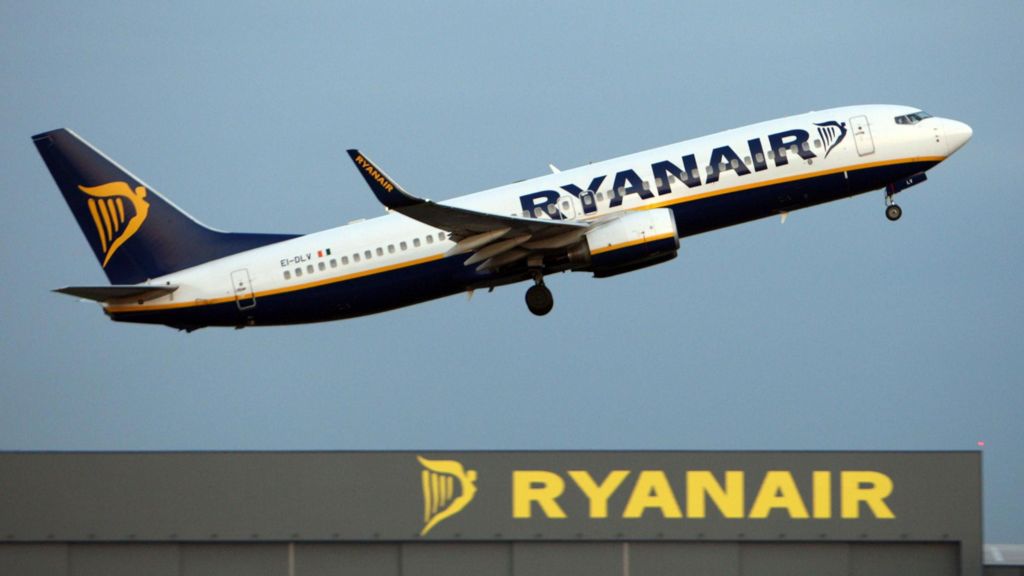
A mid-flight engine failure on a Ryanair-operated flight last July left one passenger seriously injured after broken engine fragments shattered a cabin window, pulling his head and shoulder partially out of the aircraft, US transportation investigators have confirmed in a newly released preliminary assessment.
The event unfolded on 10 July, when the flight — traveling from Thessaloniki, Greece, to Memmingen, Germany, and operated by Ryanair’s subsidiary Malta Air — suffered a catastrophic fan blade break in its right-side engine just moments after departing Thessaloniki International Airport. As the broken fan blade fragmented, pieces of the engine structure collided with the plane’s cabin, dislodging one window entirely.
National Transportation Safety Board (NTSB) investigators, who took over full probe responsibilities at the request of Greek civil aviation authorities, confirmed that 62-year-old Serbian national Ljubisa Karović was seated adjacent to the broken window. The sudden change in cabin pressure pulled Karović’s head and right shoulder through the opening, leaving him with serious injuries and in acute shock following the incident.
In accounts collected after the emergency landing, Karović’s wife Svetlana Grković Maksimović recalled that she and two other traveling passengers grabbed onto her husband’s legs and held him firmly for several minutes, preventing him from being pulled completely out of the aircraft as the crew worked to stabilize the plane.
The NTSB’s timeline of the incident matches the chaotic sequence reported by crew members. Shortly after takeoff, as the plane climbed to cruising altitude, the flight crew received an alert indicating high engine vibration. Following standard protocol, they reduced power to the affected engine and ran a series of system checks. When vibrations temporarily subsided, the crew resumed the climb on autopilot.
Minutes later, however, vibrations spiked dramatically, followed by a loud bang that alerted the entire cabin to the seriousness of the failure. The crew immediately declared an in-flight emergency and initiated an immediate descent back to Thessaloniki, the departure airport.
Cabin crew members told investigators they felt the growing vibrations, spotted a small amount of smoke in the cabin, and deployed emergency oxygen masks before passengers began calling for help over the partially ejected passenger. The crew ultimately made a safe, uneventful landing back at Thessaloniki, with emergency crews waiting on the tarmac to treat the injured passenger.
Preliminary inspection records show the affected engine underwent routine ultrasonic testing for structural faults in May of this year, and no anomalies or damage were detected during that check. Ryanair Group CEO Michael O’Leary has previously hypothesized that the failure stemmed from foreign object damage — debris from the airfield or environment striking the engine fan blade during or before takeoff. The NTSB has not yet issued a final determination on the root cause of the incident, with the full investigation ongoing.