博客

  • National security question trips up Sen. Darline Graham in South Carolina debate

    National security question trips up Sen. Darline Graham in South Carolina debate

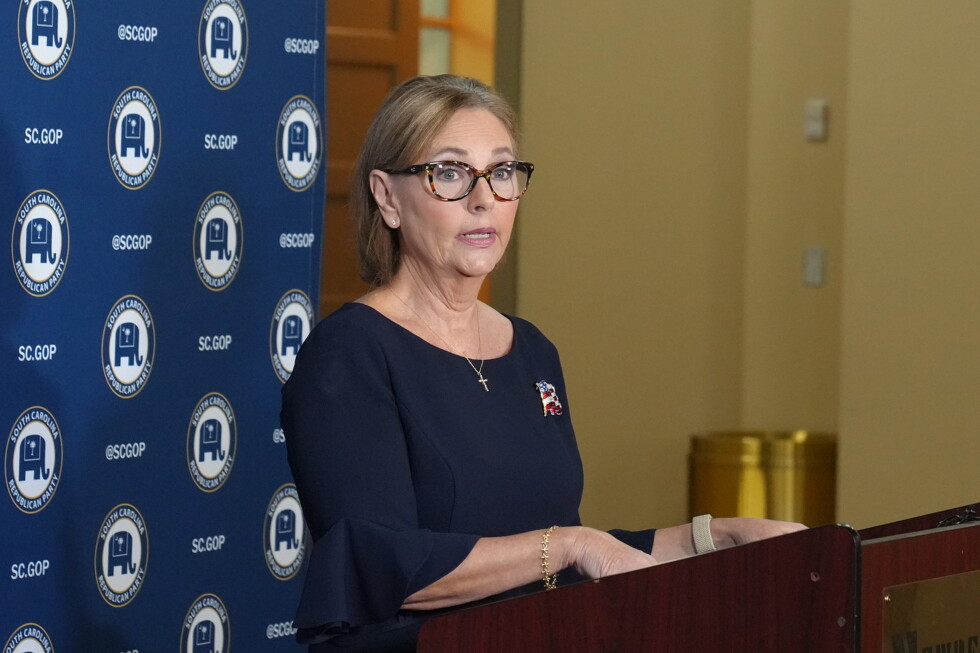
    Ahead of next week’s critical runoff election for South Carolina’s open U.S. Senate seat, candidate Darline Graham has drawn immediate national attention after a striking admission during a Tuesday evening debate, when she openly acknowledged her limited familiarity with core U.S. national security and foreign policy issues.

    During the debate, a moderator posed a targeted question asking whether Graham viewed Taiwan and the South China Sea as legitimate national security priorities for the United States, and to explain her reasoning on the matter. Opening her response with a promise of candor, Graham cut through typical political talking points to share an unvarnished assessment of her own expertise. “I’m just going to be honest here. I’m not that informed on national security,” she stated, pausing before adding, “But I do support the military.”

    Graham’s path to the Senate ballot is rooted in family tragedy and unexpected opportunity. Her older brother, longtime Senator Lindsey Graham, died unexpectedly on July 11, and South Carolina’s governor appointed her to serve out the final months of his term on an interim basis. Now, she is competing in a special election to win the remaining term in her own right, squaring off against U.S. Representative Ralph Norman in the high-stakes runoff. Both candidates advanced to the runoff after finishing as the top two vote-getters in last week’s statewide primary, and Graham has secured the endorsement of former President Donald Trump, a major force in the state’s Republican politics.

    The moment has gained outsized attention in large part because of Darline Graham’s family connection. Her late brother Lindsey Graham built a decades-long reputation in the Senate as a prominent, influential voice on foreign policy and national security issues, a link Darline Graham herself referenced during her response. “My brother was in the Air Force for 33 years so I will do everything I can to support the military. My dad was in the Army. I’m not a polished politician up here, national security is not my thing, not my area of expertise, but I do support the military,” she explained.

    Political analysts note that the admission has already reshaped the narrative of the final week of campaigning, with observers debating whether Graham’s frankness will resonate with voters frustrated by traditional political orthodoxy, or whether it will reinforce concerns from opponents that she is unprepared to serve in the Senate.

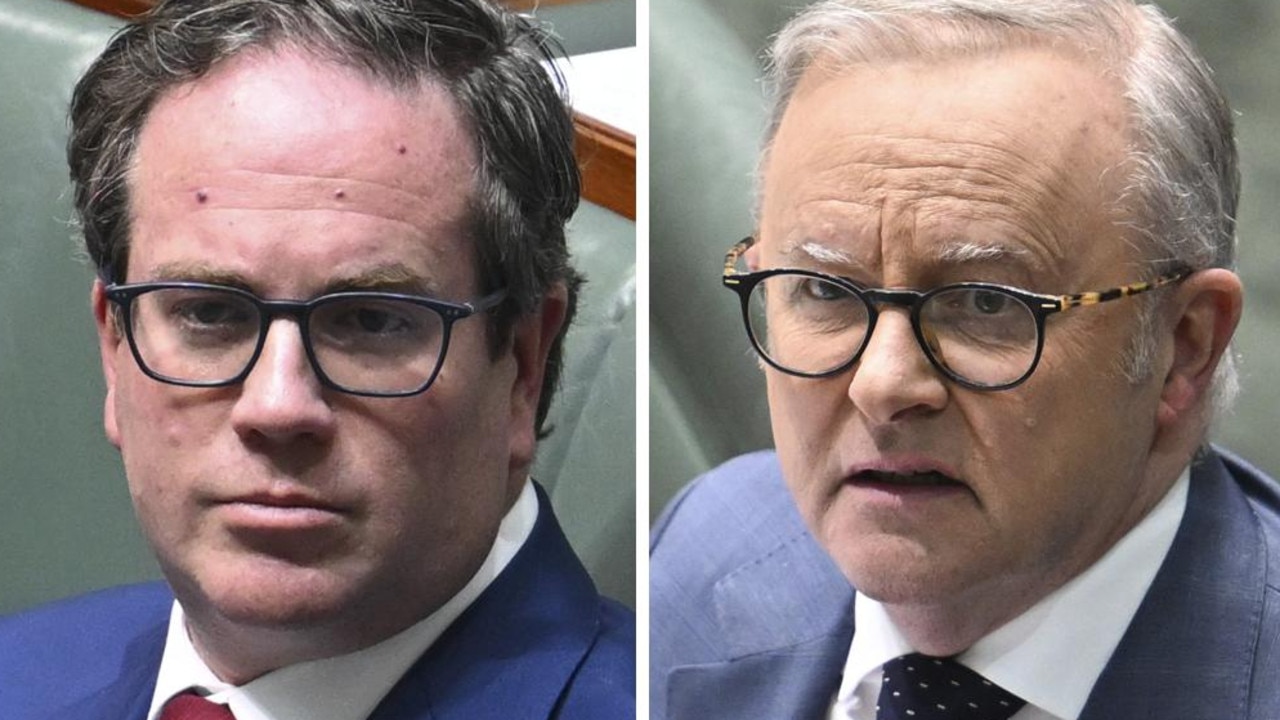
  • Anthony Albanese forced to step in as Veteran Minister faces fresh fire

    Anthony Albanese forced to step in as Veteran Minister faces fresh fire

    Australia’s federal government has been thrown into political turmoil this week, as Prime Minister Anthony Albanese was forced to publicly defend his Veterans Affairs Minister Matt Keogh amid intense opposition pressure triggered by a controversial initial refusal to meet with a leading veteran advocacy group. The standoff centers on a new government policy that caps annual allied health services for veterans at $5,000 — a restriction that was never recommended by the Royal Commission into Defence and Veterans Suicide, and has already drawn fierce condemnation from veteran support organizations across the country.

    The conflict began on Monday, when representatives from the Coalition of Veterans’ Voices arrived in Canberra to protest the newly introduced $5,000 annual cap. Keogh’s office initially informed the group that the minister had no available time in his schedule to meet with their delegation. As political backlash grew over the perceived snub to Australia’s ex-service community, Keogh ultimately reversed the decision and held the meeting, but the controversy did not end there.

    During parliamentary question time on Tuesday, Keogh publicly acknowledged that he had made a mistake in initially declining to meet the veteran group. Even so, he rejected accusations that he had acted with disrespect toward Australia’s veteran community. By Wednesday, the opposition ramped up its attacks, calling directly for Keogh’s resignation and pressing Albanese to remove him from cabinet. Over the course of question time, Keogh was pressed five separate times on the incident, with Albanese also facing one direct question about the minister’s future.
    Opposition veterans affairs spokesman Michael McCormack challenged Keogh’s continued tenure in the role, asking how the minister could retain his position if he failed to uphold core Australian Defence Force values. John Armfield, a former navy diver and spokesman for the advocacy group Fair Care for Veterans, doubled down on the criticism after his meeting with Keogh, stating: “I enlisted under the navy values of courage, honour, honesty and loyalty, yet you fail to display any of these values, minister.”

    In his response to the criticism, Keogh acknowledged the depth of anger and hurt among veteran advocates. He noted that he had previously heard Armfield’s testimony before the Royal Commission into Defence and Veterans Suicide, which detailed tragic, devastating circumstances facing many veterans and their families. “I can very much understand why he would feel that there has been a breach of faith with him in terms of the upholding of the Australian Defence Force values and his commitment. And, so I understand that,” Keogh told parliament. “I’m sorry that he holds that view about this, and all I can do is I try to do each and every day is to make sure that we’re continuing to the work of improving the system that exists to support our serving personnel and our veteran community and their families, so that they get the service and the support that we all agree that they deserve.”

    The political scrutiny intensified when Phillip Thompson, a Queensland Liberal National Party MP and military veteran, pressed Keogh over whether his denial of disrespect toward veterans amounted to calling former fighter pilot Tim Nelson a liar. Keogh responded that he meets regularly with veterans, their families, and active defence personnel, and respects every perspective they share with him. He added that he does not make a practice of repeating private meeting details in parliament on a daily basis.

    Opposition Leader Angus Taylor directly called on Albanese to sack Keogh, labeling the minister “incompetent and disrespectful” during question time. In a decisive public show of support, Albanese stepped in to confirm that he retains full confidence in Keogh, noting that engaging with Australia’s uniformed service members is one of the greatest privileges of public office. “They serve in our name and deserve our total respect at all times for what they do,” Albanese said, before launching into criticism of the former Coalition government’s record on veteran support that was cut off by parliament’s presiding officer.

    The root of the controversy, the $5,000 annual cap on allied health services for veterans, remains deeply divisive. The Albanese government argues the cap is a necessary reform to reduce waste and eliminate unnecessary, low-value services from the veteran support system. Veteran advocates, however, have slammed the policy as cruel, arguing it will cut off critical care for veterans living with complex physical and mental health injuries stemming from their service.

  • Thai teen found in suitcase died from suffocation, police reveal

    Thai teen found in suitcase died from suffocation, police reveal

    A devastating homicide case in the popular Thai coastal resort of Pattaya has taken new procedural steps forward, with official autopsy results confirming the teenage victim died from suffocation, law enforcement authorities have confirmed publicly. The victim, identified locally as 17-year-old Tunchanok Donhomla, was found dead inside a suitcase abandoned near a railway line in the early hours of June 27. Just 15 minutes before the discovery of her remains, Pattaya police took 45-year-old Australian citizen Simon Peter Carman into custody on suspicion that he was preparing to flee Thailand to avoid prosecution.

    Speaking to the British Broadcasting Corporation on Wednesday, Pattaya City Police Chief Anek Srathongyoo shared key details from the post-mortem examination. He confirmed that while the victim sustained brain injuries, those wounds did not cause her death. According to Anek, those injuries likely occurred after Tunchanok had already died, when the accused moved her body in the suitcase before abandoning it along the tracks. Investigators have also confirmed that DNA recovered from the victim’s body matches Carman’s genetic profile, with police saying the match most likely came from him handling the body while placing it into the bag.

    Carman now faces four formal criminal charges: murder, concealment and movement of a deceased body, kidnapping of a minor between 15 and 18 years old, and taking a minor in that age group for an indecent act. Anek told reporters that Carman did not reject all allegations from the start of interrogation, admitting he had left the area with Tunchanok. Even if Carman enters a not guilty plea during upcoming court proceedings, Anek said investigators have compiled a complete, thorough evidence file and addressed all gaps in the case to prove the charges before the court.

    Investigators are on track to submit the full case file to public prosecutors by this Friday, Anek confirmed, noting the September 18 statutory deadline to formally indict the accused. Previously released closed-circuit television footage places Carman and Tunchanok together at a local condominium at 3:34 a.m. local time on June 25. Later that same day, police say footage shows Carman leaving the building alone, dragging a large suitcase. He then loaded the suitcase onto a motorbike and traveled in the direction of the railway line where the body was eventually found.

    Since his arrest, Carman has shifted his stance, initially offering a claim of self-defense to officers. He told police he had agreed to pay Tunchanok 1,000 Thai baht (equivalent to roughly $30 USD) for sexual services, but a dispute broke out when he only offered 500 baht after the pair returned to his rental apartment. In a recorded statement from custody, Carman addressed the victim’s family, saying, “I feel bad for what happened to your daughter. It was out of my control. I know you’ll be very sad, upset… same [as] me. Please tell other girls… just to be careful.”

    The victim’s family, who spoke to the Australian Broadcasting Corporation, shared that Tunchanok was an only child who lived with her father and stepmother in Kalasin Province, roughly 480 kilometers northeast of Pattaya. Known to loved ones by her nickname Cake, she told her family she was traveling to Pattaya for a holiday with a friend and left for the coastal city on June 16. Her father, Thongchai Donhomla, said he is deeply grieved by his daughter’s death, noting that “My daughter had no mother, so whenever she wanted anything, she would find a way herself, and she always helped me too.”

    Her stepmother, Oradee Bussarakum, said the confirmation of Tunchanok’s death fulfilled the family’s worst fears. “We were scared. We just hoped it wouldn’t turn out the way we feared. Now our eyes are swollen from crying,” she said. Oradee has publicly called for the maximum punishment, saying “I just want [Carman] executed. I even asked the police if I could hit him, if I could beat him.” If Carman is ultimately convicted of murder under Thai law, he is eligible to receive the death penalty.

  • Fractured opposition battles Nigeria’s Tinubu as presidential campaigns begin

    Fractured opposition battles Nigeria’s Tinubu as presidential campaigns begin

    West Africa’s most populous nation kicked off official campaigning for its 2025 general election on Wednesday, setting the stage for an unprecedented contest where incumbent President Bola Tinubu seeks a second term against a deeply fragmented opposition bloc, against a backdrop of soaring public frustration over unmet economic and security promises.

    The presidential and parliamentary polls are scheduled for January 16, 2025, with state gubernatorial elections to follow three weeks later on February 6. While 18 opposition candidates have qualified to challenge Tinubu’s reelection bid, political analysts broadly agree the race will boil down to a three-way contest, pitting the incumbent against the two top contenders he defeated in the 2023 election: former Vice President Atiku Abubakar of the African Democratic Congress, a veteran candidate who has run for the presidency multiple times, and former Anambra State governor Peter Obi of the Nigeria Democratic Congress, who upended the 2023 race with a groundswell of youth support that upended traditional political dynamics.

    Nigeria’s political history has handed incumbents a distinct structural advantage when the opposition vote is split across multiple high-profile candidates, a pattern that played out in Tinubu’s 2023 victory. Back then, he secured the presidency with one of the lowest vote shares for any elected Nigerian leader, a result that laid bare his underlying unpopularity even as he claimed victory.

    When Tinubu first took office in 2023, he campaigned on a pledge to build on his predecessor’s work to deliver tangible “democratic dividends” to Nigerian citizens, who had long grappled with deadly insurgent violence, systemic government corruption, and widespread extreme poverty and food insecurity. Two years on, however, critics say the president has failed to deliver on almost all of his core promises, leaving him deeply unpopular among the nation’s majority young electorate.

    Tinubu’s signature flagship economic reforms, implemented shortly after his inauguration, triggered a cascade of price hikes that have pushed Nigeria into its worst economic crisis in a generation. Within days of taking office in May 2023, he scrapped a decades-old national fuel subsidy that had kept energy costs affordable for low-income households, and moved to unify the naira’s distorted multiple exchange rates, a policy that ended the currency’s artificial overvaluation and triggered a steep devaluation. While the Tinubu administration argues the reforms stabilized public finances and prevented a potential economic collapse, winning praise from international investors, the policies sent inflation soaring to multi-decade highs, making basic goods and services unaffordable for millions of households.

    Security challenges have also worsened during Tinubu’s tenure. Mass kidnappings for ransom and jihadist violence, long concentrated in Nigeria’s far north, have spread to previously peaceful regions of the country, leaving more residents vulnerable to death and displacement and deepening public anger over the government’s failure to keep citizens safe.

    The biggest boost to Tinubu’s reelection odds comes from the opposition’s failure to unite behind a single consensus candidate to challenge the incumbent. A planned broad coalition between Atiku, Obi and other major opposition figures formed in 2025 collapsed before it could even launch, leaving anti-incumbent voters split across dozens of candidates.

    “Voters are overwhelmingly dissatisfied with the administration’s handling of inflation, insecurity and unemployment but because the anti-incumbent vote is split, the president has the edge,” explained Ikemesit Effiong, a partner at Lagos-based risk advisory firm SBM Intelligence.

    Tinubu has also solidified his political advantage through a wave of high-profile defections from opposition ranks, which have left 31 of Nigeria’s 36 state governorships in the hands of his ruling All Progressives Congress (APC). The shift has sparked widespread concerns from civil society groups that Nigeria could be sliding toward a de facto one-party state, claims the national government has repeatedly denied. But analysts note that sitting and former Nigerian governors wield enormous grassroots political influence, and are frequently accused of colluding with local electoral officials to sway results, meaning the wave of defections is likely to further boost Tinubu’s chances on election day.

    Even ordinary voters acknowledge the opposition’s disunity has all but sealed the election’s outcome. “No matter how bad things are, Tinubu will still win because [opposition candidates] are not working together,” Juliet Onah, a resident of Nigeria’s capital Abuja, said.

  • French civil servant drugged us to make us urinate on ourselves, say accusers

    French civil servant drugged us to make us urinate on ourselves, say accusers

    For more than a decade, a former senior French civil servant stood accused of orchestrating a pattern of alleged drug-facilitated abuse against job candidates, leaving hundreds of women grappling with lasting psychological and physical harm—and a justice system that has left them waiting years for accountability.

    Anaïs de Vos was 27 years old when she sat down for a 2011 job interview at France’s Ministry of Culture in Paris, opposite interviewer Christian Nègre, then a top civil servant in the department. Unaccustomed to drinking coffee, de Vos accepted Nègre’s offer of a cup out of professional courtesy, only to find the drink had an unpleasant off taste that led her to consume just half. Within minutes of starting the meeting, Nègre suggested the pair move their conversation outside for a stroll through Paris’s central streets.

    It was not long before de Vos began experiencing sudden, uncontrollable physical symptoms: an overwhelming, urgent need to urinate, followed rapidly by growing weakness that left her unable to feel her legs. When she told Nègre she needed to find a toilet immediately, she recalled his response as eerily giddy, framing her urgent need like that of a misbehaving child. He directed her to a locked storage cupboard under a Seine River bridge and told her she could relieve herself there. Alarmed by the disturbing suggestion, de Vos insisted they continue to a public facility.

    The pair headed to the Louvre, where public restrooms required a one-euro fee that neither de Vos—who had left her purse at the ministry—nor Nègre claimed to have cash to cover. By the time de Vos found a cafe that would let her use their bathroom, she had already lost control of her bladder. Shaken, she managed to hide the accident thanks to the dress she wore that day, and completed the three-hour interview dizzy and completely drained. She left without the job, and carried vague suspicions that something was very wrong that day, but buried the thought that a public official at a government ministry could have harmed her on purpose. The incident gutted her self-confidence, she says, pushing her onto a far less ambitious career trajectory in the years that followed.

    It was not until 2019, when police reached out to de Vos, that her vague unease became a shocking confirmation: she was one of nearly 200 women Nègre was suspected of drugging during fake job interviews at the ministry. Dozens more victims have come forward since that initial notification, bringing the total number of accusers to nearly 250. All allege Nègre subjected them to chemical submission—a form of abuse where drugs are used to strip victims of control over their bodies—between 2009 and 2018. Investigators believe Nègre used diuretics, common medications used to treat conditions like high blood pressure that trigger excess urine production, to humiliate and control his alleged victims. On Nègre’s computer, police found a detailed spreadsheet titled “Experiments P” that logged every step of his alleged actions: the time each candidate arrived for their interview, when the diuretic was given, how long it took for the urge to urinate to take effect, and even what type of underwear the woman was wearing.

    Marie-Hélène Brice, another alleged victim whose name appeared in Nègre’s notes, says her 2016 interview with Nègre in Strasbourg followed an almost identical pattern. Nègre suggested a walk along a local canal to calm her interview nerves, and within minutes Brice began experiencing the same crippling, urgent need to use a toilet. Nègre told her he knew where a public restroom was located, but when they arrived, no facility existed. Left with no other option, Brice was forced to urinate in public, while Nègre stood over her, never taking his eyes off her even as he offered to shield her with his jacket. Like de Vos, Brice carried the shame of the incident for years, only learning she was one of dozens of victims when police contacted her. The abuse left her with lasting urinary issues alongside severe psychological distress, and she says the incident fits her definition of sexual assault without question. “I have been attacked, I have been intoxicated, I have been poisoned, but for me it is a sexual assault, clearly,” Brice told reporters.

    The investigation into Nègre first opened in June 2018, when a colleague caught him taking upskirt photos of a woman under a table. He was suspended from his post as regional director of cultural affairs almost immediately, and fired from the Ministry of Culture in 2019. Prosecutors say Nègre admitted to investigators in 2018 that he “imposed humiliating situations on women” during these job interviews. Now in his 60s, Nègre is under formal investigation on charges including drugging, invasion of privacy, and sexual assault, and is awaiting trial. The BBC reached out to Nègre for comment through his legal team, but he declined to respond to the allegations.

    The Nègre case has drawn new national attention to the issue of chemical submission in France, a topic that gained widespread public notoriety in 2024 after the conviction of Dominique Pelicot, who drugged his wife Gisele Pelicot for years and invited strangers to rape her while she was unconscious. French MP Sandrine Josso, who became a leading advocate for chemical submission survivors after a French senator was convicted of drugging and assaulting her earlier this year, has pushed for systemic changes to how France handles these cases. Josso championed a new pilot program that allows women who suspect they have been drugged to submit blood, urine, or hair samples for toxicology testing without first filing a formal police complaint, a change designed to remove barriers for survivors seeking confirmation of their abuse.

    Yet major gaps remain: most of Nègre’s alleged victims had no idea they had been drugged for years after their encounters, and toxic substances only remain detectable in blood and urine for a short window after administration. While drugs can be detected in hair samples for longer periods, tracing the exact timing of administration becomes far more difficult as time passes. Jean-Claude Alvarez, a toxicology professor who leads the pilot testing program at Paris’s Raymond-Poincaré AP-HP Hospital, called the use of diuretics for this purpose “very unusual,” adding he had never encountered such a case in 26 years of practice. The program has now added diuretics to its standard screening panel in response to the Nègre case.

    Fifteen years after de Vos’s interview, and seven years after she first spoke to police, the case has yet to go to trial—a delay that has left dozens of survivors frustrated and re-traumatized. According to the women’s rights group Fondation des Femmes, which supports 30 of Nègre’s alleged victims, Nègre has continued to work in human resources throughout the investigation. De Vos, now 42, says she heard nothing about the case from authorities between 2019 and 2023, despite repeated emails seeking updates. “For four years, I was alone with the knowledge that I was a victim. I didn’t know what to do,” she said. “I am very angry with the justice system.” Brice describes the long wait for trial as “secondary victimisation,” noting that survivors are forced to repeatedly prove the harm they suffered while waiting years for any sense of resolution. Many say they do not feel authorities take their claims seriously.

    Kalliopi Mingeirou, a representative from UN Women, told the BBC that drug-facilitated sexual assault remains a greatly underaddressed issue globally, and that systemic delays in abuse cases destroy survivors’ lives. The BBC requested comment from French police, judicial authorities, and the national government on the criticisms raised by survivors, but no response was provided.

    For Brice and de Vos, speaking out publicly has become a way to turn pain into action. After years of staying silent out of shame, Brice says she no longer hides her status as a survivor. “It is important for me to speak publicly because it allowed some victims to recognise themselves, to discover they were a victim and to file a complaint in turn,” she said. “Speaking out is necessary in the world in which we live, it is important to talk about sexist and sexual violence.”
  • Sydney Swans CEO Matthew Pavlich says he will not ‘abandon’ investigated players

    Sydney Swans CEO Matthew Pavlich says he will not ‘abandon’ investigated players

    The Australian Football League (AFL) club Sydney Swans has shaken up its 2024 season campaign after issuing season-ending suspensions to five of its top senior players for violating internal club standards, even as the players remain caught up in an ongoing sexual assault investigation by Victoria Police. Club chief executive Matthew Pavlich has publicly stressed that the organisation will not cut ties with the embroiled players, while reaffirming that the tough internal sanctions will stand for the remainder of the season, including the upcoming finals series.

    The controversial incident unfolded in the early hours of Monday this week, immediately after the Swans claimed a victory over Essendon at the Melbourne Cricket Ground. The five players involved—Riley Bice, Nick Blakey, Isaac Heeney, James Jordon and Chad Warner—are currently under formal investigation by Victoria Police over allegations of a sexual assault. As of Wednesday, no players have been arrested, and no criminal charges have been filed against any of the group.

    Pavlich clarified during a press conference on Wednesday that the club’s disciplinary action was not tied directly to the active police probe. Instead, the players were suspended for breaking clear club rules: staying out late after the match, drinking alcohol, and inviting non-authorised guests back to their team hotel in Melbourne. Separating the internal disciplinary process from the ongoing criminal investigation, Pavlich emphasized that the club is committed to supporting the players through what he described as an incredibly challenging period for the group.

    “We’re not abandoning our players, we’re supporting our players through this really challenging time for them,” Pavlich told reporters. “Just to be clear, they will not be considered for AFL selection for the remainder of the season including finals but they will be allowed back at the football club and can participate in training.”

    The club’s chief also pushed back against widespread misinformation circulating in public discourse around the case, noting that none of the five players have yet completed formal interviews with investigators and no charges have been filed. “There’s a lot of mistruths out there, which we’re trying to manage as best we can. There are issues related to the police matter that we can’t talk about but I just want to make that crystal clear,” Pavlich added.

    The press conference on Wednesday marked Pavlich’s first extended question-and-answer session with media, after he spoke for less than a minute a day earlier and declined to take any questions. He appeared alongside Sydney Swans chairman Andrew Pridham, who addressed widespread speculation about whether the club’s ladder position — with the Swans sitting second ahead of the finals series starting next month — influenced the severity of the sanctions. Pridham confirmed that the board did not consider the impact on the team’s on-field performance when approving the suspensions during a meeting on Tuesday night.

    In a striking admission of the decision’s impact, Pridham said that the club was willing to “effectively torpedo our season” to send a clear message about the organisation’s non-negotiable standards. “I think the fact we’ve got to the place we are today and effectively suspended the players for the balance of the season tells you how seriously we’re taking it,” Pridham said. “Clearly something has gone wrong, they shouldn’t have been in that situation of being out that late. The only way we can deal with it is put our foot down incredibly hard, which we’ve done. To effectively torpedo our season by making a decision such as this tells you how seriously we’ve taken it.”

    When pressed on the club’s outlook for the remaining matches and upcoming finals, Pridham struck a measured tone, aligning with Pavlich’s optimistic framing of the team’s chances. “I think as Matthew said, you’ve always got to enter the field of play with expectations. We’ll send our best team out there and we hope they can perform well, let’s see what happens,” he said.

    Pridham added that the harsh sanctions reflected the club’s commitment to upholding long-standing cultural standards, rejecting any claims that the organisation was attempting to downplay or cover up the incident. “The fact that we are willing, five of our absolute best players, to remove their availability for the rest of the season I hope demonstrates that we’re not trying to brush anything under the carpet, we’re taking it very seriously,” he said. “Our standards have been the cornerstone of our culture over many, many years, is that when people do step aside our expected standards, we do act swiftly and decisively. That’s what we’ve done and I’m confident that having taken this action, we will be in a better place going forward as a result.”

  • Darwin man charged over alleged ‘Islamophobic’ incident involving threats to family, guns seized

    Darwin man charged over alleged ‘Islamophobic’ incident involving threats to family, guns seized

    A 53-year-old Darwin resident has been taken into legal custody and charged under federal Australian law following an alleged Islamophobic attack that saw him threaten a pregnant woman, her partner, and their young child, Northern Territory police have confirmed.

    The alleged incident, which was motivated by racial and religious hatred, unfolded on June 7 in Australia’s Northern Territory capital, according to law enforcement officials. Authorities confirmed last Tuesday that the suspect had been arrested and hit with two distinct Commonwealth charges.

    The formal charges stem from two counts of threatening force and violence against individuals on the basis of their protected group status, an offense that specifically criminalizes harm intended to intimidate entire protected communities. As part of the ongoing investigation into the incident, law enforcement teams executed a search that resulted in the seizure of all firearms owned by the suspect, and an immediate suspension of his firearms licence was put in place.

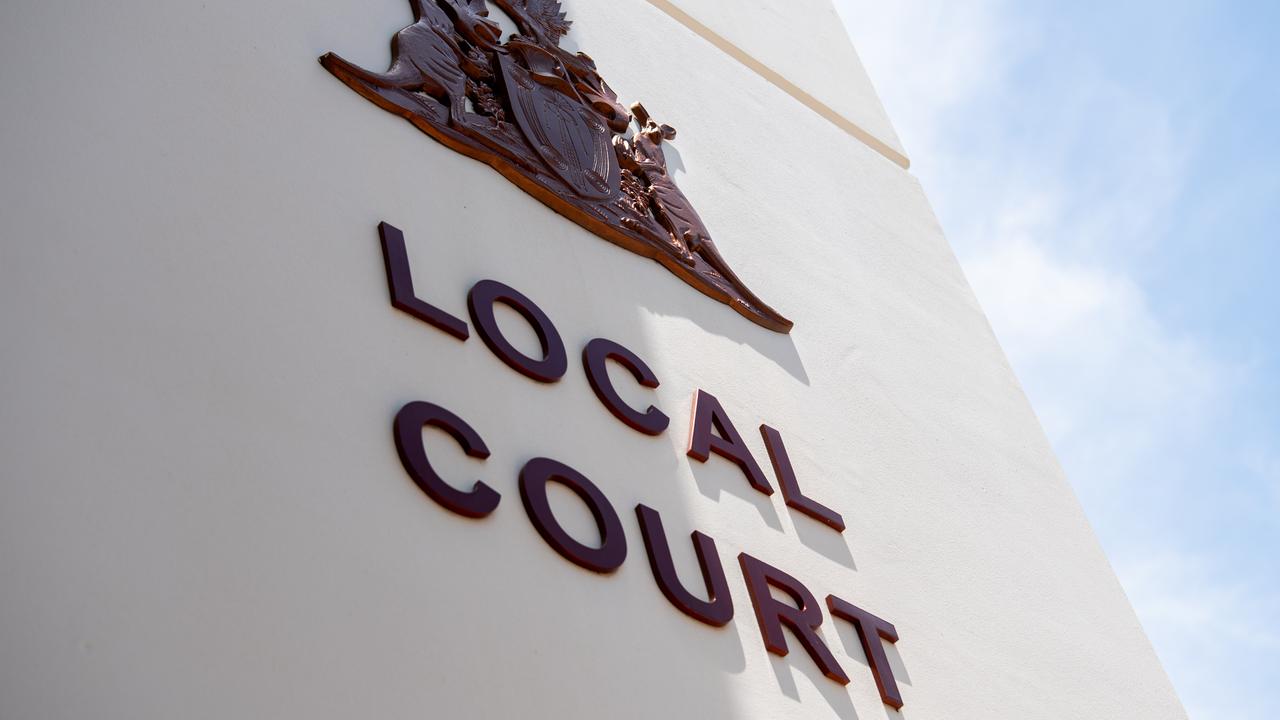
    Following his arrest processing, the suspect has been released on bail and is scheduled to make his first court appearance at Darwin Local Court on the first of October.

    Acting Commander Robert Griffiths of the Northern Territory Police force issued a firm public statement following the arrest, emphasizing that the targeted harassment of individuals or families based on their race, religious faith, or national origin has no place in the local community.

    “This alleged conduct is completely unacceptable in any tolerant, inclusive society,” Griffiths said. “Every single person in this community has the fundamental right to go about their daily routines, gather with their loved ones, and live without fear, intimidation, or targeted persecution.”

    He added: “No person should ever be targeted simply because of who they are, what their religious beliefs are, or where they were born. This kind of bigotry will not be tolerated by Northern Territory Police, and we will take swift action to hold those who perpetrate it accountable.”

  • Palestinian-American hoists US flag on home besieged by settlers

    Palestinian-American hoists US flag on home besieged by settlers

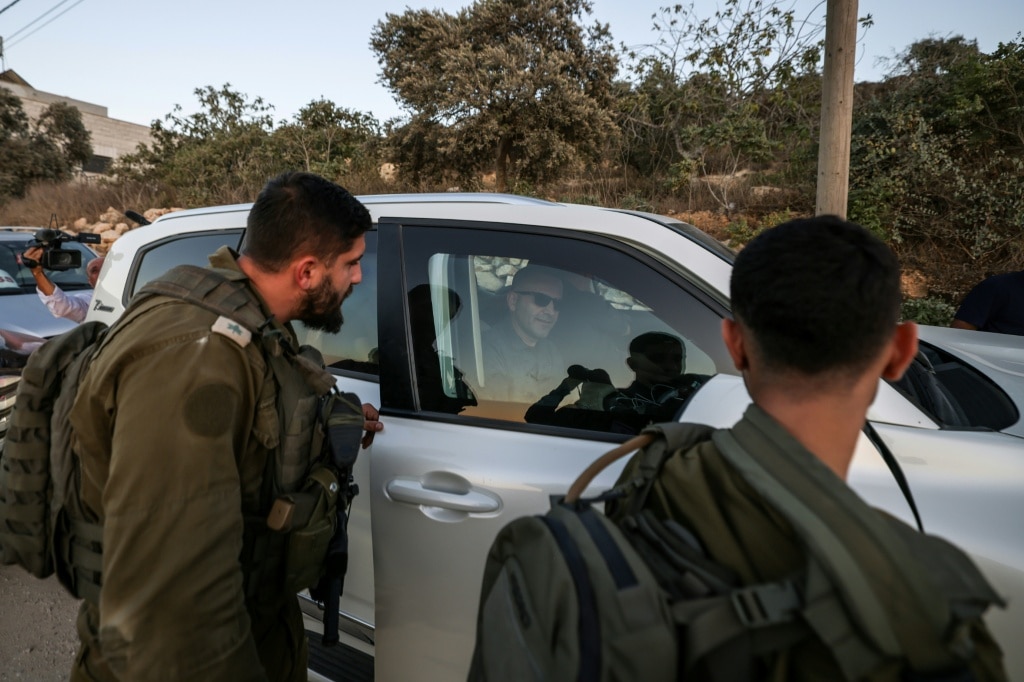
    In the occupied West Bank village of Qusra, a standoff between a Palestinian-American dual citizen and extremist Israeli settlers has drawn international attention, after the property owner raised the United States flag over his besieged home just days after returning to the contested territory. The incident has even sparked rare criticism of the settlers from a prominent pro-settler U.S. envoy, putting new focus on escalating settler violence ahead of Israel’s upcoming national election.

    Louai Abu Ridi, who co-owns one of three trapped homes in Qusra near Nablus, cut short his time at his adopted residence in Ohio to return to the West Bank on Monday. For more than a week before his arrival, Israeli settlers had blocked all access to the properties, cutting off residents from food deliveries, essential supplies, and outside contact. By Tuesday, Abu Ridi had hoisted the Stars and Stripes above his home, a deliberate and public appeal for intervention from the U.S. government, which he has already pressed to take up his case through the U.S. Embassy in Israel.

    Speaking to reporters from AFP inside his encircled home, Abu Ridi explained the gesture was meant to shine a light on the reality of settler intimidation tactics for American audiences. “It’s my message to all Americans in the United States to see what’s going on here in the West Bank, how the settlers put us under siege trying to take my own house in the West Bank,” he said. He also accused Israeli military forces, which announced plans to remove the blockades last week under U.S. diplomatic pressure, of actively enabling the settlers. While troops removed one settler encampment and detained a single individual, settlers have repeatedly returned to the site on foot and by vehicle. Abu Ridi noted that Israeli soldiers allow settlers to move freely through the area, even exchanging friendly greetings with the intruders rather than enforcing the eviction order.

    Escalating harassment and land grabs by Israeli settlers targeting Palestinian residents in the West Bank have surged in recent months, a trend closely tied to Israel’s upcoming October 27 parliamentary election. Prime Minister Benjamin Netanyahu’s far-right government has actively championed expansion of Jewish settlements in the occupied territory to shore up support from right-wing Jewish voters ahead of the close-fought vote.

    The Qusra siege has triggered condemnation across the globe, and has produced an uncommon rebuke even from U.S. Ambassador to Israel Mike Huckabee, an evangelical Christian long known for his unwavering support of the settlement movement. Huckabee confirmed this week he has called on Israeli officials to end the blockade, stressing that the U.S. has a responsibility to protect its citizens living abroad.

    In television interviews aired Tuesday on Israeli news outlets, Huckabee called for harsh consequences for the settlers, labeling their intimidation campaign as terrorist activity. “It’s not fair to the families who are Palestinian, who own their homes, who have a right to raise their families without fear,” he said, a notable shift from his past position rejecting the formal identity of Palestinian people. Huckabee added that the small faction of extremist settlers are damaging their own pro-settlement cause with their actions: “If this little minority, if they think they’re doing their cause a favour, they are making a horrific mistake.”

    The confrontation unfolds against a decades-long backdrop of occupation and contested settlement in the West Bank. Israel seized control of the territory from Jordan during the 1967 Six-Day War, and today it is home to roughly three million Palestinians and 500,000 Israeli settlers. The vast majority of the international community regards all Israeli settlements built in the occupied West Bank as illegal under international law, a position the U.S. has occasionally wavered on in recent years.

  • Hotel blaze in India’s West Bengal kills 9 and injures 6

    Hotel blaze in India’s West Bengal kills 9 and injures 6

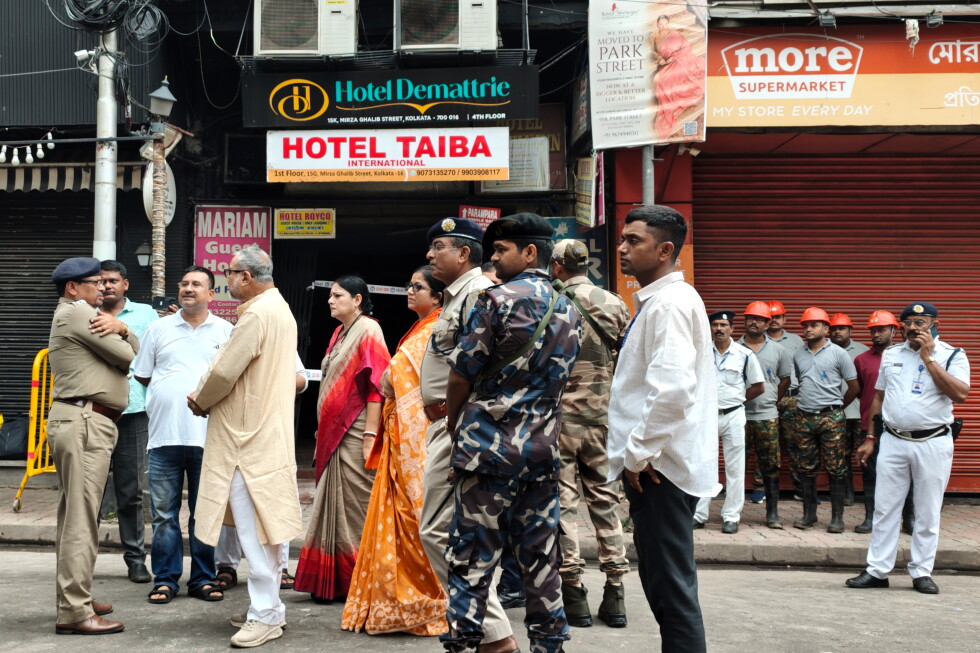
    In the pre-dawn hours of Wednesday, a devastating fire broke out at a midtown Kolkata hotel, located just steps from the West Bengal Fire Department’s own headquarters, leaving at least nine people dead and six others injured, according to local law enforcement and Indian media reports.

    The inferno ignited at approximately 1:45 a.m. local time, state-run news agency Press Trust of India (PTI) confirmed. Emergency responders rushed five fire engines to the scene to contain the spread of the blaze, while local police and regional disaster management teams launched coordinated search and rescue operations. All injured victims were immediately transported to a nearby medical facility for urgent care.

    A serving police officer told PTI that thick, acrid smoke quickly enveloped the multi-story building, creating major obstacles for firefighters working to reach guests trapped on the upper floors. Despite the challenging conditions, crews eventually managed to bring the fire fully under control.

    As of Wednesday morning, authorities confirmed that the official death toll stands at nine, but warned that the number of fatalities could climb as search operations continue for any remaining people trapped inside the structure. Officials added that their immediate priorities are continuing rescue efforts and launching a full investigation into the origin of the blaze, which remains undetermined at this stage.

    This latest deadly fire highlights a long-running, systemic safety crisis across India, where frequent devastating blazes are often traced to electrical failures, unregulated gas cylinder installations, widespread disregard for fire safety protocols, and lax enforcement of existing fire codes. These systemic failures have led to recurring, preventable loss of life in recent years.

    Just two days before the Kolkata incident, a separate hotel fire in Tarapith, a famous temple town also located in West Bengal, claimed seven lives and left multiple others in critical condition. Before that, a December blaze at a crowded nightclub in the popular tourist state of Goa killed at least 25 people, in one of the deadliest fire incidents in the country’s recent history.

  • Trump pauses 50% tariffs on Canadian goods for three days

    Trump pauses 50% tariffs on Canadian goods for three days

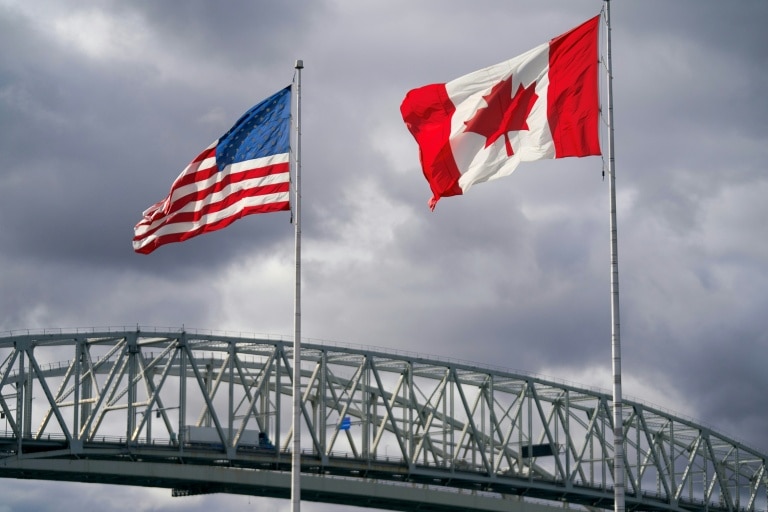
    In a last-minute twist to weeks of high-stakes trade negotiations, US President Donald Trump has announced a temporary 3-day pause on planned 50% tariffs on a range of Canadian goods, just hours before the punitive measures were set to take effect at midnight Tuesday.

    The delay comes as both sides signal growing momentum toward a revised trade agreement under the United States-Canada-Mexico Agreement (USMCA), the trilateral deal Trump originally signed and celebrated during his first presidential term, but now argues requires substantial updates.

    Trump broke the news via his Truth Social platform, writing that the reprieve was granted “based on the fact that Canada and the U.S.A., subject to the finalization of documents, have a DEAL!” Canadian Prime Minister Mark Carney struck a more cautious tone, however, confirming that negotiators have made “substantial progress” toward a comprehensive pact but noting that “there is important work still to be done.”

    The 50% tariffs, which were ordered by Trump last month, were crafted in response to White House allegations that Canada has engaged in discriminatory trade practices against American alcohol, automobile, and dairy products. The duties would have targeted more than $20 billion worth of Canadian exports to the US, equal to roughly 5.5% of Canada’s total annual exports to its southern neighbor, according to estimates from Oxford Economics. Affected products were set to include wine, cement, and hockey sticks, among other goods.

    While Oxford Economics assesses that the tariffs would have only created a modest headwind for Canada’s overall national economy, the research firm notes that central Canada’s critical manufacturing sector would have faced far more severe disruption. Sectors facing the worst impacts would have included cement production, paper manufacturing, printing, wood products, clothing, and electronic equipment, the firm added.

    The US Trade Representative’s Office outlined in a post on X that the emerging framework between Washington and Ottawa would include “comprehensive market access for all American goods, economic security commitments, digital trade alignment” and other key trade provisions. A formal proclamation from Trump suspending the tariffs cited Canada’s public commitment to eliminate the discriminatory and unequal trade practices at the center of the dispute as the reason for the delay.

    Carney emphasized that any final deal would seek to resolve long-running outstanding trade frictions and deliver greater economic certainty and tangible benefits for Canadian businesses, workers, farmers, and household families. Canadian negotiators have been working from Washington in recent days to secure not only a full cancellation of the new threatened tariffs but also relief from existing sector-specific Trump-era duties that have already put significant pressure on Canada’s auto, steel, lumber, and aluminum industries. Reports indicate Canada has already tabled concessions including a commitment to pressure provincial governments to return US alcohol and wine products to retail shelves.

    In a surprise addendum to his announcement, Trump also hinted that the long-stalled Keystone XL Pipeline project, which was canceled by former President Joe Biden, could be revived. “The great Keystone XL Pipeline, long ago killed by Sleepy Joe Biden, may be awoken from the grave!” he wrote, a pledge aligned with his longstanding support for the controversial pipeline that has been fiercely opposed by environmental activists for years.

    Political and trade analysts note that the eleventh-hour brinkmanship over tariffs is a common negotiating tactic for trade talks. Christopher Padilla, a former US commerce department official, told Agence France-Presse that he expects the Trump administration intentionally threatened the new tariffs to force early concessions from Canada as the two sides renegotiate USMCA terms.

    The tariff plan faced a major legal headwind earlier this year, when the US Supreme Court struck down many of Trump’s global tariffs, forcing the president to rely on an untested new legal provision to impose the targeted duties on Canada. The proposed tariffs were structured to exclude Canadian energy, potash, and goods already subject to existing sector-specific tariffs, but would have applied to most other goods covered under the original USMCA framework.

    US Trade Representative Jamieson Greer explained in July that the tariffs were intended to hold Canada accountable for retaliatory trade actions against the US, including removing US alcohol from provincial retail shelves and granting improved market access to European Union dairy products over American competitors.