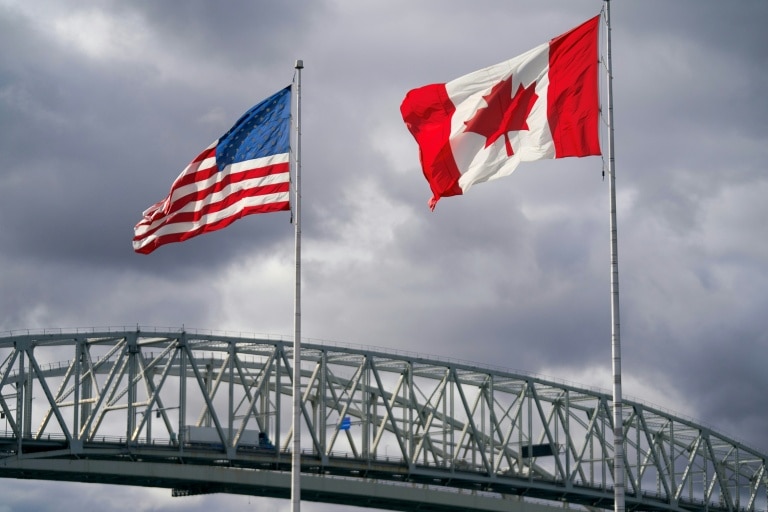
In a last-minute twist to weeks of high-stakes trade negotiations, US President Donald Trump has announced a temporary 3-day pause on planned 50% tariffs on a range of Canadian goods, just hours before the punitive measures were set to take effect at midnight Tuesday.
The delay comes as both sides signal growing momentum toward a revised trade agreement under the United States-Canada-Mexico Agreement (USMCA), the trilateral deal Trump originally signed and celebrated during his first presidential term, but now argues requires substantial updates.
Trump broke the news via his Truth Social platform, writing that the reprieve was granted “based on the fact that Canada and the U.S.A., subject to the finalization of documents, have a DEAL!” Canadian Prime Minister Mark Carney struck a more cautious tone, however, confirming that negotiators have made “substantial progress” toward a comprehensive pact but noting that “there is important work still to be done.”
The 50% tariffs, which were ordered by Trump last month, were crafted in response to White House allegations that Canada has engaged in discriminatory trade practices against American alcohol, automobile, and dairy products. The duties would have targeted more than $20 billion worth of Canadian exports to the US, equal to roughly 5.5% of Canada’s total annual exports to its southern neighbor, according to estimates from Oxford Economics. Affected products were set to include wine, cement, and hockey sticks, among other goods.
While Oxford Economics assesses that the tariffs would have only created a modest headwind for Canada’s overall national economy, the research firm notes that central Canada’s critical manufacturing sector would have faced far more severe disruption. Sectors facing the worst impacts would have included cement production, paper manufacturing, printing, wood products, clothing, and electronic equipment, the firm added.
The US Trade Representative’s Office outlined in a post on X that the emerging framework between Washington and Ottawa would include “comprehensive market access for all American goods, economic security commitments, digital trade alignment” and other key trade provisions. A formal proclamation from Trump suspending the tariffs cited Canada’s public commitment to eliminate the discriminatory and unequal trade practices at the center of the dispute as the reason for the delay.
Carney emphasized that any final deal would seek to resolve long-running outstanding trade frictions and deliver greater economic certainty and tangible benefits for Canadian businesses, workers, farmers, and household families. Canadian negotiators have been working from Washington in recent days to secure not only a full cancellation of the new threatened tariffs but also relief from existing sector-specific Trump-era duties that have already put significant pressure on Canada’s auto, steel, lumber, and aluminum industries. Reports indicate Canada has already tabled concessions including a commitment to pressure provincial governments to return US alcohol and wine products to retail shelves.
In a surprise addendum to his announcement, Trump also hinted that the long-stalled Keystone XL Pipeline project, which was canceled by former President Joe Biden, could be revived. “The great Keystone XL Pipeline, long ago killed by Sleepy Joe Biden, may be awoken from the grave!” he wrote, a pledge aligned with his longstanding support for the controversial pipeline that has been fiercely opposed by environmental activists for years.
Political and trade analysts note that the eleventh-hour brinkmanship over tariffs is a common negotiating tactic for trade talks. Christopher Padilla, a former US commerce department official, told Agence France-Presse that he expects the Trump administration intentionally threatened the new tariffs to force early concessions from Canada as the two sides renegotiate USMCA terms.
The tariff plan faced a major legal headwind earlier this year, when the US Supreme Court struck down many of Trump’s global tariffs, forcing the president to rely on an untested new legal provision to impose the targeted duties on Canada. The proposed tariffs were structured to exclude Canadian energy, potash, and goods already subject to existing sector-specific tariffs, but would have applied to most other goods covered under the original USMCA framework.
US Trade Representative Jamieson Greer explained in July that the tariffs were intended to hold Canada accountable for retaliatory trade actions against the US, including removing US alcohol from provincial retail shelves and granting improved market access to European Union dairy products over American competitors.