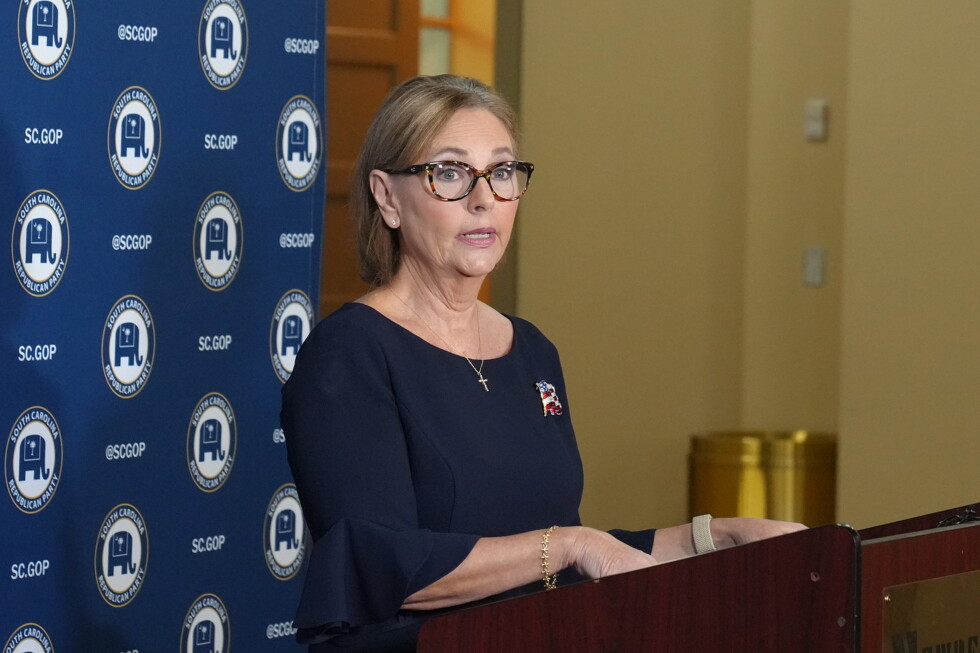
Ahead of next week’s critical runoff election for South Carolina’s open U.S. Senate seat, candidate Darline Graham has drawn immediate national attention after a striking admission during a Tuesday evening debate, when she openly acknowledged her limited familiarity with core U.S. national security and foreign policy issues.
During the debate, a moderator posed a targeted question asking whether Graham viewed Taiwan and the South China Sea as legitimate national security priorities for the United States, and to explain her reasoning on the matter. Opening her response with a promise of candor, Graham cut through typical political talking points to share an unvarnished assessment of her own expertise. “I’m just going to be honest here. I’m not that informed on national security,” she stated, pausing before adding, “But I do support the military.”
Graham’s path to the Senate ballot is rooted in family tragedy and unexpected opportunity. Her older brother, longtime Senator Lindsey Graham, died unexpectedly on July 11, and South Carolina’s governor appointed her to serve out the final months of his term on an interim basis. Now, she is competing in a special election to win the remaining term in her own right, squaring off against U.S. Representative Ralph Norman in the high-stakes runoff. Both candidates advanced to the runoff after finishing as the top two vote-getters in last week’s statewide primary, and Graham has secured the endorsement of former President Donald Trump, a major force in the state’s Republican politics.
The moment has gained outsized attention in large part because of Darline Graham’s family connection. Her late brother Lindsey Graham built a decades-long reputation in the Senate as a prominent, influential voice on foreign policy and national security issues, a link Darline Graham herself referenced during her response. “My brother was in the Air Force for 33 years so I will do everything I can to support the military. My dad was in the Army. I’m not a polished politician up here, national security is not my thing, not my area of expertise, but I do support the military,” she explained.
Political analysts note that the admission has already reshaped the narrative of the final week of campaigning, with observers debating whether Graham’s frankness will resonate with voters frustrated by traditional political orthodoxy, or whether it will reinforce concerns from opponents that she is unprepared to serve in the Senate.