博客

  • Kenya triples its power target, aiming to expand use of nuclear and geothermal energy

    Kenya triples its power target, aiming to expand use of nuclear and geothermal energy

    In a landmark announcement that cements its role as a trailblazer in African clean energy transition, Kenya has dramatically scaled up its long-term renewable energy capacity goal, more than tripling the previous target to 5,500 megawatts from the current operational capacity of roughly 1,500 megawatts. The ambitious expansion plan lays out a diverse clean energy mix, including 2,000 megawatts of new nuclear capacity, 700 megawatts of additional hydropower, and a suite of new geothermal energy projects across the country.

    For a nation that already generates 93% of its total electricity from renewable sources, the updated target is set to strengthen Kenya’s standing as a global leader in green energy adoption. However, energy analysts and industry insiders warn that this dramatic growth in clean generation capacity will not automatically translate to lower electricity bills for domestic and industrial consumers – a pressing priority that has been pushed to the top of the national policy agenda by Kenya’s lawmakers.

    Peter Njenga, chief executive officer of KenGen, the state-owned power utility that produces roughly 60% of the country’s electricity, confirmed the recalibration of the national clean energy growth trajectory, saying “We have recalibrated our long-term growth trajectory from 1,500MW to a 5,500MW renewable energy development pipeline.”

    Kenyan lawmakers have repeatedly pressured the national government to cut retail electricity rates, arguing that cheaper power is critical to supporting the country’s industrialization goals and easing cost-of-living pressures for households. In July, Kenya’s parliament issued a formal directive to Energy Minister Opiyo Wandayi, ordering him to develop a framework to renegotiate existing power supply agreements with major independent energy producers. Lawmakers argue that lower wholesale electricity costs would give state-owned distribution firm Kenya Price enough financial flexibility to cut consumer rates without compromising its operational and financial stability.

    Energy experts across the board agree that Kenya’s urgent priority is not simply adding new generation capacity, but addressing systemic inefficiencies that keep consumer electricity prices far higher than regional peers. “The answer to this conundrum is not as straightforward as it may seem,” said Mugwe Manga, climate finance lead at the nonprofit Financial Sector Deepening Kenya. “One must look at the entire energy system holistically to understand the drivers of the end cost of power.”

    Unlike major emerging economies including Morocco, Egypt, and China, Kenya offers very limited direct government subsidies to buffer retail electricity prices for consumers. While the cost of generating renewable electricity in Kenya is broadly competitive with regional alternatives, end users ultimately bear the full weight of high project financing costs, significant transmission and distribution network losses, taxes, and volatility from foreign exchange rate movements.

    Latest market data underscores the stark gap between Kenya’s electricity prices and those of its neighbors: industrial consumers in Kenya pay between $0.18 and $0.23 per kilowatt-hour, compared to just $0.03 per kilowatt-hour in South Africa and Egypt, and roughly $0.05 per kilowatt-hour in Morocco and Ethiopia.

    Joseph Siror, CEO of Kenya Power, pushed back on widespread perceptions of excessive pricing in an earlier interview, noting “The perception that electricity is expensive is subjective. The consumer prices are dependent on infrastructure costs, electricity tariff structures, and outstanding bill recoveries.” Siror added that Kenya’s heavy reliance on capital-intensive green energy sources inherently adds to costs, as the specialized infrastructure required for renewable generation carries high upfront installation and long-term maintenance expenses.

    Manga identifies the country’s distribution network as one of the single biggest sources of inefficiency driving high consumer costs. “More than 20% of electricity is lost to technical failures and illegal connections, compared with a global average of 8%-10%,” he explained. “That offers a great low-hanging fruit to improve efficiency and pass that efficiency dividend to end consumers through reduced tariffs.”

    Prohibitively high financing costs represent a second major barrier to lower prices. Renewable energy developers across Africa face far higher borrowing interest rates than their counterparts in wealthy developed economies, because international investors perceive clean energy projects on the continent as carrying higher systemic risk. These elevated borrowing costs are ultimately passed through to end consumers in the form of higher tariffs.

    Kenya’s long-standing power purchase agreements (PPAs) with independent power producers (IPPs) have also come under renewed scrutiny in recent months. IPPs supply roughly 40% of Kenya’s total generation capacity, operating under long-term contracts signed after the country liberalized its electricity generation sector in the late 1990s. Many of these contracts include binding “take-or-pay” clauses that require the Kenyan government to make contracted payments even when the country does not need or consume all the electricity secured under the agreement. Critics argue these arrangements force consumers to pay for unused surplus electricity, though Manga notes that such guarantees were a necessary requirement to secure financing for the capital-intensive renewable projects built over the past two decades.

    “Kenya’s renewable resource base is a major advantage, but electricity prices are determined by the whole system, not only by the cost of power generation,” explained Albert Nganga, senior regulatory manager at CrossBoundary Energy. “They also reflect how power is contracted, transmitted, distributed and recovered.” Nganga added that recently proposed open-access electricity market reforms could boost competition by allowing large industrial consumers to purchase power directly from generators, potentially putting downward pressure on prices.

    Cynthia Angweya-Muhati, CEO of the Kenya Renewable Energy Association, emphasized that the country’s ambitious new generation targets will only deliver broad benefits if paired with systemic policy and regulatory reform. “The real test will be whether that additional clean generation is matched by reforms that lower electricity costs for consumers,” she said.

    This coverage of climate and energy issues by The Associated Press receives financial support from multiple private foundations, with AP retaining full editorial control over all content.
  • Why did Uganda unveil a statue of Netanyahu’s brother at Entebbe?

    Why did Uganda unveil a statue of Netanyahu’s brother at Entebbe?

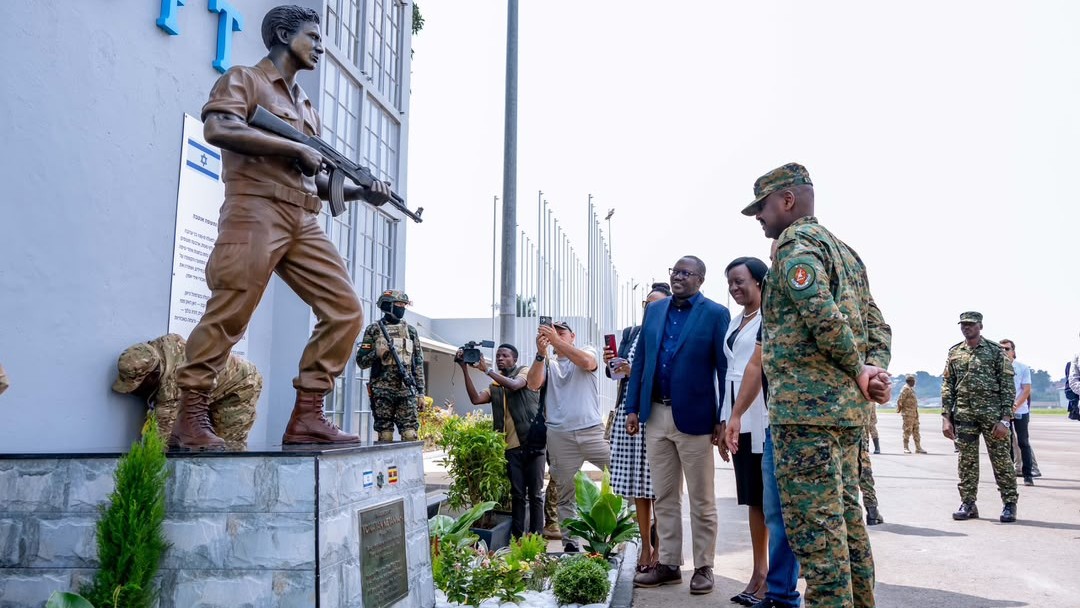
    In early August 2026, a life-sized bronze monument of Yonatan Netanyahu, the Israeli commando leader killed during the 1976 Entebbe hostage rescue raid, was unveiled at Uganda’s Old Entebbe Terminal, 40 kilometers outside the capital Kampala. Commissioned by Ugandan Army Chief Muhoozi Kainerugaba — eldest son of long-serving President Yoweri Museveni — the installation marks the 50th anniversary of one of the most storied special operations in modern Israeli history, and comes just days before Uganda’s parliament approved a controversial deployment of Ugandan troops to Gaza as part of a UN-backed International Stabilisation Force. The timing, against a backdrop of ongoing Israeli military operations in Gaza that have killed tens of thousands of Palestinian civilians despite a October 2024 ceasefire agreement, has turned the quiet ceremony into a flashpoint for debates over African sovereignty, shifting diplomatic alliances, and the legacy of the 1976 raid.

  • Escalating Trump posts map labeling Hormuz Strait ‘US territory’

    Escalating Trump posts map labeling Hormuz Strait ‘US territory’

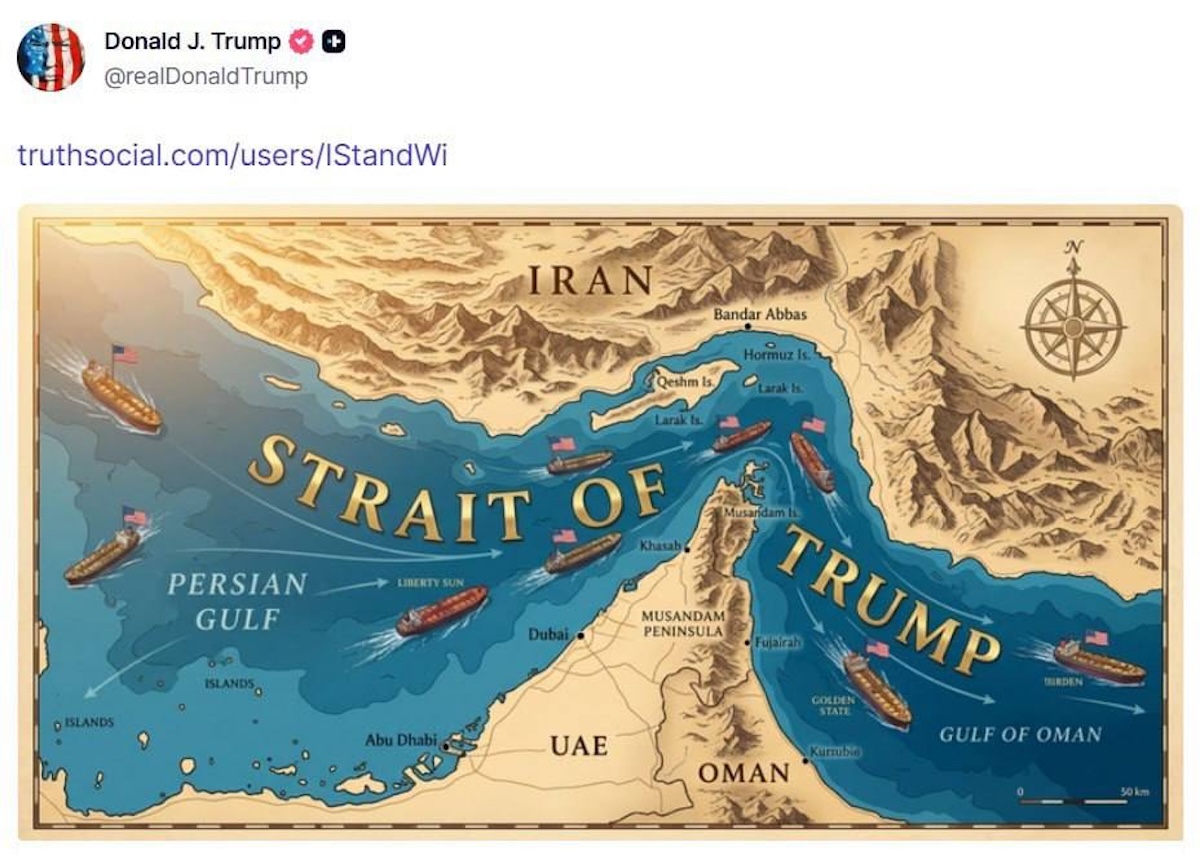
    Tensions between the United States and Iran have spiked dramatically after former U.S. President Donald Trump published a map on his Truth Social platform claiming the strategically critical Strait of Hormuz as American territory, drawing immediate and harsh condemnation from senior Iranian officials. The provocative post came just days after Trump first openly threatened to claim the key waterway as U.S. territory, amplifying already heightened hostilities between the two nations amid an ongoing six-month conflict.

    Kazem Gharibabadi, Iran’s deputy foreign minister, issued a blistering response to Trump’s map in a post on X (formerly Twitter), writing in Arabic: “Just as Trump incorrectly labeled the Persian Gulf, his fantasy of claiming the Strait of Hormuz will be corrected sooner than later — and if he will not correct this delusion, we will do it for this delusional individual.” Gharibabadi attached a screenshot of Trump’s original post, which showed the mislabeled map marking the narrow passage that sits south of Iran, connecting the Persian Gulf to the Gulf of Oman.

    The current standoff over the strait traces back to February 28, when the United States under Trump launched joint military strikes with Israel against Iran. In response to the unprovoked attacks, Iran imposed restrictions on commercial shipping traffic through the strait — one of the world’s most vital chokepoints for global fossil fuel trade. The shipping restrictions have sent ripple effects through energy markets worldwide, driving up fuel prices globally. In the United States, the national average price for a gallon of gasoline has now hit an all-time record high for the mid-August period.

    Despite mounting domestic economic pressure from rising energy costs, widespread global criticism, and a plummeting presidential approval rating, Trump has refused to backtrack on his actions. In a public address last Friday on New York’s Long Island, the president doubled down, stating: “I’ll never apologize, I did the right thing.” It was during that same speech that he first issued his threat to claim the Strait of Hormuz as U.S. territory, prompting widespread condemnation from political observers both in the U.S. and abroad. Critics have labeled Trump “completely unhinged” and a “sadistic violent menace to the world” and have renewed calls for a second impeachment.

    The escalating conflict comes as a 60-day bilateral ceasefire between the warring parties expired on Monday, with neither side indicating meaningful progress toward new negotiations to end the hostilities. Trump has framed the war as an effort to halt Iran’s alleged nuclear weapons development, a claim that contradicts assessments from U.S. intelligence agencies, which have repeatedly confirmed Iran is not pursuing a nuclear weapons program. This is not the first break in U.S.-Iran nuclear policy: during Trump’s first term in office, he famously withdrew the United States from the Joint Comprehensive Plan of Action, the Obama-era multilateral nuclear deal that placed strict verifiable limits on Iran’s nuclear activities.

    Senior Iranian military officials have pushed back on U.S. claims of success in the strikes. Major General Mostafa Izadi, deputy commander-in-chief of the Islamic Revolutionary Guard Corps, stated on Tuesday that “the enemy failed to destroy Iran’s defensive capabilities and nuclear industries.”

    For his part, Iranian Parliament Speaker Mohammad Bagher Ghalibaf reaffirmed Tuesday that Iran will keep the strait closed to commercial shipping until the U.S. economic blockade and oil embargo on Iran are fully lifted. He issued a stark warning to any actor that continues aggression or territorial threats against Iran, saying any further escalation would result in a “more severe defeat” for the United States and its allies.

  • Belgian wildfire ‘encircled’ but situation still ‘complicated’

    Belgian wildfire ‘encircled’ but situation still ‘complicated’

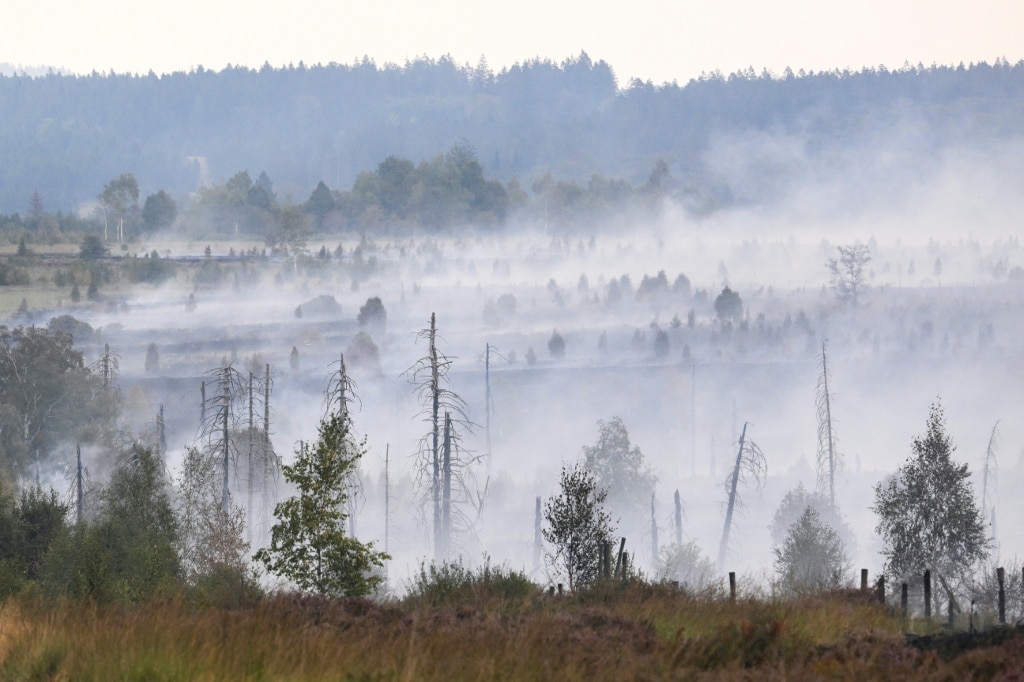
    One of the most destructive wildfires in Belgium’s recorded history has reached a critical turning point, but the battle to contain it is far from over, national crisis management authorities confirmed Wednesday. After working through the night under grueling terrain and weather constraints, firefighting crews have successfully established a full containment line around the massive blaze burning in the High Fens nature reserve, the largest wildfire to hit the country in 100 years.

    Crisis cell spokesperson Tony Hosmans told reporters that the blaze, which has scorched thousands of hectares of protected landscape, is no longer advancing east toward the German border. With containment now in place, the primary operational goal for the coming 24 hours is to fully bring the fire under control, with additional support from water-bombing aircraft expected if weather conditions allow.

    Despite the breakthrough on containment, Hosmans emphasized that the situation on the ground remains highly unstable. Multiple new flare-ups have ignited across different sections of the burned area, keeping hundreds of deployed crews on high alert around the clock. The blaze exploded in size over the past weekend, spreading across 3,000 hectares (7,500 acres) – an area roughly half the size of Manhattan – after breaking out on Friday in the protected wetland and forest reserve. That area was previously hit by a massive wildfire in 1911, during a historic heatwave remarkably similar to the ongoing extreme weather event across Europe.

    The final stretch of containment line, located along the hard-to-reach front near the German border, took all night to close. Ground crews advanced from the east and north through difficult terrain to seal the last gap, a feat made more challenging by the unique landscape of the High Fens. The reserve is made up of a patchwork of heathland, deep peat bogs, and narrow raised wooden hiking boardwalks, all of which slow heavy equipment and ground crew movement.

    To bolster local and national firefighting efforts, cross-border support has poured in from four neighboring European countries: Norway, Germany, Sweden, and the Netherlands, which deployed water-bombing aircraft to the site. However, poor weather has severely limited the use of these critical resources. Low cloud cover over the fire zone grounded all aerial operations on Tuesday, and intermittent rain that has fallen across the area since Monday has similarly blocked flights – even as that same precipitation has helped slow the fire’s spread by raising humidity and dampening surface fuel.

    The High Fens wildfire is just one of dozens of destructive blazes burning across the European continent, where weeks of record-breaking heat and extreme drought have created tinder-dry conditions across vast swathes of land. Major wildfires have also forced mass evacuations and burned thousands of hectares in France, Greece, Portugal, and Spain in recent weeks.

    In addition to the operational challenges on the surface, crews face a unique and long-term threat from the peat that makes up much of the High Fens landscape. Unlike surface fires that burn through trees and brush, this blaze is smoldering deep within the underground peat layers, meaning it can reignite unexpectedly weeks or even months after initial containment.

    Area fire chief David Covens explained the unique risk during a tour of the fire zone: “The fire is burning in the peat, so it is actually underground, sometimes quite deep. Whenever we disturb the ground, when we cut down a tree and expose the soil, the fire can reignite.” Even with all available resources committed to the operation, Covens acknowledged that full extinguishment will be a months-long process: “We’re doing everything we can with the resources available, but we know this is going to take a long time.”

    Thus far, the blaze has triggered mandatory evacuation orders for two Belgian villages and the German border town of Monschae. Residents of the Belgian hamlet of Sourbrodt have already been cleared to return to their homes, but other evacuations remain in place as crews continue to work to secure the area. Officials warned that even after the fire is declared under control, repeated soaking and targeted dousing will be required for weeks to eliminate hidden underground hotspots and prevent reignition.

  • AFL reveals new parade as 2027 Gather Round dates are confirmed

    AFL reveals new parade as 2027 Gather Round dates are confirmed

    The Australian Football League has officially confirmed the official timeline for its 2027 Gather Round, the league’s popular annual festival of Australian rules football that has quickly cemented its status as one of the biggest highlights of the national football calendar.

    Announced in a Wednesday morning media statement, the 2027 iteration of the fan-favorite event will run from Thursday, April 8 through Sunday, April 11. For the first time in the event’s history, organizers will add a new player parade scheduled for the Friday afternoon of the festival weekend, expanding the event’s off-field entertainment offerings.

    Unlike the standard AFL fixture that sees teams travel across the country each round, Gather Round brings every one of the league’s 18 clubs to a single host state to play all of that round’s matches across multiple local venues. Hosted exclusively in South Australia since its 2023 debut, the event has typically fallen in either the fourth or fifth round of the regular season, and regularly draws crowds of roughly 265,000 attendees across its four-day run. All matches for the 2027 event will again be spread across three South Australian venues: Adelaide Oval, Barossa Park, and Norwood Oval.

    Beyond its on-field appeal, Gather Round has emerged as a major economic driver for the host state. In the four years since its launch, the festival has injected more than $400 million into South Australia’s local economy, a track record that both league and state leaders have highlighted as central to its long-term success.

    AFL Chief Executive Andrew Dillon emphasized that the event has rapidly grown into a marquee staple of the annual AFL calendar. “The event continues to deliver outstanding results on and off the field, attracting hundreds of thousands of fans and generating record economic benefits for South Australia,” Dillon said in a statement. “We look forward to once again creating a festival of footy atmosphere across the week, including the new players’ parade, and sharing more details on the fixture and Gather Round activities in the months ahead.”

    South Australian Premier Peter Malinauskas echoed that enthusiasm, noting that Gather Round has grown into a transformative economic force for the state’s major events sector. “It’s become a powerful platform for South Australia to tell its story to the rest of the nation, for local businesses to connect and find new opportunities for growth,” he said. Malinauskas, who has secured Gather Round’s South Australian tenure through at least 2029, added that locking in dates aligned with school holidays across multiple states gives traveling fans from across the country a head start to plan their getaways to the event.

    The 2027 dates are deliberately scheduled to overlap with the first term school holidays in Victoria, Queensland, and the Northern Territory, with partial alignment with school holiday periods in South Australia, New South Wales, Western Australia, the Australian Capital Territory, and Tasmania. The alignment is expected to boost interstate attendance and local hospitality revenue by making it easier for families to attend the event.

    The 2027 confirmation follows a June 2025 announcement that Gather Round will remain hosted in South Australia through at least 2029, locking in the event’s long-term home after its meteoric rise in popularity over its first four editions.

  • Businesses reopen after eastern Indonesia earthquake displaced thousands

    Businesses reopen after eastern Indonesia earthquake displaced thousands

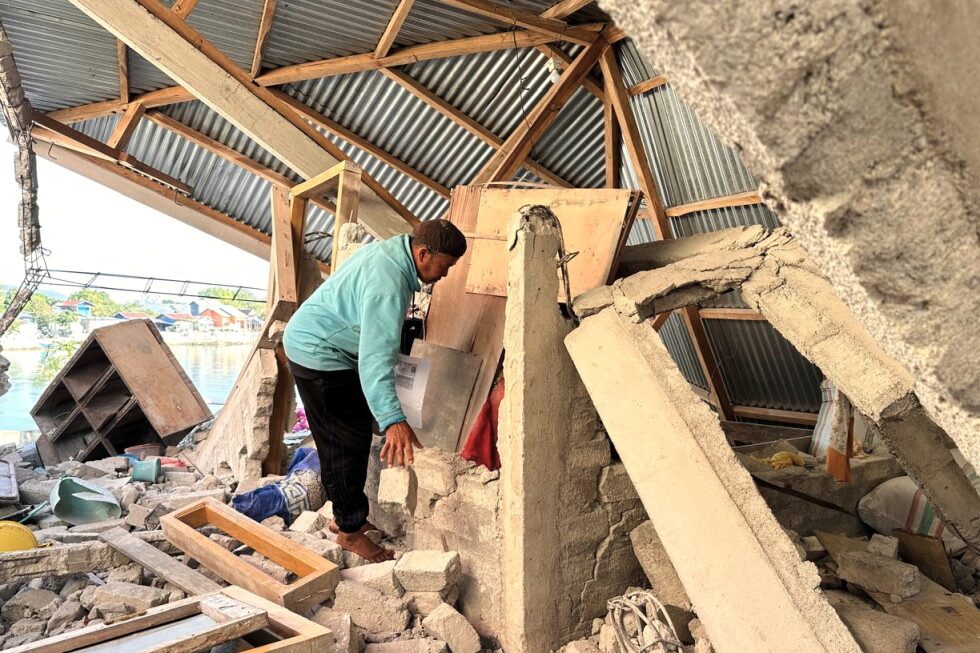
    Four days after a powerful 6.2-magnitude-level earthquake left at least 70 people dead, nearly 1,200 injured, and thousands displaced on Indonesia’s Flores Island, basic commercial operations have begun a gradual return to service, even as rescue teams continue searching for missing victims and tens of thousands remain displaced from their destroyed homes.

    The disaster struck just before 6 a.m. local time on Saturday, with the U.S. Geological Survey recording the quake at a shallow depth of 10 kilometers (6 miles) off the coast of the remote island, located in Indonesia’s East Nusa Tenggara province. Shallow seismic events in coastal regions often amplify surface damage, and this quake was no exception: official data from Indonesia’s National Disaster Management Agency confirms widespread destruction across the island, with at least 11,925 residential homes, 182 public health facilities, 653 educational institutions, 184 government administrative buildings, and 173 religious sites sustaining damage or complete collapse.

    In the immediate aftermath of the quake, authorities issued a tsunami warning that sparked panic among local residents, who fled for higher ground, before the alert was ultimately lifted. Through Tuesday, geological agencies had recorded more than 2,100 aftershocks, only 70 of which were strong enough to be felt by local communities. The persistent risk of further tremors has left thousands of residents sleeping outdoors in open areas, unwilling to return to damaged or unstable structures.

    As of Wednesday, grocery stores, gas stations, and public markets had resumed partial operations in hard-hit regions. In Maumere, the main port city of Sikka regency, reopened fuel stations and marketplaces drew large crowds of residents seeking to restock supplies. In Reo, a town in heavily impacted Manggarai regency, locals queued outside a partially reopened grocery store, which limited customer entry to comply with safety protocols amid ongoing structural risks.

    Many residents rely on these local businesses to meet daily needs that emergency food aid cannot fully cover. “Food aid has helped, but it doesn’t cover everything we need for daily life,” explained Delvina Panjaitan, who waited in line outside the Reo grocery store. “We still rely on grocery stores and markets, and we need them to be operating again.”

    East Nusa Tenggara Governor Emanuel Melkiades Laka Lena confirmed that immediate humanitarian needs for food and clean water have largely been met across the affected zone, and that local government offices in the seven impacted regencies have resumed full operations. “This is to accelerate post-disaster recovery and serve the community’s administrative needs,” the governor stated.

    Debris and rubble from collapsed structures still cover most public streets, however, and search-and-rescue teams continue excavating collapsed buildings and clearing mud from landslides triggered by the quake. Fathur Rahman, coordinator for the national search mission, noted that crews are still “anticipating the possibility of discovering more victims” trapped in the rubble. More than 40,000 people remain displaced, taking shelter in tents, official evacuation centers, and improvised makeshift camps across the island.

    Indonesia, a sprawling archipelago made up of more than 17,000 islands, sits along the tectonically active Pacific Ring of Fire, making it extremely prone to both major earthquakes and volcanic eruptions. This region of Flores has a history of devastating seismic disasters: in 1992, a major earthquake and subsequent tsunami killed roughly 2,500 people on the island, marking one of the deadliest natural disasters in Indonesia’s modern history.

  • Mobile gold miners in eastern Congo complicate health workers’ efforts to contain Ebola

    Mobile gold miners in eastern Congo complicate health workers’ efforts to contain Ebola

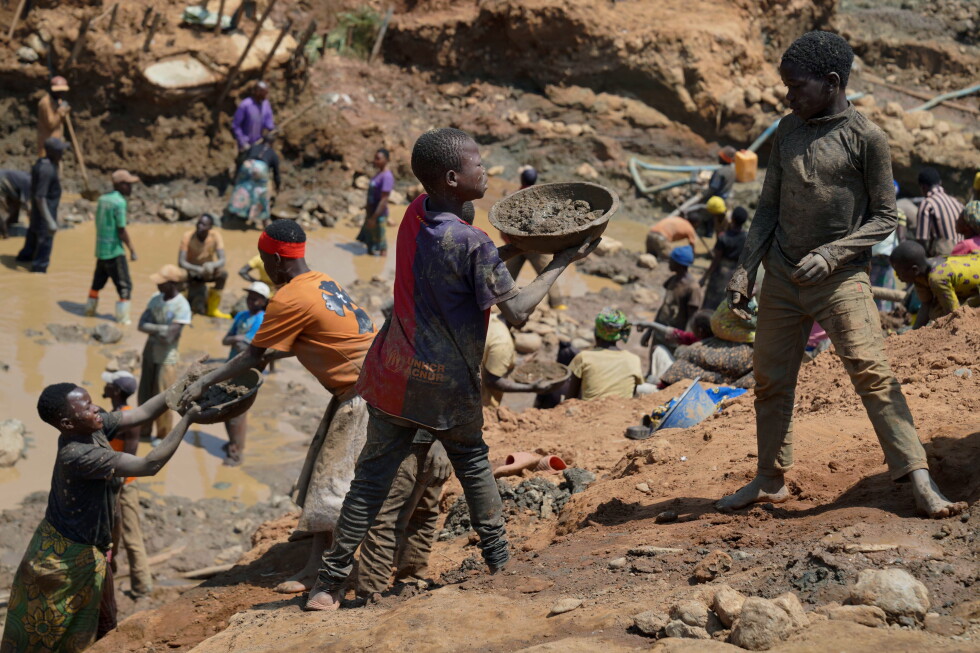
    Nestled in the conflict-wracked Ituri Province of eastern Democratic Republic of the Congo, hundreds of artisanal gold miners — including children like 11-year-old Isaac Batisa — crowd into narrow, hand-dug pits and deep underground shafts every day, panning and digging for small traces of the precious metal to earn meager wages that feed their families. For Batisa, who lost his parents and two brothers in a rebel attack and now supports five younger siblings while living with his aunt, Ebola, the deadly viral outbreak that has already claimed more than 2,300 lives across the country, is not his immediate priority. “We don’t know about Ebola here,” he says, noting he often earns as little as $2 a day for his backbreaking labor.

    This remote, hard-to-reach mining site in Iga-Barrière offers a rare, unfiltered look at one of the most intractable barriers to containing the fastest-growing Ebola outbreak in recorded history. While no confirmed Ebola cases have yet been documented at Congo’s artisanal mining sites, public health officials warn that the true spread of the virus in these isolated areas remains nearly impossible to track. The vast majority of new cases and deaths are currently recorded among unmonitored populations, a category that perfectly describes the transient workforce that moves between small mining claims, rural villages and urban population centers on a constant basis.

    Unlike formal industrial mining operations, most small-scale artisanal mines in eastern Congo are unregulated and often illegal, with miners actively evading local authorities to access gold deposits. Workers dig with nothing more than basic hand tools like shovels and hand-held pans, crowding shoulder-to-shoulder in pits and tunnels with no structural reinforcement to prevent collapses. Crucial public health measures to slow Ebola transmission — including regular handwashing stations and physical distancing protocols — are entirely absent from these work sites. This creates a perfect storm for rapid spread of the virus, which spreads through direct contact with infected bodily fluids and contaminated surfaces.

    Complicating response efforts even further, the strain behind the current outbreak — the Bundibugyo virus — is one of the less common variants of Ebola, meaning no proven targeted treatments or vaccines are currently available for widespread use. As of 2024, the outbreak has spread to six Congolese provinces, with nearly 5,000 confirmed cases and 2,325 recorded deaths, 90% of which are concentrated in Ituri. Public health experts now warn the outbreak could surpass the 2014–2016 West Africa Ebola crisis, which killed more than 11,000 people, to become the deadliest Ebola outbreak in history.

    The transient nature of artisanal mining work is the single biggest obstacle to effective contact tracing, according to frontline Ebola response workers. Miners regularly cross village and provincial boundaries in search of new gold deposits, while small-scale mineral traders move between remote mining camps and densely populated urban centers to sell extracted gold. This constant movement makes it nearly impossible to track potential contacts once an infection is identified.

    “Artisanal miners may come into contact with several communities as they move from one place to another, which can facilitate the transmission of the virus if a person is infected,” explained Mari Ndika, an Ebola response coordinator leading local monitoring efforts. Community health worker Anna Ndroy Kansime recently experienced this gap firsthand: two miners identified as close contacts of a confirmed Ebola case vanished after moving to an unregistered mining site, their current location still unknown. There is also no formal system to register mining workers or record their travel, leaving response teams blind to potential new transmission chains, Kansime added. “People can become infected in one place and travel elsewhere before monitoring teams know they have been exposed, potentially creating new chains of transmission that are difficult to trace.”

    For the miners and their families, there is often no other option but to keep digging. Decades of conflict in eastern Congo, where more than 100 armed militant groups operate including the ADF and CODECO militias that terrorize Ituri, have displaced millions of people and pushed countless families into extreme poverty. A 2024 OECD report estimates that roughly 2 million Congolese work in artisanal and small-scale mining, which produces not just gold but also coltan, tin and tungsten that power global electronics supply chains. UNICEF estimates that 15% of Congolese children between the ages of 5 and 17 are engaged in child labor, with no reliable recent count of how many of those children work in mines. At the Iga-Barrière site, children work alongside adults, and even pregnant women work in open pits late into their third trimesters, Kansime confirmed.

    “In Ituri province, where conflict has uprooted families and where jobs are scarce, the mines offer the only possibility of cash income, however dangerous the work,” said Singoma Aimé, a 36-year-old miner at the site. He added that miners have repeatedly called for basic public health infrastructure to protect themselves from Ebola: “We especially need hand-washing facilities because everyone comes from home to work at the site, and we lack any kind of adequate protection.”

    International humanitarian organizations warn the outbreak’s continued spread is an urgent global crisis. Last week, Mercy Corps warned that confirmed cases have now been recorded along a major travel route just 22 miles from the South Sudanese border, raising fears of cross-border spread that could expand the crisis exponentially. Trish Newport, emergency coordinator for Doctors Without Borders (MSF), called the outbreak’s unrelenting speed “extremely concerning” in an interview with the Associated Press, noting it continues to outpace all containment and contact tracing efforts.

    “We see family members that come in who have had 15 people in their family die,” Newport said. “We rapidly need to scale up to be able to prevent more deaths from happening, more families and communities from being impacted.”

    Response teams say the path forward requires targeted outreach to mining communities, working with local authorities, mine managers and community leaders to educate miners on Ebola prevention and establish systems to track suspected cases. But deep structural barriers remain: impassable rural roads, the constant presence of armed groups that block access to remote areas, and the simple reality that mining is the only source of food and income for millions of Congolese. “For many families, gold is what pays for food,” Kansime said — a reality that leaves few with the option to stop working, even in the face of a deadly pandemic.

  • National security question trips up Sen. Darline Graham in South Carolina debate

    National security question trips up Sen. Darline Graham in South Carolina debate

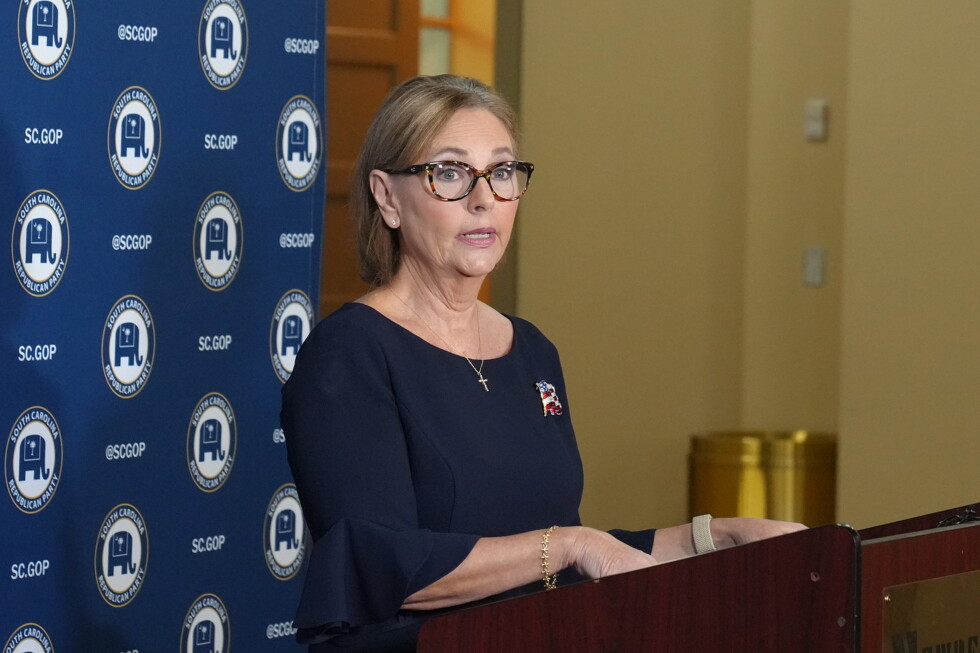
    Ahead of next week’s critical runoff election for South Carolina’s open U.S. Senate seat, candidate Darline Graham has drawn immediate national attention after a striking admission during a Tuesday evening debate, when she openly acknowledged her limited familiarity with core U.S. national security and foreign policy issues.

    During the debate, a moderator posed a targeted question asking whether Graham viewed Taiwan and the South China Sea as legitimate national security priorities for the United States, and to explain her reasoning on the matter. Opening her response with a promise of candor, Graham cut through typical political talking points to share an unvarnished assessment of her own expertise. “I’m just going to be honest here. I’m not that informed on national security,” she stated, pausing before adding, “But I do support the military.”

    Graham’s path to the Senate ballot is rooted in family tragedy and unexpected opportunity. Her older brother, longtime Senator Lindsey Graham, died unexpectedly on July 11, and South Carolina’s governor appointed her to serve out the final months of his term on an interim basis. Now, she is competing in a special election to win the remaining term in her own right, squaring off against U.S. Representative Ralph Norman in the high-stakes runoff. Both candidates advanced to the runoff after finishing as the top two vote-getters in last week’s statewide primary, and Graham has secured the endorsement of former President Donald Trump, a major force in the state’s Republican politics.

    The moment has gained outsized attention in large part because of Darline Graham’s family connection. Her late brother Lindsey Graham built a decades-long reputation in the Senate as a prominent, influential voice on foreign policy and national security issues, a link Darline Graham herself referenced during her response. “My brother was in the Air Force for 33 years so I will do everything I can to support the military. My dad was in the Army. I’m not a polished politician up here, national security is not my thing, not my area of expertise, but I do support the military,” she explained.

    Political analysts note that the admission has already reshaped the narrative of the final week of campaigning, with observers debating whether Graham’s frankness will resonate with voters frustrated by traditional political orthodoxy, or whether it will reinforce concerns from opponents that she is unprepared to serve in the Senate.

  • Anthony Albanese forced to step in as Veteran Minister faces fresh fire

    Anthony Albanese forced to step in as Veteran Minister faces fresh fire

    Australia’s federal government has been thrown into political turmoil this week, as Prime Minister Anthony Albanese was forced to publicly defend his Veterans Affairs Minister Matt Keogh amid intense opposition pressure triggered by a controversial initial refusal to meet with a leading veteran advocacy group. The standoff centers on a new government policy that caps annual allied health services for veterans at $5,000 — a restriction that was never recommended by the Royal Commission into Defence and Veterans Suicide, and has already drawn fierce condemnation from veteran support organizations across the country.

    The conflict began on Monday, when representatives from the Coalition of Veterans’ Voices arrived in Canberra to protest the newly introduced $5,000 annual cap. Keogh’s office initially informed the group that the minister had no available time in his schedule to meet with their delegation. As political backlash grew over the perceived snub to Australia’s ex-service community, Keogh ultimately reversed the decision and held the meeting, but the controversy did not end there.

    During parliamentary question time on Tuesday, Keogh publicly acknowledged that he had made a mistake in initially declining to meet the veteran group. Even so, he rejected accusations that he had acted with disrespect toward Australia’s veteran community. By Wednesday, the opposition ramped up its attacks, calling directly for Keogh’s resignation and pressing Albanese to remove him from cabinet. Over the course of question time, Keogh was pressed five separate times on the incident, with Albanese also facing one direct question about the minister’s future.
    Opposition veterans affairs spokesman Michael McCormack challenged Keogh’s continued tenure in the role, asking how the minister could retain his position if he failed to uphold core Australian Defence Force values. John Armfield, a former navy diver and spokesman for the advocacy group Fair Care for Veterans, doubled down on the criticism after his meeting with Keogh, stating: “I enlisted under the navy values of courage, honour, honesty and loyalty, yet you fail to display any of these values, minister.”

    In his response to the criticism, Keogh acknowledged the depth of anger and hurt among veteran advocates. He noted that he had previously heard Armfield’s testimony before the Royal Commission into Defence and Veterans Suicide, which detailed tragic, devastating circumstances facing many veterans and their families. “I can very much understand why he would feel that there has been a breach of faith with him in terms of the upholding of the Australian Defence Force values and his commitment. And, so I understand that,” Keogh told parliament. “I’m sorry that he holds that view about this, and all I can do is I try to do each and every day is to make sure that we’re continuing to the work of improving the system that exists to support our serving personnel and our veteran community and their families, so that they get the service and the support that we all agree that they deserve.”

    The political scrutiny intensified when Phillip Thompson, a Queensland Liberal National Party MP and military veteran, pressed Keogh over whether his denial of disrespect toward veterans amounted to calling former fighter pilot Tim Nelson a liar. Keogh responded that he meets regularly with veterans, their families, and active defence personnel, and respects every perspective they share with him. He added that he does not make a practice of repeating private meeting details in parliament on a daily basis.

    Opposition Leader Angus Taylor directly called on Albanese to sack Keogh, labeling the minister “incompetent and disrespectful” during question time. In a decisive public show of support, Albanese stepped in to confirm that he retains full confidence in Keogh, noting that engaging with Australia’s uniformed service members is one of the greatest privileges of public office. “They serve in our name and deserve our total respect at all times for what they do,” Albanese said, before launching into criticism of the former Coalition government’s record on veteran support that was cut off by parliament’s presiding officer.

    The root of the controversy, the $5,000 annual cap on allied health services for veterans, remains deeply divisive. The Albanese government argues the cap is a necessary reform to reduce waste and eliminate unnecessary, low-value services from the veteran support system. Veteran advocates, however, have slammed the policy as cruel, arguing it will cut off critical care for veterans living with complex physical and mental health injuries stemming from their service.

  • Thai teen found in suitcase died from suffocation, police reveal

    Thai teen found in suitcase died from suffocation, police reveal

    A devastating homicide case in the popular Thai coastal resort of Pattaya has taken new procedural steps forward, with official autopsy results confirming the teenage victim died from suffocation, law enforcement authorities have confirmed publicly. The victim, identified locally as 17-year-old Tunchanok Donhomla, was found dead inside a suitcase abandoned near a railway line in the early hours of June 27. Just 15 minutes before the discovery of her remains, Pattaya police took 45-year-old Australian citizen Simon Peter Carman into custody on suspicion that he was preparing to flee Thailand to avoid prosecution.

    Speaking to the British Broadcasting Corporation on Wednesday, Pattaya City Police Chief Anek Srathongyoo shared key details from the post-mortem examination. He confirmed that while the victim sustained brain injuries, those wounds did not cause her death. According to Anek, those injuries likely occurred after Tunchanok had already died, when the accused moved her body in the suitcase before abandoning it along the tracks. Investigators have also confirmed that DNA recovered from the victim’s body matches Carman’s genetic profile, with police saying the match most likely came from him handling the body while placing it into the bag.

    Carman now faces four formal criminal charges: murder, concealment and movement of a deceased body, kidnapping of a minor between 15 and 18 years old, and taking a minor in that age group for an indecent act. Anek told reporters that Carman did not reject all allegations from the start of interrogation, admitting he had left the area with Tunchanok. Even if Carman enters a not guilty plea during upcoming court proceedings, Anek said investigators have compiled a complete, thorough evidence file and addressed all gaps in the case to prove the charges before the court.

    Investigators are on track to submit the full case file to public prosecutors by this Friday, Anek confirmed, noting the September 18 statutory deadline to formally indict the accused. Previously released closed-circuit television footage places Carman and Tunchanok together at a local condominium at 3:34 a.m. local time on June 25. Later that same day, police say footage shows Carman leaving the building alone, dragging a large suitcase. He then loaded the suitcase onto a motorbike and traveled in the direction of the railway line where the body was eventually found.

    Since his arrest, Carman has shifted his stance, initially offering a claim of self-defense to officers. He told police he had agreed to pay Tunchanok 1,000 Thai baht (equivalent to roughly $30 USD) for sexual services, but a dispute broke out when he only offered 500 baht after the pair returned to his rental apartment. In a recorded statement from custody, Carman addressed the victim’s family, saying, “I feel bad for what happened to your daughter. It was out of my control. I know you’ll be very sad, upset… same [as] me. Please tell other girls… just to be careful.”

    The victim’s family, who spoke to the Australian Broadcasting Corporation, shared that Tunchanok was an only child who lived with her father and stepmother in Kalasin Province, roughly 480 kilometers northeast of Pattaya. Known to loved ones by her nickname Cake, she told her family she was traveling to Pattaya for a holiday with a friend and left for the coastal city on June 16. Her father, Thongchai Donhomla, said he is deeply grieved by his daughter’s death, noting that “My daughter had no mother, so whenever she wanted anything, she would find a way herself, and she always helped me too.”

    Her stepmother, Oradee Bussarakum, said the confirmation of Tunchanok’s death fulfilled the family’s worst fears. “We were scared. We just hoped it wouldn’t turn out the way we feared. Now our eyes are swollen from crying,” she said. Oradee has publicly called for the maximum punishment, saying “I just want [Carman] executed. I even asked the police if I could hit him, if I could beat him.” If Carman is ultimately convicted of murder under Thai law, he is eligible to receive the death penalty.