博客

  • Australia races to shield little penguins from H5N1 bird flu

    Australia races to shield little penguins from H5N1 bird flu

    Australia is conducting an unprecedented, large-scale vaccination program to protect its beloved wild little penguin colonies from the rapidly spreading H5N1 avian influenza, a pathogen that has already claimed its first victim from the iconic Phillip Island population. The H5N1 virus, which has devastated bird populations across the globe, first reached Australia’s continental mainland in June 2024, and this month confirmed its first infection in the Phillip Island colony when a deceased penguin tested positive for the strain.

    Located along Victoria’s eastern coast, Phillip Island is home to the world’s largest single colony of little penguins — also called fairy penguins, the smallest species of semi-aquatic penguin on Earth. Standing just knee-high and weighing roughly the same as a standard one-kilogram bag of sugar, these diminutive seabirds draw hundreds of thousands of annual tourists to their famous nightly “penguin parade”, where crowds gather along purpose-built boardwalks to watch the birds waddle ashore from the ocean to their beach burrows. At the peak of the southern hemisphere’s breeding season, the colony swells to nearly 40,000 birds, with the species’ natural range spanning coastal southern Australia, New Zealand, and the island state of Tasmania.

    James Todd, chief biodiversity officer for the state of Victoria, confirmed that vaccination work at Phillip Island and a second key population at Melbourne’s St Kilda breakwater kicked off this week in response to the confirmed case. “This is unprecedented. There has never been a vaccination effort of this scale for a wild seabird population anywhere in the world,” Todd emphasized in an interview with Agence France-Presse.

    Carrying out a mass vaccination program for a wild penguin colony comes with extraordinary logistical hurdles. The H5N1 vaccine requires two doses to confer full immunity, a requirement that makes reaching entire wild populations extremely challenging. But wildlife teams have a unique advantage in working with these well-studied colonies: conservation workers have mapped every penguin burrow across both sites, the birds are already accustomed to periodic health checks and human handling, and the regulated nightly penguin parade allows teams to reliably locate and access individuals.

    The program targets roughly 5,000 penguins that live closest to high-traffic visitor areas, where the risk of virus transmission between birds and external exposure is highest. Teams will retrieve penguins from their underground burrows, and corral additional birds as they come ashore each evening, with microchips used to track which individuals have received their first and second doses. Originally planned as a three-to-four week gap between doses, the urgent nature of the outbreak has experts considering shortening the interval to one to two weeks, though a final timeline has not yet been confirmed.

    While wild penguins are naturally defensive and will squawk, peck, and struggle when handled, Todd noted that the on-ground teams have decades of experience working with these specific populations. “If you and I were doing it, we’d probably drop the thing straight away,” he joked, adding that the skilled teams are able to process birds quickly and safely without causing long-term stress or harm. The vaccination effort is expected to stretch over weeks and months, as workers race to build immunity in the colony before H5N1 can spread widely and cause mass mortality among one of Australia’s most recognizable and economically important wildlife attractions.


  • Jake Stringer confirms Giants exit as he reveals plan for Victoria return

    Jake Stringer confirms Giants exit as he reveals plan for Victoria return

    Veteran Australian Rules Football forward Jake Stringer has made a public announcement that he will leave the Greater Western Sydney Giants, with this weekend’s match against Adelaide widely expected to mark his final appearance in the club’s iconic orange guernsey. The 250th career game milestone that Stringer will hit in the upcoming clash caps a two-year stint with the New South Wales-based club, and the player confirmed that family health needs have driven his choice to return to his home state of Victoria. Speaking to media on Thursday, Stringer laid out the personal motivations behind his upcoming exit, noting that his father has battled ongoing health issues throughout 2025, and the distance from his two young daughters who remain based in Melbourne has created significant personal challenges during his time in Sydney. “I’ll probably most likely go back to Melbourne, just for family reasons,” Stringer explained. “My dad’s been sick throughout this whole year and being away from my two girls back in Melbourne’s been challenging. I’m just excited for this last game and … most likely it’ll be my last game.” Despite his impending departure from the Giants, Stringer emphasized that he still retains the physical fitness and competitive drive to continue playing top-tier AFL for multiple more seasons. For now, however, his focus remains fixed on finishing his tenure with the Giants on a high note, before taking time to reassess his next move alongside his family. “Definitely feel like I’ve got quite a few more years left. But I’ll just get through this weekend, reassess, spend some time with the family, go back home and work it out from there,” he said. Stringer also clarified that he has not yet committed to joining any specific Victorian-based club, despite widespread speculation that he will sign with one of the league’s Melbourne-based teams as a free agent ahead of the 2026 season. “There had been no decision or anything like that on a preferred Victorian destination,” he said. “I’m just looking forward to finishing it off here, enjoying more time with my teammates who I absolutely love, and go from there.” Stringer’s career in the AFL spans more than a decade, with stints at three separate clubs to date. He arrived at the Giants at the end of the 2024 season after a seven-year tenure with Essendon Bombers, where he notched 123 appearances and led the club in goalkicking across three separate seasons. Before his time at Essendon, Stringer launched his professional career with the Western Bulldogs, where he played 89 matches, earned All-Australian honours in 2015, and claimed his only AFL premiership title with the club in 2016. Across his two seasons with the Giants, Stringer has appeared in 37 matches, and will hit the 250-game milestone in this weekend’s clash with Adelaide. The forward’s impending move will see him join his fourth AFL club when he finalizes a transfer to Victoria, marking a full-circle return to the state where he built the early years of his celebrated career.

  • Mourinho begins second Real Madrid reign with Barca in his sights

    Mourinho begins second Real Madrid reign with Barca in his sights

    Sixteen years after first walking through the Santiago Bernabéu’s doors as head coach, 63-year-old Jose Mourinho has returned to Real Madrid to launch his second spell in charge, with his opening La Liga fixture kicking off Saturday against Espanyol in Barcelona. The veteran Portuguese manager faces a familiar mandate: dethrone Barcelona as the dominant force in Spanish football, just as he did more than a decade ago.

    Mourinho’s comeback comes after Real Madrid endured two trophyless seasons, marked by persistent dressing room unrest, inconsistent on-pitch performance, and a string of failed managerial appointments that failed to strike a balance between the club’s stacked attacking talent and defensive stability. Neither Carlo Ancelotti, Xabi Alonso, nor Alvaro Arbeloa managed to integrate Real’s superstar front line — Kylian Mbappe, Vinicius Junior, and Jude Bellingham — without leaving the club’s defensive shape exposed.

    For Real president Florentino Perez, turning back to the notoriously strict disciplinarian Mourinho is a calculated bet: that the manager can turn individual superstars into a cohesive, hard-working unit without blunting their elite attacking cutting edge. Mourinho himself argues he returns a changed coach, tempered by years of top-flight experience across England, Italy, Turkey, and other top European leagues. “I’m much more mature, less emotional, and more in control… as always, learning from mistakes,” he said this week, quick to add he has not become “more boring” since his first departure.

    From his first days at Real’s Valdebebas training ground, Mourinho has made his priorities clear, framing his return as a “mission” to build “a culture of work, responsibility, ambition” at the club. Perez has backed that mission with major transfer investment this summer: Los Blancos broke their transfer record to sign Ivorian winger Yan Diomande for 140 million euros ($163 million), and added high-profile targets Bernardo Silva and Marc Cucurella to the squad. Still, critics have pointed to one gaping hole in the club’s summer business: the failure to land defensive midfielder Rodri, who instead joined Barcelona, leaving Madrid’s midfield reinforcement question unresolved.

    While Diomande adds yet another elite attacking threat to an already crowded front line, many analysts argue that former Manchester City playmaker Silva could prove the more pivotal signing for solving Madrid’s long-standing structural problems. For years, the club has attempted to transition away from the iconic Toni Kroos-Luka Modric era, a period where the duo’s match control gave forwards freedom to attack while cutting Madrid’s defensive exposure. Though Silva is not a direct replacement for either veteran, his technical quality gives Mourinho a much-needed option to address the balance issue that has plagued the side since Kroos and Modric stepped back.

    Mourinho’s first tenure at Real Madrid is forever tied to the fiery Clasico rivalry with Pep Guardiola’s all-conquering Barcelona side. Bitter touchline clashes, accusations of refereeing favoritism, and a string of tense, high-stakes meetings turned the fixture into one of the most watched rivalries in global sport, until Mourinho’s Madrid ended Barcelona’s domestic stranglehold with a 100-point La Liga title in 2011-12.

    This season, the first Clasico of the campaign is scheduled for late October, when Madrid visits Barcelona, and the fixture is already one of the most anticipated matches of the European calendar. Between now and kickoff against Espanyol this weekend, Mourinho has two months to get his squad fit, cohesive, and aligned on his vision — all ahead of the first test against the defending double Spanish champions that could define his second tenure from the start.

    This opening weekend of the La Liga campaign also features a full slate of other fixtures, kicking off Thursday with Rayo Vallecano hosting Alaves at 19:00 GMT. Friday sees Real Betis take on Real Sociedad at 19:00 GMT, while Saturday’s matchday includes three additional games: Athletic Bilbao vs Sevilla (15:00 GMT), Valencia vs Celta Vigo (17:30 GMT), alongside Mourinho’s opener against Espanyol. Sunday’s fixtures are Atletico Madrid vs Villarreal (15:00 GMT), Getafe vs Racing Santander (17:30 GMT), and Elche vs Barcelona (19:30 GMT), with Monday wrapping up the weekend with Osasuna vs Levante (17:30 GMT) and Malaga vs Deportivo La Coruna (19:30 GMT).

  • Giant whales move into Greenland waters as ice disappears

    Giant whales move into Greenland waters as ice disappears

    For decades, the thick, year-round sea ice off East Greenland’s coast acted as an impenetrable barrier, locking large baleen whale species out of the nutrient-rich coastal waters. But a landmark, long-term study published in *Frontiers in Marine Science* documents a dramatic ecological transformation: as global warming melts Arctic sea ice, hundreds of humpback, fin, and minke whales are now moving into these newly ice-free areas each summer to feed.

    The research, led by Professor Mads Peter Heide-Jørgensen from the Greenland Institute of Natural Resources, combines 40 years of ship-based sighting data, systematic aerial surveys conducted in 2015 and 2024, satellite tracking of 15 tagged whales, and traditional knowledge from Inuit hunters to build a comprehensive picture of this shift. The trend reveals a steep, rapid increase in whale presence in the region: not a single humpback whale was recorded in ship surveys until 2006. Just one year later, seven humpbacks were spotted, and by 2024, that number had climbed to 150 ship-based sightings. Researchers estimate that in the summer of 2024 alone, around 4,000 humpbacks, 6,000 fin whales, and 6,000 minke whales traveled to the ice-free East Greenland coast.

    Scientists have labeled the annual arrival of these massive marine mammals seasonal Arctic “feeding frenzies,” describing the change as a major ecological regime shift for the entire East Greenland ocean ecosystem. The shift is driven by rising ocean temperatures, which melt the sea ice and allow fish and krill populations to move into the newly warming coastal waters, creating an abundant food source for migratory baleen whales. Researchers calculate that the three whale species consume a minimum of 800,000 tonnes of fish and krill combined over a single summer feeding season.

    While the study confirms the rapid redistribution of baleen whales into the region, it has not yet determined whether the trend reflects an overall growth in these whale populations or simply a shift in their range from other feeding grounds, such as West Greenland. This question carries particular political and cultural sensitivity in Greenland, where subsistence whale hunting is a long-standing practice. Outside experts consulted by the BBC hypothesize the whales are moving from West Greenland waters to the east, but the research team has not confirmed this link.

    The findings highlight a stark, uneven impact of climate change on Arctic marine life: opportunistic baleen whale species appear to be adapting successfully to the changing conditions and even benefiting from the new access to food and habitat. But other native Arctic species, including narwhals and belugas, are facing severe pressures. These iconic cold-water species are losing their traditional sea ice habitat, and are now being displaced or outcompeted by the incoming baleen whales.

    Professor Heide-Jørgensen emphasized the significance of this transformation, noting that the changes unfolding off East Greenland are likely the most radical ecological shifts observed anywhere in the subarctic. “For some species, climate change is not necessarily a problem – it opens up new opportunities,” he explained. “But other species are losing their habitat.”

  • Harry and Meghan are experts in surprise – but is their UK return forever?

    Harry and Meghan are experts in surprise – but is their UK return forever?

    For the Duke and Duchess of Sussex, the years following their 2020 exit from senior royal roles have been defined by unforeseen choices and dramatic shifts that have consistently kept global public attention focused on the couple. Now, just a few years after establishing their life in California, they are poised for one of their most unexpected changes yet: a full return to the United Kingdom to take up long-term residence.

    Insiders close to the couple confirm that the decision to relocate was finalized only recently, despite earlier casual talks about increasing time spent in the UK. The turning point came during the family’s high-profile visit to the UK in July, which included stops at King Charles III’s Highgrove estate and a gathering with the extended Spencer family, the relatives of Harry’s late mother, Diana, Princess of Wales. During that visit, Archie and Lilibet, the couple’s two young children, had the opportunity to meet their extended British cousins, aunts and uncles for the first time in an informal setting. The trip also included a stay at the couple’s existing property in Portugal, which the couple described as an overall overwhelmingly positive experience that convinced them a permanent return was the right choice.

    Multiple sources have stressed that the relocation is not driven by any conflict or difficulty in their current US life. Instead, it is rooted in two core priorities: the desire to build a life closer to Harry’s remaining family in the UK, and access to British schooling for Archie and Lilibet, for whom schools have already been selected. With the new academic year for nearly all English state and private schools set to begin by the second week of September, the couple is expected to complete their relocation within the next 10 days to get settled before term starts.

    While the exact address of their new UK home has not been publicly disclosed for privacy reasons, it has been confirmed that they will not reside in central London. Instead, they are expected to trade their sprawling $14 million California mansion for a quieter life in the British countryside. Top rumored locations include the Cotswolds and the region surrounding Northamptonshire, which sits close to Althorp House, the Spencer family estate that was the childhood home of Diana, Princess of Wales.

    The sudden decision came as a complete surprise to King Charles III and the wider working royal household, with the King only receiving formal notification of the plan on the preceding Sunday. Palace insiders note that while Charles was not involved in the decision-making process, he has welcomed the opportunity to spend more private time with Harry, Meghan and his grandchildren.

    Despite this warm reception from the King, the relocation should not be interpreted as a sign of impending reconciliation between Harry and his older brother, Prince William, the Prince of Wales. The sibling relationship remains fractured after years of public tension, triggered in large part by Harry’s tell-all memoir *Spare* and the couple’s explosive 2021 interview with Oprah Winfrey, where they made multiple public claims about internal royal tensions. William has reportedly never forgiven the pair for airing private family disputes in public, and insiders say he views the couple’s return as likely to create unnecessary public distraction and a de facto alternative royal focal point that will disrupt the working family’s agenda. Kensington Palace has declined to issue any official comment on the move, in line with longstanding protocol around the couple’s private matters.

    Crucially, there are no plans for the Duke and Duchess to return to official frontline royal duties. They will retain their status as private non-working royals, and the Royal Household has repeatedly ruled out any “half-in, half-out” arrangement that would tie their public or commercial work to official royal patronages or duties. All professional work they pursue while based in the UK will remain entirely independent of the monarchy.

    One open question surrounds Meghan’s growing lifestyle brand As Ever, which she has been seeking to expand beyond the US market. It remains unconfirmed whether the brand’s products, including its signature artisanal jam, will eventually appear alongside the King’s own Duchy Organic line on UK supermarket shelves.

    Another unresolved issue is the couple’s security arrangements. Since relocating to the US, the couple has relied on a privately funded security team, but it remains unclear whether that team will relocate to the UK with them. There has also been no update on whether the couple will seek official metropolitan police protection during their stay, or whether Harry’s years-long legal dispute with the UK Home Office over access to official public protection when visiting the UK has been resolved. Notably, just last year after losing a high-profile legal challenge over his security arrangements, Harry told the BBC that he could not imagine a scenario where he would bring his wife and children back to live in the UK full time.

    For now, the couple describes their stay as an extended long-term residence, with Britain set as their primary home for the foreseeable future. As with all news involving the Sussexes, public reaction is expected to split along already entrenched lines, with supporters celebrating the return and critics remaining skeptical of the couple’s long-term intentions. But for close friends of the pair, the news is overwhelmingly positive: “I’m just excited to have them here,” one friend told reporters.

  • US national debt exceeds $40 trillion for first time

    US national debt exceeds $40 trillion for first time

    For the first time in United States history, the country’s total gross national debt has surged past the $40 trillion mark, new federal government data released Wednesday confirmed — a symbolic threshold that has arrived far faster than official forecasters initially projected, fueled in part by the lingering fiscal impact of invalidated tariffs implemented during the Donald Trump administration.

    According to Treasury Department figures, total public debt outstanding hit $40.05 trillion when markets closed on Tuesday. That milestone comes years earlier than the Congressional Budget Office’s prior projection, which forecast total federal borrowing would reach just $39.4 trillion by the end of the 2026 fiscal year.

    Multiple overlapping factors have driven the rapid acceleration of U.S. debt. Long-term mandatory obligations for social safety net programs including Social Security and major health care initiatives have grown steadily alongside an aging national population, while rising interest rates have pushed the government’s interest payment costs sharply higher in recent years. Federal spending on overseas conflicts, paired with across-the-board tax cuts that reduced government revenue, have also widened annual budget gaps that the U.S. funds through new borrowing, as the federal government consistently operates at a deficit.

    The crossing of the $40 trillion threshold comes at a moment of already heightened market uncertainty, with ongoing inflationary pressure, the Israel-Hamas war in the Middle East, and persistent concerns over unconstrained government spending already leaving investors on edge. On Tuesday, yields on long-term U.S. Treasury bonds climbed to their highest level since 2007, as geopolitical risks tied to tensions involving Iran and growing anxiety over deficit spending drove price shifts in bond markets. Higher yields have forced the federal government to refinance existing debt at interest rates not seen since the period leading up to the 2008 global financial crisis, further increasing long-term fiscal costs. Early Wednesday, the Treasury Department took action to stabilize the long-term bond market, pulling yields lower by the end of the trading session.

    Fiscal policy experts have warned that the current trajectory of U.S. government borrowing is on an unsustainable path. “It’s been well known for a while that the United States government was on a pretty unsustainable path with deficits,” explained Jessica Riedl, a budget and tax fellow at the Brookings Institution. “Over the last few years, the United States has moved into roughly $2 trillion deficits, even during peace and prosperity.” Riedl noted that while annual deficits equal to 3% to 4% of gross domestic product were once enough to spark concern among financial market participants, current deficit levels now sit closer to 6% to 7% of GDP — a shift that has left markets increasingly nervous. Beyond discretionary spending choices, rising interest rates driven by persistent inflation have lifted interest costs on the national debt, while age-related program costs for an aging population continue to put upward pressure on annual deficits.

    While analysts point out that there is no specific debt-to-GDP ratio that automatically triggers a fiscal crisis, the $40 trillion mark carries significant psychological weight for markets. “But psychologically, these are the landmarks that warn financial markets that they need to take another look at rising debt,” Riedl said.

    Caleb Quakenbush, director of fiscal policy at the Bipartisan Policy Center, noted that federal borrowing first saw a dramatic surge during the 2007–2009 Great Recession, then grew even further after the U.S. government rolled out massive emergency stimulus spending to offset the economic downturn caused by the COVID-19 pandemic. But Quakenbush told AFP that neither Congress nor successive White House administrations have addressed the long-term trajectory of U.S. budget spending in a “meaningful or durable way.” He warned that the current unprecedented levels of borrowing create major uncertainty for the U.S. economy.

    In a crisis scenario, Quakenbush noted, bond markets could face severe disruptive challenges. Even without a full-blown crisis, however, the growing debt burden will translate to higher borrowing costs for American consumers and businesses, creating incremental headwinds that squeeze overall economic growth over time. Prior to the debt milestone, Treasury Secretary Scott Bessent had set a policy goal of cutting the U.S. deficit down to 3% of GDP, a target that looks increasingly out of reach amid current fiscal trends.

  • Aged care program for 830,000 Australians to be extended

    Aged care program for 830,000 Australians to be extended

    After weeks of uncertainty over its future that threatened continuity of care for hundreds of thousands of older Australians, the Albanese federal government has confirmed it will extend the Commonwealth Home Support Program (CHSP) through June 2029, and will keep the program separate from the broader Support At Home initiative long-term. The announcement was made jointly Thursday by federal Health Minister Mark Butler and Aged Care Minister Sam Rae, bringing much-needed clarity to service providers and the 830,000 senior Australians who rely on the CHSP for daily living support.

    The CHSP is a subsidized, government-contracted service that caters to seniors who need partial assistance to remain living independently in their own homes. It covers essential daily support ranging from domestic cleaning and grocery shopping to medical transport and community social connection activities. Senator Rae emphasized that for most seniors beginning their journey into aged care support, the CHSP acts as a critical first entry point into the national aged care system.

    “Providers told us they needed certainty. And, importantly, all the people told us that they needed continuity of care,” Senator Rae said of the decision to extend funding and lock in the program’s independent status beyond 2029. Prior to the announcement, widespread uncertainty about a potential full merger into the Support At Home program had pushed a number of providers – including multiple local councils across the country – to begin withdrawing from the CHSP. Around 1,300 providers currently deliver CHSP services across Australia, with nearly 40 percent of program clients residing in regional and rural areas outside major metropolitan centers.

    The federal government plans to open a new round of public and sector consultation during the extended funding period to refine the CHSP’s long-term operating framework, following confirmation it will remain separate from Support At Home. Industry peak body Ageing Australia quickly welcomed the announcement, with chief executive Tom Symondson noting that the removal of uncertainty would prevent widespread service closures and cuts that many providers had already begun planning for.

    “Without it, many have been forced to consider closure or service reductions. I hope that much of that can be avoided with today’s announcement,” Symondson said. He added that the extension period must be used to address longstanding flaws in the program, including outdated contracts and insufficient funding levels that have left many communities without adequate support. “It’s critical that we use this time to look at existing contracts and make sure they’re sufficient to provide the support needed for local communities. Many are outdated with woefully inadequate funding to deliver for the needs of the community, which must be urgently addressed,” he said.

    Alongside the CHSP extension announcement, Senator Rae also defended the federal government’s controversial integrated assessment tool, an algorithm-driven decision-making system that has faced crossbench opposition and passed a disapproval motion in the Senate in recent months. Rae argued that the tool, which has been added to the national aged care assessment system, delivers more equitable and efficient assessment outcomes, and has successfully reduced wait times and improved accuracy for applicants. The government has since introduced reforms to give seniors the right to appeal algorithm-generated decisions to a human reviewer, and Rae acknowledged further improvements can be made to the prioritization process.

    While Rae noted that the broader single assessment system that includes the tool was a formal recommendation of the aged care royal commission, he confirmed the algorithmic tool itself was never explicitly recommended by the royal commission inquiry.

  • John Longmire’s ‘deep sadness’ as five Swans players suspended amid police probe

    John Longmire’s ‘deep sadness’ as five Swans players suspended amid police probe

    One of Australia’s most storied Australian Football League (AFL) clubs, the Sydney Swans, is facing an unprecedented crisis that has shaken its institutional identity to the core, after five of its top senior players were drawn into a formal sexual assault investigation led by Victoria Police and suspended indefinitely for the remainder of the 2025 season. The controversy unfolded just hours after the Swans secured a win over Essendon at Melbourne’s MCG on Sunday, when allegations emerged of misconduct in the early hours of Monday morning at the Pullman East Melbourne hotel, where the team was staying ahead of the match. The five players at the center of the incident are star forward Isaac Heeney – who multiple reports name as the primary focus of the police probe – alongside Riley Bice, Nick Blakey, James Jordon and Chad Warner. As of the latest update, no arrests have been made and no criminal charges have been filed against any of the five athletes. While the investigation centers on the sexual assault allegation, club officials have already confirmed the players violated internal team rules by drinking late into the night and inviting unauthorised guests to their team hotel, a breach that led to their immediate suspension for the rest of the playing season. Australia’s Herald Sun first reported that the group had hired exotic dancers to perform lap dances in a shared hotel room before a disturbance broke out, prompting witnesses to alert hotel management and authorities. John Longmire, the Swans’ beloved premiership-winning former head coach who stepped into an off-field role at the start of 2025 after 14 seasons leading the senior side, has spoken publicly about the devastating impact of the scandal on the club’s decades-old culture. Longmire, who coached all five suspended players throughout their AFL careers, told Fox Footy he was overcome with grief when he first learned of the allegations. “It was just incredible deep sadness … and that is probably where we’re still sitting,” Longmire said, reflecting on the wave of emotions that has swept through the club since news of the investigation broke. “You go from shock and disappointment, maybe a bit of anger in that. You get a bit of those emotions. And you also care about people, try and get that balance right, and it’s very tricky.” Longmire acknowledged that the club’s reputation for strong, tight-knit culture had suffered irreparable immediate damage, adding that rebuilding trust with fans, club members and the broader AFL community would be a long, arduous process for everyone involved. “The culture of the footy club has taken a big hit,” he said. “It’s (going to be) a challenge for everybody to be able to get through and be able to put one foot in front of the other and get things right. It will take time for everyone to rebuild the trust in the football club.” Remarkably, the off-field scandal comes at the peak of the Swans’ on-field success: heading into the September finals series, the club has already secured second place on the AFL ladder and is guaranteed at least two home finals, putting it in a strong position to contend for the 2025 premiership. It is important to note that news outlet NewsWire, which first broke the story, stresses that it is not making any accusations of sexual assault against the players, only confirming that the individuals are the subject of an active ongoing investigation by Victoria Police. Following the emergence of the allegations, the five suspended players released a joint public statement this week acknowledging the controversy, admitting the club had “fallen short” of its standards, while the Swans’ women’s AFLW side also released a statement saying leadership was “deeply disappointed” by the actions of the men’s team players.

  • Top seed Zverev bundled out by Paul in rain-hit Cincinnati upset

    Top seed Zverev bundled out by Paul in rain-hit Cincinnati upset

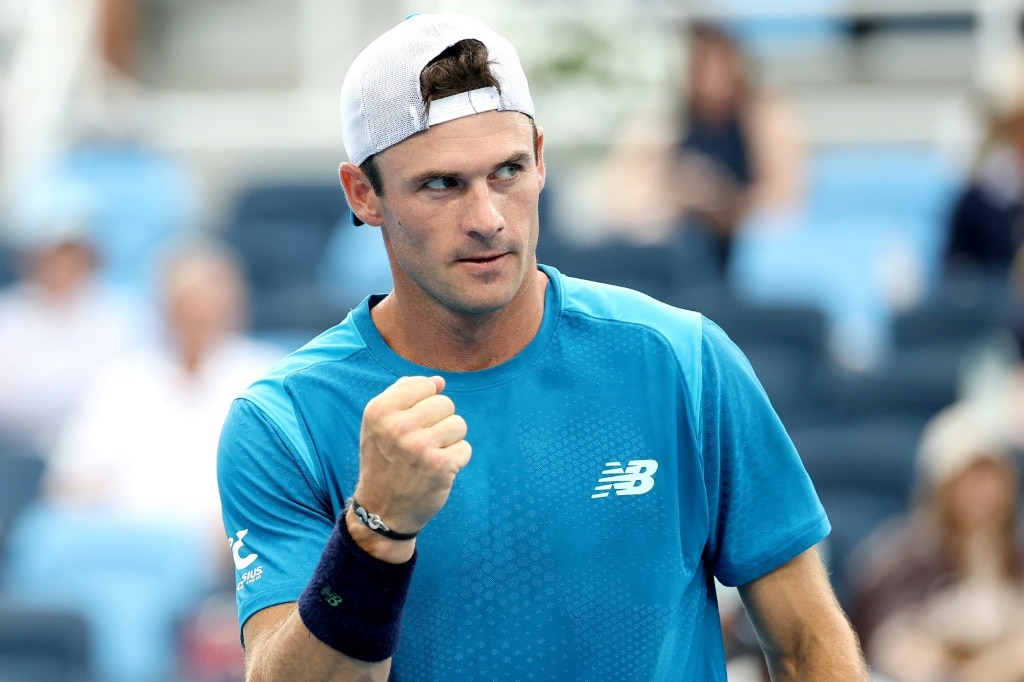
    The ATP-WTA Cincinnati Masters, the final high-profile elite hard-court tournament ahead of the US Open kicking off on August 26, delivered a wave of stunning upsets and dramatic matches on Wednesday. Headlining the day’s surprises was American Tommy Paul, who fought off a match point, navigated multiple rain delays, and pulled off a 4-6, 7-6 (8/6), 6-4 victory over tournament top seed Alexander Zverev to book his spot in the men’s quarter-finals.

    Zverev, the reigning French Open champion, looked poised to seal a straight-set win when he held a match point at 6-5 in the second-set tiebreak, but a misfired volley into the net wasted his golden chance. The German looked to have gotten back on track in the decisive third set, breaking Paul’s serve to take a 4-2 lead. However, Paul responded with back-to-back breaks of his own to move ahead 5-4, then held his nerve in the final service game to close out the upset. The result marked Paul’s third win over Zverev in their past four head-to-head meetings.

    “I’m not sure how I did it,” Paul told reporters after the match. “I put some returns in, he gave me some looks at second serves and he threw in a few doubles (faults). That always helps a ton. I went after the ball a bit more, I was having fun out there. I hope I can keep building on this and peak at the US Open.”

    The two-and-a-half-hour clash was far from smooth sailing for either player: it was halted for 90 minutes mid-way through the seventh game of the second set due to heavy rain, with two additional five-minute breaks to allow staff to dry standing water off the court before play could resume.

    Paul will next face Italian rising star Flavio Cobolli, who himself pulled off a comeback victory to advance. Cobolli, this year’s Roland Garros runner-up, outlasted red-hot Spaniard Rafael Jodar 4-6, 7-6 (7/3), 6-3 after two and a half hours of grueling competition. All three of Cobolli’s wins in Cincinnati this year have gone the full three-set distance, and the run marks his second Masters 1000 quarter-final appearance of the season, following his run in Madrid. The result also prevented 19-year-old Jodar, who has been in scintillating form this season, from reaching his eighth quarter-final in nine events.

    “At the end of the second set and start of the third I told myself to believe, try on every point,” Cobolli said after his win. “I knew I had a chance. Rafa has had an unbelievable season but maybe he was a bit tired. At the end I deserved to win as I was fresher than him. I pushed to my limit to get through. Sometimes I have to remind myself that I’m really strong.”

    The upsets extended beyond Zverev’s exit, as Argentinian Thiago Tirante continued his extraordinary Cinderella run in Cincinnati. After beating 24-time Grand Slam champion Novak Djokovic in the second round, Tirante recovered from a set down to defeat Jakub Mensik 5-7, 6-4, 6-4 to reach the first Masters 1000 quarter-final of his career. In another men’s third-round match, French youngster Arthur Fils dominated fifth seed Alex de Minaur of Australia, cruising to a straightforward 6-3, 6-4 victory to secure his quarter-final spot.

    In the women’s draw, defending champion Iga Swiatek remained solid through her third-round clash, defeating France’s Diane Parry 6-3, 6-3 to advance. The seventh-seeded Pole, a six-time Grand Slam champion, converted her fourth match point to seal the 88-minute win, after being broken when she served for the match at 5-2 in the second set. Swiatek will face a rematch of last week’s Toronto final against Elena Rybakina, who eased past Diana Shnaider 6-4, 6-4 to book her quarter-final spot. Swiatek defeated Rybakina, the reigning Australian Open champion, to claim her first title of 2026 in Toronto last week.

    Two current Grand Slam champions suffered surprise exits on Wednesday. Ukraine’s Marta Kostyuk rallied from a set down to knock out fifth seed and French Open champion Mirra Andreeva 4-6, 6-0, 6-2. Sixth seed and Wimbledon champion Linda Noskova fell to American Amanda Anisimova 6-1, 6-4 in another match disrupted by rain. Anisimova will next face third-seeded compatriot Jessica Pegula, who overcame a second-set wobble to beat Romanian veteran Sorana Cirstea 6-2, 4-6, 7-5.

  • Chinese Valentine’s Day is rooted in legend and tradition, not just romance

    Chinese Valentine’s Day is rooted in legend and tradition, not just romance

    While many modern couples now frame Qixi, China’s traditional “Valentine’s Day,” around romantic dates, chocolate boxes, and flower bouquets, the centuries-old festival carries far deeper cultural roots that communities across Asia are working to preserve and pass to new generations. Observed annually on the seventh day of the seventh month of the lunar calendar (falling on August 19 in 2026), Qixi is celebrated far beyond China’s borders, with vibrant observances in Vietnam, Singapore, and other Asian communities with shared cultural heritage.

    In Beijing this year, the city’s Folk Custom Museum, located within the historic Dongyue Taoist Temple, marked the festival with its 14th consecutive year of Qixi programming, this time under the theme “Asking for Skills.” The event centered on the festival’s lesser-known core tradition of *qiqiao*—the historical practice of young women praying for improved dexterity, craftsmanship, and wisdom—bringing this ancient custom to life through interactive, hands-on activities for attendees of all ages.

    The day opened with a moving performance of traditional Chinese classical music, before transitioning to a series of workshops rooted in historic Qixi practices. Participants tried their hand at natural nail dyeing using garden balsam, a plant-based pigment long linked to wishes for beauty and good fortune, and created custom sachet-shaped bead paintings woven with Song brocade, a rare and precious Chinese silk textile, and strung with pearls that symbolize wholeness and prosperity. Many families also joined in making *qiaoguo*, a traditional decorative pastry shaped using carved wooden molds.

    “We especially hope that young audiences can understand the meaning of our traditional festivals through interactive and engaging experiences,” explained Jia Juan, a member of the museum’s public education department. The annual event draws roughly 500 attendees each year, and Jia walked through the festival’s layered origins: beyond the iconic romantic legend of the Cowherd and Weaver Girl, Qixi first grew from ancient Chinese astronomical worship, with *qiqiao* customs developing steadily through the Han Dynasty and flourishing during the Tang and Song dynasties (7th to 13th centuries).

    The romantic core of the festival draws from one of China’s most beloved ancient myths: Zhinü, the weaver girl represented by the star Vega, falls in love with Niulang, a mortal cowherd embodied by the star Altair. When their forbidden love draws the wrath of the Jade Emperor, he separates the pair across the Milky Way, granting them only one annual reunion on the seventh day of the seventh lunar month, when magpies form a bridge across the heavens for them to meet. Records of this legend date all the way back to the pre-Qin period, before 221 BCE.

    Thousands of miles away in Singapore, cultural organizers are working to revive Qixi traditions that faded among younger generations after the festival was first brought to the country by Chinese migrant women in the 1930s. Researcher Lynn Wong launched Qixi Fest, a multiday public initiative, in 2023 to reintroduce the custom to modern Singaporeans, with this year’s program running through August 23.

    Wong’s work to revive the festival grew from a personal realization: despite growing up in a Chinese Singaporean community, she had never encountered Qixi growing up, raised instead on Western fairy tales and folk stories. She began interviewing elderly community members to collect their memories of the festival, documenting her research in a book to preserve the oral history of the tradition. “We’re trying to create the childhood memories of this new generation of Singaporeans so that they grow up with the stories that our forefathers grew up with,” she said.

    For Singaporean Hor Xin Hao, a Cantonese descendant who maintains his family’s generations-old Qixi rituals, the modern framing of Qixi as simply a Chinese Valentine’s Day diminishes the festival’s far broader cultural meaning. Each year, his family sets up an outdoor prayer table facing the night sky late on the sixth day of the seventh lunar month, offering prayers and gifts of incense, fresh flowers, perfume, cosmetics, and soap through midnight to honor the Seven Maidens, the celestial sisters that include Zhinü the Weaver Girl. These offerings are believed to bring blessings of beauty and good fortune.

    “I personally feel that the idea of a Valentine’s Day actually reduces the original idea behind the festival into something narrower,” Hor explained. For him, Qixi is far more than a celebration of romance: it is a tribute to ancestral legacy, traditional values, and humanity’s connection to the natural world and the stars above. “It contains the way we look at life from the interaction between us and the universe,” he said.