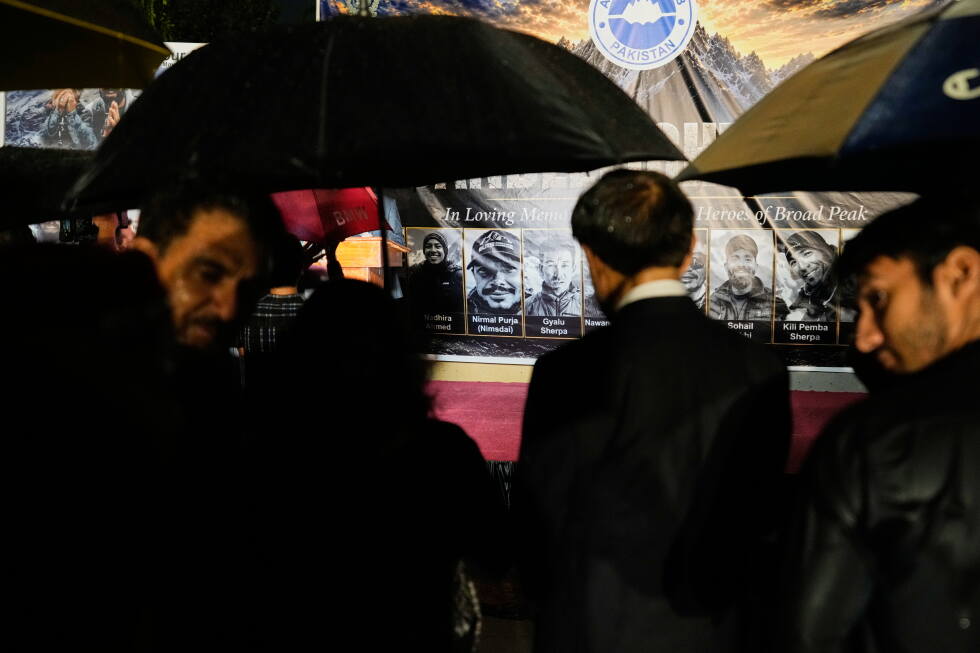
Nearly two months after a catastrophic avalanche swept away an international mountaineering expedition on Pakistan’s Broad Peak, search operations have concluded with the recovery of the last missing climber, 39-year-old American mountaineer Mallory Geis. Pakistan Alpine Club president Irfan Arshad Khan confirmed Friday that a crew of local volunteer searchers located Geis’ remains, bringing closure to the massive search operation launched after the July 31 incident that claimed the lives of all 10 members of the expedition.
Geis, a resident of San Antonio, Texas, had embarked on the Broad Peak expedition as her first attempt to summit one of the world’s 14 peaks over 8,000 meters, which stands at 26,247 feet above sea level. Earlier this year, she shared her ambitious life shift on social media: she had closed her local Pilates studio to step into what she called “a giant leap of faith into the unknown to see where life goes.” She added at the time that she suspected her future would hold “lots of helmets, harnesses, and crampons,” leaning fully into her passion for high-altitude climbing.
In the weeks following the avalanche, Geis’ family released a public statement honoring her memory, describing her as “a bright light who was loved deeply by family and friends.”
The ill-fated expedition was led by Nirmal Purja, a Nepal-born former British Army soldier better known to the climbing community as Nims Dai. Purja earned global fame for his groundbreaking 2019 achievement of scaling all 14 of the world’s 8,000-meter peaks in a record-breaking 189 days, a feat that was later chronicled in the popular Netflix documentary *14 Peaks: Nothing Is Impossible*. Purja’s speed record was ultimately broken by another climber in 2023.
High-altitude climbing expeditions in northern Pakistan’s Karakoram Range, where Broad Peak is located, carry inherently high risk. Avalanches, falling ice and rock, severe altitude sickness, and rapidly shifting weather patterns make fatal accidents a common occurrence for climbing teams operating in the region.