博客

  • Ukraine says ‘cynical’ Russian strike on shopping centre killed 14

    Ukraine says ‘cynical’ Russian strike on shopping centre killed 14

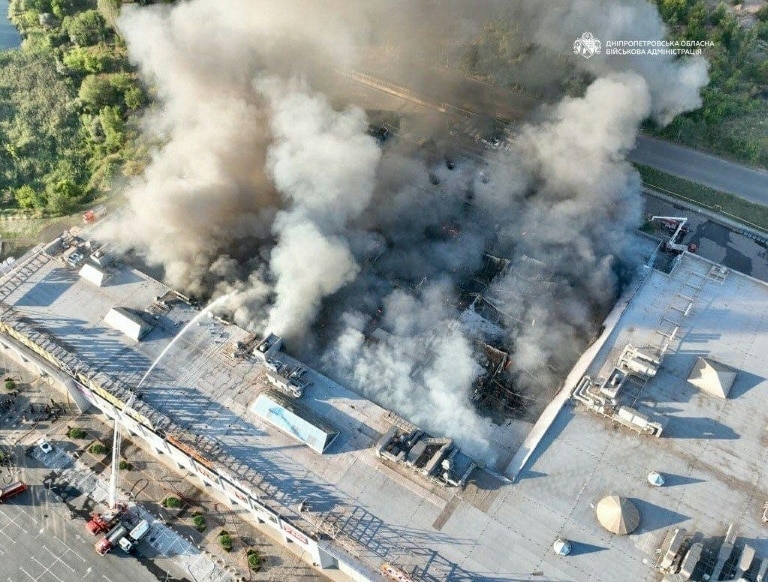
    On a recent Friday, two successive Russian drone attacks targeted a crowded civilian shopping center in Kryvyi Rih, Ukrainian President Volodymyr Zelenskyy’s hometown in eastern Ukraine, leaving at least 14 people dead and dozens more injured, in an assault Zelenskyy has denounced as a cynical and morally repugnant act of violence against innocent civilians. Regional military administration head Oleksandr Ganzha confirmed the casualty count, reporting that the strikes ignited large blazes inside the commercial building and left 121 people wounded, many seriously. A separate simultaneous strike in the southern Mykolaiv region claimed four additional lives, including those of three children, Ukraine’s Interior Minister Ivan Vygivsky announced via the messaging platform Telegram.

    Social media footage captured from the scene of the Kryvyi Rih attack shows thick black smoke billowing from the shopping center’s structure, with first responders scrambling to pull survivors from the rubble and treat injured civilians on surrounding sidewalks. In a startling escalation, a second drone struck the building’s roof roughly 30 minutes after the first impact—a deliberate secondary attack that Zelenskyy stated was intended to target rescue workers who had rushed to the scene to save lives. Located just 37 miles from active frontline positions, the industrial city of Kryvyi Rih has faced repeated Russian bombardment throughout the full duration of Moscow’s full-scale invasion.

    The deadly attack comes amid a months-long trend of intensified Russian airstrikes and drone bombardments across Ukrainian populated areas, a shift that has coincided with a sharp rise in civilian fatalities. The United Nations has recorded that 2026’s civilian death toll has already climbed to its highest point since the opening weeks of the 2022 invasion, highlighting the growing danger to non-combatants as the conflict grinds on. The strike also comes just days before a key meeting of Ukraine’s international backers, scheduled to take place Monday to coincide with Ukraine’s Independence Day, where allied leaders will gather to reaffirm their commitment to supporting Kyiv’s defense efforts.

    The gathering, organized under the umbrella of the ‘Coalition of the Willing’, will be co-chaired by French President Emmanuel Macron, participating via video link, German Chancellor Friedrich Merz, and new British Prime Minister Andy Burnham. A senior European Union official confirmed that roughly 10 senior leaders, including European Council President Antonio Costa, will travel to Kyiv to attend the talks in person. In the wake of Friday’s attacks, Zelenskyy has issued an urgent call for unified, forceful action from Ukraine’s international partners, stressing that sustained diplomatic and economic pressure on Moscow is the only path to meaningful peace. “The world must respond to them accordingly—with real pressure on the aggressor. For peace to be possible, Russia must face real accountability,” Zelenskyy wrote in a post on X.

    Shortly after the strikes, Zelenskyy held a scheduled call with United Nations Secretary-General António Guterres, where he updated the UN chief on the scope of the attacks and the civilian casualties they caused, according to a statement from the Ukrainian leader on social media. For months, Kyiv has repeatedly lobbied its Western allies for additional air defense systems, as Ukrainian forces struggle to intercept the growing volume of Russian ballistic missile and drone salvos targeting civilian infrastructure across the country. In response to intensified Russian strikes, Ukraine has also stepped up its own retaliatory attacks on Russian territory in recent months, in a bid to alter the conflict’s momentum and pressure Moscow to enter good-faith negotiations to end the war—Europe’s deadliest armed conflict since World War II.

    To date, all diplomatic efforts to broker a ceasefire or lasting peace deal have stalled. Moscow continues to demand sweeping territorial concessions and major political concessions from Kyiv, terms Zelenskyy has repeatedly rejected. The Ukrainian president has argued that accepting Russia’s demands would amount to unconditional capitulation, leaving Ukraine permanently vulnerable to future Russian aggression.

  • Meghan in talks for role in Netflix series The Gentlemen, BBC understands

    Meghan in talks for role in Netflix series The Gentlemen, BBC understands

    Nearly seven years after stepping back from her professional acting career to join the British royal family, the Duchess of Sussex is reportedly exploring a high-profile return to the screen, with early-stage discussions underway for a role in Guy Ritchie’s hit Netflix original series *The Gentlemen*, the BBC has confirmed.

    If a deal is finalized, the gig will mark Meghan’s first major acting credit since her 2018 marriage to Prince Harry, ending a nearly decade-long hiatus from full-time on-screen work. It also comes as the couple prepares for a major life shift: the pair are set to relocate from their current California home back to the United Kingdom later this month, where they will take up residence in a private non-royal estate outside London, according to initial reports from the *Daily Telegraph* and The Sun.

    Intriguingly, the timing and location align closely with *The Gentlemen*’s production history. The show’s first two seasons, which star Theo James in the lead role of an aristocrat turned drug baron, were primarily filmed on location in the Cotswolds, the English rural region long rumored to be a favored area for Harry and Meghan’s UK base. The series has already attracted high-profile British acting talent including Hugh Bonneville and Vinnie Jones in previous installments.

    As of yet, no details have been released regarding the specific character Meghan might play, nor have negotiations progressed far enough to confirm the part will be offered. The duchess, who is a U.S. native, built her acting reputation over seven seasons on the long-running American legal drama *Suits*, where she portrayed sharp-witted corporate lawyer Rachel Zane until her final episode aired in 2018, just months after her wedding. When she stepped away from acting that year, she framed the decision not as a sacrifice, but as an exciting new life chapter in an interview with the BBC.

    Meghan has dipped her toes back into on-screen work in recent months: she recently filmed a small cameo as herself in the upcoming comedy *Close Personal Friends*, which stars A-list leads Lily Collins and Brie Larson, marking her first acting appearance in nearly 10 years.

    Industry analysts note that a return to regular acting would likely be financially lucrative for the duchess, who stepped back from official royal duties in 2020 and has since built independent commercial ventures alongside Harry. During her upcoming time based in the UK, the BBC understands she also plans to expand the global footprint of her U.S.-founded lifestyle and culinary brand As Ever.

    The couple’s upcoming relocation also includes major changes for their young family: their two children, 7-year-old Prince Archie and 5-year-old Princess Lilibet, have already been enrolled to start at a British school in September. A source close to the couple confirmed there are no current plans for either Harry or Meghan to resume their former roles as working members of the British royal family following the move.

  • UK court orders Prince Harry, others to pay Daily Mail initial £9.5mn

    UK court orders Prince Harry, others to pay Daily Mail initial £9.5mn

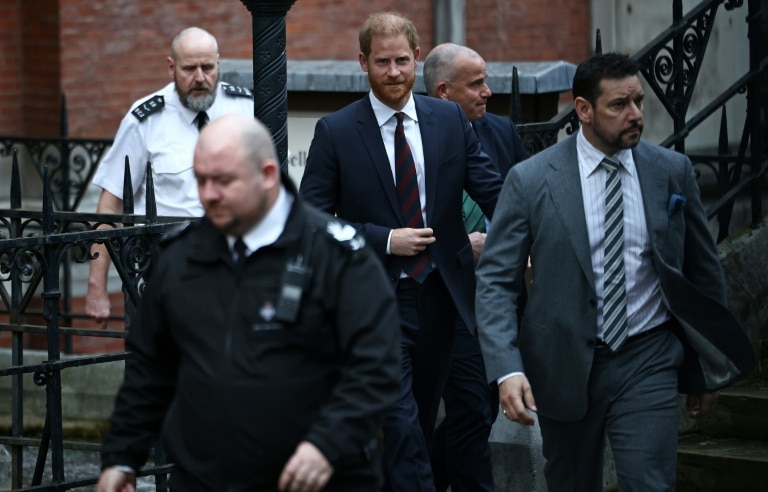
    In a high-stakes legal ruling that caps months of dramatic courtroom proceedings, the United Kingdom’s High Court has ordered Prince Harry, Duke of Sussex, and six other high-profile co-claimants to hand over an initial £9.5 million ($13 million) in interim legal costs to Associated Newspapers Limited (ANL), publisher of the tabloid *Daily Mail*, following their defeat in a high-profile privacy and unlawful information gathering lawsuit. The payment deadline is set for 4 p.m. GMT on August 28, just seven days after the Friday ruling.

    The lawsuit, which stretched over an 11-week emotional trial that included in-person testimony from Prince Harry, pitted the seven claimants — which also include music legend Elton John, John’s husband David Furnish, actors Elizabeth Hurley and Sadie Frost, and former Member of Parliament Simon Hughes — against ANL. The group accused the tabloid publisher of orchestrating widespread privacy violations, including planting bugging devices in the claimants’ homes and vehicles, intercepting private calls, and using other unlawful techniques to obtain personal information. ANL has consistently and vehemently denied every allegation brought forward in the case.

    On July 7, High Court Judge Matthew Nicklin issued a core ruling siding entirely with ANL, finding that the claimants had failed to produce sufficient evidence to back up their formal legal claims. This new Friday order follows a two-day additional hearing focused solely on who would bear the massive legal costs generated by the case. In his latest ruling, Nicklin repeated harsh criticism of the claimants’ case, describing it as “speculative and substantially inferential.”

    Notably, ANL has estimated its total total defense costs reached roughly £34.5 million as of July 9, but Nicklin flagged the figure as excessive and largely unsupported by documentation. He raised “real concerns” over whether all the costs claimed by ANL were actually reasonably incurred, and stressed that the court has not yet ruled on the final total amount the claimants will ultimately be required to pay. The final determination of unpaid costs will be handled by a dedicated costs judge if the two sides cannot reach a negotiated agreement.

    In a key decision that increases the financial liability for the claimants, Nicklin rejected their request to assess costs on the standard basis, instead granting ANL’s request for the stricter indemnity basis of cost recovery. The ruling explained that the way the litigation was conducted pushed it “well outside the norm,” citing the extreme gravity of the allegations against ANL as one of the core factors justifying the decision. Court filings previously showed that the claimants’ combined insurance coverage for costs totals £16.2 million, creating a substantial gap between that coverage and ANL’s claimed total costs, meaning the seven claimants could face significant out-of-pocket expenses beyond their insurance.

    The court also set a formal timeline for any potential appeal: claimants must file requests for permission to appeal the July 7 ruling by October 2. This development comes less than 48 hours after breaking news that Prince Harry and his wife Meghan Markle plan to relocate their family back to the UK from their current home in Montecito, California, in the coming weeks.

    Reaction to Friday’s ruling split sharply along the lines of the original case. After the July ruling, Prince Harry and anti-racism campaigner Doreen Lawrence (another co-claimant) called the outcome “a complete and obvious whitewash.” Following the new cost order, an ANL spokesperson framed the decision as “another overwhelming victory for the Mail and its journalism,” adding that the judge’s ruling amounted to “a devastating critique of an attempt to destroy a newspaper and the reputations of its journalists, editors and executives.” For his part, Simon Hughes said he was “disappointed and surprised” that the judge had not capped the amount of costs ANL can recover from the claimants.

  • Tesla recalls nearly 3M vehicles in China over door handle safety risks

    Tesla recalls nearly 3M vehicles in China over door handle safety risks

    In a sweeping safety action that marks the largest automotive recall of 2024, Tesla and four major Chinese electric vehicle manufacturers are pulling more than 4 million vehicles off Chinese markets to address hazards linked to popular hidden flush door handles, China’s top market regulator announced Friday.

    The U.S.-based electric vehicle leader accounts for the vast majority of the recalled units, with 2.98 million affected vehicles including both China-produced and imported variants of its four core models: Model 3, Model Y, Model X, and Model S. Beijing-based technology conglomerate Xiaomi, which only recently launched its first line of consumer EVs, is recalling more than 390,000 units, while Hangzhou-headquartered EV startup Leapmotor is pulling over 370,000 vehicles. Established Chinese automaker Geely and leading EV brand XPENG are also conducting smaller recalls tied to the same safety issue, regulator data shows.

    The recall action comes roughly eight months after Chinese regulators first announced that hidden door handles — a design widely adopted by EV makers to improve aerodynamic efficiency and extend driving range — will be banned for all new vehicles starting in 2027. Chinese officials have ramped up regulatory scrutiny of the flush handle design after a series of traffic accidents both in China and abroad documented cases where electronic hidden door handles failed to operate after severe collisions, trapping occupants inside and slowing emergency rescue efforts.

    In the official notice posted to the State Administration for Market Regulation (SAMR) website, the regulator outlined the specific risk: in extreme crash scenarios that cause total vehicle electrical system failure, the non-mechanical hidden handles can block quick exit for trapped passengers and prevent first responders from gaining immediate access to the vehicle cabin. To resolve the hazard, Tesla will roll out free over-the-air software updates to all affected vehicles to adjust handle functionality, according to the regulator. Tesla has not yet issued an independent public comment or response to requests for clarification as of Friday.

    People’s Daily, the official newspaper of the Communist Party of China, framed the industry-wide recall as a coordinated proactive safety upgrade for all existing vehicles ahead of the 2027 ban taking effect. The state publication noted that for China’s fast-growing new energy vehicle sector, industrial competitiveness depends not only on rapid technological innovation but also on meeting rigorous, consistent public safety standards.

    The large-scale recall is one of the most high-profile regulatory actions taken by China in recent years to tighten oversight of the booming EV sector, which has grown exponentially to lead global electric vehicle production and sales. Industry analysts note the move signals Beijing’s growing priority on passenger safety as the segment matures, moving beyond a focus purely on market expansion and technological firsts.

  • Exclusive: UK’s advertising regulator not investigating Great Israeli Real Estate Event

    Exclusive: UK’s advertising regulator not investigating Great Israeli Real Estate Event

    Exclusive reporting from Middle East Eye (MEE) has uncovered that the United Kingdom’s independent advertising regulator has declined to open a formal investigation into a London-based real estate event that promoted housing developments in illegal Israeli settlements in the occupied Palestinian territories, despite a formal request from senior UK government ministers to launch an urgent probe. The controversy first erupted in mid-June, when MEE broke the story that the Great Israeli Real Estate Event, held at London’s Edgware United Synagogue, included advertisements for properties built in settlements deemed illegal under international law.

    The day after MEE’s initial report, then-Foreign Secretary Yvette Cooper announced to Parliament that the government had formally referred the event to the Advertising Standards Authority (ASA), calling for an urgent review to ensure all UK advertising rules were being upheld. Two senior government ministers – Hamish Falconer of the Foreign Office and Ian Murray of the Department for Digital, Culture, Media and Sport – followed up with a formal letter to the ASA on June 14, asking the regulator to examine evidence of settlement advertising and ensure compliance with UK domestic laws and guidance.

    Despite this high-level government referral, MEE has confirmed the ASA has never initiated a formal investigation into the event. A spokesperson for the regulator explained that it does not have grounds to open a probe without formal complaints from the public, and noted the agency would only move forward with an investigation if concrete evidence of unlawful advertising is submitted to it. The ASA’s position is rooted in its independent mandate, which grants the regulator full autonomy to decide whether to open formal inquiries, regardless of government requests.

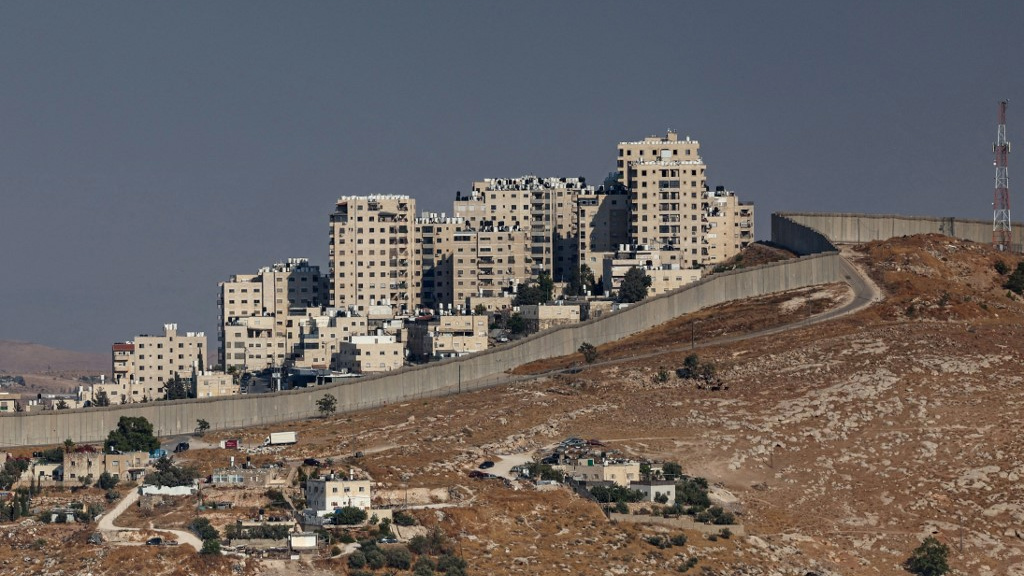
    MEE’s own on-the-ground reporting from the event produced concrete visual evidence of settlement promotion, including brochures and leaflets from multiple Israeli real estate firms advertising developments in illegal settlements across the occupied West Bank and East Jerusalem. Developer Harey Zahav promoted two illegal West Bank settlements, Kfar Eldad south of Bethlehem and Teneh Omarim near Hebron, at the event. Leading Israeli agency Tivuch Shelly advertised a new housing project in Ma’ale Adummim, a large illegal settlement in the central occupied West Bank, marketing the development as an “exciting new project just 10 minutes from Jerusalem!” Another firm, Jerusalem Real Estate, advertised projects in French Hill and Ramat Eshkol – both illegal settlements in occupied East Jerusalem.

    After MEE’s initial reporting exposed the activity, event organizers publicly acknowledged that properties in illegal settlements had been promoted, claiming the inclusion was an accidental error.

    The controversy has also sparked regulatory action against the Edgware United Synagogue, which hosted the gathering. Last week, the UK Charity Commission issued a public rebuke to the synagogue’s trustees, criticizing their decision to allow the event on charity-owned property. The commission announced it would reopen a previously closed compliance case into the synagogue, noting that the trustees overrode an institutional ban on the event and failed to implement sufficient checks to enforce booking terms, despite holding personal misgivings about the gathering. “We share concerns about the potential impact, including on public trust and confidence, of registered charities being seen to actively assist in the development or expansion of illegal settlements in Palestine,” the commission said in a statement, adding that “charity premises must not be misused.” The regulator confirmed it would consider escalating its formal regulatory action if further concerns about the synagogue’s conduct arise.

  • Death of Syrian detainee sparks protest and conversation about prison reform

    Death of Syrian detainee sparks protest and conversation about prison reform

    ### Custody Death Sparks National Outcry as Syria Navigates Post-Assad Reform
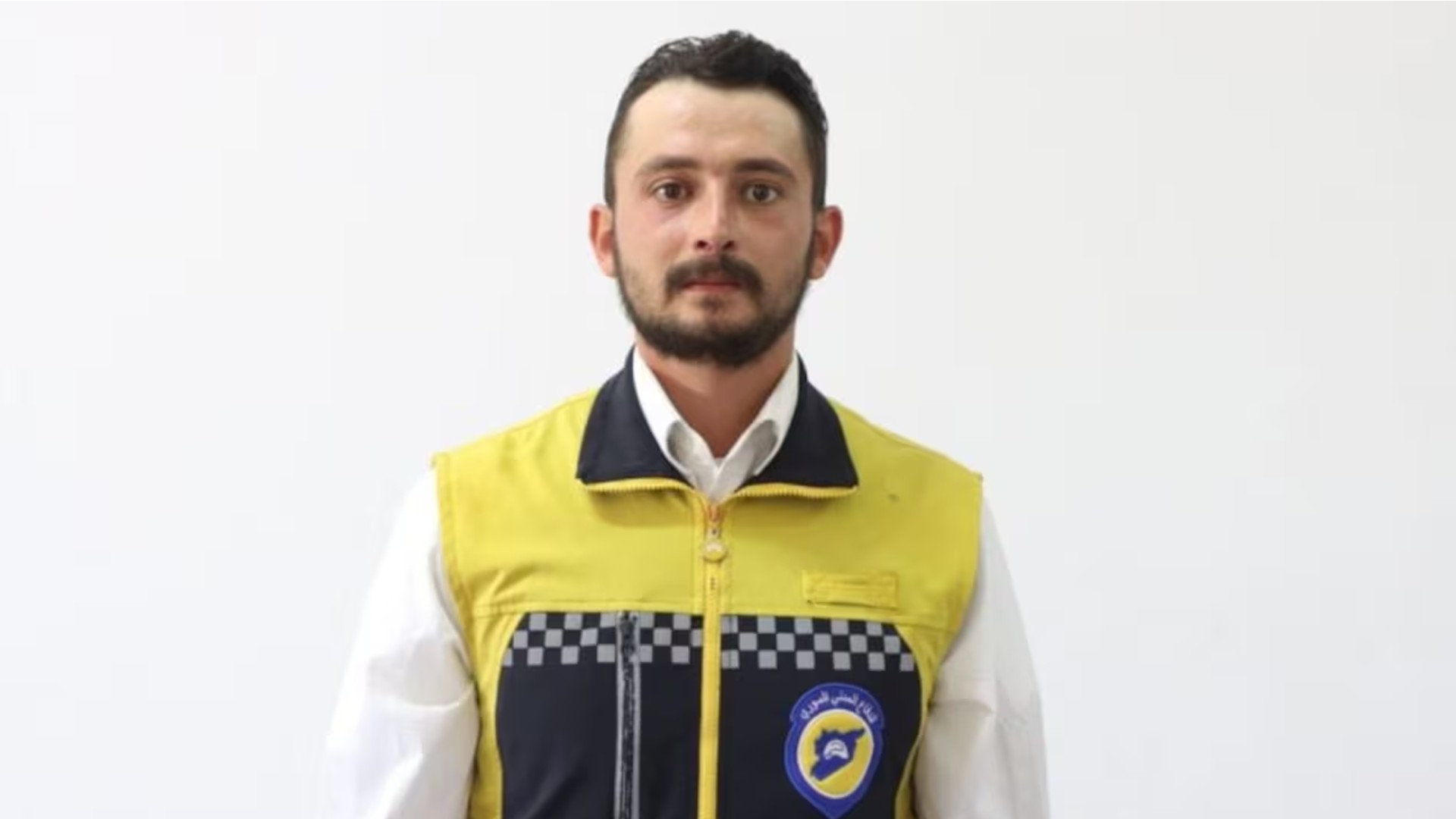
    Nearly eight months after the collapse of Bashar al-Assad’s 24-year authoritarian regime, the in-custody death of a 29-year-old former rescue volunteer has ignited widespread public protest and renewed scrutiny of Syria’s transitional government’s efforts to dismantle the legacy of systemic detention abuse. Mohammed Ghamira, a father of two who previously volunteered with the White Helmets civilian rescue organization, was taken into custody earlier this month over an alleged financial dispute. He was transferred from a police station in Latakia province’s al-Haffah district in critical condition, and pronounced dead shortly after arriving at a local hospital.

    Official statements from Syrian authorities confirmed Ghamira’s death was caused by cerebral and gastrointestinal hemorrhaging stemming from a beating he received while in detention. The young man lived with hemophilia, a rare bleeding disorder that prevents the body from clotting blood properly after injury. Ghamira’s family confirmed they had explicitly warned detention officials of his pre-existing condition and requested he not be subjected to physical violence before his death.

    A three-day official investigation launched by the new Syrian administration concluded Thursday, finding that Ghamira died after being slapped by a police investigator. The officer responsible for the assault has been taken into custody and referred to judicial authorities for prosecution. The probe also uncovered multiple procedural failures and negligence on the part of the local police department’s chief and the investigating officer, most critically the failure to document Ghamira’s known medical condition in official detention records.

    News of Ghamira’s death quickly sparked public backlash across the country. Earlier this week, hundreds of demonstrators gathered in Aleppo to demand full accountability for the killing. Many carried signs bearing the message: “Do not repeat the oppression that we revolted against,” echoing widespread public rejection of the abusive detention system that defined the Assad era. Syrian activist Nedal al-Amari called the case a devastating betrayal of the revolution that ousted Assad last December. “After liberation, every Syrian who is killed under torture in state prisons or institutions is a disgrace that we, as people of the revolution, have to carry,” al-Amari wrote on social media platform X.

    Ahmed al-Sharaa’s new government took power in December 2024 after a rapid offensive defeated Assad’s forces, ending decades of brutal authoritarian rule. During Assad’s time in power, the regime oversaw a sprawling network of more than 100 detention facilities where systematic torture, extrajudicial killing, and enforced disappearance were widespread. Rights groups documented that between the start of the 2011 pro-democracy protests that sparked the civil war and August 2024, more than 150,000 people—including more than 5,000 children and 10,000 women—were arrested by Assad’s security forces. Tens of thousands of detainees were tortured to death in facilities like Sednaya Prison, which Amnesty International labeled a “human slaughterhouse,” where mass executions, deliberate starvation, and mass unmarked graves of detainees were documented as crimes against humanity.

    International and local rights analysts say the public backlash over Ghamira’s death signals a key shift from the Assad era, when open discussion of abuse in custody was strictly forbidden and criticism of the regime carried severe punishment. Saana-Maria Jokinen, a Syria-based human rights researcher and writer, noted that unlike during Assad’s rule, Ghamira’s death is being openly covered by Syrian media, and citizens are freely expressing outrage and demanding accountability without fear of repression. “A very tragic case,” Jokinen wrote on X. “However, in stark contrast to the days of the Assad regime, Ghamira’s death is openly discussed in the Syrian media and Syrians aren’t afraid to voice their criticism.”

    Local and international human rights groups acknowledge that the fall of the Assad regime brought an immediate end to the centralized system of mass arbitrary detention, enforced disappearance, and systematic torture that defined the prior era. The Syrian Network for Human Rights (SNHR), a leading independent monitoring group, told Middle East Eye that meaningful progress has already been made under the transitional government. The new Syrian constitution, adopted in March 2025, includes explicit legal protections: Article 18 enshrines guarantees for human dignity and physical integrity, and explicitly bans enforced disappearance as well as physical and psychological torture. SNHR data shows at least 993 detainees have been released from former regime detention facilities in the first half of 2025 alone.

    At the same time, the monitoring group documented 192 cases of arbitrary detention by the transitional government in the same six-month period, and warned that a fully compliant, rights-respecting detention system aligned with Syria’s international human rights obligations has not yet been fully built. “These facts show, at one and the same time, a measure of progress and the limits of this progress,” SNHR said. The group rejected claims that the new administration has recreated the abusive detention apparatus of the Assad regime, noting there is no evidence of centrally orchestrated torture or mass arbitrary detention under the current government. Instead, the risks to detainees stem from ongoing institutional gaps and procedural failures.

    “A detainee remains at risk when his arrest isn’t registered immediately, his family isn’t informed of his whereabouts, lawyers and doctors can’t reach him quickly, or when he is held in unofficial facilities, his transfers aren’t documented, and independent monitors can’t inspect places of detention without prior notification,” SNHR explained. The organization has called on the transitional government to implement urgent reforms, including creating a unified, public register of all detainees, guaranteeing timely access to legal representation, family visits, and medical care for all people in custody, shutting down unofficial detention facilities that operate outside formal judicial and administrative oversight, and opening all detention sites to independent inspection.

  • At least 2 teens seriously wounded in sword attack at Swedish school

    At least 2 teens seriously wounded in sword attack at Swedish school

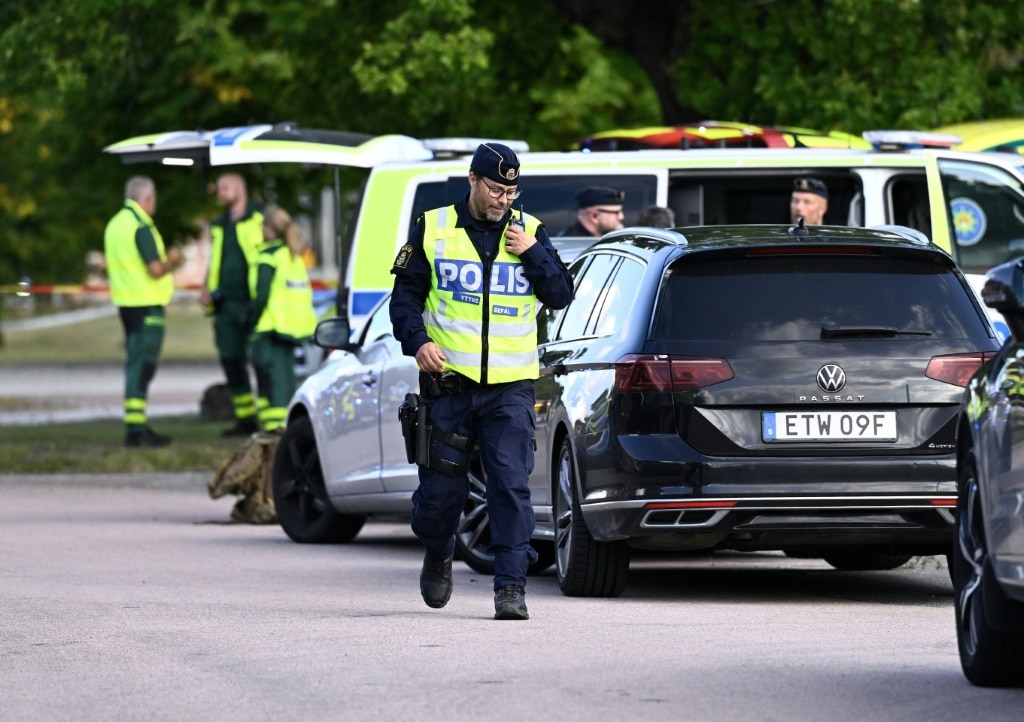
    A violent sword attack at Brinellskolan high school in Fagersta, central Sweden, has left at least two teenage boys seriously injured, sending shockwaves through the small community just days after students returned from summer break. Regional healthcare officials confirmed the two wounded teenagers, aged between 12 and 17, were admitted to hospital for emergency care; one underwent urgent surgery, though both have since been stabilized. A third person with unspecified injuries is also being transported for medical treatment, local authorities confirmed.

    Local police first received emergency calls reporting the attack shortly after 2:00 pm local time (1200 GMT) on Friday. In an official statement, the Fagersta municipality confirmed that an unidentified sword-wielding assailant had entered the school grounds and wounded multiple people before being taken into police custody. Multiple Swedish media outlets, including leading newspaper Aftonbladet and public broadcaster SVT, have reported that the attacker, an 18-year-old former student at the school, was shot in the leg by police during the arrest operation. Citing anonymous sources, SVT added the perpetrator had a prior assault conviction and wore a protective helmet during the attack, a detail that echoes a fatal 2015 sword attack at a Trollhattan school that left three people dead in a racially motivated attack.

    In the immediate aftermath of the incident, Brinellskolan and several nearby schools were placed under full lockdown, with students and staff locked in secure locations for more than three hours. The lockdown was eventually lifted, but authorities postponed a scheduled 5:00 pm press conference, noting that search and rescue operations were still ongoing at the school campus. Footage and images from the scene captured a large emergency response, with multiple ambulances, dozens of police vehicles, and a police helicopter deployed to the small town of 12,000 residents, which is home to Brinellskolan’s 450-student body. Dozens of anxious parents gathered outside the school gates waiting for updates on their children, with one parent, Agnes, telling Swedish news agency TT that being close to the campus helped ease some of her fear after her daughter called to report she was sheltering in the school library. This is not the first security incident at the school: in May this year, the entire student body was sent home after an unconfirmed threat was made against the campus.

    Swedish Prime Minister Ulf Kristersson released an official written statement to AFP confirming the severity of the incident, noting that it occurred just as students resumed classes following the summer holiday. “We do not yet know what lies behind the attack, but we do know that the police are working extremely intensively,” Kristersson said, adding that he had canceled a scheduled policy speech in Stockholm to focus on coordinating the government’s response to the attack. Magdalena Andersson, leader of the opposition Social Democrats, called the attack “terrible news” in a post on X, writing, “When violence takes place at a school, I know it impacts everyone in our country. All of Sweden stands with Fagersta in this difficult time.”

    The attack marks the latest in a string of high-profile violent incidents at Swedish educational institutions over the past decade. In February 2025, a 35-year-old man opened fire at an adult education center in Orebro, killing 10 people in what remains Sweden’s deadliest mass shooting; police later confirmed the attacker was motivated by personal financial and psychological distress. In March 2022, an 18-year-old student fatally stabbed two teachers at a secondary school in the southern city of Malmo. The 2015 Trollhattan attack, which matches the modus operandi of Friday’s incident, left three people dead at the hands of a sword-wielding attacker who was killed by police at the scene. As of Friday evening, authorities have not released a confirmed motive for the Fagersta attack.

  • US borrowing costs rise as attempts to ease rates prove short-lived

    US borrowing costs rise as attempts to ease rates prove short-lived

    A last-ditch intervention by the U.S. Treasury Department to cool rising long-term borrowing costs has delivered only temporary relief, leaving bond yields back on an upward trajectory just days after the policy announcement and raising fresh concerns about the impact on household lending and economic stability.

    Earlier this week, Treasury Secretary Scott Bessent unveiled plans to ramp up government debt buybacks, a move designed to stimulate bond market demand and pull down the yields that set benchmark borrowing costs for governments and major corporations around the globe. Immediately after the announcement, 30-year bond yields dipped from an almost two-decade peak of 5.34% to 5.18%, marking a sharp short-term drop. But by Friday, that momentum had fully reversed: the 30-year yield climbed back to roughly 5.27%, erasing most of the initial decline.

    For American consumers, this backslide carries tangible consequences: movements in government bond yields directly influence the interest rates on 30-year mortgages, auto loans and other forms of consumer borrowing, meaning higher rates are likely to persist for households looking to borrow for big-ticket purchases.

    Economists across leading financial institutions have characterized the intervention’s impact as predictably short-lived, rooted in deeper structural pressures that no small-scale policy signal can resolve. The core source of market anxiety, analysts note, is the recent milestone of U.S. national debt surpassing $40tn, doubling from less than $20tn a decade ago. Decades of elevated public spending under both the Trump and Biden administrations, paired with growing interest payments that add to the total balance, have left investors demanding higher returns to hold U.S. government debt.

    “The response to the government’s intervention was unsurprisingly short-lived,” noted John Canavan, lead analyst at Oxford Economics. He added that traders remain fixated on the daunting volume of global borrowing by both governments and corporations, alongside recent spikes in global oil prices that have stoked fresh inflation fears.

    Economists at Capital Economics echoed that assessment, pointing out that Bessent himself framed the buyback plan as largely a signaling measure to demonstrate the Treasury’s willingness to act when yields hit current levels. “It is not necessarily an effective one, however, as much of the initial fall in 30-year yields has now been reversed,” the firm said.

    Bessent has pushed back against criticism of the current fiscal trajectory, blaming the prior Biden administration for the ballooning debt in comments to U.S. media Thursday. “We did not get here in a day, we were left with a mess,” he said. The BBC has confirmed it has reached out to the Treasury Department for additional comment on the bond market’s weak response to the intervention.

    Beyond fiscal expansion, multiple overlapping factors have driven global borrowing costs higher in recent months. The ongoing U.S.-Iran war has disrupted global oil supplies, pushing energy prices up and reigniting investor fears that inflation will remain elevated. At the same time, large-scale borrowing by technology firms chasing artificial intelligence development — a sector where long-term returns remain deeply uncertain — has increased competition for capital, pushing yields up. Tax revenues that continue to fall short of public spending commitments have added further pressure on bond markets.

    The ongoing bond market volatility has already triggered ripple effects across other global asset markets. The U.S. dollar, the world’s primary reserve currency held in bulk by central banks for international transactions and exchange rate stabilization, has weakened amid the uncertainty. A weaker dollar makes U.S. exports more competitive on global markets, but it also raises the cost of imported goods for U.S. consumers, reduces the purchasing power of American travelers abroad, and makes U.S. travel and tourism more affordable for international visitors.

    In response to the market uncertainty, safe-haven assets have rallied: gold hit a three-month high on Friday, as investors continued to view the precious metal as one of the most stable stores of value during periods of economic and market volatility.

  • Germany investigates Russia links to weapons cache discovered in woods, reports say

    Germany investigates Russia links to weapons cache discovered in woods, reports say

    Germany is confronting a fresh escalation of alleged foreign espionage and violent threat activity linked to Russian intelligence, after authorities uncovered a hidden weapons stockpile in a wooded area on Berlin’s outskirts that investigators believe was intended to carry out contract assassinations on Moscow’s behalf.

    According to statements from German Interior Minister Alexander Dobrindt, domestic intelligence services first received intelligence pointing to the existence of the unregistered weapons cache back in October of last year. Working alongside the Berlin State Police, security officials successfully located the stash, which contained two fully functional handguns along with a stock of matching ammunition. After recovering the weapons and disabling them to prevent any unauthorized use, law enforcement opted to leave the cache site under continuous surveillance for several months — a tactical move that ultimately failed to draw any individuals connected to the stockpile to the location.

    Dobrindt confirmed that federal prosecutors have opened a formal investigation into a suspect currently detained in Romania, who is already facing charges connected to alleged planned parcel bomb attacks on Romanian soil. The minister described the individual as a low-level operative, declining to release further details including their nationality, and noted that the German investigation will factor into upcoming discussions over a potential extradition request.

    Initial media reporting from leading German outlets including *Süddeutsche Zeitung* and public broadcasters NDR and WDR was the first to link the weapons cache directly to Russian intelligence, alleging the stockpile was pre-positioned to enable future targeted killings of high-profile figures on German territory. While Dobrindt stopped short of formally confirming explicit Russian connections to the cache during his public statement, he emphasized that the involvement of foreign powers could not be ruled out.

    This investigation builds on years of growing tensions and confirmed cases of Russian state-sponsored violence on German soil. German security agencies have issued repeated warnings over recent months that Russian intelligence services are actively plotting assassination attempts inside Germany, with potential targets including senior executives in the German defense industry and Russian opposition figures living in exile in the country.

    The most high-profile prior incident came in 2024, when a CNN report revealing a Russian plot to assassinate Armin Papperger, CEO of Germany’s largest defense manufacturer Rheinmetall, sparked widespread outrage among German political leaders. In an earlier 2021 case, a German court sentenced Russian national Vadim Krasikov to life imprisonment for the execution-style murder of a Chechen exile in a central Berlin park, concluding the killing had been directly ordered by the Russian government. Krasikov was ultimately released in a large-scale U.S.-Russia prisoner swap in 2024.

    Dobrindt noted that multiple other low-level operatives suspected of working for foreign intelligence services have already been detained across Germany so far this year, including one individual from Kazakhstan. Speaking on the significance of the uncovered cache, the minister stressed that the incident confirms the continued high threat of foreign-directed violence facing the country: “This case demonstrates that we are operating under a high threat level.”

  • Ethiopia’s Virgin Mary festival in Tigray cancelled over drone strike fears

    Ethiopia’s Virgin Mary festival in Tigray cancelled over drone strike fears

    One of northern Ethiopia’s most beloved cultural celebrations centered on women and young girls will not go forward this year in Mekelle, the capital of conflict-weary Tigray region, after authorities called off the main Ashenda festival gathering over growing threats of drone attacks and renewed civil conflict.

    The three-day Ashenda festival, whose name translates to “tall green grass” in the local Tigrinya language, blends Orthodox Christian religious observance of the Virgin Mary with decades of cultural tradition that centers the joy and community of girls and women. Every year, thousands of participants dress in elaborate traditional garments, style their hair in intricate braided patterns, and gather for open-air dancing and socializing — a rare seasonal freedom from the social restrictions that govern women’s public gatherings at other times of the year. For communities across Tigray and northern Ethiopia, the annual event is one of the most anticipated highlights of the cultural calendar.

    This year, the core event was scheduled to be a large public gathering at Mekelle’s main stadium on Saturday. But the cancellation announced by Tigray’s culture and tourism bureau comes on the heels of a series of recent deadly drone strikes across the region that have stoked widespread fears that the 2020–2022 Tigray civil war, which killed an estimated hundreds of thousands of people, could reignite after two years of fragile peace.

    Tigray regional authorities have pinned the recent wave of drone attacks on Ethiopia’s federal armed forces, though the federal government has not yet responded to requests for comment from the BBC on these accusations. The most recent strike hit Mekelle last Thursday, wounding 13 civilians and damaging residential buildings, according to Tigray’s communications affairs bureau. Regional officials also documented two earlier strikes near Dandera, a town just nine miles outside of Mekelle, on August 18 that left one person dead and another injured. A strike in the Raya-Alamata district on August 10 killed three people, regional officials confirmed.

    Announcing the decision to cancel the main stadium gathering, Dori Asgedom, head of Tigray’s culture and tourism bureau, said the event could not proceed due to “ongoing drone strikes and the threat of war.” He added, “The drone attack on innocent citizens in Mekelle city is an act that history will not forgive and should be condemned.”

    The Tigray regional administration has called on global actors to step in amid escalating tensions, urging the “international community to break their silence” on the recent strikes, condemn the violence, and launch urgent diplomatic efforts to prevent full-scale conflict from reigniting.

    The fragile peace deal signed in 2022 between the Tigray People’s Liberation Front (TPLF) and Ethiopia’s federal government brought an end to two years of brutal fighting that devastated Tigray’s infrastructure and left a massive humanitarian crisis in its wake. But tensions have spiked sharply in recent months after the TPLF dissolved the interim administration established under the peace agreement and reinstated its pre-war governing council. Both sides have repeatedly accused one another of failing to uphold the terms of the 2022 peace deal, pushing the region back to the brink of open conflict.