
In one of the most substantial penalties for violating European Union privacy rules to date, Dutch data protection officials have ordered ride-hailing giant Uber to pay a record-breaking €825 million ($964 million) fine for breaches of the bloc’s landmark General Data Protection Regulation (GDPR). The Dutch Data Protection Authority (DPA) announced the penalty Friday, detailing that the violation stems from Uber’s use of fully automated decision-making software to suspend and even permanently deactivate driver accounts between 2018 and 2022, with no mandatory human oversight to catch algorithmic errors. Under GDPR’s strict provisions, entirely automated processes that have significant negative impacts on individuals are explicitly prohibited. The regulator also added that Uber failed to meet its transparency requirements, neglecting to properly inform drivers that their account status decisions were being made entirely by algorithm with no human input before suspension. This penalty marks the fourth time the Dutch DPA has levied a fine against Uber, and it is far larger than the previous largest penalty issued to the company by the same regulator: a €290 million ($324 million) fine handed down in 2024 over unauthorized, inadequately protected transfers of European drivers’ personal data to servers in the United States. In response to the new ruling, Uber immediately pushed back against the decision, saying it disagrees with both the finding of violation and the size of the fine, and confirming it plans to file an official appeal against the penalty. In a formal written statement, the company emphasized that the policies under investigation were discontinued years ago. “We take decisions that affect drivers’ ability to earn extremely seriously and we’re fully committed to fair treatment,” the statement read. “This includes human reviews, robust safeguards, and the opportunity for drivers to appeal our decisions if they believe we made a mistake.” The massive penalty has drawn broad attention to ongoing enforcement of GDPR rules, particularly around algorithmic decision-making that impacts gig workers, who have increasingly raised concerns about opaque automated systems that can suddenly cut off their income with no avenue for immediate review.
博客
-
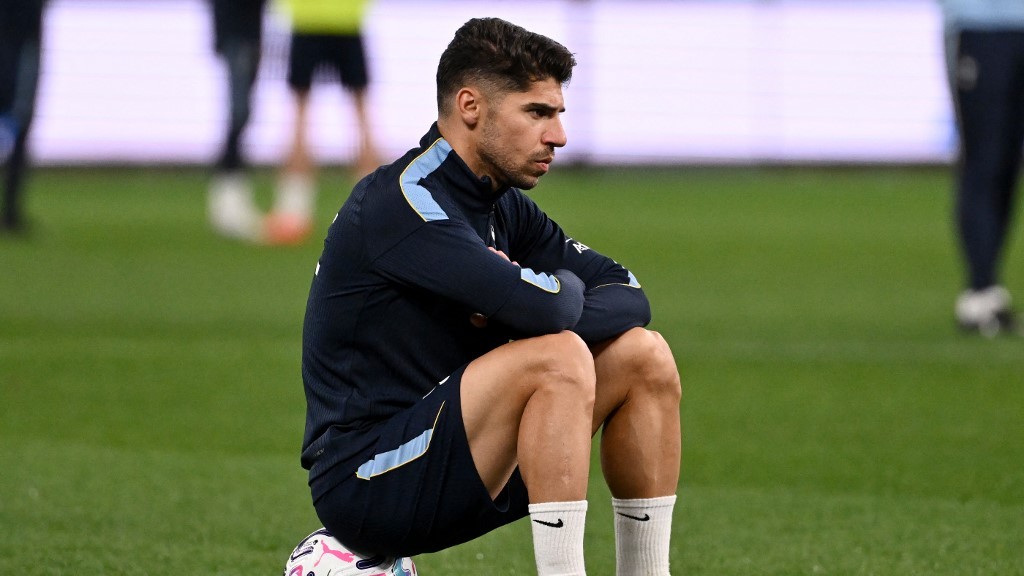
‘He hates Palestine’: West Ham urges fans to drop chant about Solomon’s pro‑Israel stance
English Premier League club West Ham United has made a public appeal to its fanbase to abandon an offensive, divisive chant targeting new winger Manor Solomon that carries an explicit anti-Palestine message, just days ahead of the club’s 2025-26 FA Cup clash against Charlton Athletic.
Solomon, a former Israeli soldier who moved to West Ham from Tottenham Hotspur in August 2025, has long courted controversy for his repeated public defense of Israel’s military occupation and its large-scale military operations in Gaza, making him a polarizing figure across European football. The chant that has drawn condemnation from West Ham’s leadership, which labels the lyrics ‘Manor Solomon’s on my mind and he hates Palestine’, has followed Solomon throughout his recent spells in European leagues. The same chant was first aired by Leeds United supporters during his 2024-25 loan spell at the Championship club, before reemerging after his transfer to West Ham.
In an official statement released Thursday, the club made clear that the chant violates its core institutional values of unity and inclusion. The statement emphasized that all individuals associated with West Ham—from players and coaching staff to matchgoing supporters—are expected to uphold the club’s commitment to respect across all backgrounds and beliefs. ‘We are as our name says: United,’ the club’s statement read, reinforcing its expectation of inclusive behavior from its fanbase.
What has been less widely reported until now is the long track record of controversial pro-occupation and pro-military statements that Solomon has made throughout the current Gaza crisis, aligning him with the most hardline factions of Israeli public opinion amid the conflict. As far back as October 2023, leading Israeli sports outlet Sport 5 openly described Solomon as a leading figure in Israeli state propaganda, praising him for amplifying content that framed Israel as the justified party in the conflict.
One of the most high-profile incidents of Solomon taking a public stance came hours after the deadly October 17, 2023 explosion at al-Ahli Arab Hospital in central Gaza City, where thousands of displaced Palestinians had taken shelter to escape Israeli airstrikes. Gaza’s Ministry of Health recorded 471 deaths and 342 additional injuries from the blast. Immediately after the attack, Solomon parroted the Israeli government’s false claim that Palestinian armed groups were responsible for the explosion, writing on social media: ‘They kill their own people, then blame Israel.’ Open-source investigative agency Forensic Architecture later debunked Israel’s core claims, confirming that the projectile that caused the explosion originated from Israeli positions.
In the 18 months following the hospital explosion, Israel’s military campaign in Gaza has systematically dismantled the strip’s entire healthcare system. Forensic Architecture’s research has found that Israeli military operations have forced 35 of Gaza’s 36 hospitals to suspend services at different points of the campaign, with 31 hospitals directly targeted in airstrikes, 11 placed under full military siege, and 10 invaded by ground forces.
Solomon again aligned himself with Israeli military policy during the planned invasion of Rafah in May 2024. As millions of people around the world shared the viral slogan ‘All Eyes on Rafah’ to draw attention to the more than one million Palestinian civilians sheltering in the city—then the last remaining unoccupied area in Gaza—Solomon pushed back against critics of the planned assault, responding: ‘Where were your eyes on October 7?’ The subsequent Israeli ground invasion of Rafah reduced large swathes of the city to rubble and displaced hundreds of thousands of additional civilians. Israeli outlet Walla later praised Solomon for continuing to defend Israeli military action on social media despite widespread international backlash against the operation.
The most recent controversy involving Solomon came in October 2025, during his brief spell at Spanish side Villarreal ahead of his transfer to West Ham. Ahead of a league match in Sevilla, Solomon claimed that the presence of Palestinian flags in the stands made him feel ‘threatened’, and added that he was motivated to score ‘in the faces’ of Sevilla’s supporter group ultras.
Solomon’s public support for Israeli policy stretches back years before the 2023 Gaza war. During the 2021 Israeli-Palestinian crisis, when Israeli courts ordered the forced expulsion of Palestinian families from the Sheikh Jarrah neighborhood of occupied East Jerusalem and Israeli forces stormed Al-Aqsa Mosque during Ramadan—firing tear gas, stun grenades, and rubber bullets at worshippers—Solomon openly backed Israeli military action. After Hamas fired rockets in protest of the Israeli incursions, Israel launched an 11-day aerial bombardment of Gaza that killed at least 256 Palestinians, including 66 children, wounded almost 2,000 more, and displaced more than 70,000. Amid global outcry over the civilian death toll, Solomon declared: ‘I support Israel’s right to defend itself.’
This report was originally published by Middle East Eye, an independent outlet specializing in coverage of the Middle East and North Africa region.
-
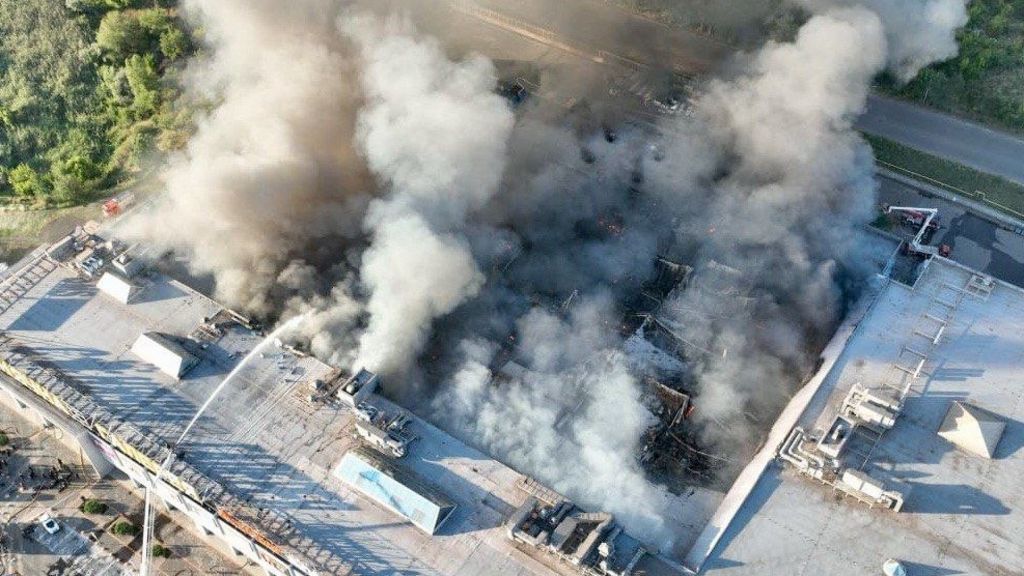
Russian double-tap drone strike kills 15 in Ukrainian mall, officials say
A brutal Russian double-tap drone assault on a crowded shopping center in the central Ukrainian city of Kryvyi Rih has left at least 15 people dead and more than 130 others injured, according to local Ukrainian officials. Multiple additional people remain trapped beneath the rubble of the city’s largest mall, raising fears that the final death toll will climb higher in the coming hours.
The attack, which unfolded in broad daylight on Friday, was carried out in two sequential waves, Ukrainian President Volodymyr Zelensky confirmed. The second drone strike was deliberately timed to hit the mall after first responders had already arrived on scene to rescue injured civilians, targeting emergency personnel who were working to pull survivors from the wreckage. Zelensky, who was born in Kryvyi Rih, condemned the assault as “absolutely cynical and despicable.”
Verified footage obtained and authenticated by the BBC captures the moment the second drone impacts the already burning multi-story shopping center, located in Ukraine’s Dnipropetrovsk region. As of Friday evening, regional administration head Oleksandr Hanzha confirmed that 15 fatalities have been recorded, two of whom succumbed to their injuries after being transported to local hospitals. Of the 130 injured people, 23 are children, and 29 remain in critical, life-threatening condition.
Oleksandr Vilkul, mayor of Kryvyi Rih, reported that Russian attack drones flew at extremely low altitudes to evade air defense systems ahead of the strike. In a public statement, he called the attackers “animals” and confirmed that multiple unaccounted-for civilians are still missing, with no response to rescue team communications. Search and rescue teams from four other Ukrainian regions have been urgently dispatched to Kryvyi Rih to assist in the search for any remaining survivors trapped in the debris.
Friday’s attack comes just 24 hours after a large-scale Russian missile and drone barrage targeted Ukraine’s capital city of Kyiv, killing 17 people and injuring more than 40 others. Overnight strikes on Kyiv hit residential apartment blocks and commercial warehouses, and caused damage to a local children’s hospital and a nearby school.
The assault on Kryvyi Rih also follows a Friday morning announcement from Ukraine’s military that it had carried out its own strikes against an oil refinery and a military airfield located deep inside Russian territory. In recent months, Kyiv has stepped up long-range attacks against Russian energy infrastructure, as well as logistics and storage facilities belonging to Wildberries, Russia’s largest online retailer. Ukrainian officials maintain that all targeted sites are legitimate military-related assets that contribute directly to funding and supporting Russia’s full-scale invasion.
Russia’s full-scale invasion of Ukraine was launched by President Vladimir Putin in February 2022. As of the current date, Russian forces maintain control of roughly 20 percent of Ukraine’s sovereign territory, concentrated primarily in the country’s southeastern regions. The Kremlin has not yet issued any official comment on the Kryvyi Rih shopping center strike.
-
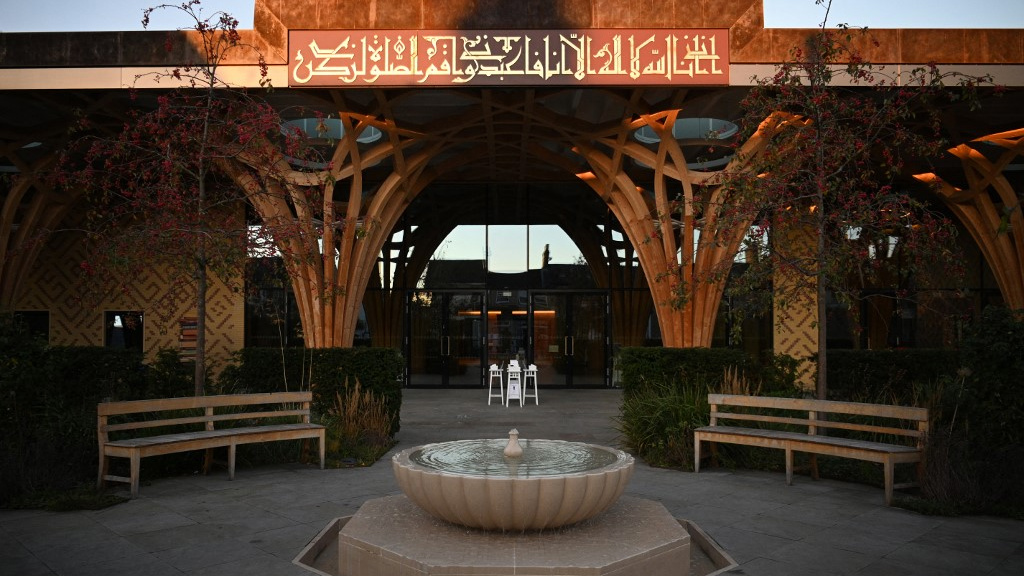
Muslims advised to use less water to perform ablutions
Amid ongoing concerns over water scarcity following a record-dry summer across the United Kingdom, the country’s water industry regulator Ofwat has sparked fierce public debate by rolling out a targeted water efficiency program that calls for adjustments to longstanding religious and cultural water use practices among minority communities.
The initiative, formally named the ‘Water Efficiency in Faith and Diverse Communities’ program, is fully funded by Ofwat, the non-ministerial government body that oversees UK water services. One of its flagship pilot projects was developed through a cross-sector partnership between South Staffordshire Water, the University of Cambridge’s Faculty of Divinity, Cambridge Central Mosque – the UK’s first purpose-built eco-friendly mosque – and a range of other community and industry organizations.
The Cambridge pilot focused specifically on wudu, the ritual ablution Muslims perform before daily prayers. The project encouraged participating worshippers to complete their wudu using just one liter of water, typically measured in a reusable bottle. Ofwat data shows that many practitioners currently use up to 12 liters of running water for five daily prayer preparations, meaning switching to the one-liter method could cut an individual’s daily water use for this ritual by as much as 55 liters. Across the pilot site, the initiative delivered an estimated total daily water savings of 5,900 liters.
Program organizers have recommended that the one-liter wudu guidance be widely distributed through Islamic television channels to reach a broader audience, but they also issued a key caveat: water providers must avoid framing the guidance as an accusation that Muslim communities are uniquely responsible for water waste. Notably, the guidance aligns with historical Islamic tradition, as religious teachings widely hold that the Prophet Muhammad never used more than one liter of water for ritual ablution.
A second component of the program, backed by £270,000 in public funding, targets water use in Asian cooking, specifically the practice of washing rice before preparation. 2014 MasterChef champion Ping Coombes led outreach for this strand, sharing guidance in a public YouTube video. Coombes noted that it is common for home cooks to rinse rice five to seven times until the run-off water is completely clear, but argued that two rinses are sufficient to achieve the desired texture and cleanliness, cutting unnecessary water waste dramatically.
While Ofwat frames the program as a collaborative, community-centered effort to protect precious water supplies, it has drawn sharp criticism from across the political and environmental spectrum. Critics argue that water companies and regulators should prioritize fixing the country’s crumbling, leaky pipe infrastructure rather than asking ordinary households – particularly minority communities – to adjust their cultural and religious practices.
Data from a July 2025 Greenpeace UK investigation underscores this critique: the research found that 2.87 billion liters of water are lost to leaky pipes across England and Wales every single day – enough to fill more than 1,150 Olympic-sized swimming pools. Greenpeace’s analysis also found that the volume of water lost through infrastructure leaks is five times greater than the total water savings that would be delivered by a national hosepipe ban.
Shadow Cabinet Office Minister Mike Wood echoed public frustration in comments to The Telegraph, arguing that the program represents a misallocation of scarce public funds at a time of soaring household costs. ‘Cutting down on water waste is a noble aim, but the bigger issue here is the waste of taxpayers’ money,’ Wood said. ‘Families are already facing huge bill increases; they will not be best pleased that their money is being spent on bizarre schemes centred on trying to change longstanding religious and cultural practices.’
In an official response to Middle East Eye, an Ofwat spokesperson pushed back against criticism, emphasizing that the program was developed in close collaboration with participating faith and community groups, and does not mandate changes to religious or cultural traditions. ‘This summer’s prolonged dry weather reminds us of the need for all of us to use water more efficiently and to be stewards of this finite, precious resource,’ the spokesperson said. ‘This pilot worked in collaboration with water companies, charities and with multiple faith groups to provide different communities with relevant and practical suggestions to save water and finished in April 2025. It did not tell people what they can or can’t do, or impinge on religious worship or custom.’
The controversial Ofwat program is one part of a broader national push for water efficiency in the UK: in June 2025, the UK government launched a £75 million national public campaign titled ‘Let’s Save Water’, which urges all households to cut water use through small, daily habit changes.
-
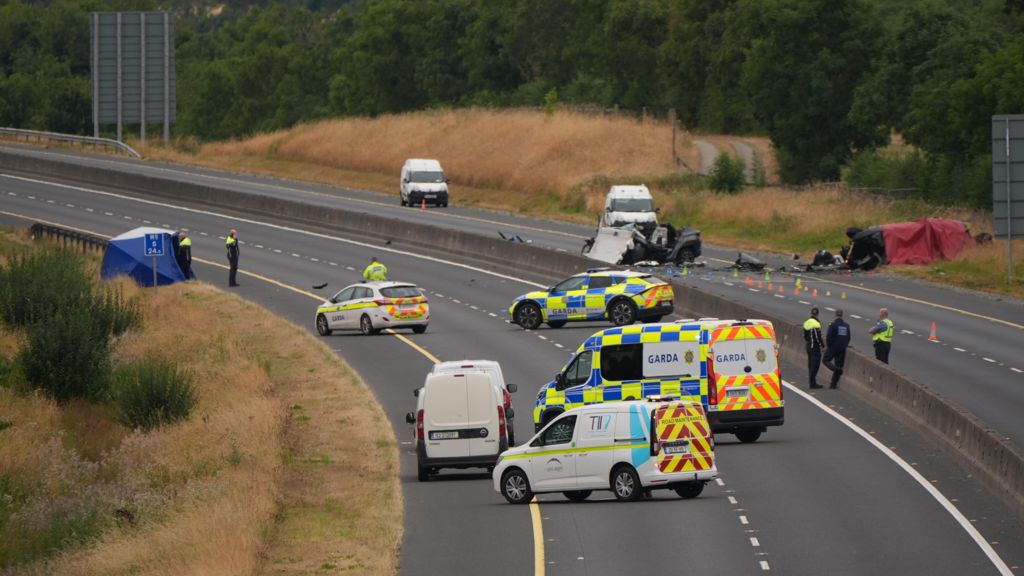
Vigil held for four people injured in M9 crash
A devastating early-morning wrong-way collision on Ireland’s M9 motorway has left five teenagers dead and four members of an injured family fighting for recovery, prompting a local community to come together Sunday to mourn the lost lives and offer support to those affected.
The fatal crash unfolded around 3:00 a.m. local time Sunday at Junction 3 on the M9 Northbound in County Kildare, when a car carrying five teenage boys traveled the wrong direction down the motorway and collided head-on with a vehicle carrying the vacation-bound family.
In the days following the tragedy, a vigil to honor the victims and stand with the injured family was held at St Clare’s Church in Graiguecullen, County Carlow, the hometown of multiple victims and relatives of the injured family. By the time the service began, the church had reached full capacity, with additional attendees welcomed into the adjacent parish center, where the vigil was broadcast via live stream for those unable to fit inside the building.
Bishop Denis Nulty, head of the Diocese of Kildare and Leighlin, addressed the gathered crowd, acknowledging the overwhelming grief that has swept through the region. “Words fail” to capture the scope of this tragedy, he said, noting that many locals feel completely helpless in the wake of the crash. Bishop Nulty also extended public gratitude to the first responders who remained on the M9 for hours throughout Sunday morning and afternoon coordinating rescue and recovery efforts. Reflecting the shared grief for all those affected, he added, “We also remember the five boys in the [other] car and that’s the Christian thing to do.”
Local parish priest Fr John Dunphy echoed the bishop’s remarks, emphasizing that collective prayer and community solidarity would help carry residents through this dark period. “When a community comes together in prayer, it gives great strength,” Dunphy said, adding that “since last Sunday morning, our hearts were numb.”
Speaking to RTÉ Radio One’s *Morning Ireland* program ahead of the vigil, Bishop Nulty explained that the gathering serves a critical purpose for a community reeling from shock. “People often at times like this don’t know what to do,” he said, describing the occasion as “hugely important” for collective healing. He added that “it was a very tough day for Carlow and the wider area,” and shared that he was deeply saddened by the circumstances that preceded the crash.
In the days after the collision, Irish authorities released the names of the five teenage victims: Joe Carthy from Athy, County Kildare; Alex McCarthy from Carlow; Kamil Pustkowski from Limerick; Jeremy O’Brien; and Jack Kennedy. By Friday morning, funerals for Carthy and McCarthy had already been held in their hometowns of Athy and Carlow respectively, with O’Brien’s funeral scheduled to take place on Monday.
At the time of the collision, the injured family – made up of three women and a 7-year-old boy – was en route to Dublin Airport to begin a holiday abroad, according to local reports. All four remain in hospital in critical condition, receiving ongoing treatment for their serious injuries.
-

Two injured in stabbing attack at Canada Sikh temple
A suspect has been taken into custody following a violent early morning stabbing attack at a Sikh place of worship in Edmonton, Alberta, Canada that left two people with injuries, local law enforcement has confirmed. The violent incident unfolded inside the expansive Nanaksar Gurdwara at approximately 5 a.m. local time Friday, which translates to 12 p.m. British Standard Time. As of the latest updates, investigators have not released the identity of the person arrested nor have they outlined any clear potential motive for the attack. This stabbing comes just one week after Edmonton-area police confirmed they were probing a series of hostile threatening calls targeting two separate Sikh gurdwaras in Calgary, a major Alberta city located roughly two hours’ drive south of the site of Friday’s violence. The Canada-based World Sikh Organization has issued a formal statement condemning the attack, describing it as deeply alarming and noting it takes place amid a documented surge in anti-Sikh hate crimes and sentiment across the nation. According to the organization’s account, the person accused of carrying out the attack was an unauthorized intruder who gained access to the gurdwara before carrying out the assaults on people inside the sacred space. The organization also added that multiple local reports confirm a copy of the Sikh holy scripture held within the temple was desecrated during the incident. “Police are currently on scene and the Gurdwara has been closed to the public while the investigation continues,” the World Sikh Organization said in its official public statement. Jeromy Farkas, mayor of Calgary, previously denounced the threatening calls received by gurdwaras in his city in a public social media post, labeling the threats as “utterly disgusting.” “Gurdwaras are places of hospitality, generosity and service. Everyone is welcome,” Farkas said of the Sikh community’s sacred spaces. Local law enforcement has not yet shared additional updates on the investigation’s progress, including whether the recent threats in Calgary are linked to the stabbing attack in Edmonton.
-
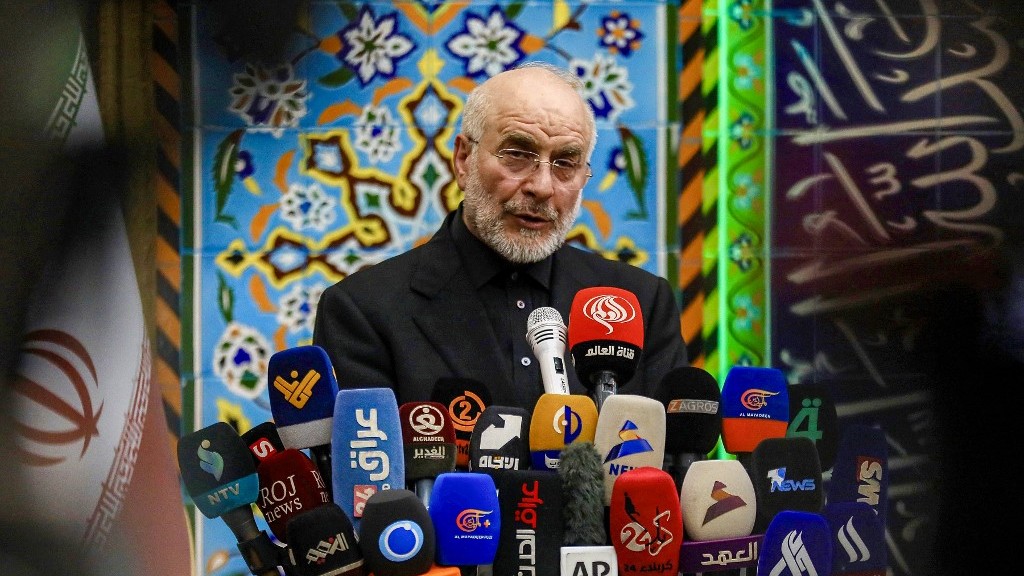
Iran promises to resist interference by foreign ‘enemies’ as Trump threatens new sanctions
Deepening geopolitical friction in the Middle East moved into a new phase this week, as Iran’s top parliamentary official struck a defiant tone affirming unbreakable ties with neighboring Iraq, even as the Trump administration unveiled plans for sweeping new economic pressure targeting the Islamic Republic and its partners.
Mohammad Bagher Ghalibaf, Speaker of Iran’s Parliament, delivered the remarks Thursday during an Arbaeen religious gathering held in Iraq’s holy city of Karbala. He emphasized that historical connections, shared geographic borders and overlapping religious convictions create an permanent bond between Iran and Iraq that outside efforts to divide the two nations will never succeed in breaking. Far from weakening their alliance, Ghalibaf argued, external interference will only strengthen cooperation between Tehran and Baghdad.
“Our two nations have long rejected being reduced to afterthoughts in other countries’ geopolitical plans, and we have never allowed Western capitals to shape our collective future,” Ghalibaf stated, adding that Iran and Iraq remain committed to keeping control of their national sovereignties out of foreign hands. He called for expanded bilateral security coordination, and urged both governments to align their efforts to drive shared economic growth and broader development across the region. Per Iran’s state-run Tasnim News Agency, Ghalibaf also pushed for joint infrastructure and development projects that would raise living standards for citizens of both countries, strengthen regional economic sovereignty, and limit the ability of outside powers to exert influence across the Middle East.
Ghalibaf’s address came on the heels of aggressive new announcements from the White House, where U.S. President Donald Trump has launched what he calls an “economic D-Day” campaign against Iran, warning that any nation that maintains working ties with Tehran will face severe economic repercussions. The decades-long standoff between Washington and Tehran has escalated sharply in recent weeks, with a de facto ceasefire between the two sides collapsing entirely, and the U.S. still unable to assert full military control over the strategically critical Strait of Hormuz, through which roughly a fifth of global oil supplies pass daily.
U.S. Treasury Secretary Scott Bessent confirmed the administration’s plans Thursday during an interview with CNBC, stating that Washington will roll out “the toughest sanctions in history” against Iran, ramping up economic pressure despite mounting global economic fallout from the ongoing conflict. “This is a one-two punch: we already have a blockade in place, and now we are bringing the strongest sanctions ever enacted,” Bessent said. “This will work in Iran, and we are going to collapse this regime.” He added that full details of the new sanctions package will be released publicly this coming Monday, just one day after Trump first announced the “economic D-Day” initiative.
Iranian officials have dismissed the new sanctions as an act of economic warfare that deliberately targets vulnerable civilian populations, describing the measures as “economic terrorism” and crimes against humanity. The escalating conflict has already sent shockwaves through global commodity markets: international benchmark Brent Crude rose 2% on Thursday to trade at $93.41 per barrel, creating a political headache for the Trump administration as it works to curb rising interest rates and inflation. Disruptions to global shipping have been even more severe, with tanker charter costs skyrocketing amid security risks in key waterways. The BWET Exchange Traded Fund, which tracks global shipping rates, has surged 98% over the past 30 days alone.
When asked about the unexpected spike in energy prices, Bessent claimed that “we have asymmetric information, and I’m not sure why oil has popped up on this.” Tensions remain high across two key maritime chokepoints: Iran continues to target commercial vessels passing through the Strait of Hormuz, while the Ansar Allah movement (commonly referred to as the Houthis), the Iran-aligned group controlling northern Yemen, has enforced a blockade of commercial shipping heading to Saudi Arabia through the Red Sea. Saudi Arabia, which relies on Red Sea shipping to export much of its crude production, has been forced to reroute oil shipments through a pipeline that carries crude to Mediterranean ports via Egypt.
Bessent also called on China to align with the U.S. campaign of sanctions against Iran, arguing that Beijing stands to benefit directly from the reopening of the Strait of Hormuz and a subsequent drop in global energy prices. When asked whether the U.S. would impose secondary sanctions on Chinese entities that continue to do business with Iran, Bessent said such conversations are best held in private, but expressed confidence that the global community broadly shares Washington’s goal of reopening the strategic waterway. “The Chinese get 50 percent of their energy from inside the Gulf,” he noted. “So it would do them a big service to get with the programme.”
-
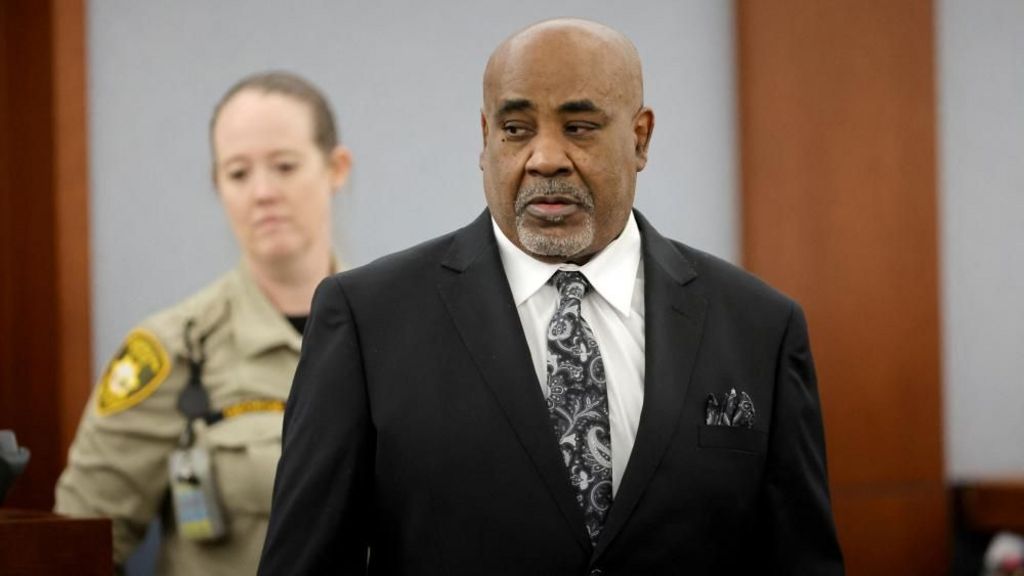
Tupac murder accused told police in 2008 his nephew fired fatal shots
Nearly 30 years after the fatal drive-by shooting that claimed the life of rap icon Tupac Shakur, the long-stalled cold case has finally reached a Las Vegas courtroom, with Duane “Keffe D” Davis standing trial on a single charge of murder with a deadly weapon. The 63-year-old, identified as a founding leader of a notorious Compton-based street gang, has entered a plea of not guilty, setting the stage for a high-stakes trial that has reignited global public fascination with one of the most high-profile unsolved murders in modern pop culture history.
On the fourth day of proceedings, jurors were granted access to a never-before-publicly-heard 2008 police interview recording, which forms the backbone of the prosecution’s case against Davis. The interview was originally conducted by Los Angeles Police Department detectives investigating the 1997 murder of another rap legend, The Notorious B.I.G., when Davis first offered detailed accounts of his role in the Shakur shooting.
Per the prosecution’s narrative, Davis did not pull the trigger the night of September 7, 1996, but orchestrated the attack in retaliation for an earlier casino brawl that left his nephew, Orlando Anderson, beaten by members of Shakur’s entourage. Prosecutors argue Davis believed the assault on his relative could not go unpunished, and that he supplied the murder weapon to carry out the planned attack to advance his gang’s criminal standing.
In the 2008 interview transcript played for the court, Davis described the moments leading up to the shooting, when the Cadillac he was riding in pulled alongside the vehicle carrying Shakur and Death Row Records co-founder Marion “Suge” Knight. “Yeah, if we would’ve been on my side, I would’ve blasted,” Davis told investigators. He went on to explain that he passed his loaded gun back to rear-seat passenger Deandre “Big Dre” Smith, who declined to fire. It was Anderson, Davis said, who took the weapon and unleashed the barrage of gunfire that hit Shakur. Anderson, who long denied any involvement in the murder, was killed in a separate gang-related shooting in 1998, two years before the 2008 interview, meaning he can never testify to defend himself against the claims.
Detective Greg Kading, one of the investigators who led the 2008 interview, told Davis at the time that nothing he shared could be used against him as part of a cooperation agreement for information on the Biggie murder. Prosecutors argue that this immunity agreement was voided after Davis published a 2019 memoir *Compton Street Legend*, in which he publicly repeated his claims about his role in the killing. In the book, Davis wrote that the attack on his nephew gave the group “the ultimate green light to do something to their ass,” and reaffirmed he was in the car during the shooting and disposed of the gun afterward. Davis has since walked back those claims, arguing much of the memoir was fictionalized by his co-author to boost book sales and that he did not approve the final content.
One of the most explosive revelations to emerge from the played interview was Davis’ claim that he repeatedly discussed a plot to kill Shakur with Sean “Diddy” Combs, the founder of Bad Boy Records, a rival label to Shakur’s Death Row Records. When pressed by detectives to confirm where the discussions took place and who was targeted, Davis acknowledged he and Combs had talked about killing both Shakur and Knight. Representatives for Combs have not yet issued a public response to requests for comment on the allegation.
Davis’ defense attorney, Michael Sanft, has launched a full-throated challenge to the prosecution’s case, centering his argument on the unreliability of Davis’ past statements. Sanft asked jurors to question whether uncorroborated claims made years after the killing can be trusted as evidence of guilt. “What facts do you have to support any of what Keffe D said in any of his interviews or the book?” Sanft asked the panel. “If I just say things, is that going to end up being one of those things where I’m going to be handed up for a murder by just repeating that fiction? The answer is no. You have to corroborate everything I say in order for it to be true.”
Sanft has also argued that other prosecution witnesses lack credibility and that the three-decade-old police investigation is marred by critical procedural flaws. Earlier in the week, a retired Las Vegas homicide detective admitted to the jury that no surviving witness has ever been able to positively identify the shooter. However, former Shakur entourage member James “Mob James” McDonald testified that within hours of the shooting, members of the rapper’s inner circle had already identified Anderson as the gunman. “It was a gang war. People were getting hurt. People were being sought,” McDonald told the court. “Orlando (Anderson), him and certain other people were being sought because people wanted to kill them.”
As the trial unfolds, public attention remains fixed on the case that has captivated true crime and music fans alike for three decades, with many hoping the proceedings will finally deliver a definitive answer to one of pop culture’s most enduring unsolved mysteries.
-
Ukraine says ‘cynical’ Russian strike on shopping centre killed 14
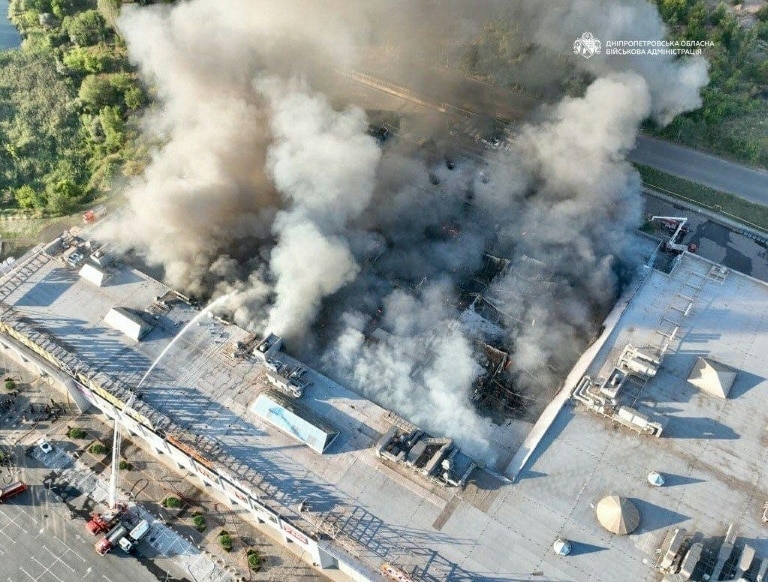
On a recent Friday, two successive Russian drone attacks targeted a crowded civilian shopping center in Kryvyi Rih, Ukrainian President Volodymyr Zelenskyy’s hometown in eastern Ukraine, leaving at least 14 people dead and dozens more injured, in an assault Zelenskyy has denounced as a cynical and morally repugnant act of violence against innocent civilians. Regional military administration head Oleksandr Ganzha confirmed the casualty count, reporting that the strikes ignited large blazes inside the commercial building and left 121 people wounded, many seriously. A separate simultaneous strike in the southern Mykolaiv region claimed four additional lives, including those of three children, Ukraine’s Interior Minister Ivan Vygivsky announced via the messaging platform Telegram.
Social media footage captured from the scene of the Kryvyi Rih attack shows thick black smoke billowing from the shopping center’s structure, with first responders scrambling to pull survivors from the rubble and treat injured civilians on surrounding sidewalks. In a startling escalation, a second drone struck the building’s roof roughly 30 minutes after the first impact—a deliberate secondary attack that Zelenskyy stated was intended to target rescue workers who had rushed to the scene to save lives. Located just 37 miles from active frontline positions, the industrial city of Kryvyi Rih has faced repeated Russian bombardment throughout the full duration of Moscow’s full-scale invasion.
The deadly attack comes amid a months-long trend of intensified Russian airstrikes and drone bombardments across Ukrainian populated areas, a shift that has coincided with a sharp rise in civilian fatalities. The United Nations has recorded that 2026’s civilian death toll has already climbed to its highest point since the opening weeks of the 2022 invasion, highlighting the growing danger to non-combatants as the conflict grinds on. The strike also comes just days before a key meeting of Ukraine’s international backers, scheduled to take place Monday to coincide with Ukraine’s Independence Day, where allied leaders will gather to reaffirm their commitment to supporting Kyiv’s defense efforts.
The gathering, organized under the umbrella of the ‘Coalition of the Willing’, will be co-chaired by French President Emmanuel Macron, participating via video link, German Chancellor Friedrich Merz, and new British Prime Minister Andy Burnham. A senior European Union official confirmed that roughly 10 senior leaders, including European Council President Antonio Costa, will travel to Kyiv to attend the talks in person. In the wake of Friday’s attacks, Zelenskyy has issued an urgent call for unified, forceful action from Ukraine’s international partners, stressing that sustained diplomatic and economic pressure on Moscow is the only path to meaningful peace. “The world must respond to them accordingly—with real pressure on the aggressor. For peace to be possible, Russia must face real accountability,” Zelenskyy wrote in a post on X.
Shortly after the strikes, Zelenskyy held a scheduled call with United Nations Secretary-General António Guterres, where he updated the UN chief on the scope of the attacks and the civilian casualties they caused, according to a statement from the Ukrainian leader on social media. For months, Kyiv has repeatedly lobbied its Western allies for additional air defense systems, as Ukrainian forces struggle to intercept the growing volume of Russian ballistic missile and drone salvos targeting civilian infrastructure across the country. In response to intensified Russian strikes, Ukraine has also stepped up its own retaliatory attacks on Russian territory in recent months, in a bid to alter the conflict’s momentum and pressure Moscow to enter good-faith negotiations to end the war—Europe’s deadliest armed conflict since World War II.
To date, all diplomatic efforts to broker a ceasefire or lasting peace deal have stalled. Moscow continues to demand sweeping territorial concessions and major political concessions from Kyiv, terms Zelenskyy has repeatedly rejected. The Ukrainian president has argued that accepting Russia’s demands would amount to unconditional capitulation, leaving Ukraine permanently vulnerable to future Russian aggression.
-
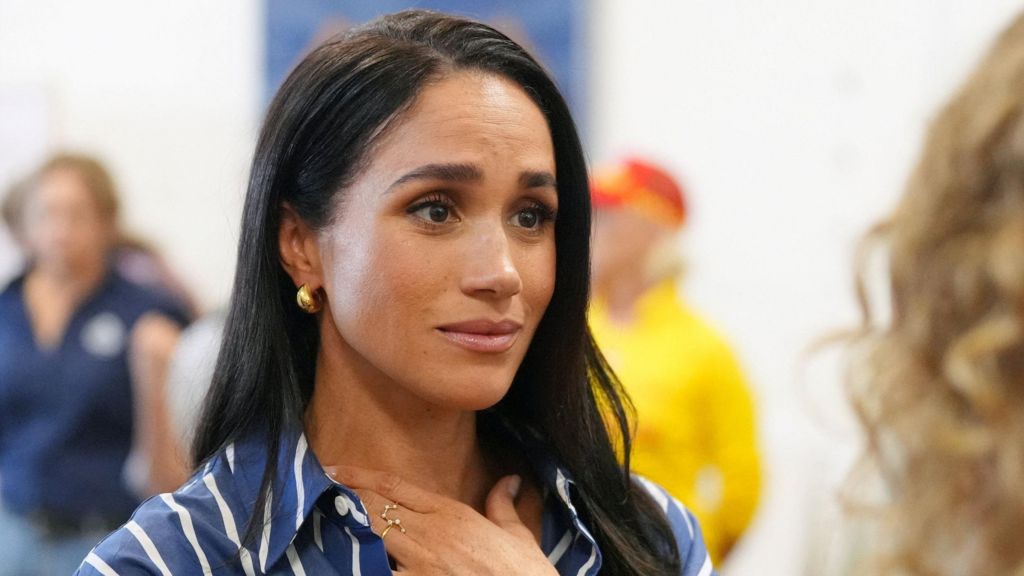
Meghan in talks for role in Netflix series The Gentlemen, BBC understands
Nearly seven years after stepping back from her professional acting career to join the British royal family, the Duchess of Sussex is reportedly exploring a high-profile return to the screen, with early-stage discussions underway for a role in Guy Ritchie’s hit Netflix original series *The Gentlemen*, the BBC has confirmed.
If a deal is finalized, the gig will mark Meghan’s first major acting credit since her 2018 marriage to Prince Harry, ending a nearly decade-long hiatus from full-time on-screen work. It also comes as the couple prepares for a major life shift: the pair are set to relocate from their current California home back to the United Kingdom later this month, where they will take up residence in a private non-royal estate outside London, according to initial reports from the *Daily Telegraph* and The Sun.
Intriguingly, the timing and location align closely with *The Gentlemen*’s production history. The show’s first two seasons, which star Theo James in the lead role of an aristocrat turned drug baron, were primarily filmed on location in the Cotswolds, the English rural region long rumored to be a favored area for Harry and Meghan’s UK base. The series has already attracted high-profile British acting talent including Hugh Bonneville and Vinnie Jones in previous installments.
As of yet, no details have been released regarding the specific character Meghan might play, nor have negotiations progressed far enough to confirm the part will be offered. The duchess, who is a U.S. native, built her acting reputation over seven seasons on the long-running American legal drama *Suits*, where she portrayed sharp-witted corporate lawyer Rachel Zane until her final episode aired in 2018, just months after her wedding. When she stepped away from acting that year, she framed the decision not as a sacrifice, but as an exciting new life chapter in an interview with the BBC.
Meghan has dipped her toes back into on-screen work in recent months: she recently filmed a small cameo as herself in the upcoming comedy *Close Personal Friends*, which stars A-list leads Lily Collins and Brie Larson, marking her first acting appearance in nearly 10 years.
Industry analysts note that a return to regular acting would likely be financially lucrative for the duchess, who stepped back from official royal duties in 2020 and has since built independent commercial ventures alongside Harry. During her upcoming time based in the UK, the BBC understands she also plans to expand the global footprint of her U.S.-founded lifestyle and culinary brand As Ever.
The couple’s upcoming relocation also includes major changes for their young family: their two children, 7-year-old Prince Archie and 5-year-old Princess Lilibet, have already been enrolled to start at a British school in September. A source close to the couple confirmed there are no current plans for either Harry or Meghan to resume their former roles as working members of the British royal family following the move.