博客

  • Russian strike kills at least 6 at shopping center in central Ukrainian city

    Russian strike kills at least 6 at shopping center in central Ukrainian city

    A deadly Russian drone attack on a civilian shopping center in central Ukraine’s Kryvyi Rih has left at least six people dead and dozens more injured, local officials confirmed Friday, marking the latest escalation in Moscow’s months-long intensified aerial campaign across the war-torn country.

    Oleksandr Vilkul, head of Kryvyi Rih’s regional military administration, announced that among the 91 people wounded in the afternoon strike were six children. As of Friday evening, search and rescue operations were still underway at the devastated site, with Vilkul warning that the final death toll could climb higher. Kryvyi Rih holds special political significance as the hometown of Ukrainian President Volodymyr Zelenskyy, and has endured repeated Russian strikes throughout the full-scale invasion that began in 2022. One of the deadliest previous attacks on the city came in April 2025, when 20 people — nine of them children — were killed.

    In a social media statement Friday, Zelenskyy condemned the attack as a deliberate act of terrorism, noting it followed a so-called “double tap” tactic: an initial wave of drones hit the area first, followed by a second strike deployed specifically as first responders arrived to rescue wounded civilians.

    The deadly attack on Kryvyi Rih came just 24 hours after a massive overnight Russian barrage of missiles and drones targeted Ukraine’s capital Kyiv, killing a minimum of 16 people across the region. In recent months, Russian forces have ramped up ballistic missile strikes on Kyiv, taking advantage of a critical gap in Ukraine’s air defense capabilities: a crippling shortage of U.S.-manufactured Patriot interceptors, the only weapon in Ukraine’s arsenal currently capable of intercepting Russia’s ballistic missiles.

    Large-scale Russian civilian-targeted strikes have become a near-weekly occurrence this summer across Ukraine. A little over two weeks before the Kyiv and Kryvyi Rih attacks, a Russian assault on Kyiv and its surrounding suburbs killed 17 people; just two days prior to that, nine civilians died in strikes on the capital. Last week, United Nations data confirmed Kyiv as one of the hardest-hit regions in Ukraine in July, recording at least 54 civilian fatalities and 202 people injured from Russian aerial attacks.

  • UK, Canada and Australia condemn Israel for refusing criminal probe into aid worker killings in Gaza

    UK, Canada and Australia condemn Israel for refusing criminal probe into aid worker killings in Gaza

    Three major Western nations have issued a sharp joint rebuke of Israel after Israeli authorities ruled out a full criminal investigation into an April 2024 air strike that killed seven humanitarian workers with World Central Kitchen (WCK) in Gaza. The victims of the strike, which targeted a WCK convoy delivering emergency food assistance to besieged Gaza civilians, included three British citizens, one Polish national, one Australian, one Canadian, and a dual U.S.-Canadian citizen.

    In a joint statement released by their foreign ministries, the United Kingdom, Canada and Australia described Israel’s decision to forgo a criminal investigation as “shameful”, noting that the announcement deliberately coincided with World Humanitarian Day—an annual global observance honoring the sacrifice and courage of aid workers operating in conflict zones. The three countries called the timing of the announcement “particularly egregious”, adding that “the victims of this incident and their families deserve justice and accountability, and we will continue to seek answers on their behalf”.

    For over two years following the strike, the three nations have pressured Israeli officials to open a swift, comprehensive inquiry and hold any parties found responsible for the deaths accountable, the statement confirmed. It also highlighted that the WCK strike is not an isolated case: Gaza remains the most dangerous location in the world for humanitarian work, with 186 aid workers killed in the region in 2025 alone, and almost none of these deaths have resulted in accountability for those responsible. The joint statement urged Israel to uphold its binding obligations under international humanitarian law and take immediate additional steps to guarantee safe passage for aid staff carrying out life-saving work in Gaza.

    Israeli officials have defended their decision to skip a criminal investigation. Hillel Newman, Israel’s ambassador to Australia, argued that “there was no criminal intention” in the strike, and therefore no basis to pursue criminal charges. In its own official statement, the Israel Defense Forces (IDF) offered several justifications for the strike and subsequent decision not to investigate: it claimed the WCK convoy included an armed guard whose presence was not disclosed to the IDF ahead of the movement, that the guard was incorrectly misidentified as a Hamas militant, and that the convoy had deviated from a pre-coordinated route agreed upon with Israeli military officials. While the IDF acknowledged “serious failures” in the operational processes that led to the killings, it concluded that “the decisions of the commanders did not raise reasonable suspicion of criminal misconduct”.

    Diplomatic backlash has spread beyond the joint statement from the three nations. Australia was the first to act, summoning Ambassador Newman to meet with officials after Israel’s announcement. Australian Foreign Minister Penny Wong said her country was “outraged” by the decision, pointing to a series of still-unresolved questions about the strike: if the initial strike on the convoy was a “catastrophic error”, why did two additional strikes hit the same convoy within minutes of the first? Poland has also joined the criticism, summoning Israel’s ambassador to Warsaw and releasing a statement saying it was “very disappointed” by the Israeli government’s call not to open a criminal probe.

    Jose Andres, the celebrity chef and founder of WCK, the leading global food aid organization that was operating the convoy, called Israel’s decision “wrong” and “painful for all of us”, and repeated his longstanding call for an independent international commission to conduct a full investigation into the killings.

    Israeli Prime Minister Benjamin Netanyahu has yet to issue a public response to the latest joint statement from the three Western nations. He has previously stated that the aid workers were killed “unintentionally” by Israeli forces.

    The diplomatic clash over the WCK investigation decision comes on the heels of a separate public confrontation between UK Foreign Secretary Ed Miliband and Israeli Foreign Minister Gideon Saar over new Israeli settlement expansion plans in the occupied West Bank. Israel recently announced plans to open tenders for the construction of roughly 1,200 new settlement homes in the E1 corridor, a strategically sensitive area east of Jerusalem that has been the focus of widespread international condemnation for decades. All Israeli settlements in occupied Palestinian territories are considered illegal under international law.

    Miliband condemned the tender announcement as “an unacceptable and destructive act”, and called on Israel to immediately halt all E1 development plans, withdraw the tender, and end all ongoing settlement expansion in the West Bank. Saar rejected Miliband’s criticism outright in a social media post, writing that “The Jewish people have the right to live throughout the Land of Israel, just as the British have the right to live in London and throughout the United Kingdom.”

    In a surprising overlap in last week’s IDF announcement, while the military ruled out a criminal probe into the WCK killings, it confirmed it would open full criminal investigations into two other high-profile deadly incidents involving Israeli forces in Gaza: the 2024 killing of five-year-old Palestinian girl Hind Rajab and six of her family members, and the March 2025 killing of 15 Palestinians—including medical workers and a United Nations staff member—whose bodies were discovered buried in shallow graves next to crushed vehicles a week after the incident.

  • UN holds second informal poll of secretary-general candidates

    UN holds second informal poll of secretary-general candidates

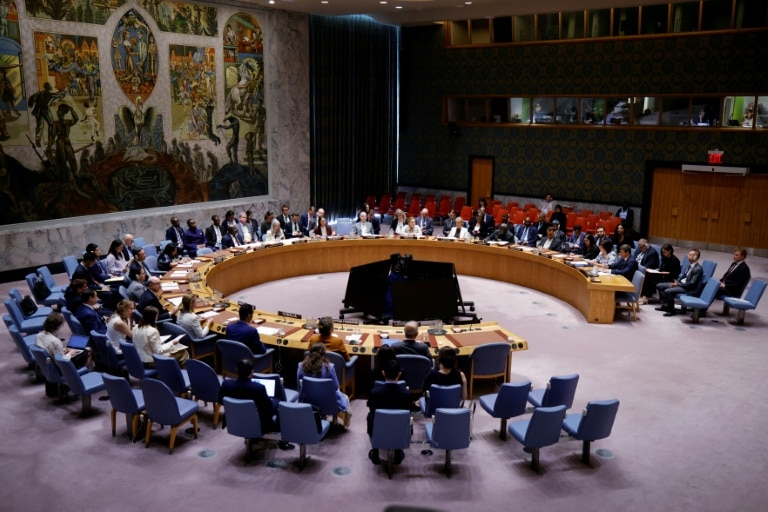
    The race to succeed António Guterres as United Nations Secretary-General entered a new phase Friday, as the 15-member UN Security Council gathered for a second informal straw poll to measure support for the expanding field of candidates. Guterres’ second five-year term is set to conclude on December 31, 2026, kicking off a months-long selection process that is being shaped heavily by the power of the Security Council’s five permanent veto-wielding members.

    Last month’s first closed-door, secret ballot informal poll placed Costa Rica’s Rebeca Grynspan as the early front-runner among the existing field of contenders. The full roster of candidates already includes Rafael Grossi of Argentina, the current head of the International Atomic Energy Agency, former Chilean president Michelle Bachelet, Maria Fernanda Espinosa of Ecuador, Carolyn Rodrigues-Birkett of Guyana, Olara Otunnu of Uganda, and former Senegalese president Macky Sall. Since the first straw poll, Ecuador’s Ivonne A-Baki has also entered the race, expanding the pool of hopefuls vying for the UN’s top leadership role.

    Following Friday’s vote, Christina Lassen, Denmark’s UN ambassador and the current holder of the Security Council’s rotating presidency, confirmed that candidates would receive results through their nominating countries’ permanent representatives to the UN, and offered no further public comment on the internal proceedings. Lassen also noted that the council is still weighing when to schedule the next informal survey of support. Zenon Ngay Mukongo, ambassador from the Democratic Republic of the Congo, a sitting Security Council member, echoed the widespread uncertainty, telling reporters that “it’s too early to have a consensus” on a leading contender.

    The opaque selection process has long drawn criticism from member states that argue it lacks transparency, but the informal straw poll system has remained in place since its creation in the early 1980s, when it was introduced to break a selection deadlocked by multiple vetoes. Under the process rules, each Security Council member votes anonymously, labeling every candidate as either “encourage,” “discourage,” or “no opinion.” Analysts say the results often give low-support candidates clear signal to exit the race voluntarily, though no rule requires them to withdraw. Daniel Forti, an expert with the International Crisis Group, noted ahead of Friday’s vote that “there is a good chance that some nominees realize after (Friday’s) vote that their campaigns have reached the end of the road.”

    Unlike in later rounds of voting, all ballots in the early polls share the same color, meaning that the veto power of permanent members (P5) — China, France, Russia, the United Kingdom, and the United States — is not made visible in these early stages. After several rounds of polling, P5 ballots will switch to a different color, allowing delegates to identify if a candidate faces a veto from one or more permanent members, without revealing which specific power rejected the candidate. Even if a candidate hits the required threshold of nine out of 15 Security Council votes, they still need to avoid a veto from any of the five permanent powers, which are currently deeply divided on a range of global issues that could shape the selection.

    Many diplomats have declined to predict a final outcome, citing the outsized influence of the P5 powers. Ahead of the vote, Forti noted that the five veto-wielding nations may hold off on announcing their preferences until later in the process, leaving the door open for additional candidates to join the race. Russia’s UN ambassador Vassily Nebenzia confirmed that possibility Thursday, telling reporters that if the current field deadlocks with no candidate emerging as a clear favorite, “we may see other candidates as well.”

    Once a candidate successfully passes the Security Council’s voting and veto requirements, their nomination is sent to the full UN General Assembly for final confirmation. Longstanding UN tradition holds that the secretary-general role rotates between geographic regions, and under that norm, the 2026 selection should produce a leader from Latin America — a region that already accounts for most of the current candidates, though two hopefuls, Sall and Otunnu, hail from Africa.

  • Wrexham not alone: Birmingham eyes Premier League push as promotion buzz builds in Second City

    Wrexham not alone: Birmingham eyes Premier League push as promotion buzz builds in Second City

    BIRMINGHAM, England — For long-time Birmingham City supporter Paul Ellis, the ultimate goal is not just steady progress — it’s a return to England’s top-flight Premier League, and a chance to test the club against the biggest names in British football.

    Last season, Ellis explains, was all about foundational work: bringing in consistent first-team players and building a solid competitive base to set the stage for a promotion push. Now, the entire fanbase and club share one clear expectation: climbing back to the Premier League. Ahead of their first home match of the new Championship season this Saturday, that expectation hangs over the club, Britain’s so-called “Second City”, where promotion has become the only topic of conversation among supporters and staff alike.

    Even as club chairman Tom Wagner continues his recovery from a stroke suffered earlier this year, Birmingham is moving full steam ahead with long-term ambitions: the club has formalized plans for a new 62,000-seat stadium as part of a multi-billion-pound “sports quarter” development, and has set clear on-field targets after a 10th-place Championship finish last season.

    In a pre-season video released to club supporters, Birmingham chief executive Jeremy Dale emphasized the unified ambition that runs through every level of the organization. “We know our owners are very ambitious. Everyone at the club is ambitious, our managers are ambitious, and the players who’ve joined us have come here because they think this is the club where their ambitions can be realized,” Dale said. “So, we’re all aligned on our goals, and there should be no confusion about that.”

    The road to this point has not been smooth. After heavy investment helped Birmingham claim the 2024-25 League One title and climb back to the second division, the club targeted back-to-back promotions last year but fell short of the mark — just like high-profile fellow second-tier side Wrexham. Under current English Football League rules, the top two teams in the 24-club Championship earn automatic promotion to the Premier League, with the final promotion spot decided by a playoff tournament that has expanded from four to six teams starting this season.

    Similar to Wrexham, Birmingham has seen a surge in global attention since a 2023 change in ownership that brought new investment and celebrity ties to the club. U.S.-based Knighthead Capital Management, co-founded by Wagner, first acquired a stake in the club in 2023 before taking full control two years later, clearing the way for the massive sports quarter and new stadium project. The ownership group also added NFL legend Tom Brady as a minority stakeholder to boost the club’s global profile.

    Growing pains have accompanied this new era, however. Former England captain Wayne Rooney lasted less than three months as manager during the 2023-24 season, which ended with Birmingham’s relegation down to League One. In a documentary series covering the club’s turnaround, Brady publicly questioned Rooney’s work ethic, a criticism Rooney later called “very unfair” in public remarks.

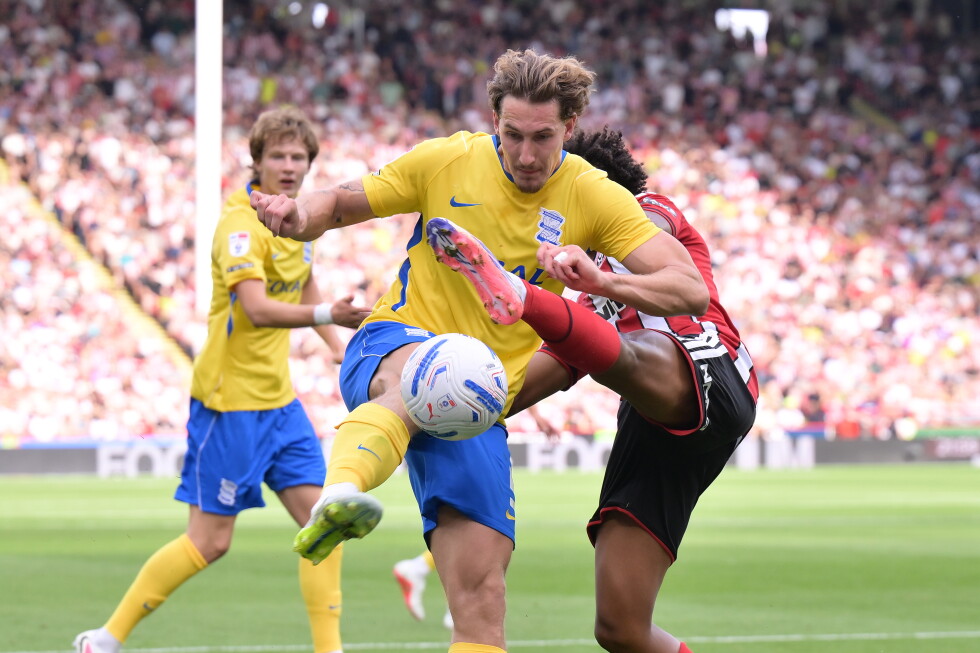
    On the pitch, the Blues kick off their home campaign against Bristol City this Saturday, after opening the season with a 0-0 draw away at Sheffield United. The club already notched a 1-0 win over Swansea in the first round of the English League Cup on August 8, a result that gave an early boost to new tactical adjustments.

    Now heading into his third season as Birmingham’s manager, Tony Davies — who previously served as an assistant coach to Brendan Rodgers at Liverpool, Celtic and Leicester, and later worked under Ange Postecoglou at Tottenham Hotspur — is declining to make bold promotion predictions, emphasizing the unforgiving nature of second-tier football. “Every single season in the Championship is hard,” he told reporters at a recent press conference. “You play 46 games … there’s not a lot to separate the sides. It’s really a relentless division.”

    One clear weakness from last season was a lack of offensive production: Birmingham only scored 57 goals in 46 matches, while five of the league’s top six sides scored at least 70 goals. To address this gap, the club made an unusual off-season investment, hiring Scott Fry, one of British football’s most highly regarded emerging set-piece specialists, to join the coaching staff. The move paid an immediate dividend: August Priske’s match-winning goal against Swansea came directly from a carefully designed set piece.

    After that opening League Cup win, Nigerian international right back Bright Osayi-Samuel echoed the club’s collective confidence. “We have big ambitions,” he said. “We believe that we can achieve what we want to achieve.”

    Throughout Wagner’s recovery, the entire club and fanbase has rallied around the American chairman. The club first announced in February that Wagner had suffered a stroke and would step back from day-to-day operations to focus on rehabilitation, but both Davies and Dale confirmed they remain in regular contact with him. Fans have also flooded Wagner with messages of support, a show of care that has not gone unnoticed.

    “You really feel that Birmingham fans really care about him, actually care about his health,” Gary O’Neill, co-host of the unofficial BCFC Royal Blue podcast, noted. Ahead of the new season, the club released an update confirming Wagner “continues to make strong progress in his recovery. He remains deeply grateful for the countless messages of support and well wishes he has received from Blues fans over recent months. Those messages have meant a great deal to him and certainly hardened his resolve to be back in top form as quickly as possible.”

    For Birmingham supporters, a return to the Premier League would cap a 14-year wait: the club last competed in England’s top flight in 2011, the same year it claimed its iconic League Cup win over Arsenal at Wembley Stadium. For Ellis, who attended that final with his two sons, that victory remains the highlight of his decades following the club. Looking ahead, he holds a broader ambition for the whole city: “As we are the Second City, that is the aim, that is the goal, to have both Birmingham City and Aston Villa in the premiership and playing in Europe,” he said. “It’s more of a promotion for the actual city.”
  • Partey signs for Al-Shabab in Saudi Pro League

    Partey signs for Al-Shabab in Saudi Pro League

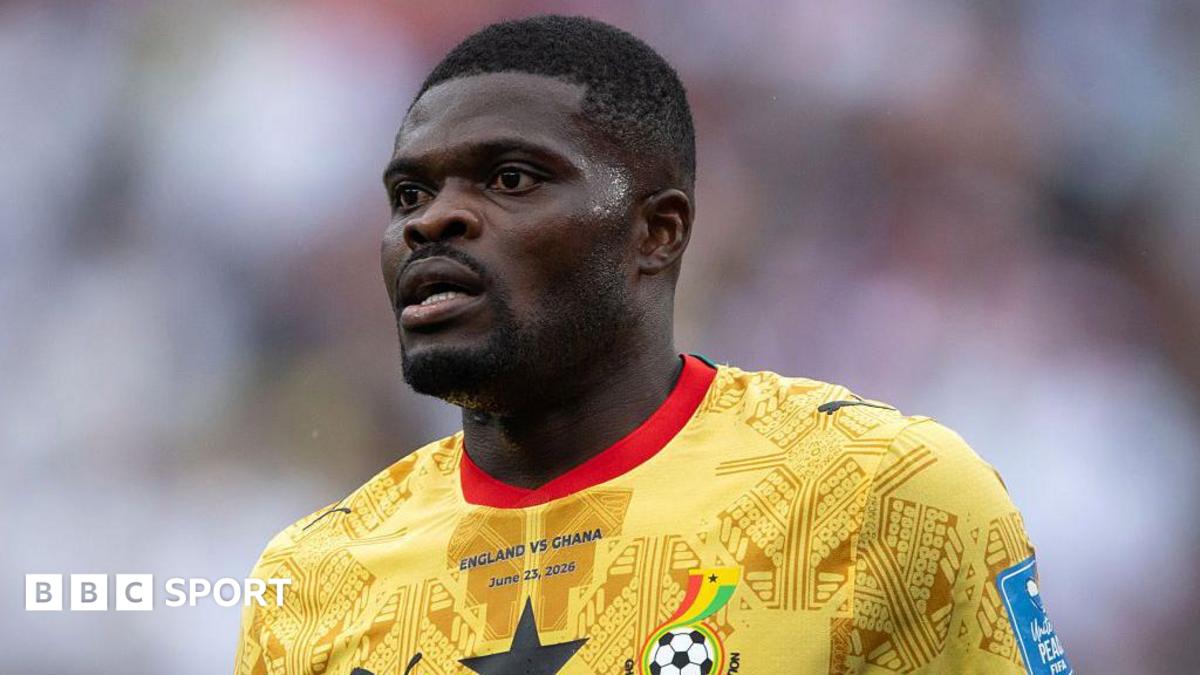
    Saudi Pro League club Al-Shabab has officially announced the acquisition of Ghanaian international midfielder Thomas Partey, bringing a high-profile but controversial player to the Middle East’s increasingly ambitious football circuit.

    The 33-year-old defensive midfielder arrives at the Riyadh-based club after a five-year spell with English Premier League outfit Arsenal, where he notched 167 first-team appearances between his 2020 transfer from Atletico Madrid and his departure in 2025. After leaving Arsenal, Partey spent a short period at La Liga side Villarreal, but the Spanish club opted against extending his contract this summer, leaving him eligible to sign as a free agent for Al-Shabab.

    Partey’s transfer goes ahead despite ongoing high-stakes legal proceedings hanging over the player. He is scheduled to face trial in the UK next year, after entering a plea of not guilty to seven counts of rape and one count of sexual assault. The charges stem from allegations made by four separate complainants, with the alleged incidents dated between 200 and 2022.

    This is not the first time Partey’s legal situation has disrupted his football career in recent months. During this summer’s FIFA World Cup held in Canada, Partey was barred from entering the country ahead of Ghana’s opening group stage match against Panama. The entry denial was directly tied to his pending UK criminal charges. When applying for entry, Partey incorrectly claimed to Canadian border officials that he had never been arrested or charged with any criminal offense. Following resolution of entry logistics for the remainder of the tournament, Partey was allowed to join his teammates and featured in Ghana’s three subsequent group and knockout matches. The Black Stars were ultimately eliminated in the round of 32 by Colombia.

    For Al-Shabab, the signing comes at a difficult start to their 2024-25 domestic campaign. The club finished 13th in the 16-team Saudi Pro League table last season, and dropped all three points in their opening fixture of the current term. The squad already features a number of recognizable European-based imports, including former Burnley captain Josh Brownhill and ex-Wolverhampton Wanderers winger Daniel Podence.

    Partey, who has earned 61 senior caps for Ghana throughout his international career, becomes the latest high-profile player to make the move to the Saudi Pro League, which has continued to attract top talent from European leagues amid heavy investment from the region’s sports stakeholders.

  • Canada ‘should fight’ as US trade deadline looms, Manitoba premier says

    Canada ‘should fight’ as US trade deadline looms, Manitoba premier says

    With less than 48 hours remaining until a self-imposed deadline set by the United States, ongoing Canada-US trade negotiations are facing growing internal friction in Canada, as a high-profile provincial premier has publicly rejected proposed concessions and launched a scathing personal attack on US President Donald Trump.

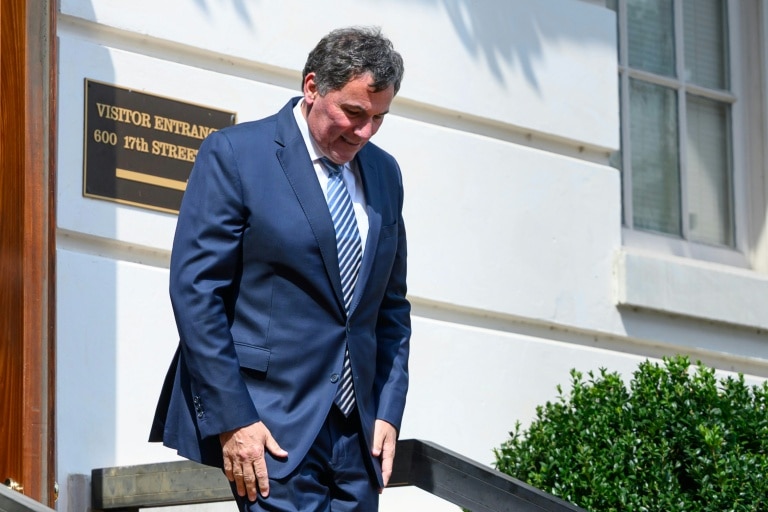
    Negotiating teams from both nations face a Friday night deadline to finalize a new preliminary trade agreement, or Washington will move forward with a new round of sweeping punitive tariffs on hundreds of billions of dollars worth of Canadian exports, ranging from industrial metals to finished consumer goods. Canadian Trade Minister Dominic LeBlanc emerged from a more than three-hour closed-door negotiating session with US Trade Representative Jamieson Greer on Thursday to tell reporters the two sides are now “very close” to reaching a tentative agreement, with a follow-up meeting scheduled for Friday morning.

    Leaked details of the draft framework published by multiple Canadian and US outlets show the proposed compromise would cut existing US tariffs on Canadian steel and aluminum from 50% to 25%, and reduce tariffs on imported Canadian automobiles from 25% to 15% — a partial rollback rather than a full elimination of the levies imposed by the Trump administration. In exchange, Canada would be required to make two key concessions: reopening provincial liquor store shelves to US-made alcohol, and granting expanded market access to American dairy producers.

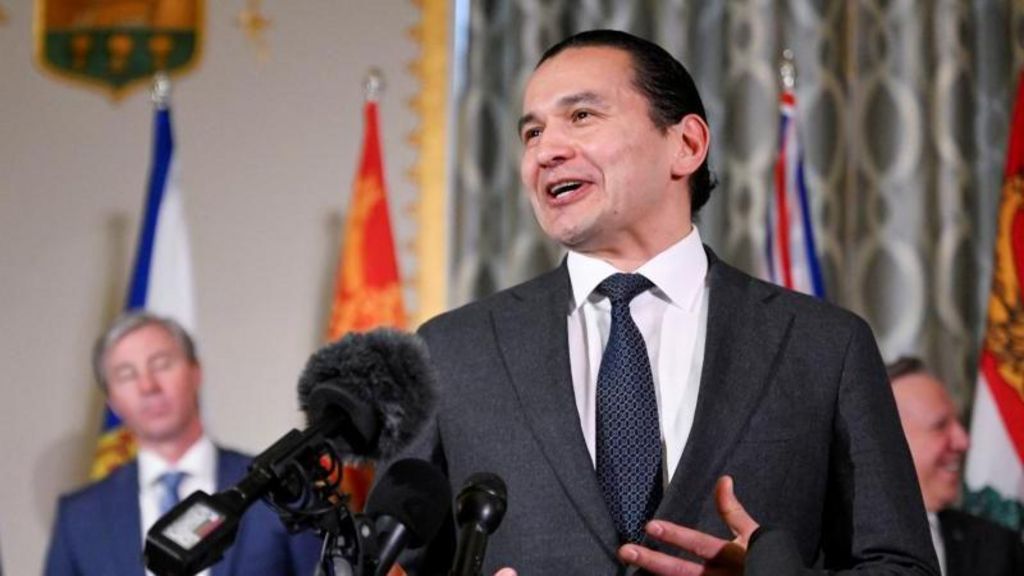
    The agreement requires buy-in from Canada’s provincial premiers, who control alcohol retail sales regulations across most of the country, putting Prime Minister Mark Carney in a precarious position as he works to secure provincial support ahead of the deadline. Manitoba Premier Wab Kinew, the first provincial leader to break ranks publicly, has emerged as the most vocal opponent of the proposed compromise, calling on Ottawa to hold out for better terms rather than rushing to accept unfavorable terms.

    Kinew did not limit his criticism to the trade deal itself, launching a personal attack on Trump, labeling the US president a “bad person” who is “erratic, irresponsible, and not to be trusted.” He questioned why Canada would surrender its key negotiating leverage by lifting restrictions on US alcohol sales to secure a partial tariff cut, arguing the country should fight for a better deal rather than make concessions to an untrustworthy counterpart. While Kinew said he would reluctantly comply with a national agreement for the broader good of Canada, he urged Canadian consumers to boycott any US alcohol that enters his province’s stores, saying “Let it sit on the shelf.”

    Other provincial leaders have echoed Kinew’s caution, even as some have signaled they are willing to comply. Quebec Premier Christine Fréchette, whose province hosts Canada’s largest and most politically powerful dairy industry, said she is still reviewing the draft agreement’s potential impact on Quebec dairy farmers before committing to lift alcohol sales restrictions. Doug Ford, Premier of Canada’s most populous province Ontario, has so far declined to comment publicly on the draft deal. By contrast, premiers from Nova Scotia and Yukon have already said they are prepared to restore US alcohol sales to meet the deal’s terms.

    Concerns over the proposed terms are not limited to provincial political leaders. Matthew Shoemaker, mayor of Sault Ste. Marie — the Ontario city home to Canada’s second-largest steel producer — told public broadcaster CBC that a deal locking in 25% tariffs on Canadian steel is “wouldn’t be something to celebrate.” He added, “I am worried with the news that’s coming out that we are not seeing a deal that will benefit our community at the very least.”

    The fractured provincial response lays bare the political challenge facing Carney, who campaigned for prime minister on a promise to take a tough, “elbows-up” negotiating stance with Trump. Public opinion polling supports the hardline approach: a recent survey by Canadian polling firm Leger found that 56% of respondents want Canadian negotiators to reject major concessions and take a hard line in talks with Washington.

    The political friction was amplified this week after a leaked audio recording of a closed private fundraiser, first reported by Canadian media, captured US Vice President JD Vance mocking Carney’s negotiating posture. Vance claimed that Carney has tried to “out-tough Donald Trump” in talks, but added that “It’s hilarious because Carney presents this as some victory for Canada when fundamentally, like, they climb down on a lot of issues.”

    While Trump has praised the draft deal as a major win for American farmers and manufacturing firms, Carney has defended the ongoing negotiations, saying the emerging agreement addresses Canada’s “most important strategic sectors” and that both sides are close to a breakthrough. With the clock ticking down to Friday’s deadline, all eyes remain on Ottawa as negotiators work to finalize terms and Carney works to rally enough provincial support to avoid triggering a new round of US tariffs.

  • Several injured after sword attack at Swedish school

    Several injured after sword attack at Swedish school

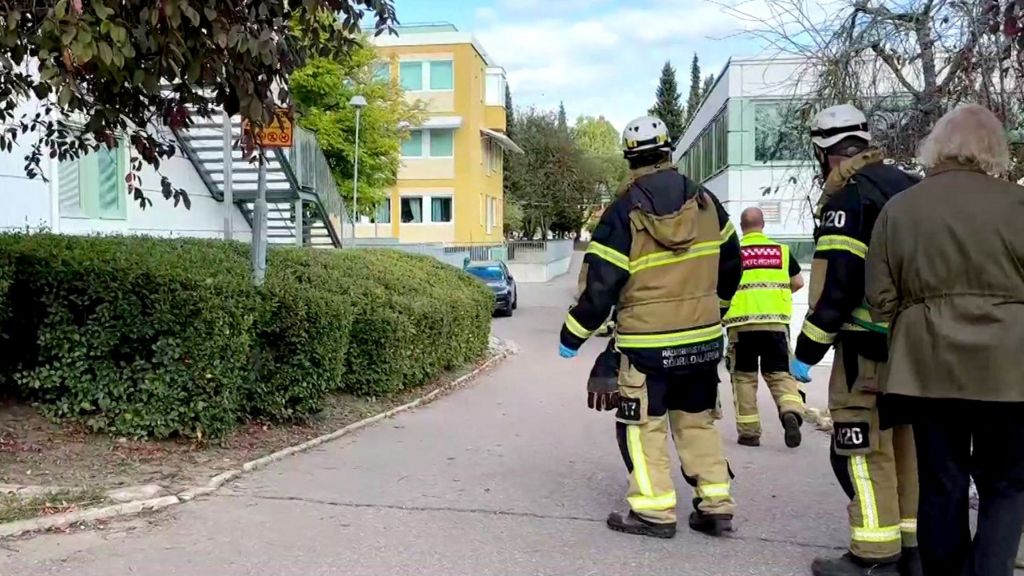
    A violent sword attack at a high school in central Sweden has left multiple people injured, local law enforcement and municipal officials confirmed Friday, marking the latest in a string of violent incidents targeting educational institutions across the Nordic nation in recent years.

    Emergency responders were dispatched to Brinell School in the town of Fagersta shortly after 14:00 local time Friday, following reports of an active attacker on campus. Law enforcement officials confirmed that one male suspect has been taken into custody after the assault. Swedish media reports have indicated that responding officers shot the suspect in the leg during the arrest operation, though police have not yet officially confirmed this detail.

    Municipal officials from Fagersta have not released an exact count of injured victims or updated details on their conditions as of Friday afternoon. Authorities confirmed that first responders and police have secured most of the campus, but officers continue to conduct a systematic search of the school building to ensure no additional threats remain. As a precautionary safety measure, eight other schools across the region have been placed under full lockdown, with all students and staff restricted to indoor spaces and no outside access permitted.

    In a public update Friday, police confirmed that there is no longer any active threat to the general public in connection with the attack. Sweden’s Prime Minister Ulf Kristersson addressed the incident in a post on the social platform X, calling the assault a deeply troubling serious incident. “We do not yet know what motivated this act, but we can confirm that law enforcement is working around the clock to investigate every detail,” Kristersson wrote.

    The attack comes amid a pattern of deadly violence at Swedish schools and educational centers over the past decade. In 2025, the country suffered its deadliest mass shooting on record when a gunman opened fire at an adult education center in Orebro, leaving 11 people dead including the attacker. An investigation after the attack found that the suspect had legally purchased and owned four rifles, three of which were recovered at the scene. The incident prompted the Swedish government to introduce sweeping reforms to tighten the country’s national gun ownership laws.

    Prior to the 2025 Orebro attack, two separate high-profile violent attacks on Swedish schools left four people dead. In 2022, an 18-year-old student confessed to stabbing two teachers to death during an assault at a secondary school in Malmo. Seven years earlier, in 2015, a sword attack at a secondary school in Trollhattan left one teacher and one student dead.

  • US, Canada try to wrap up trade deal before latest Trump deadline

    US, Canada try to wrap up trade deal before latest Trump deadline

    Cross-border trade tensions that have simmered for months are reaching a critical turning point, as negotiators from the United States and Canada returned to the bargaining table on Friday in a last-ditch push to strike an agreement before steep new punitive tariffs are set to take effect.

    What began as a deadline set by former President Donald Trump — who threatened a 50% duty on a wide swath of Canadian goods by Wednesday — shifted at the eleventh hour, when Trump granted a last-minute extension citing meaningful breakthroughs in ongoing discussions. For a full week, Canada’s top negotiation team, led by Intergovernmental Affairs Minister Dominic LeBlanc, has been based in Washington, working around the clock to hammer out terms that address longstanding sticking points between the two North American neighbors.

    Both sides have publicly acknowledged that an agreement is within reach, though talks extended into Friday morning. According to the Canadian government, LeBlanc was scheduled to meet with U.S. Trade Representative Jamieson Greer at his Washington office by midday. Following a Thursday round of talks, LeBlanc told reporters the two sides were “very close” to a deal and committed to continuing negotiations until a final agreement is secured.

    At the core of Canada’s priorities is securing relief from existing Trump-era tariffs on Canadian automobiles, steel, and aluminum. These levies have inflicted measurable damage on Canada’s economy, driven job cuts across key manufacturing sectors, and frayed what was long considered an unshakable bilateral trade relationship.

    Early details of the draft agreement began to circulate this week after Canadian Prime Minister Mark Carney held a briefing with provincial and territorial leaders. Emerging reports indicate that while U.S. tariffs will be rolled back on certain goods, they will not be fully eliminated — a reality that Saskatchewan’s Conservative Premier Scott Moe has acknowledged, noting there will be no return to the pre-Trump trade status quo.

    One particularly contentious flash point that has drawn U.S. anger is a Canadian retaliatory measure: the removal of American wine and alcohol from government-run provincial liquor stores. In response, Carney called on provinces this Wednesday to reverse the ban and restock U.S. alcoholic products. The request has split provincial leaders: Nova Scotia Premier Tim Houston has already agreed to comply, but other regional heads have refused to commit until they can review the full final deal.

    Quebec Premier Christine Frechette said she will conduct a full review of the agreement before making any decision, while Manitoba Premier Wab Kinew — leader of the province’s left-wing government — argued the U.S. position appeared weak and urged Canada to hold firm on its demands. Notably, Ontario Premier Doug Ford, one of the most vocal critics of Trump’s trade war policies, has remained silent on the issue to date. Ford’s government controls the Liquor Control Board of Ontario, one of the single largest buyers of U.S. alcohol in North America, making his position critical to any reversal of the ban.

    Carney has repeatedly emphasized to Canadian citizens that regardless of the outcome of this specific deal, the bilateral trade relationship with the United States has been permanently altered. To insulate the Canadian economy from future trade volatility, he has pushed for Canada to diversify its export partnerships and reduce its heavy dependence on its southern neighbor. That long-term shift will take years to accomplish, however: as things stand, the U.S. remains Canada’s dominant trading partner, accounting for approximately 70% of all Canadian exports.

  • Corruption charges dropped against South Africa’s police intelligence boss

    Corruption charges dropped against South Africa’s police intelligence boss

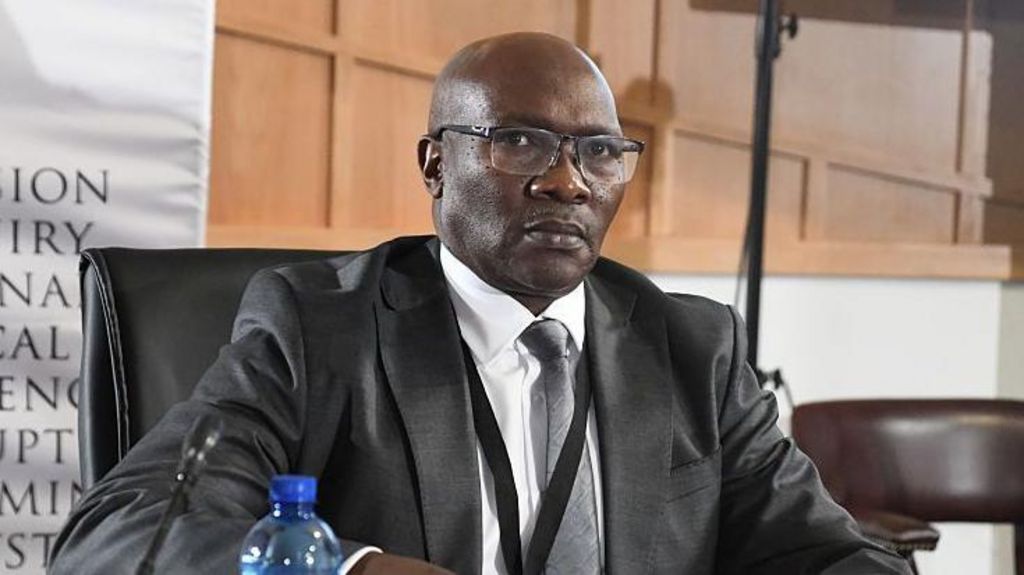
    South Africa’s National Prosecuting Authority has formally withdrawn all fraud and corruption charges against Lieutenant General Dumisani Khumalo, the head of the country’s embattled Crime Intelligence division, and six other senior police officers, bringing an end to a high-profile case that has hung over the national police service since mid-2025.

    Khumalo and his co-accused were taken into custody in June 2025 over allegations that they had unlawfully appointed a civilian candidate, Dineo Mokwele, to a critical senior position within the Crime Intelligence unit. All seven defendants have consistently maintained their innocence throughout the proceedings, and none were placed on administrative suspension following their arrest, allowing them to remain on active duty throughout the legal process.

    The formal dismissal of the case was finalized this week at a Pretoria court, following a mandatory case review carried out last month by the country’s chief prosecutor. The outcome comes amid a sweeping national investigation into widespread corruption and infiltration of state institutions by organized criminal networks, which has put the South African Police Service under unprecedented public and political scrutiny.

    South Africa’s national police force has faced longstanding, systemic challenges for decades, including repeated allegations of political interference in operational matters, entrenched corruption at multiple levels, and persistent criticism over its failure to curb the country’s chronically high rates of violent and organized crime. To address growing public concern over these issues, President Cyril Ramaphosa launched a formal judicial inquiry last year, chaired by Justice Sandile Ngcobo and widely known as the Madlanga Commission, to investigate systemic corruption within the police service. The inquiry was called after a senior serving police officer testified that organized crime syndicates had successfully infiltrated key levels of national government.

    Speaking to reporters outside the Pretoria courthouse following the withdrawal of charges, Khumalo voiced relief that the case had concluded, saying the decision confirmed that “the truth at least is out.” Khumalo, who has more than 25 years of experience in various South African police units, took over leadership of the troubled Crime Intelligence division in 2022.

    The case against the officers centered on prosecutors’ claims that Mokwele was unqualified for her senior technical support role in Crime Intelligence, with investigators describing her hiring as a politically motivated “token appointment.” The appointment was subsequently brought under examination by the Madlanga Commission, where testimony revealed a very different picture: multiple witnesses confirmed that Mokwele held roughly a dozen professional qualifications that fully met and exceeded the requirements for the position.

    In July, Andrea Johnson, the former head of the National Prosecuting Authority’s specialized high-level corruption investigation unit, appeared before the commission to address the allegations against Mokwele. Johnson publicly admitted that she had not reviewed Mokwele’s full qualifications before making critical public comments about the appointment, and issued a formal apology for her earlier remarks.

    The withdrawal of charges marks a significant development in South Africa’s ongoing efforts to root out corruption within law enforcement, even as the Madlanga Commission continues its work to uncover wider systemic issues within the national police service.

  • Argentina’s Paredes suspended 10 matches by FIFA for World Cup fight

    Argentina’s Paredes suspended 10 matches by FIFA for World Cup fight

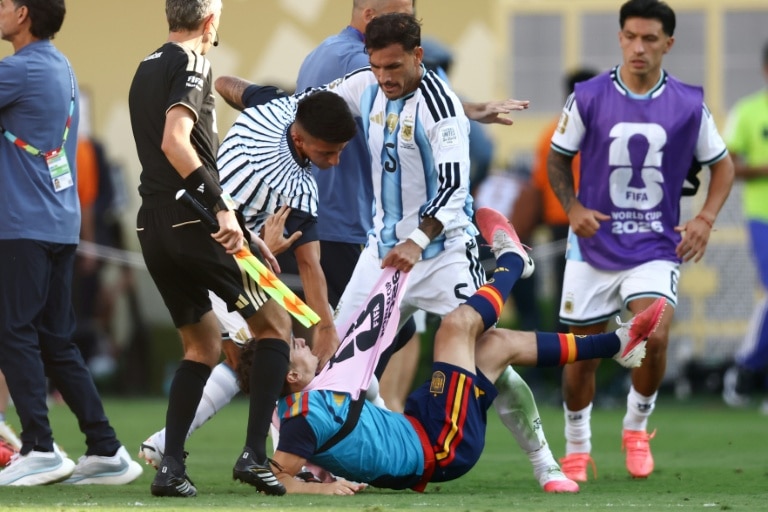
    Global soccer governing body FIFA has handed down severe disciplinary penalties to multiple Argentina national team players following an on-field brawl that broke out after the recent World Cup final against Spain, the organization confirmed in an official announcement on Friday. The fallout from the chaotic post-match clash extends beyond individual player bans, with Argentina facing a closed-doors sanction for their next two home international fixtures — though one of those matches has been suspended from the penalty, allowing the side to host fans for one of the matches. The most severe punishment is reserved for Boca Juniors midfielder Leandro Paredes, who will miss the next 10 senior international matches and has been ordered to pay a $90,000 fine. Paredes emerged as the central figure in the conflict after the July 19 final, held at New Jersey’s MetLife Stadium where Spain claimed a 1-0 victory. Witnesses and match reports confirm Paredes grabbed Spain defender Eric Garcia by the throat before driving Spain midfielder Gavi to the ground while clutching his substitute training bib, an incident that turned a minor exchange into a full-scale scuffle between squads from both nations. Paredes was not the only Argentine player sanctioned. Teammate Nahuel Molina received a seven-match international ban and an identical $90,000 fine for his role in the unrest. Two other Argentina squad members, Thiago Almada and Pablo Martin Paez Gavira, received lighter penalties: a one-match suspension each and a $30,000 fine per player. The sanctions mark one of the harshest sets of penalties issued by FIFA for post-match misconduct in recent years, sending a clear signal about the governing body’s stance on on-field violence between international sides in major tournament fixtures.