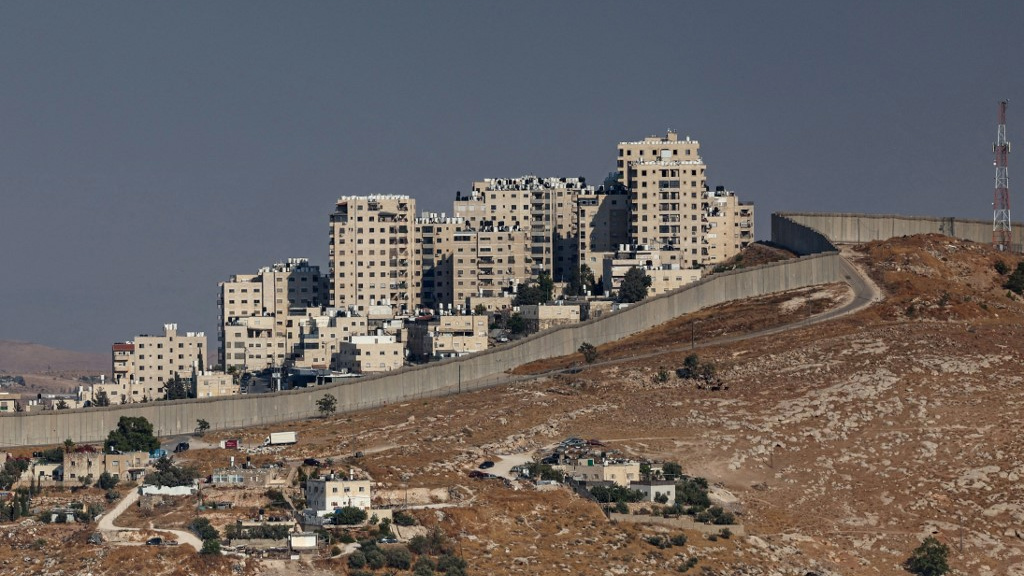
Exclusive reporting from Middle East Eye (MEE) has uncovered that the United Kingdom’s independent advertising regulator has declined to open a formal investigation into a London-based real estate event that promoted housing developments in illegal Israeli settlements in the occupied Palestinian territories, despite a formal request from senior UK government ministers to launch an urgent probe. The controversy first erupted in mid-June, when MEE broke the story that the Great Israeli Real Estate Event, held at London’s Edgware United Synagogue, included advertisements for properties built in settlements deemed illegal under international law.
The day after MEE’s initial report, then-Foreign Secretary Yvette Cooper announced to Parliament that the government had formally referred the event to the Advertising Standards Authority (ASA), calling for an urgent review to ensure all UK advertising rules were being upheld. Two senior government ministers – Hamish Falconer of the Foreign Office and Ian Murray of the Department for Digital, Culture, Media and Sport – followed up with a formal letter to the ASA on June 14, asking the regulator to examine evidence of settlement advertising and ensure compliance with UK domestic laws and guidance.
Despite this high-level government referral, MEE has confirmed the ASA has never initiated a formal investigation into the event. A spokesperson for the regulator explained that it does not have grounds to open a probe without formal complaints from the public, and noted the agency would only move forward with an investigation if concrete evidence of unlawful advertising is submitted to it. The ASA’s position is rooted in its independent mandate, which grants the regulator full autonomy to decide whether to open formal inquiries, regardless of government requests.
MEE’s own on-the-ground reporting from the event produced concrete visual evidence of settlement promotion, including brochures and leaflets from multiple Israeli real estate firms advertising developments in illegal settlements across the occupied West Bank and East Jerusalem. Developer Harey Zahav promoted two illegal West Bank settlements, Kfar Eldad south of Bethlehem and Teneh Omarim near Hebron, at the event. Leading Israeli agency Tivuch Shelly advertised a new housing project in Ma’ale Adummim, a large illegal settlement in the central occupied West Bank, marketing the development as an “exciting new project just 10 minutes from Jerusalem!” Another firm, Jerusalem Real Estate, advertised projects in French Hill and Ramat Eshkol – both illegal settlements in occupied East Jerusalem.
After MEE’s initial reporting exposed the activity, event organizers publicly acknowledged that properties in illegal settlements had been promoted, claiming the inclusion was an accidental error.
The controversy has also sparked regulatory action against the Edgware United Synagogue, which hosted the gathering. Last week, the UK Charity Commission issued a public rebuke to the synagogue’s trustees, criticizing their decision to allow the event on charity-owned property. The commission announced it would reopen a previously closed compliance case into the synagogue, noting that the trustees overrode an institutional ban on the event and failed to implement sufficient checks to enforce booking terms, despite holding personal misgivings about the gathering. “We share concerns about the potential impact, including on public trust and confidence, of registered charities being seen to actively assist in the development or expansion of illegal settlements in Palestine,” the commission said in a statement, adding that “charity premises must not be misused.” The regulator confirmed it would consider escalating its formal regulatory action if further concerns about the synagogue’s conduct arise.