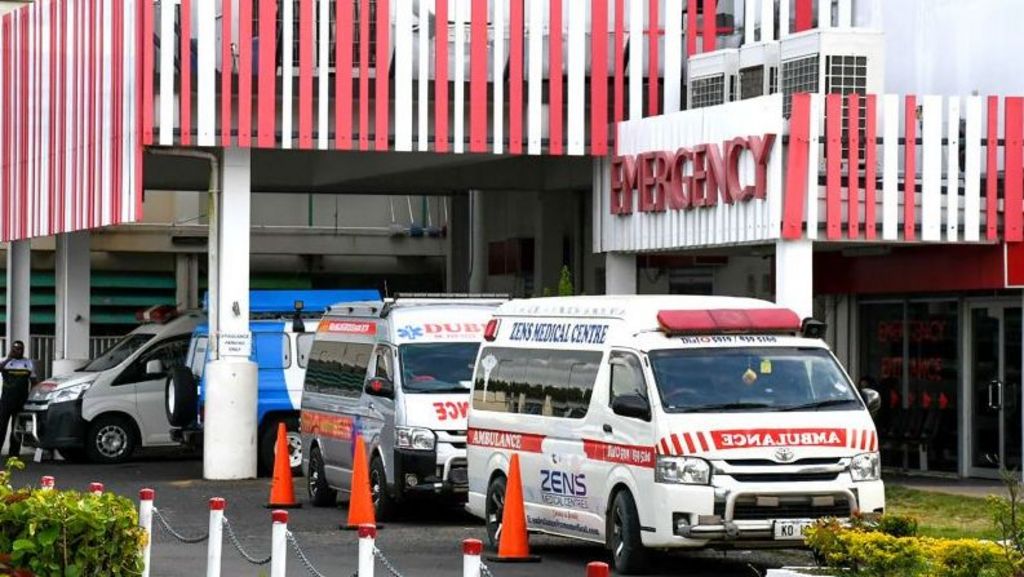
In a significant response to a rapidly worsening public health crisis, the Pacific island nation of Fiji has officially declared a national emergency following a sharp surge in HIV infections that has stretched the country’s already fragile health services to breaking point. As national authorities move to scale up testing, treatment, and preventive care across the archipelago, new data reveals the alarming pace at which the epidemic has grown over the past five years.
Today, roughly one out of every 60 adults in Fiji lives with the bloodborne virus, a marked jump from the 2020 figure of one in 167. Compounding the crisis, the country has recorded a steady rise in infant deaths linked to HIV-related complications, marking one of the most devastating outcomes of the unchecked spread. In 2025 alone, Fijian health authorities recorded 2,016 new HIV diagnoses, according to Health Minister Antonio Lalabalavu, who emphasized that a standard outbreak-level response is no longer adequate to contain the crisis.
Health experts and non-governmental organizations have traced the rapid spread of the virus to a dangerous combination of rising intravenous drug use, unprotected sexual activity, needle sharing, and a high-risk practice known locally as “bluetoothing” or “hotspotting.” This practice, which has been tied to HIV surges across parts of Africa and the Pacific, sees multiple drug users inject the blood of an already intoxicated person to achieve a collective high. It has gained traction in Fiji for two key reasons: it allows users to split the cost of a single dose of drugs, making intoxication cheaper, and it requires only one syringe, a resource that is already difficult to access for many drug users in the country.
To address the root drivers of transmission, the Fijian government is launching a targeted syringe and needle distribution program as a core component of its emergency response. Lalabalavu confirmed that the country already holds adequate stockpiles of sterile syringes and needles, and legislative amendments will soon be introduced to parliament to clear the way for the program’s full nationwide rollout. The minister has also issued a public call for at-risk community members to access voluntary testing, stressing that stigma around HIV status remains a major barrier to care.
“No one should be ashamed, threatened, or excluded because of their HIV status,” Lalabalavu said. “Stigma drives people away from the very services that can help them.”
Alarmingly, UNAIDS data from 2025 shows that among the estimated 9,100 Fijians living with HIV, only 39% are aware of their status, and just 22% are accessing life-saving antiretroviral treatment. This falls drastically short of the global average, where 78% of people living with HIV have access to consistent treatment.
Jason Mitchell, head of Fiji’s national HIV response taskforce, warned that bringing the epidemic under control will be a years-long process, far different from the rapid two-year turnaround seen during the COVID-19 pandemic. “It will take upwards of five years for [Fiji] to get on top of the epidemic,” Mitchell told ABC News in an interview. “It’s a long-term programme, it’s not something like Covid that’s turned around in two years. HIV is very different.”
Mitchell added that the surge has placed unprecedented pressure on Fiji’s under-resourced health system. “For a health system that’s already struggling, to have people who should really be well because there’s treatment available taking up beds in hospitals and sitting in outpatient… Our clinical services has really been under a lot of pressure,” he said.
The United Nations programme on HIV and AIDS (UNAIDS) has expressed support for Fiji’s emergency declaration, noting that the move signals the urgent whole-of-society response needed to reverse the epidemic’s trajectory. Winnie Byanyima, executive director of UNAIDS, said the crisis in Fiji serves as a critical wake-up call for the global community.
“It is also a stark reminder to the world that Aids is not over,” Byanyima said. “HIV epidemics can change quickly, and countries need health and community systems that are ready to respond urgently.”