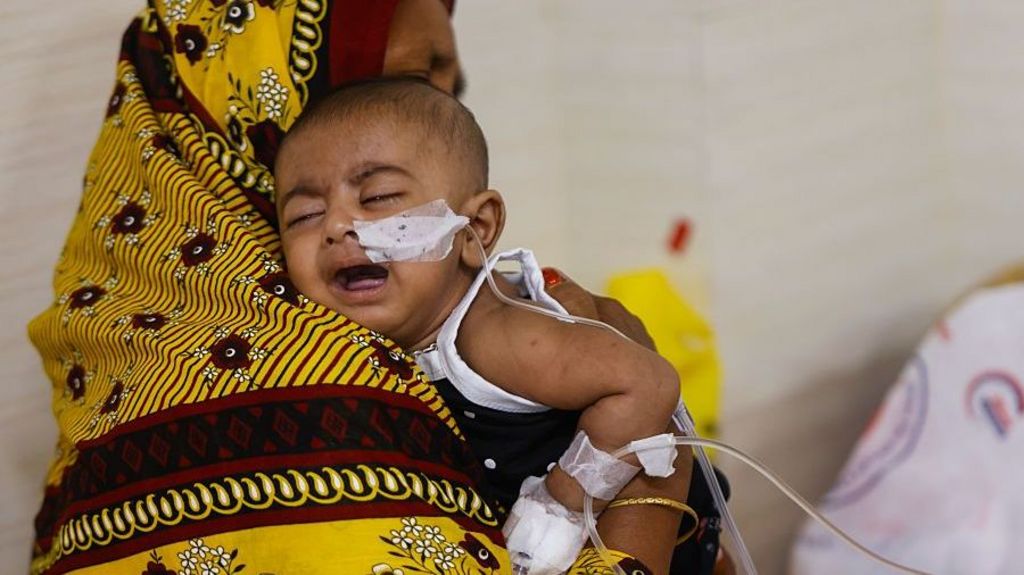
Decades have passed since Bangladesh has faced a public health crisis of this scale: a rampant measles outbreak that has already claimed the lives of more than 1,000 children, with daily new suspected cases continuing to climb even after a nationwide emergency vaccination initiative. As of mid-September 2026, official data records more than 194,000 confirmed infections since the outbreak began accelerating in March, pushing the South Asian nation to the unenviable position of recording more measles cases than any other country worldwide this year. Up until March, both the World Health Organization (WHO) and global public health bodies had praised Bangladesh for making substantial progress toward full measles elimination, making the sudden resurgence all the more alarming.
The unfolding crisis traces its roots to a perfect storm of overlapping systemic and public health challenges, according to UNICEF. Years of disruptions to routine childhood immunization caused by the COVID-19 pandemic left a large cohort of children unprotected against the highly contagious virus, which spreads easily through respiratory droplets from coughing, sneezing, and breathing. Bangladesh’s dense population of 178 million people further accelerated transmission, while widespread childhood malnutrition—an ongoing public health challenge in the country—has amplified the risk of severe complications and death for infected children. WHO data confirms the scope of the vaccination gap: 83% of all confirmed measles cases occur in unvaccinated children, with another 10% affecting infants under six months old, a group too young to receive routine measles vaccination and thus inherently vulnerable to the disease.
Disputes over vaccine access and delayed public health action have added another layer of complexity to the crisis. UNICEF has alleged that the former interim government led by Muhammad Yunus delayed placing vaccine orders in 2024 while reviewing proposals from new vendors, despite repeated warnings about the growing risk of an outbreak. “We were worried about possible [vaccine] gaps increasing, and it’s unfolding into what we’re now seeing,” Miguel Mateos Muñoz, a UNICEF spokesperson, told the BBC in June. Senior health officials from Yunus’ administration have denied these claims, asserting that no vaccine shortage ever occurred. Political upheaval in the country over the past two years—including 2024 mass student-led protests that ousted long-time authoritarian prime minister Sheikh Hasina—has further disrupted public health planning and response efforts.
More than 19.8 million children have been vaccinated through the initial emergency campaign, but public health experts agree the first phase of the response fell short of what was needed to curb transmission. Dr Mushtuq Husain, a leading Bangladeshi public health expert, told the BBC that the first campaign failed to reach enough unvaccinated children across all regions and age groups, leaving large pockets of vulnerability. “There are no shortcuts when it comes to a response,” Husain said. “The government made the right decision to jump into action. But the health workers needed to go door-to-door to make people aware of the urgency.” While the WHO has characterized the initial vaccination drive as broadly successful, it acknowledged that a significant share of target children were never reached, and transmission had already spread across every region of the country before large-scale immunization efforts could get underway. “The outbreak spread nationwide before vaccination activities were implemented, creating extensive transmission chains that take time to fully interrupt,” the WHO said in a statement.
Starting September 26, the Bangladeshi government will launch an intensified second phase of its vaccination campaign, aimed at reaching the thousands of unvaccinated children who were missed in the first round. Right now, an average of 1,000 new suspected cases are reported every day, with eight new deaths recorded on a single Tuesday in September, and 300 additional child deaths recorded since the health ministry declared the outbreak under control in June. Hospitals across the country remain overwhelmed by the surge of patients: during a BBC visit to facilities in June, dozens of families were forced to wait and rest on blankets on hospital floors, with one major facility operating at more than twice its intended patient capacity. While the health ministry previously acknowledged the strain on the national health system, it argued that the pressure was unavoidable given Bangladesh’s large population and claimed the crisis had already been contained.
Bangladesh is not an isolated case: measles outbreaks have reemerged across the globe in recent years, even in nations that had previously achieved elimination status. The United Kingdom lost its official measles elimination status earlier this year, and the United States has recorded consistent increases in cases since 2020. In both high-income nations, vaccination coverage for children under five years old falls short of the 95% herd immunity threshold required to stop sustained measles transmission, underscoring the global nature of the growing threat of vaccine-preventable disease resurgence.