博客

  • Japanese lawmakers visit Beijing seeking to mend ties after fallout from Takaichi’s Taiwan remark

    Japanese lawmakers visit Beijing seeking to mend ties after fallout from Takaichi’s Taiwan remark

    TOKYO — In a bid to reverse a dramatic breakdown in China-Japan relations triggered by a controversial statement on Taiwan from Japanese Prime Minister Sanae Takaichi that inflamed Beijing and spilled over to damage economic ties, a multi-party delegation of Japanese legislators departed for Beijing on Monday. The four-day visit, scheduled to run through Thursday, will see the group hold formal talks with officials from the Chinese Communist Party, in what supporters frame as an opening to restart frozen diplomatic communication.

    The cross-party delegation includes Gaku Hashimoto, a former health and welfare vice minister from Takaichi’s own ruling Liberal Democratic Party, one lawmaker from the Komeito opposition, and a representative from the Centrist Reform Alliance (CRA). Shinichi Isa, the CRA spokesperson and a former diplomat posted to the Japanese Embassy in Beijing, spoke to reporters ahead of the delegation’s departure from Tokyo’s Haneda Airport, emphasizing the urgency of the mission.

    “Communication has been severed in all areas, and we are already seeing negative impacts ripple across multiple sectors,” Isa told reporters. “Our goal is to find a path forward that can restart constructive dialogue between the two sides.”

    The crisis erupted immediately after Takaichi took office, when she stated that a Chinese military action targeting Taiwan would qualify as a “survival-threatening situation” for Japan, potentially justifying the deployment of Japanese military force. The comment crossed a well-established red line for Beijing, which claims the self-governing island of Taiwan as its sovereign territory, and triggered furious pushback from Chinese authorities.

    Weeks later, Isa warned on social media platform X that bilateral relations had fallen to their lowest point since the two countries normalized diplomatic ties in 1972. Unlike previous periods of tension, when low-level official communication remained open to prevent escalation, Isa noted that “now all official channels between government agencies and ministries have been completely cut off.” He added that the ongoing frozen relationship serves no national interest for either China or Japan, and confirmed that Beijing had granted the delegation’s request to open a limited “window for dialogue” between the two sides.

    Earlier last week, China’s Foreign Ministry acknowledged that cross-party “people of insight” from Japan had recognized the severity of the current bilateral standoff and were seeking concrete steps to put relations back on a stable footing. “We urge those running the Japanese government to take these voices seriously … and take concrete actions to create the necessary conditions for normal exchanges between the two countries,” the ministry said in a statement Friday.

    Takaichi has so far refused to retract her original comment on Taiwan. In a small conciliatory gesture amid rising tensions, however, she chose to pray remotely rather than make an in-person visit to Tokyo’s controversial Yasukuni Shrine during the annual Aug. 15 commemoration of Japan’s World War II surrender. The shrine, which honors convicted Japanese war criminals alongside the country’s war dead, is widely viewed by China and South Korea as a symbol of unrepentant Japanese wartime militarism and aggression.

  • China probes use of formaldehyde to keep cabbages fresh

    China probes use of formaldehyde to keep cabbages fresh

    As the world’s leading cabbage producer, accounting for nearly half of the global annual output that exceeds 30 million metric tons, China is now facing a fresh food safety scare that has sparked nationwide attention. Hebei Province, a key growing and distribution hub in the country’s northeast, has confirmed that authorities have launched a full investigation following the emergence of footage showing cabbage handlers dipping heads of the vegetable in a preserving solution before loading them onto transport trucks.

    The controversial footage was first brought to public attention by an independent environmental blogger last week. In China, the use of formaldehyde — a colorless, carcinogenic chemical — for any food preservation purpose is banned under strict national food safety regulations. Most of China’s cabbage output is distributed domestically, with a large share also exported to neighboring Asian markets and Russia, with South Korea and Vietnam counting among the top international buyers.

    State media reports confirm that local police have already initiated legal proceedings against the individuals identified as being involved in the practice. In response to growing public concern, national and local regulators have moved quickly to head off widespread consumer panic and rebuild public trust in the country’s fresh vegetable supply. Authorities are rolling out widespread random spot checks of cabbage stocks at wholesale and retail markets across every region of the country.

    Investigators are also working to determine how widespread the illegal practice of formaldehyde dipping is across the cabbage industry, and have implemented tracing protocols to isolate and remove any affected produce from the supply chain. In an official public statement released Saturday, administrators from Kangbao County, the region at the center of the initial reports, reaffirmed their commitment to upholding food safety standards: “Any illegal or non-compliant practices discovered will be dealt with strictly in accordance with the law to ensure the safety of the vegetable supply.”

    Beijing’s Xinfadi Market, the largest wholesale fresh produce hub serving the Chinese capital, released its own statement confirming that it had completed a full audit of its cabbage supply chains, and that no contaminated produce had entered the market’s distribution network.

    The incident has dominated domestic Chinese media coverage and sparked intense public discussion. In an official editorial, People’s Daily, the official newspaper of the Chinese Communist Party, issued a sharp rebuke of the actors involved: “The wholesalers focused solely on their immediate economic interests while completely disregarding the lives and health of consumers. [They] crossed a legal red line and breached the moral bottom line.”

    According to the American Cancer Society, while prolonged exposure to high concentrations of formaldehyde in occupational settings has been definitively linked to multiple forms of human cancer, the long-term health impacts of low-level exposure through food consumption remain understudied and not clearly understood.

  • Asian shares mostly decline as bond market pressure mounts

    Asian shares mostly decline as bond market pressure mounts

    As global markets kicked off a high-stakes trading week Monday, most Asian equity benchmarks retreated and crude oil prices pulled back, with investors across the world holding their breath ahead of the annual gathering of top U.S. economic policymakers at Jackson Hole, Wyoming. U.S. stock futures also ticked downward in early pre-market trading, setting a cautious tone across the Asia-Pacific region.

    Across major regional markets, the downturn was broad-based. Japan’s benchmark Nikkei 225 index dropped 0.5% to close at 65,678.45, while South Korea’s Kospi suffered a steeper 3.5% decline to land at 6,664.36. Hong Kong’s Hang Seng index fell 2.1% to 25,465.23, and China’s Shanghai Composite index edged 0.7% lower to 3,877.30. Taiwan’s Taiex also followed the downward trend with a 0.5% loss. Australia bucked the regional slump, however, with its S&P/ASX 200 gaining 0.5% to reach 9,107.40.

    This week’s market calendar holds several make-or-break economic releases and events that could shape near-term global policy. On Wednesday, U.S. officials will release the July reading of the Personal Consumption Expenditures (PCE) price index, the Federal Reserve’s preferred metric for tracking inflation. Current forecasts and recent data signal U.S. consumer inflation remains stuck above 3%, well above the Fed’s long-term 2% target.

    Inflation has reaccelerated after a brief cooling period in early 2025, driven by two key global shocks: broad-based U.S. tariffs imposed on trading partners worldwide, and output disruptions caused by the ongoing Iran conflict, which has cut oil shipments through the critical Strait of Hormuz and pushed energy prices sharply higher starting in early 2026.

    Persistent inflation pressures have already sent bond yields surging in recent weeks, creating cascading volatility across financial markets. Last week, spiking long-term yields forced an unusual intervention from the U.S. Treasury Department, led by Secretary Scott Bessent. To calm markets, Bessent announced the government would double its buyback program for longer-term bonds, a move designed to push down 10-year Treasury yields and ease pressure on mortgage rates. The relief was short-lived, however: by Friday, the 10-year yield climbed back to 4.73%, matching a multi-year high, and held near that level at 4.71% in early Monday trading. The 30-year Treasury yield, another key target of the buyback program, also rose to levels not seen since 2007.

    The unexpected failure of the Treasury’s intervention has amplified investor concerns. Higher sustained yields raise government borrowing costs, which in turn weigh on consumer spending—the core engine of U.S. economic growth. Many market participants are also growing increasingly wary of the risks posed by continuous large-scale government borrowing, a trend that has put persistent upward pressure on yields. The bond market remains highly volatile, and all eyes are now turning to the Jackson Hole summit, where Federal Reserve Governor Kevin Warsh is set to deliver a key speech that could signal upcoming shifts in interest rate policy.

    U.S. equities closed last week on a fragile positive note: the S&P 500 gained 0.4% on Friday, notching only its second gain in six trading days after hitting an all-time high earlier the previous week. The Dow Jones Industrial Average climbed 1% and the Nasdaq composite edged up 0.4%, supported by better-than-expected spring corporate profits that have helped drive major U.S. indexes to record levels in recent weeks.

    Geopolitical uncertainty continues to cloud the outlook, however. On Sunday, the new head of Iran’s top security body warned that Tehran would view any country’s support for new U.S. economic sanctions against the Islamic Republic as an act of war, even as Iran’s president defended a recent memorandum of understanding with the U.S. as the best path forward to de-escalate the stalled conflict. Persistent doubts about when oil tankers will be able to safely resume full transit through the Persian Gulf have kept energy markets volatile. Early Monday, crude prices pulled back from recent highs: Brent crude fell 1.4% to $93.10 per barrel, while U.S. benchmark crude dropped 1.6% to $85.63 per barrel.

    One unusual bright spot amid the market volatility has been cryptocurrency. Bitcoin, which tends to rally when interest rate expectations fall and liquidity increases in global financial markets, has benefited from expectations that the Treasury’s intervention will push long-term yields lower. Additional tailwinds have come from growing hopes for pro-crypto industry legislation working its way through Washington. Early Monday, bitcoin traded near $77,000, according to data from CoinDesk.

    In currency markets, the U.S. dollar edged slightly lower against the Japanese yen, falling to 158.89 yen from 158.94 yen at Friday’s close. The euro held steady, remaining unchanged at $1.1678 against the greenback.

  • Australian shark attack victim grateful for ‘second chance at life’

    Australian shark attack victim grateful for ‘second chance at life’

    A 34-year-old Australian mother who survived a brutal shark mauling at one of Sydney’s most popular public beaches says she is ready to embrace the new lease on life she has been given, after months of grueling recovery that included emergency surgery and the amputation of one arm.

    Leah Stewart was attacked by the predator during an early morning swim at Coogee Beach back in June, suffering multiple laceration bites across her arms and legs. The incident was one of a string of deadly shark encounters recorded across Australia throughout 2026, which have claimed multiple lives already this year.

    Following the attack, Stewart was placed in an induced coma by emergency medical teams to stabilize her condition, and underwent multiple urgent surgical procedures to save her life – one of which required the amputation of one of her arms.

    In her first public statement since the attack, shared via social media on Monday, Stewart opened up about her challenging recovery journey, and expressed profound gratitude to the thousands of supporters who have rallied around her. An online community fundraiser organized on her behalf has now raised more than AU$550,000, equal to roughly US$394,000, to cover her ongoing medical and living costs.

    “After what has been an incredibly difficult few months, I’m so happy that I’ve progressed enough to build some independence, and I can finally see some light after all of this,” Stewart wrote. “I want you to know that I feel like I’ve been given a second chance at life, and I’m not going to waste it.”

    Stewart said she had been overwhelmed by the outpouring of support from her loved ones and even complete strangers from across the globe, adding that the kindness she has received has inspired her to focus on healing rather than resentment. “You’ve inspired me to get better, not bitter,” she wrote.

    She confirmed that the online fundraiser would be officially closed now that the target has been far exceeded. The funds will allow her to complete her recovery in the comfort of her own home, and will also cover the cost of future adaptive medical treatments and prosthetic care.

    “I still have a long way to go, but my recovery has been remarkable, and a huge part of that is because of the absolute army of love, support, prayers and encouragement surrounding my family and I from all over the world,” Stewart added.

    Stewart’s full account of the attack will be broadcast this weekend on Nine Network’s flagship current affairs program *60 Minutes*. In pre-released excerpts from the interview, she described coming face-to-face with the shark before the attack, saying she will never forget the “horrific” sight of the animal. “I’ll never forget its face – it was a monster,” she said.

    Recounting the terrifying moment the shark latched onto her leg, Stewart said her first and only thought was of her young daughter, August. “I just thought, ‘she’s not going to have a mum. She’s gonna grow up without a mum’,” she recalled. Fighting back tears, she added, “I couldn’t handle that, I didn’t want her to not have a mum. I just thought, I’ve got to fight it, do everything I can to be here.”

    The attack on Stewart comes amid a marked rise in shark encounters along Australia’s coastlines this year. In January, four separate shark attacks were recorded across the country in just a 48-hour window, including one that left a 12-year-old boy dead from his injuries. In May, a spearfisher was killed by a shark off the coast of Queensland, and a father of two died after being attacked by a 4-meter great white shark in Western Australia.

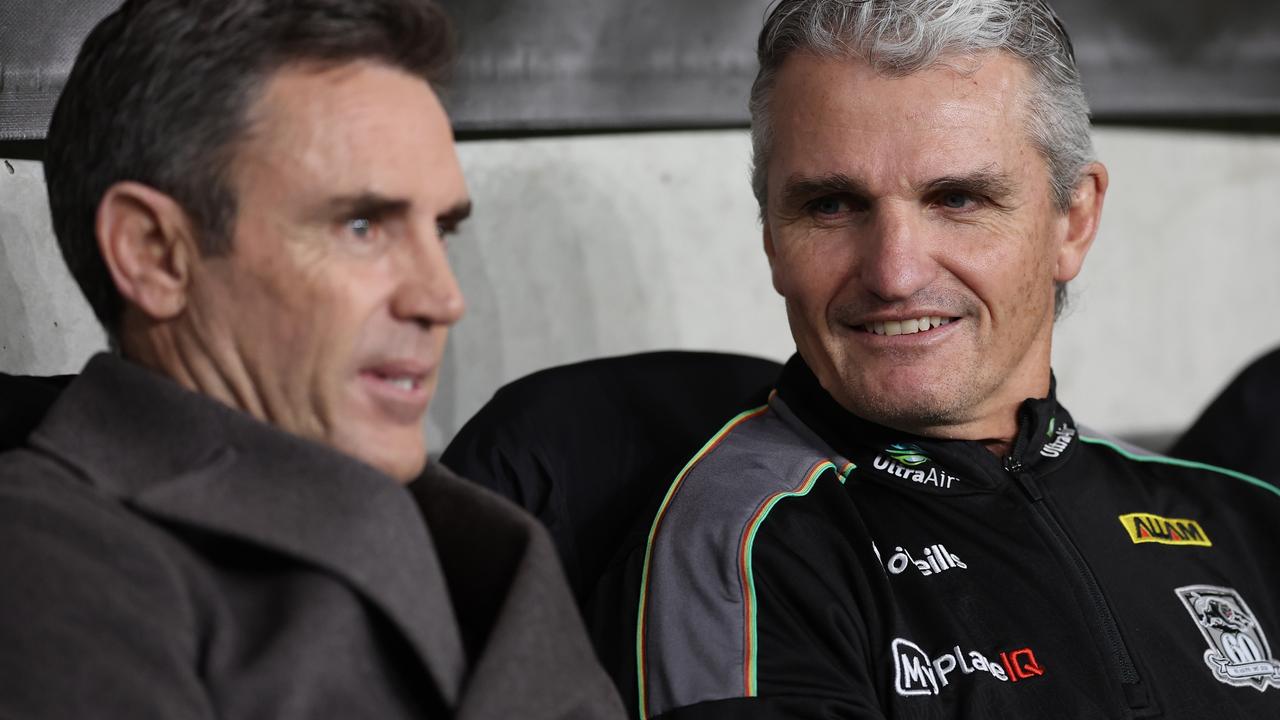
  • ‘Blaize knows’: Panthers face selection headache for finals as Ivan Cleary addresses Kangaroos rumour

    ‘Blaize knows’: Panthers face selection headache for finals as Ivan Cleary addresses Kangaroos rumour

    Veteran NRL head coach Ivan Cleary is navigating two major looming storylines simultaneously: a crunch selection dilemma for his in-form Penrith Panthers side amid a tight minor premiership race, and growing speculation linking him to the vacant Australian Kangaroos head coaching job.

    With just two rounds remaining in the 2024 NRL regular season, Penrith finds itself deadlocked with the New Zealand Warriors and Sydney Roosters atop the ladder on 38 competition points. A slightly inferior for-and-against record drops the Panthers to second place, but two wins from their remaining fixtures against Canterbury-Bankstown Bulldogs and Wests Tigers would lock in a second-place finish, guaranteeing two home finals matches to open the post-season.

    This tight ladder position rules out the approach Penrith took in last year’s corresponding round 26 clash with the Bulldogs, when the side rested nearly all of its starting 17. This week, the Panthers will already be without starting five-eighth Jack Cogger, who accepted a three-match suspension for a high tackle against the Melbourne Storm. Cogger opted to accept the ban rather than contest the charge at the NRL judiciary, where a prior earlier-season offence would have pushed the potential suspension to four matches had he lost his appeal. “Three weeks is bad enough, but four’s worse,” Cleary told reporters. “Super disappointed with it, to be honest. But ultimately, we didn’t think we could win.”

    Cogger’s suspension has thrown a last-minute curveball into Penrith’s finals preparations. Only a few weeks prior, Cogger had reclaimed the starting five-eighth spot from young talent Blaize Talagi over ongoing defensive concerns, and Talagi has since lined up for the club’s reserve grade side. While Talagi offers significant attacking upside, repeated defensive misreads have put his selection in doubt for Friday’s clash. The current frontrunner to partner Nathan Cleary in the halves is Jack Cole, who already stepped into the starting role when Cogger was unavailable in round 23.

    Cleary noted that the squad has already addressed Talagi’s defensive gaps, and that the sudden vacancy is just another routine challenge of a long NRL season. “You’d prefer it if you get a little bit more cohesion there, but all the boys that have played there have sort of played enough. It’s just another challenge that you get throughout the season,” he said. “It’s an important position, a big game with top two spots still up for grabs. The team is the most important thing. Whoever fills the job, we have confidence they’ll do it. Injuries and suspensions have hit every side this year, so you just have to be ready for everything, have different contingencies. It’s not all about one guy who starts, there are plenty of other things that you’ve got to work out as well.”

    In additional injury news, starting hooker Mitch Kenny remains sidelined with a serious lower-leg injury and will not return this week, though he is on track to record game minutes in the final round of the regular season.

    Off the field, Cleary remained tight-lipped when asked about speculation linking him to the Kangaroos head coaching vacancy, which opened after incumbent coach Kevin Walters announced he would step down following the 2024 World Cup to take over at English Super League side St Helens.

    Cleary is currently contracted to Penrith through the end of the 2027 NRL season, and recently stepped down from his role as New South Wales Blues head coach, with the NRL locking in Matt King as his replacement several weeks ago. The four-time premiership-winning coach previously served as an assistant coach for the New Zealand Kiwis at the 2013 World Cup, making him a high-profile candidate for the Kangaroos role, alongside Kangaroos legend Cameron Smith.

    “If I’ve been linked to it, I’d be very honoured, but it’s not something I’m thinking about because I don’t know what I’ll be doing,” Cleary said. “I’m still coaching in the NRL, it’s a big enough job, plenty to be worrying about anything else, so that’s what I’m doing. I don’t know why I’m being considered because I don’t know much to it.”

  • Migrants, rescue ships face threats, harassment at sea: aid group

    Migrants, rescue ships face threats, harassment at sea: aid group

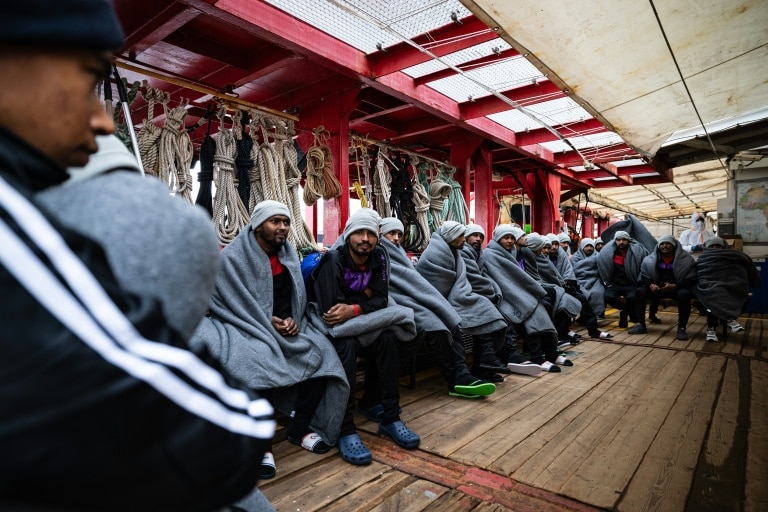
    The central Mediterranean crossing route for African migrants seeking entry to Europe has grown far more dangerous in recent months, with armed Libyan factions increasingly threatening and harassing both vulnerable migrants at sea and civilian humanitarian rescue operations, a leading search-and-rescue aid organization has reported.

    Europe’s enhanced cooperation with Libyan authorities and armed groups to block migrant departures has directly fueled this rising hostility, according to SOS Mediterranee, the NGO that operates the prominent rescue vessel Ocean Viking. The organization documented at least seven separate incidents between June and July where boats linked to Libyan actors approached NGO rescue craft at high speed, shadowed them for hours on end, and even chased the vessels into open international waters.

    Beyond these targeted encounters, the group notes a sharp uptick in unmarked speed boats affiliated with multiple Libyan armed groups operating in the crossing region. These unidentified craft have carried out violent interceptions of migrant vessels in distress, including deliberately ramming overcrowded boats and executing dangerous maneuvers that put all people on board at grave risk of death.

    This pattern of aggression is not a new development. Last year, SOS Mediterranee accused the Libyan coast guard of attacking the Ocean Viking while the ship was operating in international waters, with more than 100 rounds fired at the vessel. At the time of the attack, 87 rescued migrants and the ship’s civilian crew were on board, putting every person in immediate danger. Legal cases related to the attack have been launched in Italy, France, and Germany, but the organization says European Union institutions and national authorities across the bloc have refused to comment on the incident, and no perpetrators have been identified or held accountable to date.

    SOS Mediterranee is now calling for a full, independent international investigation into the escalating violence targeting migrants and rescue operations in the central Mediterranean.

    Data from the United Nations International Organization for Migration (IOM) released earlier this month supports the aid group’s warnings: while stricter European migration deterrence policies have cut the total number of migrants attempting the deadly crossing, the fatality rate for those who do set out has spiked dramatically. Between January and April of this year, the IOM recorded 821 people dead or missing at sea along the route, a 111% increase compared to the same period in 2025. Over the same timeframe, total migrant arrivals to European shores fell 46% to just 8,577 people.

  • New Zealand moves to ban social media for under-16s

    New Zealand moves to ban social media for under-16s

    Almost 18 months after neighboring Australia introduced what was then the world’s first national ban on social media use for children under 16, New Zealand’s center-right government is officially bringing forward its own sweeping legislation to restrict underage access to major platforms, in one of the most ambitious global attempts to curb youth exposure to online harm. Prime Minister Christopher Luxon’s ruling National Party has spent more than a year reviewing Australia’s policy and designing its own regulatory framework, which is set to be introduced to parliament this coming Monday.

    The core of the proposal, titled the Online Safety Bill, prohibits any child under the age of 16 from creating and using personal accounts on major social media platforms including Meta-owned Instagram and Facebook, ByteDance’s TikTok, and Snap Inc.’s Snapchat. To enforce the rule, the legislation requires platforms to take legally mandated reasonable steps to verify the age of all new users, mandating verification methods ranging from existing account metadata and formal government-issued identification to digital ID services and AI-powered facial age estimation tools. Beyond age checks, platforms will also be required to conduct regular mandatory assessments of the risks their platforms pose to underage users and publish public reports detailing their efforts to mitigate those harms.

    The stakes for non-compliance are steep: platforms that fail to meet their regulatory obligations could face fines equal to as much as 10% of their annual global revenue, a penalty structure aligned with strict digital regulations introduced by the European Union in recent years. Crucially, the bill does not impose any fines or legal penalties on children who access platforms, nor on their parents or caregivers, a clarification Education Minister Erica Stanford emphasized as the government rolled out the proposal.

    Luxon made the case for the controversial legislation in stark terms, framing it as a necessary intervention to protect a generation of young New Zealanders. Citing public health data, he noted that one in three teenagers between 13 and 17 currently spend at least five hours per day on social media platforms. “Social media is exposing them to harmful content, addictive technology and pressures they are not equipped to deal with, and it’s affecting their family life, mental health, sleep, and education,” Luxon said. “We simply cannot accept the harm being done to a generation of New Zealand children.”

    Despite the government’s push for the bill, its path to becoming law remains far from certain. The National Party holds a plurality in parliament, governing in coalition with two smaller parties – the libertarian ACT Party and the populist NZ First – both of which have already publicly announced their opposition to the proposal. NZ First cited what it calls the “colossal failure” of Australia’s similar policy, which was implemented in December 2023, to justify its opposition. ACT, meanwhile, has argued the ban is unworkable, claiming that tech-savvy teenagers will easily find ways to bypass age verification checks.

    Critics of the ban can already point to independent research out of Australia that casts doubt on the effectiveness of the under-16 ban. A peer-reviewed study conducted by Australian researchers, published in June 2024, found little empirical evidence that the ban had led to a meaningful drop in social media use among Australian teenagers. New Zealand joins a growing number of countries around the world that are exploring strict age-based restrictions on social media access, as policymakers grapple with rising concerns about the impact of unregulated social media use on youth mental health and well-being.

  • Divorce, smartphones and control – BBC sees how Taliban run Afghanistan

    Divorce, smartphones and control – BBC sees how Taliban run Afghanistan

    Five years have passed since the Taliban seized control of Afghanistan, ousting the U.S.-backed government that had held power for two decades. In a rare, multi-year access arrangement, BBC correspondents gained unprecedented entry to meet with senior Taliban officials, offering an unfiltered look at the gap between the group’s pre-power promises of moderation and the hardline reality of its current rule.

    One of the most striking encounters took place in the office of Abdullah Sarhadi, governor of northern Afghanistan’s Jawzjan Province, as an 18-year-old woman – identified only by the pseudonym Tuba to protect her identity – confronted the former Taliban commander to demand a divorce from her husband, who she says has abused her for months. Fully veiled and wearing sunglasses to conceal her identity, the young woman stood her ground, stating calmly, “If there was any chance to live together, I wouldn’t be here… I have taken my decision.”

    After attempting to pressure Tuba into remaining in the marriage – warning her that no man would marry a divorced woman and claiming she would lose her social standing – Sarhadi ultimately dismissed her request, and privately commented to the room of male officials, bodyguards and local elders that women are “mindless” and “deficient in intellect”, prompting laughter from those present. Under Taliban-imposed Sharia law, women face extreme barriers to securing divorce without spousal consent; Tuba’s husband demanded four times the original bridal bride price as a settlement, a demand her family refused. Even after Sarhadi ordered the husband to stop beating Tuba and provide her with a separate room, Tuba’s father told the BBC the family would continue pursuing divorce through Taliban courts, despite the long odds of success. This public, on-the-record exchange offers a rare unvarnished glimpse into how gender restrictions play out in daily life under Taliban rule.

    Sarhadi’s own trajectory mirrors the journey of many senior Taliban figures now holding national office. A military commander during the Taliban’s first rule in the 1990s, he surrendered to U.S.-led coalition forces in 2001 when the group was ousted, and spent several years detained at the U.S. Guantanamo Bay detention camp before being released. When the Taliban retook power in 2021, he was first appointed governor of Bamiyan Province, then moved to lead Jawzjan, and most recently became deputy commander of a military corps in Kunduz Province. When pressed about the 2001 destruction of the ancient giant Bamiyan Buddha statues – an act that triggered global condemnation – Sarhadi made an unflinching admission: he personally helped destroy the UNESCO-recognized archaeological site. “Whatever we did and we do is in accordance with the guidance and God’s law… We smash idols rather than sell them. Why should I regret? It was God’s will,” he said. He also confirmed that a recent ban on smartphones for government officials has slowed administrative work, but declined to criticize the policy further, noting any open opposition would “cause trouble”.

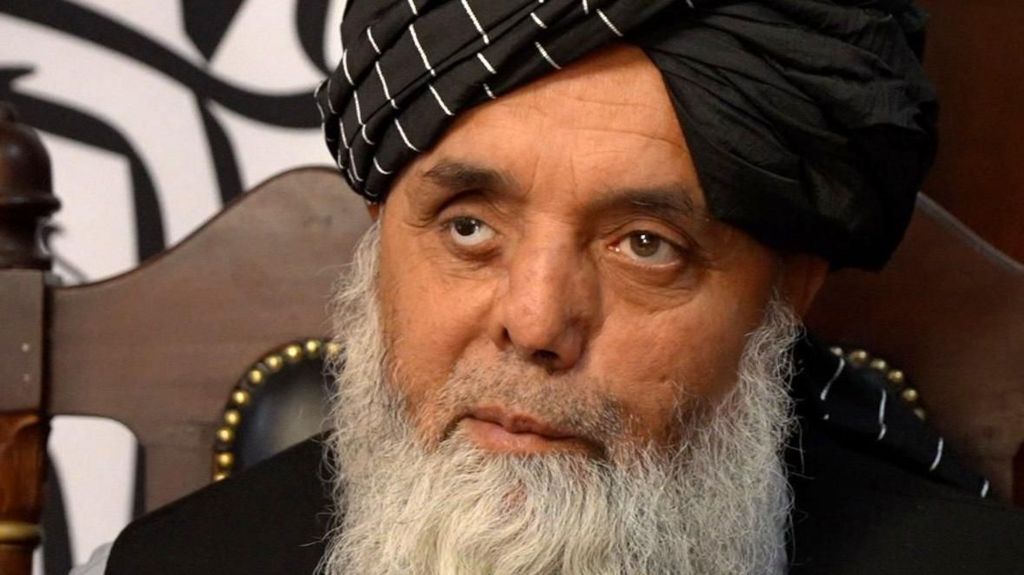
    Another senior Taliban official, Habibullah Badr, who now holds a position in the ruling administration after stepping back temporarily for medical treatment, admitted he previously planned and oversaw suicide attack operations in Kabul during the insurgency. The former death row inmate even went on to run the same prison where he was once held under the former U.S.-backed government, serving as national deputy head of prisons. When questioned about the thousands of civilian deaths caused by Taliban suicide attacks during the insurgency, Badr evaded questions about specific strikes, claiming the group only targeted U.S. convoys and warned civilians to stay away from foreign installations, and refused to discuss past violence, saying it would “reopen wounds” and upset the public.

    At a tribal gathering where Badr was set to receive a medal honoring his service, a rare moment of public dissent played out: foundation head Sultan Mohammad Talaee publicly called on the Taliban to reopen girls’ secondary schools, which have been banned nationwide since the group took power. “Seeking knowledge is an obligation for both men and women in Islam,” Talaee told the crowd, before his microphone was immediately cut off and he was prevented from speaking further. Dissent like this carries severe risk: women who have protested restrictions have been jailed, and most local journalists the BBC spoke to reported being regularly summoned and interrogated by the Taliban’s intelligence agency, Estikhbaraat.

    When pressed by the BBC about broken promises to allow women to work and study within Islamic frameworks, Taliban chief spokesman Zabihullah Mujahid – who publicly revealed his birth name, Tahir Shah Seddiqi, for the first time during the interview – defended the group’s policies, arguing that all women’s rights and freedom of expression must be interpreted “through the Sharia lens”. He claimed allowing women to work in government offices would “lead to immoralities” and “undermine their dignity”, and said that discussions around reopening girls’ education are still ongoing, with a Sharia-compliant solution still being developed. On media freedom, Mujahid confirmed the group maintains restrictions, stating that media cannot be allowed to broadcast content against Islamic law or spread anti-government propaganda.

    While the formal seat of government remains in Kabul, Mujahid confirmed most senior leadership is based in Kandahar, the Taliban’s historic heartland and the de facto national capital, where restrictions have only tightened in recent years. Men are required to grow beards, radio stations are banned from playing music or broadcasting women’s voices, and independent journalists are prohibited from filming in the city. The Taliban’s supreme leader, Hibatullah Akhundzada, who almost never appears in public and has never given a media interview, declined the BBC’s request for a meeting.

    In a remote, impoverished region outside Kandahar, former insurgent fighters who now serve as government security personnel showed the BBC the secret cave network they used to hide from coalition forces during 20 years of insurgency. One local commander, Abdul Samad, whose father was killed fighting for the Taliban, acknowledged that the region – already one of the poorest in a country where the UN estimates three-quarters of the population cannot meet basic needs – has yet to receive the infrastructure and development support residents need. “Emirate officials have not forgotten us. They are busy with other priorities, but we are hopeful they will look after us sometime,” Samad said.

    Five years into the Taliban’s second rule, Afghanistan remains mired in widespread poverty, mass unemployment and economic collapse. While Taliban officials claim they are working to address these crises, many Afghans say the group’s rule itself is the primary obstacle to stability. For women in particular, systemic restrictions on education, work, movement and public life have destroyed decades of progress. “I’m speechless about how a group that has no understanding about life is suddenly in power,” said Hoda, a female activist who protested the 2021 takeover who requested anonymity for her safety. “Women can’t accept this situation. They might advance restrictions but it won’t stay like this forever. I think the Taliban are scared of educated women, that’s why they restrict us: they want uneducated women who cannot raise a generation that will challenge and end their rule.”

  • What do locals think of IndyCar in Washington DC?

    What do locals think of IndyCar in Washington DC?

    On a sunny Sunday in the heart of the U.S. capital, Washington D.C. played host to a rare and thrilling event: an IndyCar street race that drew hundreds of spectators from across the region – and one very high-profile guest. Former U.S. President Donald Trump was spotted in the crowd, joining racing enthusiasts and curious onlookers alike to watch the high-speed competition roar past iconic downtown landmarks.

    The race marked a unusual moment for Washington, a city better known for political gridlock and bureaucratic business than for wheel-to-wheel motorsports action. As the open-wheel cars zoomed along closed city streets, the event sparked a range of reactions from local residents, who weighed in on everything from traffic disruptions to the economic boost the race could bring to the district. For many locals, the arrival of IndyCar offered a welcome break from the daily grind of political news, bringing a new form of entertainment to the nation’s capital that put D.C. in the national sports spotlight. Others raised questions about the long-term value of hosting major motorsports events in a dense urban environment, citing concerns over road closures, noise pollution, and public resources allocated to the one-off event. Regardless of differing opinions, there was no denying that the race generated widespread buzz across the city, with Trump’s appearance adding an extra layer of media attention to the already high-profile sporting occasion.

  • Uganda and Burundi military officials visit Israel to discuss Gaza troop deployment

    Uganda and Burundi military officials visit Israel to discuss Gaza troop deployment

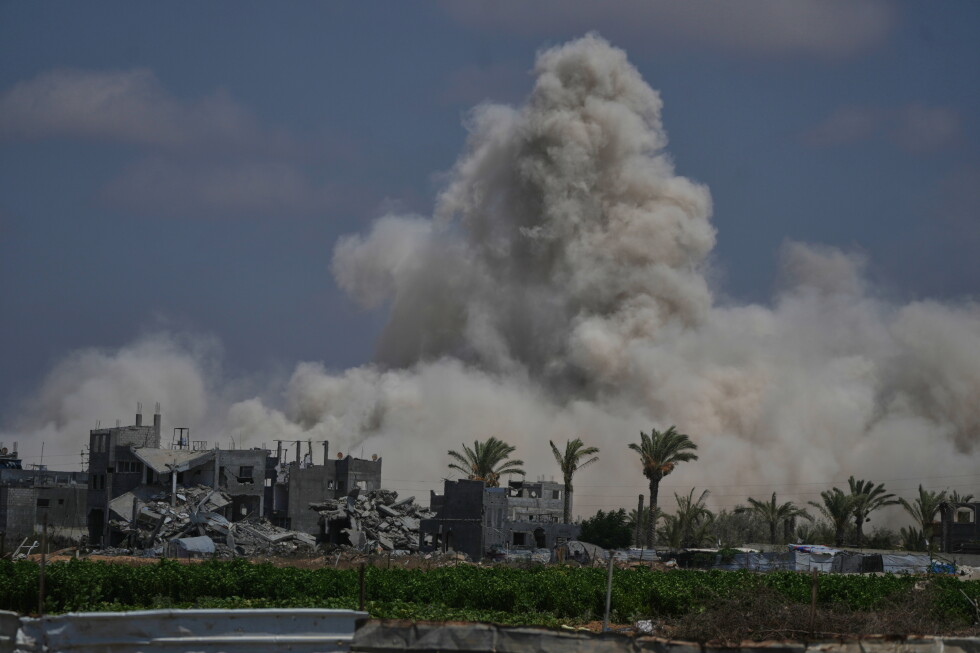
    Diplomatic and military discussions centered on expanding the planned U.S.-backed international security force for Gaza have advanced this week, with delegations from Uganda and Burundi holding closed-door talks with Israeli and U.S. Board of Peace officials last week in Tel Aviv, multiple anonymous sources have confirmed to the Associated Press. The proposed force is a core component of former U.S. President Donald Trump’s Gaza peace framework crafted to sustain the region’s fragile current ceasefire.

    A senior Board of Peace official, who requested anonymity as talks with potential contributing nations remain confidential ahead of any final agreement, confirmed that the Ugandan and Burundian delegations held knowledge-sharing sessions during the visit. Uganda is moving quickly to finalize its participation plans, after its parliament formally approved a troop contribution for the mission earlier this month, while Burundi has not yet concluded its internal negotiations, though senior officials have signaled clear intent to join the initiative.

    A separate Burundian military source, also speaking anonymously to the AP, confirmed the country’s delegation was led by three senior military officers, adding that Burundi’s leadership remains committed to moving forward with the deployment. Details on the exact size of the contingent both nations will contribute, as well as any potential financial or strategic compensation they will receive for their participation, have not been made public, and military spokespeople for both countries have not responded to repeated requests for comment from international media.

    If Burundi formalizes its commitment, the two East African nations will join a growing list of countries that have already pledged personnel to the force, including Morocco, Kosovo, Kazakhstan, and Albania. To date, Uganda has pledged approximately 1,200 troops, Morocco has committed up to 500, and the three remaining nations collectively have offered around 80 personnel. Indonesia, which previously announced plans to deploy 8,000 troops — the largest proposed contribution by any nation — has put its deployment plans on hold following the U.S.-Israeli military strike on Iran.

    The overall target for the full force is 20,000 troops, which will be led by U.S. Major General Jasper Jeffers. Current commitments remain far below this goal, and overall progress on standing up the force has moved at a slow pace amid ongoing political gridlock over the ceasefire terms.

    The proposed peace framework, first announced by Trump last month, outlines a path forward that requires Hamas to fully disarm, Israel to withdraw all military forces from Gaza, and the deployment of the International Stabilization Force to regions of Gaza that will be administered by a new technocratic Palestinian committee. The force’s core mandates include monitoring ceasefire compliance, training local Palestinian police forces, and supporting the safe delivery of humanitarian aid to the territory’s civilian population.

    The ceasefire that went into effect in Gaza last October has stalled in recent weeks, deepening gridlock over the core terms of the peace plan. Israeli Prime Minister Benjamin Netanyahu has rejected the U.S.-brokered proposal, stating that Israeli forces will not withdraw from the roughly 60 percent of Gaza that they currently control until Hamas is completely eliminated and disarmed. Earlier this month, a U.S. delegation led by senior negotiator Jared Kushner held separate marathon talks with Hamas leadership and Netanyahu to break the impasse; while Hamas has agreed to the terms of the framework, Israel has yet to offer any concrete commitment to move forward with the plan.

    Security analysts note that Uganda and Burundi bring unique practical experience to the proposed mission, having deployed thousands of troops to long-term peacekeeping operations in Somalia as part of an African Union-led counterterrorism mission against the al-Qaida-affiliated extremist group al-Shabab. Paul D. Williams, director of the security policy studies program at George Washington University, explained that both governments have a proven track record of tolerating high casualty rates during peacekeeping deployments without pulling out their forces.

    Williams added that as the Somali peacekeeping mission draws down, both nations are actively seeking new deployment opportunities to secure ongoing financial and material support for their national militaries. “Deploying to Gaza with U.S. backing is a logical and attractive opportunity for both governments to sustain that support,” he noted. A senior Ugandan military officer with direct knowledge of the deployment preparations also confirmed to the AP that the process of selecting troops for the Gaza mission is already underway.

    Diane Falzetta contributed additional reporting for this story from Nairobi, Kenya.