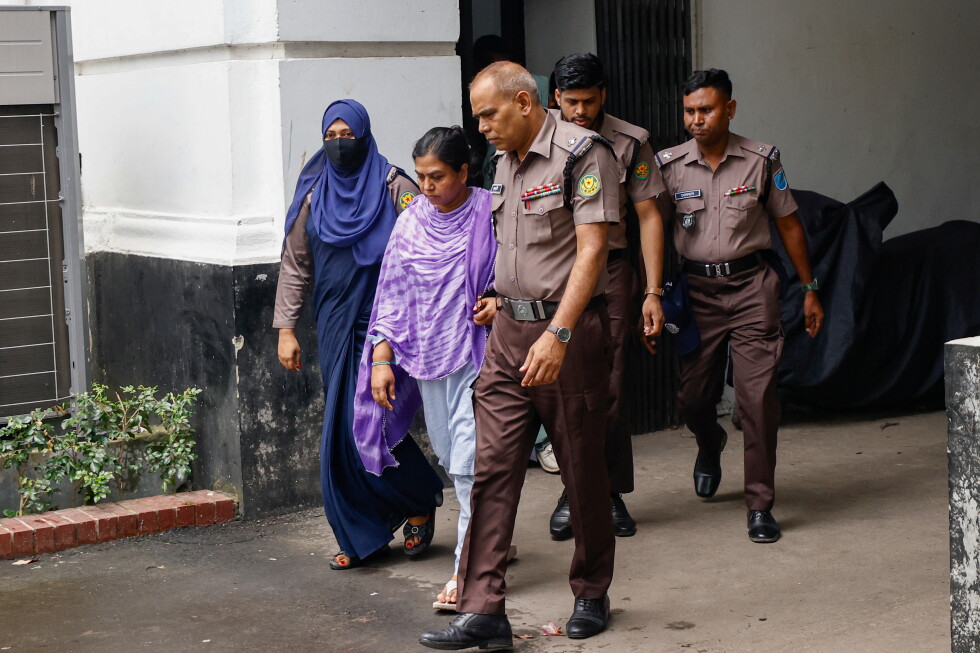
In a development that has reignited global debate over press freedom in Bangladesh, a special tribunal in Dhaka formally ruled Monday that three high-profile journalists must remain in pre-trial detention as their case connected to the 2024 mass uprising that removed former prime minister Sheikh Hasina from power moves forward. The three detained media workers are Mozammel Babu, editor-in-chief of private broadcaster Ekattor Television; Farzana Rupa, the outlet’s principal correspondent; and Shyamal Dutta, editor of the daily newspaper Bhorer Kagoj and a former head of Dhaka’s National Press Club.
Following Monday’s hearing where the journalists appeared before the tribunal, the judge scheduled the next procedural session for October 25 and ordered investigating officials to submit their full evidentiary findings against the three by that date. Prosecutors have leveled serious allegations against the trio: they claim the journalists incited the violent crackdown on student-led protestors during the 2024 uprising by asking Hasina provocative questions at a July 14, 2024 press conference. Prosecutors argue these questions prompted Hasina to make derogatory comments about demonstrators, which preceded a bloody government crackdown that left hundreds of protesters dead.
The 2024 uprising, which was spearheaded by student activists, ended with Hasina fleeing to India on August 5 that same year after she was removed from office. In the years since, Hasina has been tried in absentia by Bangladeshi courts and sentenced to death on charges of crimes against humanity linked to the crackdown. The three journalists have remained in custody since Hasina’s ouster, facing a slate of charges including murder connected to the July-August 2024 uprising. They were originally arrested during the tenure of the interim government led by Nobel Peace Prize laureate Muhammad Yunus, which transferred power to a new elected administration in February.
The continued detention of the journalists and repeated denial of bail have drawn sharp condemnation from international human rights and press freedom organizations. The Committee to Protect Journalists (CPJ) was among the first to speak out, with Asia-Pacific Program Coordinator Kunal Majumder calling the prosecution of the journalists for simply asking questions at a public press conference “outrageous and deeply troubling” in an earlier statement this month. Majumder emphasized that while editorial choices or reporting may at times be partisan or raise ethical questions, they do not constitute criminal activity. He warned that criminalizing independent journalistic judgment sets a dangerous precedent that erodes Bangladesh’s democratic standing, calling on authorities to immediately release the three journalists and dismiss all charges against them.
Family members of the detained journalists have also alleged that their detention is unlawful, adding another layer of controversy to the case. In related political developments, Hasina, who has remained in exile in India since 2024, recently announced she plans to return to Bangladesh in December. Both the former Yunus-led interim government and current Prime Minister Tarique Rahman’s sitting administration have formally requested India extradite Hasina to face her sentence, but New Delhi has rejected the request to date.