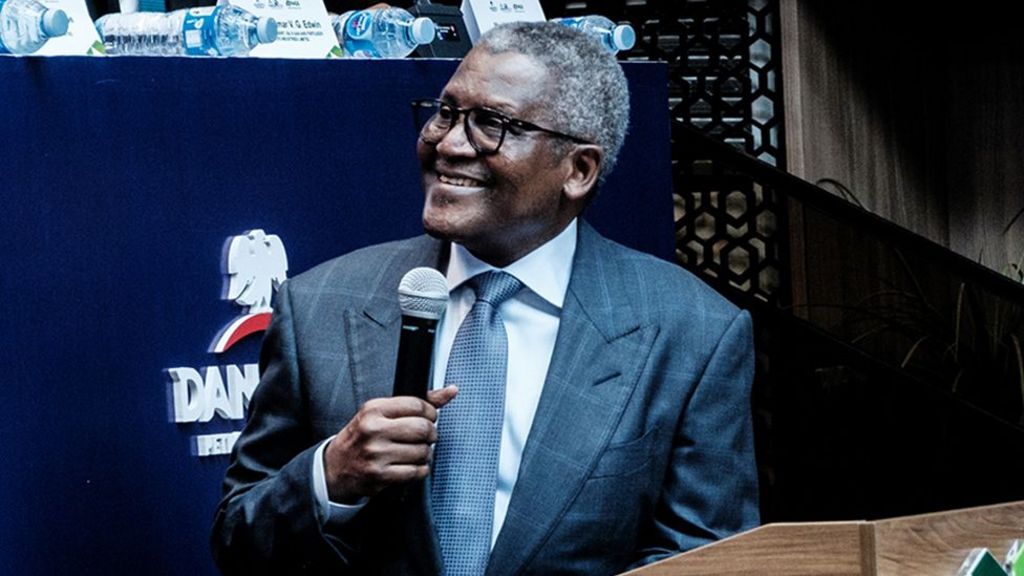
Across Nigeria, a ground-shaking shift in the country’s energy and investment landscapes has turned ordinary citizens into part-time oil industry owners, igniting a national wave of investor enthusiasm that has flooded trading platforms and dominated social media feeds. What started as an ambitious vision from Aliko Dangote, Africa’s wealthiest billionaire and Nigeria’s most iconic business leader, to create a “people’s IPO” has turned into the largest share offering in African history, capturing the imagination of a nation grappling with widespread economic hardship.
On Monday, more than 4 billion shares in Dangote’s sprawling Lagos-based oil refinery hit the public market – accounting for just over 3% of the company’s total equity. The offering was structured to be accessible to everyday Nigerians, with a minimum purchase requirement of just 10 shares, equal to roughly $4 (or £3). This low barrier to entry has opened up stock market investing to thousands of first-time participants, turning casual citizens into joke-playing “part-owners” of a facility that has already reshaped Nigeria’s entire oil sector.
Social media has erupted with playful memes and viral content celebrating the new status of small investors. One widely shared video shows a Nigerian stopping a speeding delivery truck owned by Dangote’s company, lecturing the driver against being reckless with “our company property.” Other memes show small stakeholders dialing up Dangote directly to weigh in on corporate strategy. A new slang term, “Yangote” – a Hausa language pun that translates roughly to “we all own a share now” – has quickly risen to the top of Nigeria’s social media trending charts.
The unprecedented demand caught popular mobile trading platforms off guard. Leading Nigerian investment app Bamboo crashed entirely on the IPO’s opening day, overwhelmed by the surge of user activity trying to purchase shares. In a public statement after the outage, the platform apologized to users, acknowledging “We know we let you down.”
Observers say this level of national excitement is almost unprecedented in Nigeria’s modern investment history. Public affairs analyst Jamil Ubah noted that the IPO has tapped into a deep-seated dream of financial advancement for a population where millions struggle to cover basic daily expenses. “I think the hope for the common man is that his money will grow into something big, and don’t forget this is coming at a time when many are struggling as the economy is not doing great,” Ubah explained in an interview with the BBC.
That enthusiasm has translated directly into action for first-time investors like 25-year-old clothing vendor Idris Lawal Musa, who made his first ever stock market purchase by sinking 21,000 naira ($16, or £12) into 40 shares. “It is no longer Dangote but ‘Yangote’, the company belongs to us now,” Musa told reporters, laughing. Like many small investors participating in the offering, Musa said he plans to sell quickly if the share price rises, fitting with his background as a small business trader.
The explosive popularity of the IPO also reflects a longer-term shift in Nigeria: the rise of a new investment culture among young Nigerians, who have increasingly embraced mobile trading platforms, digital savings products and cryptocurrency over the past decade. Pre-IPO hype spread rapidly across social media, with users sharing step-by-step investment guides, debating the refinery’s market valuation, and urging friends and family to join in to avoid missing out on the opportunity. That FOMO (fear of missing out) has pulled many first-time investors into the market who have little prior experience with stock risk.
Even amid the national frenzy, financial experts have issued clear warnings about the potential downside of the hype. Shares can just as easily decrease in value as they can rise, meaning inexperienced investors could lose part or all of their initial investment. Financial analyst Shuaib Uwais cautioned that prospective buyers should not treat the IPO as a guaranteed path to quick wealth. He urged investors to carefully weigh multiple risks that could impact the refinery’s future performance, including disruptions to crude oil supply, unexpected operational challenges, shifting regulatory policies, and global fluctuations in demand for refined petroleum products. “If for any reason the company experiences difficulty in sourcing its raw materials, there could be challenges,” Uwais noted.
Despite these risks, the IPO marks a major milestone for both Nigeria’s economy and Dangote’s years-long project to end the country’s reliance on imported refined fuel. Until the Dangote refinery launched operations two years ago, Nigeria – Africa’s largest crude oil producer – had no large-scale domestic refining capacity, forcing it to import nearly all finished petroleum products for domestic use. Today, the 700,000-barrel-per-day facility meets most of Nigeria’s domestic fuel demand, transforming the country’s energy sector. For Dangote, the public share offering is designed to raise capital to fund further expansion of the business – a goal that thousands of newly minted small Nigerian shareholders are now eager to support.