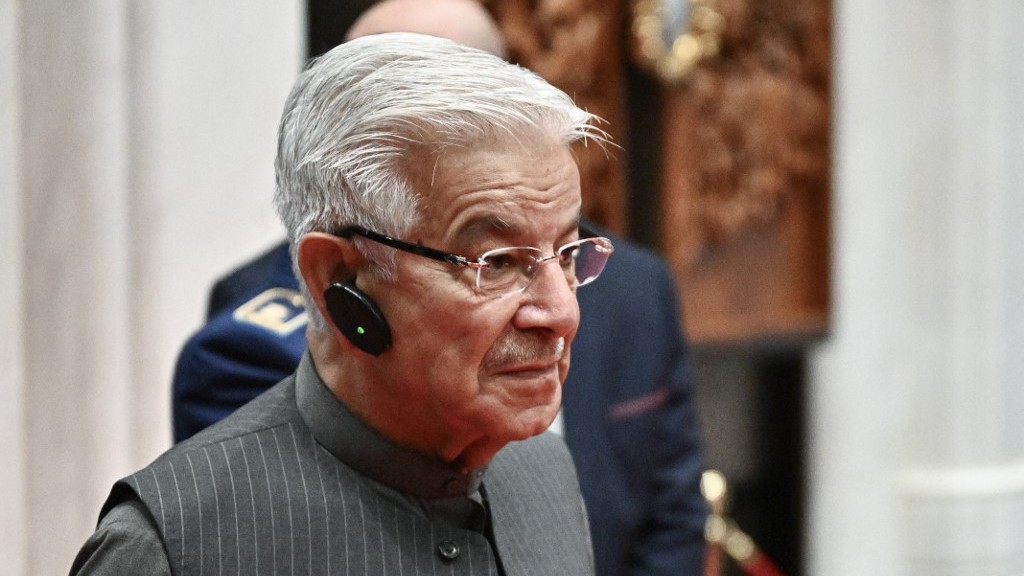
As Houthi attacks against Saudi Arabia grow more frequent and intense, Pakistan’s defense minister is calling for the immediate implementation of a trilateral defense agreement signed earlier this year with Saudi Arabia and Turkey. In an interview with Pakistan’s Geo News on Wednesday, Khawaja Asif reaffirmed his country’s unwavering commitment to defending Saudi Arabia and its two holiest Islamic sites, Mecca and Medina, noting that Pakistan bore a moral and strategic duty to protect these locations even in the absence of a formal agreement.
“The Mecca Agreement is binding on us, and we will honor every obligation it entails,” Asif stated, though he declined to provide specific details on what actions Pakistan might take to fulfill its commitments under the pact. The statement comes amid rising tensions after Houthi forces intensified drone and missile strikes targeting Saudi territory, raising concerns about regional stability and the security of key religious and energy infrastructure.
Houthi representatives have pushed back against claims that their operations target holy sites, insisting their military actions are strictly limited to Saudi oil facilities and military installations, which are located far from Mecca and Medina. “Our operations only target Saudi oil facilities and military bases, which are far removed from these sacred sites,” Houthi spokesman Yahya Saree clarified.
Asif also confirmed that Pakistan has acted as an intermediary, conveying a formal message from Saudi leadership to Iran at a time when Riyadh has grown increasingly alarmed over the escalating attacks. Asif noted that he does not believe Iran, as a sovereign state, will choose to open a new military front in the region, given its existing commitments to ongoing conflicts across the Middle East. He added that Pakistan will continue its diplomatic efforts to prevent the current crisis from spilling over into a wider regional conflict.
Asif’s comments came on the heels of a deadly attack reported by Saudi state television on Thursday: Saudi air defense systems intercepted a Houthi-launched drone over the southwestern governorate of Taif, but falling debris from the drone killed one Yemeni resident and injured two others. This incident marks the first reported fatality on Saudi soil this month since Houthi forces ramped up their cross-border attacks against the kingdom.
In recent years, Pakistan has positioned itself as a neutral regional mediator, having previously facilitated high-level talks between the United States and Iran, while simultaneously deepening its bilateral military cooperation with both Saudi Arabia and Turkey. That growing collaboration led to the signing of the Joint Defense Agreement, commonly referred to as the Mecca Pact, by the three nations on August 7. The core principle of the pact mirrors that of NATO’s Article 5, holding that an armed attack against one member is considered an attack against all three. While the pact drew immediate comparisons to the Western security alliance, analysts have warned against overinterpreting the mutual defense provision as an ironclad commitment to immediate military intervention.
Separately, Reuters reported this week, citing three anonymous Iranian sources, that China has privately urged Iran to exert its influence over the Houthi movement to de-escalate attacks, after Saudi Arabia formally requested diplomatic assistance from Beijing. While China has publicly called for all parties to exercise restraint, engage in diplomatic dialogue, and restore safe navigation through key regional waterways, private diplomatic channels saw Beijing pressure Tehran to help prevent further disruptions to critical energy supply routes that are economically vital to China. The sources did not disclose how Beijing delivered this message, nor whether the request was raised during Iranian Foreign Minister Abbas Araghchi’s official visit to China on Wednesday. Per the sources, Iran’s response to China’s request asserted that lasting peace and stability in the region can only be achieved by ending what it described as the U.S.-led “war on Iran.”