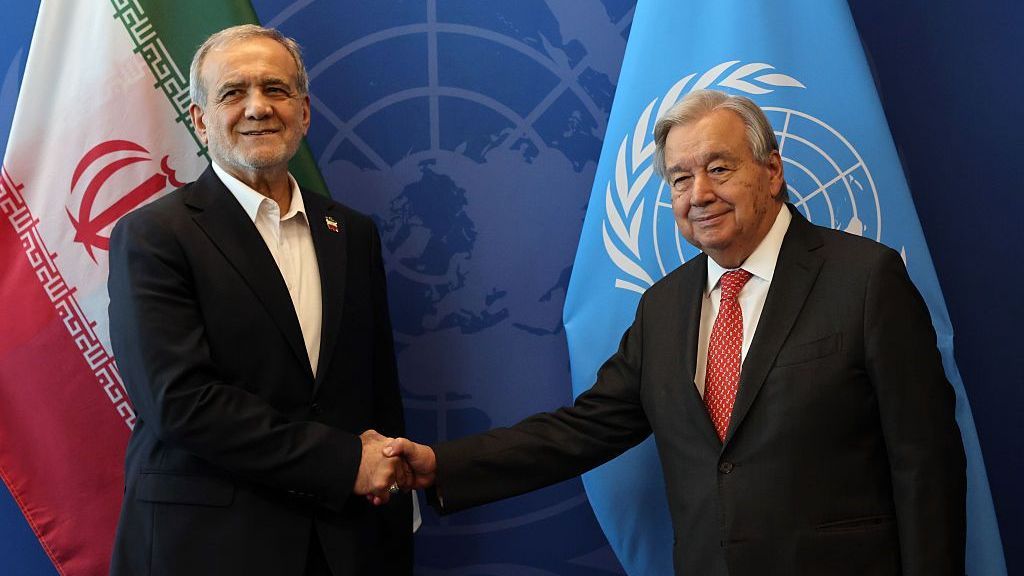
As the seventh month of open conflict between the United States and Iran approaches with no end in sight, the Biden administration has fulfilled its obligations as host country of the United Nations by granting entry visas to a scaled-down core Iranian delegation headed for next week’s high-level UN General Assembly (UNGA) in New York. The approved delegation includes Iranian President Masoud Pezeshkian and Foreign Minister Abbas Araghchi, a senior diplomatic source familiar with the process confirmed to the BBC.
US State Department spokespeople officially announced the decision Thursday, noting that the visiting Iranian officials will operate under rigid travel constraints and face strict prohibitions on purchasing a range of American goods. In a public post on X, State Department spokesperson Tommy Pigott justified the restrictions, arguing that they would block Iranian regime elites from embarking on luxury shopping sprees funded at the expense of ordinary Iranian citizens, who currently face widespread shortages of basic utilities including water and electricity, soaring domestic inflation, and harsh political repression. Pigott also claimed that the Iranian government diverts much of the country’s national wealth to fund terrorist proxy groups across the Middle East, and warned New York retail businesses to remain on high alert for attempts by delegation members to purchase restricted items. To date, the spokesperson has not confirmed whether US authorities have intelligence indicating any specific plans for luxury purchases by the Iranian delegation.
The rules mirror restrictions put in place for the 2024 UNGA, when Iranian diplomats were barred from making bulk purchases at wholesale retail outlets such as Costco and required to secure advance US approval before buying any luxury goods, including jewelry, motor vehicles, and alcohol. This year’s delegation is also smaller than the group that traveled to New York for last year’s assembly, according to State Department officials.
The 81st session of the UN General Assembly is already underway, with the flagship annual General Debate scheduled to kick off next Tuesday. The opening day of the debate will feature keynote addresses from US President Donald Trump, UK Prime Minister Andy Burnham, and French President Emmanuel Macron, while Iranian President Masoud Pezeshkian is scheduled to speak alongside the leaders of Ukraine and Syria on Wednesday.
The visa approval comes amid mounting public and political pressure on the White House to move toward a negotiated end to the ongoing Iran war. The conflict erupted on February 28 this year, when the United States and Israel launched a joint military offensive against Iran. Since the outbreak of hostilities, the conflict has pushed global energy prices sharply higher, spilled across Iran’s borders into neighboring countries, and seen repeated Iranian attacks on US military bases, US-allied states in the Persian Gulf, and Israeli territory.
In a contrasting decision that highlights stark US diplomatic priorities, the BBC has also confirmed that the US has denied entry visas to Palestinian President Mahmoud Abbas and his full delegation, barring them from attending this year’s UNGA. This marks the second consecutive year the White House has refused visas for the Palestinian delegation, a move aligned with the administration’s refusal to recognize the delegation’s official legitimacy.