博客

  • Outrage in Nepal over rape and murder of three-year-old girl

    Outrage in Nepal over rape and murder of three-year-old girl

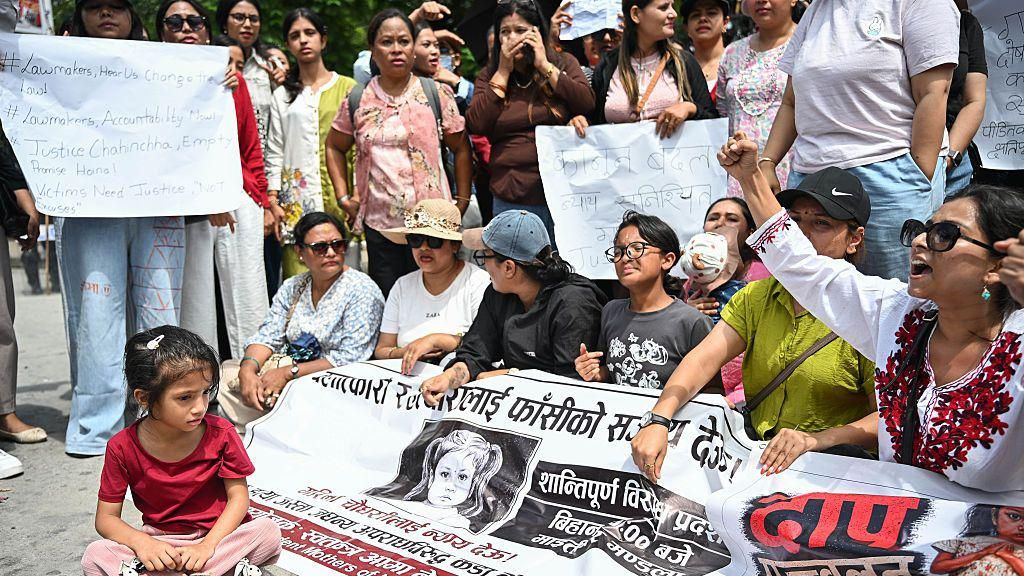
    A horrific alleged rape and murder of a three-year-old girl in southern Nepal’s Madhesh province has ignited nationwide fury, pushing activists and senior political figures to pressure the federal government to implement sweeping legal reforms and stricter penalties for violent sexual crimes against children.

    The young child went missing three days before her body was recovered last week, and the tragedy has sparked non-stop public protests across the South Asian nation. Local law enforcement spokespersons confirmed to the BBC that nine people have been taken into custody in connection with the killing, as investigations continue.

    The case has already exposed deep flaws in Nepal’s criminal justice system: police have faced widespread accusations of negligence during the early stages of the probe, after a video showing a teenage suspect in custody confessing to the crime was illegally leaked to social media platforms. Dharmendra Kumar Mishra, chief district officer for Bara, where the incident occurred, told reporters that one police officer has already been identified as directly responsible for the leak and that disciplinary action has been launched. Mishra emphasized that authorities maintain a “zero tolerance” policy for such breaches of protocol, adding that any additional officers found to be complicit will also face punishment.

    After days of large demonstrations in the regional hub of Simara, the victim’s family held talks with government ministers over the weekend, securing a formal written agreement that commits the state to two key actions: a full review of existing laws covering violent grave offenses, and the construction of a public memorial to honor the murdered child.

    Beyond immediate calls for justice, the tragedy has opened a heated national debate over how Nepal should handle young offenders, with many public campaigners demanding much harsher sentences for minors convicted of rape and murder. Prominent Nepali human rights activist Gauri Pradhan described the killing as an unforgivably atrocious, deeply painful incident that demands accountability for all those involved and systemic wide-ranging reform. Pradhan, however, has pushed back against growing public demands to introduce the death penalty for such crimes, urging restraint amid the widespread anger.

    Official data from Nepalese Police underscores the scale of the crisis of sexual violence facing the country: between July 2017 and July 2025, more than 25,500 cases of rape and sexual abuse were registered across Nepal. Shockingly, official records show more than 3,200 of these victims were girls under the age of 10, highlighting how vulnerable young children remain to violent sexual crime in the country.

  • Colombia’s armed groups recruit children and train them in drone warfare, rights group says

    Colombia’s armed groups recruit children and train them in drone warfare, rights group says

    BOGOTA, COLOMBIA – A damning new report released Monday by Human Rights Watch (HRW) has exposed a sharp, alarming resurgence in the recruitment of children by drug trafficking gangs and breakaway rebel factions across Colombia, with minors now being trained to carry out high-risk, lethal operations including piloting explosive-laden drones. The international human rights watchdog documents that criminal networks have increasingly turned to social media platforms as a fertile recruiting ground, as they battle to seize control of remote rural territories where they generate billions in illegal revenue from drug trafficking, extortion, and unregulated artisanal mining.

    “Armed groups in Colombia are recruiting children with complete impunity,” stated Juanita Goebertus, HRW’s Americas Division Director. “Colombia’s child protection systems are failing vulnerable communities, and social media platforms have emerged as a far more effective recruiting tool than any traditional tactic these groups have used before.”

    The troubling trend reverses years of progress that followed Colombia’s landmark 2016 peace accord with the Revolutionary Armed Forces of Colombia (FARC), the country’s largest rebel insurgency. That agreement dramatically reduced nationwide violence and cut rates of child recruitment for nearly a decade after FARC guerrillas demobilized and withdrew from contested rural areas. However, the power vacuum left by FARC’s exit has drawn a patchwork of smaller rebel holdouts, splinter factions, and drug cartels, which are now fighting violent territorial wars in regions where state law enforcement and social support infrastructure remain severely underdeveloped.

    Data from Colombia’s own national Human Rights Defenders’ Office confirms the accelerating crisis: at least 1,500 children have been forcibly or coercively recruited by armed groups since 2021, with 625 new cases reported in the first half of 2024 alone. That number already surpasses the peak annual recruitment count of 1,320 recorded in 1999, at the height of Colombia’s decades-long civil conflict between the military and FARC, according to data from the country’s National Truth Commission.

    Historically, armed groups in Colombia have deployed recruited children for low-stakes supporting roles including carrying messages, gathering intelligence on military movements, cooking for combat units, and frontline skirmishes. Girls are frequently targeted for sexual exploitation by group commanders, a longstanding abuse that persists today. But HRW’s investigation confirms a dangerous new evolution of the crisis: minors are now being actively trained in drone warfare, as armed groups increasingly rely on remotely piloted explosive devices to attack rival factions, police outposts, and military bases.

    HRW researchers verified multiple public social media videos showing children operating explosive-laden drones, and conducted interviews with family protection officers who work directly with children that have escaped armed groups or participated in government demobilization programs. The report notes that armed groups deliberately manipulate child recruits, framing drone operation as a recreational game rather than a deadly act of armed conflict to reduce resistance.

    Colombian government data underscores the growing lethality of drone attacks: between January and May 2024, armed groups carried out 121 drone strikes across the country, leaving 21 people dead and 145 more injured.

    The report also highlights the key role of social media in modern recruitment, echoing longstanding warnings first raised by the United Nations. HRW researchers identified dozens of public social media accounts that deliberately glorify life in rebel and criminal groups, framing participation as an attractive, glamorous lifestyle to vulnerable children in marginalized rural communities. In many cases, the algorithms powering major platforms including Meta (owner of Facebook and Instagram) and TikTok actively amplified this harmful content, pushing it to child users’ feeds and expanding its reach, the investigation found.

    In responses to HRW’s inquiry, both Meta and TikTok stated that their community policies prohibit content that promotes organized violence and child recruitment, and confirmed that they had removed all accounts flagged by the human rights organization. Still, the persistent spread of this content points to ongoing gaps in platform enforcement.

    The investigation also identifies the Ivan Mordisco faction, a FARC holdout group that rejected the 2016 peace accord, as the worst perpetrator of child recruitment, with most of its activity concentrated in Colombia’s southwestern Cauca region. A key demographic analysis from HRW found that despite Indigenous people making up just 4% of Colombia’s total population, nearly half of all child recruitment cases recorded since 2021 involved Indigenous children, leaving this already marginalized community disproportionately impacted by the crisis. Girls also account for 40% of all recruited minors, the data shows.

    HRW has issued two key sets of recommendations to address the growing crisis. First, the organization is calling on the Colombian national government to allocate additional funding and resources to prosecute armed group members who recruit children, while expanding prevention programs and social services in high-risk rural areas to protect vulnerable minors. As of Monday, the Colombian government had not issued a public response to the report’s findings. Second, HRW is urging social media platforms to create simple, accessible reporting channels for users to flag content linked to child recruitment, and to preserve content and account data that can be used as evidence in criminal prosecutions of recruiters.

  • Sunderland sign Ahoka from Royal Antwerp

    Sunderland sign Ahoka from Royal Antwerp

    English Premier League side Sunderland has added another major piece to its summer squad rebuild, confirming the signing of 20-year-old DR Congo youth international midfielder Jules Ahoka from Belgian top-flight club Royal Antwerp. The transfer fee for the promising young talent sits at €10 million, equal to roughly £8.6 million, with Ahoka penning a long-term contract at the Stadium of Light.

    Ahoka, who already earned minutes in both of Antwerp’s opening 2024-25 Belgian league matches this season, expressed his delight at securing the move to the northeast English club. “I am very happy and proud to join Sunderland,” he said in an official statement released by the club. “It is a big club with great ambitions, and I am excited to be here. I want to work hard, learn from my team-mates and the staff, and continue developing as a player. I will give everything for the club and I cannot wait to get started.”

    This transfer marks Sunderland’s third confirmed senior signing of the 2024 summer transfer window, following the earlier arrivals of Belgian left-back Thomas Meunier and French right-back Dayann Methalie. Florent Ghisolfi, Sunderland’s director of football, explained that the club has scouted Ahoka for an extended period, and was impressed by the young midfielder’s early career performances.

    “Jules is a player we have been following closely and he has shown some very encouraging qualities for his age,” Ghisolfi said. “He has huge potential and we believe Sunderland is the right environment for him to continue his development.”

    The transfer news comes just days after Sunderland’s opening match of the new Premier League season, where they fell to a 2-1 home defeat against Ipswich Town. The Black Cats are set to return to action this coming Sunday, kicking off against Fulham at 2:00 PM BST. Fans can access dedicated pre-match, post-match, and exclusive Sunderland content through BBC Sounds, with subscriptions available for follow-up coverage of the club’s 2024-25 campaign.

  • Springboks still irritated after All Blacks loss and make 4 changes for second test

    Springboks still irritated after All Blacks loss and make 4 changes for second test

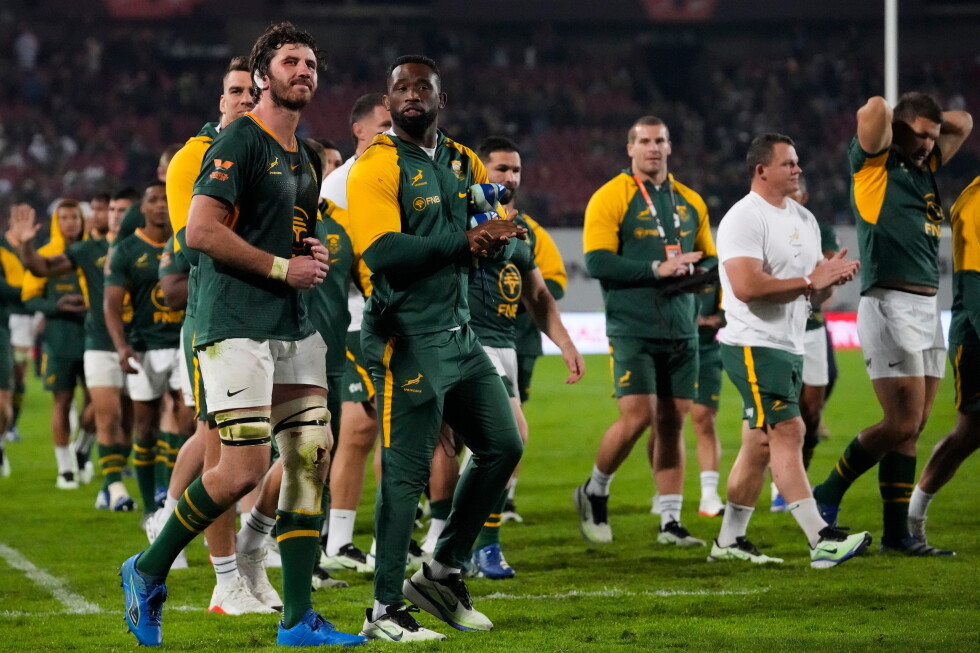
    JOHANNESBURG – For the first time in nearly 12 months, South Africa’s world-famous Springboks have dropped from the top of global men’s rugby rankings, ceding the number one spot to New Zealand’s All Blacks after a lopsided 33-16 upset victory in the opening match of their four-test series last Saturday. The defeat marked South Africa’s heaviest home loss to New Zealand at Ellis Park in recent memory, and has turned this coming Saturday’s second test in Cape Town into a do-or-die fixture for the two-time world champions, who entered the series as heavy favorites and cannot afford a second defeat if they hope to claim the series title.

    In response to the disappointing opening result, head coach Rassie Erasmus announced four key changes to the Springboks starting XV on Monday – the smallest number of starting lineup adjustments he has made all year – alongside five new additions to the reserve bench.

    The only potential change to the forward pack comes down to captain Siya Kolisi’s fitness: Kolisi is bracketed alongside breakout star Paul de Villiers, after missing nearly all game time over the past two months with dual hamstring injuries. If Kolisi proves he can withstand full training this week, he will retain his starting spot and captaincy. Handré Pollard and Cobus Reinach will step into the starting half-back positions, while winger Ethan Hooker will replace injured star Cheslin Kolbe, who is sidelined with combined hamstring and ankle issues.

    The reserve bench has been restructured to a 6-2 split, bringing in hooker utility Deon Fourie, prop Thomas du Toit, lock Lood de Jager, flanker Cameron Hanekom, and scrumhalf Morné van den Berg. All players except Fourie previously featured in South Africa’s 17-10 win over Argentina on August 8.

    Reflecting on the opening test defeat, Erasmus acknowledged that most of the team’s struggles were self-inflicted. The Springboks dominated scrums, line-out mauls, and aerial play for the first 60 minutes of the match, but failed to convert their numerous scoring opportunities into points, while the All Blacks capitalized on every small chance they created – a hallmark of New Zealand rugby that has defined the side for decades.

    “Most of the things we inflicted on ourselves, and that’s frustrating,” Erasmus said. “We’ve got a big hiding of 17 points. When they got two or three opportunities, like New Zealand most of the years in the past, they converted.”

    Erasmus added that the reserve bench failed to deliver the impact he had anticipated, a problem rooted in the starters’ unfulfilled chances rather than the replacements’ performance. “Our plans didn’t work, and that’s on me,” he said. “We as coaches didn’t give those guys the platform to actually go on and finish those things. They had to chase the game from the start.”

    On the topic of Kolisi’s potential return, Erasmus noted that de Villiers – who earned his first four test caps in Kolisi’s absence and turned in a strong performance in the first test – has earned his place in the squad, but the veteran captain’s all-round skill set addresses key gaps the Springboks displayed last Saturday. Specifically, Erasmus highlighted Kolisi’s ability to secure quick ball from breakdowns in attacking positions and organize the team’s defensive line alongside Pieter-Steph du Toit – two areas where the Springboks struggled against the All Blacks.

    “Paul played well on Saturday and there’s no reason why we should keep him out,” Erasmus said. “But Siya is our captain… There were lots of times that we played badly, not because they did anything illegal, but we couldn’t get the ball away out of the breakdown when we were in really good attacking positions. Siya’s really good at that.”

    If Kolisi is cleared to play, the Springboks will field their most experienced starting lineup in test history, with a combined 1,012 test caps across the side, including four players with more than 100 caps: Kolisi, caps record-holder Eben Etzebeth, Damian de Allende, and stand-in captain Pieter-Steph du Toit. Du Toit, a two-time World Player of the Year, will earn his 100th test cap on Saturday, making him just the 11th Springbok in history to reach the milestone, 11 years after his 2013 test debut.

    Erasmus also explained his decision to recall Pollard to the starting flyhalf position, after rotating the position throughout the year. Pollard, who kicked South Africa to World Cup victories in both 2019 and 2023, brings a more conservative, strategic game than the dropped Manie Libbok and first test starter Sacha Feinberg-Mngomezulu, with elite game management and tactical kicking that Erasmus views as critical for turning the series around.

    “Handré has delivered for us under extreme pressure,” Erasmus said.

    The reshuffled squad also marks a fairy-tale recall for Deon Fourie, who earned his spot after an impressive performance for the Stormers on New Zealand’s earlier tour, returning to the Springboks after two years of constant injury setbacks. Fourie last earned a test cap in the 2023 World Cup final against New Zealand, and if he takes the field on Saturday, he will become the oldest test player in Springbok history at 39, surpassing former legends Victor Matfield and Schalk Brits.

    In addition to Kolbe, South Africa will be without four other injured players: scrumhalf Grant Williams (ankle), utility back Canan Moodie (hamstring), and flanker Ben-Jason Dixon (concussion).

    New Zealand, who claimed the number one ranking following their opening test win, will name their matchday squad on Thursday, and are set to play a friendly tour match against the Lions club at Ellis Park on Tuesday ahead of the second test.

    Following the heavy defeat, Erasmus says the squad has already regrouped to address the flaws that cost them the opening match, and is focused on bouncing back to keep their series hopes alive. “One could see the hurt on everyone’s faces after Saturday’s match, and we know what we have to do to bounce back strongly this week,” he said. “We have regrouped and identified the areas of our game we need to fix.”
  • Israel continues to hold abducted Palestinian doctor after reported heart attack

    Israel continues to hold abducted Palestinian doctor after reported heart attack

    A 54-year-old Palestinian gynecologist, Dima Amin, has remained in Israeli custody after a dramatic pre-dawn raid that saw dozens of Israeli soldiers forcefully abduct her from her Ramallah home over an alleged inflammatory social media post, triggering a cardiac event that required emergency medical intervention and sparking widespread condemnation from human rights groups.

    The raid unfolded at 2 a.m. last Tuesday in Ramallah’s al-Tira neighborhood, where soldiers broke the main entrance lock of Amin’s home before catching the doctor and her husband, Haider Abu Ghosh, completely off guard. According to Abu Ghosh, Israeli forces did not conduct a standard, documented search of the property: soldiers immediately confirmed Amin’s identity when they found her, placed her under arrest, and ordered her to prepare to leave, while holding Abu Ghosh in a separate room to isolate him from the interaction. He told Middle East Eye that he never witnessed the moments his wife was taken into custody, but it is understood soldiers, including a female service member, led her outside and restrained her with tight cuffs.

    Within hours of her arrest, Amin developed severe chest pain and required an emergency catheterization procedure. Israeli outlet Haaretz confirmed the incident amounted to a cardiac episode brought on by the excessive force used to restrain her; tight handcuffs left permanent-looking marks on her wrists that were still visible days after her arrest, according to reports.

    More than 24 hours after the procedure, Amin was transferred back to Israel’s Moscovia Detention Center, even as her family was denied access to full medical records of her treatment. Her family says they have not been able to independently confirm Israeli reports that she was treated at Jerusalem’s Hadassah Hospital. A follow-up court hearing following her return to custody extended her detention until the following Monday, with Israeli officials confirming the arrest stems from social media posts Israeli intelligence has labeled as incitement.

    Amin’s two children, who currently study in Germany and Spain, have only been able to get updates on their mother’s condition via phone calls to their father, and the entire family says the uncertainty around her health and well-being has been crippling. “The absence of a family member, without any means of communication, even without a health issue, is absolutely devastating for us, and it’s deeply distressing that we can’t know anything about her,” Abu Ghosh told reporters.

    Amin’s case is far from an isolated incident, human rights organizations say, pointing to a broader pattern of escalating abuse and systemic rights violations against Palestinian detainees held in Israeli custody since October 2023. Leading Israeli human rights group B’Tselem confirmed via Amin’s legal representation that the doctor remained tightly restrained throughout her transfer to hospital and treatment, with visible restraint marks clearly visible on her wrists during a recent military court hearing.

    B’Tselem director Yuli Novak noted that the abuse of Palestinian detainees has become institutionalized in recent months, describing the entire Israeli prison system as having been reorganized to enable “systematic violations, including physical violence, humiliation, denial of medical treatment, and inhumane living conditions.” Novak emphasized that Amin’s arrest and treatment encapsulates this pattern of brutality: as of mid-2024, at least 90 Palestinian detainees have died in Israeli custody, and more than 9,300 Palestinians remain imprisoned by Israel. “A woman and a doctor of her age suffers a heart attack and undergoes a catheterisation while in Israeli custody, yet she is returned to detention and remains imprisoned,” Novak said. “This is what the policy of intimidating the civilian population and normalising torture and ill-treatment looks like.”

    Palestinian advocacy groups add that targeting Amin, a medical professional, fits into a wider campaign of repression against Palestinian health workers. The Palestinian NGO Network says the arrest is part of a consistent pattern of attacks on humanitarian and community infrastructure across the occupied Palestinian territories, noting that Amin is one of 250 detained Palestinian medical professionals, most of whom are from the besieged Gaza Strip. Other detained health workers include Dr. Mazen al-Rantisi and Dr. Hussam Abu Safiya, while Dr. Jamila Abu Dahou was only recently released after being taken into custody.

    The group holds Israeli authorities fully accountable for this deliberate targeting of the health sector, calling for immediate international intervention to secure the release of all detained medical personnel and end what the network describes as ongoing violations by the occupying power against Palestinian healthcare.

    The crackdown extends specifically to Palestinian female prisoners, who face increasingly harsh conditions in Israeli detention. According to the Palestinian Prisoners Club, more than 90 Palestinian women are currently held at Israel’s Damon Prison, including pregnant people, minors, and detainees with pre-existing chronic health conditions. The group says prison administrators have imposed extreme restrictions that deny female detainees access to critical medical care, adequate nutrition, personal items including clothing, and other basic human rights.

    The Prisoners’ Media Office confirmed Saturday that between July 29 and August 18, Palestinian female prisoners at Damon Prison were subjected to seven repeated invasive raids and repressive operations over just 21 days, as part of a systematic escalation of abuse against the detainee population. The office documented a range of violations during these operations, including forced entry into detainee living quarters, verbal and physical abuse, beatings, excessive handcuffing, enforced isolation, and forcible removal of prisoners to the prison yard during raids.

  • Israel probably committed war crimes in Gaza hospital double-tap, investigation finds

    Israel probably committed war crimes in Gaza hospital double-tap, investigation finds

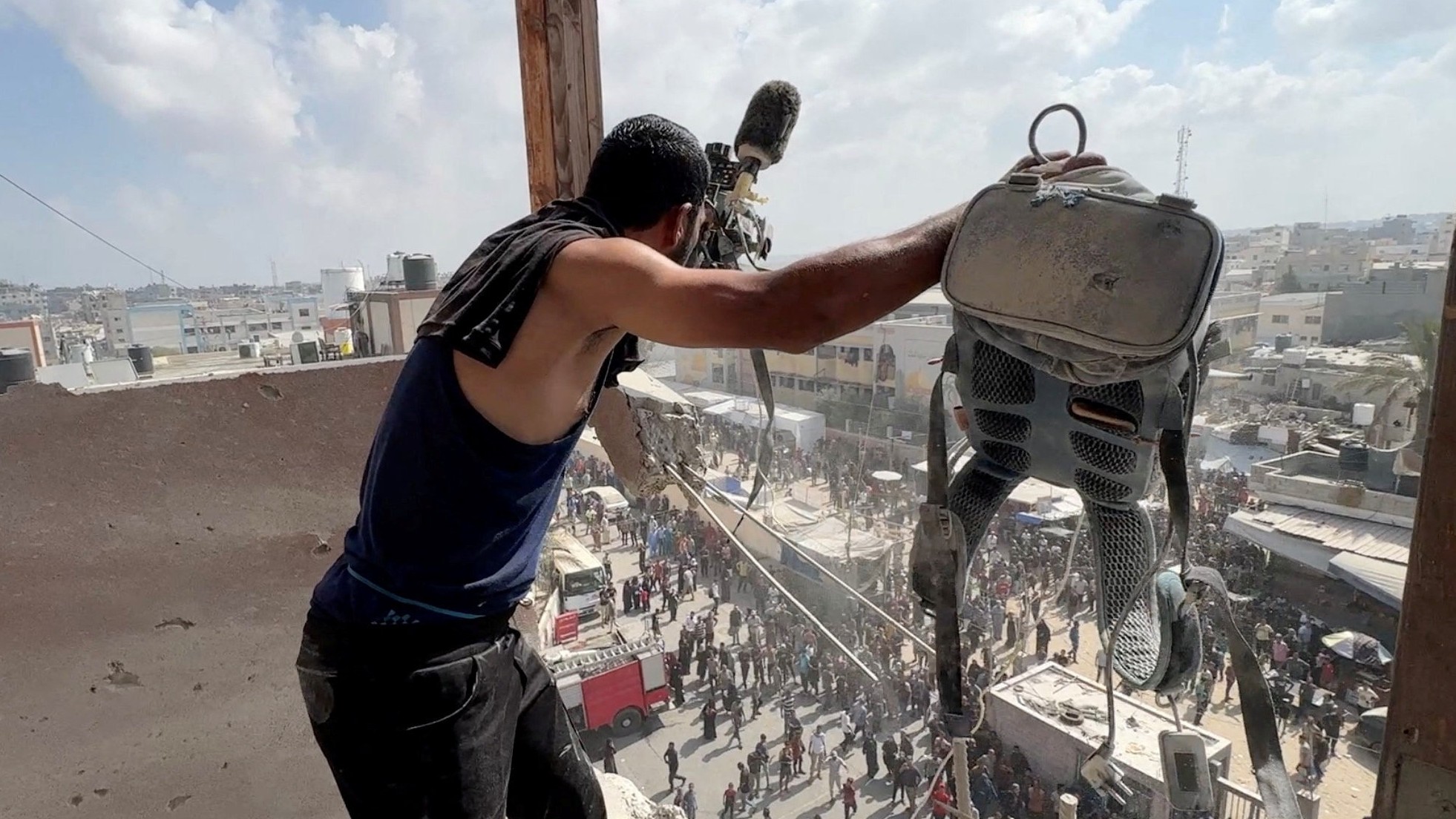
    An in-depth investigation by British newspaper The Independent has uncovered compelling evidence suggesting Israel may have violated international law and committed war crimes in a double-tap strike on Nasser Hospital in southern Gaza last August, which left 20 people dead, among them practicing journalists, medical workers and emergency first responders.

    The deadly incident unfolded in two waves on 25 August 2025. The first Israeli projectile struck and killed Hussam al-Masri, a Reuters cameraman, while he was actively filming at the hospital grounds. Within eight minutes, as journalists, medical staff and rescue workers converged on the site to treat survivors and document the initial attack, Israeli tanks launched two additional projectiles directly into the gathered crowd. This second, fatal strike was even captured live on international television, leaving 19 dead.

    Among the victims were Mohamed Salama and Ahmed Abu Aziz, contributors to regional outlet Middle East Eye, and Mariam Abu Dagga, a correspondent for The Independent. The investigation confirmed that two of the six people Israel labeled as “terrorists” were in fact a hospital employee and a civil defence rescuer who had been assisting with recovery efforts after the first strike.

    International law experts consulted by The Independent say the attack raises severe red flags for potential war crimes under the Geneva Conventions, including the deliberate targeting of unarmed civilians and the launch of a disproportionate military attack that far outweighed any claimed military gain. Of particular legal concern, experts emphasized, is the deliberately timed second strike against people responding to the initial blast.

    Israel has repeatedly denied committing war crimes in its Gaza military campaign and maintains it does not intentionally target journalists. At the time of the attack, Israeli Prime Minister Benjamin Netanyahu – who already faces an International Criminal Court arrest warrant over prior allegations of war crimes – characterized the incident as a “tragic mishap”. The Israeli military justified the strike by claiming it had targeted a camera that Hamas had placed to monitor Israeli troops.

    However, interviews with Israeli whistleblowers obtained by The Independent reveal that any strike on a Gazan hospital requires formal approval at least at the battalion command level, as well as advance operational planning, contradicting framing of the incident as an accidental error. The investigation also found that despite having contact information for hospital administration, the Israeli military never reached out to Nasser Hospital to address its purported concerns about the camera before launching the lethal attack.

    Following the release of The Independent’s findings, British cross-party members of parliament have called on the UK government to hold Israeli authorities legally accountable for the strike. Sarah Champion, Labour chair of the House of Commons International Development Committee, questioned the international community’s apparent willingness to accept the killing of civilians and aid workers without consequences, noting that the 77-year-old Geneva Conventions were created to set clear rules of war that must be enforced.

    Layla Moran, a Liberal Democrat MP, raised concerns that the UK may be holding relevant evidence that it has failed to share with ongoing international investigations into alleged Israeli war crimes and acts of genocide, calling on British authorities to proactively turn over all relevant materials to appropriate judicial bodies. Labour MP Rachael Maskell echoed calls for accountability through international courts, saying that medics operating in Gaza have reported systemic targeted attacks on humanitarian workers, including through sniper fire and drone strikes. She urged the UK to adopt sweeping measures, including ending all trade with Israel and imposing new sanctions on the Israeli government, to force accountability for the actions of the Israel Defense Forces (IDF).

  • Prince Harry steps down from African wildlife charity board

    Prince Harry steps down from African wildlife charity board

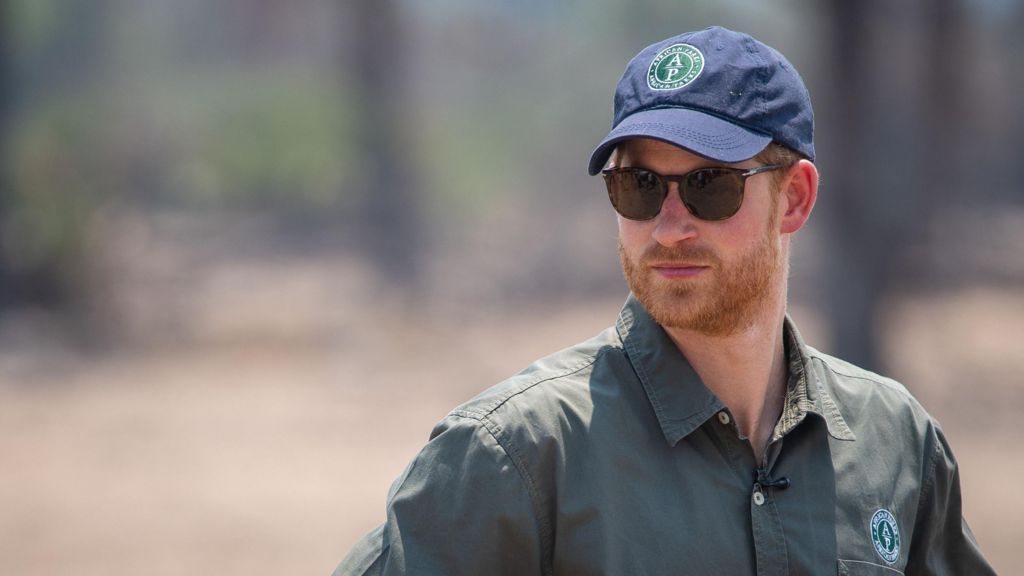
    In a move that comes amid ongoing fallout over confirmed human rights violations by park rangers employed by a leading African conservation organization, Prince Harry, Duke of Sussex, has stepped down from the board of African Parks, a charity he has been affiliated with for a decade. A spokesperson for the duke confirmed the exit Friday, noting that after six years serving as the charity’s president, Prince Harry joined the board of directors in 2023, and while he is leaving his formal governance role, he will continue to back the organization’s core conservation mission.

    The resignation comes barely a week after Prince Harry and his wife Meghan, Duchess of Sussex, announced plans to relocate their family — which includes their two children, Prince Archie and Princess Lilibet — from their long-time home in California back to the United Kingdom, where their children are set to begin school in early September. The timing has placed both the charity controversy and the Sussexes’ new chapter firmly in the global spotlight.

    The controversy surrounding African Parks erupted last year, when the organization publicly acknowledged that its rangers operating in Odzala-Kokoua National Park in the Republic of Congo (Congo-Brazzaville) had committed severe human rights abuses against local Indigenous communities. An independent investigation launched following the allegations confirmed multiple reports of violence, including beatings, sexual assault, and torture carried out by guards employed and managed by the charity. In 2025, African Parks announced it had overhauled its internal safeguarding protocols both at the Congolese park and across all its operations, as part of broader organizational reforms.

    As part of what African Parks framed as a “governance refresh” of its board, the organization issued a statement thanking Prince Harry for his ten years of involvement. The charity acknowledged that Prince Harry had been instrumental in drawing global attention to the urgent crisis of biodiversity loss across the African continent, highlighting his work to advance conservation philanthropy that benefits both local communities and wildlife. “The duke remains deeply committed to this cause, and remains a strong supporter of African Parks’ work,” the statement read.

    Prince Harry’s connection to African Parks runs deeper than board service: the organization’s website records his role as part of the expert team that delivered the first phase of the landmark 500 Elephants project, one of the largest elephant translocation initiatives in modern conservation history. The project moved hundreds of elephants from overcrowded, poaching-prone habitats in Malawi to protected areas where elephant populations had been decimated by decades of illegal hunting. Prince Harry previously described participating in the translocation as an “amazing” experience, and he was photographed attending an anti-poaching demonstration in Malawi back in 2019. In his own statement released through his spokesperson, Prince Harry said he was “proud of his 10 years with African Parks” and fully supports the charity’s ongoing work to strengthen its governance and operations. “His commitment to conservation in Africa continues, and he remains a supporter of African Parks’ mission,” the spokesperson added.

    African Parks currently manages roughly 20 national parks and protected areas across 12 sub-Saharan African countries, making it one of the largest non-profit conservation organizations operating on the continent.

    The Sussexes’ impending relocation to the UK has already sparked widespread discussion about the couple’s future, particularly around unresolved questions of security arrangements. Last year, Prince Harry lost a high-profile legal challenge against the UK Home Office over the level of publicly funded police protection he and his family are entitled to when staying in the UK. No final details have been confirmed about what security provisions will be put in place for the family following their move, and the couple’s broader long-term plans for their time in the UK also remain unannounced.

    UK public broadcaster the BBC has also reported that the Duchess of Sussex is currently in talks to return to her former acting career, with a potential role in the popular Netflix series *The Gentlemen*. If confirmed, the role would mark her first major acting credit since her marriage to Prince Harry in 2018.

    This upcoming relocation marks a major shift for the couple, who stepped back from full-time senior royal duties in early 2020 before permanently settling in California that same March. A spokesperson for the couple has confirmed that their official status as non-working members of the royal family will not change following the move, and they will remain private individuals.

  • Trump says to double tariffs on Canada autos as trade fight heats up

    Trump says to double tariffs on Canada autos as trade fight heats up

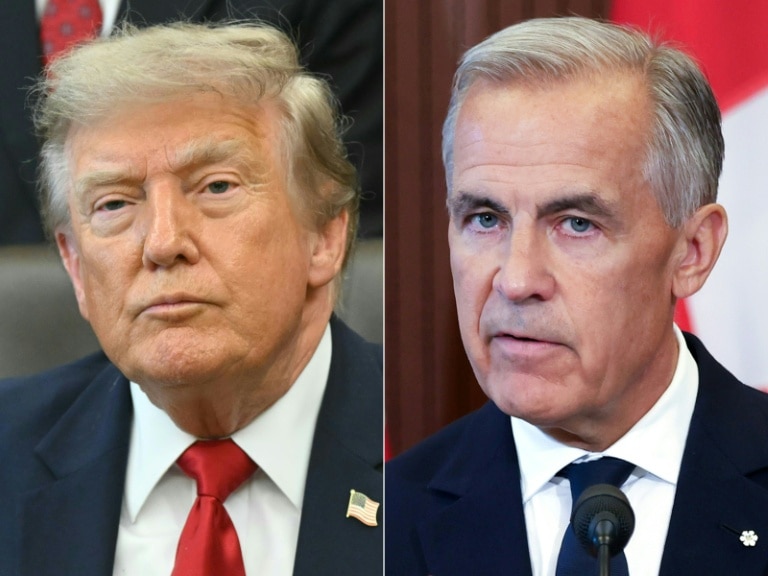
    A rapidly escalating transboundary trade conflict between the United States and Canada entered a dangerous new phase Monday, as former president and current US leader Donald Trump announced plans to double existing tariffs on Canadian automobiles and automotive parts starting in 2027.

    In a public post to his Truth Social platform, Trump confirmed that starting January 1, 2027, all imported passenger cars, trucks of all sizes, automotive components, and Canadian steel entering the US market will face a 50% import tariff. Currently, the US imposes a 25% duty on Canadian-made vehicles that do not meet US content requirements under existing trade rules, while most Canadian steel already faces a 50% tariff under prior US trade measures.

    The announcement comes just days after negotiations between Washington and Ottawa collapsed completely, failing to avert a new round of 50% US tariffs on $20 billion worth of Canadian goods that went into effect Saturday. These new levies cover approximately 5.5% of all Canadian goods entering the US, ranging from industrial inputs like cement to consumer goods including hockey sticks.

    Canadian Prime Minister Mark Carney rejected what he described as an unacceptable “bad deal” from US negotiators, walked away from talks, and immediately announced reciprocal retaliatory tariffs targeting key US export sectors. Carney’s retaliatory measures, set to take effect September 8, will hit US steel, dairy products, agricultural machinery, pulp and paper, and consumer electronics.

    The US has long held the position as Canada’s largest single trading partner, with 70% of all Canadian exports destined for the US market. As of 2025, US Census Bureau data ranks Canada as the second-largest goods trading partner for the US, just behind Mexico. Existing Trump administration tariffs have already placed significant pressure on core Canadian industrial sectors including auto manufacturing and steel production.

    In his post Monday, Trump doubled down on his longstanding criticism of Canadian trade policy, arguing that “Canada has been ripping off the United States of America for years.” He added, “we don’t need Canada, they need us.” The Trump administration initially justified the new round of tariffs by alleging Canada engages in discriminatory trade practices against US alcohol, automotive, and dairy products. Last week, Trump delayed the implementation of the new tariffs by three days to allow for last-minute negotiations between top trade officials from both nations.

    Top Canadian negotiator Dominic LeBlanc and his delegation held marathon talks with US Trade Representative Jamieson Greer and his team in Washington across Thursday and Friday, extending negotiations late into Friday night, but the two sides could not bridge core differences. According to comments Greer gave to The New York Times Saturday, the US had tabled a compromise offer ahead of the collapse: Washington offered to eliminate a 10% tariff on Canadian softwood lumber, cut the existing 25% auto tariff, and reduce the 50% steel tariff to 25% for most Canadian steel exports. The offer was rejected by Canadian leadership.

    Public opinion polling from the Angus Reid Institute released Sunday shows broad domestic support for Carney’s decision in Canada: three-quarters of Canadian respondents back the government’s choice to walk away from the talks. At the same time, the poll found that two in five Canadians report anxiety over potential job losses linked to the trade dispute.

    As of Monday, neither side had announced plans to schedule a new round of negotiations, and Carney confirmed late Friday that he has suspended further trade talks with Washington. The ongoing tariff conflict is not the only point of tension between the two neighbors: the US is also pushing for revisions to the US-Mexico-Canada Agreement (USMCA), the trilateral trade deal that governs regional trade, and Trump has so far refused to renew the agreement in its current form. Additional friction has been caused by repeated provocative comments from Trump suggesting Canada should become the 51st US state, comments that have stirred widespread anti-US sentiment among Canadian voters.

    US automakers have not yet issued a public response to Trump’s latest tariff threat, leaving unclear how the proposed 2027 duty increase would impact North American integrated auto supply chains that rely heavily on cross-border movement of parts and vehicles.

  • Is UK’s Storm Shadow missile a game changer for Ukraine?

    Is UK’s Storm Shadow missile a game changer for Ukraine?

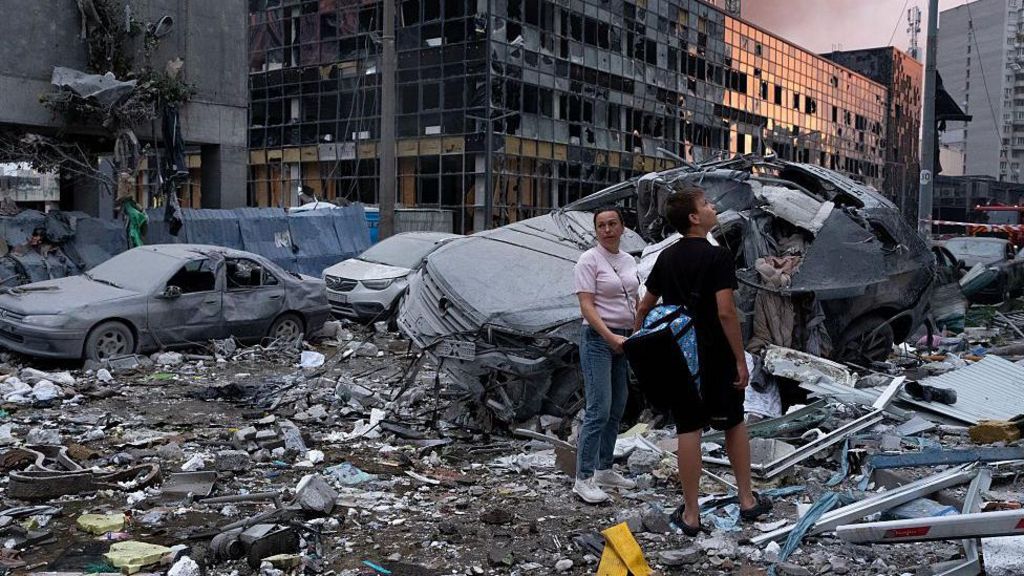
    The ongoing Russia-Ukraine conflict has long been defined by the incremental impact of Western military aid, and the recent delivery of UK-made Storm Shadow long-range cruise missiles has sparked urgent debate over whether this advanced weapon system can alter the course of Kyiv’s counteroffensive operations. Defense correspondent Joe Inwood has delved into the technical specifications and strategic implications of the system to unpack its potential role on the front lines. Unlike the shorter-range artillery and rocket systems that Ukraine has relied on for most of the war, Storm Shadow boasts a stand-off strike range of more than 250 kilometers, allowing Ukrainian forces to hit Russian command hubs, ammunition depots, and supply lines deep behind occupied front lines without putting their own aircraft at risk within heavily defended enemy airspace. Designed for precision strikes against fixed infrastructure targets, the missile uses a combination of GPS navigation and terrain-following radar to avoid detection, and its tandem warhead is engineered to penetrate hardened concrete structures like underground bunkers and reinforced storage facilities. While Western officials have emphasized that the missiles are intended for use on Ukrainian territory that is currently under Russian occupation, the deployment of this long-range capability marks a significant escalation in Western military support, raising questions about how Moscow will respond to the new threat. Military analysts note that even with Storm Shadow, Ukraine cannot achieve a decisive battlefield breakthrough on its own; the system is a force multiplier that can disrupt Russian logistics and weaken their defensive positions, rather than a silver bullet that will end the war immediately. Inwood’s analysis walks through both the capabilities and limitations of the technology, contextualizing its arrival against Ukraine’s ongoing push to retake occupied territories and the shifting dynamics of military support from Western allies.

  • Denmark’s prime minister blasts unsolicited beauty advice from plastic surgeon on Instagram

    Denmark’s prime minister blasts unsolicited beauty advice from plastic surgeon on Instagram

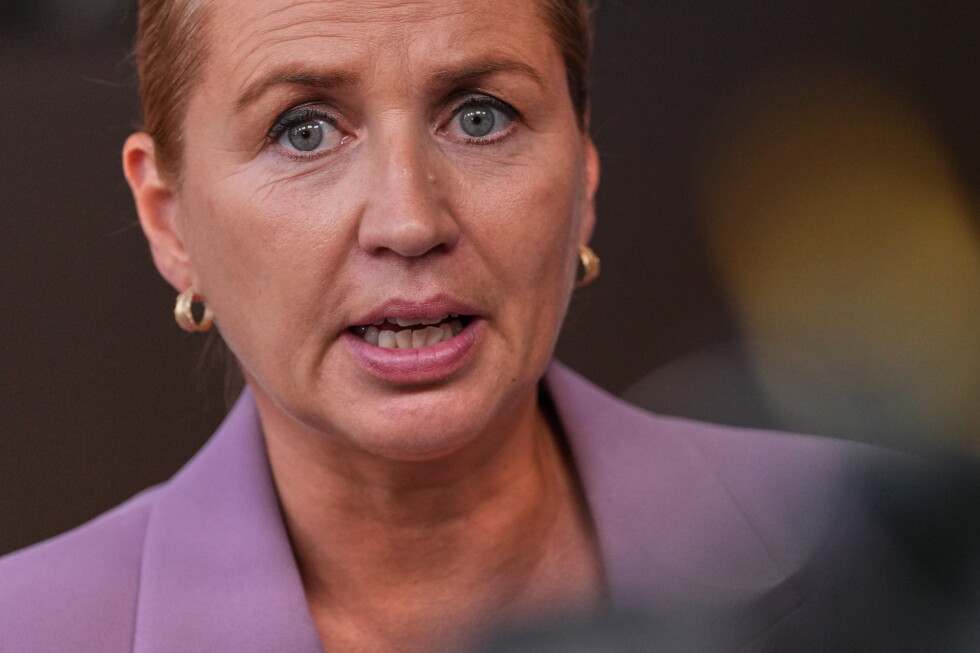
    Even the most powerful female leaders in Europe are not immune to the constant, unwanted scrutiny of their bodies and appearances — a reality that Danish Prime Minister Mette Frederiksen has brought to global public attention after speaking out against a string of unsolicited beauty advice.

    The 48-year-old Social Democrat, who has served as Denmark’s head of government since 2019 and recently secured her third consecutive term, took to Instagram earlier this week to share her frustration, fresh off a high-stakes trip to war-torn Ukraine. During her visit to Kyiv, Frederiksen navigated active air raid sirens amid Russia’s ongoing full-scale invasion, only to return home to an uninvited message from a male plastic surgeon offering to correct what he called a “little spot on her nose.”

    In her candid social media post, Frederiksen revealed that the unsolicited comments about her looks are far from an isolated incident. “I’ve lost count of how many messages I’ve received over the years about my appearance,” she wrote. Critics and strangers alike have targeted nearly every part of her features: she has repeatedly been told her teeth are unattractive, her hair is too thin, and the mark on her nose is an “ugly wart” that needs removal. Well-meaning but intrusive commentators have also repeatedly urged her to get Botox injections to reverse signs of aging.

    Frederiksen shared a screenshot of the plastic surgeon’s unwanted outreach, opting not to name the individual publicly, and posted her blunt rejection of his offer directly to her followers. “Oh no. I’m happy with my body — I really don’t need a male plastic surgeon to have an opinion about it!” she responded.

    The Danish leader, one of the longest-serving heads of government in Europe and the second woman to hold the prime minister post in Denmark, has built her tenure around firm geopolitical stances: she has repeatedly pushed back against former U.S. President Donald Trump’s attempted efforts to gain control of Greenland, Denmark’s semiautonomous Arctic territory, and has maintained unwavering support for Ukraine throughout Russia’s full-scale invasion. Now, her public pushback against appearance-based criticism has shone a light on the double standard that many women in positions of power face globally.

    In her post, Frederiksen emphasized that she has no interest in judging other people’s personal choices about their bodies, and made clear that her frustration stems from the constant intrusion on hers. “I’m perfectly fine with my body — as it is when you’re a woman approaching 50,” she wrote. She also called on followers who reach out to her to focus on policy and substantive issues rather than her physical features, adding: “if you’re going to write to me (and you’re more than welcome to), I hope you’ll use your time to talk about something more meaningful. Not my nose.”

    Frederiksen said the constant stream of unsolicited beauty tips leaves her feeling indignant, and used her platform to extend solidarity to others who navigate the same pressure to fit narrow, unrealistic beauty standards. “Today, I’m sending an extra loving thought to all of you who have to put up with the ‘perfect imperfections’ we all walk around with every day,” she wrote.