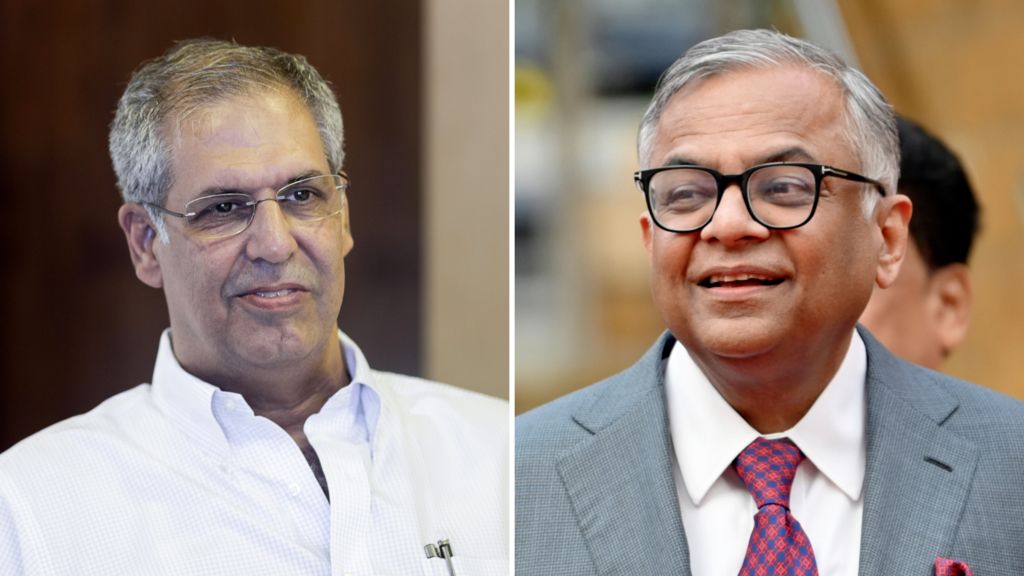
A high-stakes corporate conflict has erupted at Tata Sons, one of India’s oldest and most influential conglomerates that owns iconic global brands including Jaguar Land Rover and Tetley Tea, after the company’s board defied its majority shareholder Tata Trusts to reappoint N Chandrasekaran as chairman and advance plans for a public listing of the holding company.
Tata Trusts, which holds a 66% controlling stake in Tata Sons, has denounced the board’s decision as unlawful under the company’s articles of association and has made clear its opposition to the public listing, setting the stage for months of potential corporate upheaval and a drawn-out legal battle at Bombay House, the Mumbai headquarters of the 158-year-old industrial group. Boardroom conflicts are not new to the Tata Group, but the current rift has cast a wide cloud of uncertainty over the conglomerate’s operations, strategy, and leadership at multiple levels.
While the board has approved Chandrasekaran’s reappointment, the decision still faces a critical vote at the company’s upcoming Annual General Meeting (AGM), where Tata Trusts is almost certain to block the move, throwing Chandrasekaran’s future as chairman into question. The previous AGM was adjourned earlier this year due to a lack of quorum, and Indian regulations require the meeting to be held by the end of December 2026, though no new date has been announced yet.
Nitin Potdar, a prominent Mumbai-based corporate lawyer, spoke to the BBC about the irregularities of the board’s move, noting that “The Nomination and Remuneration Committee of the Board of Tata Sons which reappointed him has no power to take this decision. They can only make a recommendation. Also, their decision flies against the governance code of the company that requires executives to step down from active roles at 65. These are serious lapses.” Chandrasekaran, who was granted a five-year extension, will not turn 65 until 2028.
As tensions between the board and Tata Trusts mounted, Tata Group equities swung wildly, first rallying then plummeting as investors reacted to competing hopes for stable leadership and growing uncertainty over the group’s direction, particularly amid several high-risk, currently loss-making investments led by Chandrasekaran in emerging sectors such as semiconductors and commercial aviation.
Beyond the leadership tussle, the most contentious long-term issue facing the group is the mandatory public listing, which former Tata Sons chief strategy officer Nirmalya Kumar says “now looks increasingly inevitable.”
The roots of the listing requirement stretch back to 2022, when the Reserve Bank of India (RBI), India’s central bank, classified Tata Sons as an “upper layer non-banking financial company” due to its systemic importance to India’s economy and its large-scale investment activities. This classification imposes a mandatory listing requirement on the conglomerate. Tata Sons attempted to avoid the classification by repaying outstanding debt and arguing that it does not borrow directly from public markets, but after holding the company’s appeal for more than two years, the RBI rejected the bid to reverse the classification earlier this month, pushing the holding company much closer to an initial public offering (IPO).
In a public statement, Tata Trusts reaffirmed its longstanding opposition to a listing, noting that “all available options and not a listing alone” are being explored, even as the trust’s own trustees are no longer unified in their stance on the issue. Potdar argues that the Indian regulator has no legal authority to force any private company to go public, and he expects Tata Trusts to mount a legal challenge to the RBI’s ruling. In a pre-emptive move, the RBI has already petitioned the courts to be the first party heard in any legal dispute related to the listing.
The listing debate has sharply divided corporate governance experts and long-time observers of the Tata Group. For decades, prominent Tata figures including the late Ratan Tata and veteran director N.A. Soonawala have argued strongly for keeping Tata Sons a private entity. A publicly traded Tata Sons would significantly erode the control and special governance rights that Tata Trusts currently holds over the group. The Trusts’ unique structure, as a charitable majority shareholder that uses dividend income from Tata’s commercial operations to fund hospitals, universities, and public research across India, would be fundamentally altered by a listing, opponents argue. Outside public shareholders would prioritize short-term financial returns over the Trusts’ social and long-term industrial goals, potentially undermining the group’s core character.
Potdar outlined this risk, noting “A new group of shareholders might say, ‘Don’t declare dividends; we need to reinvest this money in the companies.’ What happens then? The first casualty will be the hospitals they run.” Opponents of the IPO also warn that bringing in outside public investors would weaken the group’s ability to support and restructure distressed businesses within its portfolio, while also forcing the group to answer to quarterly earnings pressures that run counter to its long-term strategy.
Timing is another major point of criticism. Soonawala outlined these concerns in a recent op-ed for the *Times of India*, writing “The group currently faces large financial commitments from recently formed subsidiary companies, including Air India, investments in long gestation projects, and losses in newer ventures. The current situation in the case of Air India would be an acid test. All these would need to be disclosed fully in an IPO prospectus. Consolidated financial statements – reflecting subsidiary losses and borrowings – may not present an especially attractive picture to sophisticated investors, pointing to wrong timing for an IPO at the present time.”
Many experts also point out that globally, industrial foundations similar to Tata Trusts are increasingly protected as sources of patient long-term capital that can fund multi-year infrastructure, research, and social projects. By forcing Tata Sons to list, India is moving counter to this global trend.
Supporters of the listing, however, argue that greater transparency and accountability are long overdue for a conglomerate of Tata’s systemic importance to the Indian economy. Kumar notes “There should be tougher scrutiny of their capital-allocation decisions being so central to the Indian business ecosystem. Everybody wants complete control over their empire and the freedom to take capricious decisions, but that is not a good thing for the organisation.”
According to data from independent investment advisory firm InGovern, the combined market capitalization of already listed Tata Group companies such as Tata Motors and Tata Consultancy Services exceeds $260 billion, and the group’s decisions impact more than 17.7 million retail shareholders, pension funds, insurance firms, and mutual funds across India. InGovern’s recent report notes that Tata Sons “cannot reasonably remain outside the governance and transparency expectations increasingly associated with systemically important financial and industrial conglomerates.” The report also adds that existing shareholders of listed Tata companies are already indirectly affected by Tata Sons’ decisions, even though they hold no direct voting rights at the holding company level.
Furthermore, as the Tata Group pursues high-stakes global partnerships including manufacturing iPhones for Apple, collaborating with Nvidia on artificial intelligence development, and working with Boeing, Airbus, and Singapore Airlines on aerospace and aviation projects, InGovern argues that a “flexible and transparent capital structure [is] increasingly important” to support these growth plans.
Some industry analysts argue that a public listing may now be the only path to de-escalate the fractious conflict between the Tata Sons board and its majority shareholder, tensions that are already causing damage not just to the conglomerate but to India’s broader economy. Tata Trusts holds controlling economic interest and veto power over board appointments and major capital allocation decisions above a set threshold at Tata Sons. If the rift between the board and its largest shareholder continues, it will be nearly impossible for Tata Sons to move forward on critical projects of national importance, from turning around Air India to raising capital to pay out SP Group, a minority shareholder that urgently needs cash to avoid a potentially catastrophic default.
No matter the outcome of the listing and leadership disputes, industry experts agree that India’s most high-profile corporate asset is entering completely uncharted territory. As Kumar puts it, “a new twist” can be expected every week as this corporate drama unfolds.