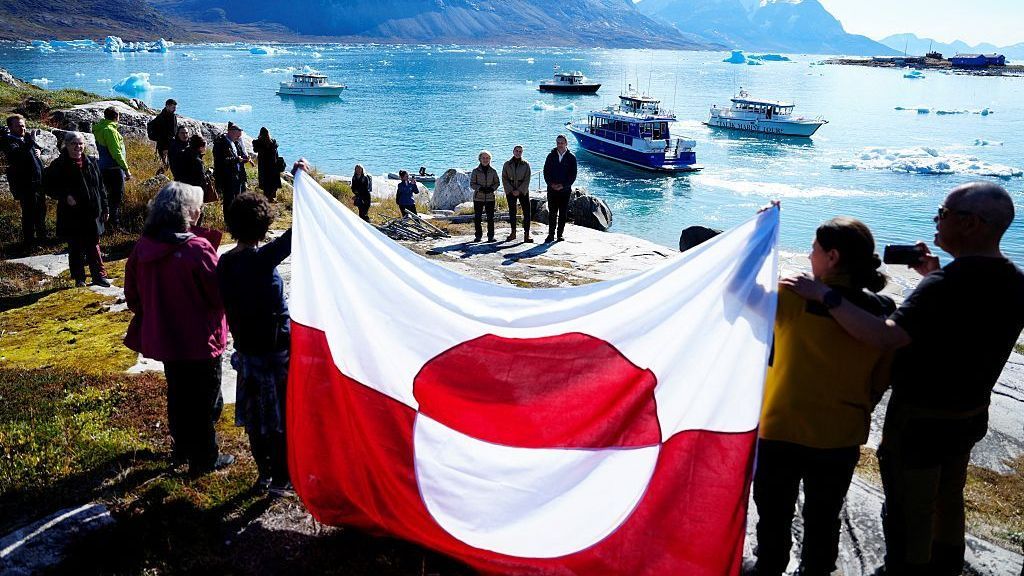
After months of high-stakes diplomatic friction sparked by former President Donald Trump’s aggressive threats to forcibly annex the resource-rich Arctic territory of Greenland, the United States and Denmark have formally announced a new security agreement that reshape strategic dynamics across the North Atlantic and Arctic regions.
Trump first began floating attempts to purchase or seize Greenland more than a year ago, framing the move as a critical national security priority. He argued that the island’s strategic geographic position made it indispensable for defending North America, while its vast untapped reserves of rare earth minerals – materials critical to manufacturing modern technologies from electric vehicles to smartphones – represented an unmatched economic opportunity. The president’s openly stated willingness to use military force to take control of the territory sparked widespread condemnation from Denmark, fellow NATO allies, and the international community, creating an unprecedented rift in transatlantic relations.
Now, the newly announced deal appears to deliver many of the strategic concessions Trump sought, without formal annexation. In a post on his Truth Social platform, Trump framed the agreement as a sweeping victory for the U.S., saying it grants America “permanent control over security, and all other needs” in Greenland at “no cost to the United States”. The core terms of the deal, as outlined by an unnamed senior U.S. State Department official who spoke on condition of anonymity, include sweeping new security authority for the U.S.: Washington gains unilateral power to construct additional military infrastructure across Greenland without requiring prior approval from either Denmark or the Greenlandic government, enshrines permanent access, basing, and overflight rights for U.S. forces, and includes a provision that the agreement will remain in force even if Greenland achieves full independence from Denmark in the future.
Most notably, the deal bars non-NATO countries, specifically named U.S. adversaries Russia and China, from establishing any military presence in Greenland or making investments in the territory’s sensitive strategic sectors without explicit written approval from the U.S. The official noted that prior to the agreement, there was no formal framework to screen foreign investments in Greenland’s sensitive industries, allowing adversaries to expand their economic and political influence in the region unimpeded.
Danish Prime Minister Mette Frederiksen has struck a more measured tone in public comments, confirming that the agreement will be formally signed next week during the United Nations General Assembly in New York. She emphasized that the deal strengthens collective security across the Arctic and North Atlantic while explicitly upholding the sovereignty of the Kingdom of Denmark and the right of Greenlandic people to self-determination. Frederiksen added that the agreement still must undergo mandatory parliamentary review in Denmark before it can enter into force. Jens-Frederik Nielsen, chairman of the Greenland Government, also praised the deal, noting that it recognizes Greenland’s core interests and solidifies its role in international security cooperation, calling the agreement beneficial to all three parties.
U.S. Secretary of State Marco Rubio echoed Trump’s positive framing, describing the deal as a historic breakthrough and a “huge win for the United States and the American people” that permanently resolves long-standing U.S. national security concerns in the region. For Trump, the agreement also advances a separate core priority: his proposed Golden Dome missile defense system, designed to shield the U.S. from intercontinental ballistic missile attacks from Russia and China, which he has identified Greenland as a critical location for.
Notably, the full text of the agreement has not been released to the public, and key questions remain about how the new deal differs from the longstanding 1951 bilateral security agreement between the U.S. and Denmark. That existing deal already grants the U.S. broad authority to deploy unlimited numbers of troops to Greenland, where Washington already maintains the Pituffik Space Base with a permanent garrison of more than 100 U.S. military personnel on the territory’s northwestern tip. The BBC has requested comment from both the Danish Embassy in Washington and the White House, with no formal response provided yet to clarify the full scope of the new agreement.