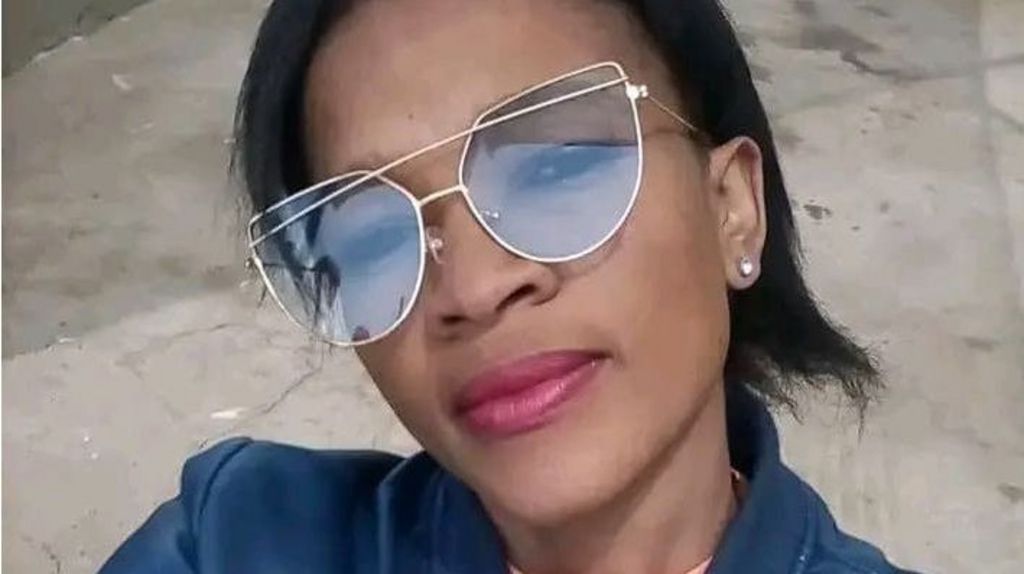
Two days after she helped identify the battered, partially burned remains of her 38-year-old niece Dineo Motapane, Nokwanda Matshikiza sat in the family’s home just outside Johannesburg, her voice breaking with raw, unrelenting grief. Her niece, a mother of two, was last seen alive the previous Sunday; her body was dumped in an open field in Ekurhuleni, a residential region east of South Africa’s largest city. For Matshikiza, the question hanging over her family’s unspeakable loss is not how to move forward – it is how many more women must die before the country acts.
“We are dying,” she told the BBC through sobs. “How many other bodies will be found before something happens? How do you explain to a child that their parent was brutally murdered, discarded like a piece of trash in a field? There is no peace in this. You never get over it.”
Dineo’s killing is far from an isolated tragedy. Her body was one of three recovered in Ekurhuleni this week alone, marking the ninth case of a murdered woman found in similar circumstances in the region since July. For Themba Kekana, the pain of losing his sister Itumeleng, a 32-year-old shopkeeper whose bruised body was found dumped on a bridge in July 17 days after she went missing, echoes that of Dineo’s family.
“We are devastated with grief,” Kekana said, his eyes wet with tears. “I look at my sister’s young daughter and I can’t take this pain away from her. No family should ever have to go through what we are facing.”
To date, only one arrest has been made in connection with the string of deaths, taken into custody two days after the first body was discovered on July 15. No suspects have been detained in the killings of Itumeleng, Dineo, or the other six victims. Most of the women were in their 20s or 30s, and all suffered extreme brutality before their deaths. South African police have not confirmed whether they are hunting a serial killer, noting the cases may be unconnected. Regardless of links between the crimes, the grim discovery spree has reignited national fury over South Africa’s long-standing crisis of gender-based violence, a problem that puts the country among those with the highest femicide rates globally.
Official quarterly crime statistics from South African police confirm the staggering scale of the nation’s murder crisis: between April and June of this year, 5,427 people were murdered across the country. While police data does not break down killings by gender, new figures from South Africa’s Human Rights Commission show 569 women were killed in that same three-month period – an average of six women every day – with another 1,052 surviving murder attempts.
The outcry comes less than a year after the South African government formally declared gender-based violence a national disaster, a step taken in November last year following mass nationwide protests that culminated in a “Women’s Shut Down” march during the country’s hosting of the G20 summit. At the time, Social Development Minister Nokuzola Sisisi Tolashe said classifying the crisis as a national disaster would enable the government to deploy more resources to tackle the violence. But activists say far more action is needed.
Amnesty International has led renewed calls this week for the South African government to formally recognize femicide – the gender-motivated killing of women – as a distinct criminal offense, a change already adopted in 33 countries across the globe, including two African nations, Gabon and Morocco.
“Every day that femicide remains unrecognised as a crime is a failure to confront the targeted killing of women,” said Shenilla Mohamed, Amnesty International’s country director for South Africa. “It is time to call it what it is: Femicide. Femicide is a gender-motivated crime. It is the killing of a woman because she is a woman. Recognizing it as a separate crime would force the state to confront its failure to protect women and girls. You cannot fix a problem you refuse to track properly.”
South African President Cyril Ramaphosa responded to the Ekurhuleni killings this week, promising that authorities would leave “no stone unturned” in their investigations. “As a nation, we must stand up for the rights, safety and dignity of women and girls,” he said.
But gender justice advocates say the current crisis is rooted in deep, historical inequities that have never been addressed. Lebogang Ramofoko, a gender and social justice advocate, argues that the dehumanization of black women stretches back through the legacies of colonialism and apartheid, systems of state violence that created intergenerational cycles of harm that have never been broken.
“The bodies of black women have been treated as disposable in this country for generations, from colonisation through to apartheid,” Ramofoko told the BBC. “What we see happening to women today is testimony to these unaddressed traumas of violence. This is not to say black men are inherently violent, but for decades state violence was targeted at black communities, and black women were too often the targets that violence was taken out on. That cycle has never been broken.”
For residents of Ekurhuleni, where nine bodies have been found in three months, fear has become a constant, daily reality. In Kempton Park, the Ekurhuleni district where five of the nine bodies were discovered, activists with the local Girl2Woman Foundation have held repeated protests to demand action.
“We are grieved, we are scared,” said Lumka Maqhubela, a member of the organization. “If the police cannot protect us any more, the government has to step in and do something. We keep being told to be more vigilant, but what more can we do? We are not safe anywhere – not in our homes, not on our streets. This has to stop.”
Thulisile Sibande, a 32-year-old Ekurhuleni resident, described the constant trauma of living in the area. “When I go to a shop, I have to look over my shoulder constantly,” she said. “I’m shocked and so scared, it’s left me traumatized.”
Thembi Mabena, a 60-year-old neighborhood resident who knew Dineo Motapane, says the vibrant, kind woman she remembers who laughed with everyone on her street would still be alive if the state had done more to protect women. “Now I’m worried too,” Mabena said. “I know so many young girls who are afraid to walk to the corner shop alone. There is no safety here, not even for me, an older woman.”
For 20-year-old Lerato Mzizi, the message is simple: In South Africa today, women are no longer safe. As grieving families prepare to bury their loved ones and activists keep up their demands for change, the nation waits to see whether the latest wave of killings will finally force the government to deliver on its promise to end the crisis.