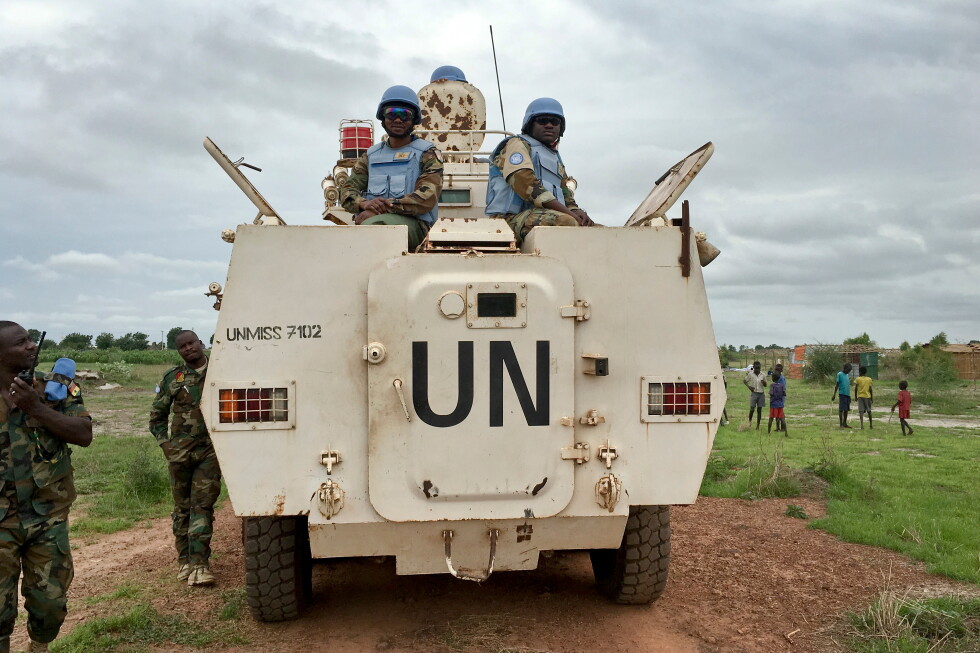
JUBA, South Sudan – A fatal ambush targeting a United Nations peacekeeping patrol in a remote region of South Sudan has left two peacekeepers dead and seven other people injured, according to an official statement from the United Nations Mission in South Sudan (UNMISS). The brazen attack, carried out by unidentified armed assailants on Monday, has underscored the rapidly deteriorating security situation across the conflict-torn East African nation as a fragile 2018 peace deal teeters on total collapse.
博客
-
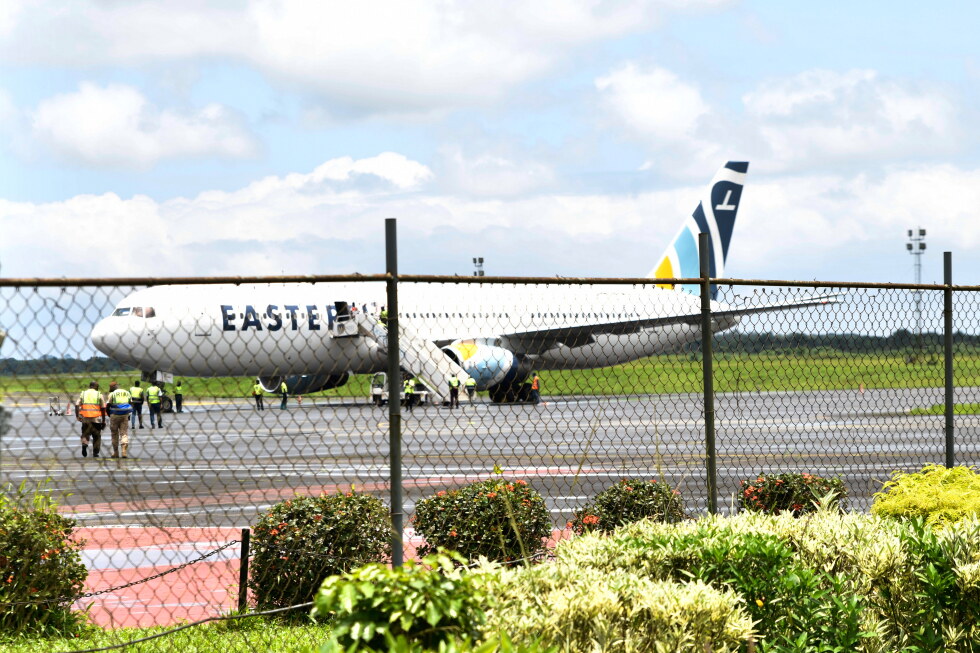
Deportees who refused to exit a US flight in Liberia are sent to Equatorial Guinea
DAKAR, SENEGAL — A coordinated act of resistance by six migrants deported from the United States has cast new light on the Trump administration’s controversial secretive third-country deportation policy, after the group refused to exit their flight in Liberia last week and was ultimately rerouted to another African nation, multiple sources confirmed Monday. A person traveling on the deportation flight and a legal representative in contact with the detainees have verified the details of the incident, which has drawn fresh criticism of a practice immigration advocates call a loophole for bypassing asylum protections.
-
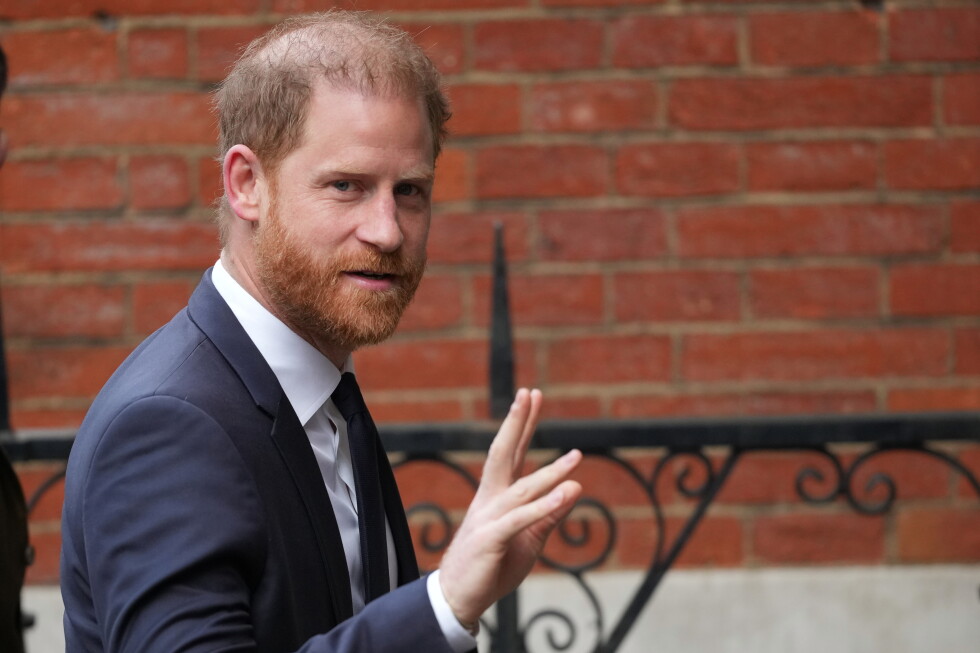
Prince Harry to leave board of African Parks conservation nonprofit
LONDON – A spokesperson for Prince Harry, Duke of Sussex, confirmed Monday that the British royal has stepped down from his role as a trustee of African Parks, a prominent conservation nonprofit that manages protected areas across 15 million hectares of land in 13 African nations ranging from Chad in the north to Zimbabwe in the south. His exit comes just one week after he announced that he and his immediate family would be moving back to the United Kingdom to take up permanent residence.
Prince Harry first joined the African Parks board of trustees a decade ago, and his departure is scheduled to take effect on September 30, as part of a planned governance overhaul announced by the organization in an August 19 statement. Two new high-profile figures will join the board to fill vacant spots left by outgoing members: a sitting Kenyan Supreme Court justice and the president of the Alliance for a Green Revolution in Africa (AGRA), an organization focused on supporting small-scale agricultural producers across the continent.
The timing of Harry’s exit, however, follows controversy that arose four months ago, when global Indigenous rights advocacy group Survival International publicly called for the prince to resign from the board. The group leveled allegations of human rights violations against park rangers employed by African Parks, claims that the organization has repeatedly denied but that placed public pressure on Harry’s position.
This is not the first high-profile charity exit Harry has made in recent months. In March 2025, he departed Sentebale, the anti-poverty and HIV/AIDS organization he co-founded to support communities in southern Africa, following a reported breakdown in working relations with the charity’s board chair.
Despite the controversy, African Parks board chair Vas Narasimhan issued a public statement praising Harry’s decade of involvement with the nonprofit. “We extend our thanks to all the members of the Board who generously volunteer their time in support of our conservation mission — and particularly to The Duke of Sussex, for a decade of committed service to African Parks,” Narasimhan said.
Harry and his wife Meghan Markle first stepped back from their full-time senior royal roles in 2020, relocating to Southern California to build an independent public profile and professional career. The couple confirmed after their recent announcement that they will not be returning to official royal duties, and will reside in a private non-royal residence on the outskirts of London.
-

China Moon mission to find water ice: unlike anything NASA’s done
For nearly 20 years, scientists have confirmed that water exists on the Moon — but critical questions remain unanswered. How much harvestable water ice is trapped in the Moon’s permanently shadowed polar craters, where sunlight has not touched the surface for billions of years? How deep is this ice buried, and what physical form does it take? These are the mysteries China’s upcoming Chang’e-7 lunar mission aims to solve, as the world enters a new era of lunar exploration focused not just on reaching the Moon, but unlocking its resources for long-term human activity.
Exploring these permanently shadowed craters is no small feat. Tucked at the base of deep, uneven craters near the lunar south pole, these regions sit at temperatures well below -200°C, cut off from sunlight and unreachable for most conventional exploration craft. Yet they are also among the most valuable real estate on the Moon: if the water ice they hold can be accessed and processed, it could provide drinking water, oxygen, and rocket fuel for future crewed missions and permanent lunar outposts.
The journey to this point stretches back more than six decades, starting when the Soviet Union’s Luna-1 became the first probe to reach the Moon’s vicinity in 1959. Early lunar exploration centered on simply reaching the celestial body; today, the core challenge has shifted to navigating and studying the most extreme, hard-to-reach lunar environments, and determining whether the Moon can supply the resources future explorers will need. China has built its incremental, ambitious lunar exploration program — named for Chang’e, the ancient Chinese goddess of the Moon — over the past 20 years, and Chang’e-7 represents the next bold step in that roadmap.
Scheduled for launch later this month, the mission’s timeline carries minor uncertainty following a recent failure of an unrelated Chinese rocket, but preparations remain largely on track. Unlike previous missions, Chang’e-7 uses an innovative multi-component design: it comprises an orbiter, a lander, a wheeled rover, and a revolutionary hopping craft that will act as the mission’s centerpiece. The Queqiao-2 lunar relay satellite, launched separately in March 2024, is already in position to support the mission, having previously served the successful Chang’e-6 sample return mission. Queqiao-2 will maintain steady communications between the exploration craft on the lunar surface and mission control on Earth.
While a final landing site has not been officially announced, the leading candidate is a sunlit ridge on or near Shackleton Crater, one of the most prominent permanently shadowed impact structures in the Moon’s south polar Aitken Basin. From this landing zone, the mission’s hopper will undertake the core exploratory work: unlike wheeled rovers, which cannot navigate the steep, broken crater walls that lead into permanently shadowed regions, the hopper is engineered to leap over treacherous terrain and descend into the dark craters that have remained undisturbed for billions of years. This design addresses the key challenges of steep slopes, permanent darkness, fragmented ground, and the need for autonomous navigation in the harsh polar environment.
Notably, Chang’e-7’s team is not searching for new evidence of water — scientists already have overwhelming confirmation of lunar polar water. Instead, the mission’s core objective is to characterize the existing water: map its exact distribution, determine its concentration and physical form, and assess whether it can be practically extracted for future use. This mission marks a key turning point for lunar exploration, shifting from mere discovery to evaluating the viability of in-situ resource utilization.
Other global space powers share the same long-term goal of establishing sustained lunar operations, but are pursuing different approaches to solve the same challenges. NASA, the United States’ space agency, has moved away from the traditional centralized state-led mission model in favor of its Commercial Lunar Payload Services (CLPS) initiative, which seeks to build a commercial lunar marketplace. NASA contracts private companies that own and operate their own spacecraft to deliver payloads and provide mobility and research services, and currently has 17 contracted deliveries carrying more than 60 scientific instruments.
NASA’s commercial approach has already produced early lessons: Intuitive Machines’ Athena mission (IM-2) undertook remarkably similar objectives to Chang’e-7, carrying a drill, a mass spectrometer to search for volatile compounds including water, a small hopping exploration craft, and an experimental mobile communications network. However, the mission ended prematurely when the lander tipped over at its landing site and powered down just one day after arrival. This contrast highlights that while both programs target the same critical lunar science questions, they are testing distinct strategic models to overcome the shared challenges of polar exploration.
Chang’e-7 is only the next step in a longer roadmap for lunar development. Following this mission, China plans to launch Chang’e-8 as early as 2028, which will focus on demonstrating practical technologies to utilize lunar resources. Down the line, crewed missions are expected to follow, leading to the construction of the International Lunar Research Station, a joint project between the China National Space Administration and Russia’s Roscosmos. On the U.S. side, CLPS will feed technological and scientific data into NASA’s larger Artemis Program, which is explicitly designed to lay the groundwork for long-term sustained lunar exploration.
At the end of the day, the extreme environment of the lunar south pole does not differentiate between programs or nations. Any craft exploring its permanently shadowed craters must contend with the same unforgiving conditions: total darkness, crippling cold, fragmented terrain, and significant communications hurdles. Reaching the Moon was one of the defining technological challenges of the 20th century. Mastering how to live and operate sustainably on its surface will go down as one of the great challenges of the 21st century — and Chang’e-7 is set to mark a major step forward in that global effort.
-
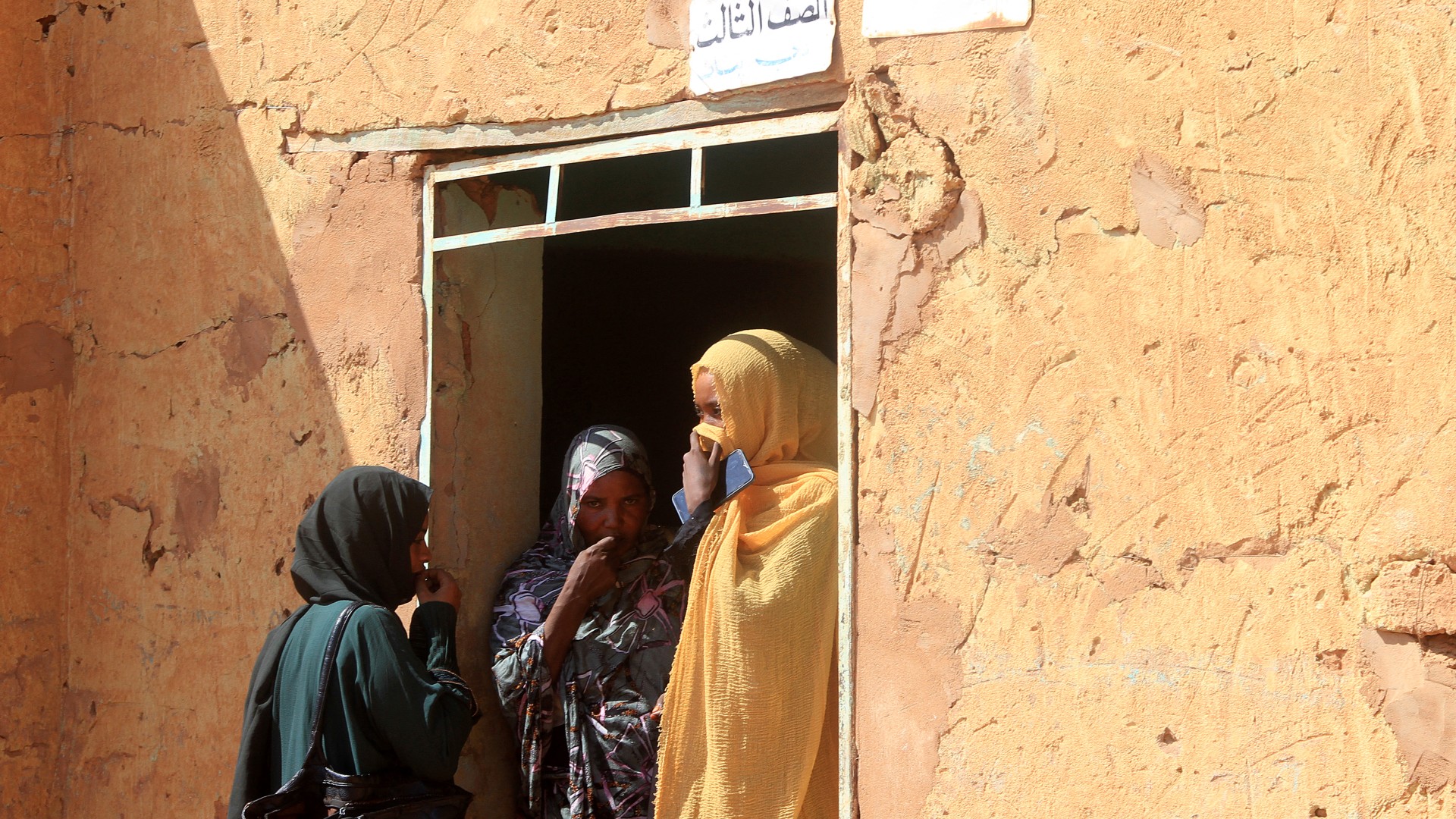
In Sudan’s deserted Bara, blood waters its famous lemon trees
Once renowned across North Kordofan for its fragrant lemon groves that filled the market town’s streets with sweet spring blossom, Bara now bears the unthinkable scars of Sudan’s brutal 2023 civil war. What was once a thriving community of 100,000 residents is now a desolate landscape of destruction, where the scent of rotting human flesh has replaced the scent of lemon flowers, following months of sieges, violent clashes, and targeted civilian massacres carried out by the Rapid Support Forces (RSF) during their occupation of the town.
In July 2024, the Sudanese Armed Forces (SAF) and its allied resistance groups achieved a decisive victory, driving RSF fighters out of Bara and opening a rare window for independent observers and local first responders to access the war-ravaged town. Multiple eyewitnesses who entered Bara shortly after the SAF recapture described scenes of widespread horror: unburied civilian corpses left abandoned on roadways by the RSF fighters who gunned them down, while the few dead that received any form of burial lie in shallow graves or sealed inside destroyed private homes.
Local engineering experts working to assess Bara’s critical infrastructure have issued an urgent public warning about an impending public health catastrophe. Bara draws all its drinking water from shallow underground aquifers and wells, which reach depths of just 20 to 30 meters. Decomposition from thousands of unburied bodies already risks leaching contaminants into these water sources, threatening the lives of any returning residents and local livestock alike.
Bara’s strategic value has made it a key battleground throughout Sudan’s ongoing conflict. Sitting directly on the primary transport corridor linking Sudan’s capital Khartoum to resource-rich Kordofan, control of the town has shifted repeatedly between warring factions since fighting broke out in April 2023. The RSF, a United Arab Emirates-backed paramilitary group already accused of genocide by the U.S. government and multiple leading human rights organizations, first captured Bara in October 2023, using the town as a launch base for repeated drone strikes on el-Obeid, the capital of North Kordofan state located just 60 kilometers away.
The RSF has a well-documented pattern of mass civilian atrocities across Sudan, including ethnically targeted massacres that killed tens of thousands of people in the Darfur cities of el-Geneina and el-Fasher. Osman Abdulatif, a member of Bara’s pro-SAF popular resistance committee, says the same pattern of violence unfolded in his hometown, even as it remained underreported to the international community.
“Clashes and RSF atrocities in Bara have not gotten the same media attention as what happened in other areas, but we believe the RSF killed hundreds of civilians inside Bara and in the surrounding villages,” Abdulatif told Middle East Eye in an interview from el-Obeid. “We entered the city just a few days after SAF took control, and we found everything destroyed. Bodies littered the streets and homes, and the entire surviving population had fled to el-Obeid and other safe regions.”
Abdulatif added that only two elderly residents, a man and a woman, were found alive in Bara after the RSF occupation, having survived for weeks without access to food after the paramilitary group cut off all supplies to the town. Beyond the urgent need to recover and properly bury civilian corpses, Abdulatif warned that Bara is still littered with large stockpiles of unexploded ordnance that pose a constant lethal threat to any civilians who attempt to return.
Humanitarian teams have confirmed that atrocities are not limited to Bara itself. When Middle East Eye visited surrounding communities, including Gabrat al-Shiekh and Um Syala, they found matching patterns of mass destruction and mass displacement, with hundreds of unclaimed civilian bodies still left scattered across the countryside. Local authorities and non-governmental organizations are preparing to launch a mass body recovery operation, but local organizers say they desperately need additional technical, logistical, and humanitarian support from international partners to carry out the work safely and effectively.
“Right now we are supporting local volunteers to get the process started, but we desperately need technical and humanitarian backing from morgue teams, civil defense, national and international NGOs, and government agencies to get this work done properly,” said one local organizer, speaking on condition of anonymity due to restrictions on media contact.
A volunteer based in Um Syala, a border community adjacent to Bara, confirmed that at least 200 bodies are still unaccounted for in that area alone. Like Bara, Um Syala and Gabrat al-Sheikh hold major strategic value: they ring Bara and sit along the Export Road, a critical logistical artery that carries Kordofan’s key exports — including gold, gum Arabic, silica, and agricultural goods — to Khartoum and global markets. With the SAF’s recapture of Bara and its surrounding communities, the road is now secure, reopening a vital supply line to el-Obeid, which had been under RSF siege for months.
Local military and resistance leaders say the recapture of Bara has shifted the entire balance of power in Sudan’s civil war firmly in the SAF’s favor. “This advance has given the SAF a much more secure position and protected el-Obeid, opening the shortest route between Kordofan and the capital Khartoum. That means el-Obeid and Omdurman are now far safer,” explained Godat Abdul Hadi, a senior leader of the armed popular resistance in North Kordofan.
Local residents and business owners in el-Obeid have already seen tangible improvements to daily life. Mohammed Abbas, a market trader in el-Obeid, said that since the siege was lifted and the Export Road reopened, markets have resumed operation and critical supplies have started flowing into the city for the first time in months. Military sources also confirm that RSF drone strikes on el-Obeid and Omdurman, Khartoum’s twin city on the banks of the Nile, have dropped dramatically, as the RSF lost the forward operating bases it used to launch these attacks.
Just a few months ago, the outlook for el-Obeid was far grimmer. In June 2024, near-constant RSF attacks and threats of a full-scale invasion sparked widespread fears that the North Kordofan capital would suffer the same fate as el-Fasher, where an estimated 60,000 people were killed in RSF massacres in late 2023. The United Kingdom, France, other European governments, and senior United Nations officials issued public calls for the RSF to halt its attacks on el-Obeid, warning of an impending mass civilian bloodbath.
But Abdulatif dismissed these international appeals as empty gestures that did nothing to alleviate civilian suffering. “If these actors were being honest, they would have forced the RSF to lift the siege instead of just asking them not to commit atrocities,” he said. “The international community has lost all credibility when it comes to what is happening in el-Obeid and Kordofan. When they only urge the RSF not to commit crimes, they are indirectly encouraging the group to maintain the siege and deepen the humanitarian suffering of our people.”
“Thankfully, we managed to lift the siege ourselves at this stage, especially after the liberation of Bara and the surrounding areas,” he added.
Despite the SAF’s recent gains, the conflict in North Kordofan is far from over. RSF leadership has not abandoned its goal of seizing full control of the region, and in recent weeks the paramilitary group has launched counteroffensive drone strikes against Gabrat al-Sheikh and targets further afield, including Omdurman, al-Damar, and even Atbara in River Nile State, north of Khartoum.
SAF military officials claim all RSF counterattacks around Bara and el-Obeid have been successfully repulsed, and say army forces are now advancing through West Kordofan toward the RSF’s major stronghold in Darfur. But a senior source with intimate knowledge of the security situation in North Kordofan, speaking on condition of anonymity for security reasons, warned that RSF fighters still hold territory just 100 kilometers from Bara in the Sodari and al-Mazroob regions.
“If the SAF does not continue advancing to secure remaining RSF-held areas in North and West Kordofan, all of our recent gains could be reversed very quickly,” the source said.
-
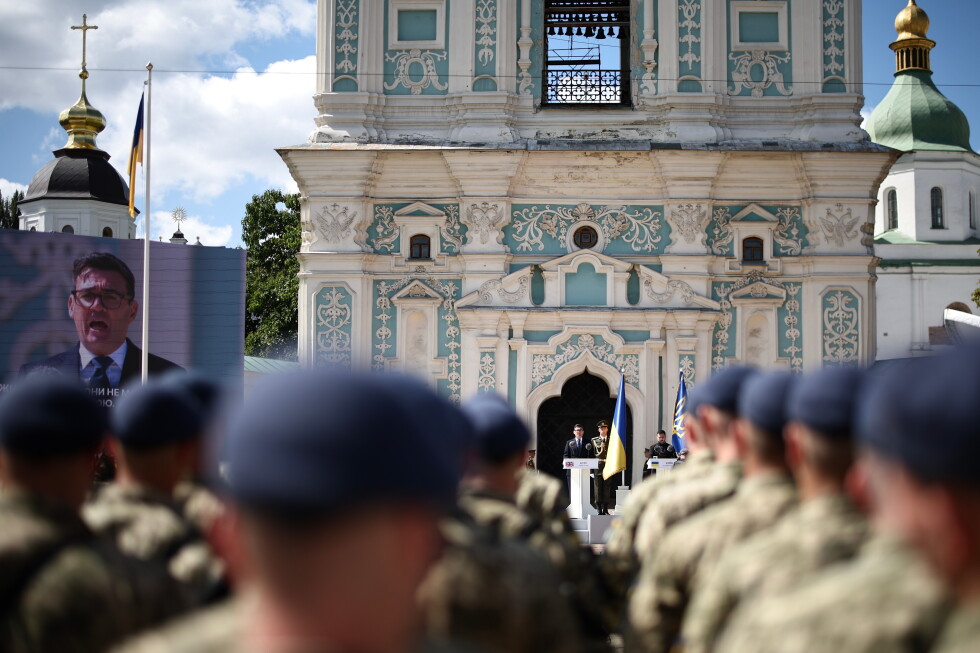
The UK will help Ukraine make long-range missiles by sharing classified tech information
On Ukraine’s Independence Day, British Prime Minister Andy Burnham stood alongside other global leaders in Kyiv to make a landmark announcement: the United Kingdom will share classified technical data for British-made missile components to help Ukraine establish domestic production of long-range precision weapons.
Under the new plan, leading European defense contractor MBDA will release detailed specifications for the British-built parts of the SCALP cruise missile, clearing the way for Ukrainian engineers to assemble the weapons domestically. The SCALP missile, developed jointly by France and the United Kingdom, is the French-named variant of the UK’s well-known Storm Shadow air-launched cruise missile.
Both variants share the same core design, boasting an official range of more than 250 kilometers (155 miles). Standing 5.1 meters (16.7 feet) long, the low-observable missile is engineered to strike fixed, hardened targets such as reinforced bunkers, command centers and critical military infrastructure. MBDA confirms the weapon relies on an advanced multi-mode navigation system that delivers exceptional hit accuracy. Currently, Storm Shadow and SCALP missiles are in active service with the air forces of the UK, France, Italy and several other operator nations, and have seen combat use in past conflicts in Iraq, Libya and Syria.
The UK’s announcement complements ongoing negotiations between Kyiv and Paris to build local SCALP assembly lines inside Ukraine. While the end goal of full domestic production would give Ukraine a sustainable, independent supply of long-range strike capability, details on the progress of construction and production timelines remain undisclosed. Experts warn that the ultimate impact of this new policy will depend heavily on how quickly Ukraine can scale up domestic manufacturing and bring domestically assembled missiles into frontline service.
Douglas Barrie, senior fellow at the International Institute for Strategic Studies, noted that the decision to declassify and share sensitive technical specifications is a significant step forward for UK support, but tangible battlefield benefits will not materialize immediately. “Any impact … will in part depend on how quickly Ukrainian-assembled SCALP cruise missiles can be introduced into service,” Barrie explained.
The announcement also comes amid an urgent short-term gap in Ukraine’s air defense capabilities: Ukrainian President Volodymyr Zelenskyy confirmed Sunday that the supply of Patriot interceptor missiles, critical for blocking Russian ballistic missile and airstrikes, has dropped sharply even as Russian attacks intensify. Production backlogs across the United States and allied European nations have slowed output, leaving Kyiv scrambling to shore up its air defense networks.
Moscow has already pushed back sharply against the UK’s new policy. Kremlin spokesperson Dmitry Peskov accused Britain of “fanning the flame” of the ongoing conflict, a rejection Burnham dismissed outright during a press briefing in Kyiv. When asked about Peskov’s criticism, the prime minister fired back: “Who started the fire?”
This latest announcement builds on the UK’s longstanding support for Ukraine’s long-range strike capacity. In 2023, Britain became the first Western nation to supply Kyiv with pre-built Storm Shadow missiles, which immediately allowed Ukraine to strike Russian command hubs, supply depots and logistical lines deep behind front lines, including in Russian-occupied Crimea. Beyond supporting SCALP production, the UK is also partnering with British defense firms to help Ukraine develop an affordable new ground-launched strike system, with testing already underway. That system is designed to hit targets out to 500 kilometers (310 miles) while carrying a 225-kilogram (496-pound) warhead, expanding Ukraine’s future strike capabilities even further.
-
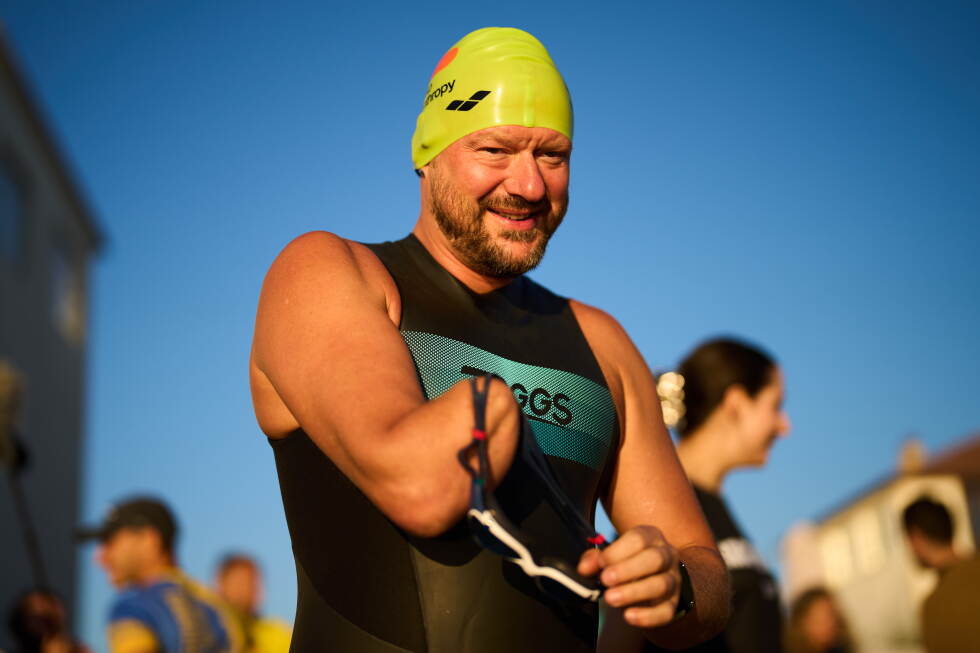
Ukraine’s amputee veterans celebrate independence day with grueling endurance challenge
On Ukraine’s 35th Independence Day, a remarkable group of war-wounded veterans and military amputees closed out a staggering cross-country endurance challenge that captured the resilience of the Ukrainian people amid more than four years of full-scale Russian invasion.
Dubbed “Iron Week,” the week-long event saw participants push through seven consecutive days of triathlon-style competition — swimming, cycling, and long-distance running — covering more than 1,500 kilometers across Ukraine, including journeys through war-scarred eastern cities. The challenge concluded at a lakeside venue just outside the capital Kyiv, where athletes removed their prosthetic limbs, slipped into wetsuits, and entered the water for the final leg of the race, with many relying on small assists from support teams to navigate the transition.
The initiative was spearheaded by Danylo Sapunov, a three-time Olympic triathlete who has dedicated his post-competition career to supporting Ukrainian veterans through physical and psychological recovery. Sapunov emphasized that the event was never about rankings or speed, but about community and solidarity. “This is not a competition. There is no winner, and it does not matter who swims faster,” Sapunov told gathered athletes and onlookers at the finish line. “The important thing is to participate and unite as one.”
The Independence Day celebration drew senior European leaders to Kyiv for official commemorations alongside Ukrainian President Volodymyr Zelenskyy, but the veterans’ race offered a powerful, ground-level demonstration of the resolve that has defined Ukraine through its ongoing defense against Russian aggression. For many participants, the challenge was deeply tied to their personal recovery journeys and their commitment to Ukraine’s sovereign future.
Yevhenii Lakhnenko, a 46-year-old army serviceman who lost his right arm and left leg to combat wounds sustained last October, explained that structured athletic activity like swimming has been a cornerstone of his physical and mental rehabilitation. After crossing the finish line, Lakhnenko reaffirmed his commitment to returning to military service, and praised the unmatched strength of the Ukrainian people. “I am finishing my recovery and will get back in the ranks,” he said. “I do not think there is another country in the world as strong as Ukraine. Only our people are capable of doing what we are doing.”
Maksym Yuzviak, a 35-year-old strike-drone operator who lost both legs in combat in January 2025, framed Ukraine’s independence not as an abstract political milestone, but as a product of the everyday courage of ordinary citizens. “Independence is about the people,” he said. “People who are ready to take responsibility and who, as they say, are capable of taking action.”
-
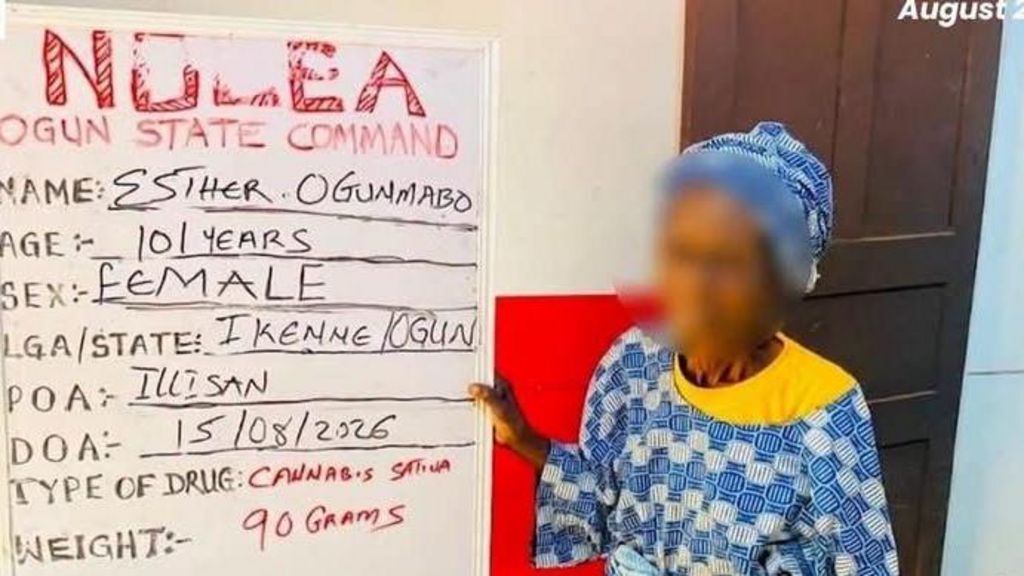
‘101-year-old great-grandmother’ arrested for selling cannabis in Nigeria
A shocking arrest of a 101-year-old great-grandmother on drug trafficking charges has captured widespread public attention across Nigeria, emerging alongside a series of major drug busts carried out by the country’s National Drug Law Enforcement Agency (NDLEA).
Esther Ogunmabo, the elderly suspect, was taken into custody on a Saturday in Ogun State, a southwestern region of Nigeria, NDLEA officials confirmed. During the operation, agents seized 90 grams of skunk, a potent strain of cannabis, packaged into small retail sachets ready for sale, according to Femi Babafemi, the agency’s head of media communications.
In statements to investigators, Ogunmabo shared that she entered the illegal drug trade after an accidental fire destroyed her small legal provisions shop, leaving her without a source of income. Authorities also revealed that her daughter, a resident of Nigeria’s largest city Lagos, has been taken into custody as well. Investigators allege the daughter arranged for fresh cannabis supplies to be delivered to Ogunmabo every four days, which Ogunmabo then split into smaller portions to sell to local buyers in her community.
In recognition of Ogunmabo’s advanced age, NDLEA chief executive Mohamed Marwa ordered that the suspect be released on bail and provided with counseling support. This bail arrangement does not close the case, however: Ogunmabo still faces potential formal criminal charges for her alleged involvement in the drug trade.
The high-profile centenarian arrest coincided with a broader push by the NDLEA to disrupt large-scale drug trafficking networks across Nigeria’s maritime borders. Just one day before Ogunmabo’s apprehension, NDLEA operatives acting on verified intelligence intercepted a wooden boat traveling in international waters off the coast of Akwa Ibom State. The vessel was en route to Cameroon, and agents arrested three people on board while seizing more than 42 kilograms of untaxed, illegal narcotics.
In a separate milestone for the agency, the operation also marked the first time the NDLEA has successfully intercepted an illegal drug shipment originating from Thailand, highlighting the expansion of the agency’s efforts to disrupt transnational drug trafficking routes connected to Nigeria.
For more reporting from across the African continent, audiences can visit BBCAfrica.com, or follow BBC Africa’s social channels on Twitter, Facebook, and Instagram.
-

Sonya Massey’s killer Sean Grayson dies in US prison
A 32-year-old former white U.S. police officer, who was convicted of murdering Black Illinois resident Sonya Massey in her home nearly two years ago, has died while in state custody, multiple U.S. and international media outlets have confirmed.
The 2024 killing of 36-year-old Massey by Sean Grayson reignited long-simmering national tensions over systemic police brutality against Black communities across the United States, sparking widespread protests and drawing direct comment from the then-sitting president.
The fatal encounter unfolded on the Independence Day weekend in 2024, after Massey placed an emergency call to Springfield police reporting a suspected intruder at her home, located roughly 320 kilometers south of Chicago. Body-worn camera footage captured the full chaotic sequence of the interaction: the pair initially shared a light moment over a pot of boiling water Massey had heating on her stove, before the encounter quickly escalated. After Massey twice stated, “I rebuke you in the name of Jesus,” Grayson threatened to shoot her in the face if she moved toward him, drew his service weapon, and fired three shots, striking Massey in the face as she ducked and apologized. Grayson claimed he opened fire out of fear that Massey intended to throw the scalding water at him.
Grayson was immediately terminated from the Springfield Police Department following the shooting. He was originally charged with first-degree murder, but a jury ultimately found him guilty of the lesser offense of second-degree murder in 2025. He was sentenced to 20 years in state prison. Grayson, who was diagnosed with colon cancer in 2023, had recently filed an application for medical parole to serve the remainder of his sentence outside of prison, but his request was denied by state authorities.
Grayson’s attorney Daniel Fultz confirmed to the BBC that his client died on Sunday, though he declined to share an official cause of death. The Illinois Department of Corrections has not yet released a public statement on the death, after the BBC reached out for comment.
In the wake of Grayson’s death, legal representatives for Massey’s family released a measured statement reflecting on the ongoing grief of losing Sonya. “Grayson’s death in custody from cancer does not bring Sonya back,” the attorneys said, per CBS News, the BBC’s U.S. partnership affiliate. “We wish his family prayers of peace, as we do for all who grieve a loved one. Sonya’s family knows that pain all too well and will grieve her loss the rest of their days.”
Following the 2024 killing, hundreds of demonstrations were held across the country to demand accountability for Massey’s death and push for broader police reform. Then-President Joe Biden publicly commented on the shooting, saying that Massey “should be alive today.”
-
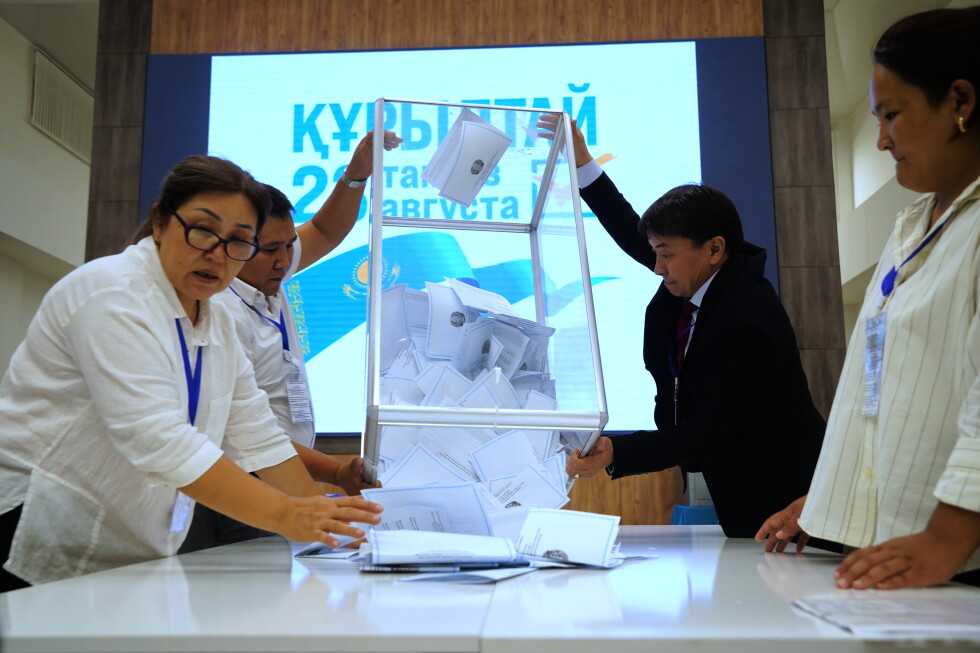
Kazakhstan’s pro-government party wins parliamentary election, boosting president’s grip on power
Official preliminary results released Monday confirmed a resounding landslide victory for Kazakhstan’s pro-government Adilet Party in the country’s first parliamentary election for a newly restructured single-chamber legislature, an outcome that political analysts broadly expect to solidify President Kassym-Jomart Tokayev’s control over Central Asia’s largest sovereign state.
Per data from Kazakhstan’s Central Electoral Commission, Adilet — which is headed by Tokayev’s former presidential administration chief — secured 71 percent of the popular vote cast during Sunday’s balloting. The rural-focused Auyl Party finished second with 6.26 percent of the vote, while three additional opposition-leaning parties, the Nationwide Social Democratic Party, Respublica, and Aq Jol, crossed the 5 percent voting threshold required to earn seats in the new legislative body.
International election observers from the Organization for Security and Co-operation in Europe (OSCE) have raised critical concerns about the electoral process, noting that the vote was undermined by a critical lack of meaningful ideological opposition. OSCE monitors emphasized that every contesting party in the election publicly endorses the sitting president’s policy agenda, leaving voters no distinct alternative aligned against Tokayev’s leadership.
The election marked the final step in a sweeping constitutional reorganization launched by Tokayev last March, when 87 percent of Kazakh voters approved a referendum to merge the country’s previous bicameral parliament into the new single-chamber legislature, officially called the Kurultai. Beyond restructuring the legislative branch, the constitutional amendments also grant the president expanded authority to appoint top-tier government officials, a power that only requires formal approval from sitting lawmakers to take effect.
Just one month ago, Kazakhstan’s Constitutional Court issued a landmark ruling that the new constitutional amendments effectively reset the count of Tokayev’s previous presidential terms, removing the legal barrier that would have prevented him from seeking re-election. The ruling clears the way for Tokayev, a 73-year-old former Soviet official and veteran United Nations diplomat who has held the presidency since 2019, to run for another seven-year term when his current mandate expires in 2030. This pattern of adjusting constitutional term limits to extend incumbents’ hold on power mirrors actions taken by leaders across several other former Soviet republics, including Russia, Belarus, Uzbekistan and Tajikistan.
Since the imposition of Western sanctions on Russia following Moscow’s full-scale invasion of Ukraine, Tokayev has pursued a careful balancing act between Russia and Western powers, maintaining economic and diplomatic ties with both blocs. He has publicly defended his constitutional overhaul as a necessary adjustment to enable faster, more agile policy-making amid growing global geopolitical and economic uncertainty.
This electoral contest unfolded against a backdrop of mounting domestic economic pressure and growing public unease in Kazakhstan. Annual inflation hit 10.2 percent in February, and recently implemented national tax increases have stirred widespread public discontent among working- and middle-class Kazakh households. Political analysts note that ongoing economic strain has put Kazakh authorities on high alert for a repeat of the deadly January 2022 unrest, when small-scale protests over a sharp spike in fuel prices escalated into nationwide civil unrest that left more than 200 people dead, including dozens of protesters and police officers. Analysts argue that concentrating greater political power in the presidency is a deliberate strategic move by Tokayev to prevent similar large-scale instability from reoccurring.
The election also coincides with a growing government crackdown on independent press and freedom of expression in the country. International media freedom advocacy organizations have repeatedly called on Tokayev to drop pending criminal charges against multiple journalists currently held under house arrest and revise restrictive national media laws that have been used to stifle dissenting speech. As of the election, Kazakh authorities have opened roughly 10 separate criminal cases against independent journalists and high-profile independent bloggers, according to local press freedom monitors.
Voter turnout for the 2025 parliamentary election reached approximately 74 percent of the country’s 12.6 million registered eligible voters, the Central Electoral Commission confirmed.