博客

  • ‘Absolutely ridiculous’: Canadians react to new tariff tensions with the US

    ‘Absolutely ridiculous’: Canadians react to new tariff tensions with the US

    Fresh tariff tensions between Canada and the United States have sparked widespread anger among Canadian citizens, with many describing the escalating trade dispute as “absolutely ridiculous”.

    As two neighboring countries sharing one of the world’s largest bilateral trade relationships, Canada and the United States have long been intertwined through deep economic integration and close cultural bonds. The emergence of new tariff frictions has reignited concerns that a worsening trade war could erode these decades-old connections.

    Interviews and public reactions from across Canada show broad frustration with the latest escalation. Many residents, business owners, and industry stakeholders have raised alarms that new tariffs will raise costs for consumers on both sides of the border, disrupt cross-border supply chains that hundreds of thousands of jobs depend on, and create unnecessary rifts in a relationship that underpins North American economic stability.

    Widespread sentiment holds that the escalating trade conflict serves little practical benefit for either nation, and that the growing friction threatens to fray the economic and cultural ties that have benefited both Canadian and American communities for generations. Observers note that continued escalation could have far-reaching consequences for multiple sectors, from agriculture and manufacturing to retail and services, leaving lasting damage to bilateral cooperation.

  • The Palestinian-American determined to defend his home from Israeli settlers

    The Palestinian-American determined to defend his home from Israeli settlers

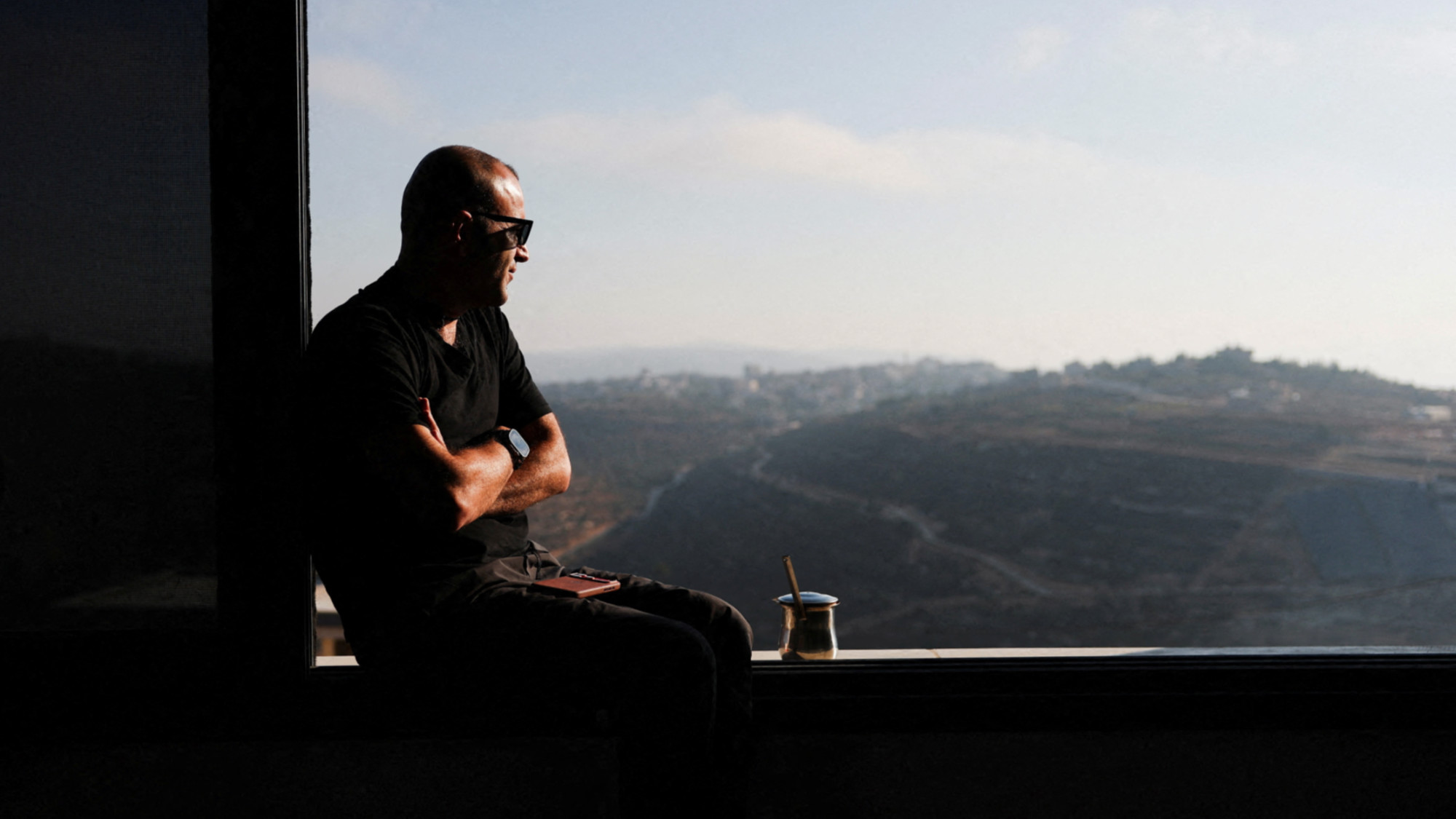
    Living 10,000 kilometers away in Ohio, Louai Abu Ridi, a Palestinian-American property owner, spent weeks glued to live security camera footage, watching armed Israeli settlers escalate their campaign of harassment against his family at his dream home in Qusra, a Palestinian town in the occupied West Bank. For months, settlers had targeted the property, where his brother had been staying while Abu Ridi lived and worked in the U.S. with his wife and two daughters. But earlier this month, the intimidation crossed a dangerous line: settlers surrounded the home and pitched permanent tents outside, launching a full siege to force the Abu Ridi family to abandon their land.

    When he watched settlers establish the encampment on his property in real time, Abu Ridi immediately began working from overseas to end the blockade. He urged his brother to contact Israeli law enforcement, and reached out to U.S. diplomatic officials and his elected representatives in Congress for intervention. But when days passed with no meaningful action to dislodge the settlers, the emotional weight of watching his family trapped 24/7 through security cameras became too heavy to bear. He booked the next available flight to Qusra, the town where he was born, raised, and built the home he intended for his family to enjoy for generations.

    “I told my brother, ‘I’m tired. I can’t sleep another night watching this siege unfold from thousands of miles away. I’m coming to stand with you, to bring you supplies, and to end this blockade together,’” Abu Ridi told Middle East Eye in an interview from inside the besieged property. Today, he remains inside the home alongside his brother, sister, 83-year-old mother, and a neighboring family that was already forced out of their own adjacent property by settlers, adamant that he will not leave until the siege is lifted and his home is secure.

    For Abu Ridi, the Qusra home is far more than a structure of concrete and brick. Though he now resides permanently in Ohio with his family, he returns to his hometown two to three times a year to visit relatives who still live in the community. He began constructing the vacation home nearly three years ago, envisioning a space where his American-born daughters could connect with their ancestral roots and build memories alongside their extended family. That dream, he says, has curdled into a persistent nightmare.

    Sporadic attacks on the property began in January 2024, just three years after construction broke ground. In May, Abu Ridi watched via live feed as roughly 15 settlers pelted the home with rocks while his brother hid inside. The August 9 siege marked a dangerous escalation that immediately reminded Abu Ridi of a recent, high-profile takeover just kilometers away in Jalud, another West Bank town. Just weeks prior, settlers cut water and electricity, blocked access roads, and laid siege to the home of the al-Tubasi family. After five days of blockade, settlers stormed the property at gunpoint, forced the family out, and raised the Israeli flag over the roof, where the home remains under settler control today.

    United Nations data underscores the growing scale of this crisis: since January 2023, more than 6,000 Palestinians have been forcibly displaced from their homes in the occupied West Bank following violent settler attacks, with attacks spiking sharply after October 2023. Fearing his family’s home would be the next seizure, Abu Ridi pushed for urgent intervention.

    After the siege drew international condemnation and media attention, the Israeli military announced it would deploy forces to Qusra to remove the settlers and prevent violent clashes. But Abu Ridi says the on-the-ground reality could not have been more different from the official statement. “When the army arrived, they took the settlers’ side,” he explained. “They went to their tent, prayed with them, and celebrated with them.” The military also designated Qusra a closed military zone, restricting access for non-residents, a move that Abu Ridi says has only reinforced the siege, rather than ending it. Soldiers have blocked food and supplies from reaching the family trapped inside the home, he says, even though just 10 to 15 settlers are camped outside the property.

    “It’s insane. If the army actually wanted to remove them, they could simply arrest the settlers and move them out, and the problem would be solved in hours,” Abu Ridi said. “They tell the media they sent the IDF to protect Palestinian residents and remove the settlers, but that is not what’s happening here on the ground.”

    Abu Ridi also sought help through U.S. channels, reaching out to the U.S. Embassy in Jerusalem and the office of his Ohio congressional representative, Marcy Kaptur. While both entities responded with public condemnation of the settlers—including U.S. Ambassador to Israel Mike Huckabee labeling the settlers terrorists, a step Abu Ridi says he appreciates—no action has changed his family’s situation on the ground. After two full weeks under siege, the blockade remains firmly in place.

    The decision to leave his wife and two daughters behind in Ohio to return to Qusra was not an easy one, Abu Ridi says. His 10-year-old daughter messages him repeatedly, even after midnight Ohio time, to check if he is safe, asking if she will ever get to sleep in the Qusra home, and if he will make it back to the U.S. alive. Still, he says leaving his mother, siblings, and extended family to face the siege alone was unthinkable.

    Life inside the besieged home is a constant state of vigilance. No one in the house can sleep through the night; family members take turns keeping watch around the perimeter, waiting for the next potential attack. “It is a nightmare. We can’t sleep at night. We have to keep watch,” Abu Ridi said. “This has been going on for months. Someone has to stay up all night watching the property.”

    Abu Ridi has also opened his home to a neighboring couple with two young daughters, ages two and four, who were forced out of their adjacent home by soldiers after settlers laid siege to it. The young girls constantly ask to return to their home to retrieve their toys, he says, too young to understand why they cannot go back. “It is a mixed emotion: sad, devastating, terrifying, all of the above,” he said of the ongoing crisis.

    Even with the constant threat of a violent settler raid, Abu Ridi says he has no plans to leave. “I’m not leaving this house until I make sure it’s safe and won’t be stolen by settlers,” he said.

  • Celebrity manager Ralph Carr set to learn fate for rape, bid to halt sentencing

    Celebrity manager Ralph Carr set to learn fate for rape, bid to halt sentencing

    A once high-profile Australian entertainment and sports manager is on the cusp of learning whether his legal team can delay his sentencing for convictions of rape and sexual assault, in an extraordinary and rare legal maneuver that would mark a historic first for the state of Victoria if approved.

    Sixty-six-year-old Ralph Carr, whose full legal name is Ralph Carnovale-Carl, was taken into police custody four weeks ago, after a jury delivered guilty verdicts on two counts of rape and one count of sexual assault. He is scheduled to appear before the County Court of Victoria on Tuesday morning, where Judge Frank Gucciardo will hand down sentencing rationale and issue a ruling on the defense’s request to put sentencing on hold while the convictions are appealed.

    This legal request, formally called a stay of proceedings, is an uncommon tool granted only in extraordinary circumstances. If approved, it would pause all sentencing action and allow Carr to submit a bail application to the Court of Appeal while his appeal moves forward. Court documents indicate that if the stay is granted, this would be the first time a court has paused sentencing in a rape conviction case in Victoria’s history.

    The charges against Carr stem from an incident in early 2023. During the trial, the jury heard that after a day of work discussions at his eponymous firm Ralph Carr Management — centered on a planned autobiography Carr was developing — the pair spent the evening drinking and using cocaine, after which Carr assaulted and raped the woman, who was decades younger than him. The two already knew each other prior to the meeting.

    Last week, Carr’s lead defense barrister Dermot Dann KC told the court that the jury’s guilty verdict represented the clearest miscarriage of justice he had encountered in his 35-year career as a trial lawyer. Dann argued there is a legitimate, tangible chance the convictions will be overturned on appeal, adding that his client’s mental health has deteriorated sharply during his time in custody, with the 66-year-old experiencing extreme psychological distress behind bars.

    Dann told the court that Carr has staked all his hopes on the stay application, warning that a rejection would leave his client in an exceptionally bleak, alarming situation. Prosecutor Matthew Fisher has pushed back against the request, urging Judge Gucciardo to reject the bid to delay sentencing and move forward with the punishment phase of the case.

    Carr first rose to public prominence in the 1990s building his reputation as a leading entertainment manager, representing a roster of high-profile Australian musicians and performers. He later expanded his business into sports management, where he landed one of the country’s biggest sports clients, former Richmond Football Club superstar Dustin Martin. His identity as the convicted offender was only made public in early August, when the last of a series of court suppression orders — which had barred media from naming him in connection to the case — expired.

  • Manga-inspired theme park to be built near Paris

    Manga-inspired theme park to be built near Paris

    A landmark €6 billion ($6.5 billion) tourism and investment deal between France and Saudi Arabia is set to deliver three new theme parks to the outskirts of Paris, anchored by a manga-focused attraction inspired by the globally beloved Japanese franchise Dragon Ball Z. The project, greenlit during Crown Prince Mohammed bin Salman’s two-day state visit to France, traces its origins to an unexpected shared passion between the Saudi crown prince and French President Emmanuel Macron.

    Presidential advisers confirmed to reporters Monday that the theme park plan grew out of past conversations between the two leaders about their mutual fondness for Japanese comics, specifically Dragon Ball Z, a decades-old series that retains a massive global fanbase decades after its debut. Macron, a self-avowed manga fan who made headlines earlier this year when he closed a press briefing with Japanese Prime Minister Sanae Takaichi by performing an iconic hand gesture from the Dragon Ball Z franchise, framed the new development as the largest leisure investment in the region since the opening of Disneyland Paris decades ago. “You know my interest for manga,” he added, confirming his personal connection to the project’s core concept.

    The parks will be constructed just outside Paris near Cergy-Pontoise, with local French media indicating the development will likely occupy the site of the shuttered Mirapolis theme park, which closed its doors 35 years ago. No official opening date has been announced by the Élysée Palace, though officials confirmed the parks will open in sequential phases, with construction expected to stretch across multiple years. The development is projected to generate approximately 2,000 local jobs, according to estimates from the Élysée.

    The project will be spearheaded by Qiddiya Investment Company (QIC), a subsidiary of Saudi Arabia’s sovereign wealth fund. The firm already unveiled plans in 2024 to build its own standalone Dragon Ball Z theme park near Riyadh, as part of the kingdom’s broader push to expand its tourism and entertainment sectors.

    Beyond leisure development, the €6bn deal signals a deepening of bilateral economic and diplomatic ties between Paris and Riyadh. During the crown prince’s visit, the two leaders are scheduled to sign a slate of additional cooperation agreements spanning health, transportation, and energy, alongside high-level talks addressing escalating tensions between the United States and Iran. Macron wrote on X Sunday that the state visit marks an “important milestone” in the bilateral relationship, noting that “France and Saudi Arabia have always worked together to promote peace and stability” amid ongoing regional challenges in the Middle East.

    The partnership aligns with Saudi Arabia’s long-term economic strategy to diversify its national revenue stream away from heavy dependence on oil exports, investing heavily in new sectors including tourism, leisure, and esports. Over the weekend, Macron welcomed bin Salman to the closing ceremony of the Esports World Cup, an event originally scheduled to be hosted in Riyadh that was relocated to Paris over safety concerns linked to ongoing Middle East conflict.

  • Watch: Doug Ford’s blunt warning to Trump over Canada tariffs

    Watch: Doug Ford’s blunt warning to Trump over Canada tariffs

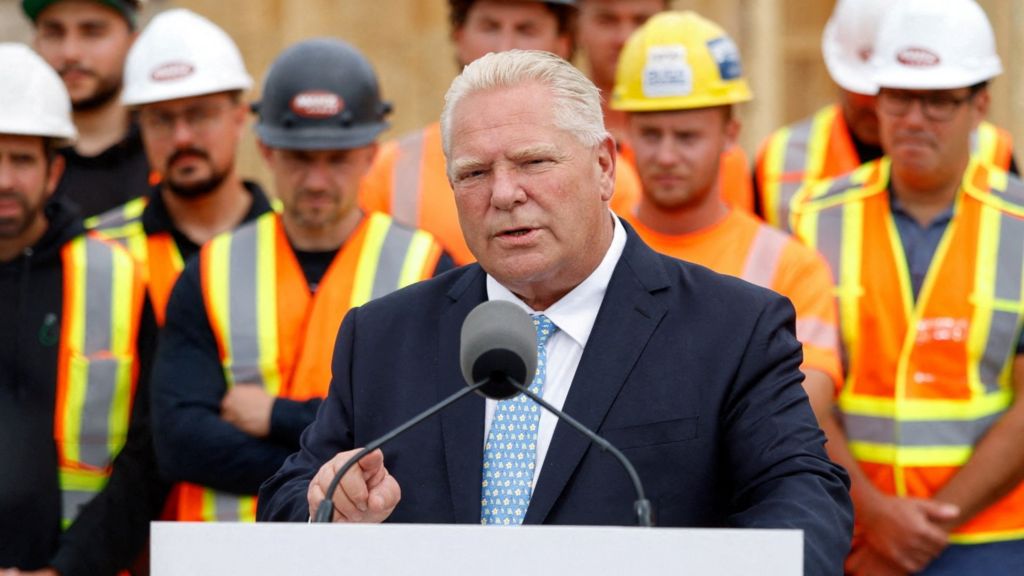
    A tense new development in cross-border economic tensions has emerged, as Ontario Premier Doug Ford has delivered an unvarnished public warning to former U.S. President Donald Trump over planned tariffs on Canadian goods. In a sharply worded public address that has drawn international attention, Ford did not hold back in laying out concrete retaliatory measures that Canada could deploy to directly damage the United States’ own economic interests, pushing back against any new trade barriers.

    The Ontario premier used unusually direct, blunt language to frame his message, directly calling out the former president’s trade agenda that has long targeted North American trade dynamics. Ford outlined a range of targeted countermeasures that would hit key U.S. economic sectors, from agricultural exports to cross-border manufacturing supply chains, making clear that Canada would not stand idly by if new tariffs are imposed. This open confrontation highlights the growing friction that continues to shape trade relations between the two neighboring nations, even as Trump remains a dominant figure in U.S. political discourse ahead of national elections.

    Trade analysts note that this public rebuke is not just a rhetorical gesture: as the premier of Canada’s most populous and economically powerful province, Ford holds significant sway over national trade policy, and his warning signals a unified Canadian pushback against protectionist U.S. trade measures. The exchange has underscored how trade disputes between the two countries remain a flashpoint in bilateral relations, with ripple effects that could impact millions of jobs on both sides of the border if tariffs move forward.

  • Taiwan charges 9 over illegal AI server exports to China, including Nvidia and Super Micro staff

    Taiwan charges 9 over illegal AI server exports to China, including Nvidia and Super Micro staff

    Tensions in the ongoing U.S.-China artificial intelligence rivalry have escalated once again, after Taiwanese prosecutors levied criminal charges Monday against nine individuals tied to top global tech firms for smuggling restricted high-end AI hardware into mainland China. The defendants include one current employee of leading chip designer Nvidia and two former workers of U.S.-based server manufacturer Super Micro Computer, according to official prosecutorial documents.

    Advanced AI infrastructure, which relies heavily on cutting-edge semiconductors produced primarily in Taiwan, has emerged as the central battleground for technological and economic competition between Washington and Beijing. The U.S. first implemented sweeping restrictions on Nvidia’s exports of top-tier AI chips to mainland China in 2022, tightening the regulations in subsequent years to block access to hardware that could advance China’s military and domestic AI development. Most recently, in April 2025, the Biden administration mandated that all exports of Nvidia’s H20 AI chips to China require special government approval, only partially reversing the rule to allow limited shipments later the same year.

    Per guidelines outlined by the Keelung District Prosecutors’ Office in northern Taiwan, all sales of high-end AI servers — the specialized computing systems that host the powerful graphics processing units (GPUs) that power large-scale generative AI models — to parties linked to mainland China are subject to rigorous export control reviews. Regulations also require that any bulk purchase of more than eight high-end AI servers must be preceded by in-person compliance checks of the end client by company staff to verify the final destination and use case.

    Prosecutors confirmed that the restricted hardware at the center of the smuggling ring is Nvidia’s B300 GPUs, a high-end AI chip model that is explicitly banned from commercial sale to mainland China under current export rules. Investigations found that the ring successfully smuggled 74 B300-powered AI servers into mainland China via multiple layered smuggling routes to avoid detection: 50 units were transshipped through Indonesia, 16 were sent directly to Chinese ports, and an additional eight were first routed to Japan, then transferred to Hong Kong before being moved across the border to the mainland. A separate attempted shipment of 56 more banned servers was intercepted before it could leave Taiwan, and the hardware remains in custody of local authorities.

    Among the nine charged defendants, four — including a senior Nvidia manager identified only by his surname Chang — are being pursued for the maximum possible five-year prison sentence under Taiwanese export control laws. Prosecutors labeled Chang the “key mastermind” of the scheme, noting he bore direct responsibility for authorizing the release of the restricted B300 GPUs for shipment, and has not cooperated with investigations following his arrest. Court documents also detail that multiple conspirators set up a front company in Japan to facilitate the shipment of eight servers, while others created fraudulent business websites and falsified end-user documentation to trick compliance screenings and evade border checks.

    In an official written statement responding to the charges, Nvidia spokesperson Patrick Rutherford said the company is committed to collaborating with Taiwanese regulatory and prosecutorial authorities to resolve the allegations as quickly as possible. Super Micro, meanwhile, noted in its own statement that the two former employees arrested in the case were identified during the company’s own cooperation with Taiwanese investigations. The company added that it will continue to upgrade its internal export compliance protocols “to protect American innovation”, in line with U.S. regulatory requirements.

    The charges mark the latest high-profile enforcement action against illegal tech smuggling amid growing global scrutiny of AI hardware flows to China, as the U.S. doubles down on efforts to limit China’s access to cutting-edge AI technology.

  • Earth is simmering in its hottest water temps on record, and that’s bad for fish and us

    Earth is simmering in its hottest water temps on record, and that’s bad for fish and us

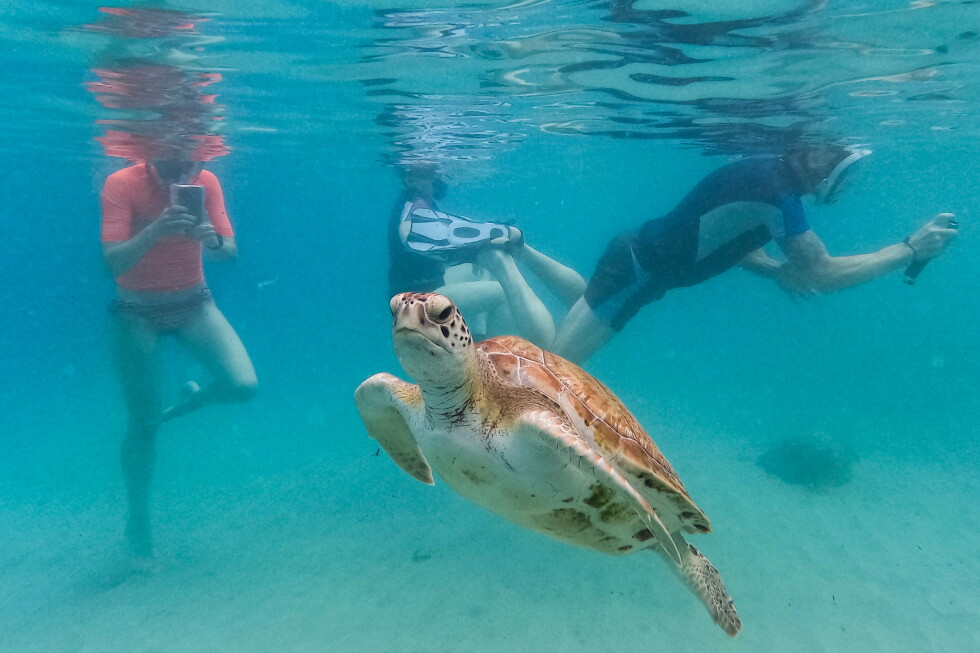
    The world’s oceans have reached their hottest recorded temperatures in history, and experts warn additional warming is on the horizon in coming months — a shift that poses cascading threats to marine ecosystems, human food security, and global weather patterns, the European Union’s Copernicus Climate Change Service announced Monday.

    According to Samantha Burgess, Copernicus’ strategic climate lead, the combined forces of a rapidly expanding, already massive natural El Niño event and human-caused climate change pushed average global sea surface temperatures to 21.1 degrees Celsius (70 degrees Fahrenheit) on Friday and Saturday of last weekend. This new mark narrowly surpasses the previous daily average record set in March 2024, marking an unprecedented deviation from long-term climate patterns.

    “This is yet another sign of our climate system under strain and the ocean under immense pressure,” Burgess emphasized in the announcement.

    Leading ocean scientists and former senior environmental officials have echoed deep alarm over the milestone. Jane Lubchenco, a renowned oceanographer and former administrator of the U.S. National Oceanic and Atmospheric Administration (NOAA), described the record as “very troubling.” In an emailed statement, she warned, “An ocean this warm destabilizes weather patterns and threatens food security, economic prosperity and marine life. A warmer ocean is not our friend.”

    The impacts of elevated ocean temperatures extend far beyond coastal waters. Warmer oceans become more acidic and hold less dissolved oxygen, directly harming the commercial and subsistence fishing industries that billions of people depend on for nutrition and livelihoods, Burgess explained. Warming also reshapes major ocean current systems and amplifies the intensity of tropical and extratropical storms, boosting rainfall totals and increasing the height of destructive storm surges.

    For coastal communities already grappling with summer heat waves, ocean warming creates an additional secondary threat: when seawater temperatures are abnormally high, overnight cooling from onshore sea breezes is eliminated, leaving communities to swelter through unrelenting hot nights. Burgess pointed to this summer’s heat events across Europe as a real-world example of this dangerous amplification effect.

    In a typical climate cycle, global average sea surface temperatures peak in March or April, as the Southern Hemisphere — which is dominated by ocean area — finishes its summer season. This year, however, the all-time record was broken in August, signaling that temperatures will continue to climb until the current El Niño reaches its peak. El Niño, a natural periodic warming of central and eastern Pacific waters that alters global weather patterns and raises worldwide average temperatures, is forecast to hit its maximum strength between November 2026 and January 2027.

    Burgess noted that the current El Niño is already comparable in size to the strongest events in recent history, and it continues to grow, with peak strength expected to reach unprecedented levels. It accounts for a large share of the current ocean warming, while long-term warming driven by fossil fuel burning has already raised global ocean temperatures by 0.8 degrees Celsius (1.4 degrees Fahrenheit) overall.

    “The thing that makes my heart sink is that this starts so early and it’s so out-of-normal that you know when it hits its peak, it’s going to be unprecedented,” said Boris Worm, a marine biology professor at Canada’s Dalhousie University. “The ocean is not supposed to do this. It’s just that there is no normal anymore.”

    Marine ecologists warn that the timing of this record sets up devastating impacts for coral reefs and global fisheries in the coming months. “We’re not even in October yet. Usually the Caribbean peaks at like late September, early October. And I think next year in the Southern Ocean, the Great Barrier Reef, yeah I’m really worried about what’s going to happen in the southern hemisphere in February, March,” said John Bruno, a marine ecologist at the University of North Carolina.

    Bruno added that only 20 percent of the heat-sensitive coral that existed in the 1990s remains alive today. While a small number of fast-growing “weedy” coral species have shown limited adaptation to warmer waters, long-lived iconic species such as staghorn coral continue to face catastrophic die-offs, he explained.

    Both Worm and Bruno warn that widespread fisheries collapse and resulting food shortages are a major looming risk. The world’s largest single fishery, the Peruvian anchovy fishery, typically suffers major collapses during strong El Niño events, and this year’s extreme heat makes a collapse particularly likely, Worm said. The loss of anchovies ripples through the entire marine food web, as the small fish are a primary food source for larger fish, marine mammals, and seabirds. Unlike larger mobile marine life that can swim long distances to find cooler water, anchovies cannot relocate to more habitable areas, leading to failed reproduction and mass starvation when waters overheat — a shift that also harms human communities that rely on the fishery.

    “Not everybody is hit equally, obviously, but the whole system collapses,” Worm explained. “It’s like when you pull out the rug from underneath an economy. It’s, like, the whole thing collapses. Some sectors may do a little bit better, but overall, everybody suffers.”

    One of the more visible changes for coastal visitors is a surge in jellyfish populations, which thrive in warmer waters. Burgess noted increased jellyfish sightings off European coasts this summer, and Bruno said the same pattern is likely emerging along the U.S. East Coast.

    Rick Spinrad, another former NOAA administrator, emphasized the ocean’s foundational role in regulating the planet’s climate. “The ocean is the planet’s thermostat, so as long as we depend on a healthy ocean for our safety, prosperity and wellbeing, these record-breaking sea surface temperatures portend even greater challenges for us all,” he said.

  • US vows ‘economic asphyxiation’ of Iran with new sanctions

    US vows ‘economic asphyxiation’ of Iran with new sanctions

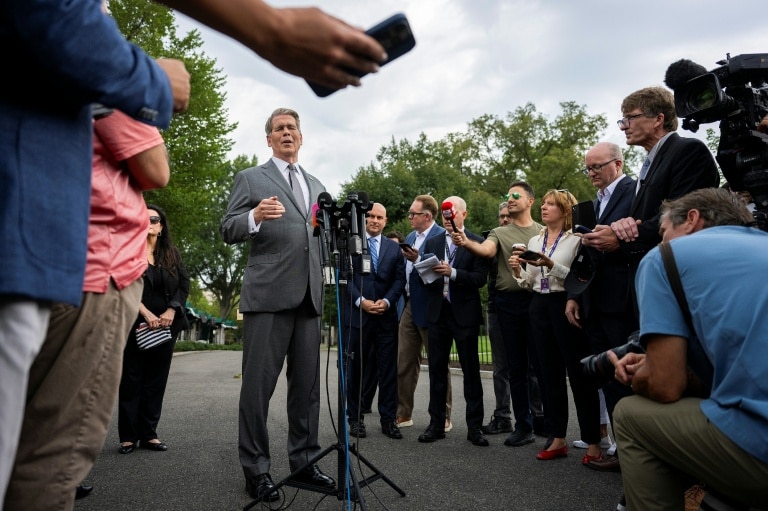
    Six months into a grinding, stalemated war between the US-led coalition and Iran, Washington has launched a sweeping new sanctions campaign labeled an “economic asphyxiation” of the Iranian regime, according to an announcement from US Treasury Secretary Scott Bessent on Monday.

    Bessent framed the new measures as an “economic D-Day” for Tehran, outlining a strategy to cut off every remaining economic lifeline connecting Iran to the global economy. The plan expands Washington’s secondary sanctions regime, which targets third-party entities that continue to do business with Iran, and carries a stark warning: any country that refuses to join the US-led campaign will face isolation alongside Tehran.

    Notably, the announcement did not name specific target countries beyond Iran or lay out a clear timeline for implementation, but it does map out new sanctions coverage that reaches across key sectors of Iran’s economy. Expanded penalties will target Iran’s digital assets, technology trade, gold reserves, aviation industry and commercial shipping networks. The Treasury Department also issued immediate sanctions against 60 individuals, companies and vessels accused of supporting Iran’s oil revenue generation, weapons procurement and cyber activity. These sanctioned entities are spread across the globe, with locations including the United Arab Emirates, Hong Kong (China), Singapore and multiple European states.

    In a sharp escalation of financial pressure, Bessent vowed that any entity found facilitating money laundering on Iran’s behalf will be cut off from the US dollar financial system, a penalty that effectively excludes most major global institutions from transacting with the world’s reserve currency. He added that President Donald Trump has been personally engaging with world leaders via phone, urging them to sever economic interactions with Tehran. When asked whether major Chinese banks, which have historically facilitated Iranian oil purchases, would face penalties under the new regime, Bessent replied that “no one is above the reach of US sanctions.”

    Iran has already pushed back forcefully against the new measures. Deputy Foreign Minister Kazem Gharibabadi framed the US’s announcement as an implicit admission of military failure, questioning why Washington would need to launch what it calls the “largest financial invasion in history” if it had achieved its war objectives.

    “Is this a victory or an admission of America’s defeat?” Gharibabadi said in a social media post ahead of the US announcement, warning third countries against aligning with Washington’s campaign.

    The current war, launched by the US and Israel in February, was initially justified over concerns about Iran’s nuclear program, but fighting and political focus have quickly shifted to the Strait of Hormuz, the strategic chokepoint that carries roughly a fifth of the world’s daily oil and gas supplies. Since the outbreak of war, Tehran has imposed a full blockade on most traffic through the strait — a move it never took in pre-war years — that has driven up global energy prices and fueled inflation, creating significant domestic political pressure on Trump ahead of November’s midterm elections.

    Iran has a long history of evading crippling Western sanctions: for decades before the current war, Tehran maintained steady oil exports (mostly to China) via complex, opaque international financial networks. But data from maritime analytics firm Kpler shows that the US naval blockade around Iran has cut Iran’s daily oil exports through the Strait of Hormuz from 2 million barrels pre-war to just 400,000 barrels by mid-August.

    For ordinary Iranian citizens, the new sanctions are expected to amplify already devastating economic hardship. Years of rampant inflation have already pushed millions of Iranians into financial precarity, sparking massive anti-government protests late last year and early this year. In an interview with AFP, Sarah Hassanbeigi, a 32-year-old Tehran-based pharmacist, captured the widespread public exhaustion: “I don’t think people can really take this much longer.”

    In a separate change to policy, the US also announced it would suspend all sanctions exemptions for cross-border educational payments between the US and Iran, cutting off another remaining financial link between the two countries.

    Despite the escalating economic pressure, diplomatic efforts to end the conflict continue to move forward. Last week, Iranian President Masoud Pezeshkian — a figure widely considered a relative moderate within the Iranian political system — stated that Tehran is in a position of strength and should seek to end the war immediately. Pezeshkian’s comment came shortly after Supreme Leader Mojtaba Khamenei appointed hardline figures to key national security posts, signaling a continued split in elite perspectives on the conflict.

    On Monday, a Pakistani delegation led by army chief Asim Munir traveled to Tehran to meet with Iranian Parliament Speaker Mohammad Bagher Ghalibaf, who also serves as Iran’s chief negotiator for peace talks. Pakistan has previously emerged as a leading mediator in conflict negotiations, helping broker an April ceasefire that ultimately collapsed. As a major trading partner of Iran, Pakistan could now face secondary sanctions penalties under the new US framework. Following the Pakistani visit, Oman’s foreign minister is scheduled to travel to Iran on Tuesday for talks focused on reaching a new agreement to regulate commercial passage through the Strait of Hormuz.

  • Colombia lifts coal export ban on Israel imposed over Gaza genocide

    Colombia lifts coal export ban on Israel imposed over Gaza genocide

    Fifteen days after taking office, Colombia’s new right-wing government has overturned a total coal export embargo imposed by former leftist President Gustavo Petro, greenlighting new coal shipments to Israel in a sharp shift toward closer economic and diplomatic ties with the Israeli government.

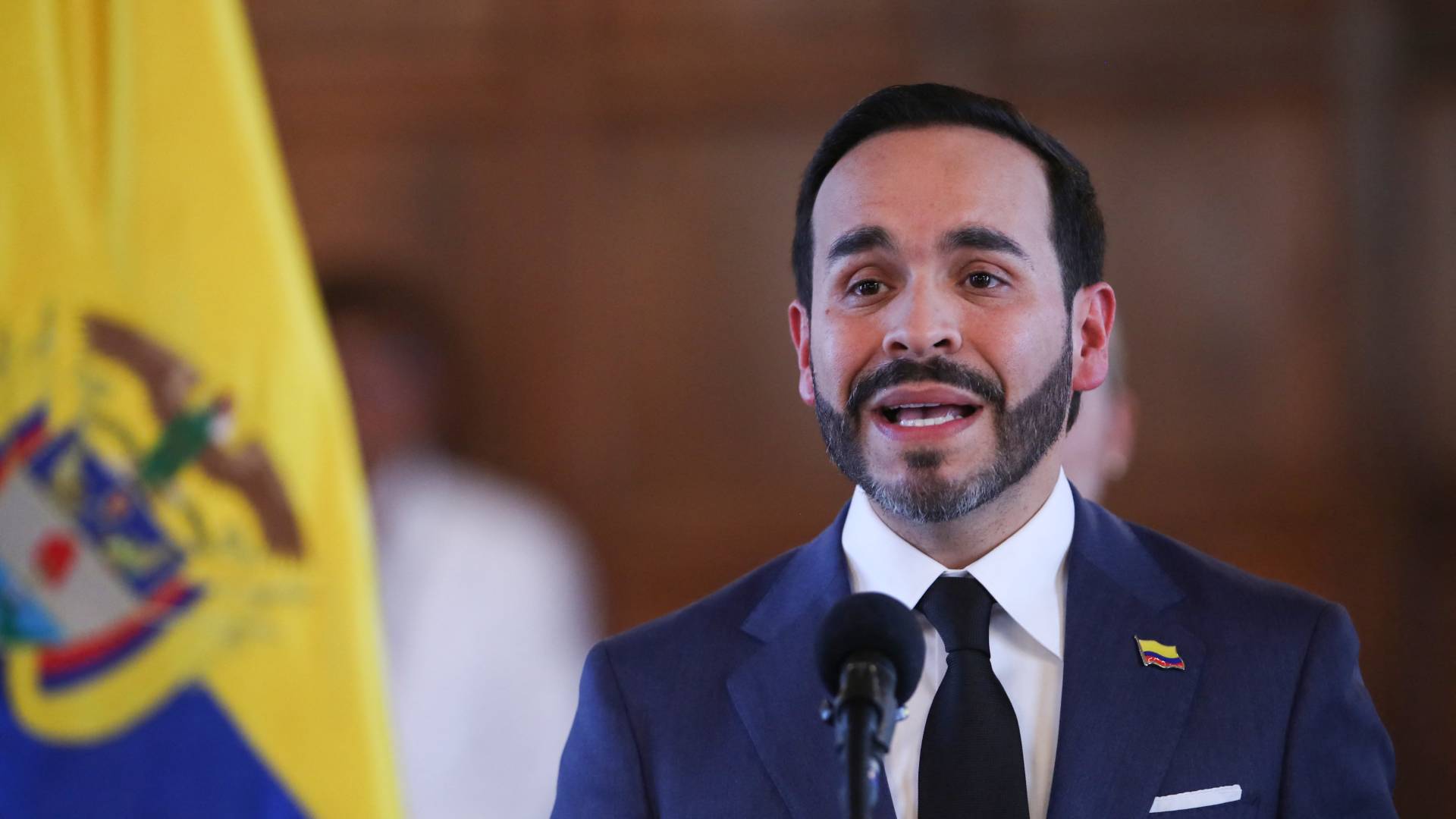
    Trade Minister Mauricio Gomez Amin made the announcement publicly Friday in a recorded video appearance alongside President Abelardo de la Espriella, who displayed the signed authorization decree for cameras. “We have the decree that authorises the export of coal,” Gomez Amin confirmed during the event.

    As of the announcement, the new administration has not released key details of the order, including its official decree number, publication date in Colombia’s state Official Gazette, or the regulatory requirements exporters must satisfy to resume shipments. It also remains unconfirmed when the first cargoes will depart for Israel.

    The embargo that was reversed marked the final step of Petro’s escalating response to Israel’s military campaign in Gaza. In May 2024, Petro cut full diplomatic relations with Israel over the assault on the Gaza Strip. Three months later, his administration introduced restrictions on thermal coal exports to the country, before eliminating all exemptions for existing contracts and enforcing a complete embargo in August 2025.

    Petro designed the embargo to remain in effect until Israel complied with binding provisional measures ordered by the International Court of Justice, which required Israeli forces to withdraw from Gaza and specifically the southern city of Rafah. Since the ICJ issued that order, Israeli operations have left the Palestinian city completely destroyed.

    Prior to the introduction of export restrictions, Colombia held the position of Israel’s largest thermal coal supplier. S&P Global market data confirms that Colombia supplied 60 percent of all Israel’s thermal coal imports in the first half of 2024.

    Gomez Amin framed the original embargo as a policy rooted solely in Petro’s ideological positioning, rather than practical statecraft. For his part, de la Espriella campaigned on a promise to transform Colombian-Israeli relations to be closer “like never before,” and emphasized the speed with which his administration has followed through on that pledge. “We’ve only been in government for 15 days,” he noted during the announcement.

    The decision to lift the coal embargo is just one part of a broad pro-Israel policy overhaul launched after de la Espriella took office on August 7. In addition to restoring full diplomatic relations that Petro severed, his administration has formally recognized Israeli sovereignty over Syria’s occupied Golan Heights and unveiled plans to relocate Colombia’s embassy from Tel Aviv to Israeli-occupied East Jerusalem.

    The policy reversal re-establishes a critical energy supply line for Israel, undoing Petro’s deliberate use of Colombian trade leverage to protest what he described as Israel’s genocide in Gaza, and replacing that pressure campaign with a rapid deepening of both economic and diplomatic alignment with the Israeli government.

  • Turkey sentences 5 opposition mayors in cases critics slam as politically motivated

    Turkey sentences 5 opposition mayors in cases critics slam as politically motivated

    In a high-profile verdict that has reignited debates over judicial independence in Turkey, an Istanbul court on Monday handed down corruption convictions to five municipal mayors belonging to the country’s main opposition bloc, a case critics have long decried as a politically motivated effort to weaken government opponents.

    The seven-month trial, held at a courthouse adjacent to Silivri Prison on Istanbul’s western outskirts, centered on claims of bribery, bid-rigging, and fraudulent manipulation of municipal public contracts involving 200 total defendants. While some other defendants received sentences and others were cleared, full details of their rulings have not been released to the public as of Monday’s verdict.

    Prosecutors’ case was built around the activities of Turkish businessman Aziz Ihsan Aktas, whose companies stand accused of securing lucrative municipal tender agreements through illegal kickbacks and fraudulent bidding practices. Aktas was first taken into custody in Istanbul in January of last year; his arrest triggered widespread investigations into multiple CHP-governed districts across Istanbul, as well as the southern CHP-run municipalities of Adana and Adiyaman. After initially denying all wrongdoing, Aktas agreed to cooperate with prosecutors under Turkey’s “effective repentance” law, turning witness against his co-defendants and claiming he bribed mayors and municipal officials with cash, luxury vehicles, and other favors to win contract awards. In a separate, related trial, Aktas was sentenced to 2 years and 8 months in prison for bid-rigging, but acquitted on separate bribery charges.

    Of the five convicted mayors, all from the Republican People’s Party (CHP), Riza Akpolat — the sitting mayor of Istanbul’s upscale Besiktas district — received the harshest penalty: 23 years and three months in prison on charges of bribe-taking, money laundering, and bid-rigging. The four other convicted mayors, who were all removed from their elected positions immediately following their arrests, received sentences ranging from five to eight years.

    Critics of President Recep Tayyip Erdogan’s administration have raised a series of red flags about the conduct of the trial, arguing it was deliberately crafted to target the CHP ahead of upcoming political contests. Two key controversial elements have drawn particular scrutiny: the prosecution’s reliance on secret witnesses, many of whom openly acknowledged their testimony was based on second-hand hearsay, and the use of cooperating codefendants like Aktas who secured more lenient sentences by implicating other defendants.

    Akpolat himself told the court during proceedings that investigators offered to drop all charges against him if he agreed to provide false testimony in a separate investigation into CHP’s 2023 internal party congress. That investigation ultimately led a Turkish court to order the removal of CHP’s top leadership in May over claims of voting irregularities during the party’s leadership election. The ouster prompted hundreds of CHP members to follow former leader Ozgur Ozel to form a New Party, which now holds the position of the largest opposition bloc in Turkey’s national parliament.

    The opposition has also pointed to a double standard in enforcement, noting that municipalities controlled by Erdogan’s ruling party that also conducted business with Aktas never faced the same level of rigorous investigation that the CHP municipalities endured.

    For its part, the Erdogan administration has repeatedly rejected claims of political interference, insisting that Turkey’s national judiciary operates as an independent body free from political pressure.

    Monday’s conviction comes amid a broader pattern of legal action against CHP officials following the party’s strong showing in recent local elections. The CHP seized control of several major Turkish cities, including Istanbul and the capital Ankara, in the 2019 local elections, and expanded on those gains in the 2024 municipal polls. Since the 2024 election, dozens of CHP elected officials have faced various criminal charges in Turkish courts.

    The highest-profile case against the opposition involves Ekrem Imamoglu, the popular metropolitan mayor of Istanbul and the CHP’s leading candidate to challenge Erdogan in the next presidential election. Imamoglu has been held in pre-trial detention since March of last year, facing a sprawling set of corruption charges related to Istanbul municipal operations that mirror the claims in the Aktas case. If convicted on all counts, Imamoglu could face a cumulative sentence of more than 2,300 years in prison.

    All five convicted mayors have announced they plan to appeal Monday’s verdict, with their legal team vowing to challenge what they call a politically tainted conviction built on unreliable and coerced testimony.