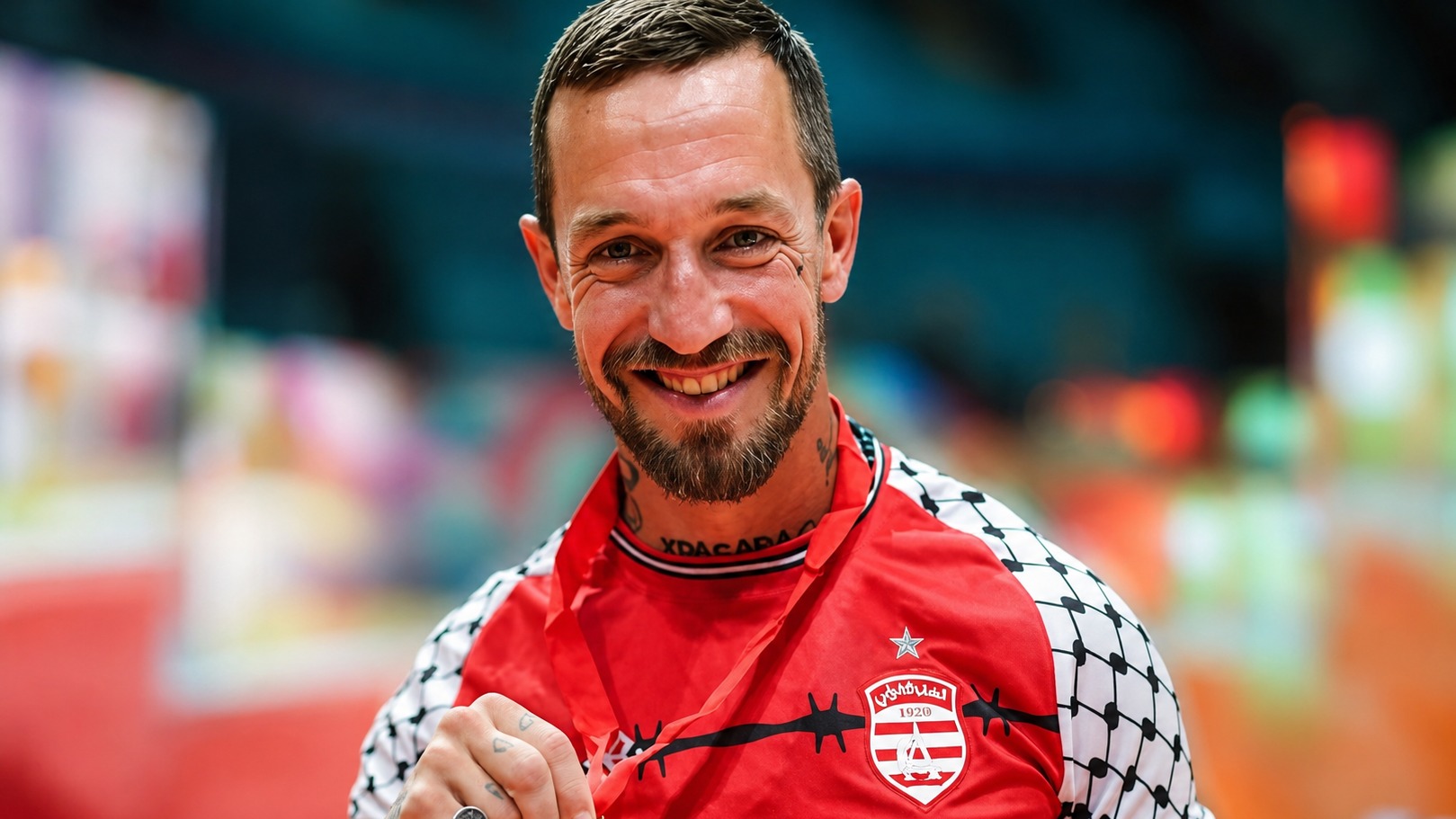
The Spanish government has ignited widespread domestic and international criticism after opting not to block a U.S. extradition request for high-profile American pro-Palestine activist and humanitarian donor Fergie Chambers at the preliminary review stage, clearing the way for the case to advance to the Spanish national court system. Government spokesperson Elma Saiz framed the Tuesday ruling as a strictly procedural step, emphasizing that the executive branch only completed a formal review of the extradition filing rather than a substantive judgment on its merits. Now, Chambers’ legal team will mount a challenge to the extradition before Spain’s Audiencia Nacional, after which the Spanish government will issue a final binding decision on the case. Lead defense counsel Baltasar Garzón — the former Spanish judge renowned for pursuing former Chilean dictator Augusto Pinochet under the doctrine of universal jurisdiction — warned that the government’s decision establishes a dangerous precedent that undermines global advocacy for Palestinian rights. Garzón argued that Spain cannot credibly claim to uphold international law, defend Palestinian people’s rights, and protect humanitarian workers while advancing an extradition request that bears clear hallmarks of political persecution by the U.S. government. The ruling has also drawn sharp condemnation from across Spanish political circles. Ione Belarra, member of Spain’s Congress of Deputies and secretary-general of the left-wing party Podemos, called the outcome devastating for all those who support Palestinian statehood. “This decision is devastating not just for Fergie Chambers and his family, but for the pro-Palestine movement in Spain and across Europe,” Belarra stated. She went on to label Chambers as the first political prisoner in Spanish history held solely for his advocacy for Palestine, accusing Prime Minister Pedro Sánchez’s government of electing to keep him in detention to advance what she called the Trump administration’s politically motivated persecution. Chambers, an heir to the prominent Cox family fortune, was first arrested on the Spanish holiday island of Ibiza this past July in compliance with the U.S. extradition request. U.S. federal prosecutors have charged him with international money laundering, riot, and conspiracy to riot, alleging that after relocating from the U.S. in 2023, he moved roughly $7.5 million out of the country with the intention of providing material support to Hamas. As of press time, the U.S. Department of Justice has not issued any response to requests for comment on the case. Prior to Tuesday’s government ruling, Chambers’ legal team submitted a formal argument calling on the executive to block the extradition entirely, pointing to what they described as undeniable political motivations driving the U.S. request. The defense outlined three core legal objections: first, that allowing the case to proceed would enable the political persecution of Chambers; second, that U.S. prosecutors have failed to link Chambers personally to any specific acts of violence or property damage, and the charge of “conspiracy to riot” has no equivalent offense under Spanish criminal law; and third, that the money laundering allegation is baseless, as all of Chambers’ wealth was legally obtained through his family inheritance and fully documented. Stella Schnabel, Chambers’ partner, called the decision deeply alarming, arguing it sends a message that pro-Palestine solidarity can be criminalized even in Europe. “This sends a deeply disturbing message that even in Spain, solidarity with the Palestinian people could be treated as a crime, and risks extending the Trump administration’s repression of pro-Palestine and progressive movements into Europe, setting a dangerous precedent for others,” Schnabel said. She also shared the emotional toll of the ruling, saying she is heartbroken that Chambers will remain behind bars, where he can only meet his children through a glass partition and cannot hold his young son or their unborn child due in the near future. Beyond his political advocacy, Chambers has carried out extensive humanitarian work in Gaza. He provided a $100,000 grant to the Zaynab Project, which expands long-term mental health and psychosocial support for orphaned children in Gaza, connecting vulnerable youth to licensed therapists and ongoing counseling. He also donated $250,000 to the Sameer Project, a Gaza-based humanitarian organization that used the funding to build a bakery in northern Gaza, complete a desalination plant to provide clean drinking water, and operate a free medical clinic for local residents. After Chambers’ arrest in July, the charity paused all its operations, a move that has impacted tens of thousands of vulnerable Palestinians who rely on its services. Ahead of the government’s decision, 150 high-profile global public figures signed an open letter urging the Spanish government to reject the U.S. extradition request as an act of political persecution orchestrated by the Trump administration. Signatories included prominent Palestinian writer Mohammed el-Kurd, veteran civil rights campaigner Angela Davis, musicians Bob Vylan and Lowkey, and actors Riz Ahmed and Richard Gere. The letter condemned what it called the Trump administration’s unprecedented crackdown on individuals and organizations working to oppose what they described as genocide in Gaza and uphold international law, noting that Chambers has dedicated his life to supporting marginalized and vulnerable communities around the world. Last week, public protests in support of Chambers were held in six major Spanish cities, including Madrid, Barcelona, Murcia, Seville, and Galicia, drawing hundreds of pro-Palestine demonstrators who called for the Spanish government to reject the extradition request entirely. The controversial ruling comes at a moment of significant political upheaval for Spain, and amid already strained bilateral relations between Madrid and Washington. Spain is scheduled to hold a general election by 2027, and Sánchez’s minority coalition government faces pressure from multiple directions: left-wing parties have criticized the ruling as a betrayal of pro-Palestine values, while the conservative Popular Party and far-right Vox — both of which hold strongly pro-Israel positions — have pushed the government to comply with the U.S. request. Sánchez has already clashed repeatedly with U.S. President Donald Trump this year, most prominently over the ongoing war in Iran: his government refused to allow the U.S. to use Spanish military bases in Rota and Morón for operations linked to the conflict, and later barred U.S. military aircraft involved in the war from entering Spanish airspace.