博客

  • Novel plant-derived protein puts insect-resistant ‘armor’ on crops

    Novel plant-derived protein puts insect-resistant ‘armor’ on crops

    BEIJING – A groundbreaking naturally occurring insecticidal protein sourced from common plants is transitioning from lab discovery to large-scale agricultural application, marking a major milestone in China’s homegrown crop protection technology, according to a recent report from Science and Technology Daily.

    Discovered and developed by the Institute of Cotton Research (ICR) under the Chinese Academy of Agricultural Sciences, the new protein, named iJAZ, offers a fully independent and controllable new pathway for breeding insect-resistant staple crops. To accelerate commercial rollout of the innovation, ICR has entered into a collaborative development agreement with Guangxi Tianyuan Biochemistry Co., Ltd. The partnership will focus on integrating the iJAZ technology into insect-resistant breeding programs for four high-value major crops: cotton, soybean, eucalyptus, and sugarcane, with the goal of making the novel insect-resistant approach widely accessible to global agriculture.

    Unlike many synthetic or engineered insecticidal traits, iJAZ occurs naturally in a range of everyday plant species, including cotton, pumpkin, and durian. What sets the protein apart from the current industry standard, Bacillus thuringiensis (Bt) insecticidal protein, is its completely unique mechanism of action and structural characteristics. Unlike Bt proteins that are constitutively expressed in modified crop tissues, iJAZ remains inactive in plant cells under normal, undamaged conditions. Only when targeted chewing pests begin feeding on plant leaves and causing tissue damage does the protein activate: it then specifically identifies and binds tightly to unique receptor sites found only in the pests’ digestive tracts, triggering its potent lethal effect.

    Independent research data from ICR’s trials confirms the protein’s extraordinary efficacy: it achieves a 99.33 percent resistance rate against cotton bollworm larvae, one of the most destructive and costly pests for global cotton production. Structurally, iJAZ is just one-tenth the molecular size of conventional Bt proteins, a key advantage that allows both iJAZ and Bt proteins to be stacked in the same crop variety. This combined application provides a long-sought solution to one of the most pressing challenges facing modern agricultural biotechnology: the widespread degradation of Bt protein efficacy as pests develop cross-resistance over decades of widespread use.

    To complement the discovery of iJAZ, ICR researchers have also developed a cutting-edge high-efficiency genetic transformation system designed to streamline the integration of the iJAZ trait into elite commercial crop varieties. The new system leverages direct shoot regeneration from the apical stem cells of seeds, cutting the traditional transformation cycle dramatically: what previously took between 6 and 8 months to complete now only requires 2 to 3 months. Even more significantly, the new system overcomes the long-standing genotype barrier that has limited the speed of crop breeding, allowing scientists to directly add insect-resistant protection to existing top-performing commercial varieties rather than breeding new varieties from scratch. This tailored approach drastically accelerates the development and release of new insect-resistant crop varieties for farmers.

    To date, the combined iJAZ and transformation technology system has already been successfully adapted and tested across a diverse range of additional crop species, including peanut, cucumber, and cowpea, demonstrating its broad applicability to global agricultural production.


  • Vietnam’s top leader To Lam arrives in Beijing for state visit

    Vietnam’s top leader To Lam arrives in Beijing for state visit

    BEIJING, April 14 — Vietnam’s highest-ranking leader, To Lam, who holds dual positions as General Secretary of the Communist Party of Vietnam Central Committee and President of the Socialist Republic of Vietnam, touched down in Beijing on Tuesday, kicking off a scheduled four-day state visit to China that will run through Friday.

    A notable detail surrounding this diplomatic trip underscores its strategic importance: this state visit marks To Lam’s first official overseas stop since he was formally elected to the Vietnamese presidency in a recent vote. For decades, China and Vietnam have maintained comprehensive strategic cooperative partnership, with close cooperation spanning trade, cross-border infrastructure, regional security, and people-to-people exchanges. This high-profile visit is widely expected to create new opportunities to strengthen bilateral dialogue, deepen collaborative efforts on shared regional and global priorities, and advance the long-term stable development of China-Vietnam relations.

  • Livestream tipping services to be regulated

    Livestream tipping services to be regulated

    In a landmark move to rein in unregulated commercial practices within the fast-growing online livestreaming industry, China’s top cyber governance authority has unveiled a comprehensive set of new regulations targeting livestream tipping services, with a particular focus on strengthening safeguards for underage users. The 11-point regulatory framework, released on April 14, 2026 by the Office of the Central Cyberspace Affairs Commission, aims to bring greater transparency and accountability to profit-driven livestreaming activities while addressing growing public concerns over excessive spending and exploitative practices.

  • New vlog of Shenzhou XXI crew details advanced in-orbit medical experiments

    New vlog of Shenzhou XXI crew details advanced in-orbit medical experiments

    Nearly six months into their historic stay aboard China’s Tiangong space station, the three-person Shenzhou XXI crew has opened a window into their daily orbital work through a newly released video diary, putting a spotlight on the groundbreaking aerospace medical experiments they are conducting to advance human long-duration spaceflight knowledge.

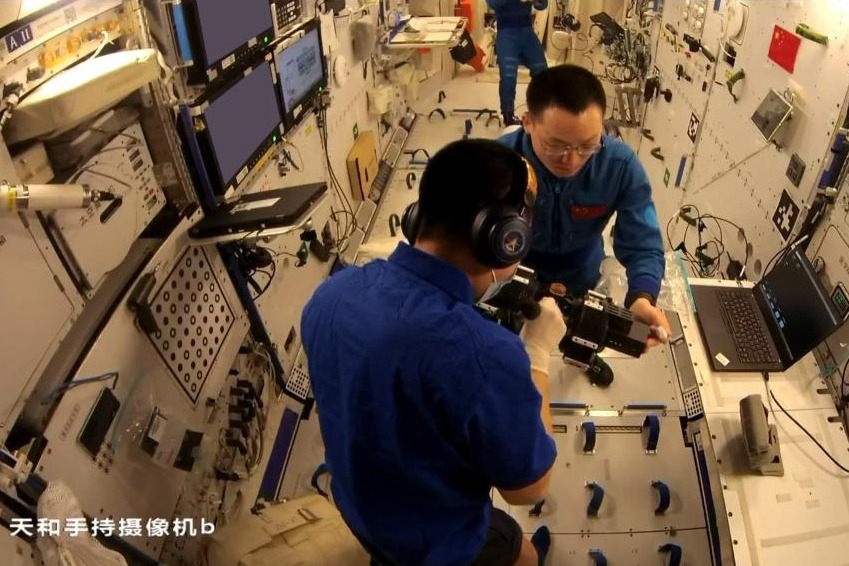
    Released Sunday by the China Manned Space Agency (CMSA), the vlog follows astronauts Zhang Lu, Wu Fei and Zhang Hongzhang as they move smoothly between specialized research racks aboard the orbiting outpost. Clad in standard blue short-sleeved mission polos, the crew demonstrates practiced precision as they handle biological samples, calibrate research hardware, and tick off a packed schedule of experimental and maintenance tasks. Per CMSA’s latest update, all three crew members remain in excellent physical shape, maintaining sharp coordination and steady motivation more than five months into their mission.

    The core focus of the work highlighted in the vlog centers on advancing understanding of how long-duration exposure to microgravity and isolated space conditions impacts human bodily function and performance. To this end, the crew has already completed a battery of cognitive function assessments and emergency decision-making drills, data from which will fill critical gaps in current research on human adaptation to extended space travel.

    One of the most notable experiments showcased in the diary sees the crew using a specialized space-grade Raman spectrometer to analyze metabolic components in urine samples. The insights gathered from this work will allow scientists to refine existing metabolic indicator frameworks and health evaluation standards for astronauts on future long-duration missions. The team also collected and cryogenically preserved saliva samples, which will be transported back to Earth for ground-based analysis of gut flora and digestive system changes in microgravity.

    Following experimental protocols, the crew also successfully drew and processed blood samples for three key lines of research: bone metabolism regulation, integrative omics, and the impact of spaceflight on circadian sleep rhythms. After processing the samples with a specialized on-orbit centrifuge, the specimens were stored securely to await return to Earth for further study.

    Beyond medical research, the crew also continued progress on microgravity physical science experiments during the period covered by the vlog. Tasks completed included replacing research samples in the orbiting laboratory’s fluid physics experiment cabinet, swapping out burners and gas cylinders in the combustion science module, and cleaning research materials from the containerless experimental chamber. When off-duty, the astronauts stick to a structured health maintenance routine, with the vlog capturing them working out on the station’s treadmill and using resistance bands to counteract the muscle and bone density loss associated with long-term microgravity exposure.

    The Shenzhou XXI mission launched on October 31, 2025, from the Jiuquan Satellite Launch Center in northwestern China. To date, the crew has completed two planned extravehicular activity sessions: the first in December 2025, and the second in mid-March 2026, marking steady progress across all mission objectives.

  • Digital tide drives trade, tourism in rural Gansu

    Digital tide drives trade, tourism in rural Gansu

    Nestled across the arid Loess Plateau of Northwest China, Gansu’s rural communities have long relied on traditional agriculture and small-scale local trade to make a living. Today, a sweeping digital revolution is rewriting this narrative, turning remote villages into connected commercial hubs and breathing new life into local economies through the dual engines of e-commerce and cultural tourism.

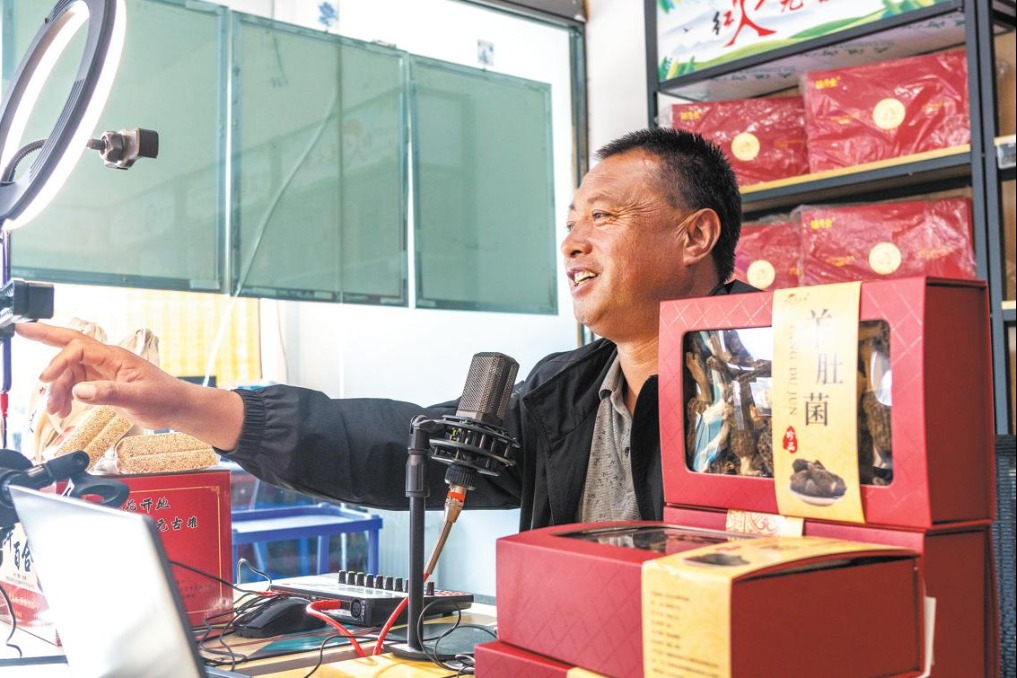
    Where farmers once spent early spring only tuning plows and preparing seedbeds, many now split their days between field work and digital content creation. Local producers are mastering new tools: adjusting ring lights for clearer livestream feeds, stabilizing smartphone gimbals to capture sweeping views of the plateau, and speaking to tens of thousands of online customers in their native regional dialects. Women in rural courtyards promote hand-brewed vinegar and crispy traditional fried snacks, while young entrepreneurs trek into rolling fields to stream the plateau’s changing seasons to a global audience.

    One standout example of this shift is Tangqi Village, located in Qingyang City, where a government-backed assistance e-commerce studio has become a local community hub. Village officials have reinvented themselves as livestream hosts, using short-form videos and real-time streaming to showcase homegrown grains, fresh fruits and artisanal snacks to buyers across China. In just 10 days after launching, the studio recorded total sales exceeding 110,000 yuan ($16,016). Today, even 70-year-old villagers bring hand-harvested eggs and sun-dried goods to the studio, accessing national consumer markets without ever leaving their home community. Local data confirms that 135 households in Tangqi have already secured direct income gains from this digital e-commerce model.

    Deep in the Gansu hills, tiny Zhuangzimao hamlet—home to only 22 households—has taken this digital transformation even further. The community established an ecological farm in 2020, and every household now participates in livestreamed commerce. Some farmers demonstrate traditional soy milk grinding and fresh tofu making in real time, while others showcase the process of brewing aromatic yellow rice wine or sun-drying chili peppers into fine powder. Last year alone, Zhuangzimao’s total sales of local specialties surpassed 3 million yuan, with more than half of the village’s households recording annual incomes above 100,000 yuan. Beyond online sales, the village has leveraged its authentic portrayal of rural life online to draw offline tourists.

    Individual local entrepreneurs have also reaped the benefits of digital adoption. In Yangpo Village, Dingxi City, resident Zhou Jingang turned his small family courtyard into a standardized workshop for hand-made potato noodles, a beloved local staple. By building a following on mainstream social media and e-commerce platforms, he has scaled production to 1 metric ton of noodles per day, and now earns 100,000 yuan in annual net income.

    Unlike early rural digital projects that focused solely on direct product sales, Gansu’s current rural development strategy leverages the global consumer demand for authentic rural nostalgia, integrating agriculture, cultural heritage and tourism into a single sustainable growth model. Zhuangzimao’s success, in particular, stems from its commitment to preserving the unpolished, genuine character of traditional village life: residents still plaster walls with local mud and pave courtyards with reclaimed old tiles, leaning into this authenticity to win over online audiences.

    A typical livestream from the village captures this vibe perfectly: “It’s New Year! We’re using a big iron pot and a wood-fired stove to fry traditional dough snacks today,” a local villager says to her camera, surrounded by neighbors dressed in traditional red headscarves and floral aprons. This unscripted, unvarnished depiction of daily rural life has turned online engagement into tangible offline income. Once a remote, little-known hamlet, Zhuangzimao is now a national 3A-level tourist attraction. Last year, it hosted 150,000 domestic visitors, ranging from school study groups to landscape photography enthusiasts, who fill village courtyards to experience authentic home-cooked farm meals first-hand.

    Provincial data underscores the scale of this transformation across Gansu. According to the provincial department of culture and tourism, the region’s rural tourism sector recorded 657 million visitor trips between 2021 and 2025—the 14th Five-Year Plan period—generating total revenue of 201.54 billion yuan.

    Experts note that this shift marks more than just an adoption of new technology: it represents a fundamental change in rural development philosophy. “The core of this strategic support is cultivating a new generation of ‘new farmers’ who understand both the cultural resonance of rural life and modern digital business tools,” explained Mao Jinhuang, an economics professor at Lanzhou University. “This transition from selling agricultural products to selling rural scenery, authentic culture and immersive experiences is a profound shift in how rural communities approach development.”

    To address gaps in digital skills among rural residents, the Gansu provincial government launched intensive targeted training programs in 2025, designed for entrepreneurs returning to rural areas after working in cities. The curricula cover practical skills including e-commerce platform operations, local brand building, and access to small business financing. As digital technology continues to reshape Gansu’s rural economic landscape, Professor Mao emphasizes that nurturing cross-skilled local talent to bridge traditional rural heritage and modern entrepreneurial tools remains the key to sustaining long-term, inclusive growth across the region.

  • New rules aim to spice up Chongqing hotpot sector

    New rules aim to spice up Chongqing hotpot sector

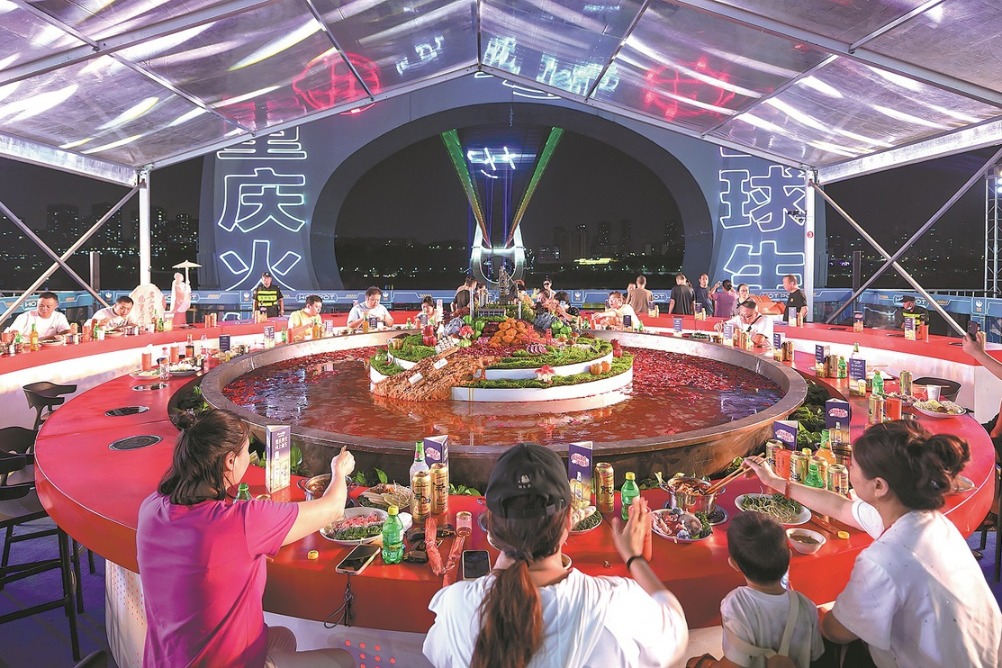
    China’s culinary and economic hub Chongqing is preparing to usher in a new era for its world-famous hotpot sector, as the first-of-its-kind *Chongqing Hotpot Industry Development Promotion Regulations* are set to take effect on May 1. This landmark legislation is designed to standardize fast-growing industry practices, fuel long-term growth, and cement Chongqing’s global reputation as the undisputed “Hotpot Capital of the World”.

    A groundbreaking provision of the new rules enshrines Chongqing hotpot in legal definition for the first time, explicitly recognizing its unique regional origins and distinctive cooking techniques that deliver its signature blend of spicy, mouth-numbing, fresh, and aromatic flavors. According to Lou Zhenxin, director of the Legislative Affairs Office of the Chongqing Municipal People’s Congress Standing Committee — the body that approved the regulations in late March — the legal framework does more than set operating guidelines: it establishes a clear, protected brand identity for Chongqing hotpot and elevates its importance as both a regional cultural asset and a core economic pillar.

    The history of Chongqing hotpot stretches back more than a century to working-class roots. While the broader hotpot tradition spread across China during the Tang Dynasty (618–907 CE) and gained nationwide popularity by the Qing Dynasty (1644–1911 CE), the modern Chongqing style emerged in the late 1800s, when river port porters began simmering affordable leftover offal in bold chili oil and local herbs. The dish moved from street stalls to formal commercial establishments in the 1930s, when the Ma brothers opened Chongqing’s first dedicated hotpot restaurant, Maji Laozhengxing. Today, the Chongqing style is the global gold standard for spicy hotpot: the China Cuisine Association named Chongqing the nation’s official “Hotpot City” back in 2007, recognizing its unmatched concentration of top-rated hotpot establishments.

    For the local economy, the hotpot sector is far more than a tourist attraction — it is a foundational growth engine. Latest data from the Chongqing Hotpot Association shows that by 2025, the city was home to nearly 20,000 hotpot enterprises operating close to 40,000 restaurants across Chongqing. Nationwide, roughly one in three of China’s more than 500,000 hotpot restaurants trace their brand and heritage to Chongqing, and Chongqing-style hotpot outlets have expanded to more than 50 countries and 200 regions across the globe. In 2025 alone, the industry’s total output hit 360 billion yuan (equivalent to roughly $52.7 billion), accounting for 11.6% of Chongqing’s total annual GDP and supporting more than 1 million direct and indirect jobs. Back in 2023, the city formally integrated the hotpot ingredients segment into its official modern manufacturing cluster strategy, highlighting its outsize role in regional food processing and agricultural development.

    Even with this explosive growth, the sector has faced growing pains that threatened its long-term viability: inconsistent quality across operators, a lack of unified industry standards, and stagnant product innovation have held back scalable, sustainable expansion. To address these gaps, the Chongqing Hotpot Association began laying the groundwork for legislation back in 2022, conducting industry-wide research and translating on-the-ground needs from small restaurant owners and large manufacturers alike into the formal legal framework now set to take effect.

    “The core mission of these regulations is to clear the bottlenecks holding back industry growth through legal mechanisms, and push the sector toward transformation into a standardized, scalable, high-quality industry,” explained Pan Ling, deputy secretary of the Chongqing Hotpot Association. Pan added that the rules also set a precedent for food industry regulation across China, integrating cultural preservation and brand building alongside economic development. The regulations support the creation of iconic hotpot-focused cultural infrastructure, including dedicated hotpot food streets, a hotpot-themed museum, and annual industry events such as hotpot culture festivals and trade expos. It also prioritizes the preservation of traditional cooking techniques by supporting their inclusion on national and local intangible cultural heritage lists.

    To strengthen the entire supply chain, the regulations call for the development of specialized production bases, wholesale markets, and national consumption hubs, while incentivizing technological innovation in key areas such as seasoning manufacturing, soup base preservation, and cold-chain logistics. For global expansion, the rules encourage local businesses to build overseas ingredient storage facilities, open international chain locations, and develop cross-border e-commerce channels, pairing product exports with targeted cultural outreach to grow global recognition of the Chongqing hotpot brand.

    In addition to the new legal framework, Chongqing has led national efforts to develop unified standards for the hotpot sector over recent years. Existing standards already cover professional skill requirements for hotpot chefs and evaluation systems for master chefs and restaurant managers, while work is ongoing to finalize national standards for hotpot soup base products and consistent grading systems for spiciness and numbing flavor. A comprehensive national talent training and certification system is also outlined in the new regulations to ensure a skilled workforce for the growing sector.

  • Observers in Taiwan say KMT leader’s mainland visit fruitful

    Observers in Taiwan say KMT leader’s mainland visit fruitful

    TAIPEI, April 14, 2026 – Six days after concluding a landmark visit to the Chinese mainland, Kuomintang (KMT) chairperson Cheng Li-wun and her delegation touched back down in Taiwan over the weekend, with cross-Strait observers across the island unanimous in hailing the trip as a productive breakthrough for bilateral ties and shared economic opportunity.

    The visit marked the first time in 10 years that a sitting KMT chairperson has led a party delegation to the mainland, a moment that carries profound weight for future interactions across the Taiwan Strait. The delegation followed a packed schedule across three major mainland regions: Jiangsu province, Shanghai, and Beijing, where they paid respects at the mausoleum of Sun Yat-sen, the founding father of modern China and a revered figure for the KMT, and toured key economic and industrial sites including Yangshan Port, one of the world’s busiest container shipping hubs, and an automated automobile manufacturing facility operated by Chinese tech giant Xiaomi.

    Local scholars and cross-Strait policy analysts point out that the engagement between the Communist Party of China (CPC) and the KMT, rooted in the shared commitment to the 1992 Consensus and opposition to Taiwan independence, has cleared a path for expanded, future-oriented exchanges between the two parties. Yang Kai-huang, a senior researcher at Taipei-based Ming Chuan University, noted that this high-level interaction reopens avenues for collaboration that have been stalled for years, creating new possibilities for constructive dialogue on issues ranging from economic cooperation to people-to-people ties.

    Teng Tai-hsien, secretary general of the Straits Economic & Cultural Interchange Association, emphasized that the delegation’s on-site visits to major mainland economic facilities gave the KMT delegation, and by extension the broader Taiwan public, a firsthand look at the mainland’s rapid development over the past decade. The tour, Teng added, makes clear the enormous untapped potential for mutually beneficial industrial cooperation between the two sides of the Strait.

    Coinciding with the KMT delegation’s return, the Taiwan Work Office of the CPC Central Committee announced a sweeping new package of 10 policies and measures designed to expand and strengthen cross-Strait exchanges and cooperation. The policy package includes provisions to fully resume regular direct passenger flights across the Strait, restart the individual travel scheme for mainland residents from Shanghai and Fujian to visit Taiwan, and streamline entry approval procedures for qualified Taiwan food manufacturers to export their products to the mainland market.

    Speaking to reporters shortly after her arrival in Taipei, Cheng emphasized that her core goal for the visit was to help the Taiwan public see the tangible benefits of peaceful cross-Strait development, a outcome that she says the visit has helped advance.

    You Chih-pin, deputy secretary general of Taiwan’s New Party, pointed out that the new policy package will not only open up high-quality employment opportunities for Taiwan’s young people, but also deliver direct, widespread benefits to key sectors of Taiwan’s economy including agriculture, fisheries, and tourism.

    Among Taiwanese industry groups, the island’s tourism sector has emerged as one of the most enthusiastic supporters of the new policy measures, particularly the plan to resume individual travel from the mainland. From 2011, when the individual travel pilot program was first launched, to 2019, when it was suspended amid escalating cross-Strait tensions under the ruling Democratic Progressive Party (DPP), mainland independent travelers formed the backbone of Taiwan’s tourism industry, supporting hundreds of thousands of jobs across the island.

    Ringo Lee, chairman of Taiwan’s High Quality of Travel Association, said the new policy reflects the mainland’s sincere goodwill toward the Taiwan people and will inject much-needed new momentum into Taiwan’s struggling tourism sector. Lee called on the DPP-led Taiwan authorities to prioritize the interests of the island’s economy and public livelihood, and heed the growing calls from industry and ordinary citizens to support cross-Strait exchanges.

    Tang Yu-shu, former head of the tourism department for Hualien County, an eastern Taiwan destination that relies heavily on visitor spending, echoed Lee’s remarks. Tang emphasized that local communities across Taiwan are eagerly awaiting the full implementation of these favorable policies, and urged the DPP administration to step aside and avoid creating unnecessary obstacles to progress that would benefit all Taiwan residents.

  • Vote counting underway in Benin’s presidential polls

    Vote counting underway in Benin’s presidential polls

    COTONOU, Benin – Hours after polling stations closed across the West African nation of Benin on Sunday, election officials have begun tallying ballots for the first round of the country’s 2026 presidential election, according to on-the-ground observations from Xinhua News Agency in Cotonou, Benin’s economic hub.

    All 16,000+ polling stations opened punctually at 7 a.m. local time and wrapped up voting operations by 4 p.m., triggering the immediate start of the counting process as outlined in Benin’s electoral regulations. Sacca Lafia, president of Benin’s Autonomous National Electoral Commission (ANEC), the independent body overseeing the nation’s elections, confirmed that preliminary general results trends will be released to the public within 48 hours of polling station closure.

    Nearly 7.9 million registered voters were eligible to cast ballots in this election, which will select a new head of state to succeed outgoing President Patrice Talon, whose five-year term is set to conclude on May 23. Under Benin’s constitution, the president and vice president are elected via direct universal suffrage to serve a single seven-year term.

    Just two candidate tickets are contesting the top office this cycle. The ruling coalition’s ticket is led by incumbent Finance Minister Romuald Wadagni, with running mate Mariam Chabi Talata, the current vice president of Benin’s National Assembly. Challenging them is the opposition ticket from Cowry Forces for an Emerging Benin, headlined by party leader Paul Hounkpe and his running mate Rock Hounwanou.

    Wadagni has centered his campaign on his track record over the past decade leading Benin’s finance ministry, highlighting the country’s consistent economic expansion under his oversight. Benin posted 7% gross domestic product growth in 2025, cementing its position as one of West Africa’s most stable and high-performing economies. If no candidate earns an absolute majority of valid votes in Sunday’s first round, a runoff election between the top two finishers will be held on May 10.

    Reports from polling stations across Cotonou and its surrounding suburbs, visited by Xinhua correspondents, confirm that voting proceeded without major incidents, unfolding smoothly and peacefully across all monitored sites. Armand Bognon, a representative of a local civil society observer platform that deployed 1,721 independent observers nationwide – 1,200 assigned to fixed polling posts and 521 mobile monitors to cross-check multiple locations – confirmed that voting operations launched on time across every region of the country.

    While the process remained orderly, voter turnout was relatively low through the morning and midday hours, with many voters arriving later in the day than expected. Multiple polling stations reported moderate attendance throughout the day, with a number of electors opting to attend Sunday religious services before casting their ballots.

    Outgoing President Talon cast his own vote at a Cotonou polling station, and spoke to reporters after voting, expressing broad satisfaction with the calm, collaborative atmosphere that marked the election. “Since late last year, we have completed a full cycle of electoral processes to renew the country’s political leadership across legislative, municipal and now presidential levels,” Talon said. “What I have observed is not just an extraordinary atmosphere, but one marked by fraternity and conviviality.”

    He added, “This gives us confidence that Benin is evolving and reaching a new stage in its history. Whoever wins this election will take the country even further. For me, the best is yet to come for Benin.”

  • Hong Kong to ban public possession of alternative smoking products

    Hong Kong to ban public possession of alternative smoking products

    HONG KONG – The Hong Kong Special Administrative Region (HKSAR) government has announced a sweeping new regulation that will criminalize the public possession and use of alternative smoking products across the territory, imposing stiff fines and potential prison time for violations starting at the end of this month.

    Under the new rule, both local residents and visitors found carrying or using banned alternative smoking items – which include electronic cigarettes, e-liquid cartridges, and herbal cigarettes – in public spaces will face legal consequences. Penalties for offenders reach up to 50,000 Hong Kong dollars, equivalent to approximately 6,384 U.S. dollars, and can include a maximum six-month prison sentence.

    Unlike many new regulatory rollouts that include a grace period for public adaptation, the ban will take full effect immediately on April 30 with no transition period. Enforcement will follow a strict “one strike you’re out” framework, meaning violations will result in immediate penalties regardless of whether it is a first offense.

    This ban represents the next phased implementation of the Tobacco Control Legislation (Amendment) Ordinance 2025, which was formally gazetted by the HKSAR government in September 2024. The territory is continuing its broader push to strengthen public health through strict tobacco control measures, with two additional key policies already scheduled for rollout in the near future: a mandatory duty stamp system for all traditional cigarettes, and a full ban on flavored conventional tobacco products.

    The series of regulatory updates underscores the HKSAR government’s commitment to reducing tobacco-related public health risks and curbing the growing popularity of alternative smoking products among local populations, particularly youth.

  • Indian national charged with sexually assaulting woman on Perth flight

    Indian national charged with sexually assaulting woman on Perth flight

    A shocking alleged sexual assault on an international commercial flight bound for Perth has led to criminal charges against a 52-year-old Indian national, highlighting law enforcement’s zero-tolerance approach to in-air criminal activity. The incident unfolded on Monday aboard Scoot Airlines flight TR16, which was traveling from Singapore to Perth, with the accused sitting immediately adjacent to his alleged female victim, according to joint investigative statements from the Australian Federal Police (AFP) and Western Australia Police.

    Within minutes of the non-consensual sexual acts occurring, the victim reached out to the flight’s cabin crew for help. Staff responded quickly by moving the woman to an alternate, safer seat and kept the suspect under constant observation for the remainder of the flight, pre-planning with law enforcement before landing. As soon as the aircraft touched down at Perth Airport, uniformed AFP officers escorted the man off the plane and took him into custody.

    Local Western Australian publication *The West Australian* has publicly identified the accused as Sudhir Kumar Chahuan. He made his first court appearance on Tuesday, where he was formally remanded in custody. He is scheduled to make another court appearance this coming Friday to advance his case.

    Chahuan faces four total criminal charges: one count of sexual intercourse without consent, and three additional counts of indecent acts committed without the victim’s consent. Under Australian criminal law, the most severe charge alone carries a maximum penalty of 12 years of imprisonment if he is convicted.

    In an official statement released to the press following the arrest, AFP Acting Superintendent Peter Brindal emphasized that federal law enforcement maintains an uncompromising stance on any criminal behavior that occurs on aircraft or within Australian airport boundaries. “Every passenger has the right to feel safe when travelling, especially when confined in an aircraft close to other passengers,” Brindal said.

    The acting superintendent also issued clear guidance for other passengers who may find themselves in similar situations, urging anyone who experiences unwanted sexual contact to reach out to authorities — whether that be airline crew, AFP officers, or airport security — as soon as it is safe to do so. “No act of indecency on an aircraft or at an airport is appropriate, and any travellers who break the law will be dealt with swiftly,” Brindal added.

    At present, the investigation into the alleged incident is being conducted as a joint operation between the Australian Federal Police and Western Australia Police’s specialized sex assault squad, with both agencies working to build a full case ahead of Chahuan’s upcoming court appearance.