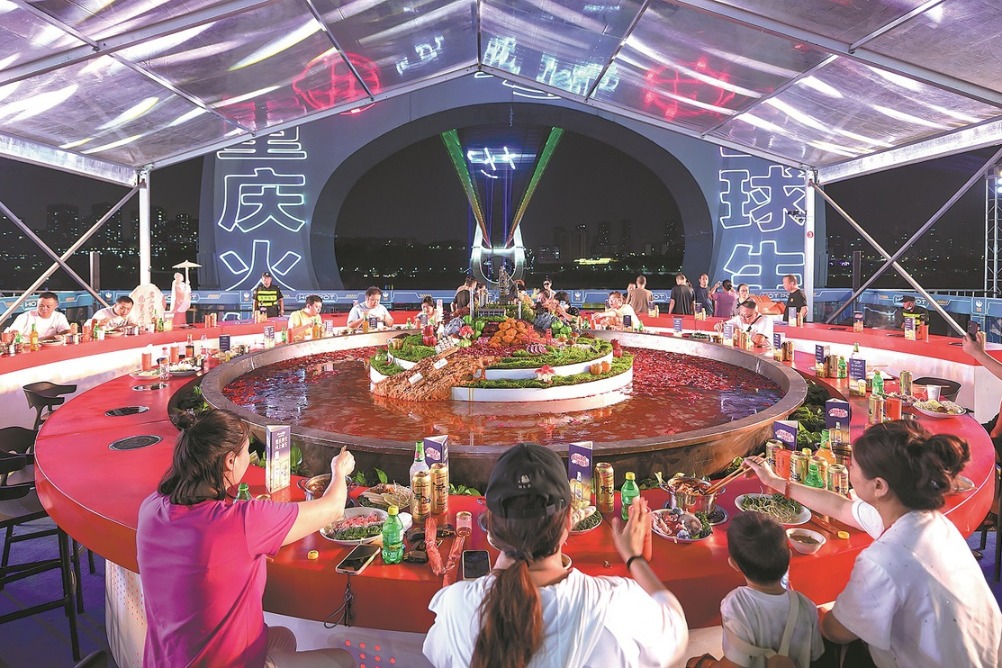
China’s culinary and economic hub Chongqing is preparing to usher in a new era for its world-famous hotpot sector, as the first-of-its-kind *Chongqing Hotpot Industry Development Promotion Regulations* are set to take effect on May 1. This landmark legislation is designed to standardize fast-growing industry practices, fuel long-term growth, and cement Chongqing’s global reputation as the undisputed “Hotpot Capital of the World”.
A groundbreaking provision of the new rules enshrines Chongqing hotpot in legal definition for the first time, explicitly recognizing its unique regional origins and distinctive cooking techniques that deliver its signature blend of spicy, mouth-numbing, fresh, and aromatic flavors. According to Lou Zhenxin, director of the Legislative Affairs Office of the Chongqing Municipal People’s Congress Standing Committee — the body that approved the regulations in late March — the legal framework does more than set operating guidelines: it establishes a clear, protected brand identity for Chongqing hotpot and elevates its importance as both a regional cultural asset and a core economic pillar.
The history of Chongqing hotpot stretches back more than a century to working-class roots. While the broader hotpot tradition spread across China during the Tang Dynasty (618–907 CE) and gained nationwide popularity by the Qing Dynasty (1644–1911 CE), the modern Chongqing style emerged in the late 1800s, when river port porters began simmering affordable leftover offal in bold chili oil and local herbs. The dish moved from street stalls to formal commercial establishments in the 1930s, when the Ma brothers opened Chongqing’s first dedicated hotpot restaurant, Maji Laozhengxing. Today, the Chongqing style is the global gold standard for spicy hotpot: the China Cuisine Association named Chongqing the nation’s official “Hotpot City” back in 2007, recognizing its unmatched concentration of top-rated hotpot establishments.
For the local economy, the hotpot sector is far more than a tourist attraction — it is a foundational growth engine. Latest data from the Chongqing Hotpot Association shows that by 2025, the city was home to nearly 20,000 hotpot enterprises operating close to 40,000 restaurants across Chongqing. Nationwide, roughly one in three of China’s more than 500,000 hotpot restaurants trace their brand and heritage to Chongqing, and Chongqing-style hotpot outlets have expanded to more than 50 countries and 200 regions across the globe. In 2025 alone, the industry’s total output hit 360 billion yuan (equivalent to roughly $52.7 billion), accounting for 11.6% of Chongqing’s total annual GDP and supporting more than 1 million direct and indirect jobs. Back in 2023, the city formally integrated the hotpot ingredients segment into its official modern manufacturing cluster strategy, highlighting its outsize role in regional food processing and agricultural development.
Even with this explosive growth, the sector has faced growing pains that threatened its long-term viability: inconsistent quality across operators, a lack of unified industry standards, and stagnant product innovation have held back scalable, sustainable expansion. To address these gaps, the Chongqing Hotpot Association began laying the groundwork for legislation back in 2022, conducting industry-wide research and translating on-the-ground needs from small restaurant owners and large manufacturers alike into the formal legal framework now set to take effect.
“The core mission of these regulations is to clear the bottlenecks holding back industry growth through legal mechanisms, and push the sector toward transformation into a standardized, scalable, high-quality industry,” explained Pan Ling, deputy secretary of the Chongqing Hotpot Association. Pan added that the rules also set a precedent for food industry regulation across China, integrating cultural preservation and brand building alongside economic development. The regulations support the creation of iconic hotpot-focused cultural infrastructure, including dedicated hotpot food streets, a hotpot-themed museum, and annual industry events such as hotpot culture festivals and trade expos. It also prioritizes the preservation of traditional cooking techniques by supporting their inclusion on national and local intangible cultural heritage lists.
To strengthen the entire supply chain, the regulations call for the development of specialized production bases, wholesale markets, and national consumption hubs, while incentivizing technological innovation in key areas such as seasoning manufacturing, soup base preservation, and cold-chain logistics. For global expansion, the rules encourage local businesses to build overseas ingredient storage facilities, open international chain locations, and develop cross-border e-commerce channels, pairing product exports with targeted cultural outreach to grow global recognition of the Chongqing hotpot brand.
In addition to the new legal framework, Chongqing has led national efforts to develop unified standards for the hotpot sector over recent years. Existing standards already cover professional skill requirements for hotpot chefs and evaluation systems for master chefs and restaurant managers, while work is ongoing to finalize national standards for hotpot soup base products and consistent grading systems for spiciness and numbing flavor. A comprehensive national talent training and certification system is also outlined in the new regulations to ensure a skilled workforce for the growing sector.