博客

  • French woman, 86, held by ICE after moving to US to reunite with long-lost love

    French woman, 86, held by ICE after moving to US to reunite with long-lost love

    A decades-long romance that defied time and distance has ended in an unexpected and grim turn: an 86-year-old French woman, who moved to the U.S. last year to build a new life with her reconnected 1960s sweetheart, is now being held in an Immigration and Customs Enforcement (ICE) detention facility in Louisiana.

    The story of Marie-Thérèse, a native of Nantes, France, reads like a romantic drama that has shifted into a chilling real-life legal nightmare. Back in the 1960s, she was working as a secretary when she met Billy, an American soldier stationed at a NATO base in Saint-Nazaire. The pair forged a connection, but when Billy was ordered back to the U.S. in 1966, they lost contact completely. Both moved on with their separate lives: they married other partners, raised children, and built families in their respective countries.

    Decades later, in 2010, the former sweethearts reconnected, and began visiting one another regularly, even alongside their respective spouses at the time. By 2022, both had been widowed, and the pair rekindled their old romance. Marie-Thérèse’s son described the couple as being smitten “like teenagers,” calling Billy a “charming, adorable man” who won his mother’s heart. The pair married in 2024, and Marie-Thérèse relocated to Anniston, Alabama, to start her new life, submitting an application for a green card to secure permanent legal residency in the U.S.

    Tragedy struck just months later, in January 2025, when Billy died suddenly. What followed was a bitter dispute over his estate between Marie-Thérèse and her stepson, Billy’s son. According to Marie-Thérèse’s son, who spoke to French newspaper Ouest-France, the stepson launched a campaign of harassment against his mother: he threatened her, intimidated her, and even cut off access to basic utilities including water, electricity and internet at her home.

    Marie-Thérèse retained legal counsel to resolve the inheritance conflict, but she was taken into ICE custody the day before a scheduled court hearing on the matter. Neighbors of the elderly woman alerted her biological children in France after the arrest, and her son has since spoken out to raise awareness of her case.

    He described the arrest to Ouest-France, saying that agents restrained his mother by handcuffing both her hands and feet, treating her “like she was a dangerous criminal.” While there is no concrete evidence linking the stepson’s alleged harassment to the detention, the timing of the arrest has raised serious questions about the circumstances that led to ICE taking an 86-year-old woman with chronic health conditions into custody.

    Currently, the French Ministry of Foreign Affairs has intervened in the case, and consular officials have already visited Marie-Thérèse in detention. Her son says despite her advanced age and pre-existing health conditions including heart disease and chronic back pain, his mother, who he describes as a “fighter,” is holding up as well as can be expected. Still, he warns that her health cannot tolerate the conditions of detention long-term.

    “Our priority is to get her out of this detention center and repatriate her to France,” he said. “Given her health, she won’t last a month in such conditions of detention.”

    This case comes amid a major expansion of ICE’s authority and operations following the start of Donald Trump’s second presidential term. The agency has been placed at the center of the administration’s aggressive mass deportation policy, with its budget and enforcement mandate significantly expanded to carry out removals of undocumented immigrants across the country.

    For Marie-Thérèse’s family, the entire ordeal feels surreal. “This story was like a bad American film,” her son said. “Every morning I wake up and tell myself none of it is true, that it was just a nightmare.”

    As of reporting, the BBC has reached out to the U.S. Department of Homeland Security, which oversees ICE, to request comment on the case, and has not yet received a response.

  • Spain finalizes amnesty measure for up to hundreds of thousands of immigrants

    Spain finalizes amnesty measure for up to hundreds of thousands of immigrants

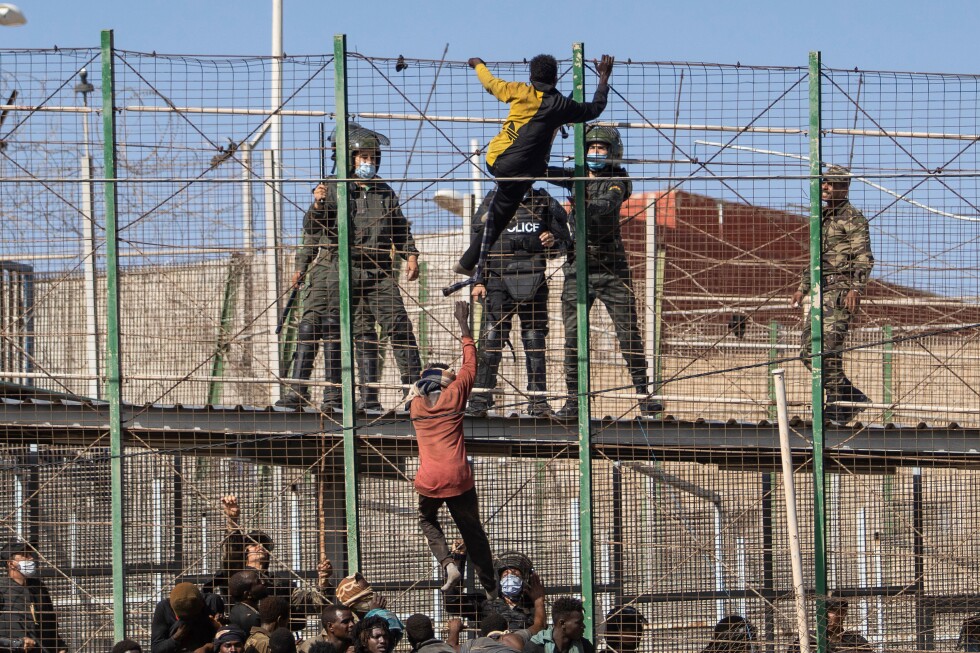
    MADRID – In a policy shift that stands in stark contrast to restrictive immigration approaches taking hold across much of the European continent and the former hardline stance of the U.S. Trump administration, Spain’s ruling government completed work Tuesday on a sweeping amnesty measure first unveiled earlier this year. The reform will open a path to legal status for hundreds of thousands of unauthorized immigrants who have already settled and built working lives in the southern European nation.

    Unlike many of its European neighbors, which have prioritized cutting new migration arrivals and ramping up deportation operations, Spain’s leadership has framed the amnesty as both a moral imperative and a practical economic adjustment. Spanish Prime Minister Pedro Sánchez celebrated the finalization of the policy in social media remarks, calling it “an act of justice and a necessity.”

    Sánchez reiterated his administration’s core position that immigrants already contributing to Spanish society through work and residency deserve the chance to participate fully under equal legal conditions, while also upholding their civic responsibilities. “We recognize rights, but we also demand obligations,” Sánchez wrote, noting that legalized migrants will be required to pay taxes like all other residents.

    Officials estimate that as many as 500,000 unauthorized people currently living in Spain will qualify for legal status under the new rules, while independent analysts place the total number of undocumented residents in the country as high as 800,000. A large share of these immigrants, hailing primarily from Latin America and African nations, fill critical labor gaps in Spain’s foundational economic sectors, including seasonal agriculture, the massive tourism industry, and broad consumer and hospitality services.

    Under the terms of the approved policy, eligible applicants can apply for a one-year renewable residency and work permit once they meet clear eligibility requirements. Spanish Migration Minister Elma Saiz confirmed that in-person applications will open starting April 20, with the online application portal going live as early as this Thursday.

    To qualify, applicants must have entered Spanish territory before January 1 of 2025, and prove continuous residency in the country for at least five months prior to applying. Saiz noted that residency can be verified through a wide range of both public and private documents, expanding access for applicants who may lack formal government records. All candidates must also pass a background check to confirm they have no criminal record.

    This amnesty marks a long-standing precedent for Spain: the country has launched six previous regularization programs for undocumented immigrants between 1986 and 2005, building a history of large-scale legalization efforts that deviates from increasingly restrictive policy norms across much of Western Europe.

  • People fly Kongming lanterns in Jinghong, China’s Yunnan

    People fly Kongming lanterns in Jinghong, China’s Yunnan

    Since 1994, all intellectual property rights to content distributed across China Daily’s official digital platform are held exclusively by China Daily Information Co (CDIC). This copyright protection extends to every form of content hosted on the site, including but not limited to written articles, photographic material, and multimedia productions. Any form of republication or uncredited use of this content is strictly prohibited unless the user has obtained explicit, written authorization from CDIC in advance. For optimal user experience, CDIC recommends that visitors access the site using a web browser configured to a display resolution of 1024*768 or higher. Beyond the core copyright regulations, the site also publicly lists key operational and regulatory details: its license for online multimedia publication is numbered 0108263, and its official business registration number is 130349. To improve public engagement and accessibility, the platform also maintains dedicated sections covering general information about the China Daily organization, opportunities for advertising partnerships, contact channels for inquiries, open recruitment listings for domestic roles, and specific employment opportunities for foreign expats. Users can also follow China Daily’s updated content across multiple social media platforms via the follow links provided on the site.

  • US forces to join combat drills in Philippines to show commitment to Asia while fighting Iran

    US forces to join combat drills in Philippines to show commitment to Asia while fighting Iran

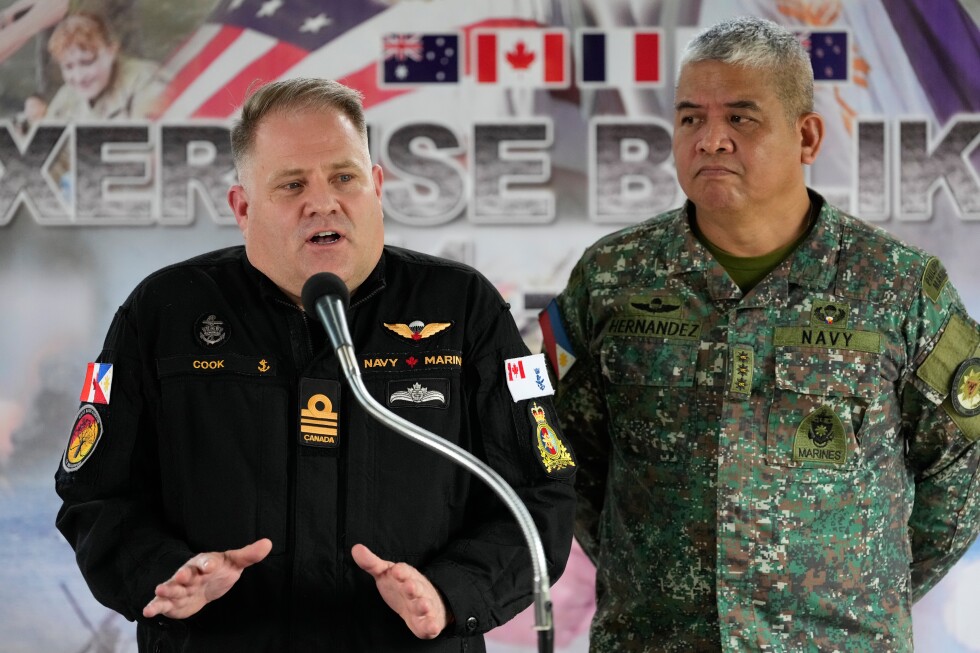
    MANILA, Philippines — One of the largest annual joint military exercises between the United States and the Philippines is set to kick off this spring, bringing over 17,000 personnel from the two treaty allies together for combat training. The drills, organizers say, send a clear signal that Washington remains deeply committed to regional security in the Indo-Pacific even as it navigates ongoing security crises in the Middle East, a senior U.S. military spokesperson confirmed Tuesday.

    Running from April 20 to May 8, this year’s iteration of the annual Balikatan – Tagalog for “shoulder-to-shoulder” – drills will mark a major expansion from 2024, when roughly 9,000 U.S. troops took part. Unlike previous years, the 2025 exercise will open participation to additional partner nations that have formal visiting forces agreements with Manila, including Japan, France and Canada.

    A centerpiece of the drills will be a live-fire ship-sinking exercise hosted in Philippine waters off the northwest coast, directly facing the disputed South China Sea. Philippine military officials confirmed that Japanese forces will conduct the live missile launch for the drill, and Japan’s top defense official has been extended an invitation to observe the operation in person.

    When asked about the strategic purpose of deploying such a large contingent amid ongoing conflict in the Middle East, U.S. forces spokesperson Colonel Robert Bunn emphasized the exercise’s core message. “Our message is our dedication and commitment to our alliance and regional security,” Bunn told reporters during a news briefing. He also noted that counter-drone defense tactics, a critical capability for modern regional security challenges, will be a key focus of the mock combat training scenarios.

    The exercises come amid rising long-running tensions over territorial claims in the South China Sea, a strategically vital global shipping waterway. Beijing claims nearly the entirety of the sea as its sovereign territory, overlapping with claims from Manila, Hanoi, Kuala Lumpur, Bandar Seri Begawan and Taipei. Territorial confrontations between Chinese and Philippine forces have intensified sharply in recent years.

    China has repeatedly voiced opposition to large-scale military drills led by the U.S. in the disputed region. Philippine defense officials have stressed that the drills are not intended to target any specific nation, but have openly acknowledged that the joint training with Washington and other security partners strengthens the Philippines’ ability to defend its sovereign interests in the contested waters.

    The exercise aligns with the Trump administration’s recent regional security posture. During a visit to Manila last year, U.S. Defense Secretary Pete Hegseth reaffirmed to Philippine President Ferdinand Marcos Jr. that Washington would work closely with regional allies to boost deterrence against global threats, specifically naming China’s assertive actions in the South China Sea. “Friends need to stand shoulder to shoulder to deter conflict, to ensure that there is free navigation whether you call it the South China Sea or the West Philippine Sea,” Hegseth said.

  • Jepchirchir withdraws from London Marathon

    Jepchirchir withdraws from London Marathon

    One of women’s distance running’s biggest champions will not be on the start line for this month’s London Marathon, as defending winner Peres Jepchirchir has confirmed her withdrawal from the 2025 event due to a lingering injury.

    The 32-year-old Kenyan, who boasts an elite resume that includes gold at the Tokyo 2020 Olympics, a world championship title, and a women-only world record run at last year’s London Marathon, was diagnosed with an unspecified stress fracture after she crossed the line in second place at the Valencia Marathon last December. The injury forced an unexpected pause to her winter training block, which Jepchirchir says has left her unprepared to compete at the top level required for the World Marathon Major.

    In an official statement shared with race organizers, Jepchirchir explained that she was only able to return to structured training in late January. “I know that to be competitive at the London Marathon you have to be at your top level and despite my best efforts, I’m just short of that due to my lack of training,” she said.

    This marks the second consecutive year that the elite distance runner has been forced to pull out of the London race; an ankle injury kept her sidelined from the 2023 event, before her historic 2:16:16 world record victory in 2024.

    Jepchirchir’s withdrawal adds to the list of high-profile athletes missing from the April 26 start line. Sifan Hassan, the women’s marathon gold medalist at the 2024 Paris Olympics, previously announced her exit from the race after suffering an Achilles injury.

    Despite the losses of two of the women’s field’s top contenders, race organizers are still expected to deliver one of the most competitive fields in the event’s history, with dozens of the world’s top distance runners set to compete for the title and prize purse.

  • Sixteen injured after ex-student opens fire at high school in Turkey

    Sixteen injured after ex-student opens fire at high school in Turkey

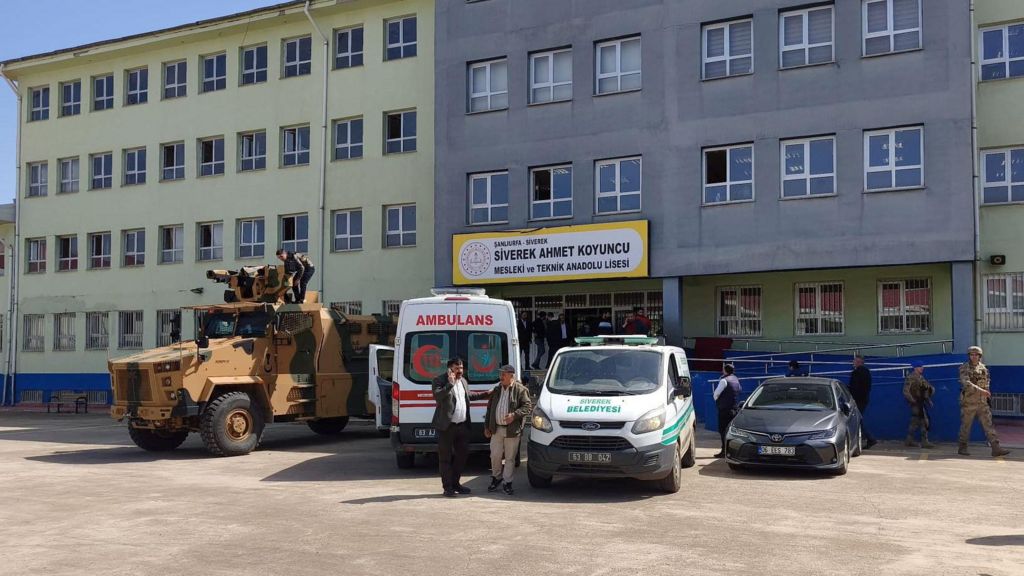
    A violent shooting incident has shaken a southeastern Turkish community, after a former high school student opened fire on campus Wednesday, leaving at least 16 people wounded before taking his own life. Local authorities confirmed the details of the attack, which unfolded on the grounds of Ahmet Koyuncu Vocational and Technical Anatolian High School in Siverek District at approximately 9:30 a.m. local time, or 6:30 a.m. GMT.

    Local governor Hasan Şıldak, the region’s top local official, told reporters that the attacker was in his late teens, who carried an illegally obtained shotgun onto the campus and began firing indiscriminately at people inside the school grounds before turning the weapon on himself. Among the 16 injured victims are 10 students, four teachers, one cafeteria employee and one responding police officer. Five of the wounded have been transferred to larger medical facilities in other regions for more advanced treatment, while the remaining injured receive care at local hospitals. Immediately after the shooting, authorities ordered a full evacuation of the entire campus, and have launched a formal criminal investigation into the circumstances of the attack.

    In a surprising statement, Şıldak noted that the 17 to 18-year-old attacker had no prior criminal record on file with Turkish law enforcement, and that the school had long been classified as a safe facility by local police. Witness testimony collected by Turkish news agency IHA has painted a chaotic picture of the attack. One unnamed witness described the gunman entering the school’s front gate without warning, pulling out a long, pump-action shotgun and immediately opening fire in all directions.

    “He immediately started shooting left and right. Then he fired towards the main school building. Then he ran inside. He started shooting at anyone who came in front of him, and then with the students’ screams, the teachers’ screams, everyone immediately scattered,” the witness recalled in their account.

    One injured student, Ömer Furkan Sayar, spoke to Turkey’s state-owned public broadcaster TRT from his hospital bed, describing how the gunman moved through at least two occupied classrooms during the rampage, including his own. “First we threw ourselves to the ground, then two of us jumped out of the window. He didn’t say anything to us, he just came in and started shooting,” Sayar said.

    As of Thursday morning, authorities have not released a possible motive for the attack, and the investigation is ongoing.

  • Zelensky in Germany for military talks amid drone boom

    Zelensky in Germany for military talks amid drone boom

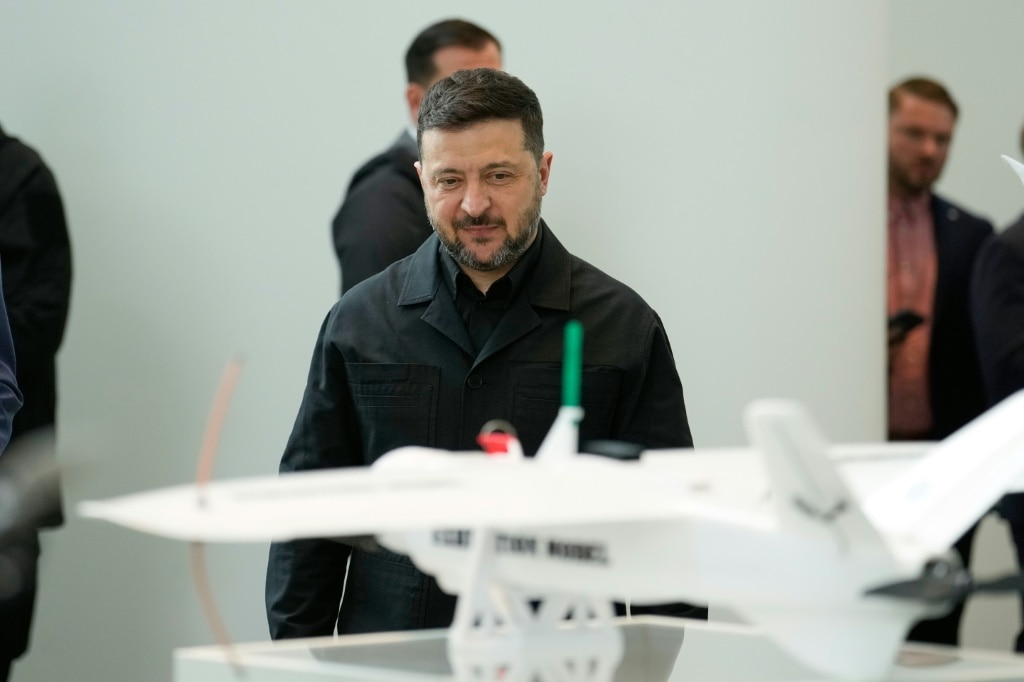
    Ukrainian President Volodymyr Zelensky touched down in Berlin on Tuesday for high-stakes military talks with German Chancellor Friedrich Merz, with drone production collaboration set as a core agenda item. The trip comes as Germany has solidified its position as Kyiv’s largest military backer, following a drawdown in security assistance from the United States, and Berlin is eager to leverage Ukraine’s hard-won frontline experience with unmanned aerial systems. This diplomatic engagement also unfolds against a backdrop of stalled U.S.-brokered peace negotiations between Ukraine and Russia, where Kyiv has rejected any proposals that would require it to cede sovereign territory to Moscow. Adding to broader transatlantic tensions, U.S. President Donald Trump has publicly criticized European NATO allies for declining to join the U.S.-Israeli campaign against Iran and take on patrol duties in the Strait of Hormuz.

    In a follow-up event scheduled for Wednesday, the Ukraine Defence Contact Group—bringing together defense ministers from nations supporting Kyiv and NATO Secretary General Mark Rutte—will convene in Berlin to continue coordinated planning for Ukraine’s defense needs. The ongoing full-scale Russian invasion of Ukraine is now in its fifth year, and the battlefield landscape has shifted dramatically as low-cost, highly effective drones with extended ranges have emerged as indispensable tactical weapons. Over years of frontline combat, Ukraine’s armed forces have built unparalleled practical expertise in developing, deploying, and countering these systems.

    The concurrent conflict in the Middle East has opened a new opportunity for Kyiv to demonstrate its capabilities: Zelensky has already deployed anti-drone specialists to nations targeted by attacks from Iran, a key Russian military ally, and personally visited those affected regions. For Germany, which has allocated hundreds of billions of euros to revitalize its armed forces to deter potential Russian aggression, harnessing Ukraine’s hands-on drone expertise is a strategic priority.

    This cooperation is already well underway. Back in February, Zelensky toured a Munich-based drone manufacturing facility operated by a German-Ukrainian joint venture that produces equipment for Ukraine’s military. The joint venture, named Quantum Frontless Industries (QFI), was launched in December by Germany’s Quantum Systems and Ukraine’s Frontline Robotics. On Tuesday, Quantum Systems announced it would unveil two new joint projects with Ukrainian manufacturers during Zelensky’s Berlin visit.

    Matthias Lehna, managing director of QFI, highlighted the speed and impact of the existing partnership: “Our existing joint venture QFI demonstrates that production capacity in Germany can be established within weeks, with operational systems delivered to Ukraine. We are convinced that this cooperation will form the core of Europe’s future defence capabilities.” The initiative is part of a broader push to scale up European defense manufacturing for Ukraine and long-term regional security.

    Beyond military collaboration, the talks come as new momentum has emerged for unlocking the European Union’s long-blocked €90 billion ($105 billion) aid package for Ukraine. The proposed loan, agreed by EU leaders in December, had been held up by Hungarian nationalist Prime Minister Viktor Orban’s veto. But Orban’s unexpected election defeat last weekend to conservative challenger Peter Magyar has cleared a path for the package to move forward. German government spokesman Stefan Kornelius signaled Berlin’s urgency on Monday, stating he hoped the aid would be made available to Ukraine “very quickly.”

    Beyond defense and funding, the visit also addressed the ongoing humanitarian situation for Ukrainians who have fled the war. Germany has already welcomed hundreds of thousands of Ukrainian refugees since the full-scale invasion began. To kick off Tuesday’s schedule of engagements, Ukrainian Social Minister Denys Uliutin met German Interior Minister Alexander Dobrindt at a new support center branded the “Unity Hub.”

    In an official statement, the German Interior Ministry explained the hub’s dual mission: it will serve as a centralized point of contact for Ukrainians who have resettled in Germany, providing guidance on employment search and integration into German society. At the same time, the center will also work to encourage refugees to return to Ukraine once conditions allow them to do so safely.

  • Stokes shuts down talk of a rift with McCullum after Ashes tensions

    Stokes shuts down talk of a rift with McCullum after Ashes tensions

    LONDON – Months after England’s crushing 4-1 Ashes defeat on Australian soil left the cricket world questioning unity between the side’s star captain and revolutionary head coach, Ben Stokes has pushed back hard against reports of a deep split between himself and Brendon McCullum, calling claims that the pair are out of alignment “a massive overstatement.”

    When Stokes and McCullum took charge of the England men’s Test team in 2022, they upended decades of cricket orthodoxy with their “Bazball” philosophy: an unapologetic, all-out attacking approach to batting that produced a string of memorable home wins, but crumbled spectacularly in Australia’s hostile conditions during the 2023-2024 winter series. A post-series review published earlier this year publicly hinted at underlying tension between the two leaders, with leaks indicating Stokes favored a more conservative tactical shift in response to Australia’s dominance, while McCullum insisted on doubling down on their signature aggressive style.

    After the review concluded that both men would retain their positions last month, Stokes broke his months-long public silence in an official interview with the England and Wales Cricket Board to address the speculation head-on. The captain acknowledged that the pair do disagree on occasion, but argued that healthy debate is not a sign of a broken partnership – it is a necessary part of building a winning team.

    “If anyone thinks that you’re always going to agree on everything when you share leadership, that’s just impossible,” Stokes said. “To me, that isn’t a healthy environment for sport, in particular. You need debate. You need discussions. Then you end up getting to the place you both want to end up getting to.”

    Stokes emphasized that the pair’s shared commitment to England’s success far outweighs their rare differences, noting they agree on 95% of all team matters. “As similar as me and Brendon are, we’re also dissimilar in other areas as well,” he explained. “The 5% things that we might have different views on, we talk about it between each other and then we end up getting to the place where we want to get to.”

    The captain admitted the period following the Ashes defeat has been the most challenging stretch of his leadership tenure, but confirmed he is thrilled to continue working alongside McCullum, a message he previously shared publicly on social media after the review’s outcome was announced.

    Following the review’s recommendations, the pair will make minor adjustments to how they operate as a leadership team – a change Stokes says he fully supports. The captain added that their core alignment has never shifted: both men are focused on making England the best Test side in the world, a goal that has anchored their partnership from the start.

    “I’m very confident in mine and Brendon’s ability to be able to work together, because we’ve done it for such a long period of time now, but work together in a slightly different way,” Stokes said. “The main point of me and Brendon is our alignment towards winning things and making this team as good as they can be. That’s always been the thing since we started. It might just look a little bit different now to how that operates — on the back of four years working together.”

    Stokes has been sidelined since a freak preseason training accident with his county side Durham left him with a broken cheekbone, and he has not appeared in the 2024 County Championship. He is on track to return to competitive play in May, in preparation for England’s home Test series against New Zealand kicking off in June. Pakistan will visit England for another Test series later this summer, and Australia is scheduled to tour the country for the 2027 Ashes series. Stokes says he hopes he and McCullum will still be leading the side together when that series arrives, chasing the goals they set out when they first took the job.

    “Hopefully we’ll still be together at the end of 2027, winning what we want to win,” he said.

  • Retrial over death of Argentina legend Maradona to begin

    Retrial over death of Argentina legend Maradona to begin

    One of the most iconic and gifted footballers in the history of the sport, Diego Maradona, died at the age of 60 in November 2020 from heart failure, and six years later, a new legal chapter into the investigation of his death is getting underway. On Tuesday, a retrial for seven members of Maradona’s medical circle opened, after the original 2025 trial was abruptly derailed over a courtroom ethics scandal.

    The first trial, held in May 2025, collapsed after it emerged that one of the three presiding judges allegedly permitted unapproved, off-the-record filming inside the courtroom for an upcoming commercial documentary, a violation of judicial protocol that forced the entire proceeding to be scrapped. Ahead of the new trial, Maradona’s supporters gathered outside the San Isidro, Argentina courthouse, holding banners calling for “Justice for God” — a nod to the legend’s widespread nickname as “Diego, the God of Football.”

    At the center of the case are allegations that Maradona’s medical team failed to deliver appropriate, life-saving care after he underwent successful surgery to remove a brain blood clot in early November 2020. Following the procedure, Maradona moved to his private home in Tigre, a Buenos Aires suburb, to recover, where he died weeks later on November 25. Prosecutors have charged all seven defendants with homicide with possible intent, a charge similar to involuntary manslaughter under Argentine law. All seven have repeatedly denied any wrongdoing, but if convicted, they face prison sentences ranging from 8 to 25 years.

    Prosecutors argue the defendants were fully aware of the extreme fragility of Maradona’s health following his brain surgery, yet neglected to take the basic, necessary precautions to monitor and treat his condition, directly contributing to his death. A preliminary autopsy confirmed Maradona’s heart failure triggered acute pulmonary edema, a life-threatening condition where fluid accumulates in the lungs, leading to his death. An independent panel of medical experts commissioned by prosecutors found the at-home care Maradona received was “deficient and reckless,” concluding the football icon would have had a significantly higher chance of survival if he been treated at a proper medical facility with adequate resources.

    The seven defendants standing trial include Maradona’s lead personal physician Leopoldo Luque and his personal psychiatrist Agustina Cosachov. A separate eighth person connected to the case, Maradona’s former nurse Dahiana Gisela Madrid, will face trial in a separate, independent proceeding at a later date. Over the course of the retrial, roughly 100 witnesses are scheduled to give testimony before the new panel of judges, including several of Maradona’s daughters. Court officials expect the proceedings to run through July.

    Maradona’s death in 2020 sparked an outpouring of grief across Argentina and the global football community. Then-Argentine President Alberto Fernández declared three days of national mourning, releasing a statement that read, “Thank you for having existed, Diego. We’re going to miss you all our lives.”

    Born to a working-class family in Buenos Aires, Maradona launched his professional career with Argentinos Juniors before rising to global stardom. He went on to represent Argentina at four consecutive FIFA World Cups, scoring 34 international goals, including the controversial “Hand of God” goal against England during Argentina’s 1986 World Cup championship run — one of the most famous moments in football history. Off the pitch, Maradona struggled for decades with substance use disorders, including a well-documented cocaine addiction that led to a 15-month competition ban in 1991 after he tested positive for the drug. He retired from professional play in 1997, on his 37th birthday, during his second tenure with Argentine club giants Boca Juniors.

    Following his retirement, Maradona moved into coaching. He took the helm of the Argentine men’s national team in 2008, leading the side through the 2010 World Cup, where they were eliminated by Germany in the quarterfinals. He later went on to manage club sides in the United Arab Emirates and Mexico, and was serving as head coach of Argentine top-flight club Gimnasia y Esgrima when he died in 2020. Today, he remains universally regarded as one of the most talented and culturally impactful footballers to ever play the game.

  • Youth from Vietnam explore Red ties

    Youth from Vietnam explore Red ties

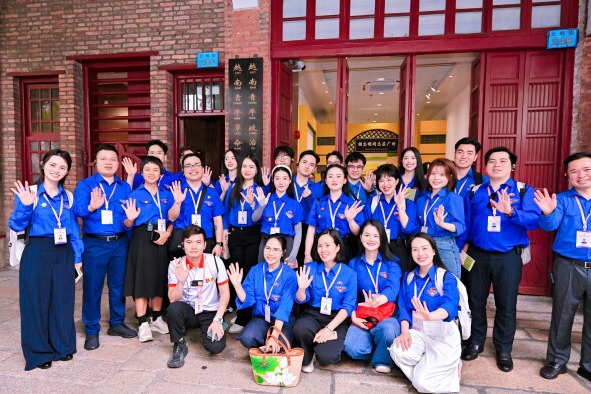
    In a landmark cross-border youth exchange initiative hosted in Guangzhou, the capital of China’s southern Guangdong province, 200 young Vietnamese delegates from diverse professional backgrounds gathered in mid-April 2026 for a three-day “Red Study Tour” designed to deepen understanding of the shared revolutionary history and dynamic cultural connections between China and Vietnam.

    Organized by the Central Committee of the Communist Youth League of China, the delegation brought together young participants spanning civil servants, youth league cadres, working journalists, university students, youth advocates, and digital content creators — reflecting the broad cross-section of contemporary Vietnamese youth society.

    Over the three-day program from Saturday to Monday, delegates toured a curated lineup of historically significant, cultural, and innovation-focused sites across Guangzhou. These included the former headquarters of the Vietnamese Youth Revolutionary Comrades Association, the resting place of Vietnamese revolutionary martyr Pham Hong Thai, the Memorial Hall of the First National Congress of the Socialist Youth League of China, and the Whampoa Military Academy Memorial Hall — sites that anchor the shared revolutionary legacy of the two nations. The tour also extended to cultural landmarks such as the historic Yongqing Fang old alley district, modern infrastructure at Guangzhou Metro Group, the advanced Fushan Circular Economy Industrial Park, leading Chinese technology enterprises, and popular scenic destinations.

    Throughout their visits, participants explored the deep revolutionary camaraderie forged between early Chinese and Vietnamese pioneers who fought side-by-side for national independence and liberation. The experience allowed delegates to gain a more nuanced, personal understanding of the sacrifices that laid the foundation for modern national development in both countries, and to reaffirm the enduring value of bilateral friendship and cooperative partnership.

    To strengthen people-to-people connections, the tour included three themed symposiums and a collaborative joint painting project that brought Vietnamese delegates together with local Chinese young people, creating space for open dialogue and relationship-building beyond guided visits.

    Huynh Thi Thanh Thuy, the 2022 Miss Vietnam and 2024 Miss International titleholder, who was among the delegates, praised the rich artistic expression and inclusive cultural fusion that defines Lingnan culture, the regional culture of southern China’s Guangdong area. She proposed a new vision for youth-led cross-border cultural collaboration that leverages digital platforms.

    “I hope young people from both countries can work together to breathe new life into cultural heritage through digital platforms,” she said. “For example, we could create joint music projects that blend traditional Lingnan and Vietnamese musical instruments with modern harmony and orchestration, or integrate the iconic imagery of Vietnamese ao dai into the traditional architectural spaces of Guangzhou’s Xiguan old mansions. This is how heritage can truly come alive in the hearts of Generation Z.”

    Tran Tuan Hiep, a performer of Tuong, Vietnam’s centuries-old traditional theatrical art form, highlighted that both China and Vietnam boast deep-rooted, distinct cultural heritages — noting that Peking Opera holds a similar place as a iconic national cultural treasure in China, mirroring Tuong’s role in Vietnam.

    “Having had the opportunity to visit China in person, I am deeply impressed by your country’s outstanding efforts in preserving traditional culture,” he said. “I hope there will be more opportunities for exchanges in the future so that we can learn from each other and jointly protect and develop the traditional arts and cultures of our two countries.”

    Vietnamese children’s book author Bui Thi Thu Ha emphasized that cultural and artistic exchange acts as a durable bridge between the two peoples, helping build greater mutual understanding of shared and distinct values, traditions, and national identities.

    “Through artistic performances, exhibitions, music, food and other events, we can not only appreciate beauty but also feel the soul, history and way of thinking of each nation,” she said.

    The Guangzhou leg of the tour concluded on Monday afternoon, with the delegation set to travel to Beijing to continue their study tour and explore more of China’s cultural and historical heritage, extending what organizers frame as a growing people-to-people partnership between the next generations of the two neighboring nations.