博客

  • Africa’s richest man, Ethiopia and Djibouti to build $660m fuel pipeline

    Africa’s richest man, Ethiopia and Djibouti to build $660m fuel pipeline

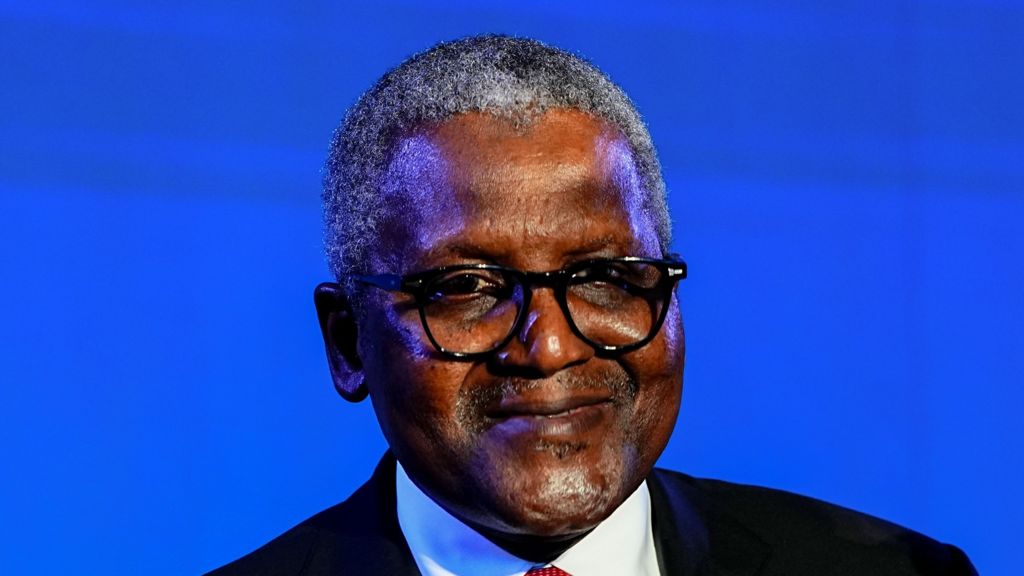
    Nigerian billionaire and industry magnate Aliko Dangote has entered a landmark partnership with the governments of Ethiopia and Djibouti to develop a $660 million integrated petroleum pipeline and storage facility, a major infrastructure initiative set to reshape regional energy logistics across the Horn of Africa.

    The cross-border project will deliver a 120-kilometer (75-mile) pipeline connecting Djibouti’s Damerjog Port to a purpose-built fuel distribution hub in Dewele, Ethiopia, alongside 400 million liters of strategic storage capacity for refined petroleum products. Developers project the facility will be fully operational within 18 months of construction starting, with the first phase focused on moving high-demand products including aviation jet fuel, diesel, and gasoline.

    Addressing attendees at the official groundbreaking ceremony, Ethiopian Prime Minister Abiy Ahmed highlighted the transformative impact the new infrastructure will bring to the country’s fuel supply chain. Currently, fuel shipments delivered through Djibouti’s ports require five days of overland transport to reach Ethiopia’s capital Addis Ababa; the pipeline will cut that transit time down to just one day, eliminating costly delays and bottlenecks.

    For his part, Dangote emphasized that the project will directly strengthen Ethiopia’s long-term energy security by building greater resilience into the country’s fuel supply network. As a landlocked nation, Ethiopia is almost entirely dependent on Djibouti’s port infrastructure to handle its imports, including all incoming petroleum products. The new pipeline is expected to significantly reduce congestion on existing overland transport routes, easing operational pressure on key sectors of Ethiopia’s economy ranging from commercial logistics and aviation to agriculture and large-scale construction.

    The initiative is not a one-sided investment: Djibouti will also capture substantial economic benefits from the project, including expanded port activity, new local job opportunities during both construction and operations, and increased steady revenue for the national government.

    This cross-border infrastructure project is part of Dangote’s broader strategic push to expand his industrial and infrastructure footprint across the entire African continent. Already, Dangote Cement, his core industrial business, boasts an annual production capacity of 55 million metric tonnes distributed across markets in sub-Saharan Africa. In his home country of Nigeria, Dangote’s flagship crude oil refinery currently processes 700,000 barrels of crude per day, with active plans to double that capacity to 1.4 million barrels daily to meet growing regional fuel demand. Just recently, the refinery operation listed 4.1 billion ordinary shares on the Nigerian Exchange Group, moving forward with a capital raising effort targeting roughly $1.63 billion in new investment.

    Looking ahead, the Dangote Group is set to break ground next week on another major refinery project in East Africa: a 700,000-barrel-per-day crude oil refining complex in the coastal Kenyan region of Lamu, cementing the company’s position as a leading player in African energy infrastructure.

  • UN General Assembly 2026: Walkout during Netanyahu’s speech, and Middle East wars in spotlight

    UN General Assembly 2026: Walkout during Netanyahu’s speech, and Middle East wars in spotlight

    As the United Nations General Assembly entered its fourth day of deliberations, the fallout from the US-Israeli military campaign against Iran and the long-running Israel-Palestine conflict remained the centerpiece of global debate, with leaders from across regions and blocs laying out starkly diverging positions on the crises and their far-reaching global impacts.

    For vulnerable economies already grappling with years of internal instability, the ripple effects of the current conflicts have proven devastating, Somalia’s President Mohamed Hassan Sheikh Mohamud told the assembly. The East African nation, which depends almost entirely on imports of food and fuel from the Middle East and relies heavily on customs revenue to fund state operations, has seen steep price hikes for essential goods and a 40 percent collapse in customs collections since the conflict escalated, Mohamud said. Disruptions in the Strait of Hormuz, a critical global chokepoint for energy trade, have triggered disproportionate harm to developing nations like his own, he added, stressing that unimpeded, free navigation through the waterway is non-negotiable to protect the world’s most vulnerable economies. Turning to the Israel-Palestine conflict, Mohamud emphasized that a just, negotiated resolution to the Palestinian question remains a foundational requirement for lasting peace across the Middle East and the wider world, affirming that Somalia stands in unwavering solidarity with the Palestinian people and their internationally recognized right to self-determination and sovereign statehood.

    European Union Council President Antonio Costa opened his address by reaffirming the bloc’s unshakeable commitment to multilateralism, arguing that no single nation can deliver durable peace in an increasingly interconnected world. While he did not explicitly name the United States’ repeated attacks on the International Criminal Court, Costa issued a clear warning against the spread of double standards in the application of international law, and pledged the EU’s full, unwavering support for both the ICC and the International Court of Justice. “We support these courts firmly, and we will defend their independence, integrity and ability to fully carry out their mandate,” he stated, condemning ongoing targeting of the court. The United States has already imposed sweeping sanctions on multiple senior ICC officials, including court president Tomoko Akane and senior trial lawyer Abdoulaye Seye, who were sanctioned in August. Former chief prosecutor Karim Khan was the first to be targeted last February, followed by two deputy prosecutors and nine judges leading investigations into alleged atrocities in Palestine and Afghanistan. Multiple reports this week have confirmed Washington is preparing to roll out even broader sanctions against the court in the coming weeks.

    Costa also indirectly pushed back against former U.S. President Donald Trump’s claims of having achieved a lasting peace deal for Gaza, noting that Israeli military operations in the enclave have continued despite a 2025 ceasefire agreement. Stating that the EU regrets the ongoing stalemate in Gaza and across the occupied Palestinian territories, Costa reaffirmed the bloc’s longstanding position that a two-state solution remains the only viable path to durable peace in the Middle East. Unlike many critics of the current conflict, Costa did not condemn the US-Israeli campaign against Iran, instead saying the EU supports diplomatic efforts to find a negotiated resolution to the standoff. He reiterated the EU’s longstanding policy that Iran must never be permitted to acquire nuclear weapons, and expressed hope that the Iranian people will one day live in conditions of peace, security and full freedom. Costa also joined global calls for unconditional, unhindered freedom of navigation through the Strait of Hormuz.

    Yemen’s Vice President Abdullah Abdulkader al-Alimi-Bawzer used his address to condemn the Houthi militia and urge the global community to unite against the group, which he accused of advancing Iran’s geopolitical agenda at the expense of regional and global security. Alimi-Bawzer noted that the Yemeni people have endured 12 years of crisis since the Houthi coup against the internationally recognized government, adding that Yemeni authorities have repeatedly supported a Saudi- and Omani-backed peace initiative that the Houthis have rejected. Instead of engaging in negotiations, the militia has escalated attacks on commercial shipping in the Red Sea and Bab el-Mandeb, he said, turning one of the world’s most critical maritime trade routes into a bargaining chip for Iran’s global confrontation. “The Houthi militia’s use of the safety of navigation as a tool for blackmail threatens not only Yemen. It is taking hostage the entire global economy,” al-Alimi-Bawzer said. He argued that long-term maritime security in the Red Sea, Bab el-Mandeb and the Gulf of Aden cannot be achieved as long as an armed non-state militia controls critical Yemeni coastline, stressing that restoring the sovereign Yemeni state and securing the Bab el-Mandeb waterway are inseparable goals.

    Kuwait’s Crown Prince Sabah Al Khaled used his address to the UN Security Council to condemn what he called illegal Iranian aggression against his country, describing the attacks as a blatant violation of core principles of international law. “These brutal attacks have systematically and repeatedly targeted civilian objects and critical infrastructure… revealing a hostile approach aimed at disrupting the foundations of life,” he said. Al Khaled noted that the security and stability of the Arabian Gulf region is a core pillar of global security, as the ongoing conflict and its spillover have clearly demonstrated. Kuwait has been among the Gulf states hardest hit by Iranian retaliation for the US-Israeli campaign against the Islamic Republic: as host to tens of thousands of U.S. troops and multiple major U.S. military bases, both American facilities and key civilian infrastructure including Kuwait International Airport and national energy sites have been targeted in recent attacks. The country is also exceptionally vulnerable to Iranian disruptions of Strait of Hormuz shipping, as nearly 100 percent of Kuwait’s oil exports are transported via tanker through the waterway. Turning to Palestine, the crown prince reaffirmed Kuwait’s firm, principled position condemning ongoing violations by Israeli occupation forces against the Palestinian people, noting that Palestinians continue to endure brutal living conditions under Israeli policies of displacement, mass arrest and expanding settlement construction. He also praised France and the United Kingdom for their recent decision to impose new sanctions on trade with Israeli goods produced in illegal West Bank settlements. Al Khaled also joined growing global calls for reform of the UN Security Council, arguing that the body must adapt to shifting global power dynamics to remain effective. “There is an urgent need for the council to become more representative, effective and transparent in carrying out its responsibilities,” he said.

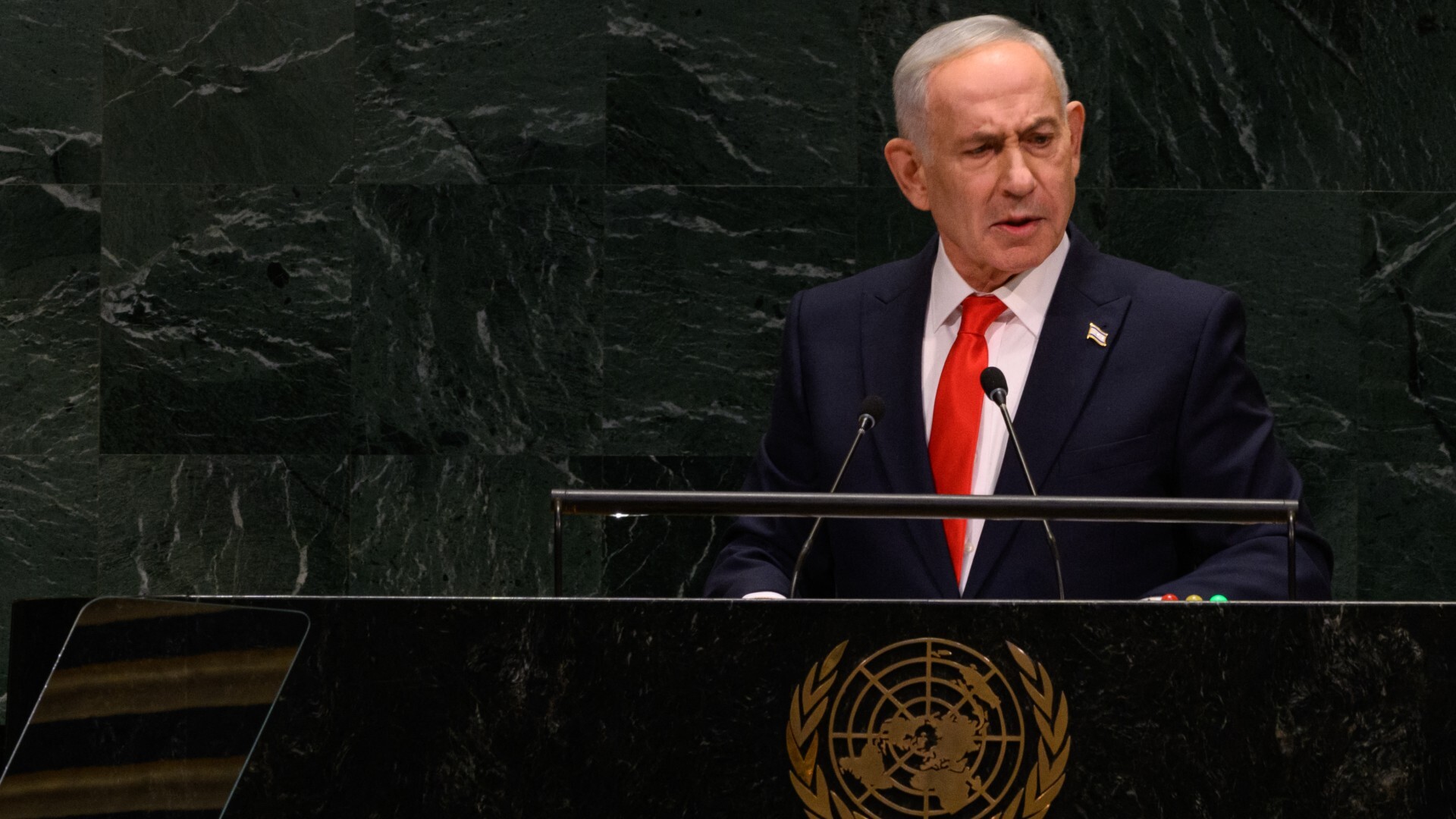
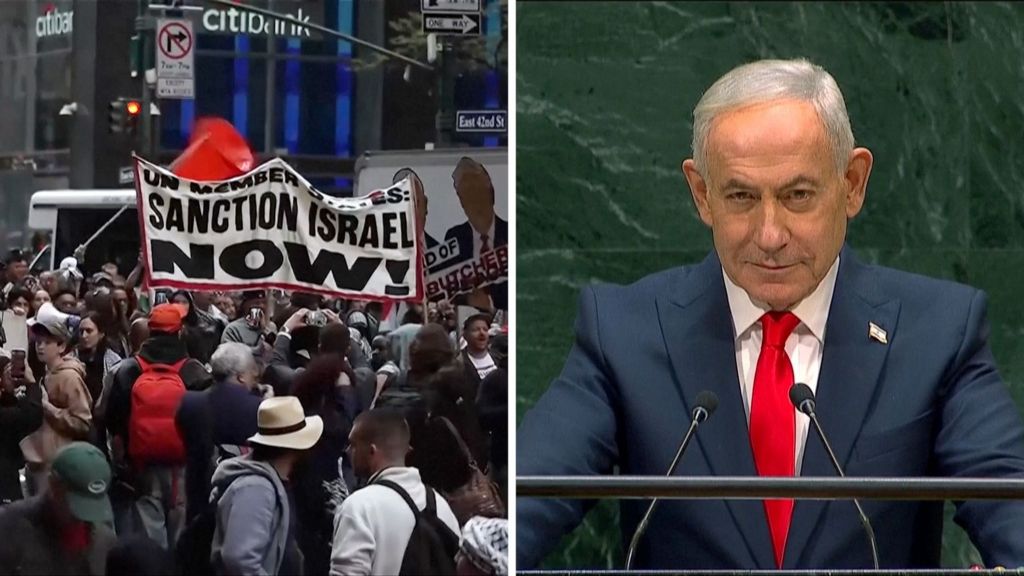
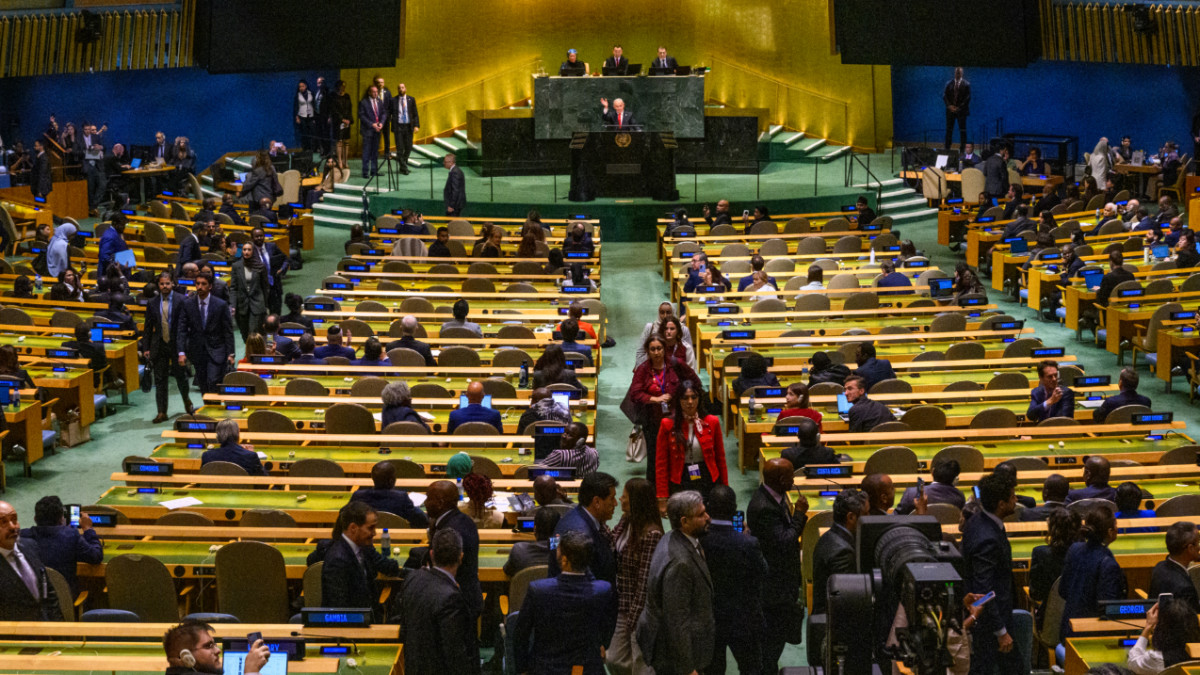
    The day’s most dramatic confrontation came during Israeli Prime Minister Benjamin Netanyahu’s pugnacious address to the General Assembly, where the Israeli leader launched aggressive attacks on critics ranging from New York City Mayor Zohran Mamdani to Turkish President Recep Tayyip Erdogan and Western European leaders, as he works to counter growing international isolation for Israel and his government. When Netanyahu took the podium, the assembly hall erupted in loud boos, and a majority of delegates walked out of the chamber in protest. Undeterred, Netanyahu struck a defiant tone, challenging remaining critics to leave. “If there are any other moral cowards who haven’t left this hall, please do so now,” he said with a smile before beginning his prepared remarks.

    Netanyahu devoted a large portion of his address to attacking Mayor Mamdani, accusing the New York leader of capitulating to what he called antisemitic protests. “Mr Mamdani, since you were elected mayor of this city, many Jews no longer feel safe in New York,” Netanyahu shouted. “Mr Mamdani, you tried to stop me from coming here. You tried to silence me. Well, you can’t silence me. You can’t silence the truth.” Outside the UN headquarters, hundreds of protesters gathered ahead of Netanyahu’s arrival and continued demonstrations throughout his speech, echoing widespread global anger at Israel’s ongoing military campaigns across the Middle East. Analysts noted that Netanyahu’s combative address was largely targeted at a domestic American audience and Jewish diaspora voters, coming ahead of Israel’s national elections scheduled for October. Netanyahu’s speech underscored the deepening rift between Israel and much of the international community even as the country expands its military campaigns against multiple neighbors, including Lebanon, Syria, Gaza and the occupied West Bank.

  • On hope: What Iranians hold on to in uncertain times

    On hope: What Iranians hold on to in uncertain times

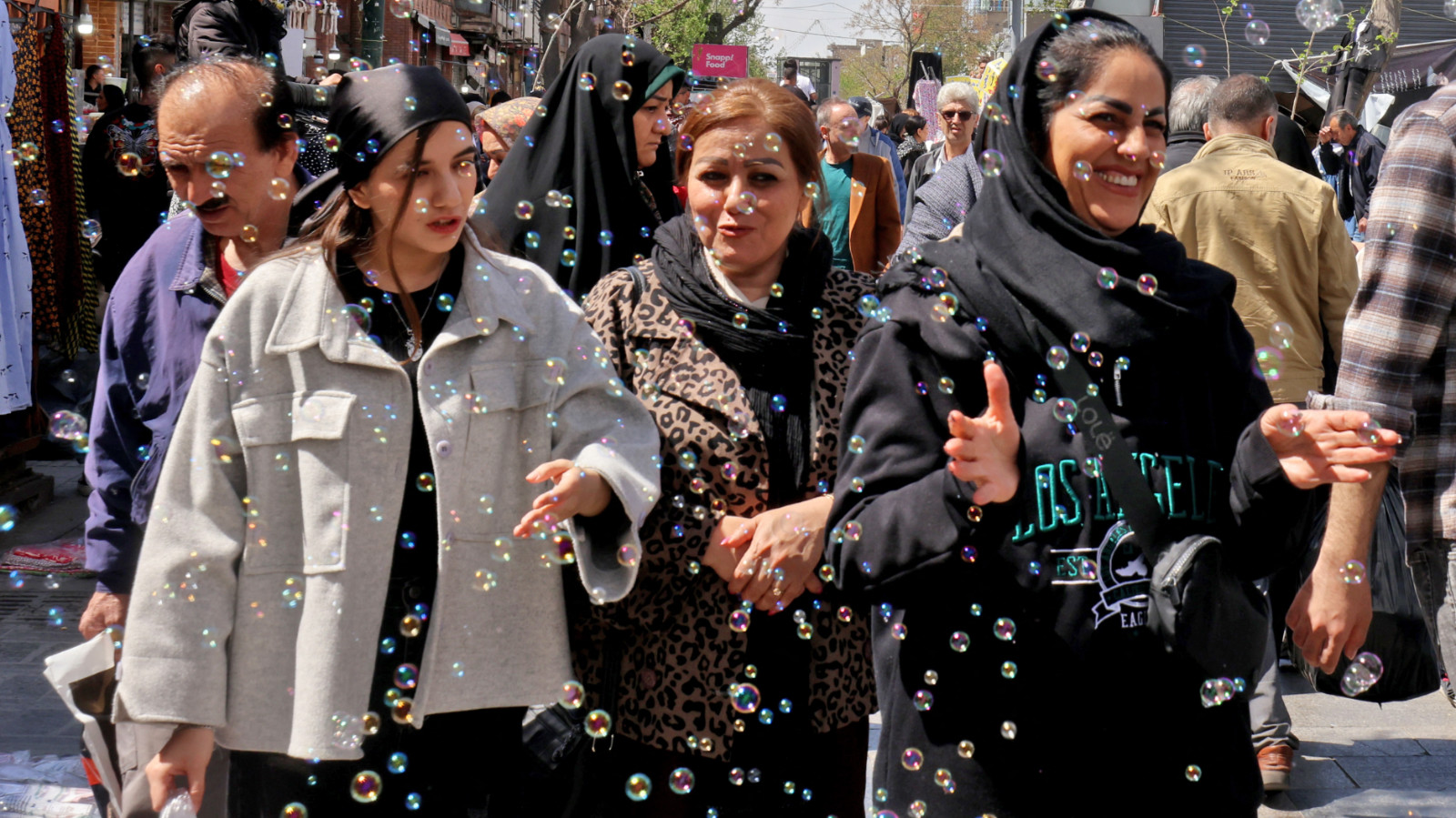
    Before dawn broke on a September morning in Velayat Park, just south of Tehran, hundreds of runners had already packed the green space, gathering to compete in a 10-kilometer road race. Participants trickled in, arriving in groups of friends and family or stepping into the crowd alone, as upbeat music filtered through the park. Athletes chatted, laughed, and adjusted their gear while waiting for the starting signal, with the women’s division scheduled to take off first.

    Many of the female runners wore event-provided sports head coverings consistent with national mandatory dress rules, but a number of participants chose to compete without covering their hair. Clips of the unorthodox scene spread rapidly across social media after the race, sparking fierce national debate and prompting Iranian authorities to launch legal action against the event’s organizers for violating public dress codes. Yet for the runners who spoke to Middle East Eye for this report, that early September morning was never about political protest — it was simply about the joy of running.

    Fahimeh, a psychologist who joined the race, described the gathering’s electric atmosphere as a rare burst of collective energy, hope and everyday joy. She recalled being struck by the shared enthusiasm of the crowd that turned out in the pre-dawn hours on September 18. Her definition of hope, she explained, is straightforward: it is not a blind belief that tomorrow will automatically bring better days, but an active choice to claim joy and purpose today.

    To understand the weight of that small, intentional choice, it is necessary to examine the broader climate of uncertainty that has shaped Iranian public life in recent years. The ripple effects of two consecutive regional wars, paired with constant fears of a new round of open military conflict, have seeped into every corner of daily life. Decades of international economic sanctions have gutted household purchasing power, while soaring inflation, widespread unemployment, and skyrocketing housing costs have pushed long-term life planning out of reach for millions. Political frustration and pervasive restrictions on personal autonomy have only deepened the national sense of instability, leaving many Iranians no longer asking if the future will be better — they are wondering if any future can be planned for at all.

    On that same September day, just a few kilometers away in central Tehran, a second large public gathering unfolded. Jan-Fada, a government-backed mobilization movement launched after the 2024 US-Israel war on Iran began, brought together military units, armed civilian volunteers, and ordinary citizens for an event centered on messages of national defense and collective sacrifice. On the surface, the two events read as stark opposites: one group of Iranians chasing personal joy through running, the other gathering to prepare for sacrifice in defense of the nation. But this framing oversimplifies the shared reality connecting all Iranians across different ideological commitments.

    Participants in both events gathered with loved ones, colleagues, and acquaintances, and both crowds carried a similar energy of collective purpose. Most attendees, regardless of which gathering they joined, share the same core concerns: supporting their families, holding steady employment, managing household finances, and building some kind of viable future. What has shifted for most Iranians is not the desire for hope, but the scale of their expectations.

    Hamed, a Tehran-based journalist and father of a teenager, frames hope as “the last asset a person has.” Years of severe economic hardship have not entirely erased Iranians’ capacity to hope, he explains, but they have reshaped what people hope for. Where a family home or a new car once felt like a realistic long-term goal for many, today aspirations have shrunk to small, immediate joys: affording a new smartphone, taking a day trip, grabbing coffee at a local cafe, or finding a low-cost way to spend time together as a family. Even these smaller plans matter, Hamed argues, because they prove people are still choosing to look forward — even when that forward only stretches a few weeks or months ahead.

    Maryam, a Tehran sports and dance instructor, sees this same quiet resilience among the students who continue to attend her classes, even amid widespread economic crisis. In recent years, she has sustained steady interest in a wide range of dance styles, from traditional Iranian folk forms to Western and contemporary styles that have faced government scrutiny. The economic collapse has hit her industry hard: fewer families can afford non-essential recreational classes, and many have been forced to drop out to cut costs. Still, a core group of students keep showing up, and Maryam says their choice to return holds deep meaning.

    Dance offers immediate pleasure through music and movement, provides much-needed physical activity, and gives students the chance to master a new skill, she explains. It also creates community, and offers a rare escape from the constant pressure of daily uncertainty. For Maryam, learning any skill is an investment in the future — people spend time and money mastering languages, music, or crafts because they believe those skills will serve them for life. Dance, she says, is no different. This belief is what keeps her teaching: her students have continued to practice through waves of political unrest, war, and even pandemic-era lockdowns that forced classes online. For them, showing up is itself an act of hope for better days ahead.

    In Tehran’s historic Grand Bazaar, 26-year-old Reza, a car dealer and second-generation trader, has made his own bold act of future-building: he is set to marry next month, a decision that shocked most of his friends and extended family. The wedding will cost him roughly 2 billion tomans, equal to $8,500 — a massive expense at a time when rampant inflation, housing shortages, and economic uncertainty have pushed marriage out of reach for millions of young Iranians. Reza’s reasoning is uncomplicated: “I fell in love,” he said. For him, marriage is a chance to leave his father’s home, build an independent life with the partner he has chosen, and invest in a shared future by building a home and working toward the life they both want. Uncertainty is unavoidable, he acknowledges — he has no guarantee his future will be stable or secure. But he is choosing to make his plans anyway. “We have no choice but to be optimistic,” he said. “We have no choice but to continue to live.”

    Not all Iranians have seen their expectations shrink — some have faced deep disappointment after unmet political hopes, yet still cling to purpose. An anonymous Tehran-based environmental activist and writer says she had hoped the 2024 election of reformist president Masoud Pezeshkian, following the death of principlist incumbent Ebrahim Raisi, would open more space for civil society and bring modest improvements to daily life. While some limited changes have taken place, they fell far short of her expectations, a disappointment deepened by the ongoing regional wars. Watching widespread destruction of local ecosystems and wildlife, she felt increasingly powerless to create change, and eventually lost her job to the latest conflict, adding personal economic instability to the broader national uncertainty. Still, she does not identify as hopeless.

    She invokes former Czech dissident and writer Vaclav Havel’s distinction between hope and optimism: “Hope is not the certainty that things will turn out well, but the belief that what one does can still have meaning, regardless of the outcome,” she told Middle East Eye. She has no idea whether her life will be better or worse in two years, she says — but she still believes “Life is worth it.”

    Back at the government-organized Jan-Fada gathering, Hamid, a participant, frames his vision of the future around what he feels called to defend. “For me, it is not about the government. It is about Iran,” he said. Defending the country means defending his home, his family, and his children, he explains. The stable life he wants for his family is not so different from the ambitions of most other Iranians: a home of their own, a reliable car, university educations for his children, occasional family trips, and enough income to avoid constant stress over unexpected expenses. Even so, the pressures of the present have already tested that vision: he recently paid several million tomans to cover medical costs for his sick mother, a massive burden for a salaried worker at a time when war, sanctions, and supply chain disruptions have driven up drug prices and made critical care harder to access. For Hamid, these struggles do not contradict his commitment to defending his country — they are part of why he chooses to stand for it.

    Back at the Velayat Park road race, Fahimeh describes hope in nearly identical terms: hope is not confidence that circumstances will get better, it is a choice to do something small that is within your control. Put on your running shoes. Step outside. Start moving. That pre-dawn September morning showed her how hope becomes real when it turns into action.

    Maryam sees the same pattern in her dance students. “People have been stuck in a long period of uncertainty and often cannot make long-term plans,” she said. “Instead, they take the next step they can see.” She summed up the collective Iranian experience of hope in a single metaphor: “Our situation is currently like holding a lantern in the dark. You can only take a few steps in front of you, and then you look for the next step.”

    This reporting is published by Middle East Eye, an independent media outlet delivering unrivaled original coverage of the Middle East, North Africa and broader region.
  • Netanyahu paints Israel’s critics as ‘antisemites’ in angry UN speech to near-empty hall

    Netanyahu paints Israel’s critics as ‘antisemites’ in angry UN speech to near-empty hall

    When Israeli Prime Minister Benjamin Netanyahu stepped up to the podium at the United Nations General Assembly this week, he was met with a cascade of boos and a mass walkout of delegates, a striking public demonstration of Israel’s deepening international isolation over its ongoing military campaign in Gaza and occupation of Palestinian territory. Undeterred by the protest, Netanyahu opened his address with a sharp jab at the departing delegates, quipping, “If there are any other moral cowards who haven’t left this hall, please do so now,” as General Assembly President repeatedly called for order to quiet the disruptive chamber.

    The pugnacious speech saw Netanyahu target a wide range of critics, from New York City Mayor Zohran Mamdani to Turkish President Recep Tayyip Erdogan and major European powers, framing his aggressive tone as a defense of Israel’s right to exist amid mounting global condemnation. A large share of his opening criticism was reserved for Mamdani, whom he accused of capitulating to what he called “antisemitic mobs” and eroding safety for Jewish New Yorkers. Netanyahu also pushed back against Mamdani’s efforts to block his UN appearance, declaring “You can’t silence me. You can’t silence the truth.” Even before Netanyahu entered the UN compound, hundreds of anti-Israel, pro-Palestine protesters gathered outside the building, continuing their demonstration through the duration of his address.

    Political analysts have noted that much of the speech was tailored to two key audiences: American voters and domestic Israeli constituents ahead of the country’s scheduled October national elections, with Netanyahu leaning into partisan rhetoric targeting progressive American politics and courting pro-Israel conservative supporters.

    On foreign policy, Netanyahu framed the recent joint US-Israeli military strikes against Iranian targets as a clear victory, claiming credit for devastating Iran’s nuclear infrastructure. He defended his decision to greenlight the attacks, saying “Devastating Iran’s nuclear facilities was hard. It was very hard to do. But for me, it was one of the easiest decisions I’ve ever had to make as prime minister.” He added that he had made a public promise to block Iran’s Islamist government from developing nuclear weapons that he claimed would target Israel and threaten global security. In a provocative symbolic gesture, Netanyahu held up a Starlink satellite internet receiver during the address, announcing he would leave the device for Iran’s UN delegation. Western intelligence sources have confirmed that the US and Israel have worked to supply Starlink terminals to Iranian anti-government dissidents to help them evade state internet censorship during anti-regime protests, and Netanyahu stated the device would allow dissidents to “freely tell their story on social media” if they flee the country. As of yet, the joint strikes have failed to topple the Iranian government, and Iran has responded by reasserting its military control over the strategic Strait of Hormuz, while its allied Houthi movement in Yemen has consolidated control over key territory along the Bab el-Mandeb Strait.

    Netanyahu opened his address on the ongoing Gaza conflict by reaffirming his condemnation of the October 7, 2023 Hamas-led attack that killed roughly 1,200 people in southern Israel, which he called the darkest day in Israeli history. However, he repeated multiple graphic accusations about the attack that have been repeatedly debunked by independent investigators, academic researchers, and even Israeli eyewitnesses. In his remarks, he claimed Hamas “slaughtered Holocaust survivors, they burned babies alive in front of their parents. They beheaded our men, they brutally raped our women, and then they murdered them.”

    In response to the October 7 attack, Israel launched a large-scale military invasion and bombardment of Gaza that has killed more than 74,000 Palestinians to date, the vast majority of them civilians, and injured nearly 175,000 more. The United Nations and dozens of leading global human rights organizations have formally designated Israel’s military campaign in Gaza as a genocide, and the International Criminal Court has issued active arrest warrants for Netanyahu and former Israeli Defense Minister Yoav Gallant on charges of war crimes and crimes against humanity.

    Netanyahu described Israel as fighting a “seven-front war” across the region, praising Israeli soldiers as fighting “like lions,” and pushed back against the countries whose delegates walked out, claiming many of their leaders privately thank Israel for its strikes on Iranian nuclear targets. He doubled down on criticism of European powers that have imposed new trade sanctions on goods from the Israeli-occupied West Bank, calling out Britain and France for what he labeled hypocrisy over colonialism. “They accuse Israel, tiny Israel, of colonialism – some colonialism. And who’s accusing us? Among them are people in Britain and in France. For God’s sake, they invented the term,” he said. Later, he revised his count upward to an “eight-front war,” adding critical global media coverage of Israel’s actions to his list of active adversaries.

    The Israeli leader went after a string of regional leaders, responding to recent comments by Syrian President Ahmed al-Sharaa condemning Israel’s illegal occupation of the Golan Heights by claiming “Jews have been on the Golan Heights since the days of Moses.” He also launched a blistering attack on Qatar and the Al Jazeera media network, and labeled Turkey a “super-spreader of antisemitic lies,” calling Turkish President Recep Tayyip Erdogan “a tyrant” who “calls for Israel’s destruction almost every single day.”

    The only foreign leader Netanyahu singled out for praise during his address was former US President Donald Trump, declaring “We have no greater partner than President Trump. I thank him.”

    On the issue of growing violence by Israeli settlers against Palestinian communities in the occupied West Bank, Netanyahu dismissed the scale of the unrest, downplaying attacks that have drawn widespread global condemnation. Earlier this week, Jordanian King Abdullah II accused Israel of carrying out de facto annexation of the West Bank and committing war crimes against Palestinian civilians there. In response, Netanyahu claimed only “a handful of young juvenile delinquents, about 150 in number, who throw stones, who chop down olive trees” were responsible for unrest in the territory. He also rebranded the West Bank by its biblical name Judea and Samaria, and claimed Hamas maintains a strong active presence there, in remarks widely interpreted as laying political groundwork for future large-scale military escalation in the occupied territory.

  • Xi got Trump’s red carpet welcome – but not everything he wanted

    Xi got Trump’s red carpet welcome – but not everything he wanted

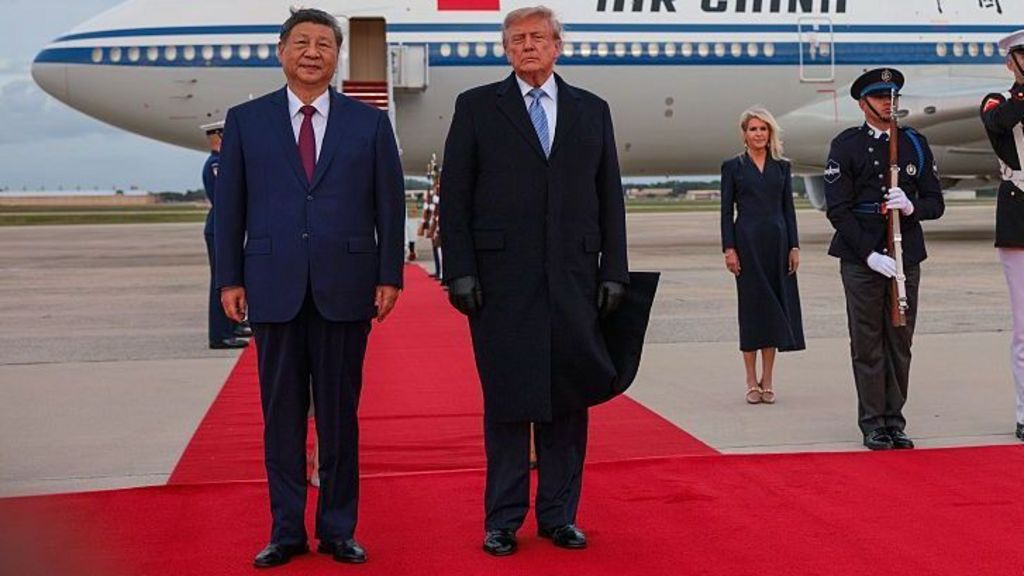
    The highly anticipated meeting between U.S. President Donald Trump and Chinese leader Xi Jinping in Washington drew global attention this week, bringing the long-simmering competition between the world’s two largest economies and military powers into sharp focus. For Xi and Beijing, the summit carried one overarching goal: to push back against what China views as Washington’s deliberate campaign to contain its rise as a global superpower, particularly on issues of trade, technology access and the Taiwan question. While Trump rolled out a full ceremonial red carpet welcome for Xi, including a formal White House state dinner, the Chinese delegation left the talks without securing many of the key concessions Beijing had prioritized.

    On trade, the two sides only agreed to extend a temporary pause in their tit-for-tat tariff dispute by a handful of months, pushing the deadline from November to January. Beijing had pushed for a full year-long extension to create stability through the remaining months of Trump’s current presidential term, a timeline that would align with China’s efforts to insulate its economy from further trade volatility amid domestic headwinds. All the most contentious bilateral trade and technology issues – including lingering U.S. tariffs on Chinese goods, China’s dominant control of global rare earth mineral supplies, and restrictions on Chinese access to cutting-edge American semiconductors – remain unresolved, deferred to future negotiation rounds. The short extension signals the U.S. is unwilling to offer long-term concessions until Beijing makes more tangible progress fulfilling its existing commitments under earlier trade agreements.

    Beijing’s urgency to lock in trade stability stems from mounting domestic economic challenges that the Chinese leadership is grappling with. Though China’s export sector continues to post record global sales, domestic consumer confidence remains weak, holding back broader growth. Youth unemployment has stayed stubbornly elevated, and the country’s property sector has faced a sharp correction in prices – a major concern for ordinary Chinese households, where 80 percent of citizens hold their wealth in residential real estate. With exports currently serving as the main pillar propping up China’s GDP growth, protecting access to the U.S. market and avoiding a return of punishing U.S. tariffs has become a top priority for Xi’s administration.

    The Taiwan question remained one of the most sensitive topics on the summit agenda, with Xi reaffirming that U.S. arms sales to the self-governing island represent a non-negotiable red line for Beijing. Under U.S. law, the United States is required to provide Taiwan with defensive military capabilities, and earlier this year, Xi publicly warned Trump that mishandling the issue could lead to direct conflict between the two powers. Following that warning, Trump delayed approval of a proposed $14 billion arms package to Taiwan, framing the move as a useful negotiating chip with Beijing. During the summit, Xi appears to have capitalized on this opening, arguing that reducing U.S. support for Taipei would lower the risk of confrontation, and reiterated China’s call for the U.S. to stick to what Beijing calls its “correct position” of opposing formal Taiwan independence. To date, however, Trump has not issued any public response to Xi’s remarks, as he faces growing bipartisan pressure from across the U.S. political spectrum to maintain long-standing American support for Taiwan.

    One underdiscussed topic on the agenda was artificial intelligence governance, a rising global priority after a series of high-profile warnings from technology leaders about catastrophic risks posed by unregulated advanced AI development. In recent weeks, Anthropic CEO Dario Amodei published an open letter calling for a slowdown in cutting-edge AI development to improve safety standards, a call that followed a warning from a top Anthropic safety researcher that unregulated advancement carries a greater than 10 percent risk of human extinction. While the two leaders did discuss AI policy, no concrete agreements or next steps – even a commitment to hold a dedicated future summit on the issue – emerged from the talks. Xi stated publicly that it is critical to ensure AI remains permanently under human control, but beyond that vague commitment, no further details of the discussion have been released. For his part, Trump has publicly dismissed fears of AI-driven human extinction as a baseless hoax.

    The most tangible win for bilateral diplomacy to come out of the talks so far is a revival of China’s iconic “panda diplomacy”: Xi confirmed that two giant pandas, Ping Ping and Fu Shuang, will arrive in Atlanta within the next few days, a gift first announced earlier this spring. More announcements are expected as the two leaders are scheduled to hold a follow-up tea meeting and tour the U.S. National Archives on the second day of the summit.

    For Beijing, the biggest immediate victory from the summit may be more symbolic than substantive. The lavish ceremonial welcome, including a personal greeting for Xi at the airport and a state banquet featuring traditional Chinese-inspired dishes, has been widely covered on Chinese social media, helping to reinforce Xi’s domestic image as a global leader on equal footing with the U.S. president. Memes highlighting Xi’s calm demeanor alongside a perceived tense expression from Trump have spread widely across Chinese platforms, with many framing the optics as a win for China’s standing on the global stage.

    Xi has managed to maintain working-level relations with the notoriously unpredictable U.S. president, and Trump has repeatedly described his personal friendship with Xi as “truly great.” But behind the warm words, ceremonial pageantry, and panda diplomacy, the fundamental power competition between the two global superpowers remains completely unresolved. The summit did little to bridge the deep divides that have defined Sino-U.S. relations in recent years, leaving the core points of contention to be fought out in future negotiations and interactions.

  • Senate edges closer to vote on Israeli accountability for US citizens killed in West Bank, Democrat says

    Senate edges closer to vote on Israeli accountability for US citizens killed in West Bank, Democrat says

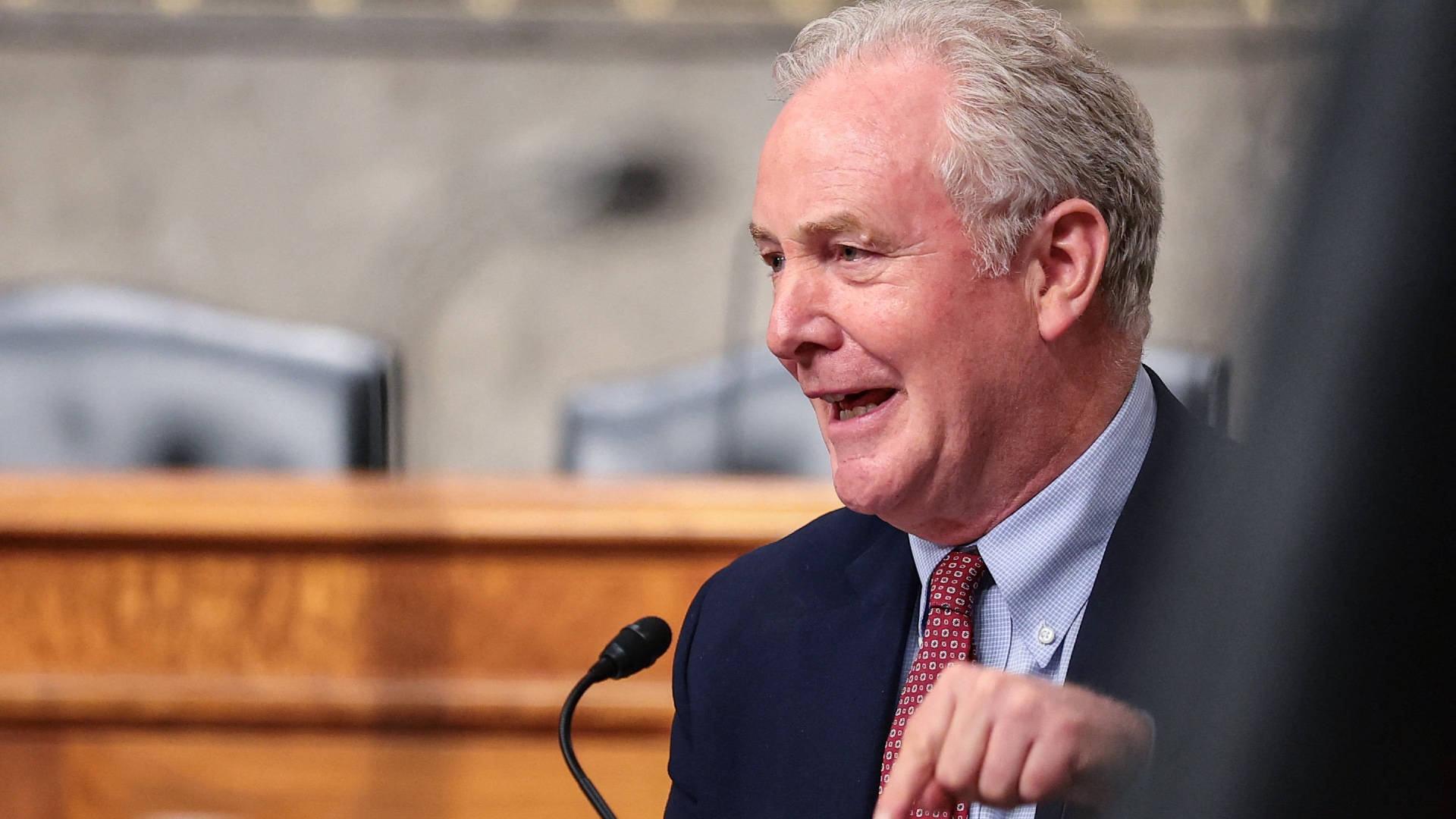
    A push to compel accountability from Israel over the deaths of nine American citizens and the detention of three additional U.S. nationals in the occupied West Bank is set to reach a Senate vote as early as next week, according to Democratic Senator Chris Van Hollen of Maryland, who announced the timeline Thursday.

    A longstanding advocate for Palestinian human rights and stricter oversight of U.S. military assistance to Israel, Van Hollen introduced Senate Resolution 852 earlier this month. The resolution is rooted in Section 502(b) of the U.S. Foreign Assistance Act, a little-used provision that grants congressional lawmakers the right to formally request the State Department produce human rights compliance reports for nations that receive American foreign aid.

    Israel currently holds the status of the largest single recipient of U.S. foreign assistance, with a planned $3.3 billion in aid allocated for 2025.

    Speaking during a virtual discussion hosted by the IMEU Policy Project this Thursday, Van Hollen expressed cautious optimism about the resolution’s path, noting that 24 Senate Democrats have already co-sponsored the measure.

    “These are Democratic senators who have put their names on the resolution, which is definitely progress from where we were two years ago when fighting for human rights for Palestinians, whether in Gaza or the West Bank, [it] was a lonely effort,” he told attendees of the session.

    As a privileged resolution, the measure bypasses standard Senate scheduling queues after a set period following introduction, allowing it to be brought directly to a floor vote due to its urgent nature for public accountability. If the vote fails to proceed next week, however, it will be pushed to the post-election legislative session following the November 3 midterm contests, Van Hollen confirmed. He has called on American constituents to contact their senators immediately in a final push to secure additional support ahead of the vote.

    “We’re at a moment where we see growing recognition throughout the public that is slowly filtering up and slowly having an impact on the bubble that is the United States Congress, and so I think that this is a moment where we can use the fact that American citizens are not getting accountability and justice to shine the light on the fact that Palestinian children and others in the West Bank are subjected to these kinds of abuses every single day,” Van Hollen said.

    The biggest barrier to passage, Van Hollen noted, is the complete lack of Republican backing: not a single one of the Senate’s 53 Republican members has agreed to support the resolution calling for accountability. The chamber is currently split 53-47 in favor of Republicans, and a tied vote would be broken by Republican Vice President JD Vance, who is widely expected to oppose the measure.

    The resolution comes one month after 45 Senate Democrats signed an open letter to Israeli Prime Minister Benjamin Netanyahu, urging him to take personal, direct action to protect U.S. citizens and their families operating in the occupied West Bank. The letter highlighted a sharp recent surge in bilateral violence that has prompted large-scale Israeli security deployments, mass Palestinian arrests, and multiple reported attacks by Israeli settlers against Palestinian religious sites and communities.

    “We urge you to take measures to prevent and intercede in this violence, establish a credible mechanism to investigate violations of law, and to make clear that the Government of Israel will not tolerate violence by its people, just as it does not tolerate violence against its people,” the letter stated, adding that Israel must launch full, transparent investigations into the deaths of the nine U.S. citizens.

    To date, high-profile deaths of U.S. nationals in the West Bank have only been investigated internally by the Israeli military, with no independent probe ever demanded by the U.S. government. Notable cases include 2022 killing of Al Jazeera journalist Shireen Abu Akleh, who was shot in the head by Israeli forces while on assignment; the 2024 death of activist Ayşenur Ezgi Eygi, killed by Israeli fire during a protest against illegal Israeli settlement expansion near Nablus; and the 2025 killing of Sayfollah Musallet, an ice cream shop worker beaten to death by Israeli settlers.

    Data compiled from regional monitors shows that Israeli operations and attacks by both military forces and settler groups have killed more than 1,100 Palestinians in the occupied West Bank over the past three years.

    This report draws on original independent reporting from Middle East Eye, which provides unrivaled, independent coverage of the Middle East, North Africa and surrounding regions.

  • Why Trump gave Xi an ornate bald eagle statue at the state dinner

    Why Trump gave Xi an ornate bald eagle statue at the state dinner

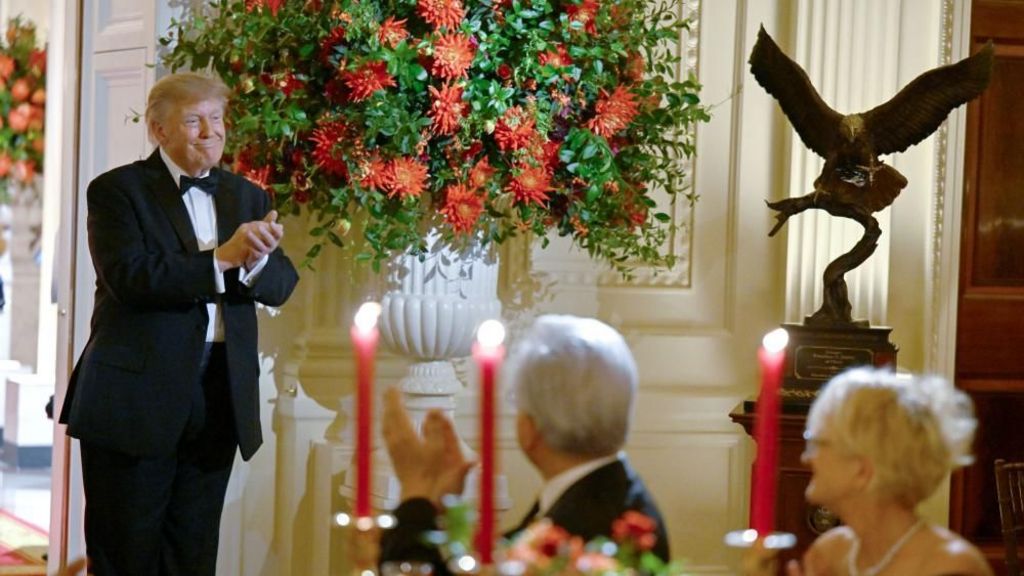
    Against the backdrop of simmering geopolitical tensions and a fragile trade truce between the world’s two largest superpowers, the traditional diplomatic practice of state gift-giving took center stage during a lavish state dinner in Washington D.C., where U.S. President Donald Trump presented Chinese President Xi Jinping with a custom-designed sculpture of the North American bald eagle, the United States’ iconic national symbol.

    Trump told assembled VIP guests at the Thursday evening event that the handcrafted piece was shaped to capture “the free and soaring spirit of America”, revealing that both he and First Lady Melania Trump had directly contributed to the design process. The exchange of carefully curated gifts, a longstanding but often underappreciated pillar of international diplomacy, forms a key building block for the personal rapport between the two leaders at their three-day summit – a core objective that underpins broader efforts to manage the world’s most consequential bilateral relationship.

    Daniel Kritenbrink, a former 30-year U.S. diplomat with deep expertise in Asian affairs and current partner at The Asia Group, explained that personal connections between heads of state carry outsized weight in this dynamic. “Leaders will tackle all manner of intractable, complex issues, but at the end of the day, they are still two people engaging with one another,” Kritenbrink noted. “That personal bond matters, and the gift exchange is one critical way to nurture that bond.” He added that rapport-building at the leader level is particularly important for Chinese diplomatic culture, and that the direct Trump-Xi relationship acts as the stabilizing glue for a partnership that shapes global security, economic growth, and technological progress. Both leaders, he emphasized, place high value on this style of personal, leader-to-leader diplomacy.

    Gift-giving has emerged as a notable feature of the Trump presidency, with the U.S. leader having received a range of high-value offerings from foreign counterparts, including a luxury jumbo jet, an engraved gold bar, and a gem-encrusted gold ring, among other items. Ole Jacob Sending, a researcher at the Norwegian Institute of International Affairs, argues that this focus on ceremonial exchanges aligns with Trump’s broader governing style: “If you look at how the Trump presidency operates, broadly defined gift-giving is very much a core part of his approach to diplomacy.”

    The exchange was reciprocal: earlier that same Thursday, Xi announced two major goodwill gestures from China to the United States: a gift of two giant pandas, Ping Ping and Fu Shuang, that will soon take up residence at Zoo Atlanta, and a new 100,000-student exchange initiative that will welcome 100,000 American students to study in Chinese institutions over the next five years. “Giant pandas have long served as envoys of friendship between the Chinese and American people,” Xi said. “In a few days, these two pandas will arrive at their new home to meet the American people.” It remains unclear whether additional gifts were exchanged, and the BBC has reached out to the White House for further comment.

    Scholars of diplomatic practice note that lavish state gift-giving is far more common in autocratic regimes and Gulf monarchies today, with research co-authored by Morten Skumsrud Anderson, who worked with Sending on a study of diplomatic gift exchange, finding that “autocracies like China tend to give far more expensive gifts” than democratic states. In Western democracies, longstanding legal guardrails and transparency rules have scaled back the value of state gifts. For the United States, the Constitution’s emoluments clause caps the value of gifts a sitting president can accept from a foreign government at $525. Any gift exceeding that threshold becomes property of the federal government, unless the president chooses to purchase it at full value out of their personal funds. U.S. presidents are also required to secure congressional approval for gifts above the limit unless they cover the cost personally. Anderson emphasized that these rules mean diplomatic gift exchange is anything than impulsive: “This is not a last-minute souvenir purchase at an airport.”

    Every detail of the exchange – from the type of gift to the timing, venue, and format of the reveal – is negotiated for weeks by lower-level diplomatic teams, resulting in a tightly scripted, carefully planned ceremony. Sending explained that missteps in gift-giving can carry real diplomatic consequences, pointing to high-profile blunders from past exchanges. During Xi’s 2013 state visit to the U.S., then-President Barack Obama gifted Xi a handcrafted inscribed bench made from California redwood, the native tree of the state where the two leaders met, a gesture that was widely praised as thoughtful and appropriate. That stands in contrast to a 2009 exchange between Obama and then-British Prime Minister Gordon Brown: Brown gave Obama an ornamental pen holder crafted from timber of a 19th-century anti-slavery ship, a historically significant gift, while Obama gifted Brown a box-set of DVDs that were incompatible with UK region-locked players. “That’s a classic example of an embarrassing misstep,” Sending said, noting that the incident was less consequential because the two leaders were close allies. For powers navigating deep-seated disagreements, however, a misjudged gift could derail broader negotiating goals.

    This summit marks the third face-to-face meeting between Trump and Xi since the start of Trump’s second term, held at a moment of significant friction between the two nations. The talks come amid growing global anxiety over AI competition, as both countries race to establish dominance in the fast-growing transformative technology, and follow a years-long bitter trade war that has only resulted in a temporary truce, extended during Xi’s visit.

    For Kritenbrink, the entire ceremonial apparatus of the state visit – from military flyovers to cultural performances, formal dinners, and the carefully planned gift exchange – all serves a single core purpose: laying the groundwork for stable bilateral relations. “It’s all protocol, optics, and relationship-building as a means to an end, which is stable US-China relations,” he said. “I’ll take a fragile truce over an all-out trade war any day.”

  • Iranian-American group sues Trump for ‘unconstitutional’ war on Iran

    Iranian-American group sues Trump for ‘unconstitutional’ war on Iran

    A Washington-based Iranian-American civic advocacy organization has initiated a landmark constitutional lawsuit against former U.S. President Donald Trump, demanding a federal court invalidate his ongoing military campaign against Iran as an unconstitutional overreach of executive power that bypassed required congressional authorization. The National Iranian American Council (NIAC) Action, the group’s advocacy arm, filed the 16-page complaint for declaratory judgment on Thursday in the U.S. District Court for the District of Columbia, represented by prominent constitutional scholars and attorneys Alan Morrison and Bruce Fein.

    Lead counsel Morrison told reporters gathered at the National Press Club for the official announcement that the legal team would pursue the case through every available appellate level, regardless of early procedural hurdles. Morrison acknowledged that the U.S. Supreme Court has avoided ruling on core war powers questions throughout the nation’s 236-year history, but argued that the current circumstances present an unprecedented opportunity for judicial intervention. Notably, both the Republican-controlled Senate and Democratic-led House of Representatives already passed a bipartisan War Powers Resolution in June seeking to curb Trump’s authority to continue military operations against Iran, shifting the political landscape that has historically discouraged courts from taking up such cases. “This changed dynamic makes the court far more likely to accept our case and issue a binding ruling on the constitutionality of this war,” Morrison added.

    In response to the June congressional War Powers Resolution, the Trump White House issued a formal statement claiming that no active hostilities were ongoing, asserting that all combat operations launched February 28, 2026 were formally terminated by a presidential ceasefire order issued April 7 the same year. Despite that official ceasefire declaration, fragile truce has broken down repeatedly, with the U.S. conducting sustained multi-day bombing campaigns across Iran’s southern coastal region earlier this month. One of those strikes hit a civilian wedding venue, killing and wounding dozens of non-combatant civilians.

    NIAC President Jamal Abdi emphasized that Trump’s unauthorized war has exposed critical gaps in long-assumed checks and balances on executive war power, revealing that long-held guardrails were merely informal gentlemen’s agreements rather than enforceable constitutional limits. “This moment is not just about ending this ongoing catastrophe. It is about setting a binding precedent for the future, so no single president can drag our nation into war without explicit congressional approval,” Abdi told reporters. “This is a matter of life and death for innocent people on both sides, and it is long past time this fundamental constitutional question is settled once and for all.”

    At the heart of the legal challenge is the Constitution’s explicit Declare War Clause, which grants sole authority to initiate war to the legislative branch, not the executive. NIAC legal team argues that Trump’s months-long bombing campaign directly violates this core constitutional separation of powers. For decades, however, the constitutional requirement for congressional war declaration has fallen into disuse: the U.S. now routinely conducts large-scale military operations, including targeted extrajudicial killings, across multiple sovereign nations without formal declarations. The 2001 Authorization for Use of Military Force (AUMF), passed days after the September 11 terrorist attacks, has been repeatedly stretched by successive administrations of both parties to justify open-ended military campaigns across the globe, many of which never deploy large ground combat forces. The executive branch has also gradually accumulated broad deference on foreign policy matters from both Congress and the courts over the past century.

    Co-counsel Bruce Fein noted that the dispute over executive war authority requires judicial resolution: “The president claims he has unilateral authority to wage this war, and every other branch and most constitutional scholars disagree. That is exactly why we are in court—there is no other body that can settle this constitutional question definitively.” In recent weeks, the Trump administration has launched a coordinated messaging push led by Vice President JD Vance, ordering reporters to avoid labeling the military campaign a “war,” and instead refer to it as sporadic “hostilities” or “skirmishes.” Morrison pushed back sharply on this rhetoric: “If you have been bombing another country continuously for seven months, that is a war. If you enforce a full blockade and kill hundreds of civilians, that is a war. When you have already spent $44 billion on military operations, that is unequivocally a war.”

    The lawsuit names eight Iranian-American plaintiffs who have suffered direct, personal harm from Trump’s bombing campaign, connecting their individual injuries to the legal challenge to establish standing for the court to hear the case. Kowsar Gowhari, one of the plaintiffs who spoke at Thursday’s press conference, lost four immediate family members in a U.S. strike, including a 70-year-old elderly cousin and a two-month-old infant. “I have an absolute responsibility as an American citizen to make sure their deaths are not forgotten and their loss does not go unanswered,” Gowhari said. “This is my country, I built my life here, and I cannot stand idle as my nation perpetuates this violence in violation of its own founding values. This war must end here, and it must end now.”

    Another plaintiff, Nima Dilmaghani, reported that his cousin was severely injured when the commercial warehouse where she worked was destroyed in a U.S. bombing. The woman suffered a fractured leg, permanent eardrum damage, and the amputation and unsuccessful reattachment of her index finger, which has permanently lost all function. Ten of her coworkers were killed in the same strike. U.S. Army veteran Alan Band, another Iranian-American plaintiff, shared that his family living in northern Tehran has endured repeated nearby explosions that shook their home’s foundations, cut off access to clean water and electricity for weeks at a time, and left the entire family traumatized. Parveen Esmaeilzadeh’s in-laws remain at constant risk of new strikes, suffer from severe post-traumatic stress disorder, and face catastrophic economic hardship. Her mother-in-law’s apartment building has sustained structural cracks from repeated blasts, and her nieces and nephews have not been able to attend a single day of school since the U.S.-Israeli joint campaign began February 28.

    Abdi closed by framing the lawsuit as a test of core constitutional principles: “This lawsuit asks one fundamental question that goes to the heart of our democracy: can a single person, acting alone, decide to keep an entire nation at war without the consent of the people’s elected representatives?”

  • Watch: Protests and walkouts as Netanyahu addresses UN

    Watch: Protests and walkouts as Netanyahu addresses UN

    As Israeli Prime Minister Benjamin Netanyahu prepared to take the stage at the United Nations General Assembly (UNGA) in New York, the high-stakes diplomatic event was overshadowed by widespread public demonstrations and coordinated walkouts from multiple delegations and attendees. Long-simmering tensions over the Israeli government’s policies, particularly in the occupied Palestinian territories and domestic judicial reforms, have drawn sharp international scrutiny in recent months, creating a charged atmosphere that boiled over ahead of Netanyahu’s scheduled address.

    Multiple protest groups gathered outside UN headquarters in Manhattan, holding large signs and chanting to demand a end to Israeli occupation and hold the Netanyahu administration accountable for alleged human rights violations. Inside the assembly hall, several diplomatic delegations from Arab and Muslim-majority nations were joined by progressive Western representatives in a coordinated walkout designed to signal their disapproval of the prime minister and his policy agenda. Even before Netanyahu stepped up to the podium, the disruption had already shifted global media focus from the content of his planned speech to the deep divisions that exist within the international community over Israel’s actions.

    According to on-the-ground reporting from the BBC’s Nada Tawfik, the scale of organized opposition caught many UN officials off guard, requiring extra security to be deployed to prevent the situation from escalating into larger unrest. The pre-speech protests and walkouts underscore how the Israeli-Palestinian conflict remains one of the most divisive unresolved issues on the UN’s agenda, with growing global pressure on the Netanyahu administration to reverse course on its most controversial policies. This display of public and diplomatic dissent also marks a notable shift from previous years, as opposition to Israeli policy has moved beyond fringe activism to gain open support from multiple official diplomatic delegations.

  • Canada prosecutors drop charges against two in Toronto gold heist

    Canada prosecutors drop charges against two in Toronto gold heist

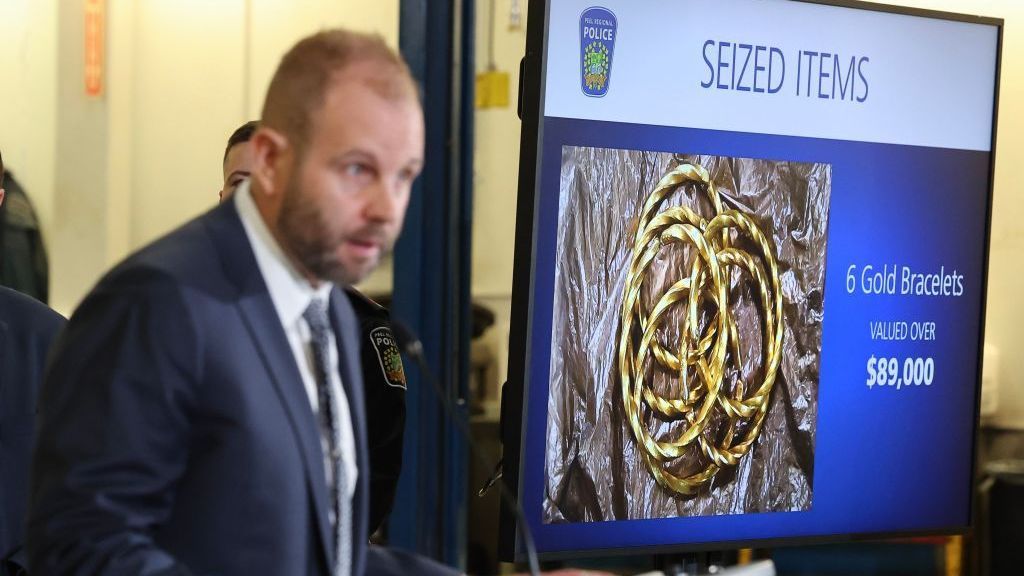
    One of Canada’s most high-profile theft cases has taken an unexpected turn, as Canadian prosecutors have withdrawn criminal charges against two men linked to the 2023 massive gold heist at Toronto Pearson International Airport. Amit Jalota and Ali Raza, the two accused individuals, saw their charges formally dismissed last week, closing a chapter that upended their personal and professional lives for nearly three years.

    The brazen heist, which remains the largest gold theft in Canadian history, unfolded in April 2023 inside an airport cargo terminal, shortly after a shipment arrived via an Air Canada flight originating from Zurich, Switzerland. In total, thieves made off with more than 6,500 gold bars weighing approximately 400 kilograms, alongside millions of dollars in untraceable cash. The total value of the stolen goods is estimated at C$20 million, equal to roughly $14.5 million USD. According to investigators from Peel Regional Police, the operation relied on a clever ruse: an accomplice gained access to the secured cargo by presenting a fraudulent airway bill, the official documentation required to claim shipped goods, before loading the stolen cache onto a waiting truck for transport off airport grounds.

    It took authorities one full year to wrap up the initial investigation phase, which led Peel Regional Police to announce a series of arrests and charges connected to the heist in 2024. But last week’s court action has now cleared two of the highest-profile accused in the case. Lawyers for both Jalota and Raza confirmed to national Canadian media outlets that their clients have consistently maintained their innocence from the moment they were first linked to the crime, and that they are now relieved to put the ordeal behind them.

    In a formal statement provided to reporters, Jalota’s legal team emphasized that the public nature of the allegations had already inflicted irreversible harm on their client, even before the case reached a trial. “He has been punitively and unreasonably punished for the last three years as he was forced to navigate the criminal justice system and the fall out of these allegations that were publicly broadcasted both nationally and internationally,” the statement read. Both men, the legal teams added, saw their daily lives and livelihoods completely upended by the accusations, which included charges of possession of stolen gold and stolen currency connected directly to the heist.

    The broader investigation into the coordinated theft has already yielded multiple convictions in Canada and the United States. Earlier this year, a Canadian court handed down a four-year prison sentence to one man who pleaded guilty to helping plan the heist. Across the border, the U.S. Department of Justice handed a 160-month prison sentence to a second connected individual, who pleaded guilty to conspiracy to illegally traffic firearms. That man was intercepted by law enforcement in Pennsylvania with 65 handguns stashed in his car’s trunk; Canadian investigators have alleged the funds used to purchase the illegal weapons were traced directly to proceeds from the Toronto airport gold theft.

    Two additional accused individuals are still scheduled to face separate trials later in 2025 on charges of conspiracy to commit theft, and both have entered not guilty pleas. The withdrawal of charges against Jalota and Raza leaves the outcome of the broader investigation still unresolved, with much of the stolen gold still unaccounted for as the judicial process moves forward for the remaining defendants.