博客

  • Zelenskyy’s direct plea helped unlock Russia sanctions in the Senate. What’s next is uncertain

    Zelenskyy’s direct plea helped unlock Russia sanctions in the Senate. What’s next is uncertain

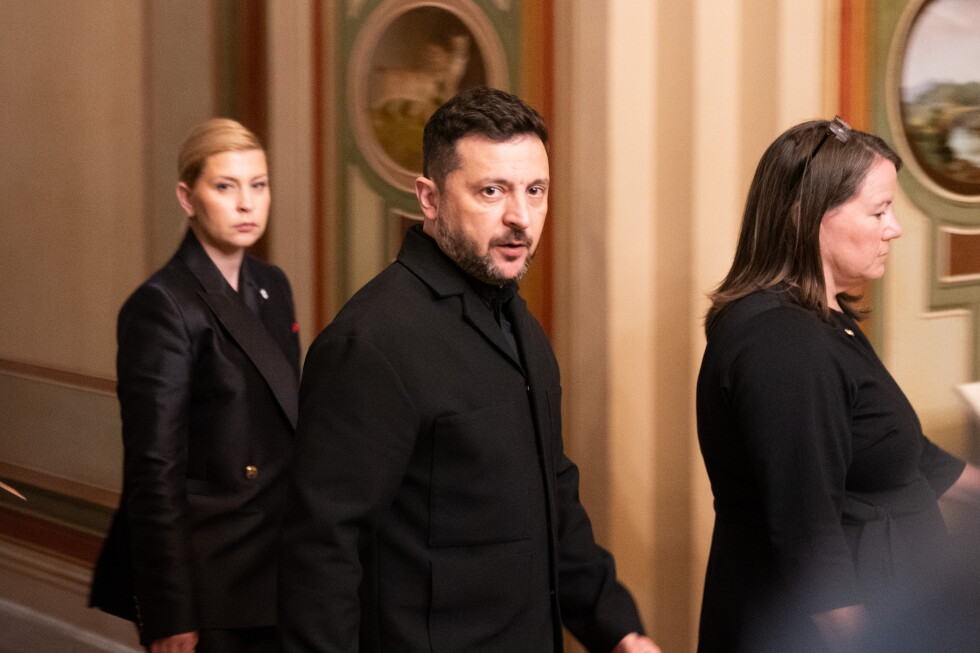
    On a singular day in Washington that blended mourning and urgent diplomacy, Ukrainian President Volodymyr Zelenskyy arrived at the U.S. Capitol just hours after the funeral of the late Republican Sen. Lindsey Graham to make a direct, personal appeal for sweeping new sanctions against Russia — a last legislative effort spearheaded by Graham to cut off Moscow’s war-fighting revenue.

    A rare show of bipartisan attention greeted the Ukrainian leader: half of all U.S. senators packed into a closed-door meeting, setting aside their usual mobile phone distractions to focus on Zelenskyy’s briefing. Joined by House members, attendees heard Zelenskyy lay out Ukraine’s ongoing strategy in its years-long defensive war against Russia’s full-scale invasion, detailing how Kyiv’s forces have held back Russian advances and even taken offensive action while outlining urgent unmet needs. Those needs include additional Patriot interceptor missiles, expanded access to Elon Musk’s Starlink satellite internet, updated defense licensing agreements, and, most pressingly, immediate passage of the sanctions package Graham spent a full year negotiating to advance.

    Zelenskyy made the stakes clear to lawmakers, according to Sen. Jeanne Shaheen, the top Democratic member of the Senate Foreign Relations Committee. “He said, ‘We need this legislation,’” Shaheen recalled in an interview, adding that the bill’s passage is critical to the morale of both Ukraine’s frontline troops and its civilian population.

    Multiple lawmakers in attendance described a palpable shift in the room, buoyed by Zelenskyy’s quiet confidence in Ukraine’s ability to persevere. “You could feel palpably in the room a sense that — Zelenskyy’s confidence of their ability to hold and to persevere,” said Rep. Steny Hoyer, Maryland’s veteran Democratic congressman and former House Democratic leader. “There was a sense in the room that, look, we can be successful.”

    The legislation, later named the Lindsey O. Graham Sanctioning Russia Act, marks the most ambitious pro-Ukraine policy initiative from Congress since Donald Trump reclaimed the White House in 2025. After two years of gridlock on Ukraine policy — the last major congressional action was 2024’s supplemental aid package — the bill advanced out of the Senate the very night of Zelenskyy’s visit, with the Ukrainian leader taking an unprecedented seat in the Senate chamber to observe the vote. Lawmakers smiled, waved, and gave encouraging gestures as they cast their ballots, and the bill ultimately passed days later by a lopsided 86-11 margin, sending it to the House of Representatives for consideration.

    Despite that strong Senate showing, the bill’s future remains deeply uncertain. House Speaker Mike Johnson leads a narrow Republican majority overwhelmingly reluctant to commit to new overseas initiatives aligned with U.S. foreign policy goals. Even among many Democratic lawmakers who have long supported Ukraine, concerns have emerged about the bill’s structure: it grants Trump sweeping authority to impose tariffs of up to 100 percent on any country that continues to import Russian energy, with no explicit congressional checks on how that power is used.

    At its core, the legislation is designed to cut off the Kremlin’s primary source of funding for its war machine by pressuring major Russian energy customers including China and India to halt purchases of Moscow’s oil and gas. But critics across the Democratic caucus warn the open-ended tariff authority gives the Trump administration too much unregulated power, which could be used against U.S. allies and ultimately raise costs for American consumers.

    “It’s important not to underestimate symbolically what this would mean,” said Daniel Balson, a policy advocate with Razom for Ukraine, a pro-Ukraine pro-democracy organization. Balson urged Congress to maintain momentum on the bill, arguing that passage would send a critical message to Kyiv that “hiccups and all, there is still an international alliance that stands behind Ukraine’s fight.”

    Zelenskyy’s 2025 Capitol Hill visit marks the latest chapter in a years-long diplomatic outreach to U.S. lawmakers that has seen dramatic high points and deep periods of uncertainty. In March 2022, just days after Russia launched its full-scale invasion, Zelenskyy addressed Congress via a dramatic private video call, pleading for warplanes to defend Ukraine’s skies. That December, he traveled to Washington for a historic Christmas address to Congress, drawing comparisons to Winston Churchill’s World War II visits to Washington to rally allied support.

    But by 2023, as then-Republican front-runner Trump aligned with critics of continued aid, congressional Republicans abandoned plans for a new round of Ukraine funding. After Trump won the 2024 election and returned to the Oval Office in 2025, all progress on new Ukraine aid ground to a halt. A high-profile Oval Office meeting saw Trump publicly berate Zelenskyy, blaming the Ukrainian leader’s opposition to Putin for blocking a negotiated peace. As Republican Rep. Don Bacon of Nebraska, a former Air Force brigadier general, put it: Republican support for the bill is largely held back by Trump’s stance. “This has largely hinged on President Trump,” Bacon said, noting that more Republicans would back Ukraine publicly if Trump signaled his approval.

    Graham, who spent a full year negotiating with the White House to win Trump’s backing for the sanctions package, shared the news of his breakthrough with colleagues at the NATO summit in Turkey last month, before traveling on to Kyiv for a final visit to Ukraine. He died just days after returning to Washington, from an apparent torn aorta. His Democratic partner on the bill, Sen. Richard Blumenthal of Connecticut, recalled that Graham called winning Trump’s approval a “BFD” — a nod to how critical the breakthrough was for the legislation.

    Top House Democrats have already raised formal objections to the bill’s open-ended tariff provisions. House Foreign Affairs Committee top Democrat Gregory Meeks of New York and Ways and Means Committee top Democrat Richard Neal of Massachusetts have both publicly pushed back on the language. More than 30 Senate Democrats supported a failed amendment to rein in the president’s tariff authority before the bill’s passage.

    “This is not so much a sanctions bill as it is a massive backdoor authority for President Trump to impose more tariffs, including on our European allies, that hurt American families,” Meeks said in a statement. Even so, Hoyer, who worked with Meeks on a separate pro-Ukraine security bill that passed the House earlier this year over Johnson’s objections, is urging lawmakers not to let the opportunity slip. He argued that existing congressional and judicial checks are sufficient to limit any potential abuse of the tariff authority, and that passing the bill is critical to sending a message of support to Ukraine.

    “You know there was so much negative vibes that we were sending,” Hoyer said. “We’ve got to send a letter to these courageous Ukrainians that we’re with them.”

  • ‘Come on’: Pauline Hanson, Nationals leader Matt Canavan clash over Barnaby Joyce

    ‘Come on’: Pauline Hanson, Nationals leader Matt Canavan clash over Barnaby Joyce

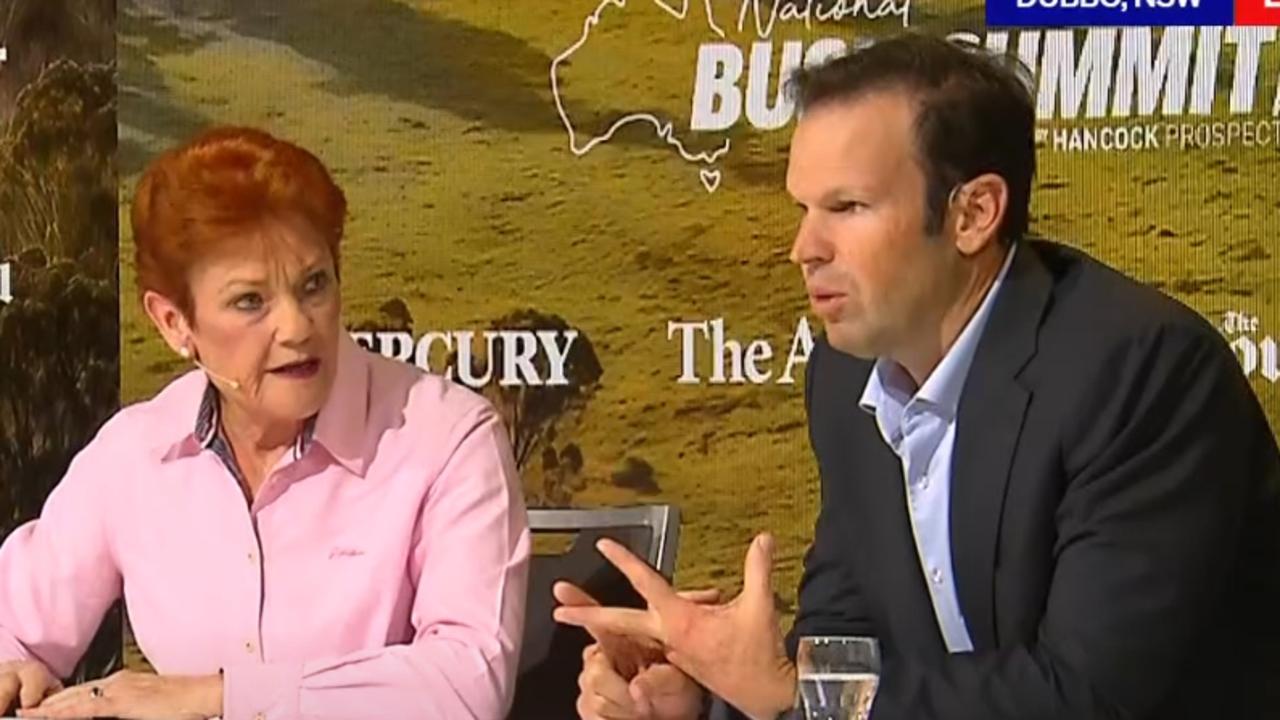
    A high-stakes public confrontation between One Nation founder Pauline Hanson and new Nationals leader Matt Canavan unfolded this Thursday at the annual Bush Summit in Dubbo, located in New South Wales’ Central West. The two senior conservative politicians went head-to-head on two divisive issues: former Nationals deputy prime minister Barnaby Joyce’s late 2023 defection to One Nation, and Australia’s long-running net-zero emissions policy debate.

    Canavan, who took over the Nationals leadership earlier this year from David Littleproud, opened discussion on Joyce’s party exit, acknowledging that he still considers the long-serving New England MP a personal friend. “He openly said he left because he didn’t like David Littleproud,” Canavan told the panel audience. While Canavan expressed personal disappointment in Joyce’s choice, he emphasized that his political work prioritizes policy impact over personal relationships, noting he spends long stretches away from his wife and five children to advance his policy goals. “I don’t think that’s a reasonable basis to leave a political party who put you there … the hundreds of thousands of volunteers that stayed out in the winds, out in the cold to get you elected,” he added.

    Hanson immediately interjected to defend Joyce, her party’s newest lower house member, pushing back on Canavan’s framing of the defection. “Come on, Matt. He didn’t leave The Nationals party just because of David Littleproud,” she said. Canavan ultimately conceded a second core motivation, acknowledging Joyce also cited the Nationals’ adoption of a net-zero emissions target as a driving factor — though he noted the party had already scrapped that policy before Joyce left.

    The confrontation quickly shifted to the broader net-zero debate, where Hanson pushed back hard against what she framed as suggestions she and One Nation are irrelevant to Australian climate politics. “It just annoys me, you know, to make me as if I’m irrelevant in this, as if I’ve got nothing to offer politics,” she said. Hanson also pushed back on the narrative that net-zero is a policy pushed by progressive parties, pointing out that ambitious renewable energy targets were first introduced under Liberal former prime minister John Howard, and the formal net-zero commitment was made under Liberal prime minister Scott Morrison — a point Canavan interrupted to clarify did not include the Paris Climate Agreement, which Hanson has long opposed. Hanson reaffirmed she has opposed Australia’s net-zero target from its inception, noting the Labor government has only continued the existing framework laid out by the previous Liberal government.

    Beyond climate policy, Hanson also addressed ongoing confusion over One Nation’s controversial migration policy, which calls for cutting net overseas migration to a cap of 130,000. She clarified that One Nation’s recent lower house MP David Farley misspoke when he claimed the party’s total migration numbers would not differ greatly from the current Labor government’s targets. Hanson explained that the 130,000 cap does not include seasonal farm workers brought into Australia under the Pacific Australia Labour Mobility (PALM) scheme, arguing these workers fill critical labor gaps that keep regional Australian agricultural and abattoir sectors operational. Unlike permanent migrants and student visa holders, PALM workers are provided accommodation directly by their employing farms and businesses, Hanson said, so they do not add pressure to Australia’s strained national housing market. When pressed, she confirmed that total annual migration, including PALM scheme workers, would exceed the 130,000 net cap, framing the separate scheme as a necessary exception for rural Australia.

    The public clash highlights growing tension between the Nationals and One Nation, as the smaller right-wing party targets regional-held Nationals seats ahead of Australia’s next federal election, leveraging voter discontent over climate policy and migration to win over regional electorates.

  • Japan’s ‘polka dot queen’ artist Yayoi Kusama dies aged 97

    Japan’s ‘polka dot queen’ artist Yayoi Kusama dies aged 97

    Yayoi Kusama, the globally revered Japanese avant-garde artist universally known as the ‘Polka Dot Queen’, has passed away at the age of 97, her official institution confirmed in a public statement on August 27, 2026. The pioneering creative, who died on August 14 at a Tokyo hospital, leaves behind a seven-decade legacy of boundary-pushing work that transformed contemporary art, shaped by her unique relationship with mental health and a distinct visual language defined by polka dots, net patterns and infinite, immersive motifs.

    Born in 1929 into a wealthy Japanese family, Kusama began nurturing her iconic artistic style as young as 10, rooted in the vivid visions and hallucinations that shaped her childhood perspective. In her autobiography, she recalled an early transformative experience: after noticing a red floral pattern on a tablecloth, the pattern appeared to spread across every surface of the room, from ceilings to pillars, even covering her own body. This epiphany laid the foundation for the repetitive, proliferating motifs that would become her lifelong signature.

    After completing art studies in her home country, Kusama relocated to the United States in the late 1950s, where she quickly carved out a space in New York City’s exploding 1960s avant-garde movement. As a Japanese woman working in a predominantly white, male creative scene, she faced systemic discrimination, but her large-scale bold canvases and provocative, experimental ‘happenings’—which combined body painting, public performance and her trademark polka dots—earned her rapid notoriety and a devoted cult following. Beyond fine art, Kusama expanded her practice into multiple domains: she launched a commercial fashion line, founded the conceptual ‘Church of Self-Obliteration’, and even officiated a same-sex wedding under her self-styled title as the ‘High Priestess of Polka Dots’, cementing her reputation as a radical cultural trailblazer.

    Kusama returned to Japan in the 1970s, where she voluntarily admitted herself to a Tokyo psychiatric hospital to manage her long-standing mental health challenges. For the remaining decades of her life, she continued to create art daily from her base at the facility, rarely stepping away from her practice. Her official statement noted that she kept painting until her final days, never putting down her brush, and remained committed to exploring her core artistic themes of infinite love and the eternal soul throughout her entire life.

    In the decades following her return to Japan, Kusama’s work grew into a global cultural phenomenon. Her iconic large-scale pumpkin sculptures—including the legendary installation on Japan’s Naoshima ‘art island’, her immersive ‘Infinity Rooms’ that play with perception and endless repetition, and other interactive installations drew record-breaking crowds at museums around the world, with major works selling for millions of dollars at auction. She developed a instantly recognizable public persona, often seen in public wearing her signature bright red wig and bold, polka-dotted clothing, turning her own image into an extension of her artistic brand.

    Her artistic philosophy, which she termed ‘self-obliteration’, centered on the idea that repeating simple motifs allows the individual self to dissolve into a larger, interconnected whole, a concept deeply rooted in her lifelong experience of hallucinatory visions. News of her death triggered an outpouring of tributes from fans and admirers across the globe. One Japanese user on the social platform X wrote, ‘I’ve had the privilege of viewing her paintings and your works several times. Bold, delicate, beautiful. That world was one I had never known. And to me, she was also someone truly endearing. May you rest in peace.’

  • Shackled Tate brothers in court asking to be released from jail during extradition fight

    Shackled Tate brothers in court asking to be released from jail during extradition fight

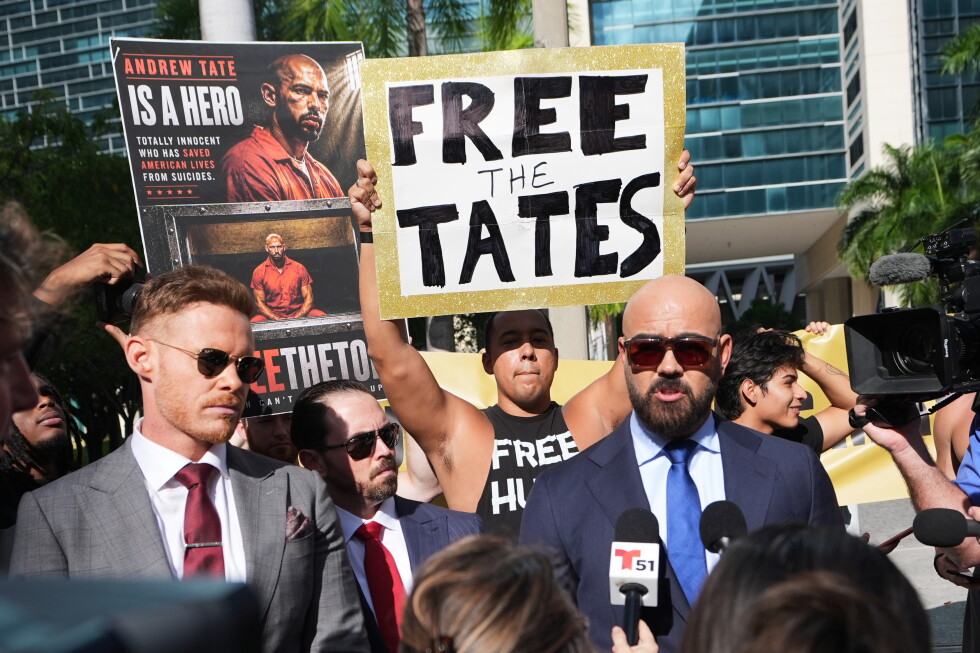
    MIAMI (AP) — One half of the world-famous, polarizing Tate brothers took the stand in a Miami federal courtroom Thursday to make a desperate case for temporary release from custody. Tristan Tate, 38, told the judge that holding him and his older brother Andrew behind bars while they battle extradition to the United Kingdom on rape and human trafficking charges makes mounting an adequate legal defense impossible.

    The pair have been held at a Miami federal detention facility since their arrest on July 18, nearly six weeks as of Thursday’s hearing. Defense attorneys are pushing the court to grant bail ahead of the still-unscheduled extradition hearing, arguing that the brothers pose no flight risk and have a track record of complying with court orders in an ongoing separate sex crime investigation in Romania.

    Prosecutors, however, argue the brothers are high flight risks. They point to the Tates’ own public claims of vast wealth and possession of multiple passports, assets that would let them flee the country if released. The defense has pushed back hard on this framing, telling the court that most of the Tates’ bragging about luxury assets is performative, crafted to boost their online brand. Claims of a $50 million superyacht, they say, are false — the vessel is not owned by the brothers. Even the high-end luxury cars, including a $2.1 million Aston Martin featured in their social media content, were rented for the camera, attorneys added. Claims of holding multiple passports were satirical jokes taken out of context, the defense argued.

    On his way into the courthouse, lead defense attorney Joseph McBride acknowledged the steep odds his clients face: he told reporters he is not aware of any case where the presiding U.S. Magistrate Lauren Louis has granted bail to a defendant awaiting an extradition hearing. Still, McBride insisted that the truth is on his side, calling the brothers innocent, law-abiding men who have never evaded legal proceedings.

    When he took the witness stand, Tristan Tate expanded on that argument, saying that detainment makes clearing his name impossible. “I need to clear my name. I need to take part in these proceedings, I can’t do that from the secure housing unit,” he told the court. He also laid out harsh details of his current jail conditions: ant infestations in his cell, a lack of privacy for toilet use visible to all passersby, and a 14-pound weight loss over six weeks from a steady diet of junk food. Both brothers appeared in court Thursday in tan prison uniforms with shackles around their limbs.

    Andrew Tate’s attorney Howard Srebnick also pushed back on the brothers’ toxic public reputation, arguing that the 39-year-old’s viral violent and misogynistic statements are part of a staged online persona, not a reflection of his real character. He compared Andrew Tate’s online act to Sacha Baron Cohen’s famously provocative character Ali G, noting that the content was intended as edgy performance, not a reflection of the man’s real views. The brothers have long maintained that their most controversial statements are either taken out of context or intended as jokes.

    The Tate brothers, both former professional kickboxers holding dual U.S.-U.K. citizenship, have built a massive global following across social media platforms. Their online empire is built around content promoting extreme wealth, traditional male dominance, and open misogyny, making them one of the most divisive influencer pairs on the modern internet. Both are vocal public supporters of former President Donald Trump; the White House has previously stated that the brothers should not expect any executive intervention in their case.

    To date, no date has been set for the extradition hearing. Under U.S. extradition rules, U.K. authorities have until mid-September to submit supporting evidence to the U.S. State Department to move the proceedings forward. Defense attorneys argue the U.K.’s extradition request is premature, noting the brothers are still involved in ongoing proceedings in Romania, where authorities have already granted them pre-trial release. The pair have complied with all court-ordered restrictions in Romania and not attempted to flee, the defense says. Judge Louis reminded legal teams Thursday that she is bound to follow U.S. federal law in ruling on the request. A ruling on the defense’s bail request has not yet been issued.

  • Return of US diplomats to Middle East seen as reducing risk of return to war

    Return of US diplomats to Middle East seen as reducing risk of return to war

    After months of widespread evacuation and downsizing triggered by escalated military conflict against Iran, the Trump administration has initiated the process of returning US diplomatic personnel to key embassy and consulate posts across the Middle East, multiple major media outlets have confirmed. This diplomatic shift signals a clear assessment by Washington that it does not expect an immediate resumption of large-scale intense warfare that forced the drawdown of US diplomatic presence across the region earlier this year.

    According to a Tuesday report from Axios, Secretary of State Marco Rubio has informed foreign diplomatic counterparts that the US will refrain from launching new offensive strikes against Iran “for the time being”, and instead will prioritize ramping up punitive economic pressure on the Islamic Republic to advance its policy goals. For the hundreds of evacuated diplomatic personnel and their families, the decision brings an end to months of uncertainty that left them in administrative limbo while the White House weighed whether and how to restaff regional missions.

    Many evacuated diplomats were forced to relocate back to the United States alongside their spouses and children, creating significant personal disruption as families prepared for the new academic year, unsure whether they would need to enroll children in US schools or arrange for schooling in the Middle East.

    The New York Times reports that the facilities targeted for partial to full staffing restoration include diplomatic missions in Israel, Lebanon, Saudi Arabia, Qatar, Oman, Iraq and Kuwait, with the first wave of returning diplomats heading to the US Embassy in Beirut, Lebanon. Under the new staffing plan, diplomatic posts in the United Arab Emirates, Saudi Arabia, Qatar and Lebanon will cap personnel levels at 85% of their pre-evacuation strength, while missions in Iraq, Kuwait and Bahrain will operate at 75% capacity. Persistent security concerns have led the State Department to maintain existing restrictions on family members accompanying staff to Lebanon and Iraq, and to implement new limits on dependent travel to Gulf Cooperation Council states, reflecting ongoing US caution about regional security risks.

    Tensions have remained elevated in the Gulf since the region came under heavy retaliatory missile and drone strikes from Iran following the joint US-Israeli offensive against the country. Smaller Gulf states including Kuwait and Bahrain have been identified as particularly vulnerable to cross-border attacks and retaliatory strikes.

    Earlier this month, The Washington Post reported that the Trump administration is actively evaluating a full withdrawal of US military forces from the broader Gulf region, in response to repeated Iranian drone and missile attacks that have exposed security risks at large US military bases in the area. This ongoing review corroborates a June 2024 report from Middle East Eye, which cited multiple current and former US officials confirming that the war with Iran had forced Washington to undertake a fundamental reassessment of its decades-long military basing strategy across the Gulf.

  • Another former Malaysia prime minister faces criminal charges after leaving office

    Another former Malaysia prime minister faces criminal charges after leaving office

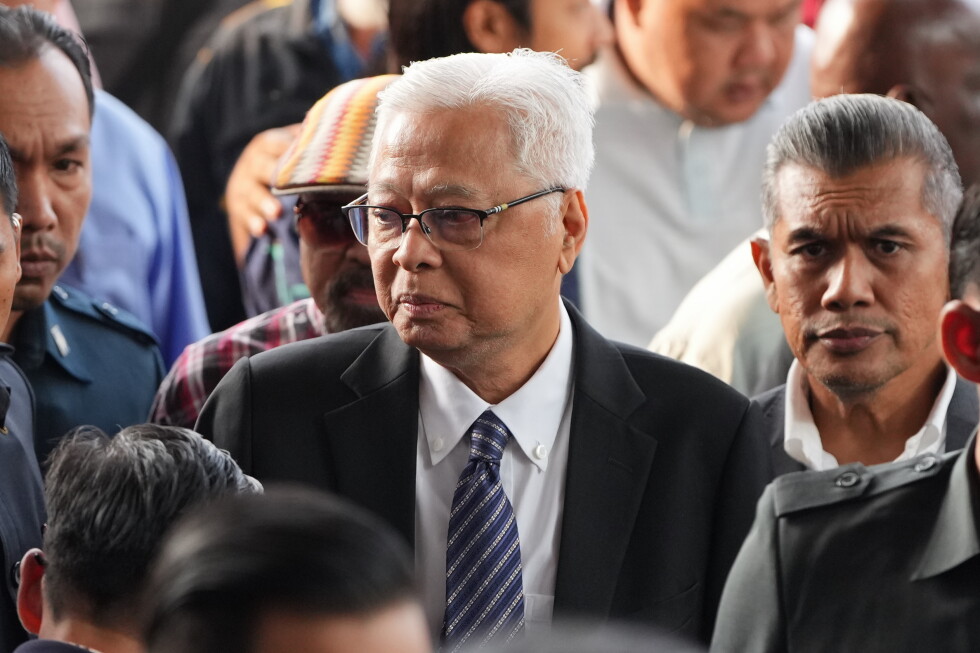
    KUALA LUMPUR, Malaysia – A new chapter of political and legal turbulence opened in Malaysia this week, as former Prime Minister Ismail Sabri Yaakib became the third former Malaysian head of government to face criminal charges after leaving office. The 66-year-old, who led the country as its ninth prime minister for just 15 months between 2021 and 2022, entered a not guilty plea Thursday to a charge under Malaysia’s anti-corruption legislation.

    The charge stems from a January 2025 notice issued by Malaysia’s anti-corruption agency, which alleges Ismail failed to submit a full declaration of his personal assets. Court documents list large unreported holdings of both domestic and foreign cash, as well as significant stocks of gold and silver. If found guilty on the charge, Ismail faces a maximum penalty of five years in prison and a fine of up to 100,000 Malaysian ringgit, equal to roughly $24,810.

    Ismail’s path to the premiership was an unusual one: he unexpectedly took office without a general election, emerging as a cross-party consensus candidate amid a period of severe political instability in 2021. His 15-month tenure makes him the shortest-serving prime minister in Malaysia’s modern history, holding office from August 2021 until the November 2022 general election that ended his administration.

    This is not the first time Ismail has been questioned by anti-graft investigators. Since leaving office, he has faced repeated questioning over potential misconduct related to millions of dollars in public funds allocated for government publicity during his time in office. Prior to Thursday’s indictment, the anti-corruption agency had already seized gold bars and approximately $40 million in cash from properties connected to the former leader.

    The original charging hearing scheduled for August 7 was delayed after Ismail was admitted to hospital to undergo a pacemaker procedure to treat an ongoing heart condition. Following Thursday’s court appearance, Ismail was released on bail. His defense lawyer, Amer Hamzah Arshad, told reporters that the former prime minister maintains his innocence and will fight to clear his name, calling the charges against him completely baseless and unfounded. The next court hearing is set for September 29, when prosecutors are scheduled to share additional evidence and case details with the defense team.

    Ismail’s indictment marks a continuation of an unprecedented pattern of criminal proceedings against former Malaysian prime ministers. He follows two predecessors who have also faced serious graft charges:
    Najib Razak, who preceded Ismail’s immediate predecessor Muhyiddin Yassin in office, is currently serving a reduced six-year prison sentence stemming from his 1MDB corruption conviction. Last year, he was sentenced to an additional 15 years in prison following the conclusion of his second and largest 1MDB-related graft trial, and still faces multiple ongoing legal proceedings tied to the multibillion-dollar looting of the 1MDB state investment fund.
    Muhyiddin Yassin, Malaysia’s eighth prime minister, is currently on trial on charges of corruption and money laundering.

  • China deploys record number of ships around Taiwan as pressure grows

    China deploys record number of ships around Taiwan as pressure grows

    In a sharp escalation of Beijing’s pressure campaign against Taipei, official data from Taiwan’s Coast Guard confirms a historic surge in Chinese government-affiliated maritime vessels operating in waters surrounding the island, with numbers hitting an all-time high in July 2026. The revelation has sparked new warnings over growing regional instability and expanded Chinese military preparation in the strategically critical waters off Taiwan’s coast.

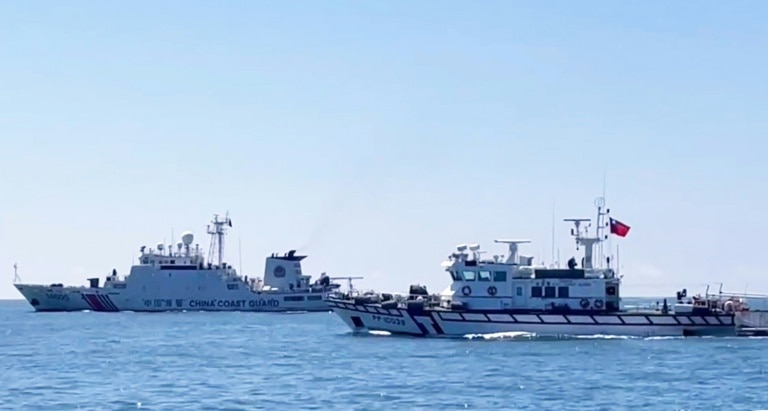
    Data shared exclusively with Agence France-Presse (AFP) by Taiwan’s Coast Guard shows that 244 Chinese vessels—including coast guard patrol craft, scientific research ships, and other government-operated boats—were detected around Taiwan’s main island in July. This marks a dramatic jump from 55 vessels recorded in June, 30 in May, and just 58 in July 2025. The monthly total averages out to nearly eight Chinese vessels operating in the area every single day. Even through the first 21 days of August, the service had already counted 152 additional vessels. Roughly 60 percent of the vessels detected are Chinese coast guard ships, with research vessels and other government craft making up the remaining share. The total does not include Chinese military warships, which Beijing deploys on near-daily patrols around the island on a consistent basis.

    Since May of this year alone, the cumulative number of Chinese vessels detected around Taiwan and its outlying islands has reached 1,247, according to full Coast Guard figures. A senior anonymous Taiwanese Coast Guard official, speaking to AFP on condition of anonymity due to restrictions on media engagement, confirmed the rapidly deteriorating security landscape. “When we say the situation is becoming increasingly severe, we mean that the number of their government vessels in the waters surrounding Taiwan has increased, and there was a marked increase in July,” the official said. Reaffirming Taipei’s position on sovereignty, the official added that the Chinese Communist Party “has never ruled Taiwan for even a single day” and that “without sovereignty over land, it has no right to claim economic zones at sea.”

    Beijing has long maintained that Taiwan, a self-governing democratic island, is an inalienable part of Chinese territory, and has repeatedly refused to rule out the use of military force to annex the island. It also claims full jurisdiction over all waters surrounding Taiwan. This expanded maritime presence is part of what analysts and officials describe as China’s “grey zone” tactics: incremental actions to assert territorial claims that fall short of open armed conflict, a strategy Beijing has already deployed widely in the contested South China Sea where it competes with multiple neighboring countries for sovereignty over disputed waters and features.

    Beyond general pressure on Taipei, experts warn the growing fleet of Chinese research vessels is conducting critical seabed and oceanographic surveys to build out Chinese military databases for submarine and anti-submarine warfare operations—preparations that would give Beijing a key strategic advantage in any future conflict over the island. Taiwan’s Coast Guard has previously tracked 41 Chinese research vessels operating in its territorial waters, out of more than 120 oceanographic research craft China operates overall. In May, the Chinese research vessel *Tong Ji* completed a full circumnavigation of Taiwan, tracking the edge of the island’s restricted waters and ignoring repeated orders from Taiwanese authorities to leave the area. The Coast Guard confirmed the vessel was almost certainly conducting oceanographic sampling and seabed mapping, work that directly feeds into China’s anti-submarine warfare data collections.

    This activity has been paired with a string of new incursions into previously less contested areas east of Taiwan. In June, Beijing conducted its first officially declared law enforcement patrol in waters east of the island, and earlier this August, China announced temporary traffic control measures in the Taiwan Strait under the cover of Typhoon Dolphin’s approach to the region. A senior Taiwanese security official recently accused Beijing of “authoritarian expansionism,” warning that China is “constantly pushing the limits through an incremental salami-slicing approach” to erode Taiwan’s sovereignty.

    Ryan D. Martinson, an expert on Chinese maritime strategy at the U.S. Naval War College, noted that while Chinese research vessels are formally owned and operated by civilian academic institutions, all data they collect is shared with the People’s Liberation Army. Speaking to AFP in an email, Martinson—who noted he was commenting in a personal capacity—explained that “That kind of data/knowledge is highly useful for Chinese naval forces, which will operate in these waters in the event of a conflict. It is especially important for anti-submarine warfare and submarine warfare.”

    Martinson emphasized that while Chinese research vessels have operated around Taiwan for years, the current scale of activity is unprecedented. “In the past couple of months, I had observed a ‘very large increase’ in the number of Chinese research vessels operating around Taiwan, especially to the east of the island,” he said. “This is not a new ‘play’ in its ‘playbook’. Rather, the novel aspect is that the scale of these operations around Taiwan is unprecedented.”

    New observations from maritime analysts also highlight increasingly coordinated operations between different Chinese maritime actors. Taiwanese Coast Guard officials confirmed that Chinese research vessels are now regularly operating alongside Chinese coast guard patrol craft. In August, the Chinese research vessel *Xiang Yang Hong 03* was detected operating within the exclusive economic zones of both Taiwan and Japan, traversing deep sea trenches that are home to critical international telecommunications cables, according to Jason Wang, chief operating officer of ingeniSPACE, a firm that analyzes satellite imagery and ship tracking data. Wang added that the research vessel was escorted by a Chinese coast guard ship and a fishing vessel affiliated with China’s civilian maritime militia—a first for operations in Taiwanese waters.

    Wang said China’s goal in this latest deployment is twofold: to gather updated hydrographic data of the Ryukyu Trench and East Taiwan Trench for anti-submarine warfare planning, and to block U.S. and allied research vessels from conducting similar surveys in the region. For analysts like Martinson, all of these interconnected actions add up to a clear shift in Beijing’s approach to Taiwan. “They represent a clear escalation in Beijing’s efforts to exercise jurisdiction over the waters surrounding Taiwan, putting pressure on the country’s leadership and undermining its sovereignty and sovereign rights,” he said.

  • ‘Blown out of proportion’: Bulldogs Covid nightmare over as emerging superstar signs huge extension with club

    ‘Blown out of proportion’: Bulldogs Covid nightmare over as emerging superstar signs huge extension with club

    The Canterbury-Bankstown Bulldogs head into a season-defining NRL clash against the Penrith Panthers on Friday with two much-needed pieces of positive news, after navigating a disruptive COVID-19 outbreak within the squad that sidelined eight players earlier this week. Head coach Cameron Ciraldo has confirmed that all eight affected players have been cleared to take the field, keeping his side’s fragile 2024 finals hopes alive ahead of the virtual elimination final.

    The cluster was first identified on Monday, when eight players and two support staff were isolated from the main training group as a precaution. The disruption even forced retired former Bulldogs outside back Steve Turner to step in to fill the fullback position for a light training session, with Ciraldo also forced to miss the session amid precautionary protocols. But speaking this week, Ciraldo downplayed the severity of the outbreak, noting the entire squad was cleared for Thursday’s captain’s run at Belmore Sports Ground, including club captain Stephen Crichton, who was among the players to contract the virus.

    “It was probably a little bit blown out of proportion,” Ciraldo told reporters. “A couple of weeks ago we had influenza A go through the camp that hit a number of our guys pretty hard, so we were extra cautious when a few boys started getting runny noses this time around. It was just a precautionary move at the start of the week to separate the group after our light early-week session, and we kept them apart until after our scheduled day off. Everyone was back in full training yesterday, preparations went really well, and we’re all excited for the opportunity tomorrow.”

    Along with the clear medical bill of health for his squad, Ciraldo received a second major boost on Wednesday, with young edge forward Jacob Preston signing a four-year contract extension to remain at Belmore. The deal ends months of speculation that the rising star back-rower would enter the free agent market on November 1, with two expansion franchises, the proposed Brisbane Bears and Gold Coast Chiefs, linked with aggressive approaches to poach the 20-something talent.

    Club powerbroker Phil Gould led the re-signing negotiations, and Ciraldo said the outcome is a massive vote of confidence in the culture the Bulldogs are building. “It’s been awesome watching Jacob’s journey over the last four years – he’s grown so much both as a player and as a person, and we’re really excited to have him around for a lot longer,” Ciraldo said. “Jacob was always very clear: he loves this club, he loves the environment we’ve built here, and he believes he can play his best footy right here. I was always confident he wanted to stay, and we wanted to keep him, so I’m just happy it’s all done now. I don’t get involved in the contract details – that’s between Gus, Jacob and his management – but this is a great result for the whole club.”

    All focus now turns to Friday night’s clash at Penrith, a match the Bulldogs must win to keep their post-season aspirations alive. Currently sitting two points behind the eighth-placed North Queensland Cowboys, who hold the last finals spot, Canterbury knows only a win will keep their 2024 campaign alive. In a promising sign for the club, the Bulldogs already upset the Panthers in round 6, handing the reigning premiers their first loss of the 2024 season.

    Instead of looking at the big-picture pressure of the match, Ciraldo said his squad is focused only on the 80 minutes of play ahead. “We’re not talking about what’s on the line in the grand scheme of things,” he said. “We’ve got a very short-term focus: we just want to stay present throughout every minute of the game. If we can do that and play our style of footy, we’ll give ourselves a good shot. There’s no point worrying about anything that happens outside those 80 minutes.”

  • South Korean police seek indictments of 7 transport ministry officials over Jeju Air crash

    South Korean police seek indictments of 7 transport ministry officials over Jeju Air crash

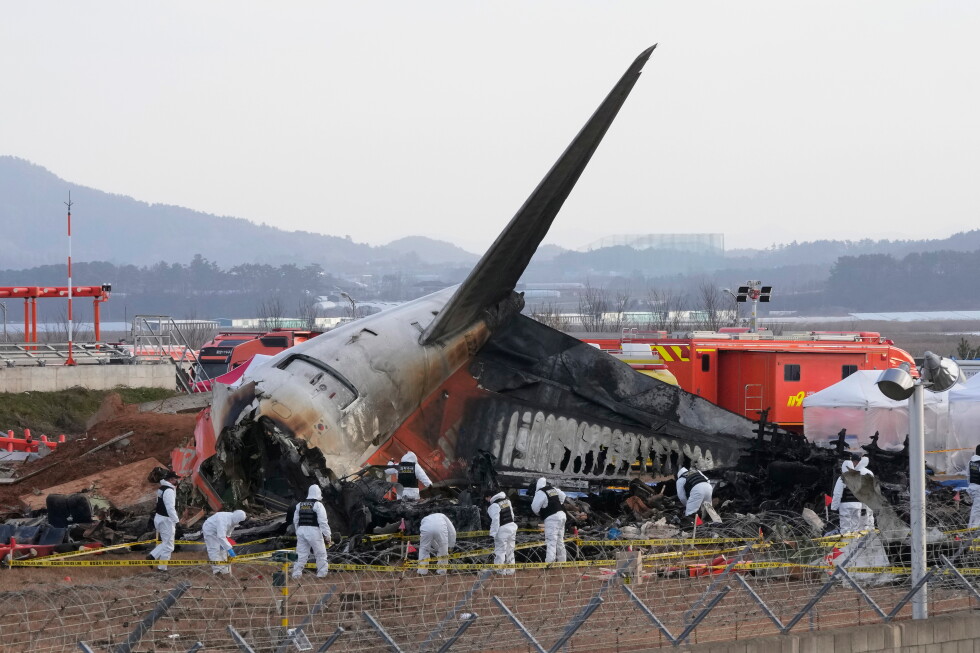
    On Thursday, South Korean law enforcement announced a major development in the investigation into the country’s worst aviation disaster in nearly 30 years: authorities are pushing for criminal indictments against seven senior transport ministry officials linked to the December 2024 Jeju Air crash at Muan International Airport that claimed 179 lives.

    The tragedy unfolded when a Boeing 737-800 operated by regional carrier Jeju Air attempted an emergency landing after its landing gear failed to deploy. The aircraft skidded off the runway before colliding with a concrete structure housing landing guidance equipment, triggering a catastrophic fire that left only two survivors among the 181 people on board.

    Investigators have already recovered physical evidence of bird strike damage to both of the plane’s engines, a key detail that has factored into early probes. A further unusual finding has added complexity to the case: the jet’s two black boxes, which record flight data and cockpit audio, ceased recording approximately four minutes before the crash, leaving gaps in investigators’ full understanding of the final moments of the flight.

    Many aviation safety experts have pointed to additional systemic failures that contributed to the high death toll, specifically calling out the design and construction of the concrete localizer structure the plane hit. Localizers are antenna arrays that guide aircraft during landing approaches, and global aviation safety standards require these structures to be built with frangible, easily breakable materials to minimize damage in the event of a collision. Experts argue the non-frangible concrete construction of the Muan airport localizer directly worsened the crash’s impact.

    Police investigations have now uncovered that the seven indicted transport ministry officials knowingly falsified official records and public statements, falsely claiming the Muan localizer had been installed in full compliance with both South Korean domestic regulations and international aviation safety standards. Law enforcement has officially referred the case to state prosecutors, requesting the seven officials be charged with the criminal offense of falsifying official government documents. Conviction on this charge carries a maximum penalty of seven years’ imprisonment in South Korea. When contacted for comment following Thursday’s announcement, the South Korean Transport Ministry declined to issue any statement.

    The probe remains ongoing: police confirmed they are still investigating roughly 70 other individuals connected to the crash, including personnel involved in the original installation of the Muan airport localizers and senior airport operations managers.

    The crash marks South Korea’s deadliest aviation accident since 1997, and as of yet no formal final cause has been publicly released by investigators, and no prior criminal prosecutions have been filed in connection with the disaster. The investigation has already been marked by controversy earlier this year: the Aviation and Railway Accident Investigation Board initially planned to release an early probe finding that both engines sustained bird strike damage, and that pilots had shut down the less severely damaged engine moments before the emergency landing. That draft finding, widely interpreted as implying pilot error contributed to the crash, sparked fierce public pushback from bereaved families of the victims and active-duty South Korean pilots, who accused authorities of attempting to shift blame for the disaster onto the deceased pilots to deflect from institutional failures. In response to the outcry, the investigation board scrapped the planned announcement of the preliminary results.

  • Nepal-Tibet disaster: what we know

    Nepal-Tibet disaster: what we know

    A catastrophic natural disaster along the Nepal-Tibet border has left at least 165 people dead and hundreds unaccounted for, after a collapsing glacier unleashed massive walls of floodwater and debris across both sides of the frontier. The disaster, which unfolded on Wednesday morning, has sparked an urgent international response, with aid organizations and governments around the world stepping in to support search and rescue operations.

    While the full sequence of events is still being pieced together by geologists and disaster response teams, dramatic surveillance footage from the Chinese side of the border captured the raw force of the disaster: a towering surge of mud and water swept over a structures as residents fled for safety. On the Nepalese side of the border, fast-moving floodwaters slammed into settlements along the Bhote Koshi and Trishuli rivers, destroying homes, infrastructure and cutting off entire communities.

    In the immediate aftermath of the event, initial descriptions varied: Nepalese officials first categorized it as a major flood, while Chinese authorities labeled it a catastrophic mudslide. The death toll has continued to climb in the days since the disaster: 162 fatalities have been confirmed in Nepal, with three more recorded in Tibet. As of Thursday, more than 350 people are officially listed as missing in Tibet, while Nepal reports 468 unaccounted-for tourists, 393 of whom hold foreign nationalities, alongside 93 missing Nepalese citizens. Foreign nationals missing span the globe, including citizens from India, Ukraine, Malaysia, the United Kingdom, South Africa and Australia, which has confirmed 34 of its residents are unaccounted for in the affected region.

    Early theories about the cause of the disaster pointed to a small earthquake triggering a landslide that blocked a upstream river, creating a natural dam that eventually burst to release the catastrophic downstream surge. This initial hypothesis aligned with an early reading from the United States Geological Survey (USGS), which detected seismic activity in northern Tibet near the disaster zone. However, further analysis of seismic data from nearby monitoring stations, long-period wave readings and satellite imagery has revised that conclusion. USGS now confirms the seismic signal initially mistaken for an earthquake was actually the event itself: a large-scale glacial collapse and subsequent debris flow, with no tectonic earthquake involved.

    The international community has moved quickly to offer support to response efforts. The United States has committed $500,000 in immediate emergency aid, while the International Federation of the Red Cross and Red Crescent Societies (IFRC) has released $1.4 million to fund on-the-ground assistance. David Fisher, head of IFRC Nepal, emphasized that reaching cut-off and affected communities is the top priority, with teams working to deliver support to people who have lost their homes, suffered injuries, or been isolated by the disaster. The European Union has activated its Copernicus satellite surveillance system to map damage and guide recovery teams, and stands ready to deploy additional support. The World Health Organization has already shipped emergency medical supplies to the region, and neighboring India has dispatched an initial 10 tonnes of humanitarian aid to support response efforts.