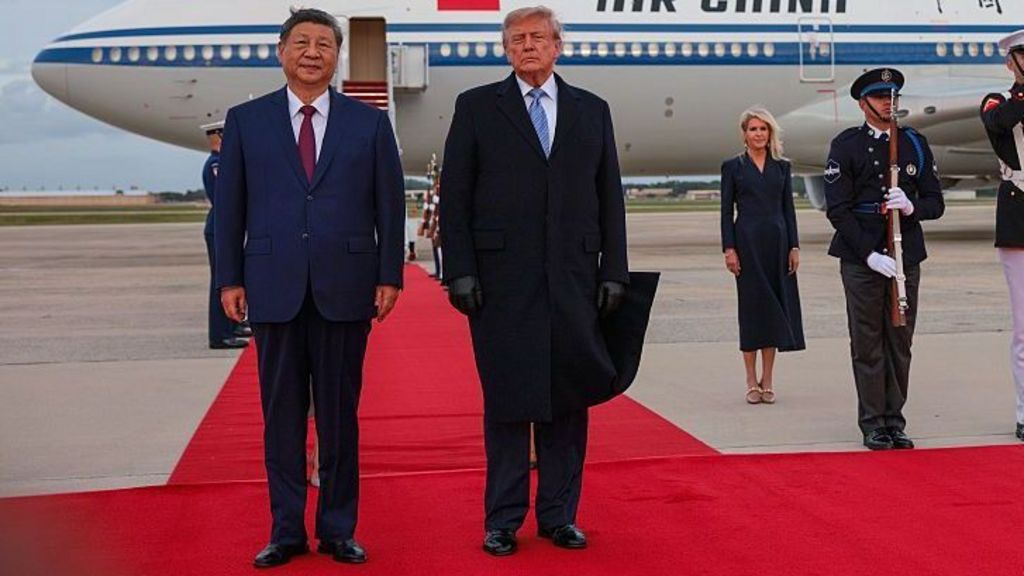
The highly anticipated meeting between U.S. President Donald Trump and Chinese leader Xi Jinping in Washington drew global attention this week, bringing the long-simmering competition between the world’s two largest economies and military powers into sharp focus. For Xi and Beijing, the summit carried one overarching goal: to push back against what China views as Washington’s deliberate campaign to contain its rise as a global superpower, particularly on issues of trade, technology access and the Taiwan question. While Trump rolled out a full ceremonial red carpet welcome for Xi, including a formal White House state dinner, the Chinese delegation left the talks without securing many of the key concessions Beijing had prioritized.
On trade, the two sides only agreed to extend a temporary pause in their tit-for-tat tariff dispute by a handful of months, pushing the deadline from November to January. Beijing had pushed for a full year-long extension to create stability through the remaining months of Trump’s current presidential term, a timeline that would align with China’s efforts to insulate its economy from further trade volatility amid domestic headwinds. All the most contentious bilateral trade and technology issues – including lingering U.S. tariffs on Chinese goods, China’s dominant control of global rare earth mineral supplies, and restrictions on Chinese access to cutting-edge American semiconductors – remain unresolved, deferred to future negotiation rounds. The short extension signals the U.S. is unwilling to offer long-term concessions until Beijing makes more tangible progress fulfilling its existing commitments under earlier trade agreements.
Beijing’s urgency to lock in trade stability stems from mounting domestic economic challenges that the Chinese leadership is grappling with. Though China’s export sector continues to post record global sales, domestic consumer confidence remains weak, holding back broader growth. Youth unemployment has stayed stubbornly elevated, and the country’s property sector has faced a sharp correction in prices – a major concern for ordinary Chinese households, where 80 percent of citizens hold their wealth in residential real estate. With exports currently serving as the main pillar propping up China’s GDP growth, protecting access to the U.S. market and avoiding a return of punishing U.S. tariffs has become a top priority for Xi’s administration.
The Taiwan question remained one of the most sensitive topics on the summit agenda, with Xi reaffirming that U.S. arms sales to the self-governing island represent a non-negotiable red line for Beijing. Under U.S. law, the United States is required to provide Taiwan with defensive military capabilities, and earlier this year, Xi publicly warned Trump that mishandling the issue could lead to direct conflict between the two powers. Following that warning, Trump delayed approval of a proposed $14 billion arms package to Taiwan, framing the move as a useful negotiating chip with Beijing. During the summit, Xi appears to have capitalized on this opening, arguing that reducing U.S. support for Taipei would lower the risk of confrontation, and reiterated China’s call for the U.S. to stick to what Beijing calls its “correct position” of opposing formal Taiwan independence. To date, however, Trump has not issued any public response to Xi’s remarks, as he faces growing bipartisan pressure from across the U.S. political spectrum to maintain long-standing American support for Taiwan.
One underdiscussed topic on the agenda was artificial intelligence governance, a rising global priority after a series of high-profile warnings from technology leaders about catastrophic risks posed by unregulated advanced AI development. In recent weeks, Anthropic CEO Dario Amodei published an open letter calling for a slowdown in cutting-edge AI development to improve safety standards, a call that followed a warning from a top Anthropic safety researcher that unregulated advancement carries a greater than 10 percent risk of human extinction. While the two leaders did discuss AI policy, no concrete agreements or next steps – even a commitment to hold a dedicated future summit on the issue – emerged from the talks. Xi stated publicly that it is critical to ensure AI remains permanently under human control, but beyond that vague commitment, no further details of the discussion have been released. For his part, Trump has publicly dismissed fears of AI-driven human extinction as a baseless hoax.
The most tangible win for bilateral diplomacy to come out of the talks so far is a revival of China’s iconic “panda diplomacy”: Xi confirmed that two giant pandas, Ping Ping and Fu Shuang, will arrive in Atlanta within the next few days, a gift first announced earlier this spring. More announcements are expected as the two leaders are scheduled to hold a follow-up tea meeting and tour the U.S. National Archives on the second day of the summit.
For Beijing, the biggest immediate victory from the summit may be more symbolic than substantive. The lavish ceremonial welcome, including a personal greeting for Xi at the airport and a state banquet featuring traditional Chinese-inspired dishes, has been widely covered on Chinese social media, helping to reinforce Xi’s domestic image as a global leader on equal footing with the U.S. president. Memes highlighting Xi’s calm demeanor alongside a perceived tense expression from Trump have spread widely across Chinese platforms, with many framing the optics as a win for China’s standing on the global stage.
Xi has managed to maintain working-level relations with the notoriously unpredictable U.S. president, and Trump has repeatedly described his personal friendship with Xi as “truly great.” But behind the warm words, ceremonial pageantry, and panda diplomacy, the fundamental power competition between the two global superpowers remains completely unresolved. The summit did little to bridge the deep divides that have defined Sino-U.S. relations in recent years, leaving the core points of contention to be fought out in future negotiations and interactions.