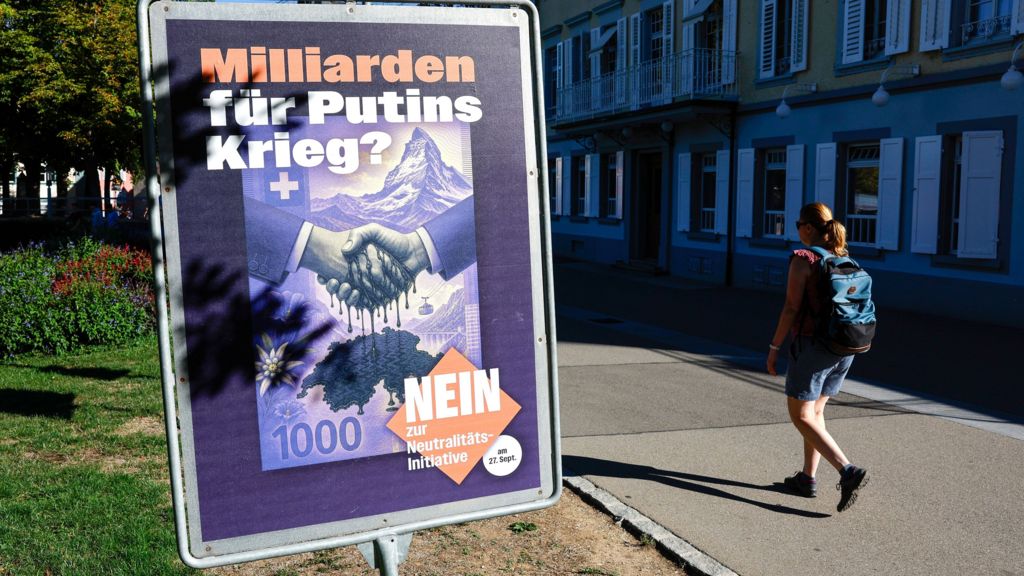
In a landmark vote that has reshaped the global conversation around one of the world’s oldest traditions of state neutrality, Swiss voters have delivered a resounding defeat to a controversial initiative that would have tightened legal constraints on the country’s long-standing non-aligned foreign policy. Official results confirm more than 70 percent of participating electorate rejected the proposal, which would have required Switzerland to secure formal approval from the United Nations before enacting any international sanctions, while also barring the nation from pursuing deeper cooperation with the NATO military alliance. The ballot initiative, backed by the right-wing Swiss People’s Party (SVP), drew open public support from the Russian government in the midst of Moscow’s full-scale invasion of Ukraine – a conflict that has reignited long-simmering debates over how a centuries-old neutral framework should adapt to modern European security challenges. The proposal was uniformly opposed by Switzerland’s federal government and every other major political party across the national ideological spectrum, whose leaders argued that rigid constraints on sanctions policy would undermine the nation’s ability to respond to acts of international aggression. For context, Switzerland’s formal status of “eternal neutrality” was first codified at the 1815 Congress of Vienna, a post-Napoleonic European settlement that recognized the country as a neutral buffer amid competing great power blocs. The legal parameters of this neutrality were further solidified in the 1907 Hague Convention, which enshrines a permanent ban on Swiss arms sales to nations engaged in active conflict, a policy still in place today that led Bern to reject a German request for tank ammunition bound for Ukraine in recent months. Unlike many European nations, Switzerland maintained formal neutrality throughout World War Two, though this period remains controversial: the country infamously accepted Nazi-looted gold deposited in Swiss banks and turned away tens of thousands of Jewish refugees fleeing Nazi persecution to avoid triggering a German invasion. The Swiss government formally apologized for these actions in the 1990s. Commenting on the results, Lukas Golder, co-director of leading Swiss research institute Gfs.bern, told public broadcaster SRF that the outcome was not a rejection of Swiss neutrality itself, but a clear signal that voters support maintaining targeted sanctions against Russia over its invasion of Ukraine. “People have a clear idea of what Switzerland’s neutrality is supposed to achieve,” Golder explained. Ahead of the vote, Swiss Foreign Minister Ignazio Cassis emphasized in a national televised debate that the country’s approach to neutrality has always been rooted in pragmatic flexibility. While Cassis confirmed that the country has no plans to abandon its long-standing ban on arms sales to conflict zones including Ukraine, he stressed that neutrality does not amount to moral indifference in the face of aggression. “We will not look away when we see violations of the very international rules that allow us to live in peace,” Cassis said. The vote highlights the unique nature of Swiss direct democracy, a system that regularly puts major national policy decisions directly to the electorate via binding referenda rather than leaving them exclusively to elected lawmakers. The result makes clear that a large majority of Swiss voters support the current flexible approach to neutrality that allows Bern to join international sanctions campaigns against aggressor states, even as it maintains its formal non-aligned status and ban on arms exports.
博客
-

Venezuela releases dozens of political prisoners as election calls grow
Weeks after a high-profile meeting between Venezuela’s interim leader Delcy Rodriguez and U.S. President Donald Trump on the sidelines of the United Nations General Assembly in New York, Venezuelan authorities have quietly freed a new wave of political detainees, human rights organizations have confirmed.
The releases, which unfolded in the early hours of Saturday, included several high-profile prisoners whose detentions had long drawn international condemnation. Among them was Wilder Vasquez, who was handed a five-year prison sentence in 2018 on charges of plotting to assassinate former president Nicolás Maduro, who was captured by authorities earlier this year and is currently facing trial on drug trafficking charges. Also freed was Miguel Castillo Cedeño, who had been held in arbitrary detention since June 2019, and Frank Cabañas, who had spent nine years behind bars tied to the death of a police officer. Cabañas, who was the last remaining suspect in the case, had been reported to suffer from serious unaddressed health issues by his family last year.
Gonzalo Himiob, vice president of leading Venezuelan human rights group Foro Penal, confirmed that a “significant number” of detainees were released from multiple detention centers across the country over the weekend. As of Monday, Caracas has not issued any official comment on the new releases, nor has it confirmed whether the move was a direct outcome of Rodriguez’s talks with Trump.
Prisoner releases and free, open presidential elections have been the two core commitments Rodriguez’s interim administration made to the U.S. after Washington recognized her as the country’s legitimate leader following Maduro’s ouster in January. Her administration launched a large-scale reconciliation amnesty program shortly after taking power, freeing hundreds of political prisoners that the previous Maduro government had detained to crack down on dissent. The program, however, slowed to a near halt in April, when Rodriguez announced the initiative was “coming to an end.” That decision drew sharp criticism from opposition groups and human rights advocates, who noted that less than half of Venezuela’s documented political prisoners had been released when the program stopped.
For years, opposition and rights monitors have documented widespread use of arbitrary detention against political opponents under Maduro’s rule, arguing that the practice was a key tool to silence dissent and consolidate authoritarian power. Rodriguez has sought to position her interim government as far more open to political opposition, while making concessions to Washington to shore up international support. Caracas has framed the entire prisoner release effort as a goodwill gesture for national reconciliation, and has repeatedly denied that it continues to jail dissidents for political reasons.
The meeting between Rodriguez and Trump has reignited debate across Venezuela’s political landscape over the timeline for free elections. Venezuelan Interior Minister Diosdado Cabello, a figure long closely aligned with Maduro’s former government, called the New York talks “a great triumph of the diplomacy of peace.” But opposition figures have slammed the meeting and questioned the interim government’s commitment to holding quick elections, a demand the U.S. had previously publicly endorsed.
Pedro Mario Burelli, a former executive of Venezuela’s state oil company and opposition commentator, issued a scathing rebuke of the encounter, calling Rodriguez and Trump “the shameless puppet and her unscrupulous and undignified puppet-master.” He added that “Little has changed in Venezuela under Washington’s clumsy and selective oversight.”
The last national election held in Venezuela in 2024, which resulted in Maduro being declared the winner, was widely disputed by the opposition and international observers as fraudulent. Independent opposition tallies showed that the opposition candidate, who stepped in after opposition leader María Corina Machado was barred from running, won the contest by a 70-point landslide. Despite widespread opposition backing for Machado, the Trump administration opted to recognize Rodriguez, Maduro’s former vice president, as interim leader after Maduro’s capture in January. Analysts at the time framed the decision as a choice to prioritize short-term domestic stability in Venezuela while a transition to elected rule is organized.
During her address to the UN General Assembly last Thursday, Rodriguez reiterated that “there will be elections in Venezuela,” but stopped short of offering a concrete timeline for the vote, a move that has left opposition groups frustrated and pushing for faster action to deliver on the long-promised vote.
-

US challenges China on secret nuclear tests as arms race looms
A deepening diplomatic standoff rooted in unproven U.S. allegations of secret Chinese nuclear testing and rapid nuclear arsenal growth has reignited a fraught domestic debate in the United States over whether to end its 30-year pause on explosive nuclear testing. Multiple independent media outlets have documented how this friction has intensified on the sidelines of high-level diplomatic engagement, coming amid a period of sharp strategic competition ahead of key summit talks between U.S. President Donald Trump and Chinese President Xi Jinping.
U.S. diplomatic officials have raised the allegations in closed-door bilateral discussions held on the margins of multilateral forums in Geneva, New York, and Casablanca, focusing claims on China’s Lop Nur testing facility in northwest China, where Washington accuses Beijing of violating the 1996 Comprehensive Nuclear-Test-Ban Treaty (CTBT). The formal accusation was first delivered publicly by U.S. delegates at the Conference on Disarmament in February 2026, shortly after the expiration of the New START arms control treaty between the U.S. and Russia. In that accusation, Washington claimed China carried out a low-yield underground nuclear test in June 2020, using a technique called cavity decoupling to hide the blast’s seismic signature from global monitoring networks.
Complementing these accusations, declassified geospatial satellite intelligence has documented large-scale infrastructure upgrades at seven separate Chinese nuclear-related sites across the country. These upgrades cover activities ranging from plutonium pit fabrication at Pingtong and blast effect testing at Zitong to nuclear fuel reprocessing in Jiuquan, Jinta, and Guangyuan, as well as a major expansion of laser fusion research facilities in Mianyang. Notably, analysts point out that China’s Mianyang laser complex operates similarly to the U.S. National Ignition Facility at Lawrence Livermore National Laboratory, where the vast majority of laser tests are used for stockpile stewardship – a practice permitted under international nuclear rules that allows nations to model thermonuclear weapon performance without conducting live underground detonations.
Even so, the combination of alleged covert testing and infrastructure expansion has supported a rapid expansion of China’s nuclear arsenal, which now stands at more than 600 operational warheads and is projected to grow to 1,500 deployable warheads by 2035, according to U.S. defense estimates. In response, Washington has pushed Beijing to adopt new confidence-building and verification measures, including expanded access for independent seismic and radiological detection at Chinese sites. President Trump has also issued a clear warning that if China does not address U.S. concerns and halt alleged violations, the U.S. will resume its own explosive nuclear testing on what he called an “equal basis” to match China’s activity.
Beijing has consistently rejected all U.S. accusations, denying that it conducts any unauthorized explosive nuclear tests or pursues an offensive nuclear arms race. China maintains its long-standing defensive “no first use” nuclear policy, and has refused to accept binding caps on its arsenal, arguing that the massive existing disparity between China’s smaller stockpile and the far larger arsenals held by the U.S. and Russia means any equal cap would unfairly lock in U.S. strategic dominance.
Crucially, independent arms control analysts have raised significant technical skepticism about the validity of U.S. claims. In an August 2026 research report published by the German Institute for International and Security Affairs (SWP), analyst Philipp Rombach concluded that U.S. accusations remain unconfirmed due to fundamental limitations in global monitoring capabilities. While Rombach acknowledged that a magnitude 2.75 seismic tremor recorded at Lop Nur in June 2020 matched the waveform pattern expected from a cavity-decoupled underground blast, the CTBT Organization’s global International Monitoring System is only calibrated to reliably confirm detonations equal to or above 500 to 1,000 tons of TNT equivalent. As nuclear testing technology advances, micro-yield experiments have become even harder to distinguish from natural seismic background noise, and the U.S. has refused to release its underlying sensor data to independent observers to protect its intelligence gathering methods. This means there is no way to separate ambiguous micro-yield detonations from permitted hydrodynamic experiments or routine industrial blasting that also produce seismic activity. Many analysts argue that without verifiable, transparent data, these unproven allegations may be a tactical tool to pressure China into trilateral arms control talks or to build domestic political support for the U.S. to resume its own nuclear testing.
From a Chinese strategic perspective, arms control analyst Tianjiao Jiang outlined in a 2026 article for the Arms Control Association (ACA) that U.S. strategy is designed to draw China into trilateral arms control negotiations alongside Russia to cap China’s growing arsenal before it reaches the projected 2025 1,500-warhead level, allowing the U.S. to avoid the strategic risk of facing two peer nuclear adversaries at the same time. Jiang explained that while U.S. coercive leverage has pushed forward limited incremental agreements on risk reduction, such as pre-notification of missile tests and bilateral crisis communication hotlines, the broader U.S. framework is fundamentally counterproductive. The approach fails to address China’s core demand for mutual recognition of strategic vulnerability, ignores the massive asymmetry in existing arsenal sizes, and pairs arms control demands with major expansions of U.S. missile defense systems such as the Golden Dome program.
Tong Zhao, a senior fellow at the Carnegie Endowment for International Peace, echoed this skepticism in a September 2026 report. Zhao noted that while U.S. strategy correctly identifies areas of feasible operational cooperation, such as reciprocal limits on theater-range strike systems in the Western Pacific and mutual inspection protocols for co-orbital space weapons, these opportunities are undermined by Washington’s broader strategic doctrine. By clinging to a policy of open-ended escalation dominance and maintaining deliberate ambiguity about first use of nuclear weapons to offset shifts in regional conventional military power, Zhao argues that the U.S. has adopted a coercive, unilateral “America First” posture that confirms China’s worst-case security fears, trapping both nations in a classic security dilemma where escalating preparations for conflict only increase the risk of confrontation.
Beyond the bilateral standoff, the escalating dispute over China’s nuclear program has reignited a fierce domestic debate in the U.S. over whether Washington should end its decades-long moratorium on explosive nuclear testing. Proponents of resuming testing, such as Heritage Foundation analyst Robert Peters, argued in a January 2026 article that the U.S. must restart live testing to confirm that its rapidly aging nuclear stockpile remains functional and credible as a deterrent. Peters pointed out that while China and Russia have both fielded newly designed nuclear weapon systems, the youngest warhead in the U.S. arsenal is 36 years old. The entire U.S. deterrent relies on decades-old plutonium pits that were never tested for multi-decade service life, and as the plutonium naturally degrades, it creates structural changes that could undermine weapon performance. A February 2024 report from the U.S. Government Accountability Office (GAO) supported this concern, noting that radioactive decay produces helium bubbles and chemical byproducts within the plutonium metal that alter the material’s structural strength and disrupt how the weapon core compresses during the high-explosive implosion that triggers a nuclear detonation. The GAO warned that these changes could lead to unacceptably low explosive yield in a weapon’s primary stage, potentially preventing it from generating enough force to trigger the secondary stage and achieve the warhead’s designed military output.
However, critics of resuming testing argue that ending the moratorium would cause far more harm than good to U.S. national security. Leading nuclear scientist Siegfried Hecker argued in a November 2025 Foreign Affairs article that restarting explosive testing would primarily benefit China and Russia. Hecker noted that a U.S. exit from the moratorium would allow China to rapidly validate next-generation weapon designs for its expanding arsenal, and let Russia refine new strategic delivery systems. China and Russia would be able to resume large-scale testing operations far faster than the U.S., which has not maintained active testing infrastructure at scale since the 1990s. Instead of resolving U.S. plutonium pit production bottlenecks, Hecker argued that a U.S. return to testing would dismantle decades of global nonproliferation norms, spark a new multi-front nuclear arms race, and encourage other nuclear-armed states to conduct their own tests.
In the end, the shifting nature of modern nuclear research – where much of the work once done in live tests now moves into permitted large-scale laser fusion research facilities – demonstrates that the line between legal laboratory stockpile stewardship and unauthorized explosive testing is a political agreement, not a clear, unambiguous physical boundary. If weapons laboratories conclude that live explosive testing is necessary to verify the safety and yield of aging warheads, this issue must be resolved through transparent, multilateral negotiation between the U.S., China, and Russia. Rather than using unproven allegations of low-yield testing as cover to unilaterally end the global testing moratorium, the three major nuclear powers must negotiate an updated, mutually verified agreement that sets clear physical boundaries for permitted laboratory simulations and subcritical experiments, before unchecked distrust unravels the entire global arms control framework.
-

Ten climbers missing after avalanche hits Himalayan base camp
On a Sunday morning, a devastating avalanche hit a high-altitude staging camp near Himlung Himal, a 7,126-meter peak straddling Nepal’s northern border with Tibet that draws hundreds of international mountaineers each climbing season. The missing group consists entirely of Nepali climbing guides, who had been deployed days ahead of foreign expedition members to prepare camps, secure climbing routes, and fix safety ropes along the ascent.
According to expedition organizers, eight of the missing climbers are part of a team from Himalaya Holidays Trekking, while the remaining two belong to a separate local adventure company. For days leading up to the incident, regional meteorological forecasts had warned of heavy and persistent snowfall across Nepal’s Manang district, where Himlung Himal is located.
Unstable weather conditions that triggered the avalanche have also blocked urgent search and rescue operations. Thick cloud cover and continued snowfall have prevented rescue helicopters from reaching the remote base camp site, while ground rescue teams have been unable to traverse treacherous, snow-choked mountain paths to reach the area.
This incident is the latest in a string of weather-related mountaineering disasters to hit the Himalayan region in 2026, a year that has seen far more extreme precipitation than the seasonal average. Earlier the same week, all climbers were evacuated from Mount Manaslu, the world’s eighth-highest peak, after officials warned of rapidly growing avalanche risk from accumulating snow.
Less than two months before this event, six Nepali climbers died in an incident on Pakistan’s Broad Peak, a climb that included high-profile British-Nepali mountaineer Nirmal Purja. The current crisis also comes against a backdrop of larger extreme weather disasters across the broader Himalayan region. In neighboring northern India’s Uttar Pradesh state, officials confirmed that extreme unseasonal weather has killed more than 50 people in recent days.
Along the Nepal-Tibet border, recovery teams are still searching for remains more than a month after a catastrophic glacial outburst flood and subsequent landslides in August that killed more than 1,400 people and left over 6,000 missing. That disaster occurred when a glacial lake collapse sent a massive wall of water and debris rushing down the Trishuli River valley, destroying dozens of riverside settlements.
For Nepal, which draws hundreds of millions of dollars annually from international mountaineering and adventure tourism—one of the country’s largest foreign exchange earners—this season’s persistent extreme weather has created exceptionally dangerous conditions that threaten both the lives of local guides and the stability of the key industry.
-
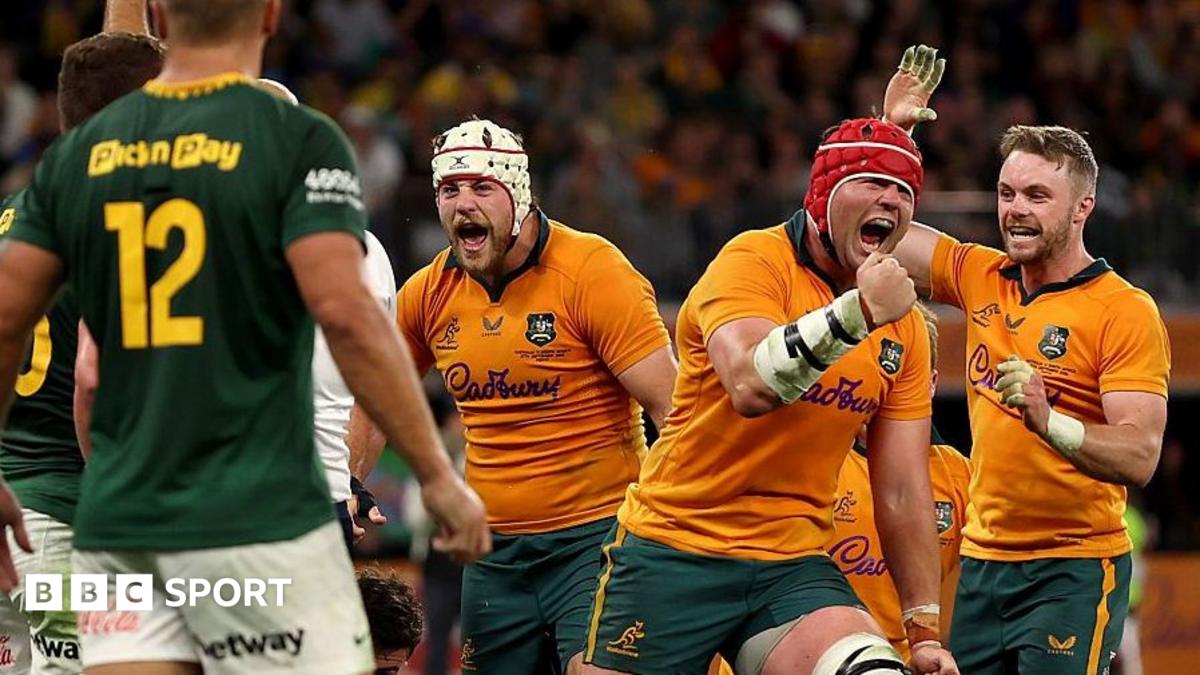
Four men down – but Australia still beat South Africa
In a thrilling, chaotic rugby union test match played out in Perth, the Australian Wallabies produced one of the most dramatic wins of the recent international calendar, holding off a late comeback from back-to-back world champion South Africa to secure a 42-38 victory, even after being reduced to just 11 fit players on the pitch in the final 10 minutes. The match also came with an official announcement confirming that Australia will kick off its 2027 Rugby World Cup hosting duties with an opening match against Hong Kong, to be held right here in Perth.
The Springboks, fresh off a win over New Zealand in Baltimore just days prior, rotated their squad heavily, making 13 changes to their starting line-up. Even with the sweeping adjustments, the visitors remained a formidable force: their second row pairing alone boasted a combined 240 international test caps, highlighting the incredible depth of the world champions’ roster. Entering the match, the Wallabies carried significant narrative weight: one year out from hosting the 2027 World Cup, and 12 months removed from a lopsided home defeat to the British & Irish Lions, the home side was hungry to prove its progress against elite competition.
The match got off to a tense, evenly matched start, with both sides trading opening penalty points. South Africa struck first for a try, with hooker Johan Grobbelaar driving over the line following a powerful forward maul to put the world champions on the board first. The Wallabies responded quickly, applying sustained pressure in the Springboks’ 22 that resulted in center Len Ikitau crossing from one meter out to level the scores. Ikitau notched his second try just minutes later, capitalizing on a messy misjudgment of a floating high kick from South Africa to grab the lead for the hosts.
The lead would not last long, however. South Africa struck back with a blistering counterattack, spinning the ball wide quickly to winger Edwill van der Merwe, who finished the stunning break with a try in the corner to cut Australia’s lead. Before halftime, the Wallabies reclaimed their advantage through a brilliant display of patient phase play: 14 consecutive, sharp phases moved the ball from one side of the pitch to the other, opening up space for fly-half Ben Donaldson to score untouched in the corner. Going into the break, Australia held a narrow but deserved lead.
Springbok coach Rassie Erasmus wasted no time unleashing his side’s depth, making all eight of his allowed substitutions early in the second half with his side trailing by 10 points. Even with the fresh legs, Australia continued to dominate the contest. Captain Harry Wilson had an early try ruled out after his foot was found to be in touch, but he burrowed over from close range just seconds later to extend the Wallabies’ lead. When South Africa fumbled a turnover deep in their own half, young Australian winger Max Jorgensen sprinted the full length of the pitch to score a spectacular solo try, pushing the score to 42-17 with just 16 minutes left to play, putting the result seemingly out of reach.
What followed was a chaotic turn of events that no one could have predicted. First, Wilson was sent to the sin bin for a minor infringement, and South Africa was awarded a penalty try, with Australian scrum-half Ryan Lonergan also yellow-carded for the infringement, dropping the Wallabies to just 13 men. Van der Merwe nearly scored another try for the visitors off a perfectly placed cross-field kick, but he dropped the ball just before grounding it, wasting a golden chance to cut the lead.
The sin-bin count continued to climb for the hosts: winger Joseph-Aukuso Sua’ali’i was also sent off temporarily to leave Australia with just 12 men on the pitch, and Springbok replacement Morne van den Berg scrambled over for a try to cut the deficit to 11 points. In the 77th minute, the Wallabies looked to have put the game to bed when Tom Wright intercepted a pass and raced away for a try, but the score was ruled out due to a dangerous tackle in the build-up, and center Hunter Paisami was issued a fourth yellow card, dropping the Wallabies to just 11 men with more than three minutes still left to play.
With massive amounts of open space to attack, South Africa crossed again through prop Ox Nche, cutting Australia’s lead to just four points. But as the Springboks lined up for the final restart, the final whistle blew, and the 11-man Wallabies held on for a historic victory.
The thrilling win comes as Australia prepares for its turn hosting the global rugby event, with tournament organizers confirming on the same day that the 2027 World Cup will open in Perth with a match between host nation Australia and Hong Kong China.
-
‘Scourge’ of abuse must be rooted out, says Pope, during Lourdes visit
Pope Leo, who ascended to the leadership of the Roman Catholic Church in May 2025, has drawn massive crowds across France during his landmark four-day official visit to the historically Catholic nation, while delivering a forceful call to root out pervasive clergy sexual abuse within the country’s church institutions.
On the third day of the tour, the pontiff addressed a closed-door gathering of French bishops at the Sanctuary of Our Lady of Lourdes, the revered Catholic pilgrimage site in southern France. Ahead of his scheduled private meeting with survivors of clerical abuse, Pope Leo pressed church leaders to maintain unwavering focus on confronting the crisis that has rocked the French Catholic community for decades.
“You have faced with determination the painful scourge of abuse of minors committed by members of the clergy or within an ecclesial context,” the Pope told the assembly, whose prepared remarks were later released to media outlets. “It is important to persevere along the path you have begun, maintaining the greatest vigilance.”
The pontiff’s urgent appeal comes five years after a devastating 2021 independent inquiry documented that an estimated 330,000 children were sexually abused by Catholic clergy or lay church members across France over a 70-year period. Following his address to bishops, Pope Leo led a public Mass before thousands of gathered worshippers at the Lourdes shrine, with a private meeting with abuse survivors planned for immediately after the service.
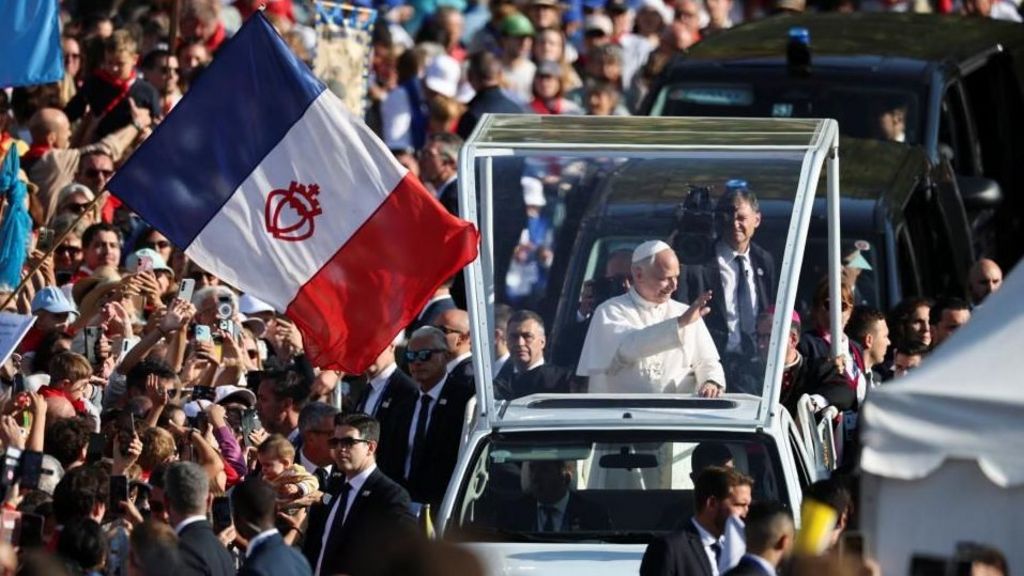
The crowds that have turned out for the Pope’s visit have been staggering. A day before the Lourdes events, an estimated 700,000 people packed Paris’s Place de la Concorde to hear the pontiff speak. Earlier that day, as Pope Leo traveled down the iconic Champs-Élysées in his open-top popemobile, throngs of cheering supporters lined the route, waving to the leader of the global Catholic Church as he greeted well-wishers. That same Friday, the Pope also held an official meeting with French President Emmanuel Macron at the start of his visit.
During a public Mass in Paris the previous Saturday, Pope Leo used his address to encourage French Catholics to share their faith openly with broader society, urging attendees not to keep their beliefs private. “Catholics should not keep their faith to themselves but let it overflow so that those you meet may be refreshed,” he told the congregation. He also reserved special remarks for young people in attendance, framing youth as the core of the contemporary Church. “How beautiful it is to see your enthusiasm, energy and commitment, and the joy you bring to Christian communities,” he said.
The Pope’s visit unfolds against a shifting backdrop for Catholicism in modern France, a country that maintains an officially secular political system but retains deep historical religious roots. Long-term trends have shown sharp decline in church participation: the share of the French population that attends regular worship fell from 35% in 1960 to less than 5% in recent years, and the total number of active priests has shrunk by two-thirds, dropping from 25,000 in 1990 to fewer than 9,000 today.
Yet there are early signs of a small but notable renewal of interest. Over the past five years, the number of adult baptisms in France has more than doubled, reaching 10,000 in 2025, according to recent church data.
Looking ahead to the final day of the visit Sunday, Pope Leo is scheduled to meet with staff and residents at a Lourdes healthcare facility before taking part in the traditional evening torchlight procession at the shrine. Visits to France by sitting popes have long been a regular occurrence, reflecting the nation’s enduring place in global Catholic history.
-

Injured Assefa narrowly misses world record in Berlin
The 2025 Berlin Marathon delivered one of the most dramatic displays of resilience in distance running history on Sunday, as Ethiopian star Tigst Assefa fought through a late injury to secure a dominant win, only to narrowly miss breaking the women’s marathon world record.
Assefa, a 29-year-old Olympic silver medalist from the 2024 Paris Games and 2026 London Marathon champion, got off to a blistering start in the race. By the 15-kilometer mark, she had opened up a full-minute gap over the rest of the elite women’s field, and she maintained a pace faster than the existing world record through the 35-kilometer mark. Long known as one of the sport’s strongest closers, all signs pointed to Assefa shattering the current world benchmark set by Kenya’s Ruth Chepngetich at the 2024 Chicago Marathon.
That world record of 2:09:56 remains intact, however, after a sudden tendon injury forced Assefa to slow dramatically in the race’s final miles. Visibly hobbling in discomfort, the Ethiopian struggled through the last kilometers to the finish line, crossing it with an official time of 2 hours 11 minutes and 4 seconds. Despite the late fade, the result still marked the third-fastest women’s marathon time ever recorded. It also beat Assefa’s own 2023 Berlin course record of 2:11:53 — her previous personal best — and marked a significant improvement on her 2:15:41 win at the London Marathon earlier this year.
Speaking after the race, Berlin Marathon event director Mark Milde expressed a mix of awe and sympathy for Assefa’s performance. “We have to bow our heads to this performance. She was on a world record course for most of the race but then something happened to her tendon,” Milde told reporters. “To finish like this, I’ve never seen something like this. The pain is hard to imagine. With a heavy heart, we saw her set a course record, but it could have been a lot more.”
Notably, Chepngetich’s current world record has remained controversial since the Kenyan was handed a three-year doping ban in 2025, overshadowing her 2024 Chicago result. Assefa’s near-record run has reignited conversation about when the mark will officially be overtaken by an untainted athlete.
The day’s results cemented Ethiopia’s dominance in the elite race: Assefa led an Ethiopian sweep of the top five positions in the women’s category, with Bedatu Hirpa finishing second and Dera Dida taking third. In the men’s elite race, another Ethiopian, Guye Adola, claimed the title with a winning time of 2:02:50.
-
Before BTS and Blackpink, there was Big Bang: Now the Kings of K-pop are back
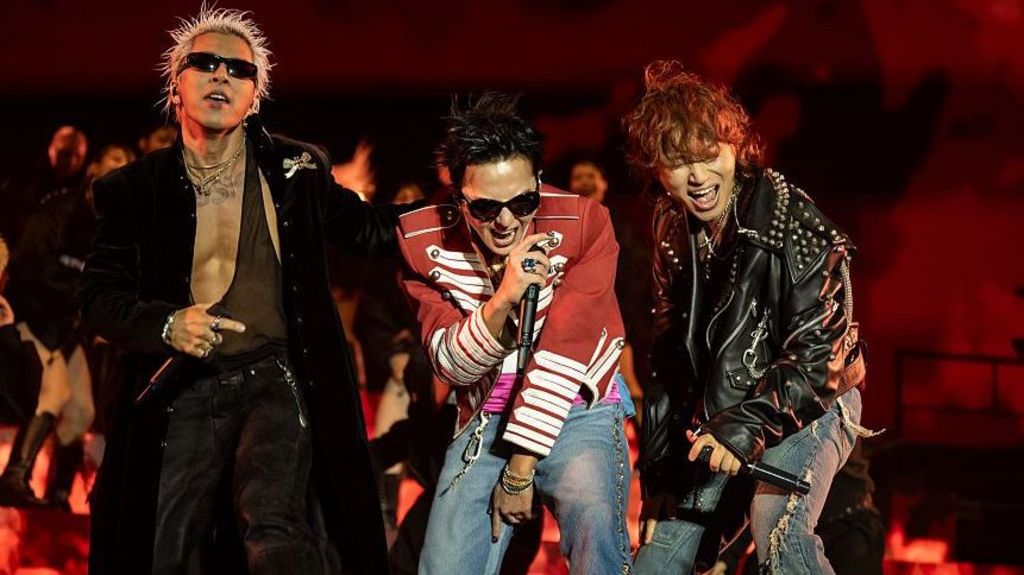
Under the bright stadium lights of Tottenham Hotspur Stadium, a sea of glowing yellow crowns bobbed in unison, thousands of voices rising in synchronized Korean chants that rolled through the near-capacity venue. When the iconic opening synth riffs of *Fantastic Baby* cut through the air, a roar of explosive energy erupted across the crowd: Big Bang, the trailblazing South Korean group that redefined K-pop’s global potential, was finally back.
Fourteen years after the band’s first major European tour, and a tumultuous decade marked by mandatory military service, member departures and high-profile legal scandals, the trio of G-Dragon, Taeyang and Daesung touched down in London Saturday as part of their 20th anniversary *XX: Cosmos* World Tour. For everyone in attendance, the night was far more than a standard concert stop—it was a landmark homecoming, and a masterclass in K-pop’s decades-long rise to global domination.
Emerging on stage in their signature high-fashion, glittering ensembles, the group set a celebratory, grounded tone from the first note. Unlike their 2012 European debut at London’s Wembley Arena, which was fueled by a hungry drive to prove K-pop could win over Western audiences and promote a new record, this reunion tour was crafted entirely for their decades-long dedicated fandom, nicknamed VIPs. The band reworked classic hits and remixed fan favorites to accommodate their two absent former members, leaning into pyrotechnics, their iconic live backing band and unmatchable stage presence instead of over-the-top elaborate staging. The result was a playful, heartfelt night that balanced nostalgia with fresh energy.
Long before BTS sold out Wembley Stadium and Blackpink headlined London’s Hyde Park, Big Bang blazed the trail for K-pop’s global crossover. As music industry scholars and fans alike emphasize, this group was the first to prove Korean pop could find massive, sustained success far beyond East Asia’s borders.
Their pioneering legacy stretches back more than 15 years: in 2011, they made history as the first K-pop act to win a major Western music award, taking home the MTV Europe Music Awards’ inaugural Worldwide Act prize. When they played their first UK show at Wembley Arena in 2012, the first date sold out in less than two hours, prompting organizers to add a second. By 2016, Forbes estimated the group had earned $44 million over the previous year, earning them a spot on the outlet’s Celebrity 100 List—the first K-pop act ever to receive the honor.
“There is no doubt Big Bang made a huge contribution to opening the global K-pop market,” explained Dr Haekyung Um, senior lecturer in music at the University of Liverpool. “Earlier acts found popularity within Asian markets, but Big Bang were true international stars. I would call them the Kings of K-pop, just as we call Michael Jackson the King of Pop. Their success was the first real proof that K-pop could fill stadiums across the Western world.”
Before Big Bang rose to fame, K-pop groups were widely dismissed as heavily manufactured products of entertainment agencies. The group shattered that stereotype: members wrote and produced their own music, cultivated their own iconic streetwear-inspired aesthetic, and blended a radical range of genres from hip-hop and R&B to trot, South Korea’s traditional folk genre. This independent, genre-bending identity set them apart across Asia, and created the blueprint for the self-produced modern K-pop acts that dominate the industry today.
For fans, Big Bang is more than a band—they are the “idols’ idols,” the starting point for an entire global love of K-pop. “They were different because they didn’t follow the uniform K-pop cookie-cutter pretty boy phase,” said Sharon, a fan who traveled from Singapore to attend the show. “They leaned harder into hip-hop and stayed true to their sound. They are the absolute OGs for me.”
Beyond their musical innovation, Big Bang revolutionized fan culture in K-pop, creating a template that groups still follow today. The band’s iconic yellow crown-shaped lightstick, the “Bang Bong,” was the brainchild of leader G-Dragon, who pushed for a custom, distinct symbol for VIPs at a time when fans relied on generic glow sticks or plain colored balloons. “Big Bang helped modernize the physical side of fan engagement,” Um noted. The Bang Bong established the model for the custom-designed lightsticks that have become a core part of K-pop concert culture worldwide.
Outside the stadium, that fan-led energy spilled onto the streets, with attendees trading handmade gifts and photo cards—a ritual Big Bang helped popularize on Western arena tours. Volunteer fan organizing groups distributed 35,000 custom printed banners across the venue, coordinating a stadium-wide tribute where fans lifted the banners in unison during select songs.
Big Bang’s 20-year journey has been far from smooth, however. All able-bodied men in South Korea are required to complete mandatory military service, and the group’s members enlisted at separate times, forcing a years-long hiatus. That break was then extended by a series of devastating scandals that split the original five-member group. In 2017, original member T.O.P was convicted of marijuana use—an offense heavily criminalized and stigmatized in South Korea—and received a suspended prison sentence before departing the group permanently. In 2019, youngest member Seungri retired from the entertainment industry entirely amid the high-profile Burning Sun scandal, a police investigation into a Seoul nightclub that exposed a ring of sex trafficking, bribery and illicit filming. South Korea’s Supreme Court upheld an 18-month prison sentence for Seungri in 2022 on charges including prostitution mediation, overseas gambling and embezzlement.
While the trio did not openly address the departures of their former bandmates on stage, their absence was palpable for long-time fans—but for many attendees, the group’s perseverance through hardship only deepened their connection to the music. “Big Bang was my introduction to K-pop,” said Annie, who flew from New York to attend the show. “I love how they’ve moved through every obstacle—it gives me hope. After all these years apart, it’s amazing to have them back. They’re the OGs.”
The K-pop industry that Big Bang helped build is almost unrecognizable today, but their 20th anniversary return has drawn a striking multi-generational crowd, blending original second-generation K-pop fans who grew up with the group and young Gen Z listeners who were barely born when Big Bang debuted. Many new fans discovered the group through archival content circulating on TikTok and YouTube, turning decades-old music and performances into viral hits for a new audience.
Gemma, who traveled to London from Edinburgh with her daughter Casey, both wearing custom handmade Big Bang jackets, explained how she first discovered the group after seeing T.O.P in the hit series *Squid Game*, then fell down a rabbit hole of their discography. “I’ve converted so many of my friends to K-pop now,” she said. “It’s all about that unmatched Big Bang energy.”
For Korean diaspora fans, the concert carried an even deeper cultural resonance. “I got into Big Bang when their 2012 *Alive* EP came out, because they felt so groundbreaking,” said Kevin. “Before, a lot of Korean artists felt like they were just mimicking what was popular in the West, but Big Bang owned their unique identity completely. It’s so rare for a K-pop group to last 20 years, and they absolutely were the ones who made K-pop mainstream globally.”
This cross-generational appeal is no accident: YG Entertainment, Big Bang’s label, was an early adopter of digital platforms like YouTube, archiving all of the group’s content and building a lasting global fan base that has grown across two decades. “Nostalgia can be built around something people didn’t even experience live when it first happened,” Um explained. “It comes from shared digital memory, and that’s kept Big Bang’s fan base growing for 20 years.”
Though the band avoided direct discussion of their turbulent history on stage, the emotional weight of their two decades together peaked during the finale performance of *Still Life*. When T.O.P’s unmistakable baritone rang through the stadium via pre-recorded vocals, a visible wave of emotion washed over the crowd. During the encore, a visibly moved G-Dragon told the audience that the group never expected their music to leave such an enduring global mark, 14 years after their first London show. As fireworks lit up the North London night sky, the three members linked hands and bowed deeply—closing out a triumphant night for the group that changed modern K-pop forever.
-
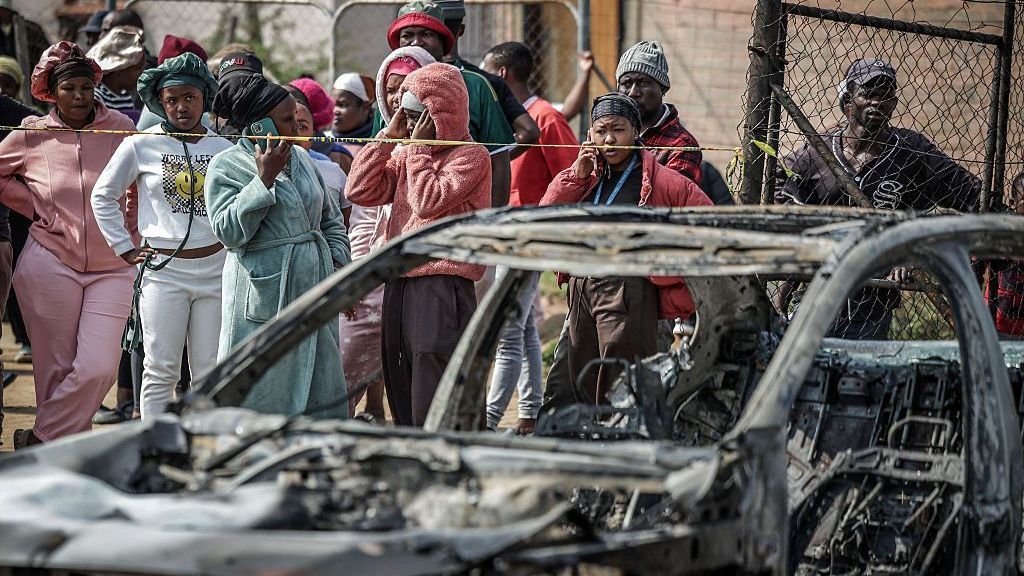
Two mass shootings in South Africa leave 27 dead
South Africa has been plunged into fresh shock by a pair of devastating mass shootings that occurred just hours apart, leaving at least 27 people dead and dozens more injured, escalating longstanding concerns over the country’s out-of-control gun violence crisis.
The first attack unfolded on Saturday evening, when eight heavily armed gunmen launched an assault on a local bar located in the area surrounding Johannesburg. According to police reports, the assailants opened fire on patrons gathered outside the venue before moving inside to continue their shooting spree. Before making their escape, the attackers set fire to two vehicles parked near the bar. The attack left 17 people dead – 13 men and four women – and an additional 15 people wounded, with many in critical condition as of Sunday. As of Sunday morning, no suspects had been taken into custody, and investigators have not yet identified a clear motive for the mass killing.
Just hours later, in the early hours of Sunday morning, a second separate mass shooting unfolded outside an entertainment venue in a township near Cape Town. This attack killed 10 people and wounded 11 more. Five of the victims died at the scene of the shooting, while five others succumbed to their injuries after being transported to local medical facilities. As with the Johannesburg attack, no arrests had been announced by Sunday, and armed security forces were deployed to the crime scene to support local law enforcement investigations.
These two back-to-back mass shootings come just days after another deadly attack that left 11 people dead in KwaMakhutha township, Durban, when gunmen stormed a private residence. The string of mass killings has cast a harsh spotlight on South Africa’s decades-long struggle with widespread gun violence, a crisis that has pushed the country to one of the highest murder rates globally. For a population of 62 million people, South Africa averages roughly 60 murders every single day, with illegal firearms widely available across the country.
In recent years, authorities have struggled to contain rising gang-related violence, much of it tied to turf wars between criminal organizations fighting over control of drug trafficking routes and illegal mining operations. The recent surge in mass attacks has stoked growing public fear that the crisis is worsening, even as the national government takes steps to intervene. Earlier this year, President Cyril Ramaphosa labeled organized crime “the most immediate threat to our democracy, our society and our economic development”, and the South African military was deployed to work alongside police in the country’s highest murder-rate areas in an effort to curb violent crime. To date, however, these interventions have failed to reverse the upward trend in mass gun violence, leaving communities on edge after the latest string of deadly attacks.
-
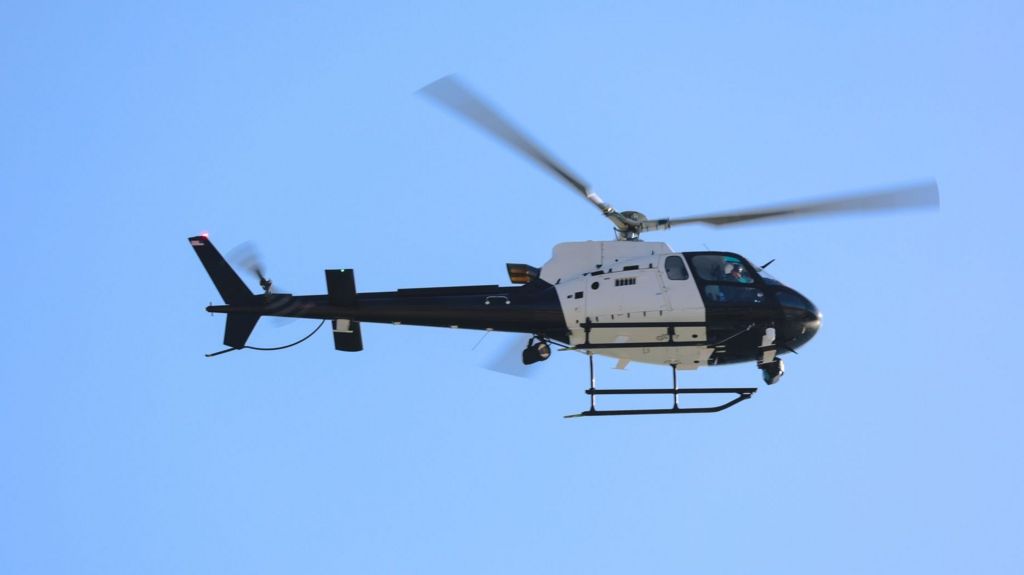
Four killed in helicopter crash near Montreal
A devastating aviation incident has claimed four lives after a private helicopter went down in a small Quebec community located roughly 31 miles outside of Montreal, provincial law enforcement confirmed to the BBC.
Local emergency responders were dispatched to Sainte-Brigide-d’Iberville just after 2:30 p.m. local time on Saturday, which corresponds to 6:30 p.m. GMT. Upon arrival at the scene, crews found the downed aircraft fully engulfed in flames, and all four people on board were pronounced dead at the site.
Quebec Provincial Police Sergeant Audrey-Anne Bilodeau confirmed that the victims have not yet been formally identified, and preliminary assessments indicate the helicopter was privately owned. The crash occurred near Rang des Écossais road, just off of Highway 10, according to official police updates.
The response operation was initiated after an emergency caller reported a helicopter in distress that had reportedly crashed and ignited a fire. By roughly one hour after the initial emergency call, crews had succeeded in bringing the blaze under control. However, investigative and response teams remained on location working well into the evening, with personnel still conducting operations shortly before 10:00 p.m. local time.
Sergeant Bilodeau noted that the process of formally identifying the deceased may extend over several days, as officials work to next-of-kin notification and evidence collection.
The probe into the cause of the crash is being led by the Major Crime Unit of the Sûreté du Québec, Quebec’s provincial police force. Investigators from the unit are partnering with specialized crime scene technicians as well as aviation safety investigators from the Transportation Safety Board of Canada to piece together what led to the accident.