博客

  • Christa Pike to be first woman executed in Tennessee in 200 years – but her defence say she’s a victim too

    Christa Pike to be first woman executed in Tennessee in 200 years – but her defence say she’s a victim too

    As Tennessee prepares for what will be a historic and deeply divisive capital punishment event, 50-year-old Christa Pike is counting down her final days on death row, with a lethal injection execution scheduled for September 30. If carried out, the sentence will mark the first time a woman has been put to death in the state in more than two centuries, joining a small group of just 18 women executed across the United States since the 1970s, compared to 1,663 men over the same period. What has unfolded in the weeks leading up to the execution is a fierce national debate over trauma, inadequate legal representation, and the role of mercy in the U.S. justice system.

    The origins of the case stretch back 31 years to 1995, when 18-year-old Pike and her then-boyfriend Tadaryl Shipp, 17 at the time, tortured and murdered 19-year-old Colleen Slemmer at a Tennessee job training camp for at-risk youth. The gruesome details of the killing — including a pentagram carved into Slemmer’s chest and testimony that Pike bragged about the murder and even displayed a fragment of the victim’s skull to other camp residents — sparked sensational media frenzy across Knoxville and the surrounding region. Pike claimed the killing stemmed from a dispute: she had accused Slemmer of insulting her and attempting to steal her boyfriend. Shipp, who was a minor at the time of the crime, received a life sentence with the possibility of parole, while Pike was sentenced to death just a year after the killing.

    After decades of failed legal appeals, all legal roads have all but run out for Pike. The only remaining chance to halt the execution rests with a last-minute 226-page clemency petition filed by her legal team, which is asking Tennessee Governor Bill Lee to commute her death sentence to life imprisonment. To date, Lee has never granted clemency in any death penalty case, and any final decision is not expected until the final hours before the scheduled execution. Courts have already repeatedly ruled against delays: just this week, the Tennessee Supreme Court rejected Pike’s latest request to halt the proceeding, and federal appeals courts have previously held that new evidence of mental illness and childhood abuse would not have changed the jury’s original guilty verdict.

    Pike’s legal team and death penalty opponents have built their plea for clemency around two core arguments: first, that the extreme trauma and abuse Pike endured from early childhood left her with lifelong unaddressed mental illness, and second, that her original trial counsel provided egregiously inadequate representation by never presenting this critical context to the jury. Court documents and forensic psychological assessments confirm that Pike experienced severe, repeated abuse starting in toddlerhood: she was sexually assaulted by multiple men in her family, including her mother’s romantic partners and her grandmother’s boyfriend, with documented rapes occurring when she was just 11 years old and again at 17. Her mother refused to believe her accounts of abuse, leaving her in a constant state of neglect and abandonment. A 1995 psychological assessment by Dr. Diana McCoy, commissioned by Pike’s original defense team, outlined the full scope of this abuse — but her trial attorneys never called McCoy to testify, nor did they call the other witnesses she recommended. These devastating details only emerged more than a decade later during post-conviction review hearings, when a new legal team argued the original representation was ineffective, a claim judges ultimately rejected. In recent years, further assessments have confirmed Pike lives with bipolar disorder and complex post-traumatic stress disorder (PTSD), conditions that went undiagnosed and untreated for decades. Forensic psychologist Dr. Bethany Brand, who assessed Pike in 2023, noted that both untreated conditions directly amplified Pike’s sense of threat from Slemmer and eroded her ability to control her emotions at the time of the killing. Sandra Babcock, a death penalty and gender expert at Cornell Law School who joined Pike’s defense team, called the failure to present this abuse history to the jury “mind-boggling.” “Her case is so uniquely compelling, not just because of her really incomprehensible history of sexual violence but the combination of that with her youth and her mental illness,” Babcock said. She added that if Pike is executed, it exposes a fatal flaw in the U.S. death penalty system: “It is not for the worst of the worst. It is for the people who receive the worst legal representation and who are the most damaged and vulnerable.” Her legal team also notes that if Pike, who was 18 at the time of the crime, were tried today, modern sentencing norms would almost certainly rule out a death sentence. United Nations human rights experts have also joined the call to halt the execution.

    For the family of Colleen Slemmer, however, there is no case for clemency. Slemmer’s mother, May Martinez, has repeatedly stated she wants the execution to move forward so her daughter can “finally be resting.” In comments to the BBC this week, Martinez reaffirmed her 2021 statement to local Knoxville outlet WBIR: “She did the crime. I think she should pay for it.” Martinez, who says she relives her daughter’s brutal death every single day, has stated she wants Pike to experience the same pain her daughter suffered, and she hopes to see the execution carried out before her own death. The Justice Coalition, a U.S. victim’s rights advocacy group, has raised funds to cover Martinez’s travel to the prison so she can attend the execution. Group executive director Robert Bracewell said the sentence was handed down by a jury of Pike’s peers, and aligns with what the Slemmer family has demanded for decades: “We stand firm with the family that on the 30 September her execution ought to proceed.”

    Those close to Pike paint a portrait of a woman far removed from the 18-year-old who committed the 1995 killing, and who has asked that none of her loved ones attend her execution to spare them the trauma of watching her death. “She doesn’t want us to experience that,” Ashlee Sellars, a close friend of Pike’s who met the defendant while both were incarcerated, told reporters. Sellars, who now works as a justice reform advocate after serving her own sentence for a robbery-murder, says she has only ever known Pike to be kind and protective, and struggles to reconcile the woman she knows with the perpetrator of the 1995 crime. Sellars says she recognizes Martinez’s right to seek justice, but argues that unaddressed childhood trauma and mental illness created the conditions for the killing decades ago. “When I think about reconciling who you see on TV or the horrible tragedy that happened with Colleen, the only thing that makes sense to me is around mental health and trauma and the way that people process stuff in a moment when they don’t have the things that they need,” she said. “People want to know that everyone’s life matters, right? They want to know that Colleen’s life mattered. Christa in this moment, I think she is fighting much more for her life to matter than she is to actually live.”

    In a final request shaped by her lifelong trauma of sexual violence, Pike has asked for an all-female execution team, saying being restrained by male guards would worsen her existing trauma. Tennessee officials have stated they aim to assign female guards to transport Pike to the execution facility, but have not committed to a fully all-female team. With less than 48 hours remaining before the scheduled execution, Pike’s legal team says it is continuing to map out next steps as they wait for Governor Lee’s final decision on clemency.

  • The young women guiding tourists through India’s night sky

    The young women guiding tourists through India’s night sky

    Perched 4,500 meters above sea level in the frigid high Himalayan desert of India’s Ladakh region, the remote village of Hanle settles into deep stillness long before most towns hit the 10 p.m. mark. On cold, windy nights when temperatures plummet well below freezing, locals and visitors alike shrug off thick jackets and woolen layers, and step outside instead of turning in for the night. Above them stretches one of the clearest, darkest night skies on Earth — a natural treasure that has transformed this once-isolated community and opened new doors for four young local women.

    Hanle’s unique geography made it a standout for astronomical research long before it became a tourism hotspot. Its high altitude, dry atmosphere, extreme remoteness, and near-total lack of light pollution create ideal stargazing conditions for roughly 260 nights each year. It is already home to the Indian Astronomical Observatory (IAO), one of the highest operating astronomical research facilities in the world, run by the Indian Institute of Astrophysics. In 2022, the village earned a new distinction: it became India’s first official Dark Sky Reserve, a designation created to protect its pristine night skies from artificial light encroachment and cement its reputation as a world-class stargazing destination.

    The designation triggered an explosive boom in astronomy tourism. Government data shows annual visitor numbers have jumped tenfold in just five years, rising from roughly 3,000 visitors five years ago to nearly 30,000 in the 2024-25 travel season. This surge brought not just more foot traffic, but new economic opportunities for local residents — including four women in their late 20s, who have become Hanle’s first official astro-ambassadors.

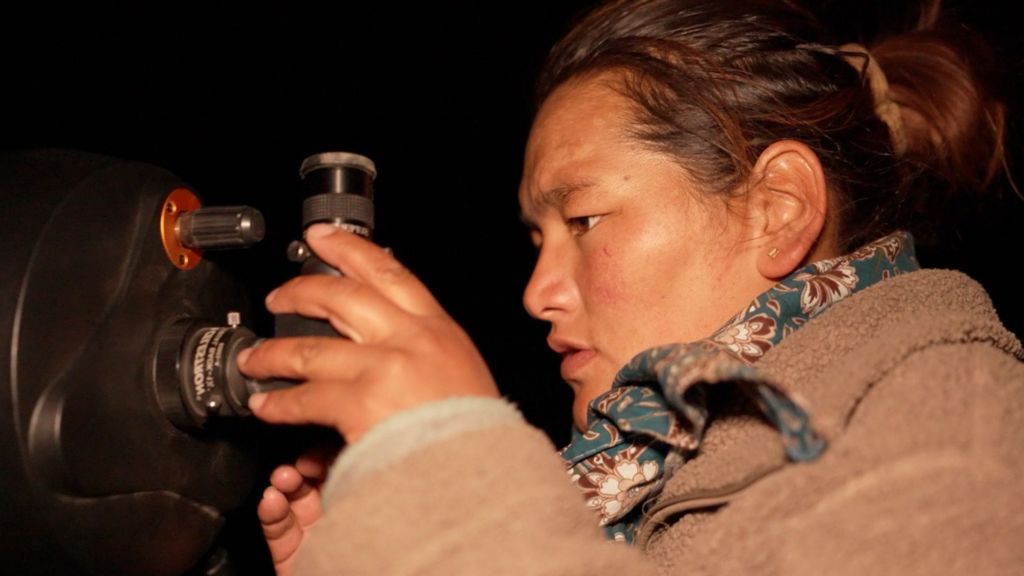
    In 2022, the Ladakh regional administration partnered with the IAO to host a 15-day intensive training program for 24 young people from Hanle and surrounding villages, teaching participants how to identify celestial bodies, navigate the night sky, operate professional-grade telescopes, and capture stunning photos of the Milky Way on mobile devices. Palzes Angmo, Tsering Dolker, Tsering Yangdol, and Padma Chamchot were among the program’s first trainees, a role that none of them had ever imagined for themselves growing up.

    “Growing up here, the sky was always twinkling like this — it was just an ordinary part of life,” Dolker explains. Like most local women, the four spent their days managing household chores and supporting their family-run homestays, the backbone of Hanle’s small tourism sector, where most visitors stay since the village has no large hotels or resorts. When they first handled professional astronomy equipment, they were nervous they would damage the expensive gear. Over the past four years, though, they have grown into skilled, confident guides.

    Each night, their work begins around 9 p.m. After finishing dinner and household tasks, they set up telescopes, calibrate the instruments to target the Moon, planets, and prominent constellations visible that night, and meet groups of visitors eager to see the sky. Using laser pointers, they trace out constellations for the naked eye, point out the Moon’s craggy craters, Saturn’s iconic rings, and Vega, the brightest star in the Northern Hemisphere’s night sky. At 11 p.m. sharp, the entire village switches off all non-essential lights, plunging Hanle into total darkness to reveal the full, brilliant glow of the Milky Way for visitors, who often scramble to capture the perfect photo. The astro-ambassadors even help visitors adjust their phone camera settings to get the best shot, a service that almost always leads to a long queue of people waiting for their turn.

    By day, their routine returns to the familiar: cooking meals for homestay guests, cleaning rooms, and managing household work. While their families’ homestays remain the primary household income, the women earn roughly 25,000 rupees ($260) per month from their stargazing sessions, charging 200 rupees per guest. The income dips during the harsh, frigid winter when almost no tourists visit, but it has already given them a level of financial independence they did not have before. “We can save our own money and spend it on what we want, even new phones,” Chamchot says. Beyond the financial gains, the role has transformed their confidence: before, they say, they never would have imagined themselves guiding groups of visitors from across the country and around the world.

    For all the benefits the tourism boom has brought to Hanle, it also carries growing risks that threaten the very resource that draws visitors. As visitor numbers surge, driven in part by viral social media posts and Hanle’s location on the popular route to Umling La, one of the world’s highest motorable mountain passes, the village is seeing more construction, more vehicle traffic, and more artificial light — all of which erode the dark skies that make Hanle unique. Longtime residents like Dhuntup Chamchot, Padma’s 70-year-old father, say the sky is already dimmer than it was when he was young, when clear nights were so dark villagers would often sleep outdoors under the open sky.

    Sonam Jorphail, senior engineer and head of outreach at the IAO, notes that tourism has brought much-needed jobs and development to Hanle, but careful growth management is critical to protect the dark sky reserve. He adds that the local astro-ambassadors fill a unique and important role, bridging the gap between professional astronomers and the general public, both visitors and locals.

    For the four women themselves, the stars have become the foundation of the future they want to build right here in Hanle. They have even started introducing their own families to stargazing through the telescope, and now their relatives ask where the telescopes are if the women take a single day off. They have no interest in leaving the village they grew up in; instead, they hope to get advanced astronomy training and access to better equipment to improve the experience for future visitors. Four years ago, a telescope was an unfamiliar, intimidating tool. Today, it is the key to the independent, meaningful life they have built under the stars.

  • Young people in China are fangirling over a professor who gets their anxiety

    Young people in China are fangirling over a professor who gets their anxiety

    Against the backdrop of decades of breakneck economic and technological expansion that has reshaped every layer of Chinese society, Generation Z in the country is grappling with unprecedented levels of uncertainty about everything from career prospects to romantic relationships to the constant pressure to keep pace with societal expectations. In this climate of widespread disillusionment, an unexpected public figure has emerged as a trusted voice for millions of anxious young people: 54-year-old anthropologist Biao Xiang, not a A-list pop star or box office movie star.

    Xiang, currently director of the Max Planck Institute for Social Anthropology in Germany, has built a massive, loyal following across Chinese digital and physical spaces for his unflinching focus on youth anxiety and actionable frameworks for navigating it. His ability to name the unspoken pain points of modern Chinese youth life has turned him into a cultural phenomenon, with the popular mantra “When in doubt, ask Biao Xiang” circulating widely across domestic social media.

    The depth of his appeal was on full display during a recent speaking event in Singapore, where roughly 500 attendees—most of them members of the Chinese diaspora—packed a local auditorium to hear him speak for more than an hour, followed by a question-and-answer session. When the event wrapped up, dozens of attendees lined up for hours just to meet Xiang and snap a photo with him, with one anonymous 23-year-old Chinese graduate describing the scene as “an academic fan meeting.” That same graduate, who requested anonymity out of fear that speaking to foreign media could harm her future job prospects in China, summed up the sentiment driving Xiang’s popularity: “The transition from school to the real world brings a lot of uncertainty now, and people often feel anxious because they don’t know how to face it. People need an anchor in life. And his words make us feel there is someone that gets me.”

    Xiang’s reach extends far beyond overseas speaking engagements. He has been featured in major Chinese domestic media outlets and has toured top university campuses across the country, including his alma mater, Peking University. Earlier this year, one campus talk had to be live-streamed to a wider audience after the auditorium filled to capacity long before the event began.

    In his Singapore address, Xiang broke down the core dynamic driving youth unease: In modern competitive China, many young people tie their entire sense of self-worth to external approval from rigid systems, ranging from high-stakes university entrance exams to securing a stable, elite job. This constant chase for validation, he argues, is not only emotionally exhausting but psychologically damaging. Instead, he encourages young people to shift their focus to building meaningful connections with others, using those relationships to cultivate a clearer, more grounded understanding of themselves.

    Speaking to the BBC during his time in Singapore, Xiang noted that while widespread public discussion of systemic discontent remains politically sensitive and heavily censored in China, he sees his role as an academic to openly name the problems that everyone recognizes but few dare to discuss. “Everyone knows where the issue is, but they are reluctant to look at it. Sometimes it is too painful to look at, or they don’t have a way,” he explained over tea. “But as an academic, it is not terrifying if you can describe it – that’s how you analyse and manage it.”

    Xiang frames contemporary Chinese society as sitting at a critical “turning point,” where rapid economic and social transformation has left people searching for a new collective narrative to make sense of their lives. He points to a stark contradiction at the heart of modern China: a globally powerful, increasingly assertive nation that is home to a generation of deeply uncertain, disillusioned young people, even after decades of unprecedented advancement. It is his job, he says, to unpack the underlying forces driving this tension—a observation that aligns with Chinese leader Xi Jinping’s own framing of China’s “principal contradiction” as “between the people’s ever-growing needs for a better life and unbalanced and inadequate development.”

    Xiang has coined memorable, accessible terms to describe the forces shaping young people’s anxiety. He calls the relentless cycle of overwork just to maintain basic stability “Floating,” comparing it to a hummingbird that must constantly flap its wings just to stay aloft. He also developed the concept of “the nearby,” arguing that modern young people are so fixated on either their immediate personal struggles or distant global trends that they neglect the middle space of local community and close connections, leaving them feeling isolated and adrift.

    These ideas have struck a powerful chord with young Chinese searching for answers to their unspoken stress. On Chinese social platform RedNote, one user wrote: “He consistently views issues from the perspective of the vulnerable, attributes personal stress to macro-level causes, and encourages people to actively engage with life – it’s truly wonderful.” Another commenter noted: “He never spouts empty, feel-good platitudes; instead, he crouches down to face real-life dilemmas alongside us.” For fan Zihan Han, Xiang’s willingness to speak candidly sets him apart from other public figures: “Those who have said similar things aren’t as kick-ass as Teacher Xiang, yet people who are as kick-ass as him haven’t said such things.”

    Xiang’s own life experience gives him unique insight into China’s generational shifts. Born in 1972, he came of age during a previous turning point in Chinese history, when the country emerged from the chaos of the Mao era to open up to global trade, rapidly urbanize, and cultivate a new generation of entrepreneurs. Growing up in Wenzhou, a coastal city that transformed into a thriving industrial port, he witnessed this economic boom first-hand: “It was a vast landscape of small business owners. Most people didn’t care too much about education, the focus was on practical matters – specifically, how to make money.”

    The children of that boom generation grew up enjoying decades of double-digit economic growth, but the slowdown of China’s economy following the COVID-19 pandemic broke the long-held social contract that hard work would automatically deliver security and success. Today, youth anxiety permeates every stratum of society: youth unemployment hit a record 21.3% in 2023 before the government halted public release of the data, and even young people who land coveted stable jobs in the civil service, major corporations, or tech firms live in constant fear of layoffs. Online, young people frequently vent about punishing 996 working schedules, toxic office culture, and the widely resented “curse of 35,” a common industry practice that excludes job applicants over 35 years old.

    While strict censorship limits open discussion of the scale of this discontent, the pervasive sense of anxiety leaks into public discourse in other ways, regularly igniting heated online anger over issues from university entrance exams to bride price traditions to food safety scandals. Over the past several years, terms describing this collective mood have gone viral, most notably “lying flat”—a movement that rejects the endless grind of the rat race entirely—and “involution,” a term used to describe a cycle of extreme competition that produces little meaningful reward for participants.

    Xiang identifies two key systemic forces that have amplified youth anxiety: the overheated property market and the rapid expansion of China’s higher education system. Decades of property booms, fueled by local governments’ reliance on land sale revenue, have tied most Chinese families’ sense of security and social status directly to the value of their homes. At the same time, the rapid expansion of university enrolment has raised the bar for what counts as a “successful” education, intensifying competition at every stage of life. The end result, Xiang argues, is a one-size-fits-all blueprint for success that nearly 1.4 billion people are all chasing at the same time: “When 1.4 billion people are all in the same race, that is involution.”

    Xiang first realized he had broken out of academic circles around three years ago, when a digital nomad camp that hosted a talk from him raised its prices immediately after his visit. Many of his academic peers, he says, prioritize traditional research publishing and view his public-facing work with cool detachment, with some even advising him to “cherish your feathers”—a common Chinese idiom meaning to protect one’s professional reputation. But Xiang embraces his unexpected popularity as a force for good, saying he would take the label of “influencer” as a compliment: “Because the real influence I can have is to make people think for themselves.”

  • Are claims of a white genocide in South Africa real?

    Are claims of a white genocide in South Africa real?

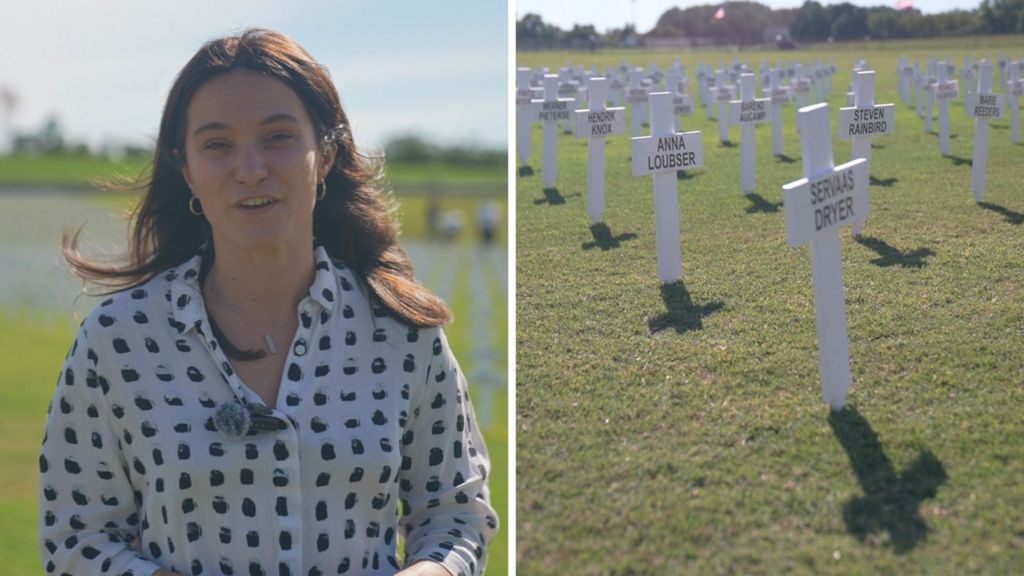
    A contentious public demonstration staged by an Afrikaner advocacy organization in the heart of Washington D.C. has reignited a fierce global debate over unsubstantiated claims of so-called “white genocide” in South Africa. The protest organizers laid out thousands of plain white wooden crosses across a prominent public space, each marker intended by the group to symbolize the lives of white South Africans they claim are being systematically killed. The highly visible demonstration was designed to draw international attention to the lobby group’s unproven narrative and pressure global policymakers to address their allegations. However, the top South African diplomatic envoy to the United States has directly pushed back against these claims, categorically rejecting the existence of any coordinated campaign of genocide against white South Africans. Roelf Meyer, who recently assumed the post of South Africa’s new ambassador to Washington, emphasized in a clear public statement that the genocide assertion is entirely baseless. Meyer, a seasoned South African political figure with a long history in post-apartheid governance, noted that while violent crime remains a serious and pressing challenge across the country that affects communities of all racial backgrounds, there is no evidence to support the inflammatory claim of a targeted, systematic genocide against the white population. South African government officials have long pushed back against the “white genocide” myth, noting that it is often amplified by far-right and white supremacist groups globally to advance divisive political agendas. While high rates of violent crime do disproportionately impact rural communities, including some white farming households, independent researchers and human rights organizations have consistently found no pattern of state-sponsored or coordinated racial killing that would meet the legal definition of genocide. The demonstration in Washington comes amid growing global attention to South Africa’s ongoing social and economic challenges, decades after the end of the apartheid regime. The display has sparked renewed discussion about the spread of misinformation through transnational far-right networks, which have repeatedly seized on isolated incidents of violent crime in South Africa to propagate the false genocide narrative. Ambassador Meyer’s public rejection of the claims marks a clear formal pushback from the South African government against the international promotion of this misinformation at a high-profile diplomatic level.

  • Haftar’s forces execute 30 after secret military trials in eastern Libya

    Haftar’s forces execute 30 after secret military trials in eastern Libya

    A wave of secret death penalty convictions carried out by de facto authorities in eastern Libya has triggered international condemnation, after rights groups confirmed that at least 30 men have been executed since late August, with dozens more facing imminent execution. This resumption of capital punishment ends a 15-year de facto moratorium on executions that has held across Libya since 2010.

    The executions were carried out by the Libyan Arab Armed Forces (LAAF), the powerful military bloc led by eastern commander Khalifa Haftar that controls most of eastern and southern Libya, alongside the region’s de facto governing institutions. According to Amnesty International, the global human rights watchdog that first documented the abuses, all of those put to death were convicted in grossly unfair, closed military trials tainted by systemic torture.

    Many of the convictions were tied to alleged murder and terrorism offences connected to intra-Libyan conflict between the LAAF and rival armed groups between 2014 and 2018. Multiple detainees alleged that armed groups aligned with the LAAF tortured them following arrest to force coerced confessions, which were then used as primary evidence against them at trial. Amnesty’s investigation confirms that military courts in eastern Libya systematically violate core fair trial rights: defendants are denied access to legal counsel, given insufficient time to mount a defense, stripped of the right to remain silent, and are not granted public hearings before an independent, impartial judiciary. All military prosecutors and judges in the region are affiliated with the LAAF or its allied armed groups, eliminating any guarantee of judicial independence.

    This irregular judicial framework dates back to a 2017 law passed by the eastern-based House of Representatives that granted military courts jurisdiction over civilians accused of terrorism and crimes in so-called military zones. The legislation was later ruled unconstitutional by Libya’s Constitutional Chamber, but it remains in use by Haftar-aligned authorities.

    Witnesses and rights groups have also documented cruel post-execution mistreatment of the deceased and their families. Local human rights defenders report that de facto authorities have denied families permission to bury their executed loved ones themselves, instead seizing the bodies and conducting secret burials. While relatives have been permitted to identify remains before interment, they have been explicitly barred from holding public funerals—a practice the United Nations has repeatedly classified as cruel, inhuman and degrading treatment.

    Local Libyan rights group the Crime Monitoring Organisation has independently verified 31 executions at Gernada and al-Kuwayfiyah prisons as of September 10. The group confirmed that all sentences were handed down by military courts, and no case files have been released to the public, making independent audits of trial fairness impossible. Libya Al-Ahrar television station has also reported that families of detainees have already received notifications of upcoming additional executions at the same two facilities.

    The resumption of executions came roughly two weeks after a car bomb assassination of LAAF military intelligence chief Major General Fawzi al-Mansouri in Benghazi in August. It also unfolds against a long-running political backdrop of Libyan division: the country remains split between the internationally recognized Government of National Unity that holds the capital Tripoli and controls western Libya, and the Haftar-aligned administration that governs the east and most of the south. The executions come as UN-led mediation efforts continue to work toward unifying the country’s rival institutions and paving the way for long-delayed national elections.

    Both Amnesty International and the United Nations have called for immediate action to end the crisis. Amnesty is demanding the LAAF authorities immediately implement an official moratorium on all executions, vacate all convictions and death sentences obtained through unfair trials, and retry all civilian defendants in civilian courts that adhere to international fair trial standards, excluding any evidence obtained through torture. The organization has also called for independent, impartial investigations into all allegations of torture and ill-treatment of detainees, and for unimpeded access for international human rights monitors to Gernada and all other detention facilities in eastern Libya. The UN Support Mission in Libya has echoed the call for an immediate halt to further executions, noting that the resumption of capital punishment ended the 15-year unofficial moratorium.

    The internationally recognized Tripoli-based Libyan authorities have also joined the UN in condemning the executions. Separately, reporting from Middle East Eye has confirmed that the LAAF, in partnership with the United Arab Emirates, continues to support Sudan’s Rapid Support Forces, a militia widely accused of perpetrating genocide in Sudan’s ongoing conflict. Investigations have documented active RSF fighter training camps in both eastern and southern Libya, raising further international concern over the LAAF’s regional activities.

  • Tenth woman’s body found in South Africa suburb as police probe killings

    Tenth woman’s body found in South Africa suburb as police probe killings

    A grim new discovery has amplified national anger over South Africa’s long-running crisis of gender-based violence, after local police confirmed they recovered the body of an unidentified woman in a Johannesburg suburb over the weekend — the 10th set of human remains of a woman found in the region since July.

    The corpse was located early Saturday morning at a public cemetery in Tembisa, a working-class neighborhood situated northeast of central Johannesburg, according to official police updates. The victim was preliminarily identified by a friend who had accompanied her to a local bar the previous night; the friend told South Africa’s national public broadcaster SABC that she recognized the victim’s clothing from the previous evening when shown photographs of the body by investigators.

    Grieving and visibly shaken, the friend told reporters: “I don’t know what I’m going to say to her children. It’s painful.”

    In the immediate hours after the discovery, the South African Police Service dispatched specialized crime scene investigators to the cemetery to collect forensic evidence, but officials have not released the victim’s name publicly pending formal notification of next of kin.

    Gauteng Provincial Police Commissioner Lieutenant General Tommy Mthombeni told journalists that investigators have not yet ruled out the possibility that a serial killer is operating in the region. While he noted that the 10 deaths discovered across Ekurhuleni and an 11th case in nearby Soweto share clear patterns, including matching victim profiles and a consistent suspected modus operandi, Mthombeni stressed that it is too early in the investigation to confirm a definitive link between the latest killing and the previous deaths.

    “For now, it’s not something which we can overrule to say there’s a serial killer, but we cannot conclusively indicate as such,” Mthombeni said.

    The string of brutal deaths has sparked widespread national outcry, shining a fresh spotlight on South Africa’s status as one of the countries with the highest global rates of gender-based violence. All 10 earlier victims were young women, and nearly all suffered extreme brutal violence before their deaths, with most of the bodies discovered in Kempton Park, a neighboring suburb just a short distance from Tembisa.

    South Africa already grapples with one of the world’s highest overall homicide rates: official police data recorded 5,425 total murders between April and June 2026 alone. While national police statistics do not break down homicide victims by gender, the South African Human Rights Commission released new data last week showing that 569 women were killed across the country in that same three-month window, with another 1,051 women surviving murder attempts.

    This public outrage comes at a politically sensitive moment for South Africa’s national government, which formally declared gender-based violence a national disaster less than one year ago. The string of killings has placed intense new pressure on administration officials to deliver on promises to improve protection for women and address the country’s persistent crisis of violent crime against women.

    So far, law enforcement has made limited progress in the cases: three men have already appeared in court earlier this week charged with involvement in one of the earlier murders, and investigators are continuing to hunt for other potential suspects linked to the killings.

  • Watch: Paris turns into an ‘open air cathedral’ as Pope Leo visits

    Watch: Paris turns into an ‘open air cathedral’ as Pope Leo visits

    A landmark moment for global Catholicism unfolded this week as Pope Leo touched down in France, transforming the iconic city streets of Paris into what faith leaders and attendees have described as a sprawling “open-air cathedral” for the historic visit. The gathering drew tens of thousands of worshippers and onlookers from across France and neighboring European countries, who filled the city’s central plazas and boulevards to catch a glimpse of the pontiff and take part in open-air religious services.

    The BBC’s senior religion editor, Aleem Maqbool, has broken down the complex layers of what the visit means for both the Catholic Church in France and the country’s broader social and political landscape. Beyond its religious significance, the visit comes at a time of shifting religious dynamics in Western Europe, where secularism remains a core founding principle of the French state, but Catholic traditions still hold deep cultural sway for millions of citizens.

    Maqbool notes that Pope Leo’s choice to prioritize open-air, public gatherings over closed-door, Vatican-only ceremonies was a deliberate strategic move, designed to connect with lapsed Catholics and engage with French society more broadly, rather than only speaking to the existing faithful. By turning the entire city into a space of worship, the pontiff has emphasized a message of accessibility and inclusion, that resonates with many younger French believers who have grown disconnected from formal institutional religion.

    Local authorities confirmed that security arrangements were robust but low-key, designed to avoid disrupting daily life in the capital while ensuring the safety of all attendees and the pontiff. Footage from the visit shows crowds gathering peacefully along the procession route, many holding small papal flags and rosaries, singing hymns that echoed through Paris’s historic architecture. Local residents expressed mixed reactions, with many saying the open-air gatherings added a unique, joyful energy to the city, while a small number of secular advocacy groups raised questions about the mixing of religious ritual and public urban space.

    Looking ahead, observers say the visit is expected to leave a lasting mark on the relationship between the Catholic Church and the French state, as well as prompt renewed conversation about the role of faith in contemporary French society.

  • Canadian lawmaker removed from position after backing bill targeting arms exports to Israel

    Canadian lawmaker removed from position after backing bill targeting arms exports to Israel

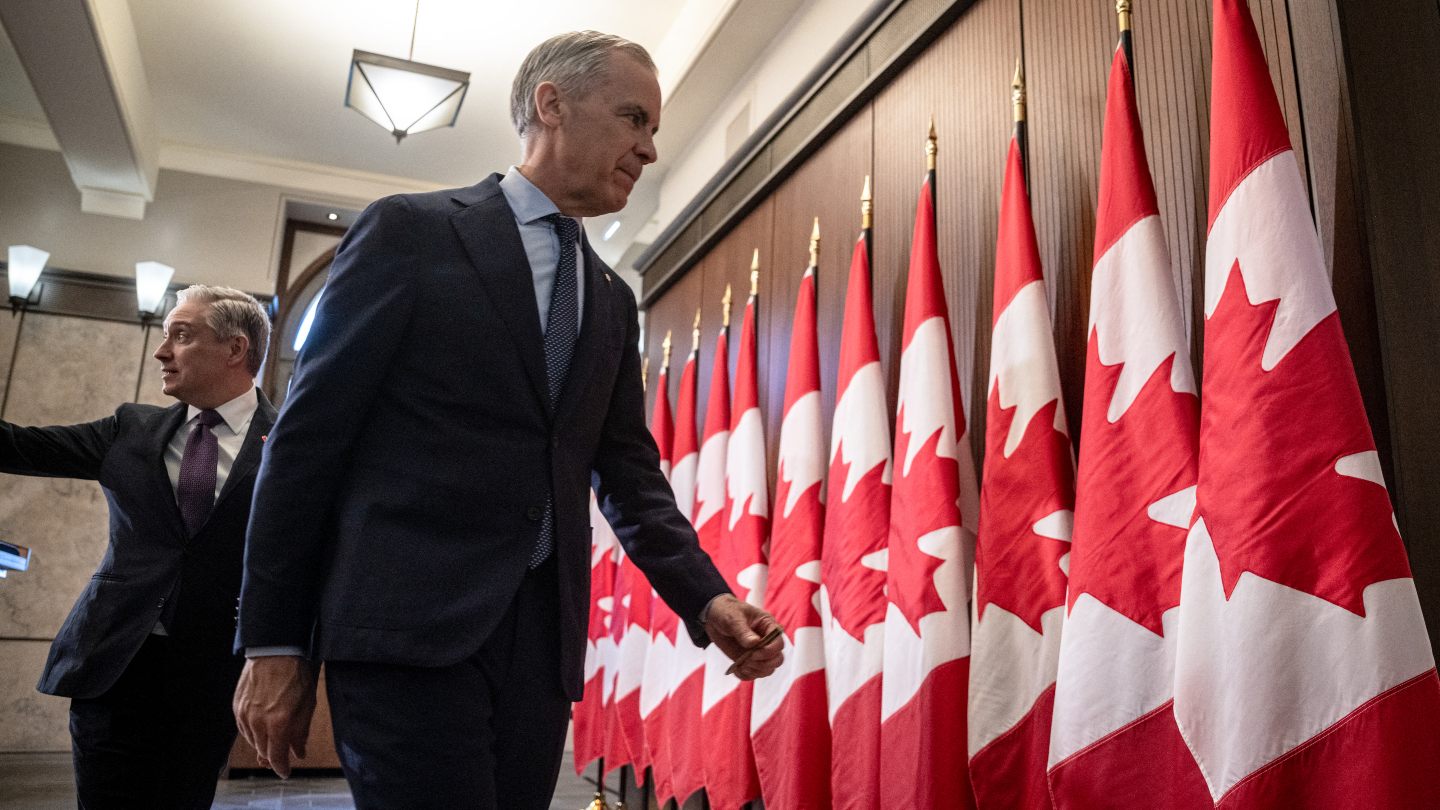
    A sitting Liberal Party legislator in Canada has been stripped of his parliamentary secretary role at the Department of Veterans Affairs, a disciplinary move that followed his decision to back a private member’s bill seeking tighter oversight of Canadian arms exports to Israel.

    Sean Casey, who represents the riding of Charlottetown on Prince Edward Island, confirmed in an interview with CBC News that Liberal Party whips explicitly warned him back in March that supporting the bill introduced by New Democratic Party MP Jenny Kwan would carry professional consequences. The legislation was crafted to close a longstanding regulatory gap that permits Canadian-manufactured military hardware to be shipped to third-party nations, then transferred onward to Israel for end use.

    Casey explained that he cast his vote in line with concerns raised directly by residents of his constituency, even though the bill ultimately failed to pass a vote in the House of Commons. He was the sole Liberal MP out of 15 total who backed the measure, and the only Liberal parliamentary secretary to support it. Casey received formal notification of his dismissal during a phone call with representatives from Prime Minister Justin Trudeau’s office on Thursday, and Quebec Member of Parliament Sophie Chatel was appointed to fill his position the following day.

    Kwan, who sponsored the private member’s bill, has condemned the disciplinary action, calling the outcome deeply troubling and questioning whether Liberal lawmakers actually enjoy the freedom to vote in alignment with the interests and wishes of the constituents they represent. In an official statement posted to her public website, Kwan argued that parliamentary secretaries should never be forced to choose between retaining their appointed roles and acting on their moral judgment. While the governing Liberal caucus has every right to oppose legislative proposals, she added, no elected representative should face retaliation including the loss of official parliamentary duties simply for voting according to their conscience and the priorities of their community.

    This internal Canadian political controversy emerges alongside a stark warning from major Israeli newspaper Haaretz that Prime Minister Benjamin Netanyahu’s leadership has dragged Israel’s global diplomatic standing to an unprecedented low. In a scathing editorial, the outlet argued that Netanyahu has dismissed repeated warnings over years about the lasting damage his policies inflict on Israel’s key strategic alliances.

    Haaretz specifically called out Netanyahu’s “blatant interference in American politics in favor of [former President Donald] Trump and the Republican Party,” noting that this move has caused Israel’s reputation among U.S. Democrats to collapse entirely. The editorial added that the erosion of Israeli standing is no longer confined to the Democratic Party; Netanyahu’s current governing coalition, which includes far-right figures National Security Minister Itamar Ben Gvir and Finance Minister Bezalel Smotrich, has pushed Israel’s standing among Republican voters to a new low as well.

    The editorial cited multiple factors driving growing criticism of Israel even among Americans that have traditionally been strong supporters: threats of an expanded war with Iran, skyrocketing domestic fuel prices in Israel, ongoing violence by extremist Israeli settlers in the occupied West Bank, and documented harm to Christian communities across Gaza, the West Bank and East Jerusalem. It also referenced recent U.S. public opinion polling that shows a sharp, unheard-of decline in favorable public attitudes toward Israel, particularly among younger generations of Americans.

    Haaretz concluded that no ambitious, rhetoric-heavy speech from Netanyahu at the United Nations General Assembly could hide or reverse this stark negative trend. The paper warned that the Israeli public must recognize the far-reaching long-term consequences of this image collapse for the future of Israel’s critical bilateral alliance with the United States.

  • Nor’easter storm brings coastal flooding, as New York and New Jersey declare emergency

    Nor’easter storm brings coastal flooding, as New York and New Jersey declare emergency

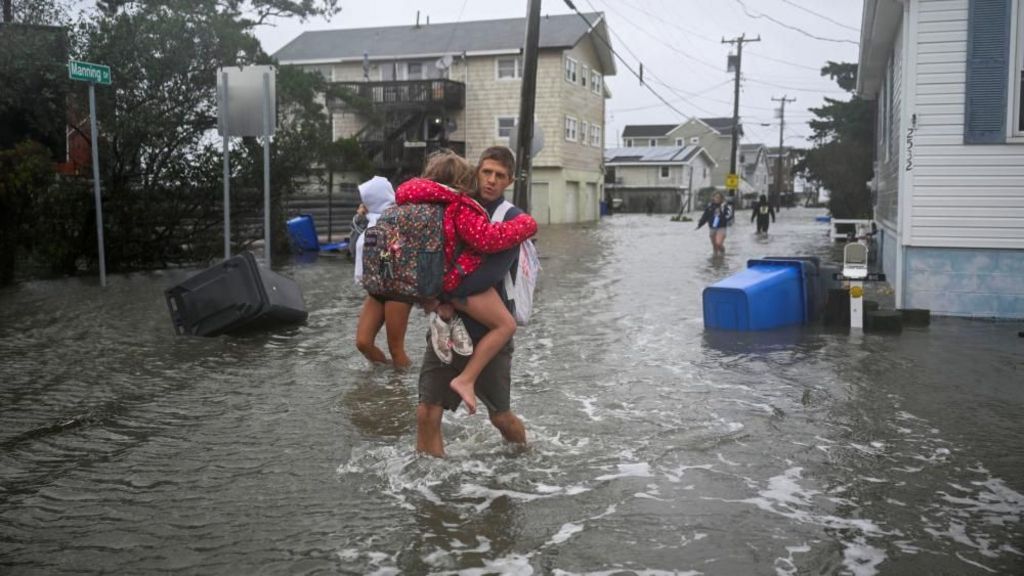
    A powerful nor’easter is bearing down on tens of millions of residents across the northeastern United States this weekend, leaving a trail of early disruption that includes coastal flooding, widespread power cuts, travel gridlock, and a wave of canceled major public events.

    The U.S. National Weather Service (NWS) has warned that the storm will reach its peak intensity on Saturday, bringing a hazardous combination of dangerous coastal flooding, unsafe beach conditions, high-speed winds, and heavy downpours to heavily populated areas stretching from New York City to Boston. Forecasts indicate precipitation and gusty winds will extend across a 900-mile stretch of the East Coast, from Virginia all the way north to Maine.

    In response to the rapidly unfolding severe weather, state officials have declared states of emergency in both New York and New Jersey. New Jersey, in particular, is already grappling with early coastal inundation in multiple low-lying shore communities, where Saturday morning already found residential streets and local homes submerged in floodwater in Surf City and Manasquan. Forecasters added that this weekend’s coinciding full moon will exacerbate high tide levels, worsening the coastal flooding threat for at-risk areas.

    The NWS issued an urgent alert for coastal communities, advising residents to “prepare immediately for significant inundation in low-lying areas near the shore, including roads underwater and impacts to homes and businesses.” In New York City, officials warned that wind gusts could reach up to 55 miles per hour (88 kilometers per hour) through the end of the weekend, raising risks of downed trees, snapped power lines, and extended power outages. New York Mayor Zohran Mamdani urged caution in a public video address to residents, saying, “Don’t travel if you don’t have to. Do not drive or walk through floodwater.”

    The storm has already forced widespread cancellation of major scheduled events across the region. Ed Sheeran’s highly anticipated concert at Boston’s Gillette Stadium was scrapped for public safety, venue officials confirmed. Other called-off events include the Global Citizen Festival in New York City’s Central Park, which was set to feature headlining performances from Lauryn Hill, Wyclef Jean, and John Legend. Major league sports schedules have also been upended: the Boston Red Sox moved their scheduled weekend series game against the Chicago Cubs from Sunday afternoon to next Friday, while a professional MLS match between Red Bull New York and St. Louis City SC was also canceled.

    As of Saturday morning, the storm had already knocked out power to nearly 150,000 households across the affected region, according to outage tracking site PowerOutage.us. Air travel has also been severely disrupted: the Federal Aviation Administration has urged all passengers to confirm their flight status with carriers before heading to airports, and flight tracking service FlightAware reported that more than 1,100 domestic flights have already been delayed, with another 400 flights completely grounded ahead of the storm’s peak.

  • German town bans ‘stumbling stone’ memorials to Nazi victims

    German town bans ‘stumbling stone’ memorials to Nazi victims

    A small town in eastern Germany has sparked nationwide outrage after local leaders approved a ban on the iconic ‘Stumbling Stone’ memorials that honor victims of Nazi terror, shining a new spotlight on the growing influence of extreme-right politics in the region.

    Heidenau, a town located near Dresden in the state of Saxony, passed the ban last week in a vote backed by councillors from the Alternative für Deutschland (AfD) — a populist party whose Saxony branch is officially classified as a right-wing extremist movement by Germany’s domestic intelligence service — and the mainstream conservative Christian Democratic Union (CDU).

    Conceived by artist Gunter Demnig in the 1990s, the Stolpersteine, or Stumbling Stones, project has grown into one of Europe’s most distinctive decentralized acts of Holocaust remembrance. Thousands of palm-sized brass plaques have been embedded into sidewalks across Germany and more than a dozen other European countries, each placed directly outside the former homes or workplaces of Jews, Roma, LGBTQ+ people, political dissidents and other groups targeted for extermination by the Nazi regime. Funded almost entirely by public donations, the memorials are designed to be encountered unexpectedly in daily life, forcing passersby to literally “stumble” over the plaque and pause to reflect on the atrocities that unfolded in their own community.

    Under the Heidenau council’s approved motion, all future memorials to Nazi victims will be moved exclusively to the town’s Nordfriedhof cemetery. The proposal claimed that many local residents viewed the sidewalk plaques as inappropriate, arguing that concentrating remembrance at the cemetery would prevent people from stepping directly on the memorial markers.

    The decision has drawn immediate fierce condemnation from across German politics and Jewish communities. Germany’s federal Education Minister Karin Prien, herself a member of the CDU, called the ban a outright “scandal” in comments to the newspaper Bild.

    “Anyone who banishes Stolpersteine and memorial sites commemorating Jewish life from public spaces to the cemetery is prioritising death over life and rendering Jewish people invisible once again,” Prien said, adding that the Saxony state branch of her own CDU shared direct responsibility for the outcome.

    Charlotte Knobloch, a respected Holocaust survivor and former president of the Munich Jewish Community, also spoke out against the move, calling it “completely the wrong approach.” She told Funke Media Group she was “appalled that a democratic party would stoop to supporting such a transparent manoeuvre by the extremists of the AfD.” While Knobloch noted she does not personally support the placement of Stolpersteine on sidewalks — a policy already in place in her home city of Munich, where public building plaques are used instead — she emphasized that decentralized, public remembrance is non-negotiable for a healthy culture of memory. “Decentralised remembrance – which is not banished from public space but, on the contrary, permeates and shapes it – was crucial to a genuine culture of remembrance,” she said.

    Demnig, the creator of the Stumbling Stone project, said the ban came as no surprise amid the AfD’s recent electoral gains in eastern Germany. The party has secured landmark victories in recent state elections in Saxony-Anhalt and Mecklenburg-Vorpommern, building a strong base in the former East German region on an anti-immigration, “Germany First” and Russia-friendly platform.

    “It was certainly to be expected that something like this would happen,” Demnig said of the Heidenau ban. The AfD has repeatedly rejected German intelligence’s classification of several of its state branches as extreme-right, dismissing the designation as political overreach.