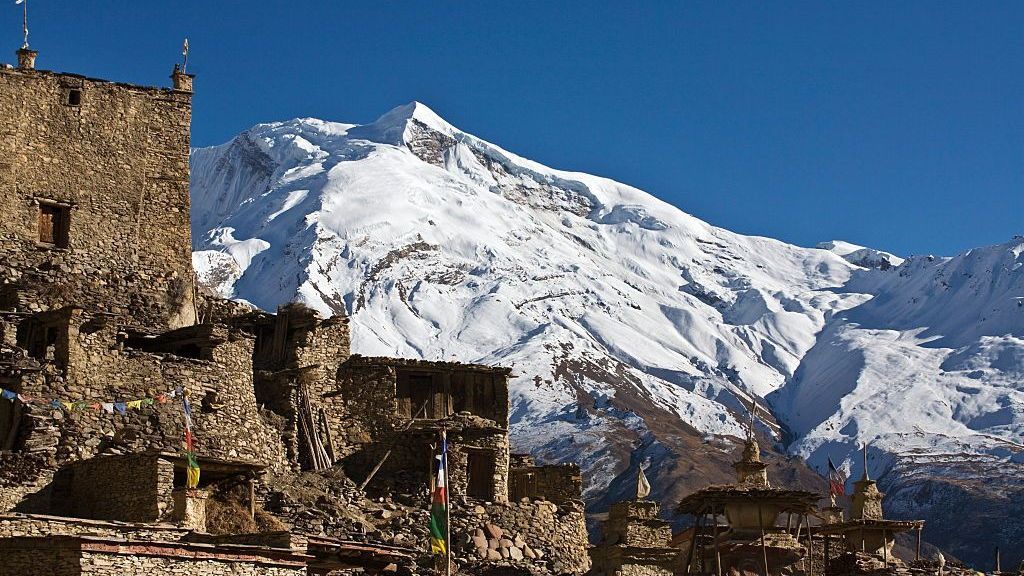
On a Sunday morning, a devastating avalanche hit a high-altitude staging camp near Himlung Himal, a 7,126-meter peak straddling Nepal’s northern border with Tibet that draws hundreds of international mountaineers each climbing season. The missing group consists entirely of Nepali climbing guides, who had been deployed days ahead of foreign expedition members to prepare camps, secure climbing routes, and fix safety ropes along the ascent.
According to expedition organizers, eight of the missing climbers are part of a team from Himalaya Holidays Trekking, while the remaining two belong to a separate local adventure company. For days leading up to the incident, regional meteorological forecasts had warned of heavy and persistent snowfall across Nepal’s Manang district, where Himlung Himal is located.
Unstable weather conditions that triggered the avalanche have also blocked urgent search and rescue operations. Thick cloud cover and continued snowfall have prevented rescue helicopters from reaching the remote base camp site, while ground rescue teams have been unable to traverse treacherous, snow-choked mountain paths to reach the area.
This incident is the latest in a string of weather-related mountaineering disasters to hit the Himalayan region in 2026, a year that has seen far more extreme precipitation than the seasonal average. Earlier the same week, all climbers were evacuated from Mount Manaslu, the world’s eighth-highest peak, after officials warned of rapidly growing avalanche risk from accumulating snow.
Less than two months before this event, six Nepali climbers died in an incident on Pakistan’s Broad Peak, a climb that included high-profile British-Nepali mountaineer Nirmal Purja. The current crisis also comes against a backdrop of larger extreme weather disasters across the broader Himalayan region. In neighboring northern India’s Uttar Pradesh state, officials confirmed that extreme unseasonal weather has killed more than 50 people in recent days.
Along the Nepal-Tibet border, recovery teams are still searching for remains more than a month after a catastrophic glacial outburst flood and subsequent landslides in August that killed more than 1,400 people and left over 6,000 missing. That disaster occurred when a glacial lake collapse sent a massive wall of water and debris rushing down the Trishuli River valley, destroying dozens of riverside settlements.
For Nepal, which draws hundreds of millions of dollars annually from international mountaineering and adventure tourism—one of the country’s largest foreign exchange earners—this season’s persistent extreme weather has created exceptionally dangerous conditions that threaten both the lives of local guides and the stability of the key industry.