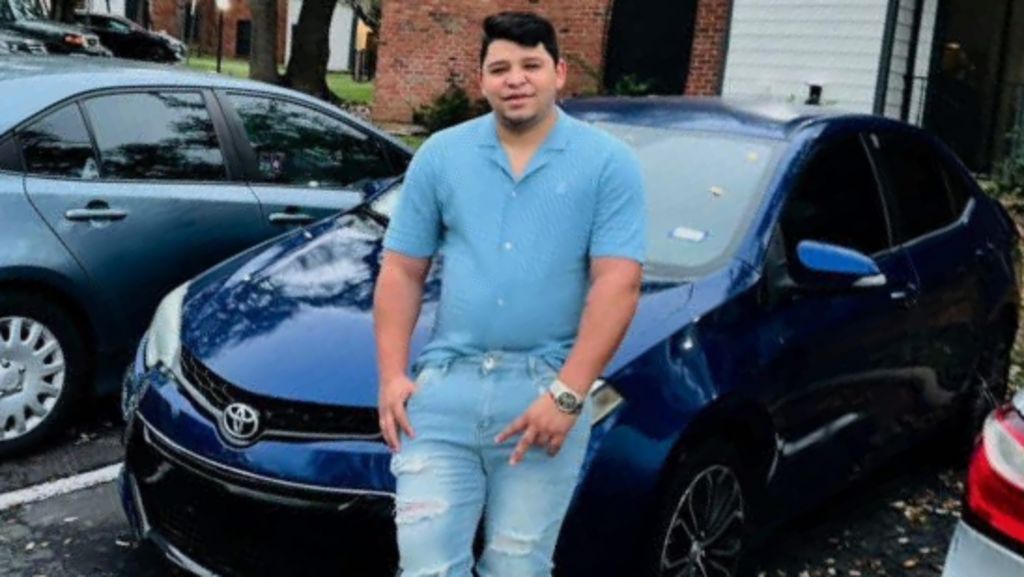
A high-stakes incident involving U.S. Immigration and Customs Enforcement (ICE) agents and a Venezuelan DoorDash driver in Austin, Texas, has sparked significant public and legal controversy, following the release of body camera evidence tied to the case. 28-year-old Wilber Rafael Garces Perez, who already had a final order of removal from the United States, now faces a federal charge of assaulting a federal officer, a count that could put him behind bars for up to two decades if he is convicted.
The encounter unfolded on September 20, when ICE agents pulled over a blue Toyota sedan registered to Garces Perez after confirming his identity and pending removal order through a federal database. What followed has produced conflicting narratives from the two sides, as laid out in official court documents.
According to federal prosecutors’ affidavit, Garces Perez refused to exit his vehicle when ordered, then drove away, striking an ICE agent in the torso with his car’s driver-side side-view mirror. Court filings claim he then led agents on a dangerous high-speed chase through mixed commercial and residential neighborhoods in Austin. The pursuit ended when an ICE SUV rammed Garces Perez’s car, forcing it to spin out and stop. Prosecutors state that the shooting occurred after Garces Perez again tried to strike an agent with his vehicle, prompting the officer to fire his service weapon, striking the driver in the upper back.
Garces Perez’s account of the incident, included in the same court filings, directly contradicts the government’s version of events. He claims that the initial contact between vehicles came when an ICE SUV made an abrupt maneuver that crashed into his car, not the other way around. He admits he chose not to exit the vehicle because he knew he would be taken into immigration custody, and the bullet remains lodged in his upper back, a detail his legal team says leaves him in ongoing critical health danger.
Body camera footage from one of the responding officers has been included as evidence in the official affidavit, offering visual context for the conflicting versions of events. The case has already thrown up multiple procedural questions: Garces Perez’s legal team says they only learned about his initial court appearance held on Tuesday after it had already concluded. Earlier this month, a judge issued a temporary block on Garces Perez’s deportation, pausing the immigration process while the criminal case proceeds.
The incident has also drawn attention to the immigration pathway Garces Perez used to enter the country: he crossed into the U.S. in 2024 via CBP One, an asylum-seeker processing program launched by the Biden administration that was later scrapped by the second Trump administration. In comments on the shooting, the Department of Homeland Security (DHS) defended its handling of Garces Perez’s medical care, claiming he has received “some of the best medical care he’s ever received in his life” — a statement that clashes with his legal team’s warnings about the health risk posed by the embedded bullet. The shooting has already spurred public protests in Austin, with demonstrators expressing frustration over the use of force against the delivery driver.