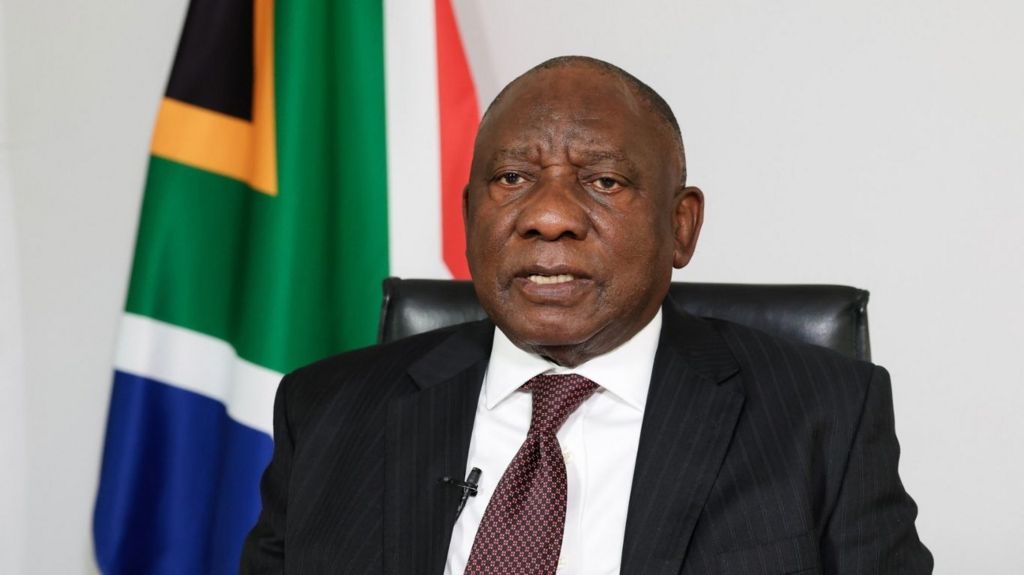
South African President Cyril Ramaphosa has announced a sweeping national emergency plan to combat gender-based violence, following the shocking discovery of 12 women’s bodies in a region east of Johannesburg over just two months. The gruesome killings have ignited widespread national anger, shining a harsh new light on South Africa’s long-standing status as one of the countries with the highest global rates of violence against women.
In a national address on Tuesday, Ramaphosa introduced a cross-sector, multidisciplinary emergency response to the murders, four of which have already resulted in arrests. The president acknowledged what many South Africans have suspected: that the proximity of the discoveries has fueled widespread fears that a serial killer could be operating in the area. However, he confirmed that as of the address, law enforcement officials have uncovered no evidence linking the deaths to a single perpetrator.
In a candid break from previous official stances, Ramaphosa admitted that the South African government has failed to meet its obligation to protect women and girls across the country, stating plainly that gender-based violence can no longer be normalized as an accepted part of daily life in the nation. “We have not done enough,” he emphasized, “and that must change immediately.”
The centerpiece of the new action plan is an immediate nationwide requirement for every local municipality to conduct comprehensive women’s safety audits. These audits are tasked with identifying and remediating all high-risk public spaces that put women in danger, including broken street lighting, overgrown unmanaged public areas, abandoned buildings, unsafe public transit routes and stops, inadequately secured parks, and other hazardous environmental conditions.
Ramaphosa also announced a targeted enforcement package designed to curb alcohol-related violence, a key contributing factor to many gender-based harm incidents. He clarified that alcohol is not a root cause of violence against women, and can never serve as an excuse for perpetration—full responsibility always rests with the person who commits harm. Still, he noted that harmful alcohol abuse acts as a major aggravating factor in interpersonal violence, making it a critical priority for broader prevention work.
Beyond law enforcement and policy changes, the president stressed that deep cultural and attitudinal change is required to end the national crisis of violence against women. He argued that gender-based violence does not originate at the moment of attack, but in long-held harmful beliefs that frame women as inferior to men, grant men the supposed right to control women’s lives, normalize controlling behavior as romantic protection, and dismiss coercion as affection. “It begins when a man refuses to accept the word no,” he said.
Ramaphosa issued a direct call to men and boys across South Africa to lead the movement to end gender-based violence, noting that for too long, the entire burden of addressing male-perpetrated violence has fallen on women survivors and advocates. “The solution to violence against women cannot be to make women less free,” he stated, a line that echoed growing demands for systemic change rather than restrictive measures that limit women’s movement and access to public space.
The new announcement comes amid devastating new statistics that underscore the severity of South Africa’s homicide and gender-based violence crisis. Between April and June of this year alone, 5,427 people were murdered across the country. While national police data does not break down homicide victims by gender, recent analysis from the South African Human Rights Commission found that 569 women were killed in that same three-month window, with an additional 1,052 women surviving murder attempts.